-
-
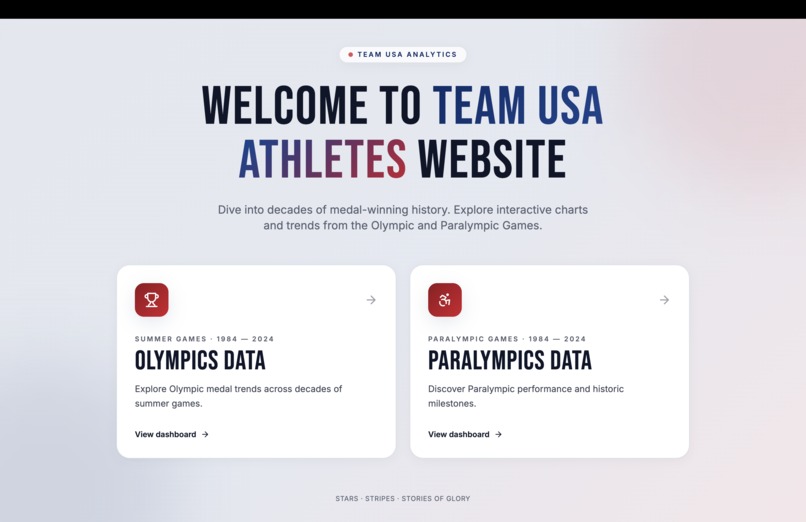
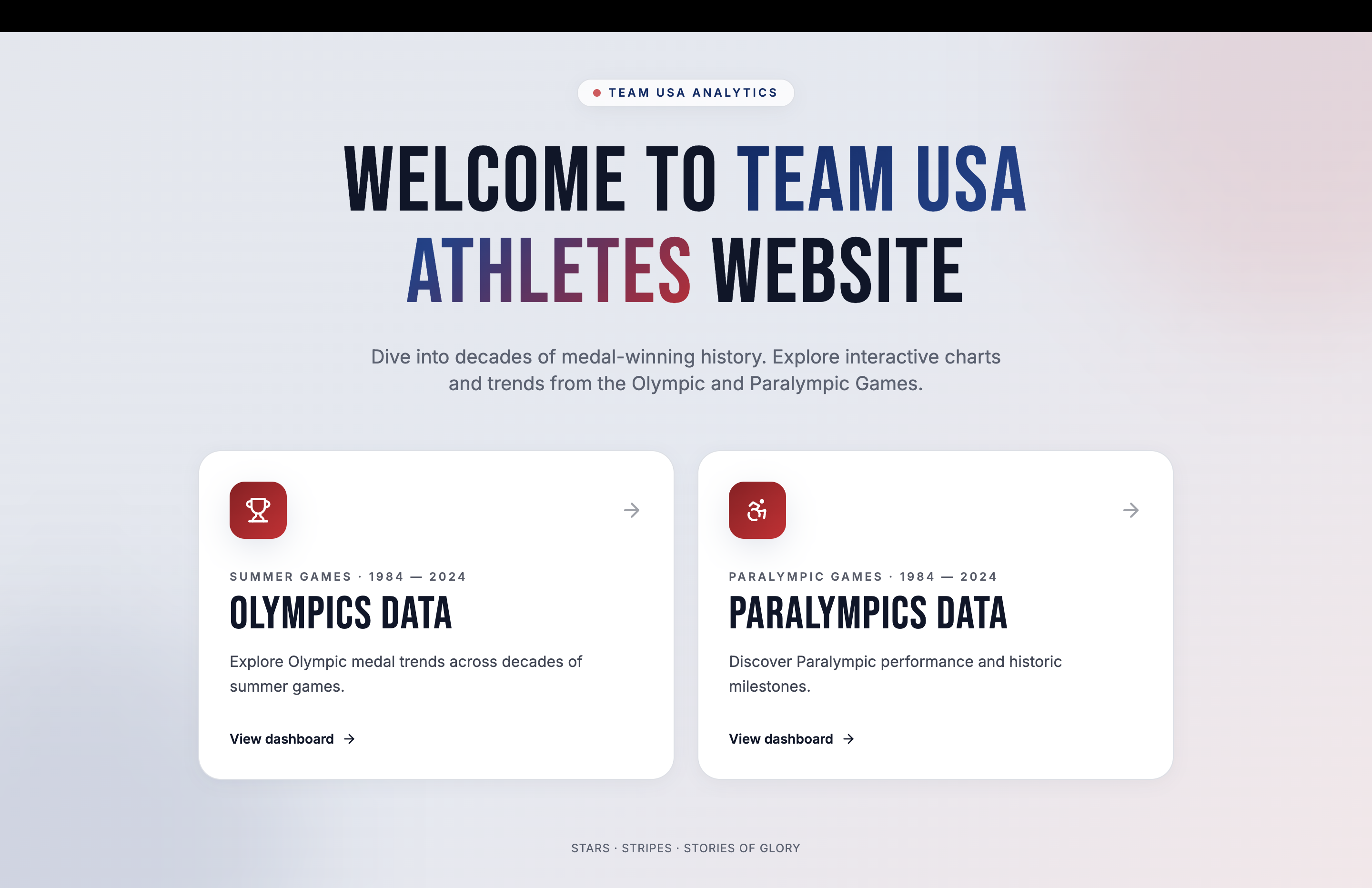
Landing Page
-
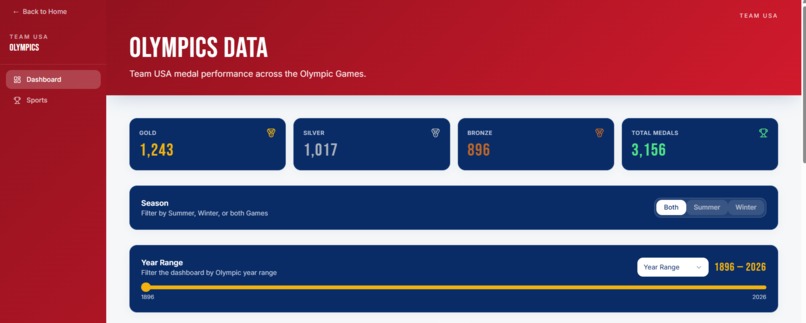
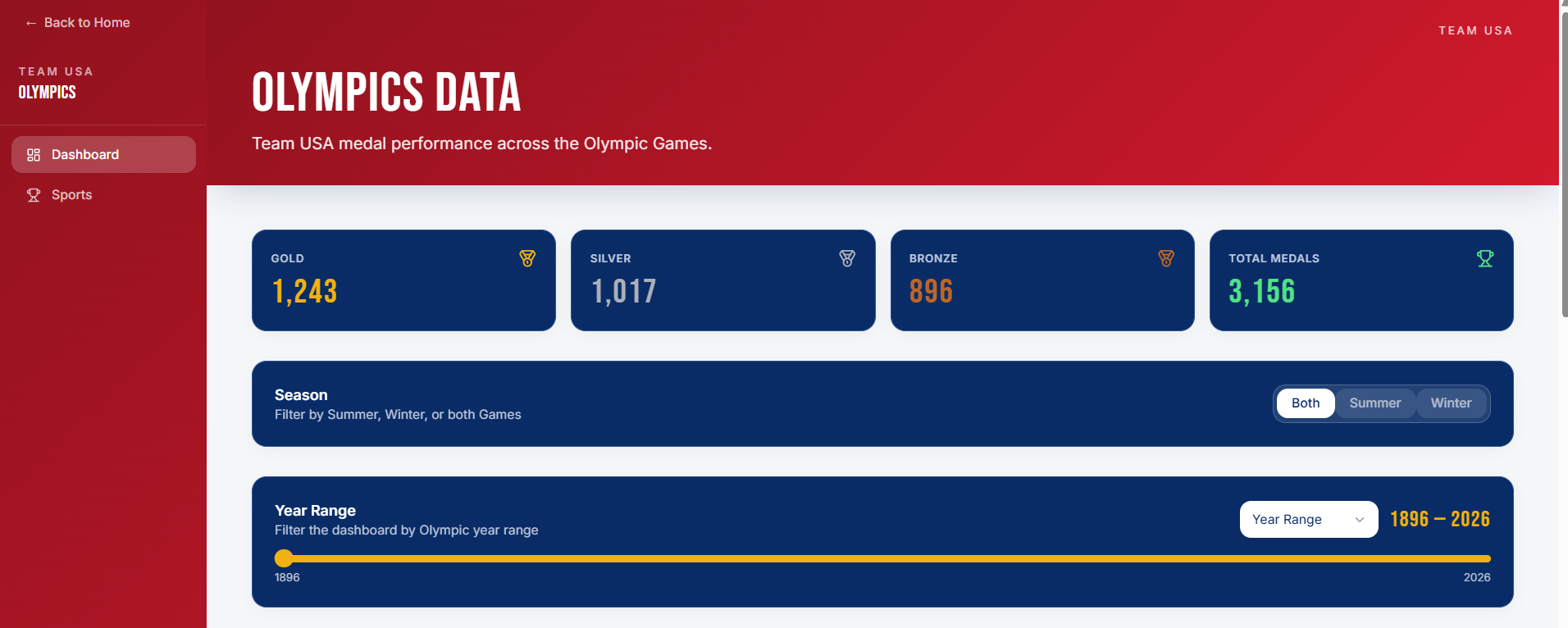
Medals Performance Data
-
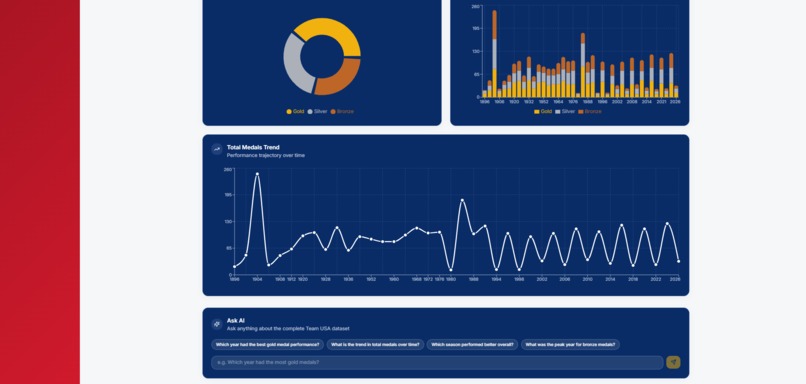
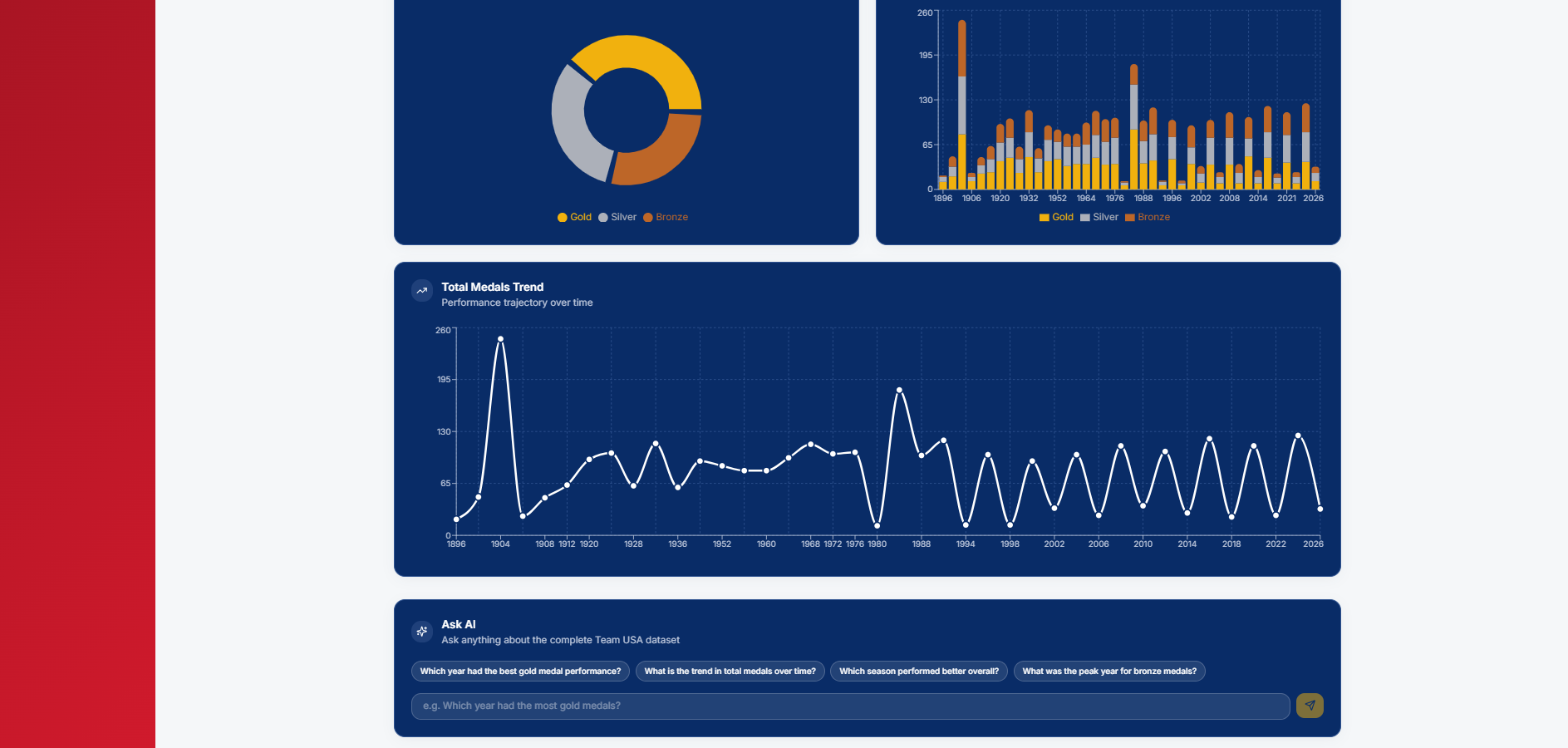
Charts
-
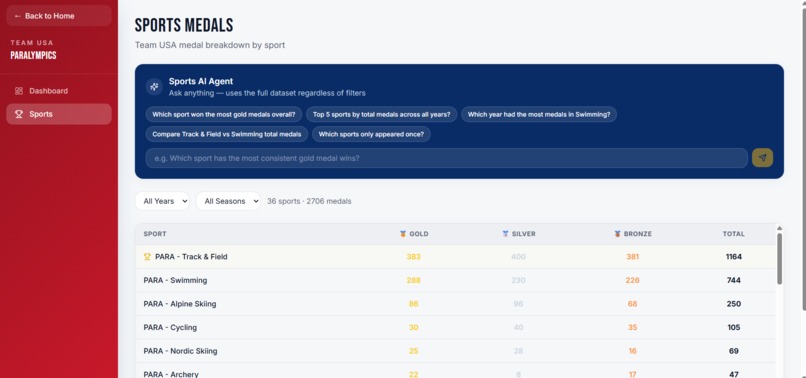
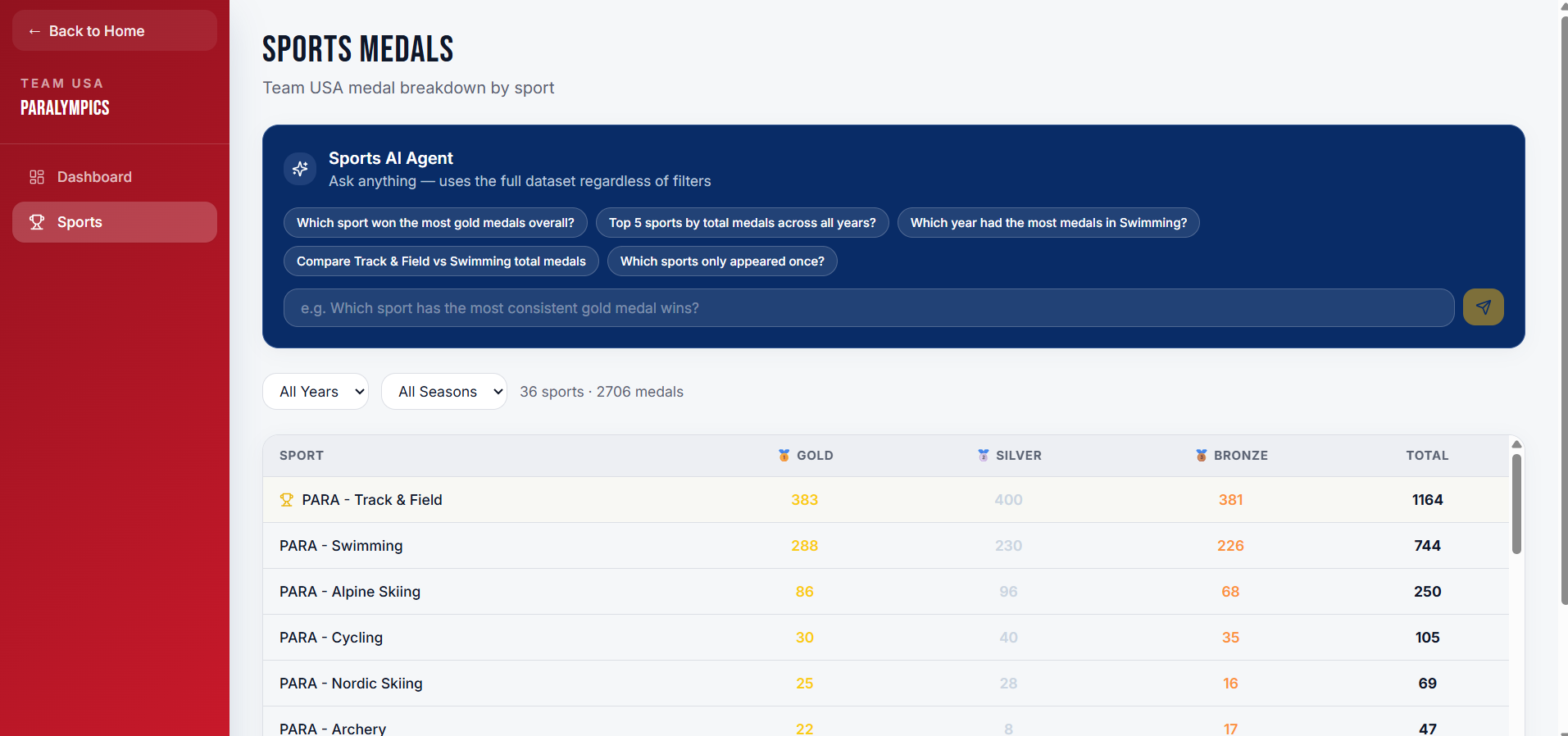
Sports Medals Data
Inspiration
Project USAAA was inspired by the idea that every fan should be able to explore Team USA’s Olympic and Paralympic history in a simple, interactive, and meaningful way. Medal data is often available, but it is usually static, fragmented, or hard to interpret. We wanted to turn that data into a fan-friendly experience where users can discover trends, compare performance, and celebrate both Olympic and Paralympic athletes equally.
What it does
Project USAAA is an AI-powered analytics platform for Team USA’s Olympic and Paralympic medal history. It allows users to explore medal counts, year-wise performance, sport-wise breakdowns, season-based filters, and visual performance trends through interactive dashboards. The platform also includes a Gemini-powered AI assistant that lets fans ask natural-language questions and receive clear, data-driven insights.
How we built it
We built the application as a full-stack web platform using React, Vite, TypeScript, Tailwind CSS, Radix/Shadcn UI components, and Recharts for the interactive frontend experience. A lightweight Node.js and Express backend securely handles AI requests and connects to the Gemini Flash API. Python and pandas were used to clean and structure Olympic and Paralympic medal data into CSV files that power the dashboards. The application is deployed on Google Cloud Run for scalable and accessible cloud hosting.
Challenges we ran into
One major challenge was organizing raw Olympic and Paralympic data into a clean structure that could support filters, charts, sport-level analysis, and AI responses. Another challenge was creating a balanced experience where Paralympic data received the same visibility and analytical depth as Olympic data. We also had to design prompts and backend flows carefully so that Gemini could provide useful, fan-friendly insights based on the available data.
Accomplishments that we're proud of
We are proud of building a complete working application that combines data visualization, AI-powered analysis, and cloud deployment into one polished experience. We are especially proud that the project treats Olympic and Paralympic achievements with equal importance. The Gemini-powered assistant also makes the platform more accessible, because users do not need technical knowledge to ask questions and discover meaningful insights.
What we learned
We learned how powerful AI can be when combined with structured data and thoughtful user experience design. We also learned that sports data becomes much more engaging when users can explore it visually and conversationally. From a technical perspective, we gained experience in combining React, Recharts, Express, Gemini API, Python data processing, and Google Cloud Run into a single deployable solution.
What's next for Project USAAA
The next step for Project USAAA is to expand the dataset with more athlete profiles, event-level details, and historical context. We also want to improve the AI assistant so it can generate deeper comparisons, explain trends, and personalize insights for different types of fans. Future enhancements could include predictive storytelling, athlete spotlights, accessibility improvements, and richer Olympic-Paralympic comparison reports.
Built With
- css
- css-frontend:-react
- csv
- eslint
- express.js
- express.js-ai-api:-google-gemini-flash-api-data-processing:-python
- google-cloud
- google-cloud-run
- google-gemini-flash-api
- javascript
- node.js
- npm
- pandas
- pandas-data-format:-csv-based-olympic-and-paralympic-datasets-cloud-platform:-google-cloud-deployment:-google-cloud-run-package-management:-npm-testing-/-dev-tools:-vitest
- python
- radix/shadcn-ui
- radix/shadcn-ui-data-visualization:-recharts-backend:-node.js
- react
- recharts
- tailwind-css
- typescript
- vite
- vitest

Log in or sign up for Devpost to join the conversation.