-
-
MiLi - Learn. Teach. Repeat
-
MiLi - Learn. Teach. Repeat
-
MiLi - Learn. Teach. Repeat
-
MiLi - Learn. Teach. Repeat
-
Survey responses
-
Survey responses
Inspiration
This idea really came from our everyday experience at CMU-Africa. After some classes, especially the math-heavy or machine learning ones, it’s easy to leave feeling lost. You try to catch up later, watch videos, reread slides, but sometimes it just doesn’t click.
Actually, we already help each other all the time. During lunch, in WhatsApp groups, outside class where someone explains a concept, and suddenly everything makes sense. But those moments never last since once the conversation ends, the explanation is gone.
We also realized how different our backgrounds are. Some students come in with strong foundations in programming or math, while others are learning those things for the first time. That difference shows up fast since people who already have context move quickly, and the rest of us are trying to fill in the blanks from multiple sources.
Even though professors and TAs genuinely try to support everyone, their time is limited. So instead of more office hours, we need a better way to capture and share the help that’s already happening among students.
This isn’t a problem unique to one class, it’s something most CMU-Africa students experience across courses. The fast pace, diverse academic backgrounds, and limited faculty time make it hard to keep everyone on the same page.
That’s how Milli-Lib (MiLi) started, as a way to make peer learning more structured and accessible. It doesn’t replace those casual study moments, it just makes them count for more people. Instead of one person explaining something once, it becomes a resource that everyone can use whenever they need it.
What it does
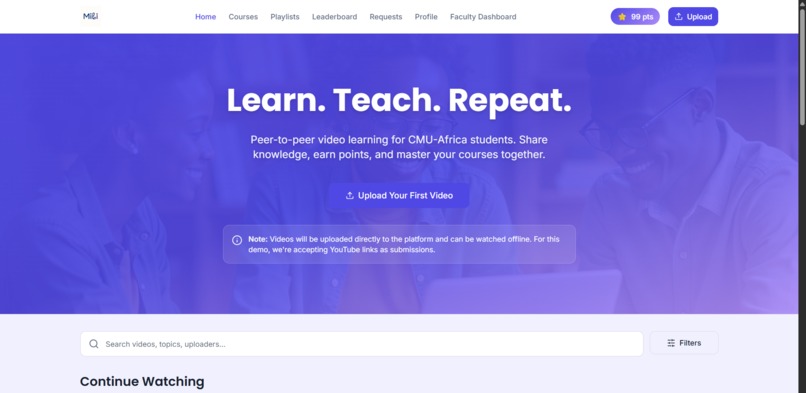
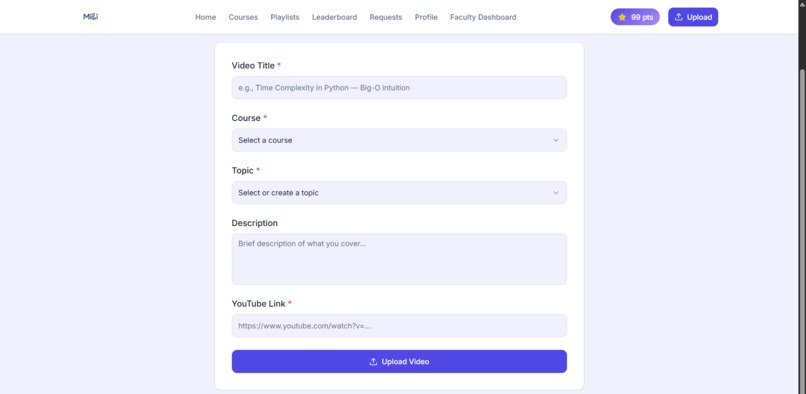
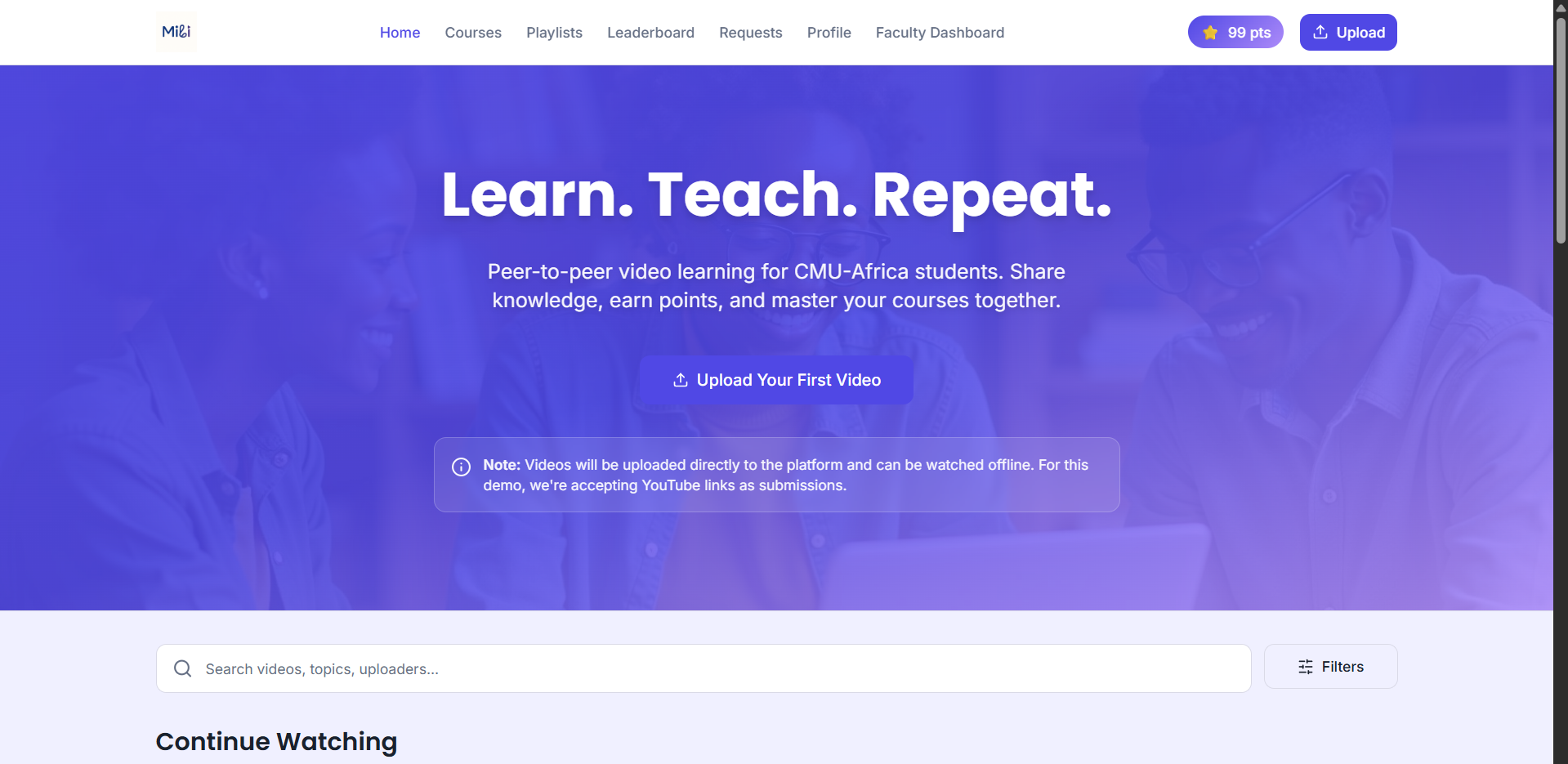
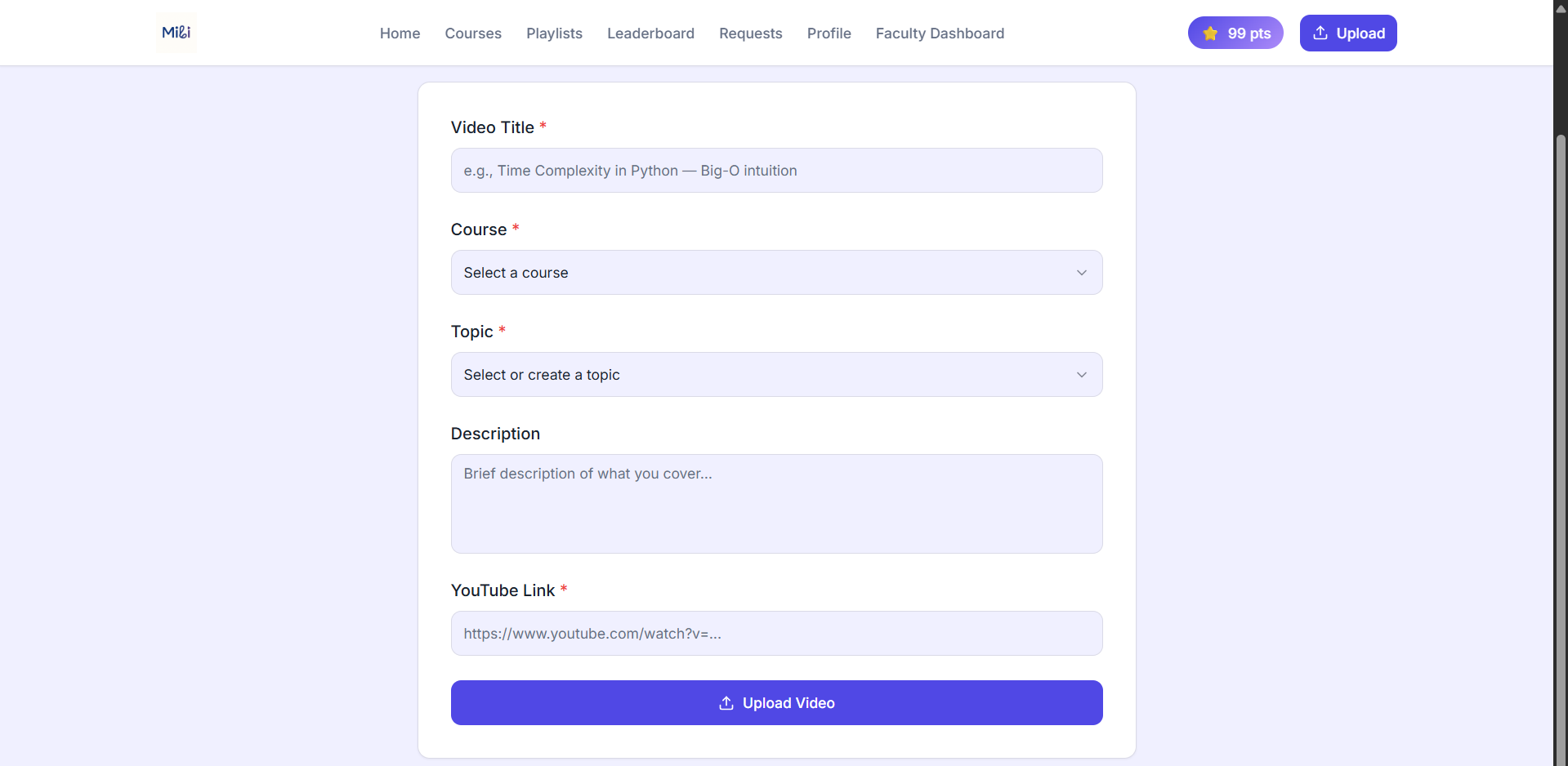
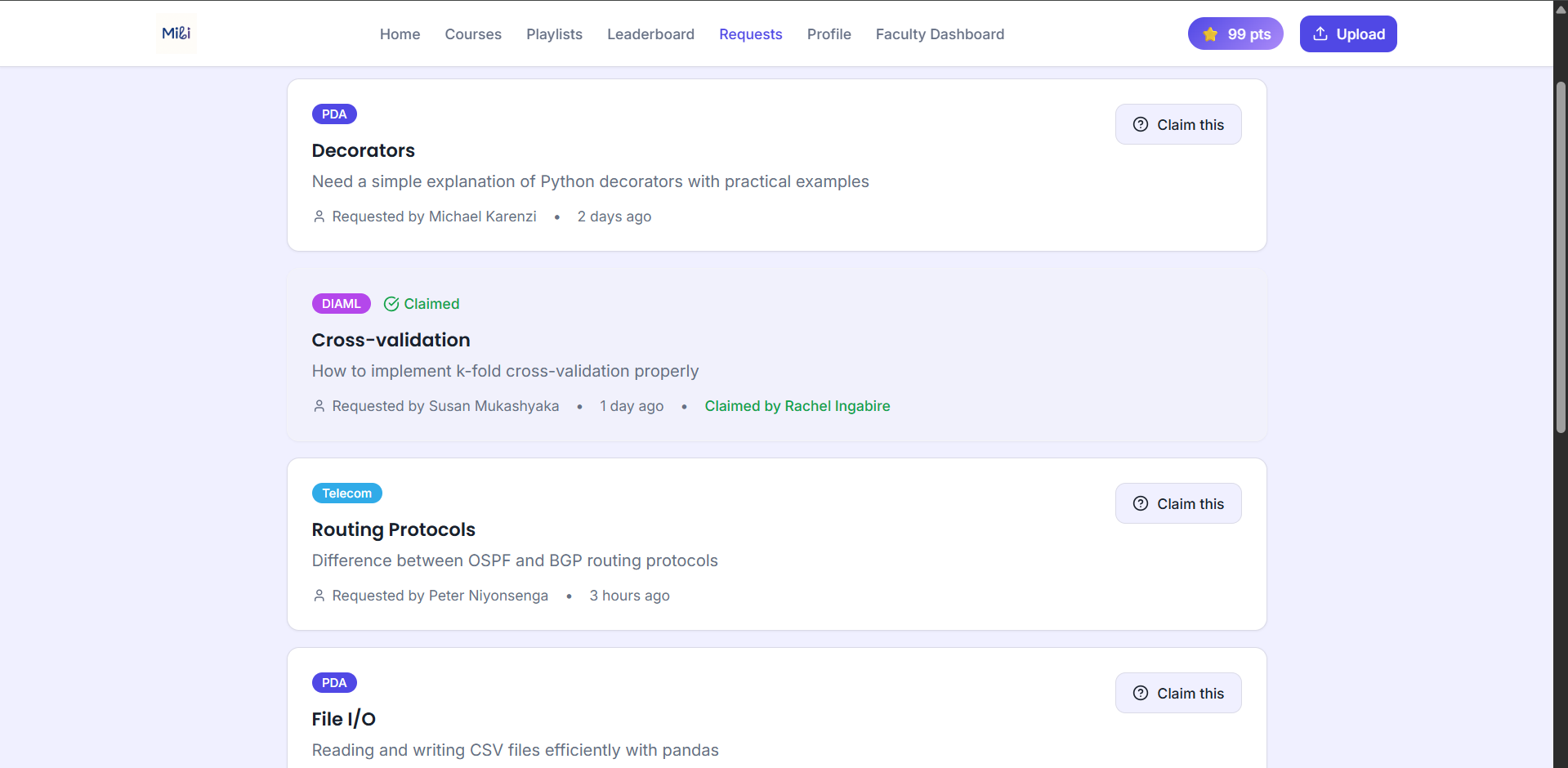
Milli-Lib (MiLi), which is a micro-learning library, is a points-based peer-learning platform where CMU-Africa students upload short (1-2 minute) video explainers on course topics.
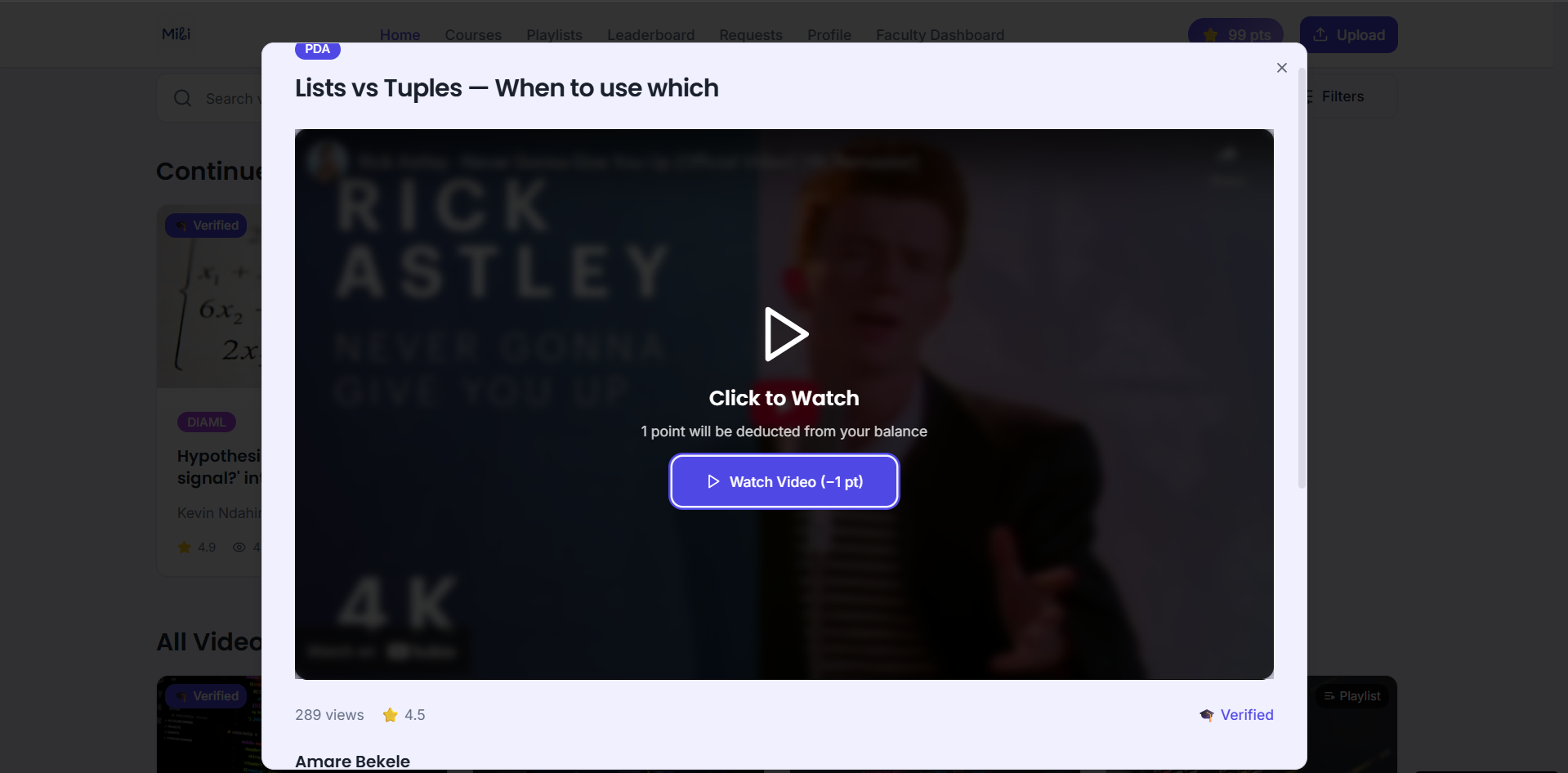
What makes MiLi different from generic learning platforms is that it builds on behavior that already exists on our campus and localizes it for how we students learn, short, direct, and peer-driven. Videos are compressed for low bandwidth, organized by course topics, and can be downloaded for offline use, so access doesn’t depend on constant Wi-Fi.
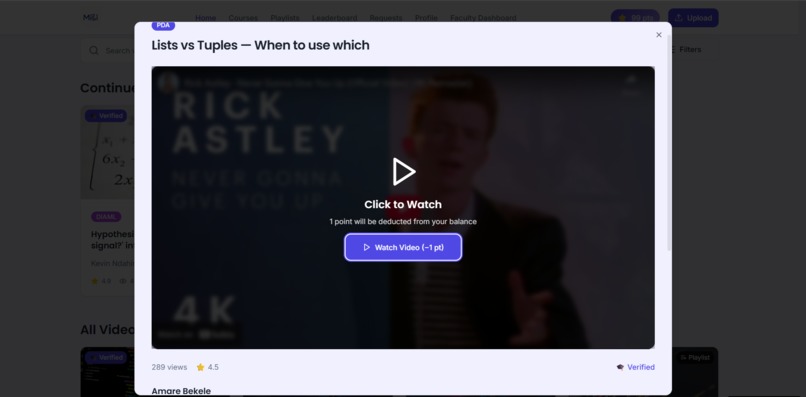
When you teach, you earn points. When you need help, you spend those points to unlock other videos. And the loop continues.
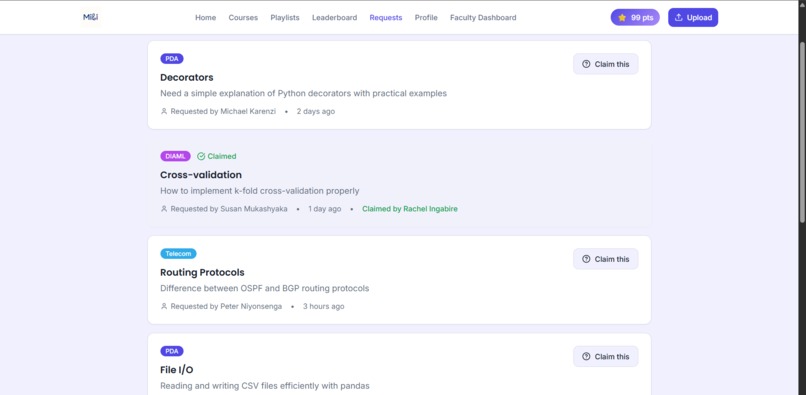
Everything is organized by course and topic, so you can actually find what you need instead of scrolling through random chats. Some contents might also be categorized into playlists if the same creators make multiple videos addressing topics in the same course. The content is peer-rated, and faculty or TAs can verify top videos to keep the quality solid.
The goal isn’t to replace professors, it’s to make sure no one falls behind before the next lecture starts.
How we’re building it
For the hackathon, we used Lovable to build the demo in order to visualize what the platform is supposed to look like and use lean methodology to test it with a focus group before building the official MVP. The prototype is being tested with a small group of students to collect usability feedback before scaling.
The actual MVP will be built with React + Firebase (web version) and Flutter (mobile app), since that stack fits our vision long-term. We’ll store videos in Cloud Firestore, add lightweight AI moderation for clarity checks, and make sure everything works smoothly even with limited internet.
Challenges we ran into
Balancing motivation: making it rewarding enough to contribute, not just consume.
Figuring out moderation : how to keep content accurate without overwhelming faculty.
To address these, we’re designing an internal peer-review system and a simple faculty dashboard that lets instructors validate videos without additional workload.
Accomplishments we’re proud of
Our team was able to conduct research, build a prototype, create a pitch deck and interview video in such a limited time and we are proud of how well we worked together. We also managed to create and share an explainer video on a DIAML topic to better demonstrate the value our platform brings.
We took a problem every student complains about and built a working solution around it, one that actually fits our campus reality. And the same platform benefits also benefits faculty in ensuring students are not left behind.
What we learned
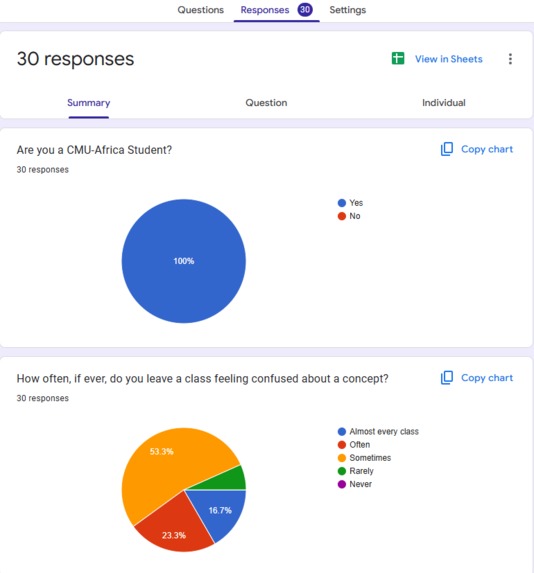
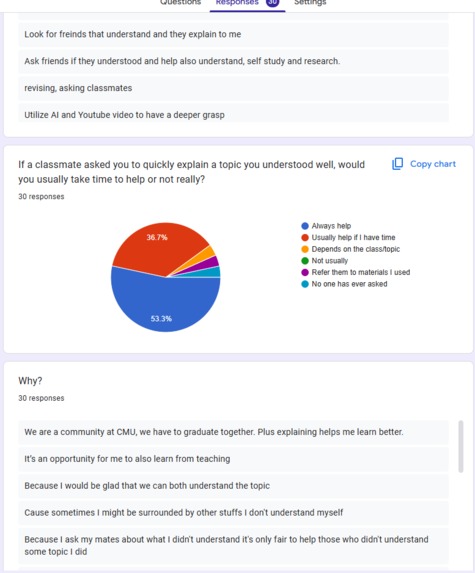
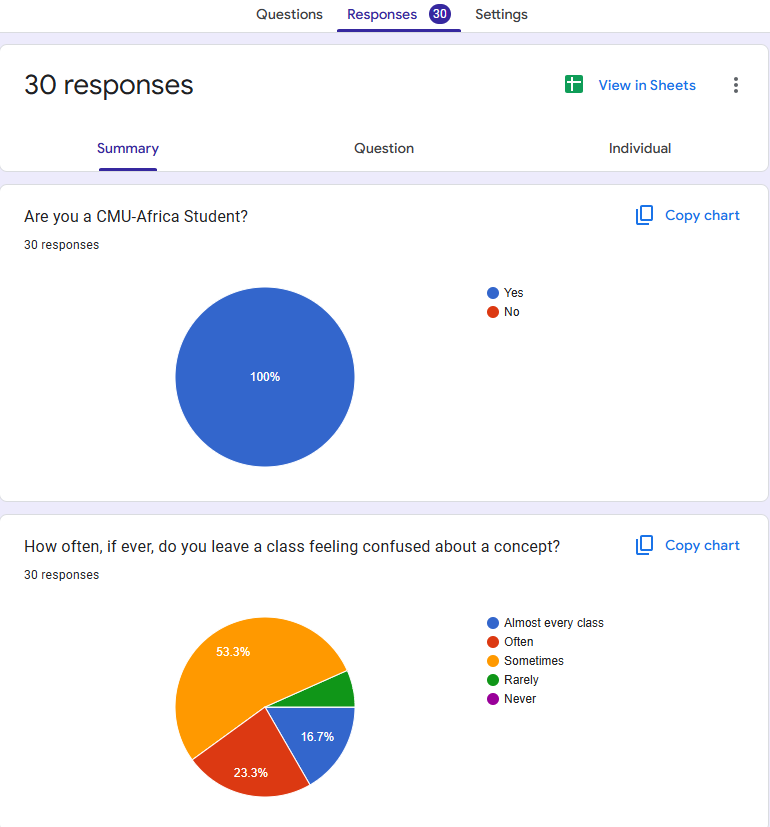
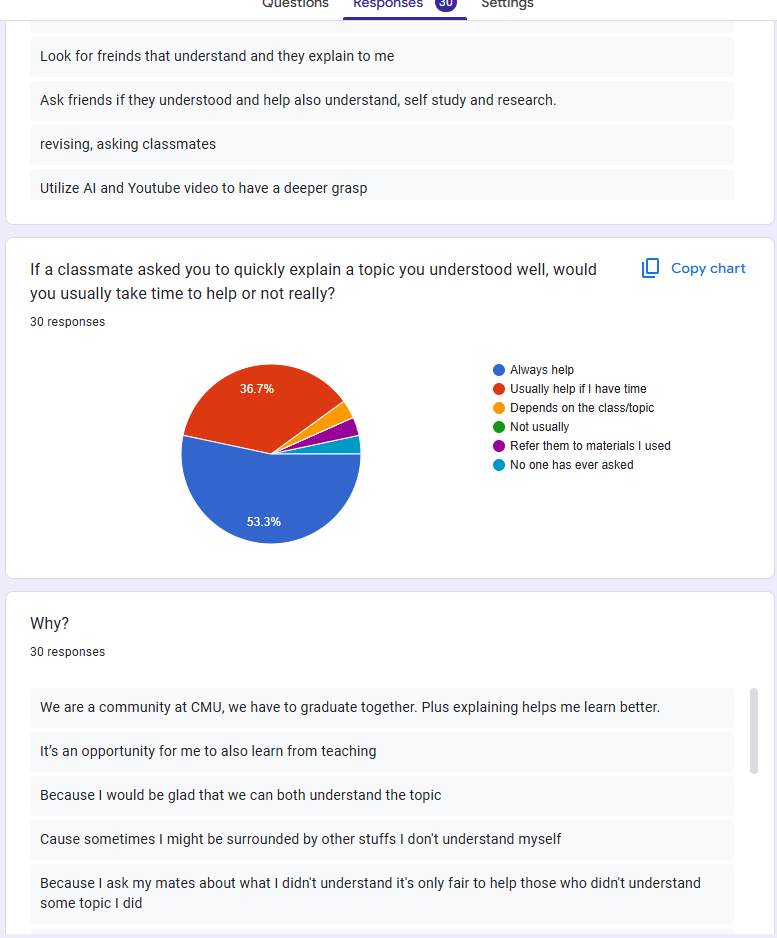
From our quick validation survey of CMU-Africa students, over 80% reported frequently leaving classes feeling confused. Most turn to AI tools or YouTube for help, and nearly all said they enjoy helping classmates when they can, but time constraints make it inconsistent.
These responses confirm that peer learning is valued, but unstructured. MiLi addresses this by capturing and organizing those moments of clarity into a system that rewards contribution and helps everyone keep up. There is a resource, the student community, which we already have and can utilize to solve our own problems.
What’s next for us
Next, we’re planning to pilot Milli-Lib (MiLi) MVP at CMU-Africa with a few courses like Telecom, PDA, and DIAML. We’ll test engagement, content quality, and see how it fits into the academic workflow.
We have around 300 students on campus across two semesters, so even if just 15% of them (about 45 students) each create two short explainers per semester, we’d already have close to 180 student-made videos every year. That’s a growing library of quick, reliable lessons created by students who’ve been exactly where others are stuck.
We’re also introducing a TA Track, where students who want to TA next semester can start building verified explainer playlists now. It’s a way to earn points, get recognized by faculty, and basically show your teaching skills early while helping others.
Then we’ll scale it within CMU-Africa and then the other campuses. Afterward, we aim to expand in collaboration with other universities like ALU and UR, to license the platform to their institutions. In future versions, other universities can adopt MiLi as an integrated learning plug-in to sustain the platform.
By 2030, we aim to make Milli-Lib (MiLi) the go-to space for peer learning across African universities.


Log in or sign up for Devpost to join the conversation.