Inspiration
There are many inefficiencies inherent to traditional commercial mining practices due to the fact that the majority of them involve the removal of unnecessary waste materials in order to get reach the target material. Not only is this physically damaging to the environments where mining takes place, but it also consumes more resources - especially in terms of energy and fuel - than are necessary. Our design aims to eliminate such excessive waste from mining. By utilizing ground penetrating radar technology to analyze the mining location before excavation even begins, our robot aims to mine only as much as it needs to be profitable, allowing it to use energy much more effectively than traditional mining methods. This reduction in unnecessary energy usage and damage done to the environment allows mining to be a much more sustainable practice overall.
What it does
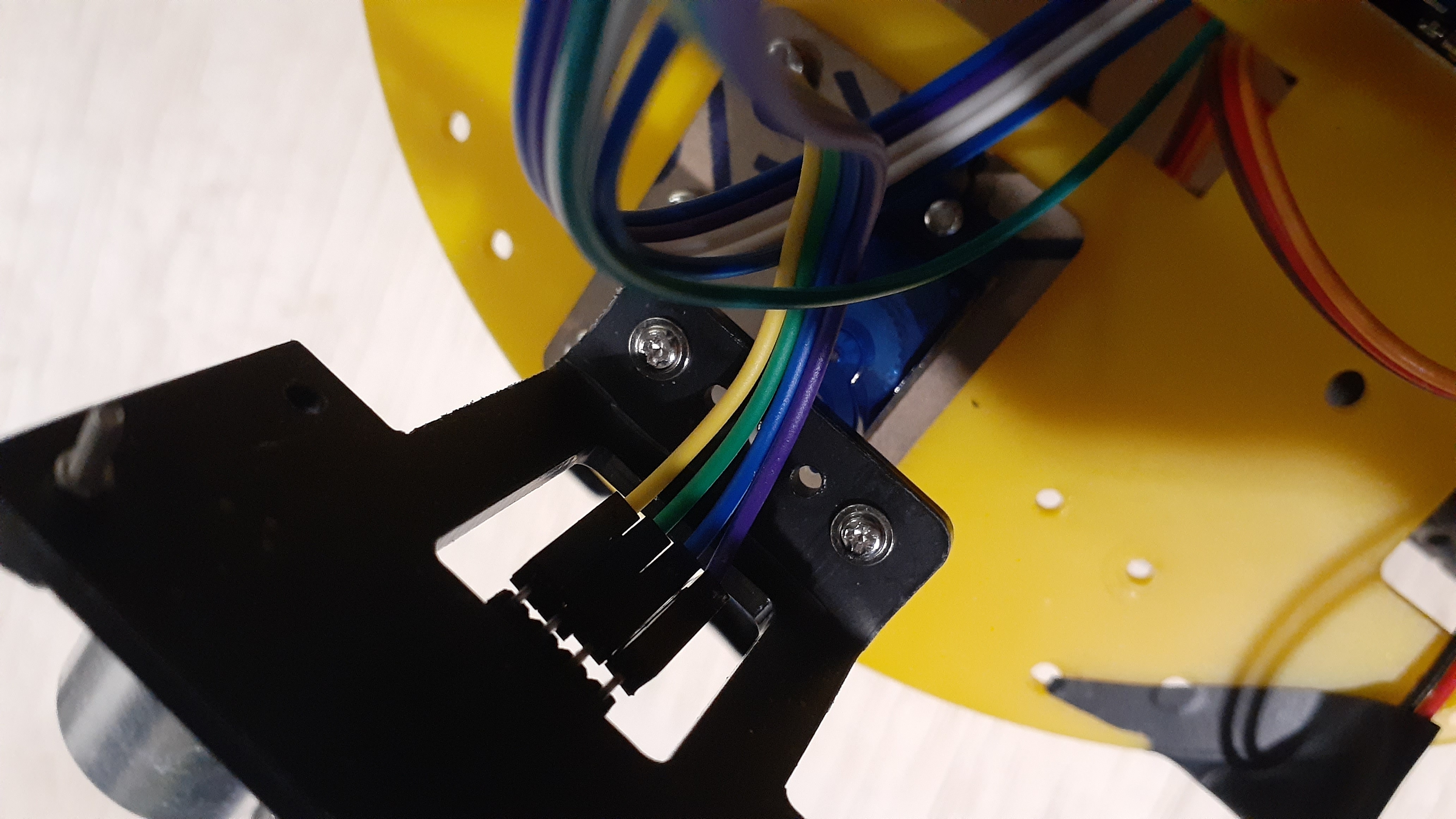
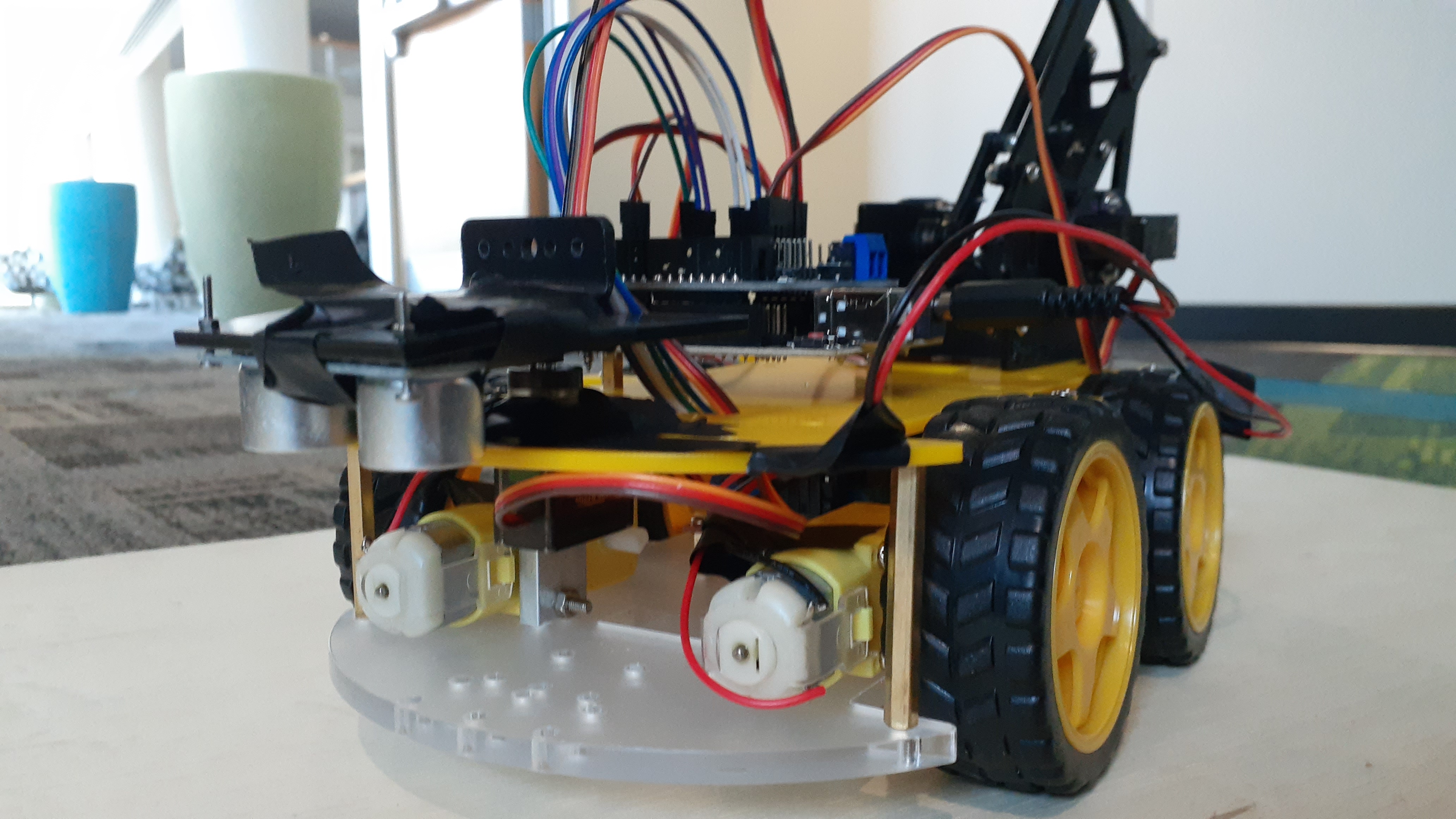
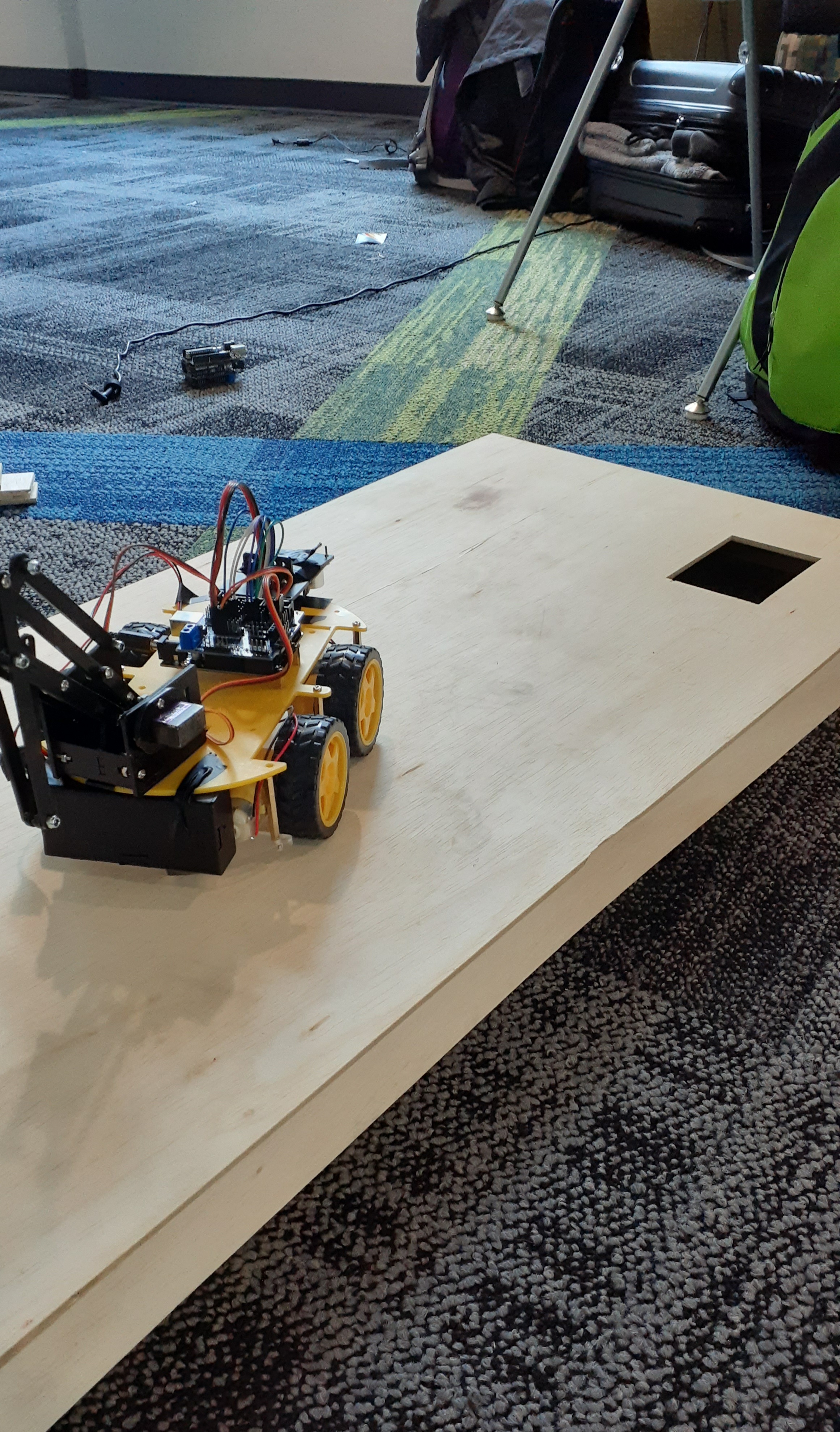
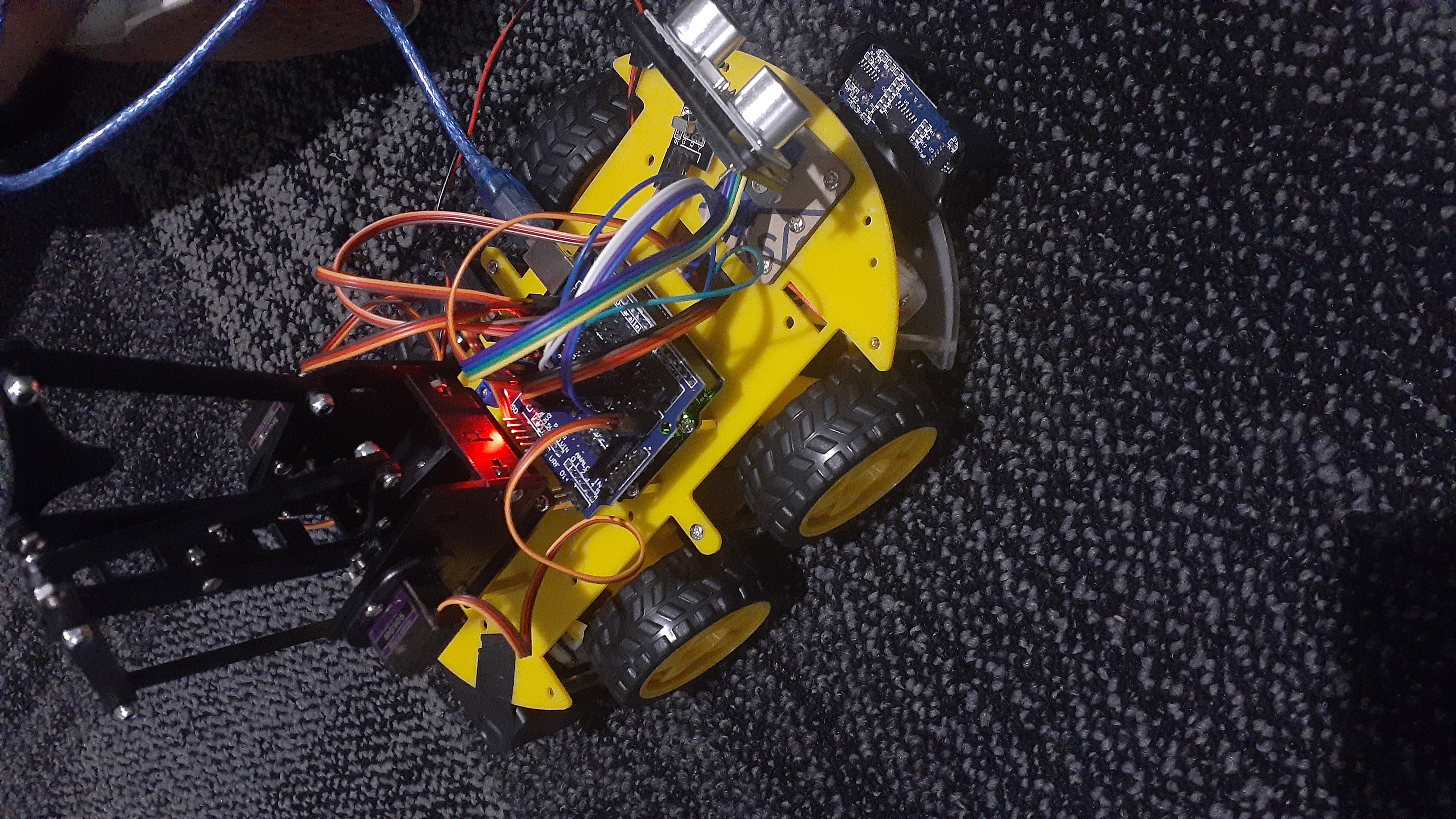
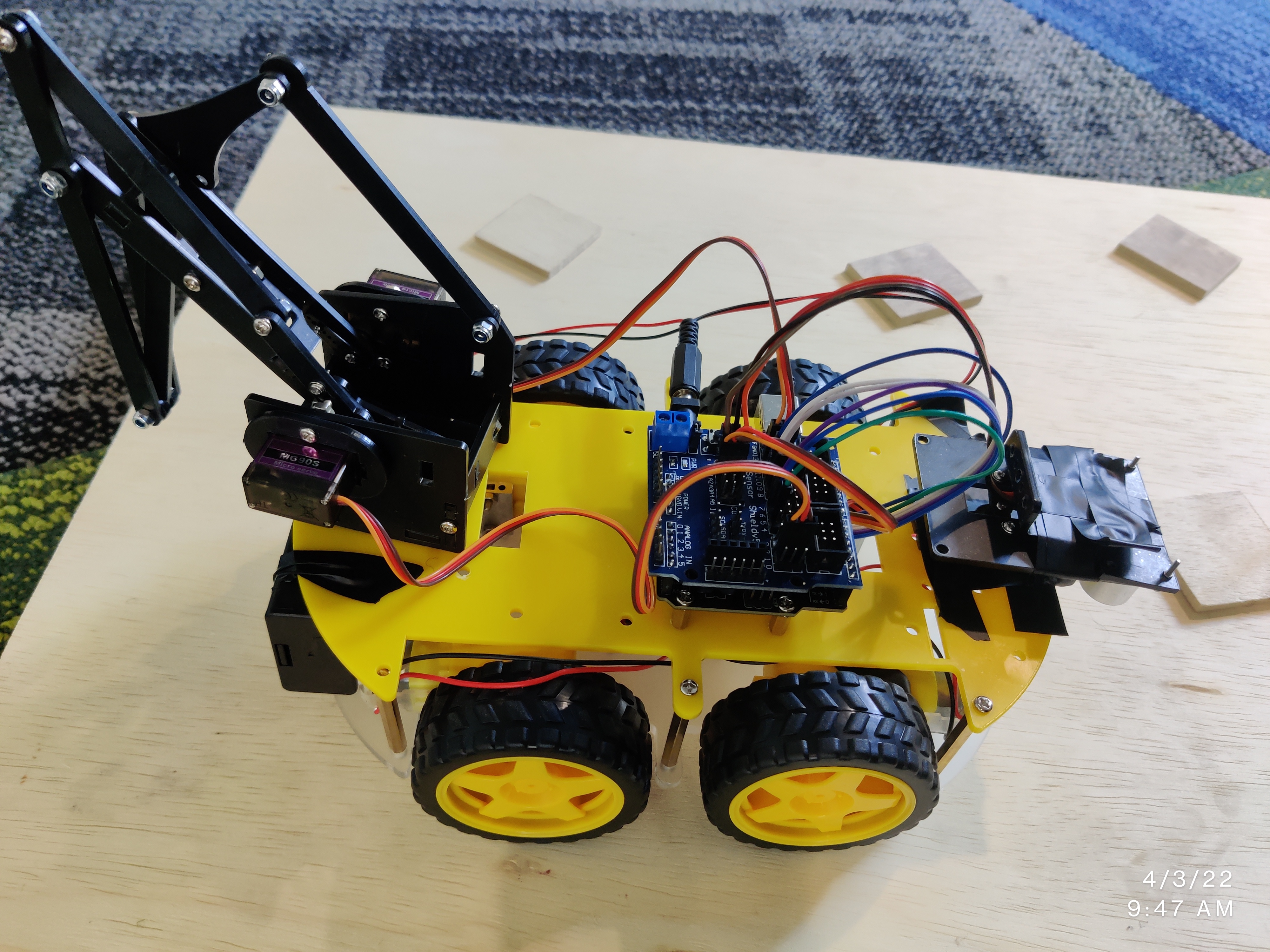
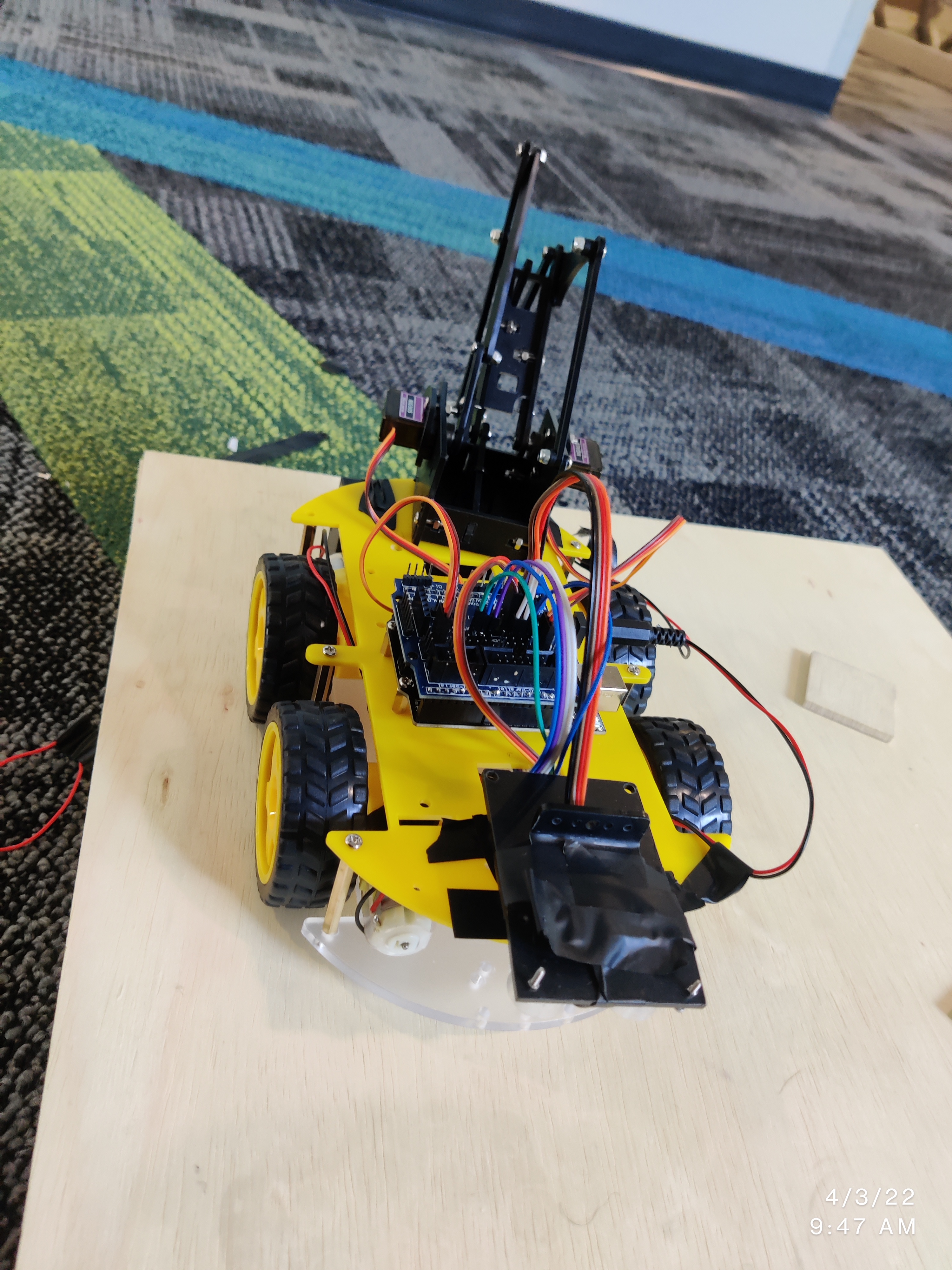
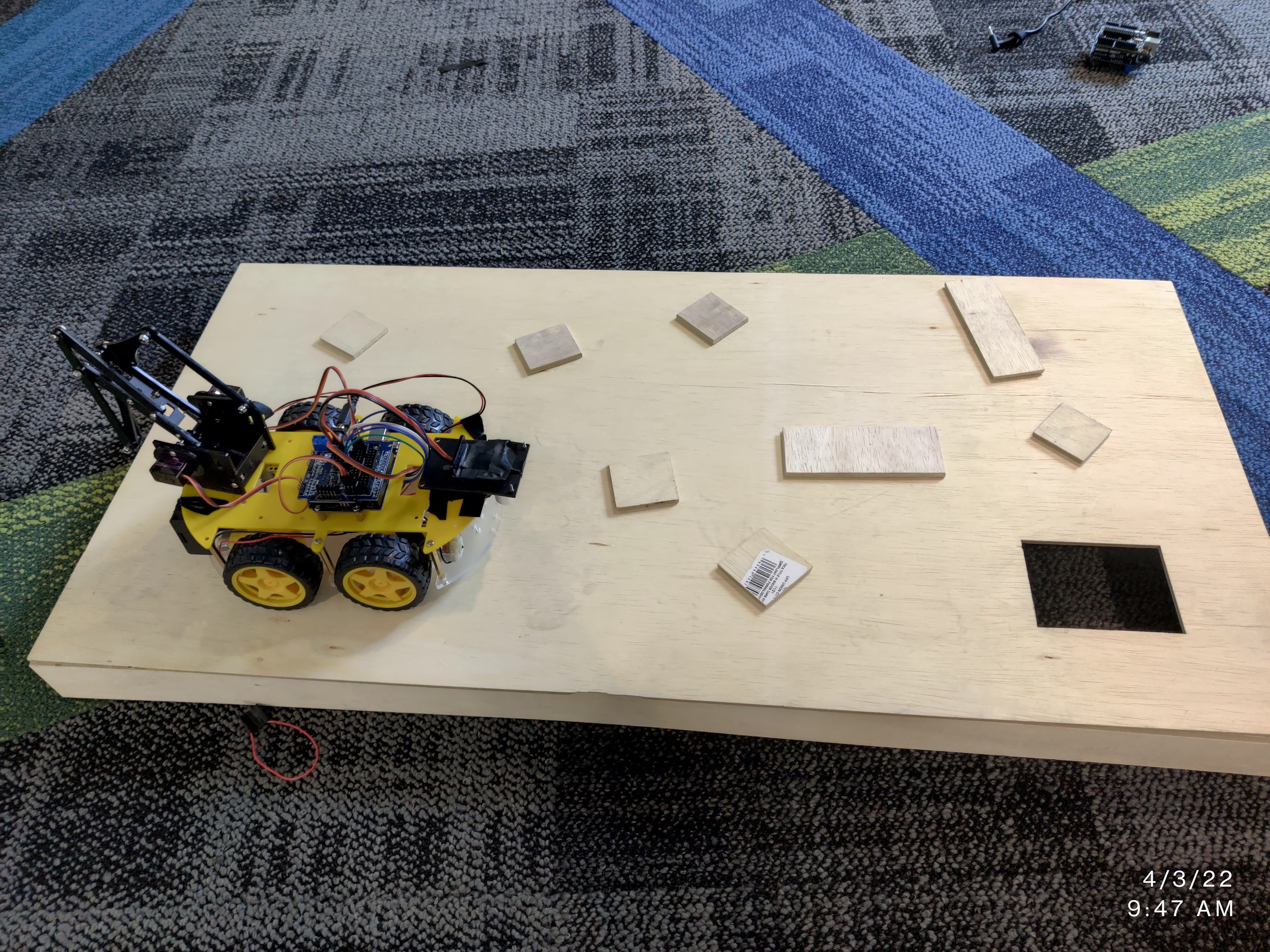
Our robot moves about a designated terrain area, and as it does, it utilizes an ultrasonic sensor to survey the terrain directly beneath it. In this model, this sensor detects either the presence or lack of a surface directly below and in front of it. This both keeps it from falling off ledges and acts as a simulation of how ground penetrating technology can be used; although the Arduino ultrasonic sensor and ground penetrating radar both use sonar technology, GPR uses much higher frequency waves so that it is able to analyze materials that aren't directly on the surface.
How we built it
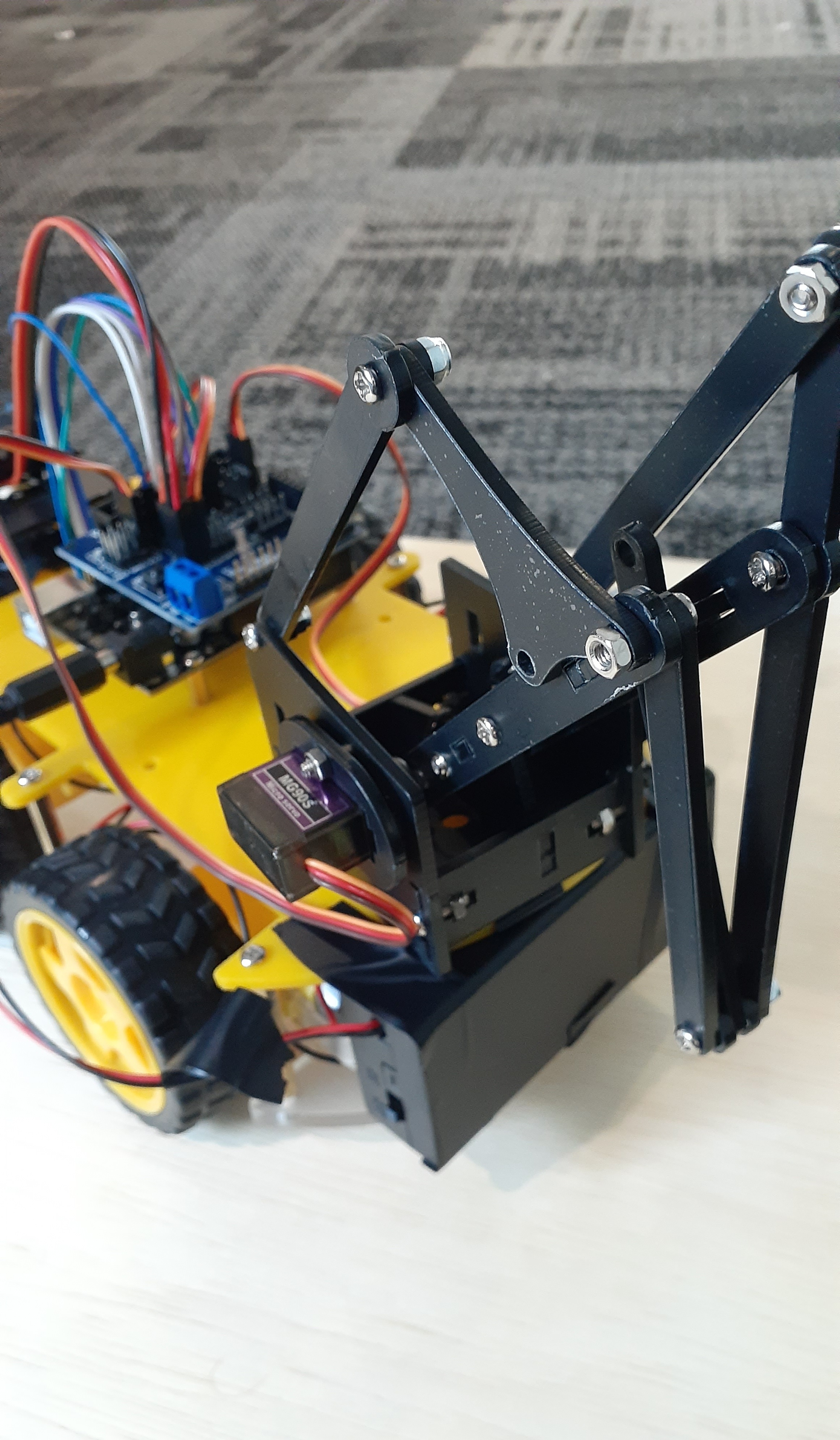
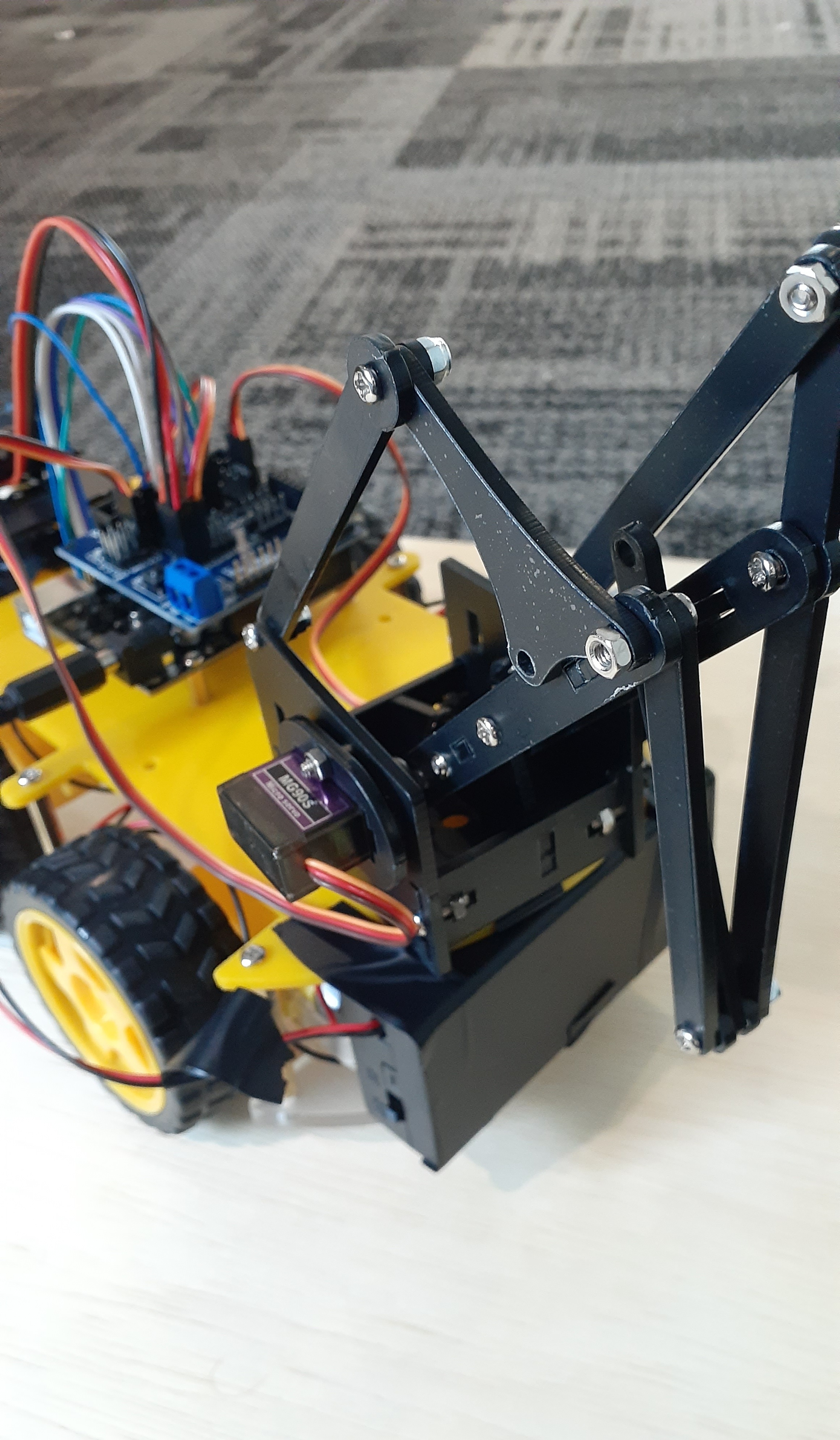
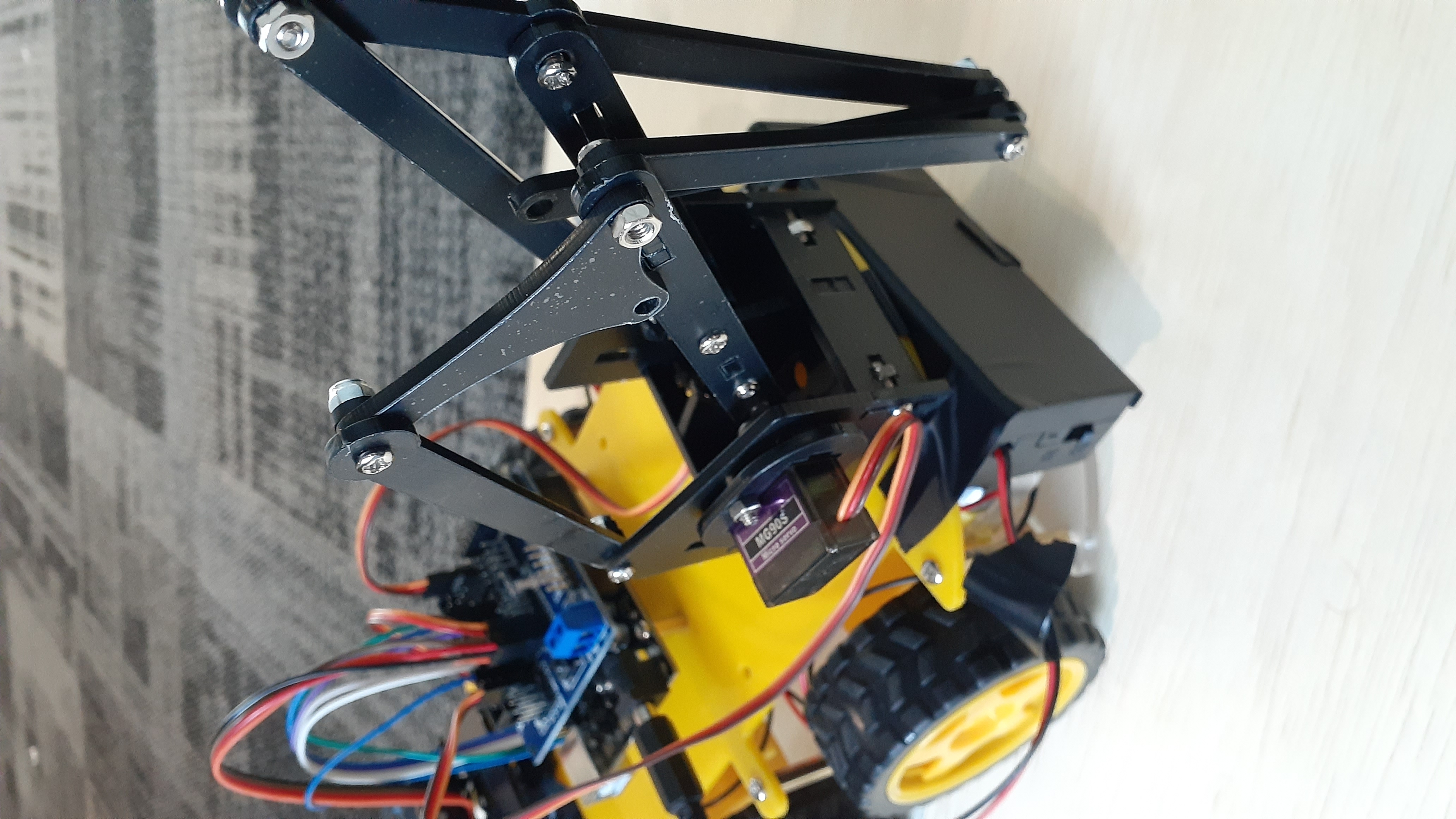
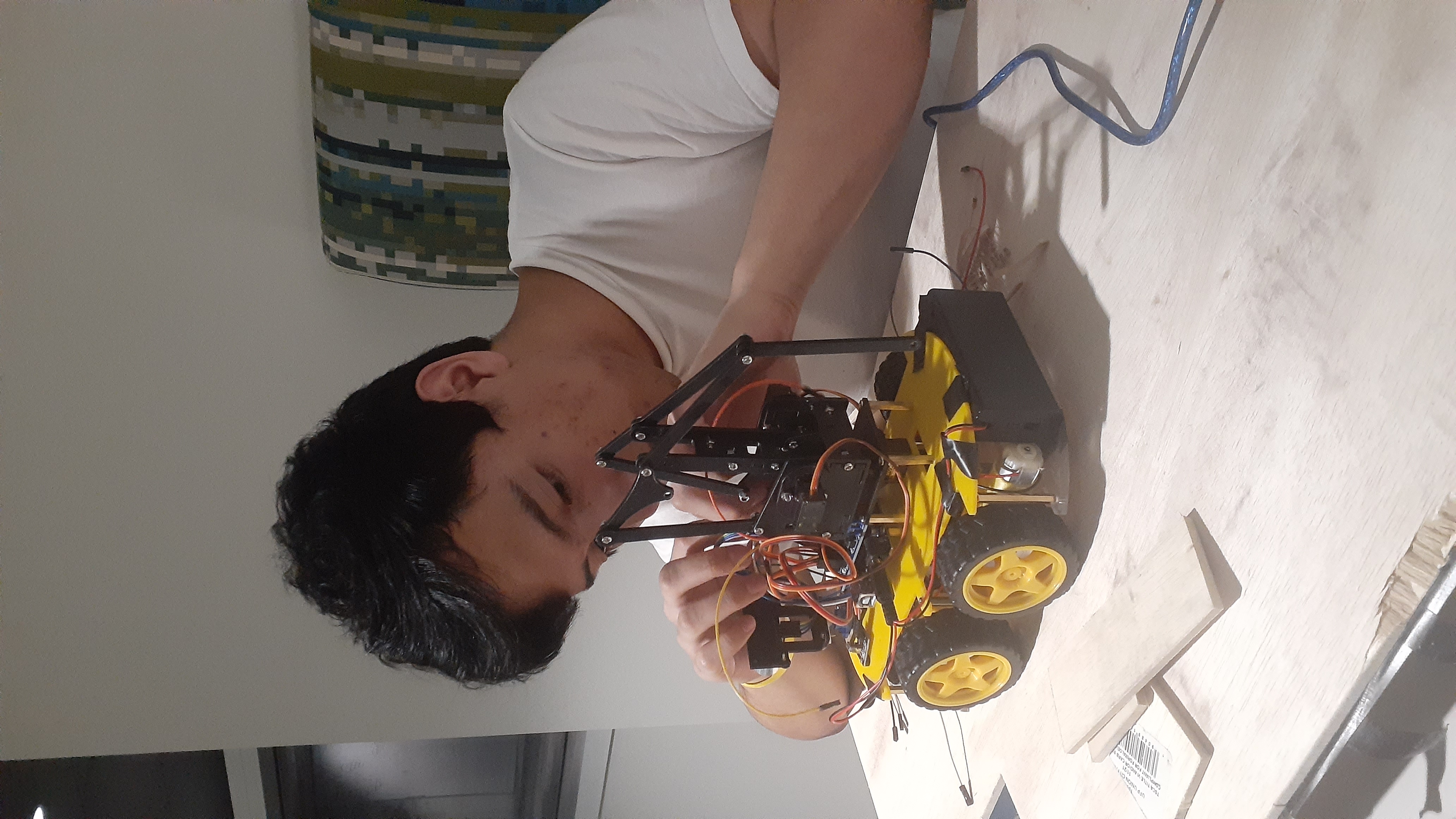
In creating our robot, our team utilized two LAFVIN kits, the smartcar and the 4 degrees of freedom robotic smart arm. The smartcar kit provided us with the materials to build the body of our robot, as well as provided us with the physical and electronic components for the motion system. Our robotic arm simulates the drill or other tool to either mark locations which are suitable for mining, or actually start the mining process right away. In addition to the physical electronic components that make up our robot, we also created a software component that simulates that which would be used to analyze the data obtained by the GPR technology. Based on attributes about the land which would theoretically be obtained by the improved sonar technology on the final robot (conductivity, relative permeability, and attenuation), this software uses a regression algorithm to determine what material is most likely beneath the surface.
Challenges we ran into
The majority of the issues that we ran into were connected to the hardware elements. These included the fact that the holes drilled and screws provided in the LAVFIN kits did not always match up in terms of size and that the motion of the robotic arm had a tendency of loosening the fasteners keeping it together. We were able to work around these by utilizing different parts of the kits than were instructed, but that fit our needs better. We also ran into some challenges during programming our hardware which included the non-uniform strength of the motors resulting in our robot listing instead of driving completely straight. While we attempted to troubleshoot this mechanical error by making sure that weight was equally distributed throughout the body of the robot and by switching the location of the weak motor, we, unfortunately, were unable to completely remedy this mechanical issue. Probably the single largest challenge that we ran into, though was the shutdown of our Arduino shortly before the end of the competition. While this was ultimately resolved, this is the reason for the lack of finalized video in this submission.
Accomplishments that we're proud of
Our group was very proud of the work that we did to successfully combine the hardware and the software that came from two separate kits. Doing such meant that we had to demonstrate our understanding of the complicated connections between all of the moving parts in the code and the way that it was initially programmed. We even added to and refactored some parts of the code to make it more efficient and as accommodating to our needs as possible
What we learned
During the research phase of this project, our group learned a lot about the sustainability issues that surround many fields and learned quite a bit about current technologies which are used to do analysis of the ground, both physically as in the case of GPR and also some chemical methods which were not directly employed in this project. In addition, we all gained a better understanding of the specific hardware aspects utilized in this project including how Arduino ultrasonic sensors work and their limitations, how to rig a motor controller., and how to construct and coordinate a robotic arm that has many components required to actuate it. There were also many important lessons learned in terms of the general engineering design process and various debugging methods.
What's next for Project
To continue this project, there are improvements that can be made to both the hardware and software aspects; perhaps the single most important would be finding an alternative to the ultrasonic sensor which can actually analyze the materials beneath a surface. Once implemented, this component would allow us to connect our currently separate identification software to the robot. In addition to this module, the exact purpose of the robotic arm needs to be fully fleshed out, allowing us to determine what tool head would be best connected to this: depending on what currently exists in the real market, it may be better for the machine to just mark the places which are best for mining, or perhaps it should digitally document these locations with a camera and GPS positioning, or maybe the drill head is the best idea, and this robot should be responsible for the mining itself, too. In terms of the identification software, there are many ways in which this could be improved in the future. The most immediately necessary is finding a more robust data set for the samples to be compared to, because there are still many materials, such as precious metals, that would be desirable to know where they are but are not included in the current data set. A user interface that allows the operator to easily change the specifications of a particular material, due to the fact that the properties of a material can change with geographic location and thus the lab-determined values that the program currently runs off of will not always allow the program to make the best judgements, would also be a very useful improvement.

Log in or sign up for Devpost to join the conversation.