-
-
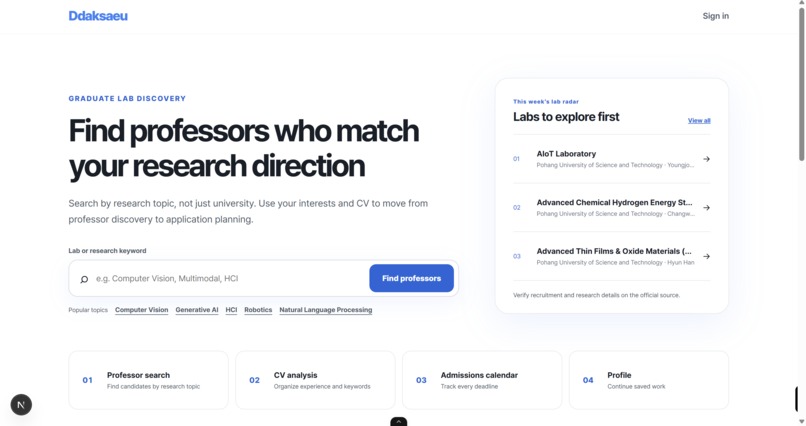
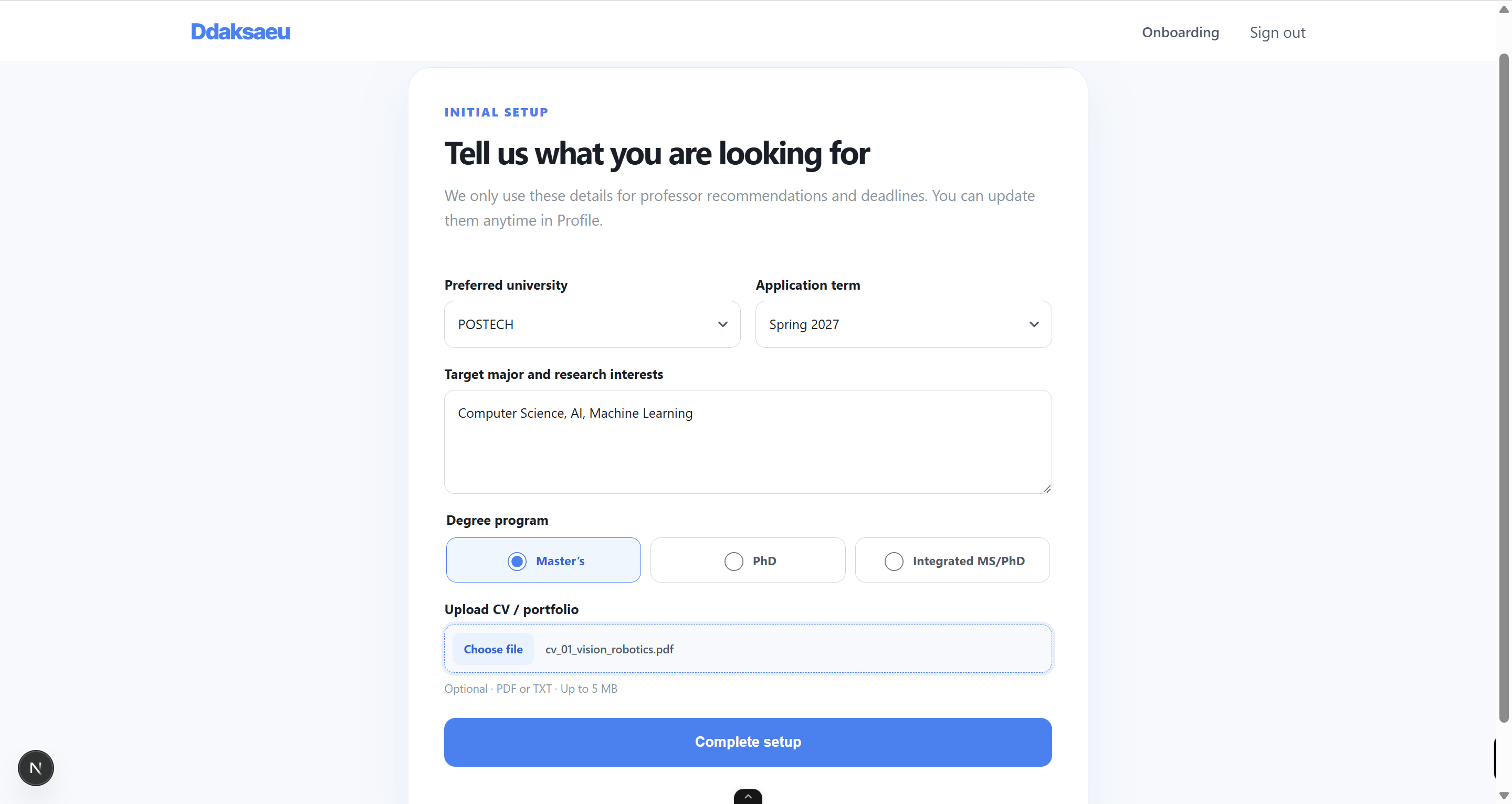
main page
-
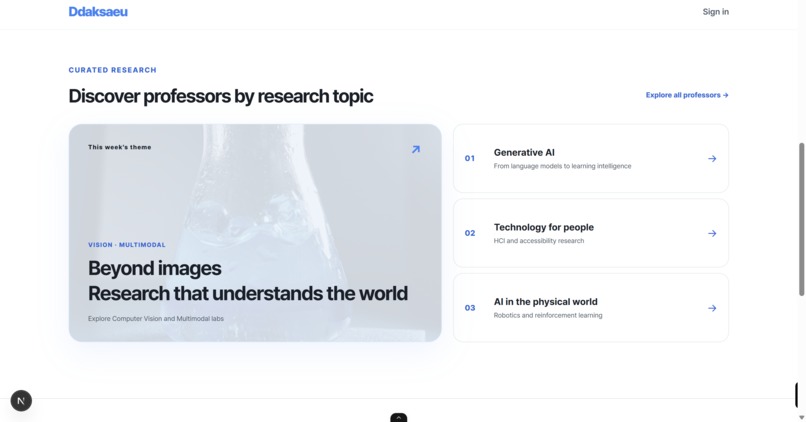
main page (2)
-
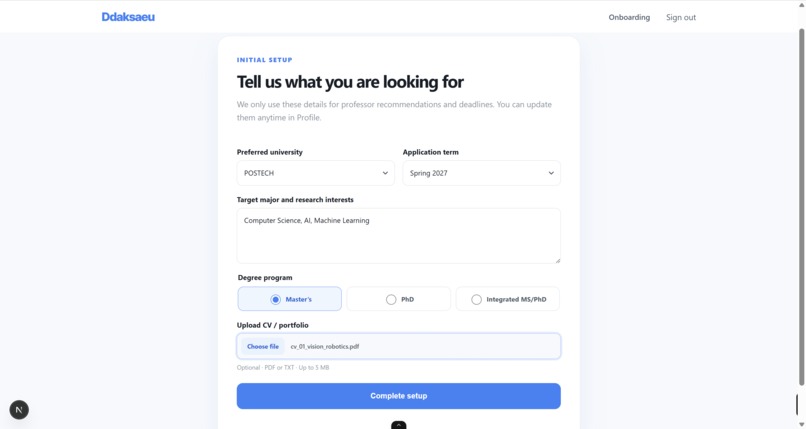
signing up
-
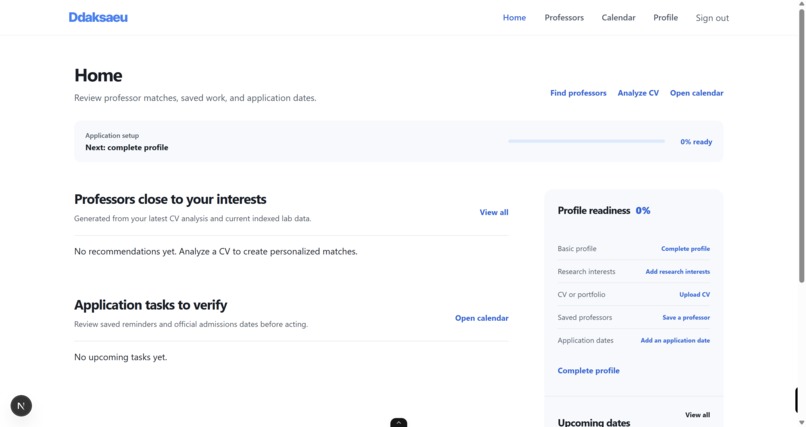
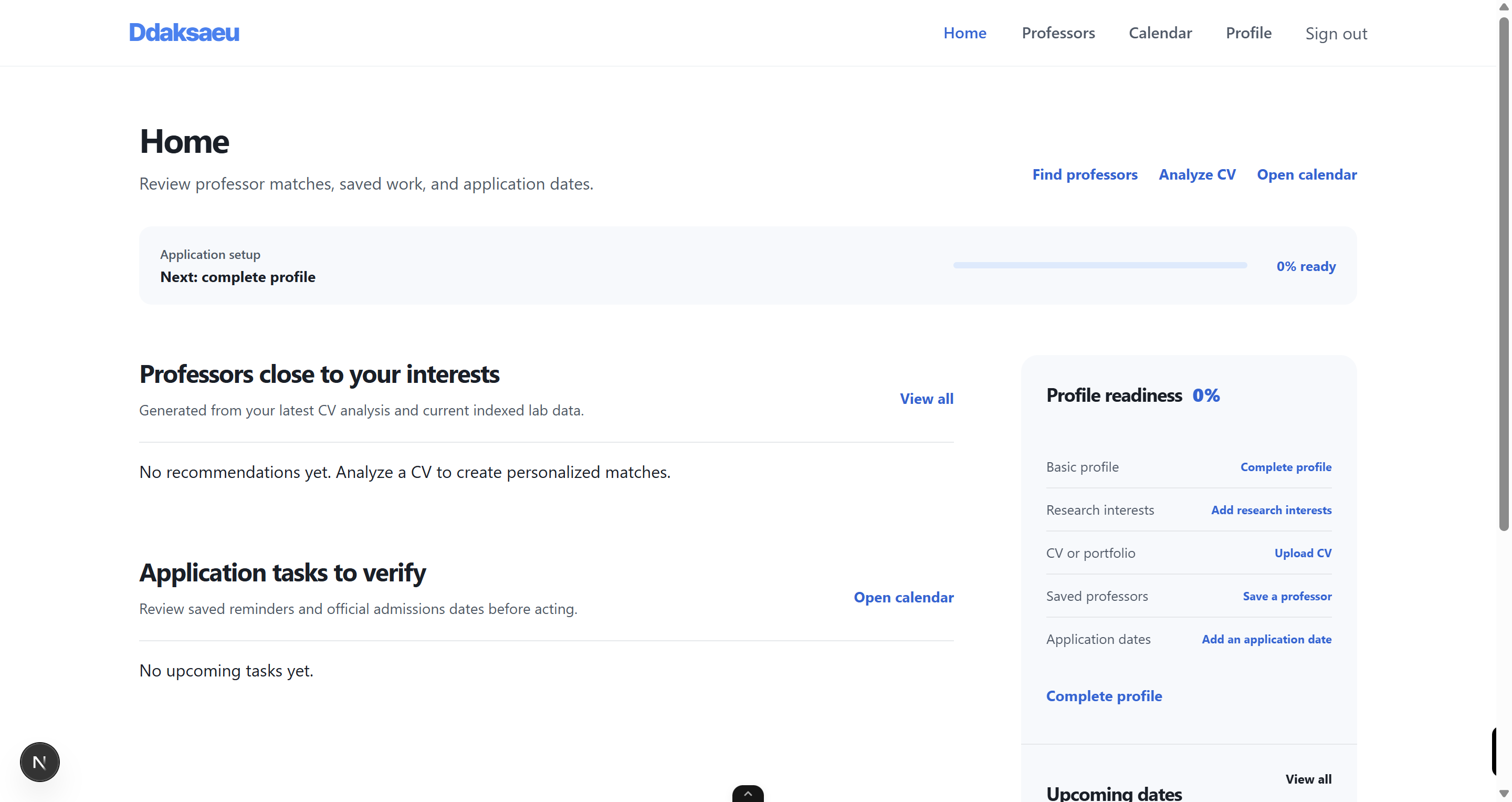
home
-
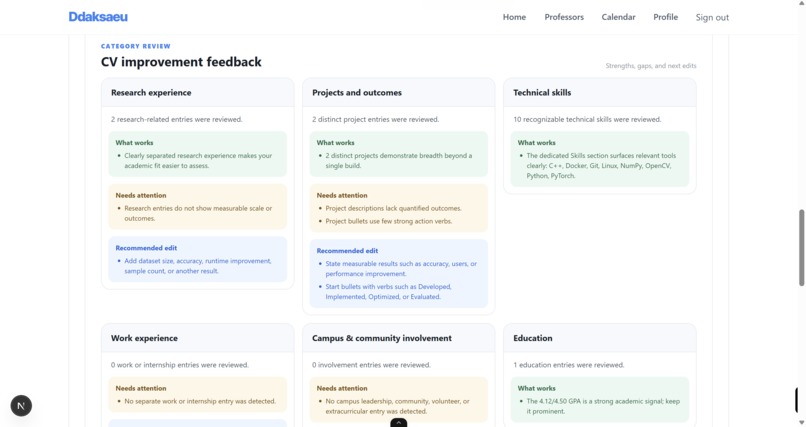
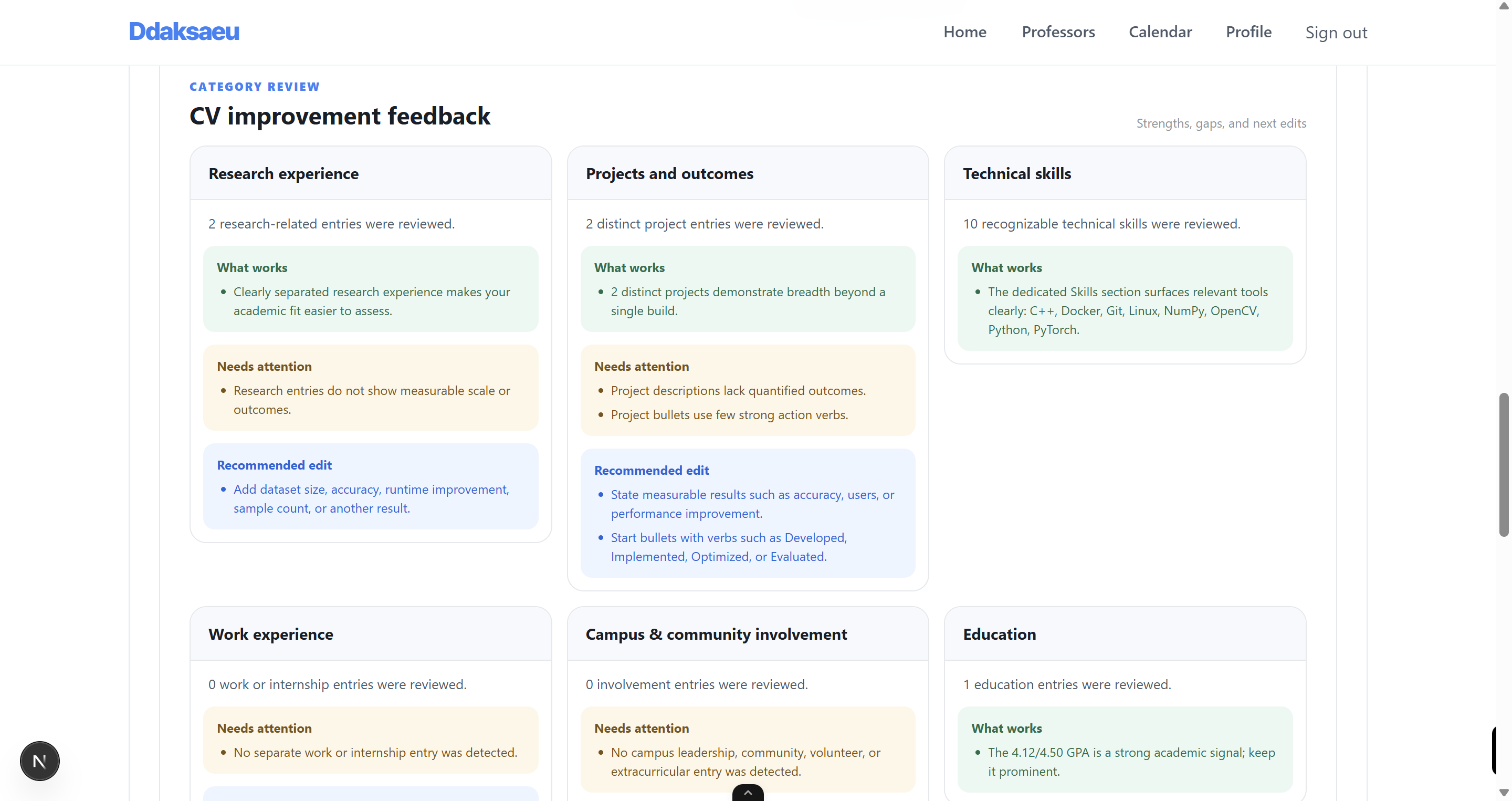
cv analysis
-
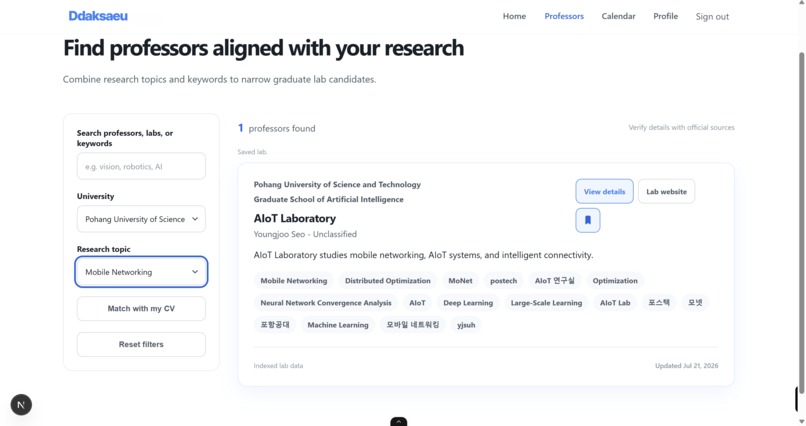
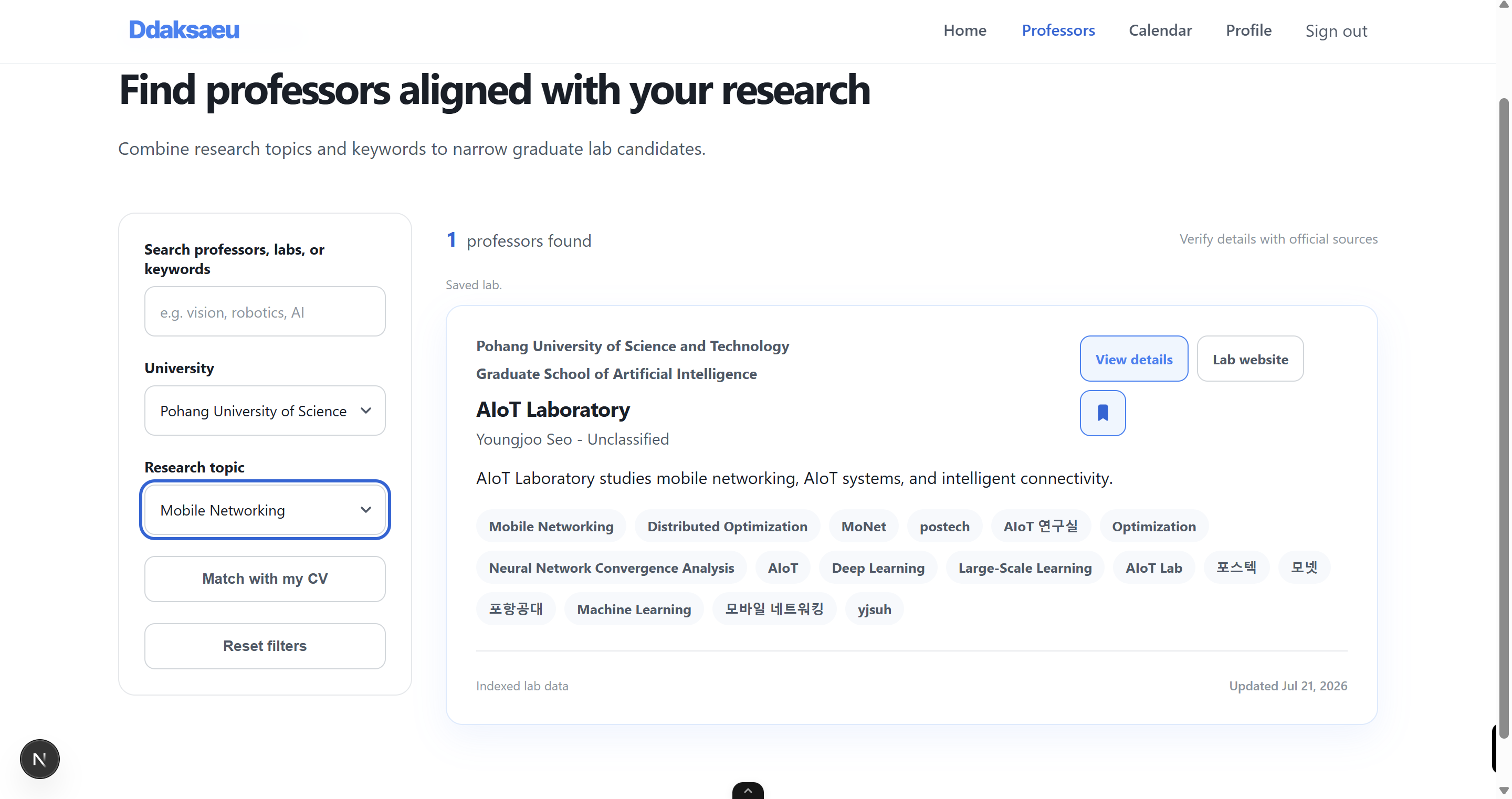
search professor
-
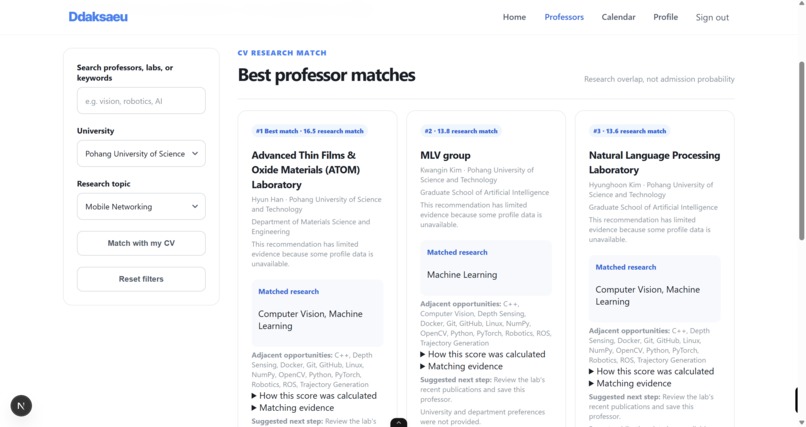
match professor w/ CV
-
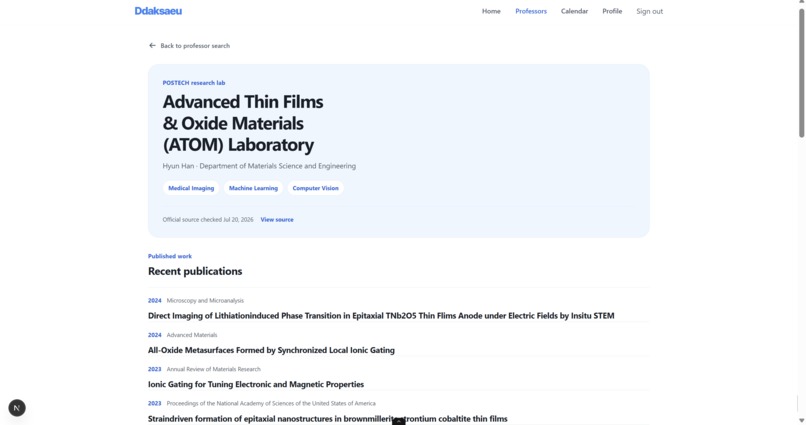
professor detail
-
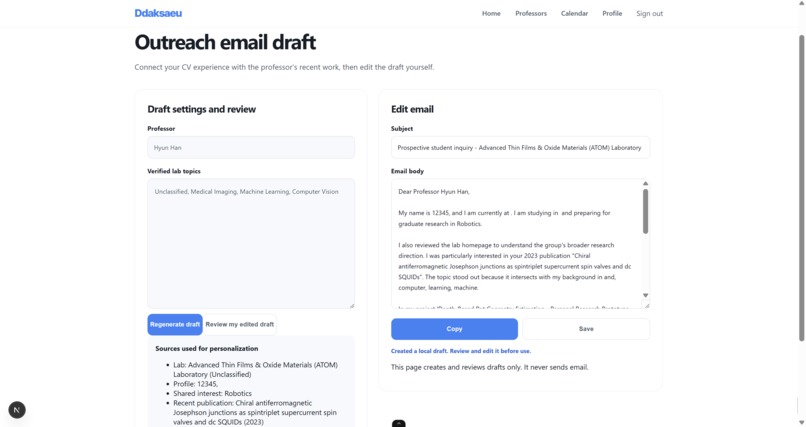
ai email draft
-
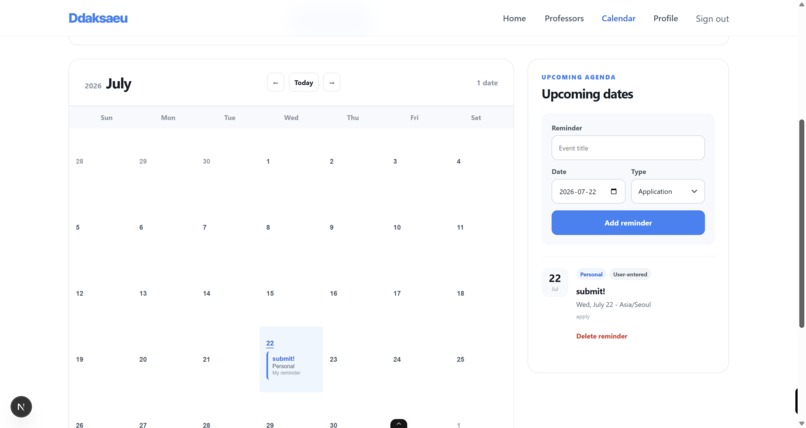
calandar
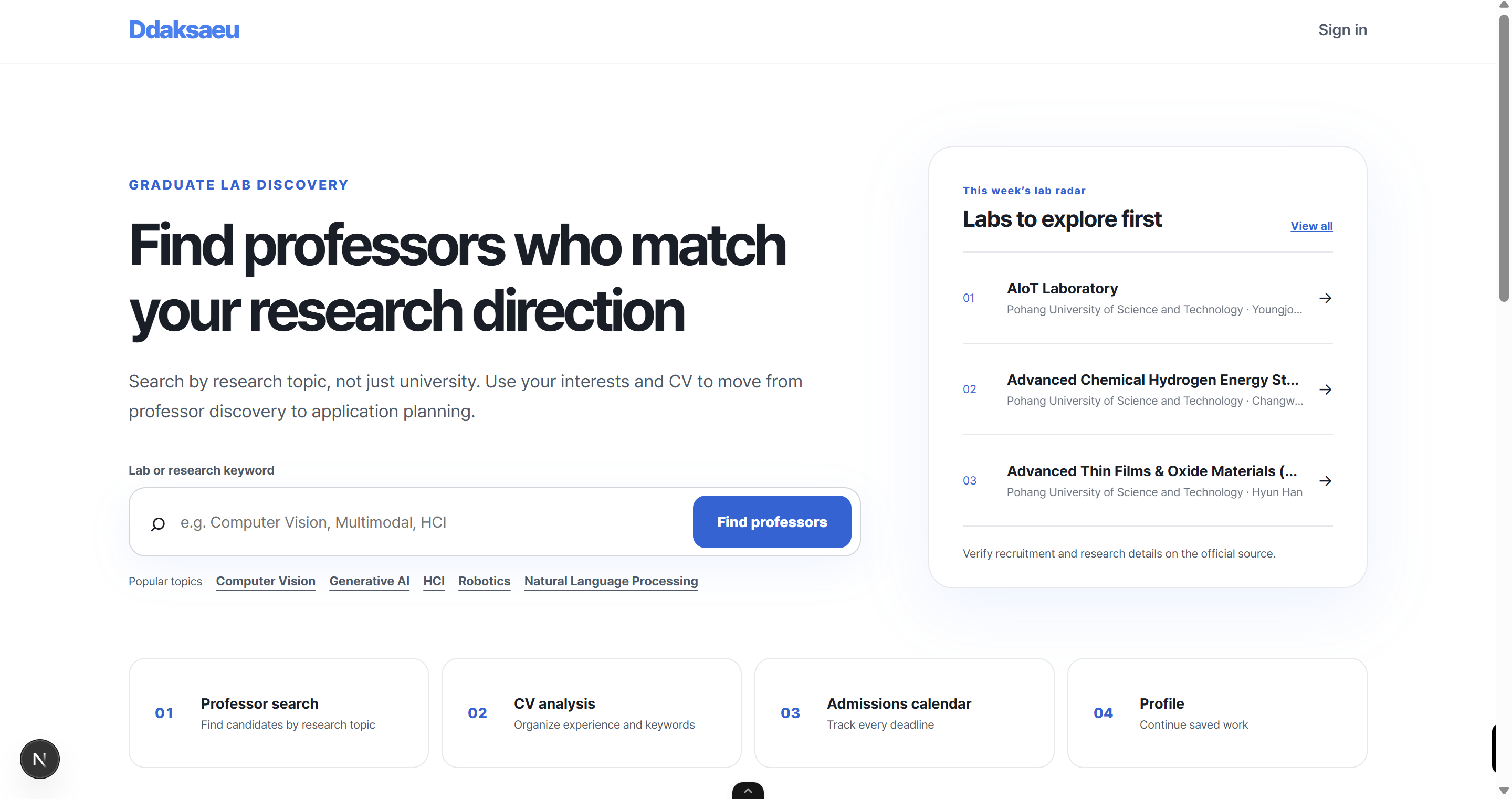
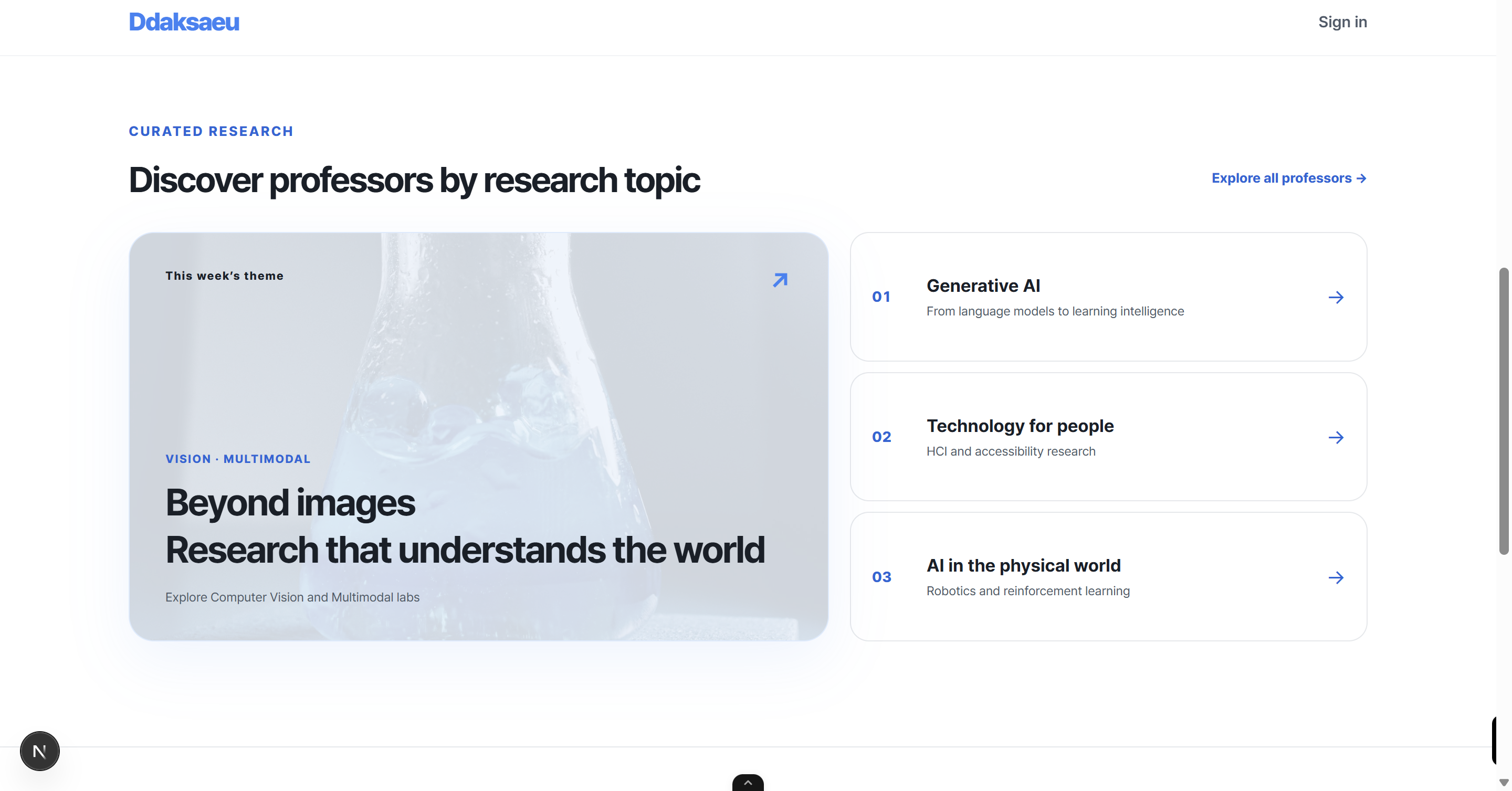
-Inspiration
When preparing for graduate school, we saw how fragmented the research process can be. Students have to move between lab websites, faculty pages, publication lists, CV files, and admissions pages just to answer a basic question: “Which research labs actually fit my background and interests?”
The problem is not only finding information. It is also understanding the evidence behind a possible match and deciding what to do next. We wanted to create one workflow that helps students move from discovering professors and labs to analyzing their own experience, preparing outreach, and organizing important application dates.
-What it does
Ddacksaeu is a graduate-school preparation platform that helps students find research labs that match their background and understand why they match.
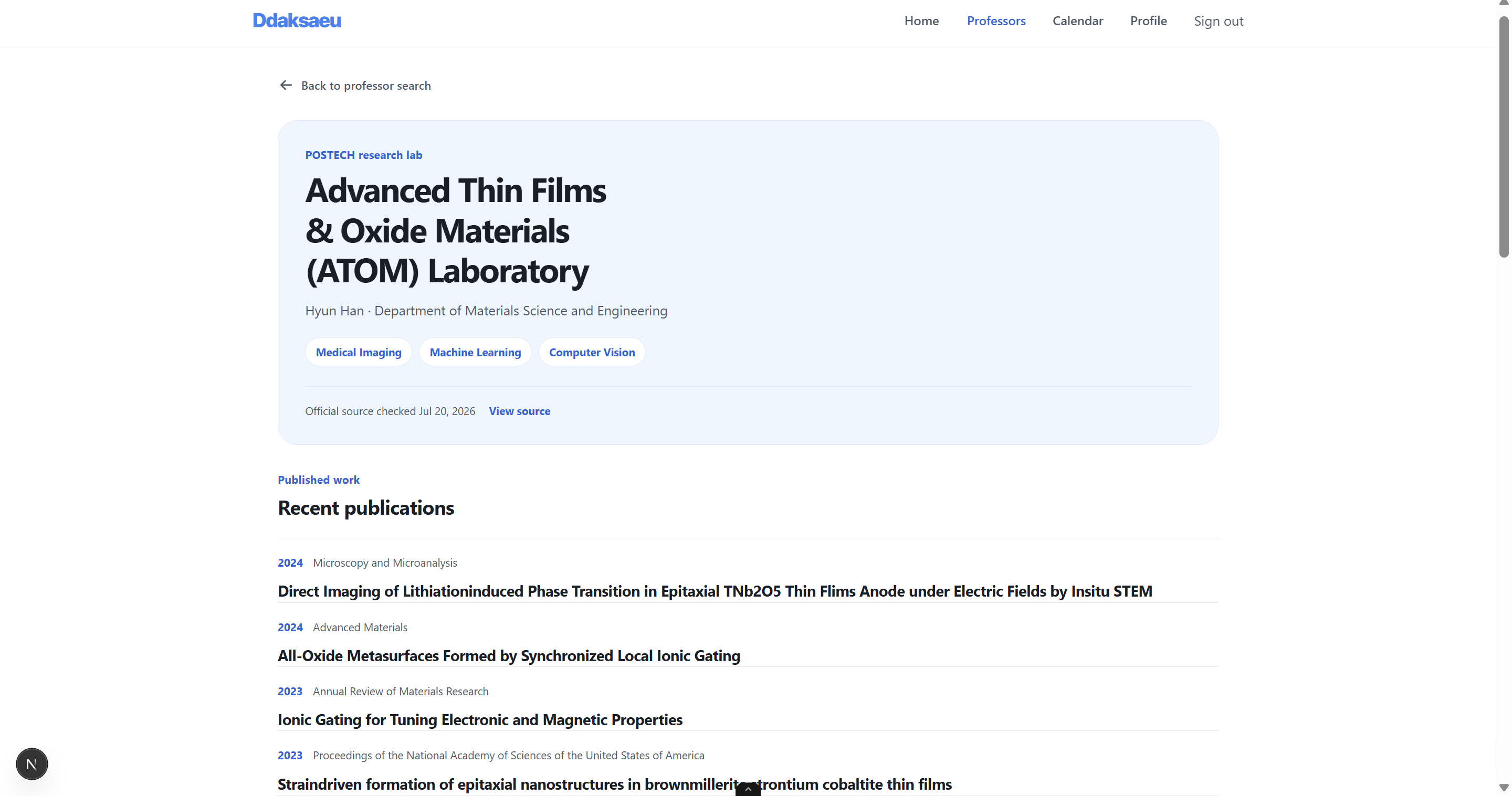
Users can search professors and laboratories by university, department, lab name, professor name, research field, and keywords. Lab detail pages provide research topics, recent publication evidence, source information, and related laboratories.
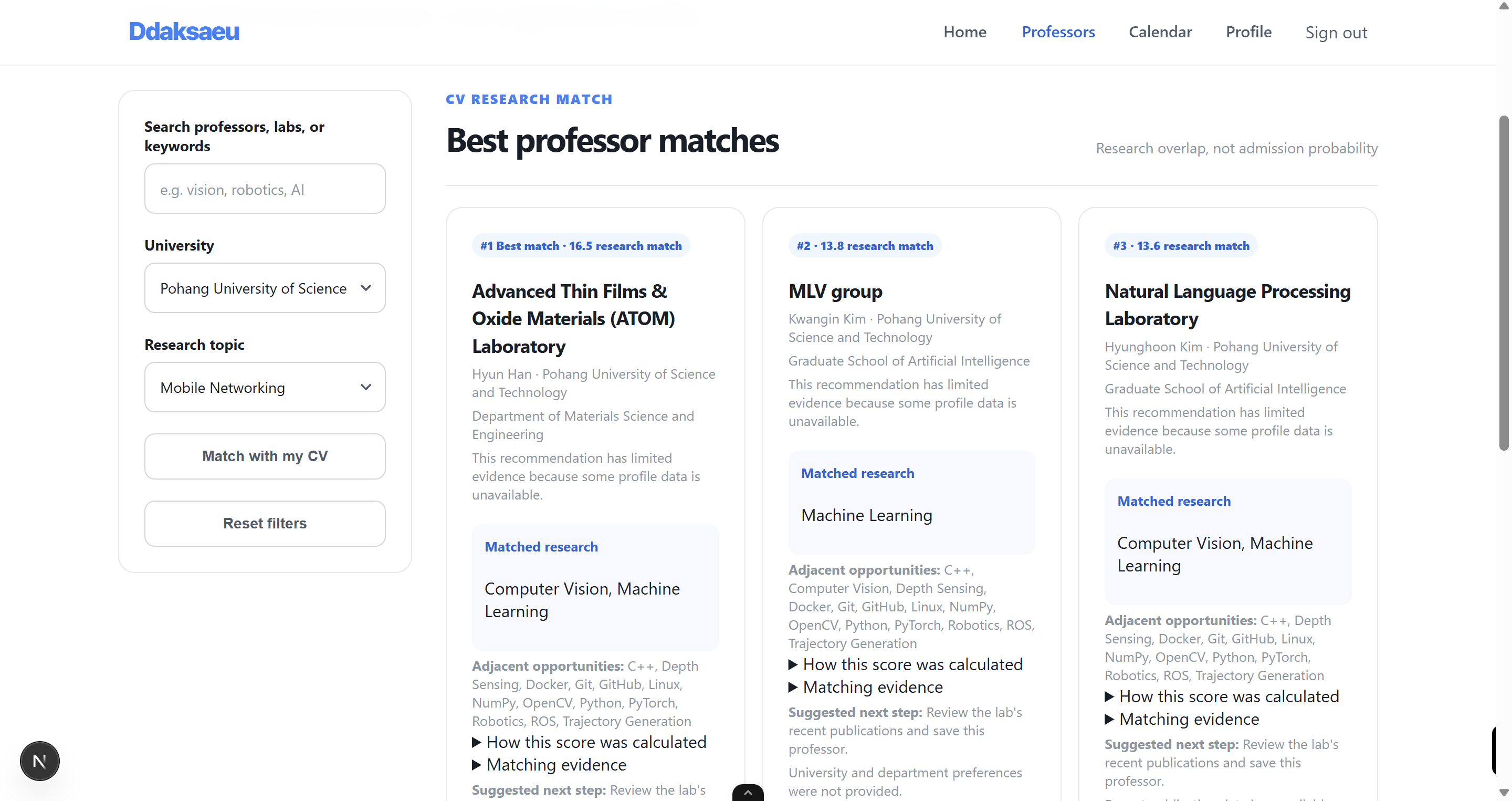
After signing in, users can upload a PDF, DOCX, or TXT CV. The platform extracts research interests, skills, experience, projects, education-related sections, and matching keywords. It then generates explainable lab recommendations based on research-keyword overlap, CV-to-lab similarity, publication relevance, user preferences, and data freshness.
Instead of presenting a black-box score or an admission prediction, Ddacksaeu shows the evidence behind each research match: matched terms, missing terms, score components, data origin, freshness, and suggested next actions.
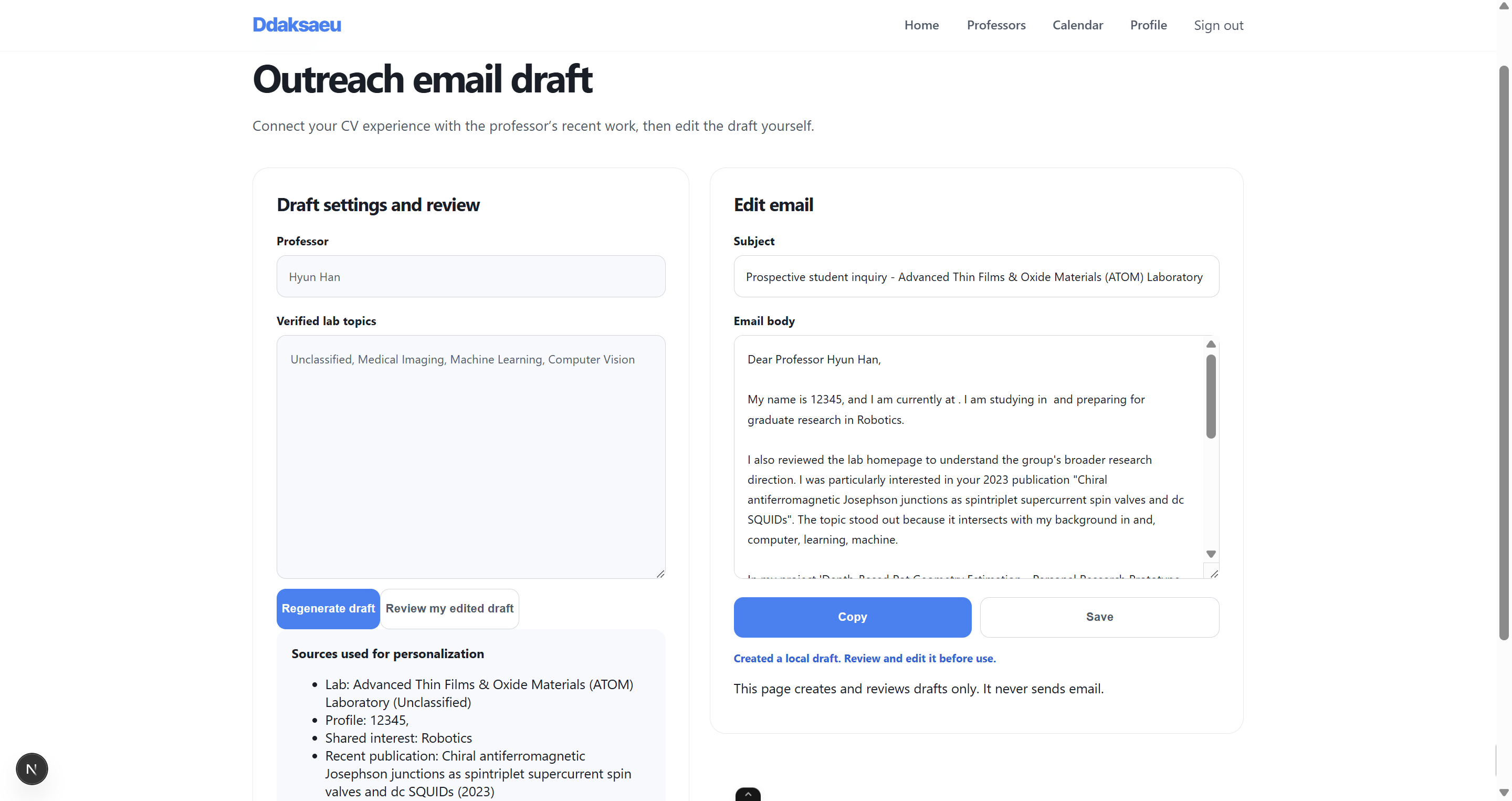
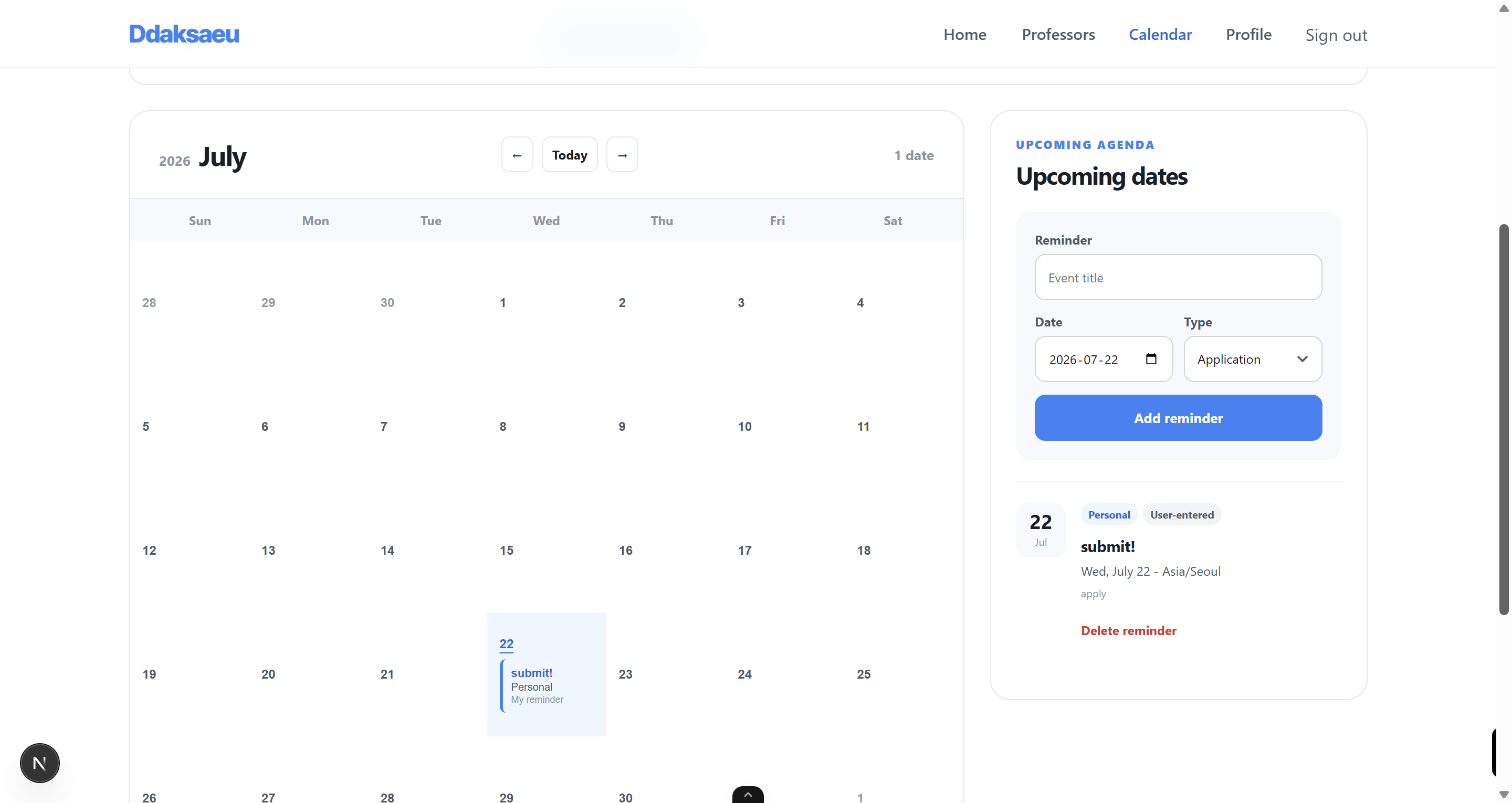
Users can also save promising professors or labs, review their profile and CV-analysis history, create a personalized outreach email draft, review the quality of that draft, and organize admission events through a filterable calendar with ICS export.
-How we built it
The frontend was built with Next.js, React, TypeScript, Tailwind CSS, and a same-origin backend-for-frontend layer. The backend uses FastAPI, synchronous SQLAlchemy, Alembic, and Pydantic, with SQLite for local development and testing and PostgreSQL compatibility for production.
The frontend communicates with the FastAPI backend through Next.js BFF routes. This design keeps backend authentication tokens out of browser storage and keeps server-only configuration separate from the client.
CV analysis runs locally on the backend. It supports text-based PDF, DOCX, and TXT files up to 10 MB, using deterministic section extraction and keyword rules. Scanned or image-only PDFs are not supported because OCR is intentionally outside the current MVP scope.
For recommendations, we combine keyword normalization, TF-IDF and cosine similarity, lexical overlap, publication evidence, user preferences, and data freshness. The weighted components are visible to users, and unavailable evidence receives a clear warning instead of being silently replaced.
Professor, laboratory, publication, and admissions records are designed to retain source URLs, origin labels, and verification timestamps. The project separates clearly labeled development fixtures from validated POSTECH crawler imports, and it does not present unverified admissions dates or recruitment status as official information.
Personalized outreach emails are generated through controlled templates using the selected professor or lab, the user’s profile, CV-derived interests and skills, and relevant publication context. Users can edit and review the draft before copying or using it.
-Challenges we ran into
The biggest challenge was not simply collecting data—it was making sure the platform does not overstate what the data can prove.
Research information changes frequently, and admissions deadlines, professor availability, and recruitment status cannot be safely inferred from incomplete sources. We addressed this by storing and displaying source-aware data, distinguishing fixtures from validated imports, and clearly marking recommendations as research-overlap guidance rather than admission predictions.
Another challenge was building helpful recommendations without turning them into a black box. We made the scoring deterministic and broke it into visible components so users can see which terms matched, what evidence contributed to the result, and which qualifications or information may still be missing.
We also had to protect sensitive user information. CV processing is performed on the backend without sending CV text to an external AI service, and the application avoids exposing backend credentials or authentication tokens in browser storage.
-Accomplishments that we're proud of
We are proud that Ddacksaeu connects the graduate-school preparation workflow into one product: professor and lab discovery, CV analysis, explainable matching, saved research targets, outreach drafting, and admissions planning.
We are especially proud of the explainable recommendation system. Rather than returning a single unexplained number, it gives users research-match evidence, including keyword overlap, CV similarity, publication relevance, preferences, freshness, and missing information.
We are also proud of the project’s source-aware approach. The platform treats external information carefully by separating verified data from development fixtures and encouraging users to check official sources before making an important decision.
Finally, we built the product as a real frontend-backend workflow with authenticated accounts, private document handling, API-backed features, migrations, automated tests, linting, and release-smoke coverage.
-What we learned
This project taught us that recommendation systems should support decisions rather than make decisions for people.
For a high-stakes process like graduate-school applications, transparency matters as much as convenience. A useful recommendation should show its evidence, acknowledge uncertainty, and help the user decide what to verify next.
We also learned that AI-assisted development and AI-like product experiences need clear boundaries. The shipped CV analysis, recommendation engine, and outreach drafting flow are designed to be controlled and inspectable: local rule-based analysis, deterministic scoring, and user-reviewed drafts rather than unreviewable automated decisions.
-What's next for Ddacksaeu
Our next goal is to expand from the current POSTECH-focused validated import workflow to more universities and research labs while preserving source URLs, verification dates, and clear data-origin labels.
We also plan to improve keyword normalization, professor and publication matching, CV-layout support, and research discovery. Optional OCR, semantic search, and more flexible outreach controls are future possibilities, but they will be added only with the same emphasis on transparency and user review.
Ultimately, we want to reduce the time students spend navigating scattered information so they can spend more time discovering research that genuinely excites them—and make their next step with clearer evidence.
Built With
- docker
- fastapi
- next.js
- openai-codex
- postgresql
- python
- react
- scikit-learn
- sqlalchemy
- sqlite
- typescript


Log in or sign up for Devpost to join the conversation.