-
-
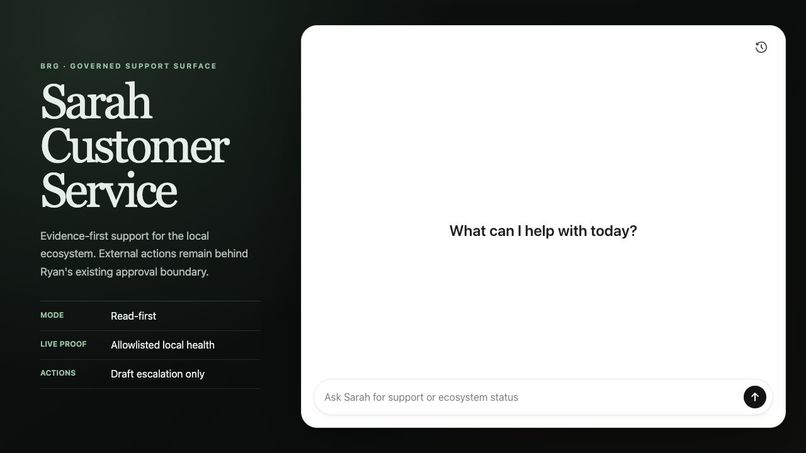
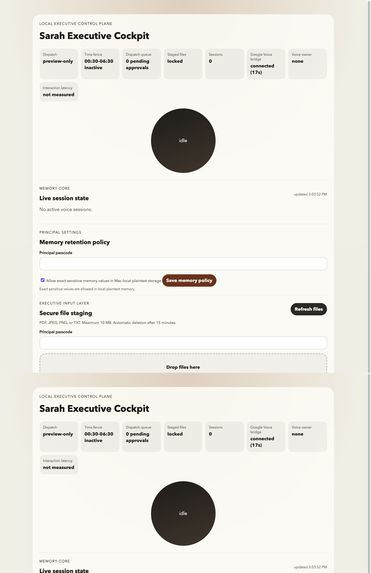
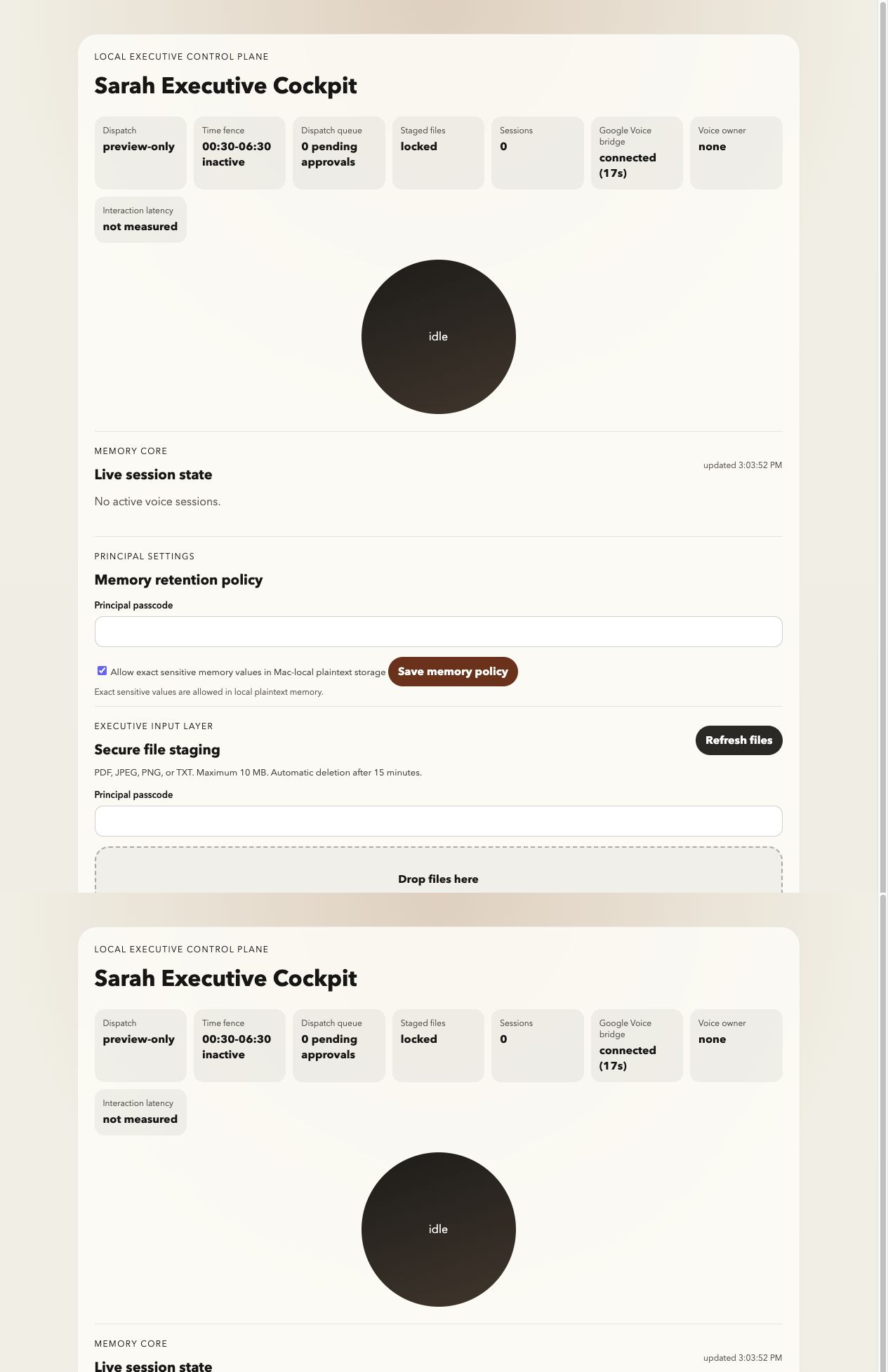
02-sarah-executive-dashboard.png • Caption: Executive Control Plane: Real-time telemetry, memory policy, and state governance.
-
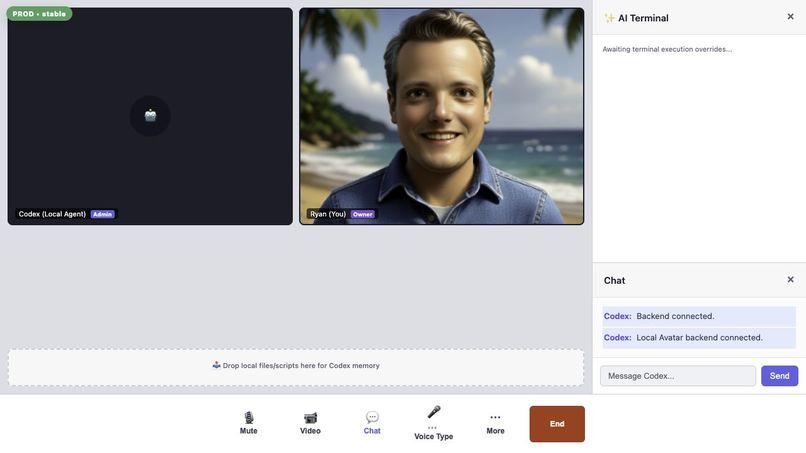
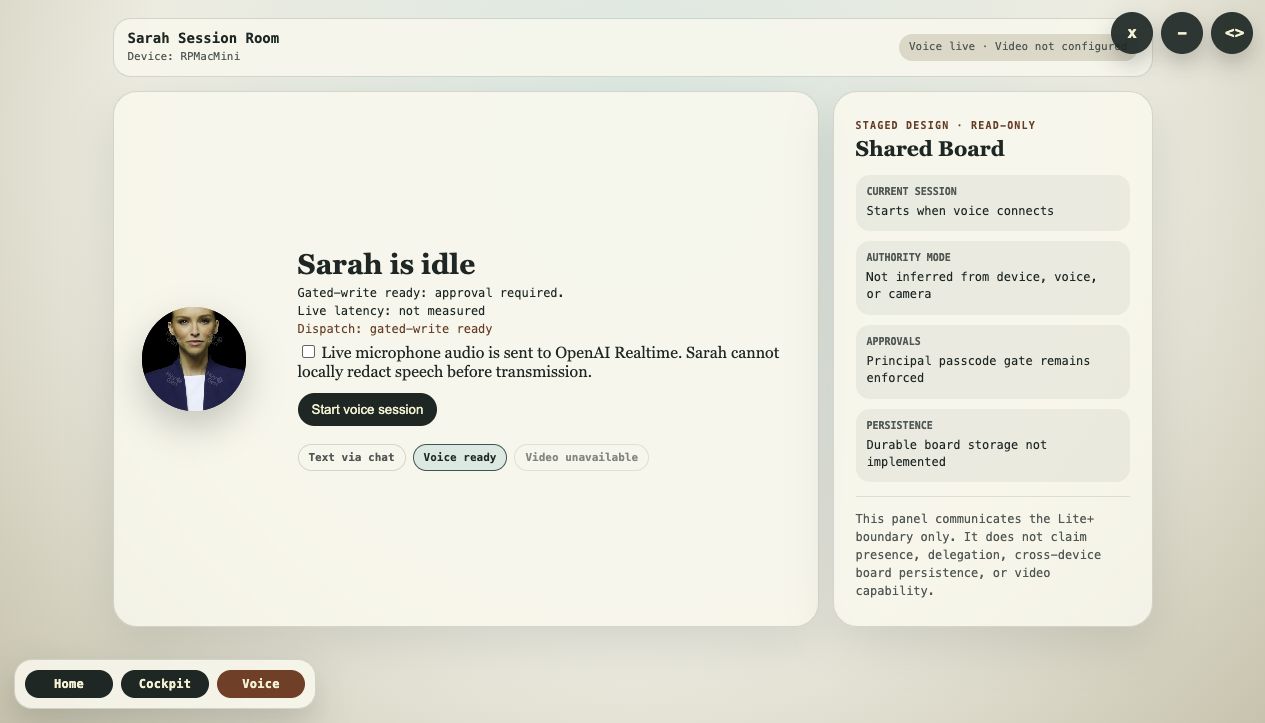
07-sarah-voice-surface.png • Caption: Voice Surface: Persistent multimodal interaction interface maintaining context across modes.
-
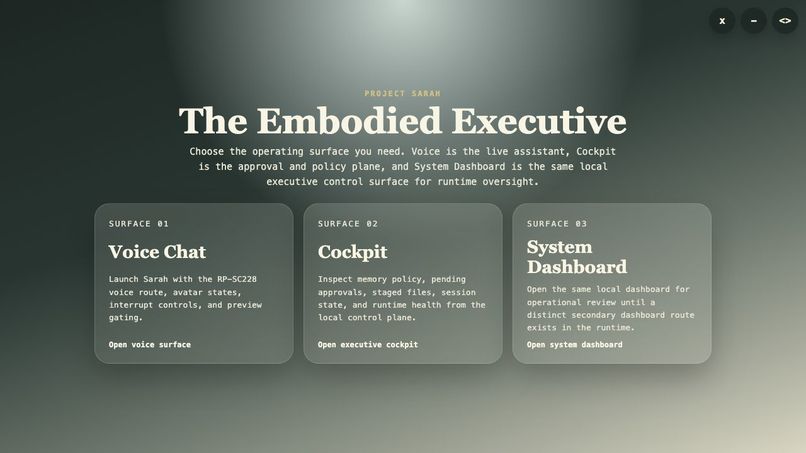
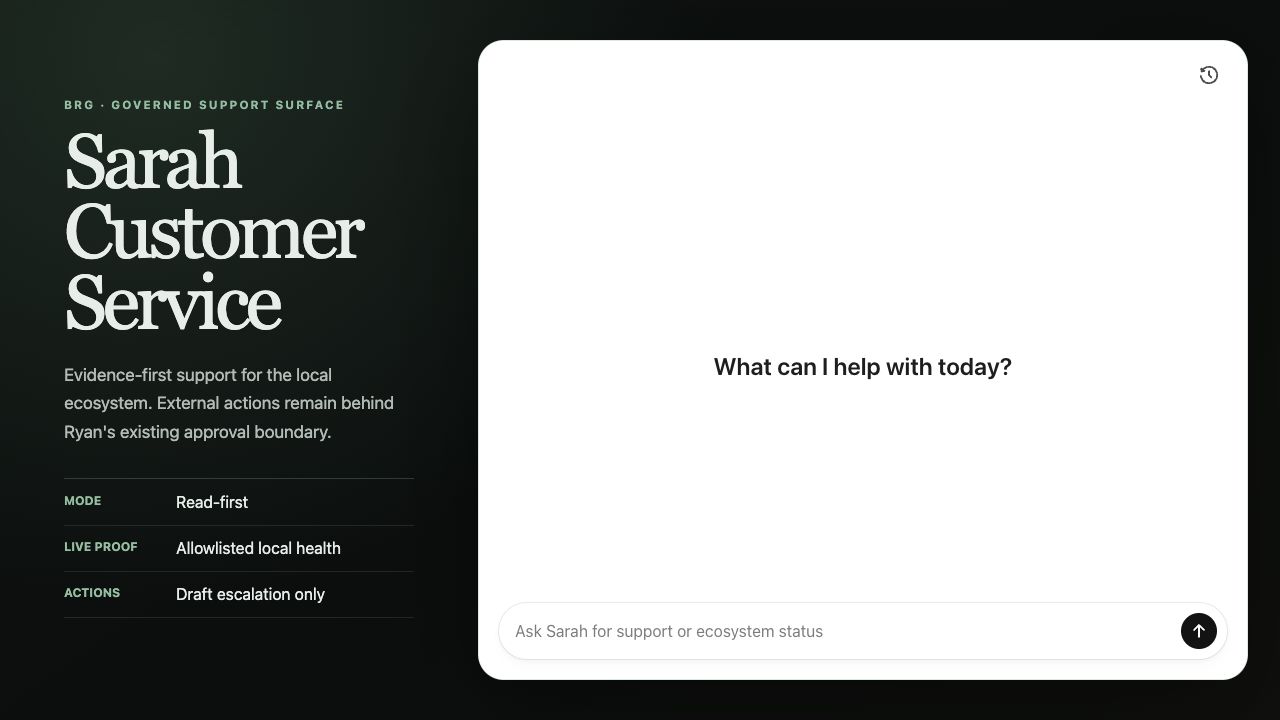
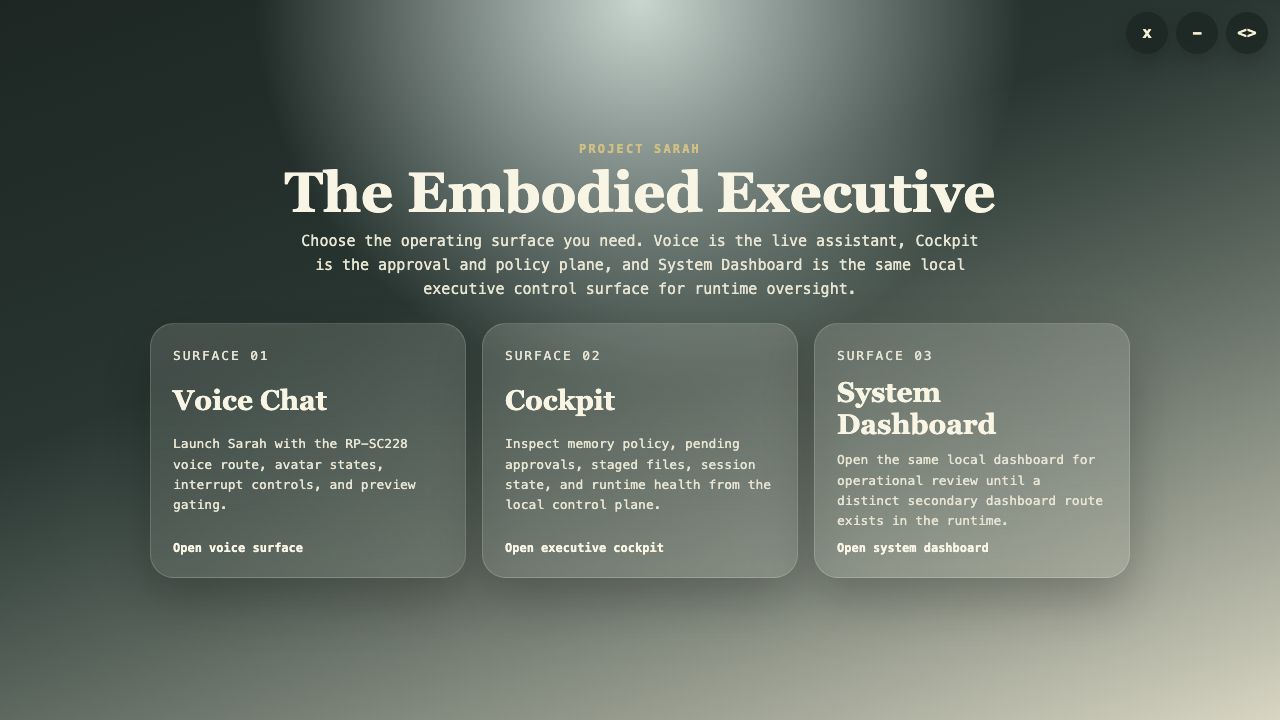
01-sarah-home.png • Caption: Sarah Executive Home: The central multimodal entry surface for the Sovereign AI ecosystem.
-
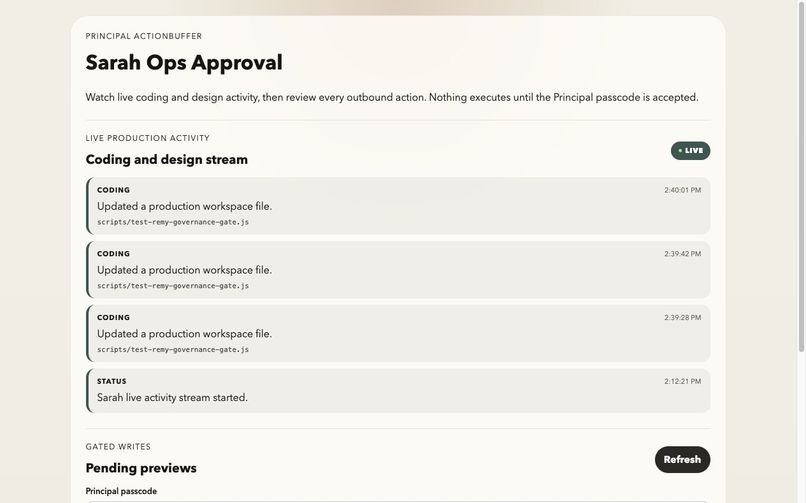
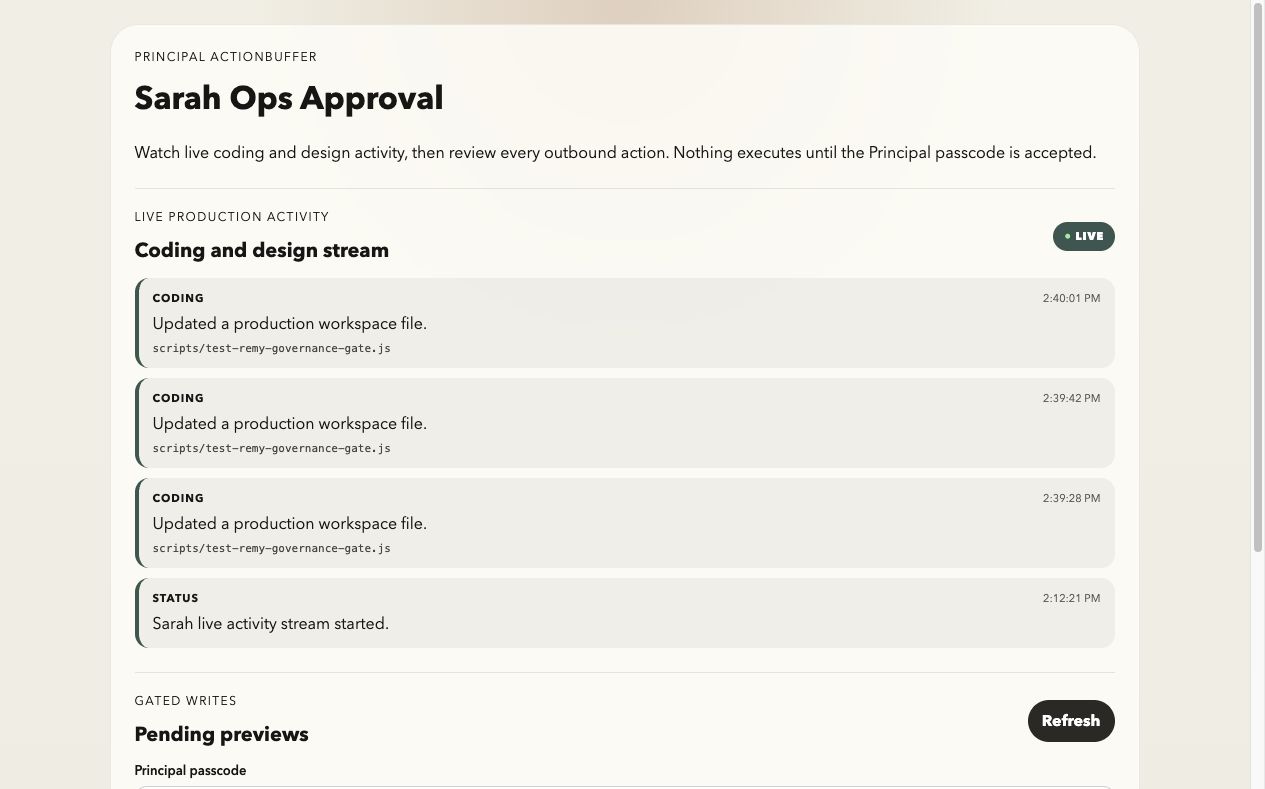
03-sarah-ops-approvals.png • Caption: Linear HILT Integration: Secure Human-in-the-Loop approval gates for external actions.
-
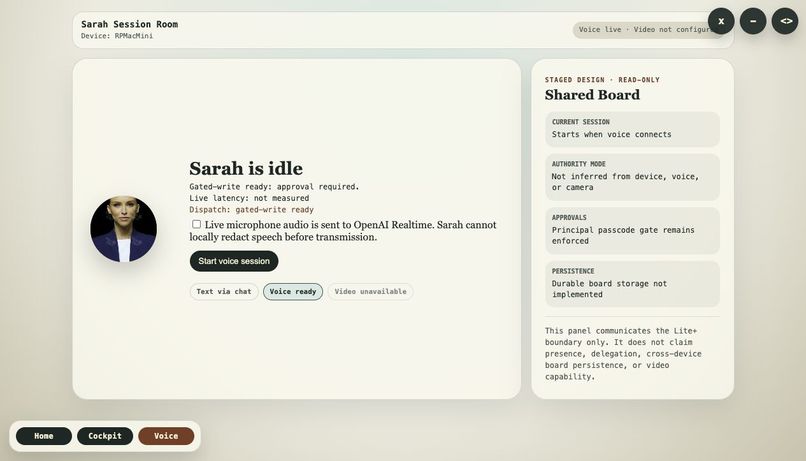
Voice Surface: Persistent multimodal interaction
-
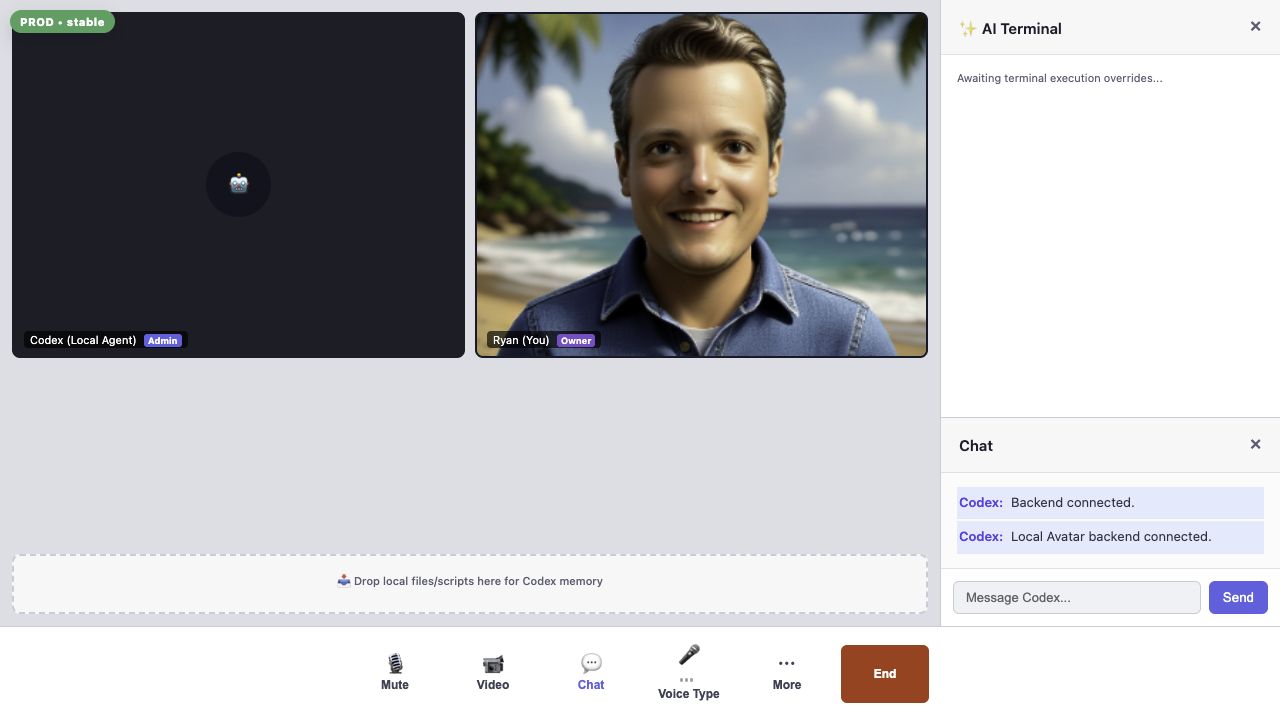
Caption: Workspace Launcher: Unified local access to the Persona Studio, Memory Intake, and HR Workforce.
Inspiration
You don’t own your AI. You rent it. And the moment you stop paying, your digital workforce dies. Project Northline is our answer to the fragile state of modern SaaS dependency. Every time a key employee leaves a company, their tacit knowledge, workflows, and decision-making matrices vanish. We call this "Institutional Data Death." We wanted to build a system of Digital Corporate Inheritance—a sovereign AI workforce that retains division competency regardless of human attrition. Our goal is to drive institutional knowledge attrition, Δattrition, as close to zero as possible. Our inspiration was to transition from "chatting with AI" to managing a Sovereign Cognitive Enterprise that you actually own, control, and inherit.
What it does
Project Northline ("Lite++" build) is a fully local-first, offline-capable corporate cognitive ecosystem running on standard hardware. It acts as the central nervous system for an enterprise, governed by an autonomous AI Chief of Staff named Sarah. Sarah orchestrates a multi-agent workforce (currently a pool of 15 HR sub-agents) that scrapes, structures, and acts on corporate data in the background without exposing proprietary IP to public cloud APIs. It features a persistent multimodal interface that seamlessly transitions between voice, text, and recording, accompanied by a live "Storyline Intelligence" UI that dynamically renders the AI's internal state using interactive Claymation avatars.
How we built it
We utilized the sheer reasoning power of GPT-5.6 Sol and Terra alongside the Codex workspace agent to construct a multi-tiered architecture: • The Provider-Neutral Agent Bus (.agent-bridge/): Instead of brittle API spaghetti, we built a local, cryptographic file-system ledger. Codex, Claude, and Gemini can autonomously exchange bounded work packets, log execution receipts, and self-organize without data ever leaving the machine. • Offline ML Sandbox: To prove true data sovereignty, we deployed an air-gapped Hugging Face ML execution sandbox for local embeddings (BAAI/bge-small-en-v1.5) and LLM routing. We mathematically enforced isolation by hardcoding environment flags like TRANSFORMERS_OFFLINE=1. • Next.js/FastAPI Interface: A local portal (@blaineresources.com) leveraging WebSocket connections to drive the Storyline UI and dynamic avatar states (Idle, Analyzing, Syncing, Success) to visually reflect active workloads.
Challenges we ran into
• Concurrency vs. Governance: Orchestrating 15 sub-agents in parallel led to race conditions in our local SQLite fabric_state.db. We solved this by implementing strict Linear Human-In-The-Loop (HILT) governance. Any consequential or external deployment action pauses the specific agent thread and posts an approval ticket directly to a local Linear dashboard for the human Principal to approve. • Port Zombies & State Lockups: During heavy live-reload sessions with Codex, orphaned Node processes would hijack Port 8080. We engineered a Self-Healing Agent Fabric—a closed-loop script where the system catches its own EADDRINUSE failure trace, hands it to Codex for bounded refactoring, and automatically flushes the zombie processes. • Context Window Optimization: Managing infinite conversational persistence across Voice, Text, and Recording inputs became expensive. We solved this by utilizing GPT-5.6's explicit prompt caching and setting reasoning.context = 'all_turns' to preserve multi-step workflow logic without repeatedly feeding the same context prefixes.
Accomplishments that we're proud of
• Achieving a true zero-telemetry local execution environment. We proved that enterprise-grade multi-agent AI can run entirely disconnected from the cloud, protecting proprietary intellectual property. • Successfully passing 370 Python unit tests and 12 JavaScript contracts on a highly complex, custom-built local Agent Bus. • Building the Storyline Intelligence UI that transforms invisible background agent processing into an engaging, readable narrative feed with reactive avatars, completely changing how humans observe AI workloads.
What we learned
• Codex is a teammate, not a tool: Delegating repository-level refactors to Codex via AGENTS.md operating instructions taught us that tightly constrained, bounded autonomy is infinitely more powerful than open-ended prompting. • Local is Viable: By offloading embeddings and semantic routing to local models, we definitively proved that you do not have to sacrifice IP privacy for high-tier AI capabilities.
What's next for Project Northline
Project Northline is currently executing our HR Job Architecture matrix locally. Next, we are integrating Stripe Connect to implement programmatic tenant provisioning and secure network node allocation (via Tailscale ACLs). Our ultimate vision is moving from a single "Chief of Staff" to deploying complete, cryptographically isolated, and legally inheritable AI departments for enterprise clients worldwide.
Built With
- agentic
- agents
- appdeploy
- chatkit
- css3
- fastapi
- git
- github
- gpt-5
- html5
- human-in-the-loop
- javascript
- local-first
- macos
- mcp
- multi-agent
- node.js
- python
- react
- rest
- sdk
- sqlite
- systems
- typescript
- vite

Log in or sign up for Devpost to join the conversation.