-
-
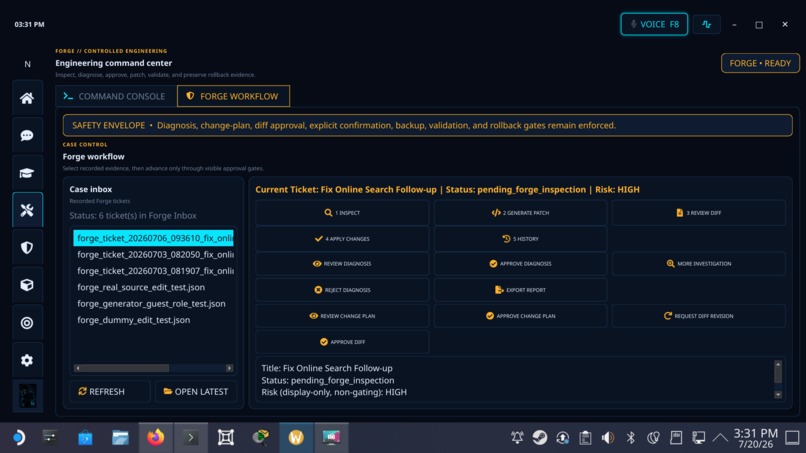
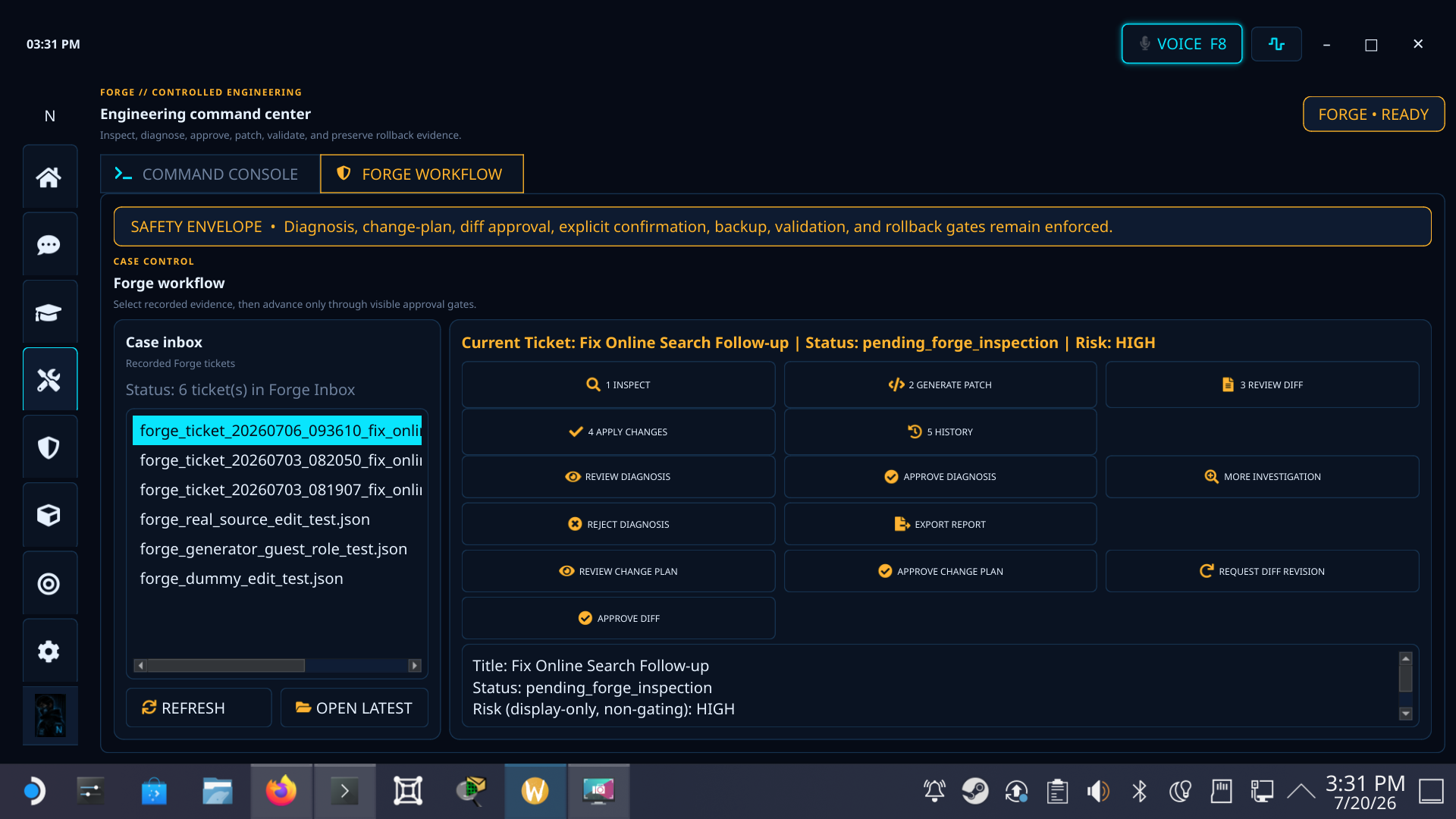
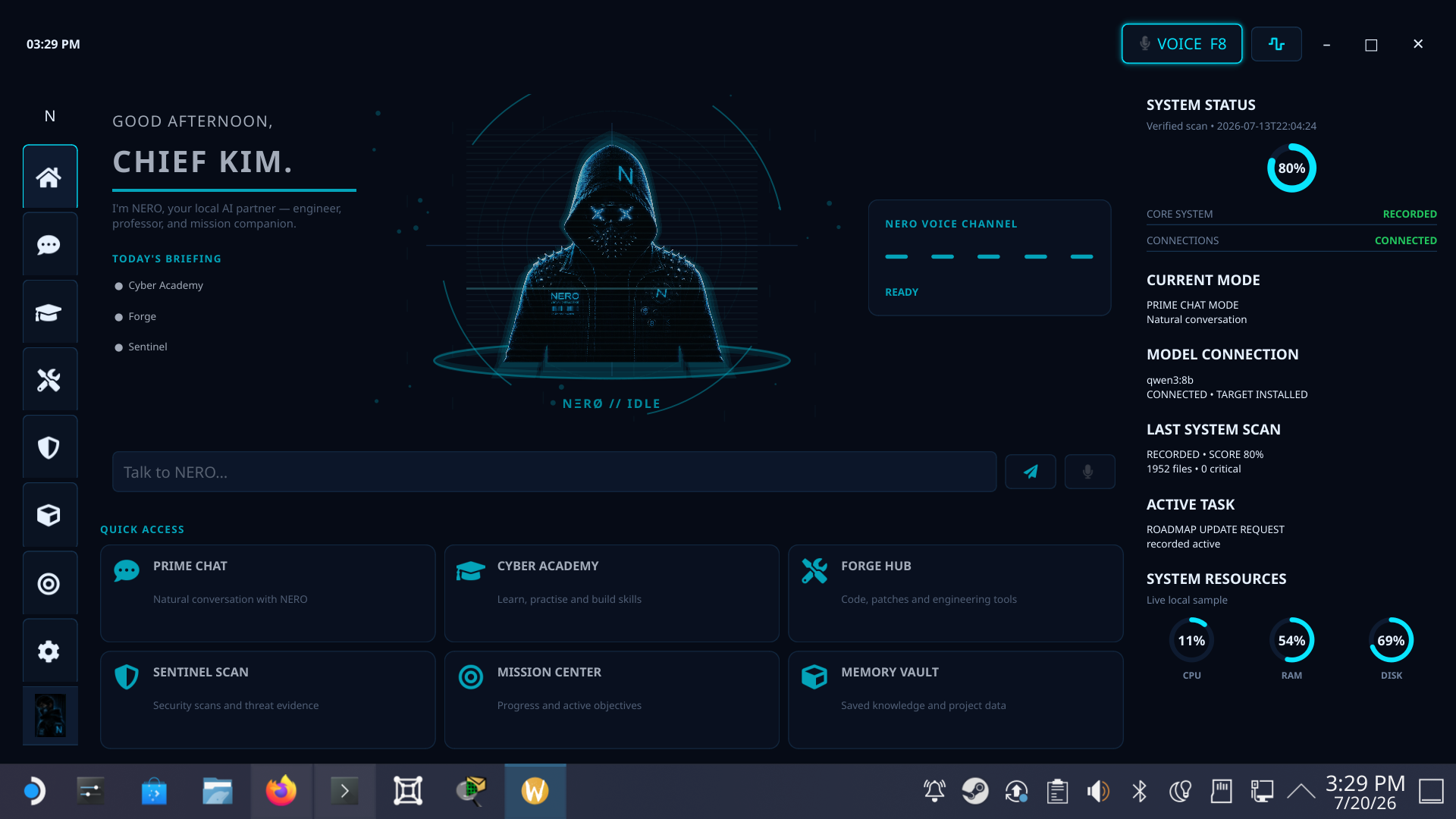
agent forge for editing
-
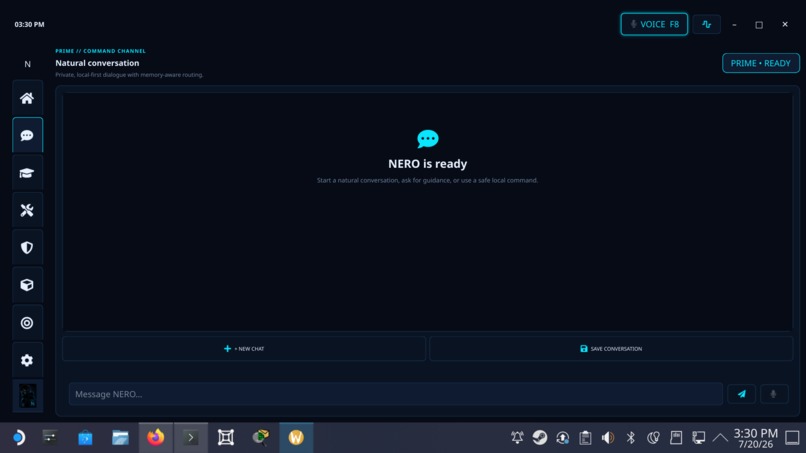
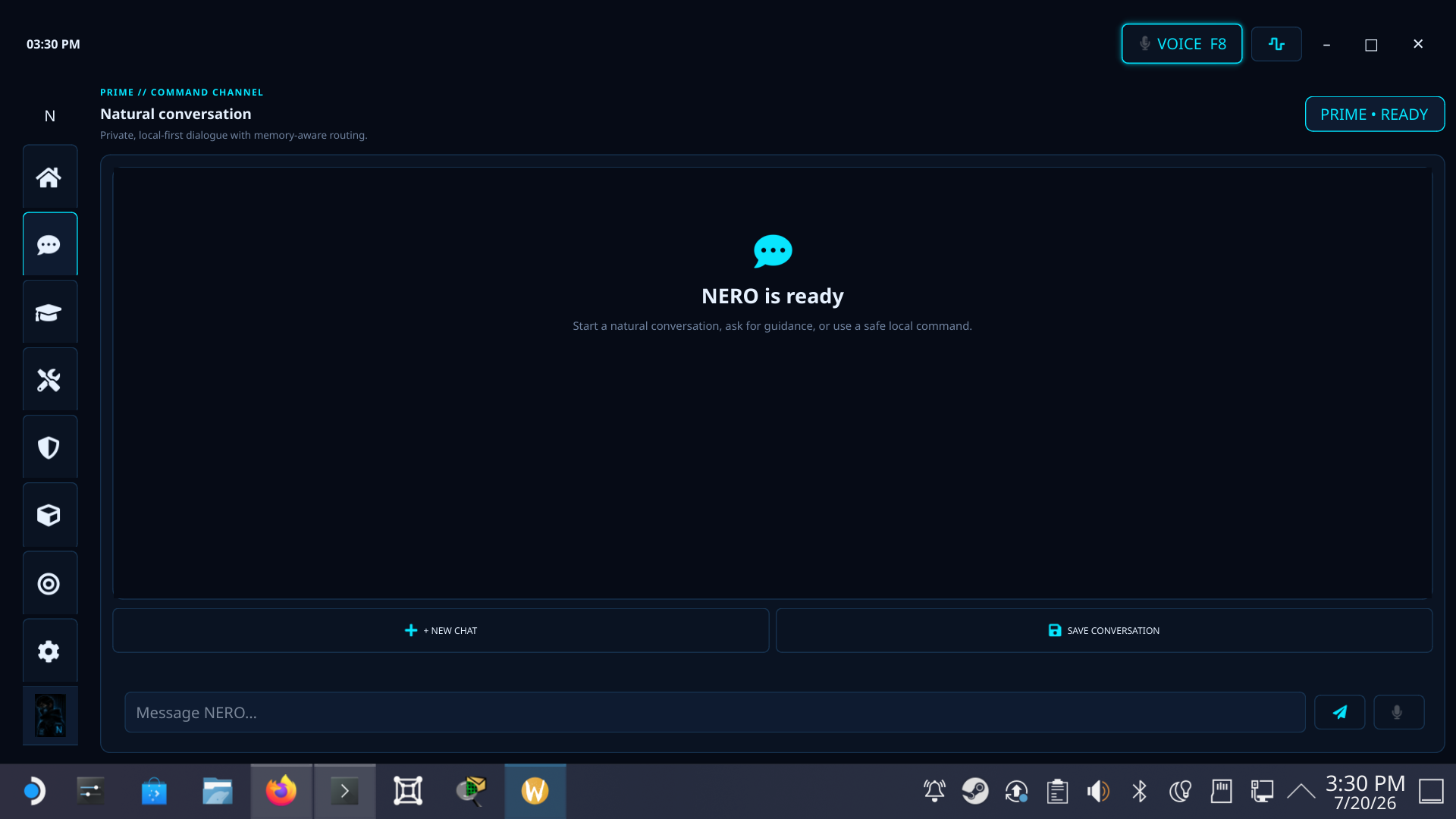
agent prime the manager
-
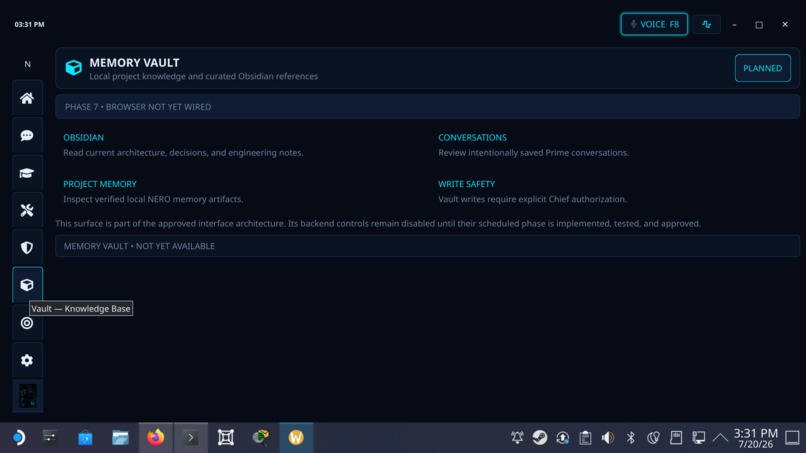
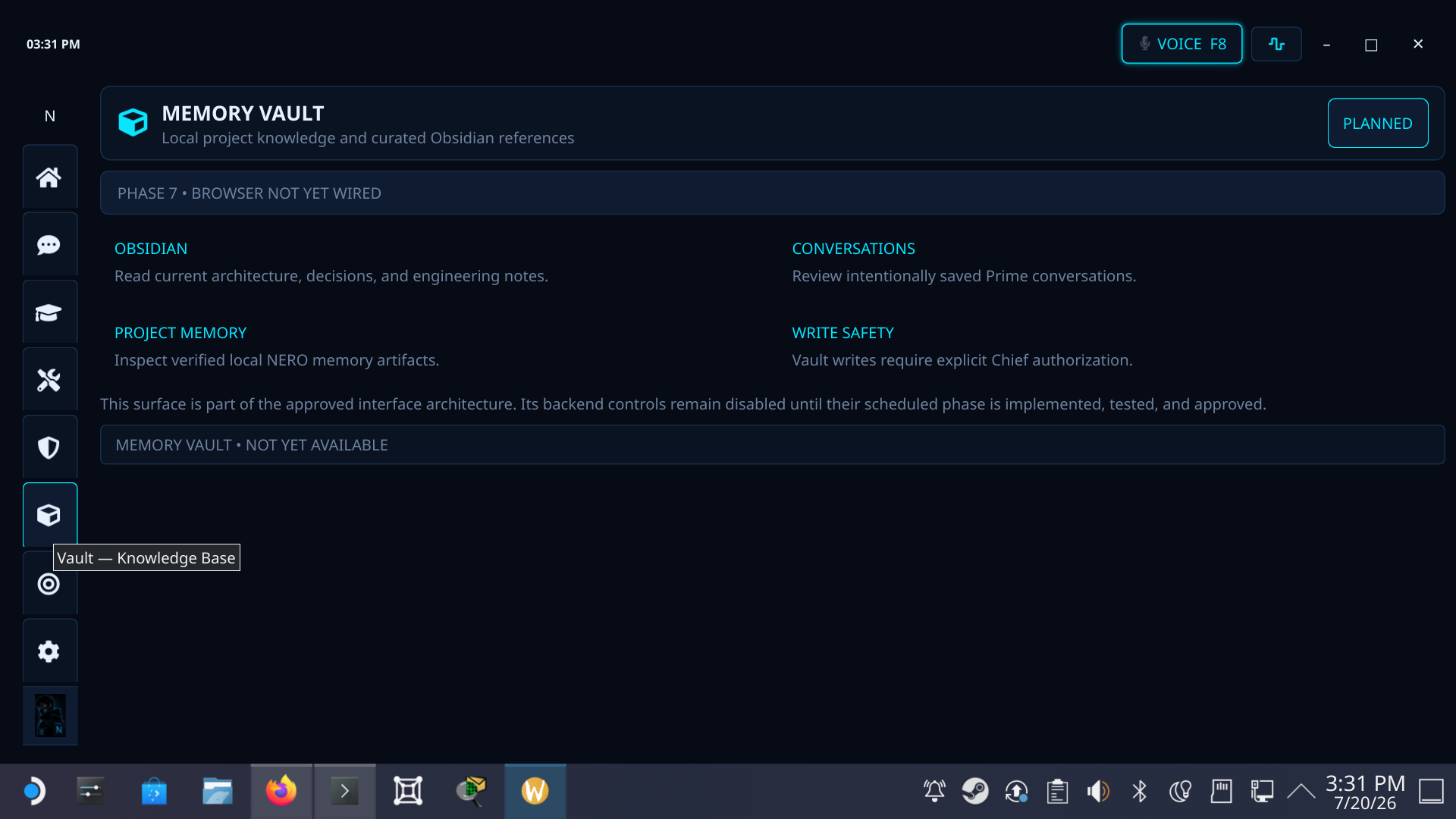
memory vault not yet wired of obsidian
-
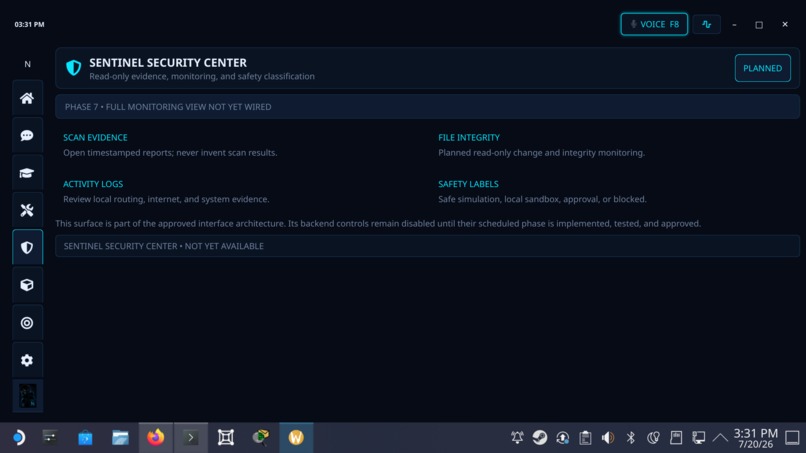
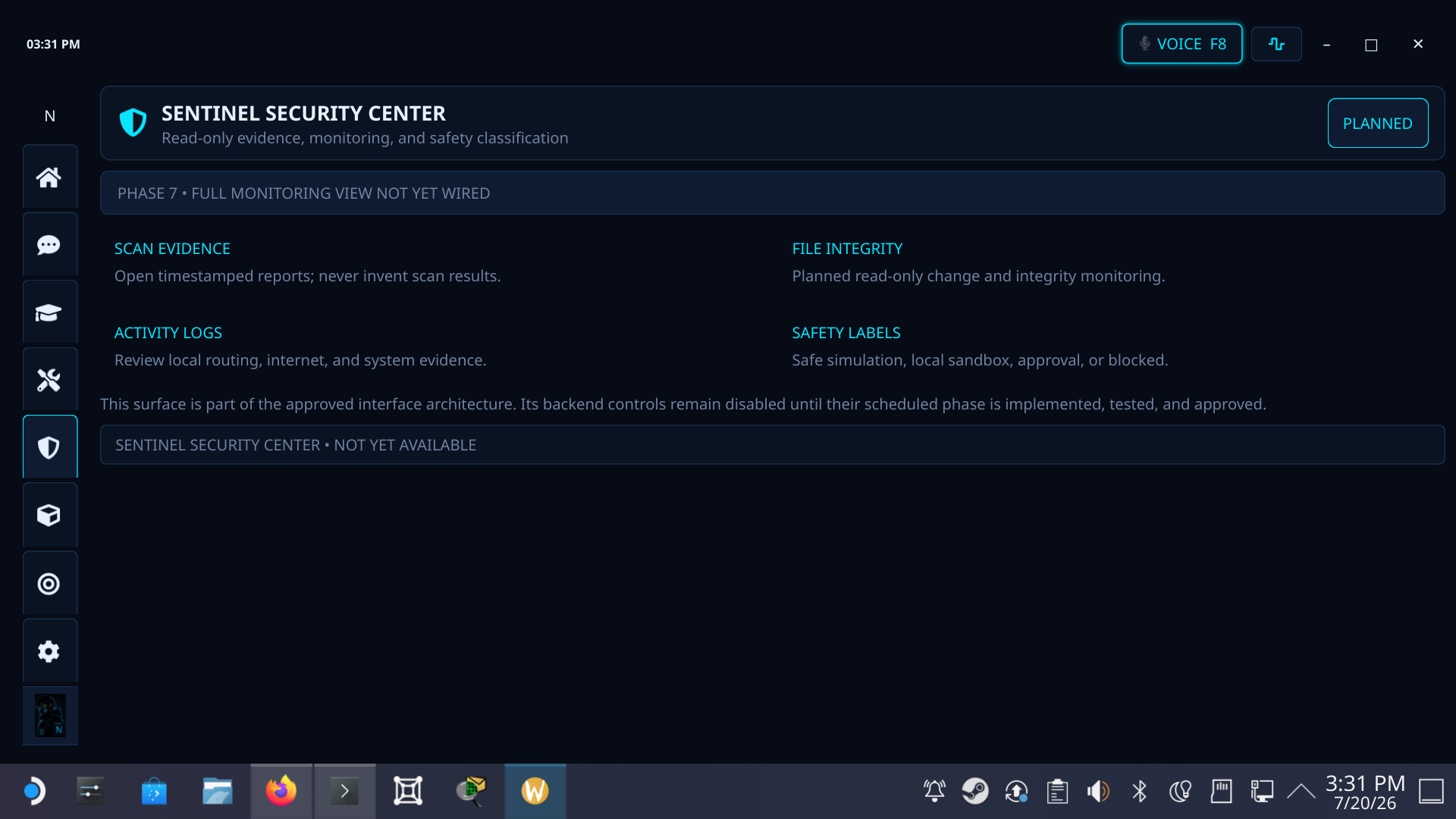
agent sentinel still ongoin
-
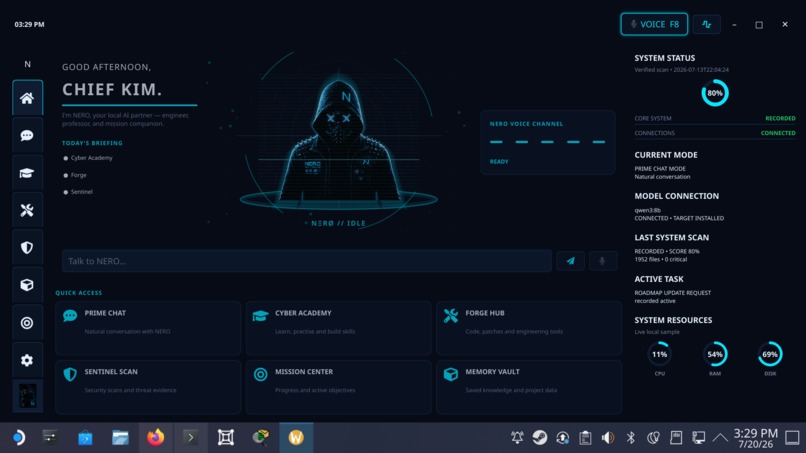
project nero dashboard
-
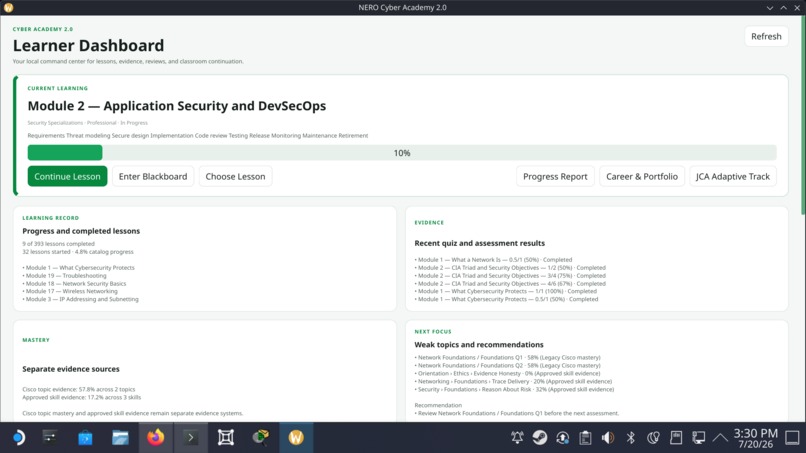
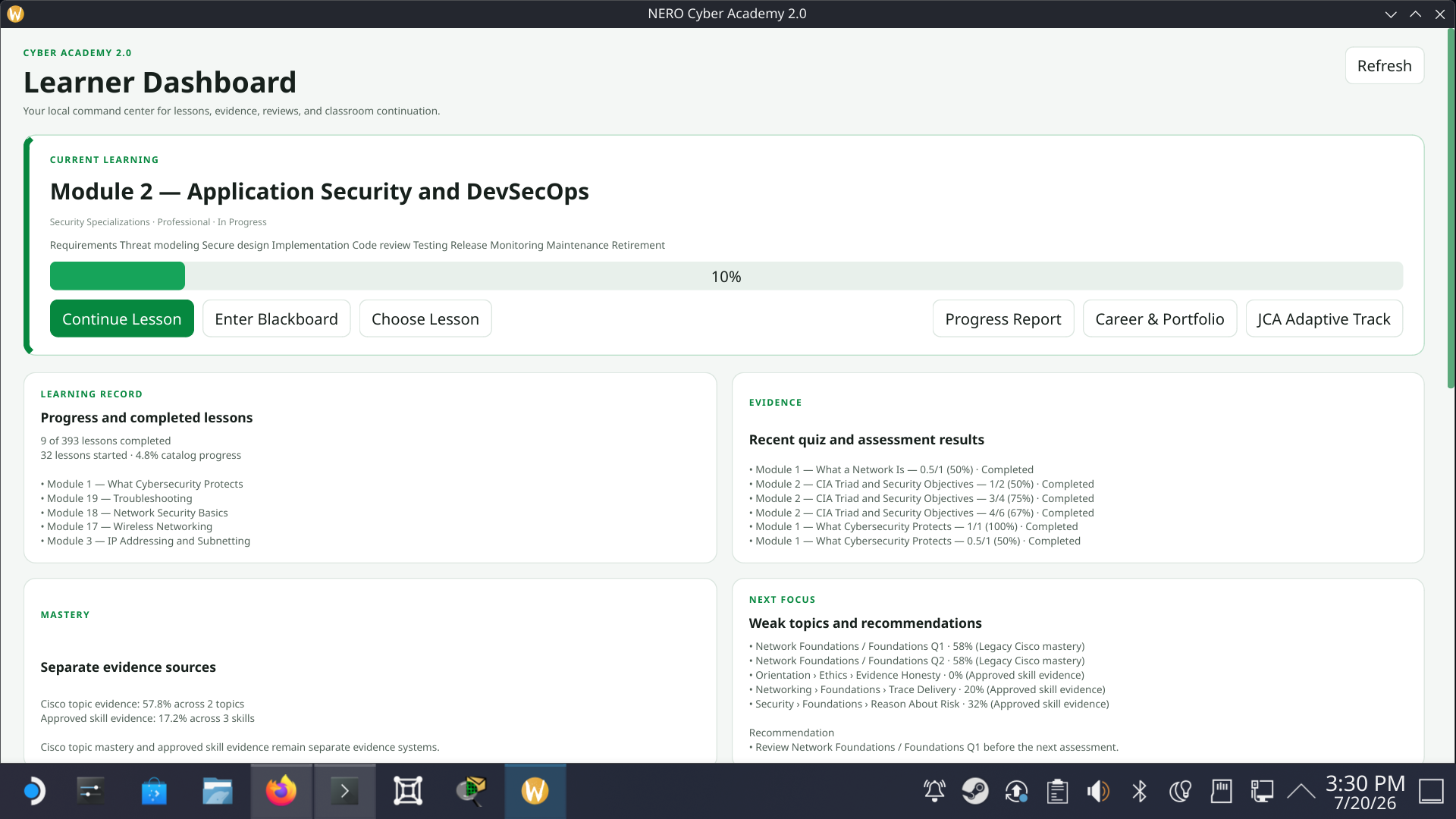
cyber academy
-
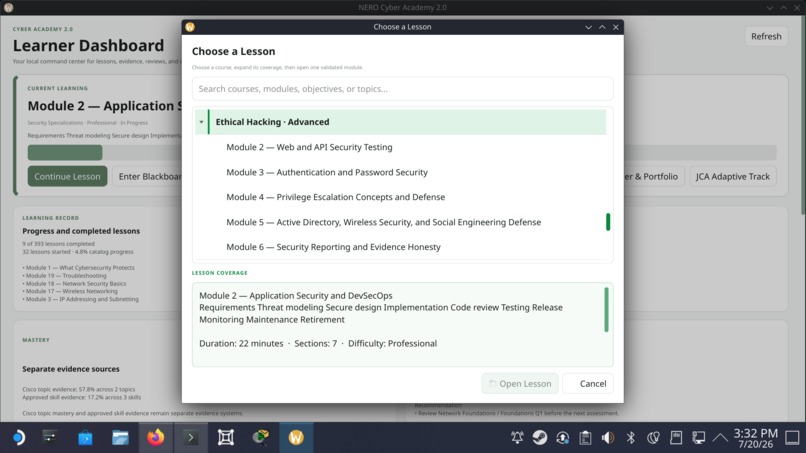
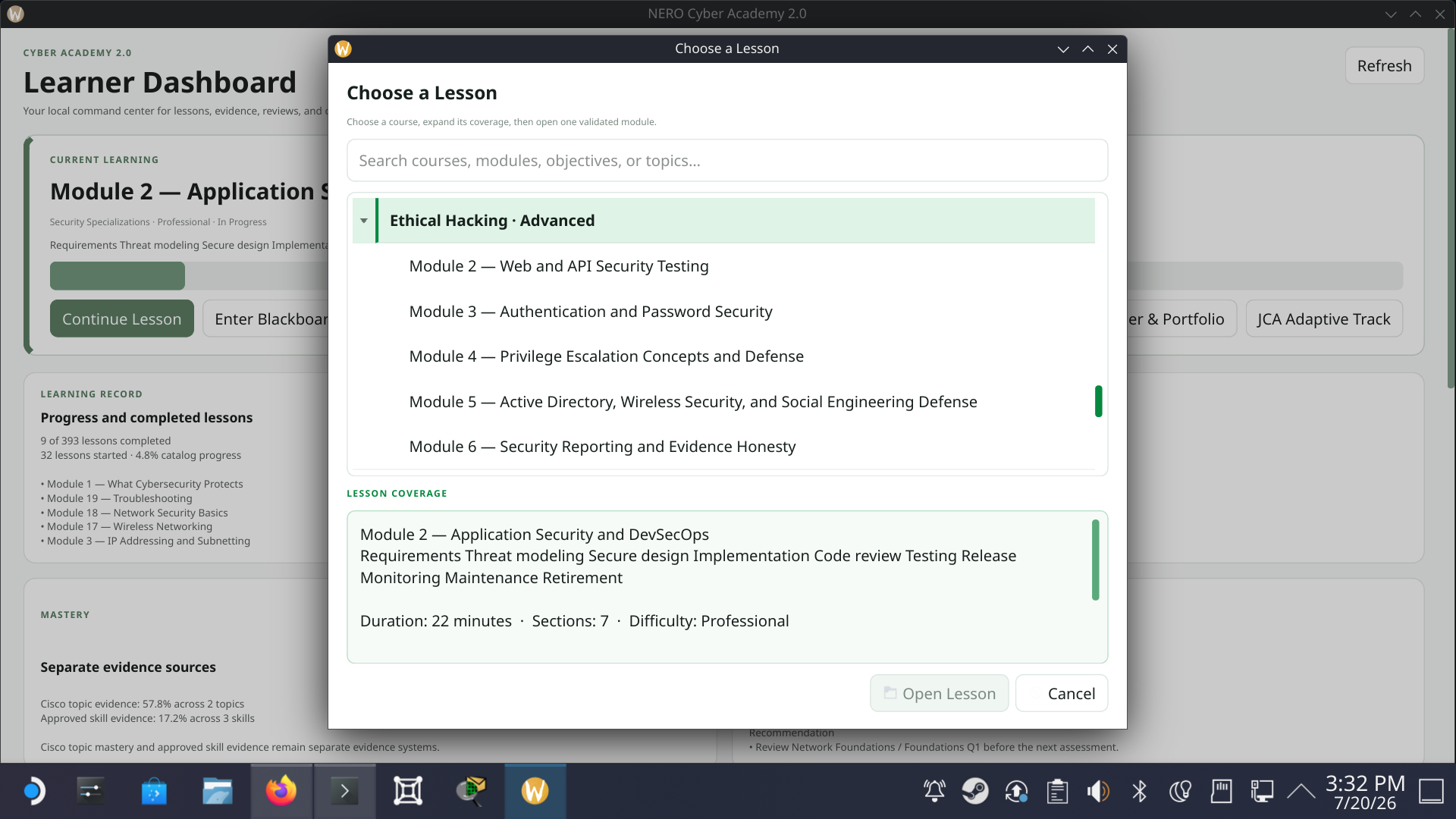
lessons
-
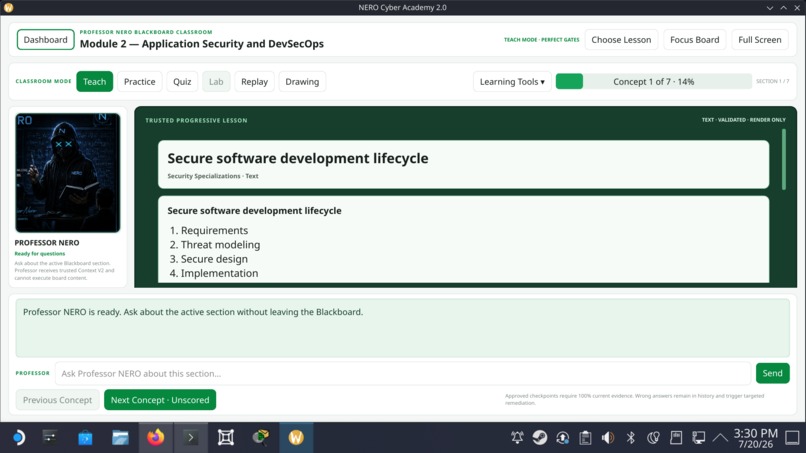
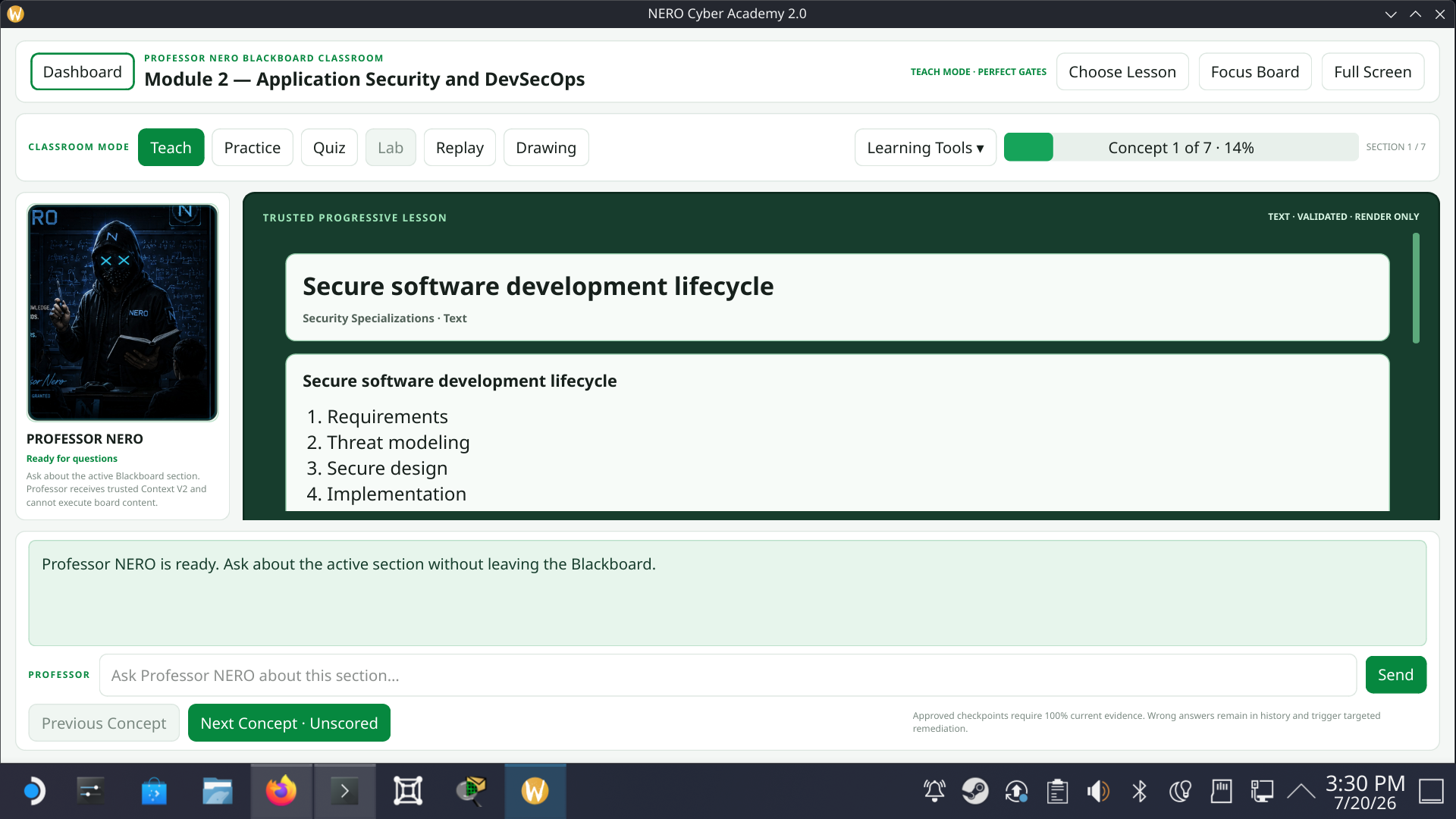
professor nero classroom
Inspiration
Project NERO began during one of the most difficult periods of my life.
While undergoing medical treatment, I had to temporarily step away from my previous career. Instead of allowing that situation to stop my progress, I started studying cybersecurity and preparing for a new future in technology.
As a beginner, I found that cybersecurity learning was often scattered across different videos, notes, quizzes, laboratory applications, and websites. I wanted one organized system that could help me study, manage projects, practice technical skills, and stay focused on my long-term goals.
That idea became Project NERO.
What it does
Project NERO is a personal AI system designed to combine learning, productivity, software development, and security inside one unified environment.
Instead of depending on one general-purpose assistant for every responsibility, NERO uses specialized AI roles:
- Prime manages communication, daily assistance, and coordination.
- Forge supports controlled software development and engineering tasks.
- Sentinel focuses on security monitoring and protection.
- Professor NERO leads the NERO Cyber Academy.
- Executors are designed to apply approved actions safely.
Important system changes follow an approval-first workflow involving planning, user confirmation, backups, testing, and rollback options. This approach is intended to keep AI-assisted development organized and under the user’s control.
The Build Week demonstration focuses on Project NERO’s strongest learning experience: the NERO Cyber Academy.
NERO Cyber Academy
The NERO Cyber Academy is an adaptive cybersecurity learning platform designed for beginners and independent learners.
Professor NERO teaches lessons through an interactive digital classroom where students can:
- Study structured cybersecurity concepts
- Practice what they have learned
- Complete quizzes and application-based assessments
- Explain the technical reasoning behind their answers
- Receive targeted feedback
- Review weak topics
- Complete fresh reassessments
- Track lesson and concept progress
- Prepare for practical laboratory activities
- Build career and portfolio readiness
The Academy is designed to evaluate understanding rather than simple memorization. When a learner answers incorrectly, the system identifies the related weak concept and directs the student toward targeted remediation before progression.
Professor NERO can also provide simplified English and Taglish explanations, making difficult technical topics more approachable for Filipino learners.
The long-term roadmap includes networking simulations, Linux exercises, guided cybersecurity laboratories, certification preparation, interview practice, portfolio development, voice interaction, and an animated Professor NERO teaching experience.
How I built it
Project NERO was built primarily on a Steam Deck using a Python-based desktop application and a modular architecture.
The Cyber Academy includes components for:
- Lesson and concept management
- Interactive classroom modes
- Quiz and assessment handling
- Technical explanation prompts
- Progress tracking
- Weak-topic remediation
- Reassessment workflows
- Focus Board presentation
- Career and portfolio planning
The project separates the wider NERO system into specialized roles so that communication, engineering, education, and security responsibilities remain organized.
How ChatGPT and Codex were used
ChatGPT powered by GPT-5.6 helped transform the original idea into a structured system. It supported brainstorming, feature planning, system architecture, teaching-method design, lesson development, documentation, debugging strategies, and the creation of clearer cybersecurity explanations.
ChatGPT also helped design Professor NERO’s adaptive teaching workflow: explain a concept, assess understanding, identify weak areas, provide targeted review, and require new evidence before progression.
Codex served as the project’s engineering partner. It worked directly with the codebase to inspect existing files, implement features, improve the interface, investigate bugs, refactor components, run tests, and connect different parts of Project NERO.
Together, ChatGPT and Codex allowed me to continue learning cybersecurity while simultaneously building a system that supports that learning.
Challenges
One of the largest challenges was building and testing an ambitious AI project on limited portable hardware.
Other challenges included:
- Keeping the interface responsive on a Steam Deck
- Organizing multiple specialized AI roles
- Preventing uncontrolled system changes
- Creating reliable progress and reassessment logic
- Mapping assessment questions to the correct answers and feedback
- Designing an experience suitable for complete beginners
- Balancing development time with my cybersecurity studies and medical treatment
Some parts of the wider Project NERO system remain under active development. The submitted demonstration therefore focuses on the working Cyber Academy experience while presenting the larger architecture as the project’s future direction.
What I learned
Building Project NERO taught me that AI is most useful when it does more than provide answers.
A good learning system should guide the user, test understanding, explain mistakes, preserve progress, and encourage practical application.
I also learned the importance of modular architecture, controlled engineering workflows, backups, testing, honest documentation, and designing around the needs of real learners.
Most importantly, this project showed me that difficult circumstances can become the beginning of something meaningful.
Accomplishments
I am proud that Project NERO grew from a personal idea into a functioning desktop learning environment built on a Steam Deck.
The project now has:
- A unified NERO interface
- Specialized AI roles
- A working Cyber Academy classroom
- Structured lessons and concepts
- Interactive assessments
- Technical explanation requirements
- Targeted remediation
- Reassessment workflows
- Progress tracking
- Career and portfolio planning
- A clear roadmap for practical cybersecurity laboratories
What is next
The next stage of Project NERO will focus on improving assessment reliability, expanding the cybersecurity curriculum, and connecting lessons to practical tools such as networking simulators, Linux environments, and guided security laboratories.
Future development will also include:
- More adaptive teaching behavior
- Improved Professor NERO animation and voice
- Certification-aligned learning paths
- Interview and career preparation
- Portfolio and project tracking
- NERO Mobile
- Stronger Forge and Sentinel integration
- School and student deployment options
Project NERO began as a personal system for helping me rebuild my future.
Its long-term goal is to become an accessible AI-powered environment where learners can study, practice, build, and develop real cybersecurity skills—even when they are starting with limited resources.
Learn without limits. Build with purpose. Protect the future.
This is Project NERO—and this is only the beginning.


Log in or sign up for Devpost to join the conversation.