Inspiration
Modern healthcare facilities are increasingly turning to automation, but advanced patient-assistant robots remain prohibitively expensive, often costing between ₹25-30 Lakhs ($30,000+). This leaves middle-class clinics, local hospitals, and eldercare facilities completely isolated from the benefits of robotic assistance. Our inspiration was to democratize healthcare technology. We wanted to design a highly affordable, structurally stable, and completely sanitizable humanoid assistant using recycled materials, bringing automated patient care and non-invasive health monitoring to every local clinic.
What it does
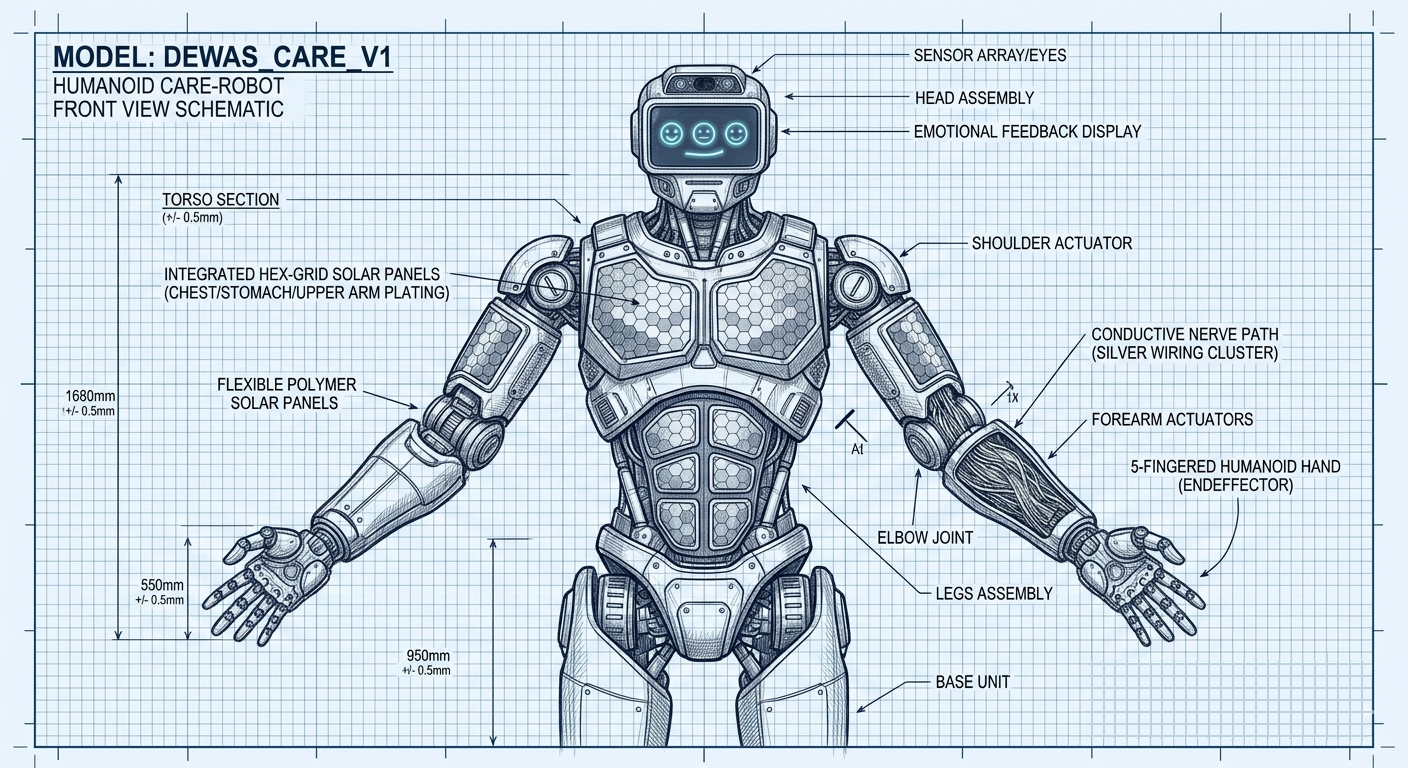
Project Natural Buddy is an autonomous humanoid hardware architecture designed to act as an offline, privacy-safe patient care and non-invasive health monitoring assistant. The system operates on three core technical pillars:
- Sanitisation-Friendly Ventless Design: Hospital environments require constant disinfection. The robot features a completely sealed, "Ventless Design" where the charging port serves as a functional exhaust. This allows the outer chassis to be fully washed, sprayed, and disinfected with hospital-grade sanitizers without risking internal hardware damage.
- Privacy-First Patient Monitoring (Edge AI): Patient data is highly sensitive. To ensure 100% HIPAA/data privacy compliance and prevent cloud data leaks, all facial tracking, pain/stress level monitoring, and fall detection are processed entirely on-device (Edge AI) without requiring active internet connectivity.
- Stability & Patient Safety: Heavy battery packs are distributed strategically across the robot's torso (abdomen) and thighs. This keeps the Center of Mass (COM) low and balanced, preventing the robot from tipping over in crowded hospital wards or around vulnerable patients. ## How we built it To prove the physical and economic feasibility of bringing an advanced medical-assistant robot to resource-constrained clinics, we engineered a detailed and mathematically optimized Bill of Materials (BOM):
- Advanced Brain: NVIDIA Jetson Nano - Xavier (Real-time Edge AI processing) = ₹80,000
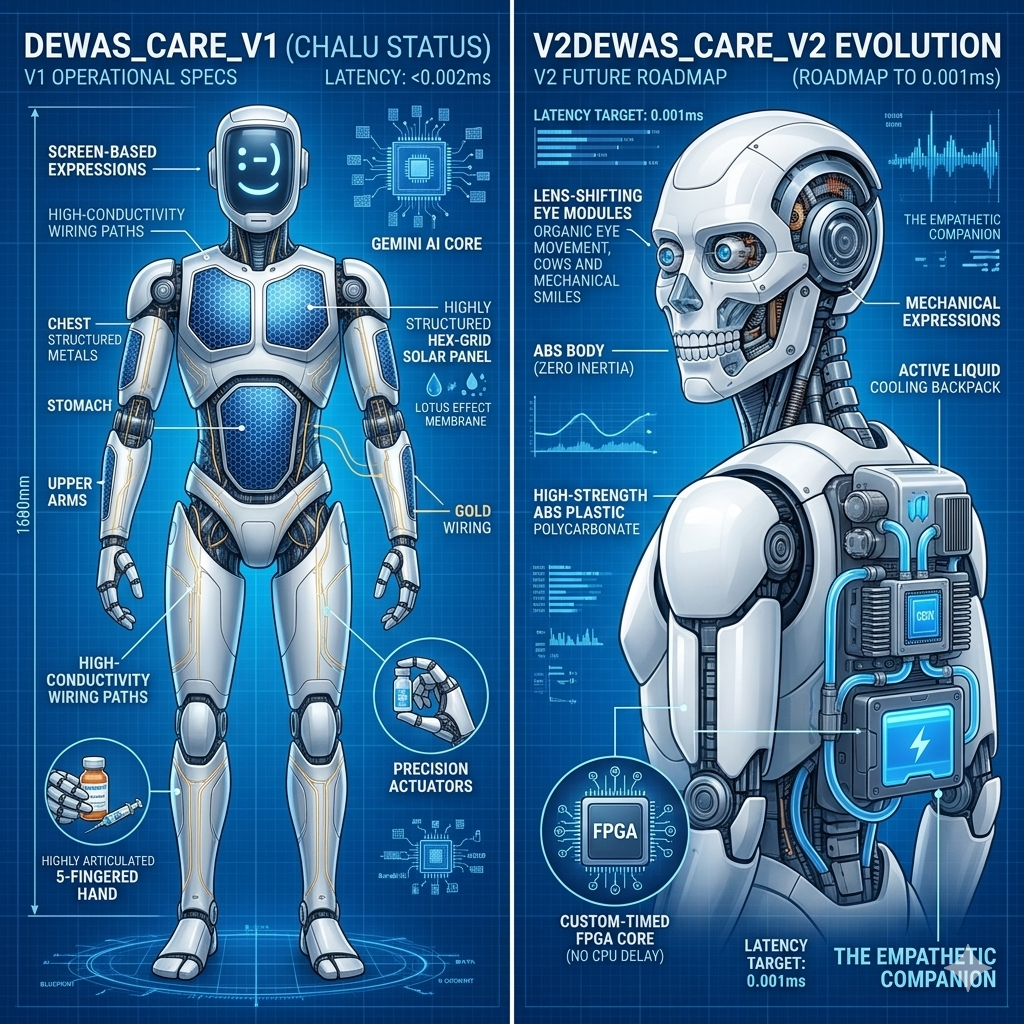
- Precision Actuators: 12 to 15 Industrial Grade Digital Servos (Metal Gear) = ₹2,50,000
- Sensor Array: Intel RealSense Depth Camera + 2D/3D LiDAR + 6-Axis Gyro = ₹1,50,000
- Structure & Shell: High-grade Aluminium & 3D Printed Industrial Resin = ₹1,20,000
- Low-Latency Wiring: Silver/Gold wiring & specialized Signal Shields = ₹70,000
- Energy System: High capacity Li-Po Battery + intelligent Power Board = ₹60,000
- R&D and Testing: Prototype iterations and physical/thermal safety simulations = ₹1,20,000
- TOTAL MANUFACTURING COST (COGS): ₹8,50,000
Retail Model: Retailing the medical companion robot at ₹15,00,000 allows a healthy ~43% Gross Profit Margin to sustain the business while being ₹10 Lakhs cheaper than existing, less-secure alternatives on the market.
Challenges we ran into
The primary engineering challenge was designing a robust thermal cooling system. While standard computers use cooling fans, we could not use open vents because they would collect dust and prevent the robot from being sanitised. To overcome this, we designed a passive, closed-loop thermal routing layout that distributes heat to internal heatsinks and uses the charging port as a sealed exhaust, ensuring the robot remains waterproof while keeping the processor cool.
Accomplishments that we're proud of
We successfully conceptualized an affordable, sustainable, and highly secure healthcare hardware layout that makes autonomous patient assistance economically viable for rural and middle-class hospital setups.
What we learned
We learned that in medical technology, safety, sanitization, and data privacy are just as important as the robot's intelligence. A healthcare assistant must be designed to withstand rigorous hospital sanitization protocols and protect sensitive patient data.
What's next for Project Natural Buddy: Affordable MedTech Assistant
The next phase for Project Natural Buddy is the software-level UI/UX design. We plan to design a highly intuitive, visually polished patient-care dashboard for doctors and nurses to monitor the robot's telemetry.
Furthermore, we hope to collaborate with local healthcare clinics and non-profit medical organizations to refine the human-robot interaction (HRI) models, ensuring the robot feels friendly, comforting, and helpful to patients of all ages.
Built With
- 3d-printing
- autodesk-fusion-360
- edge-ai
- healthcare
- lidar
- nvidia-jetson
- python
- realsense
- technology

Log in or sign up for Devpost to join the conversation.