Inspiration
Most advanced consumer humanoid robots on the market today cost between ₹20-21 Lakhs ($25,000+), making household automation and personalized assistance a luxury exclusive only to the wealthy. We wanted to change this narrative. Our inspiration was to democratize home robotics. We wanted to design a highly affordable, structurally stable, and waterproof consumer helper robot using recycled materials, bringing sustainable, safe, and privacy-first AI assistance directly to the homes of ordinary families.
What it does
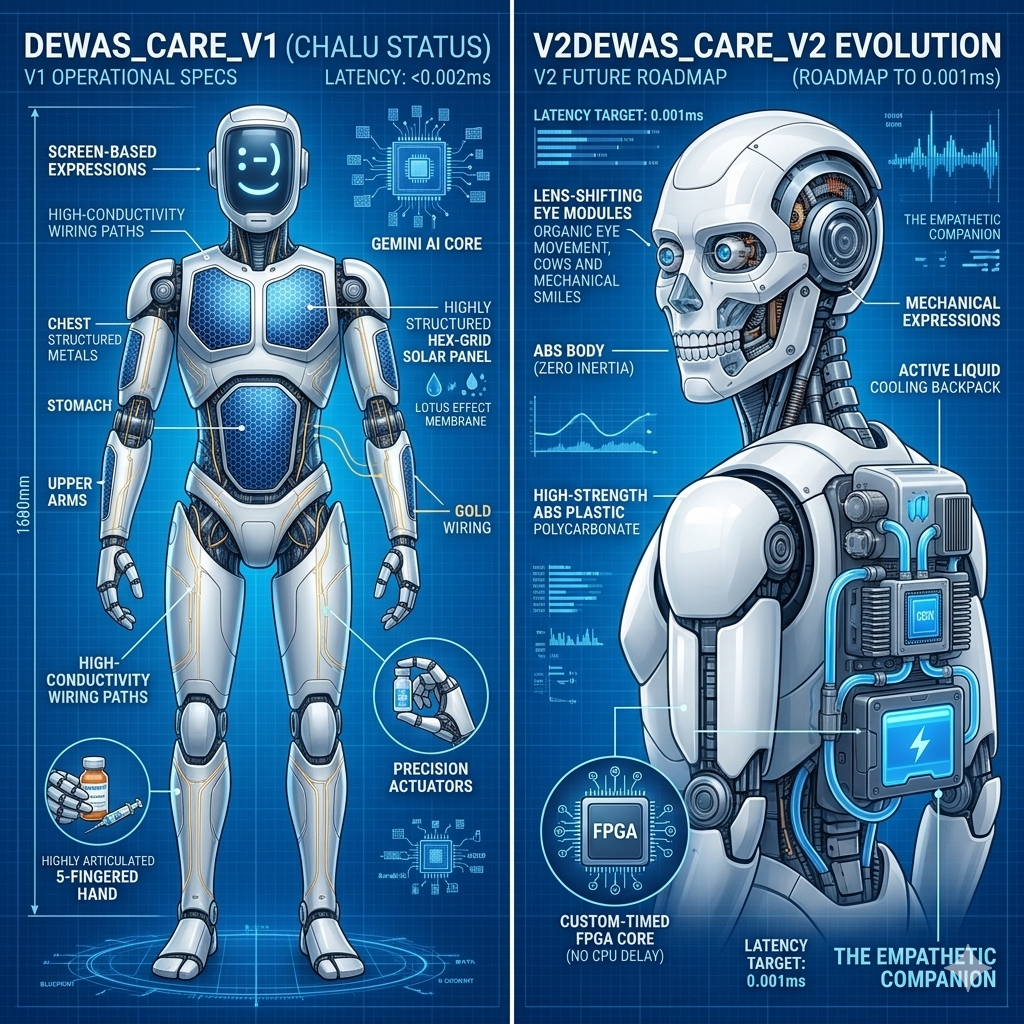
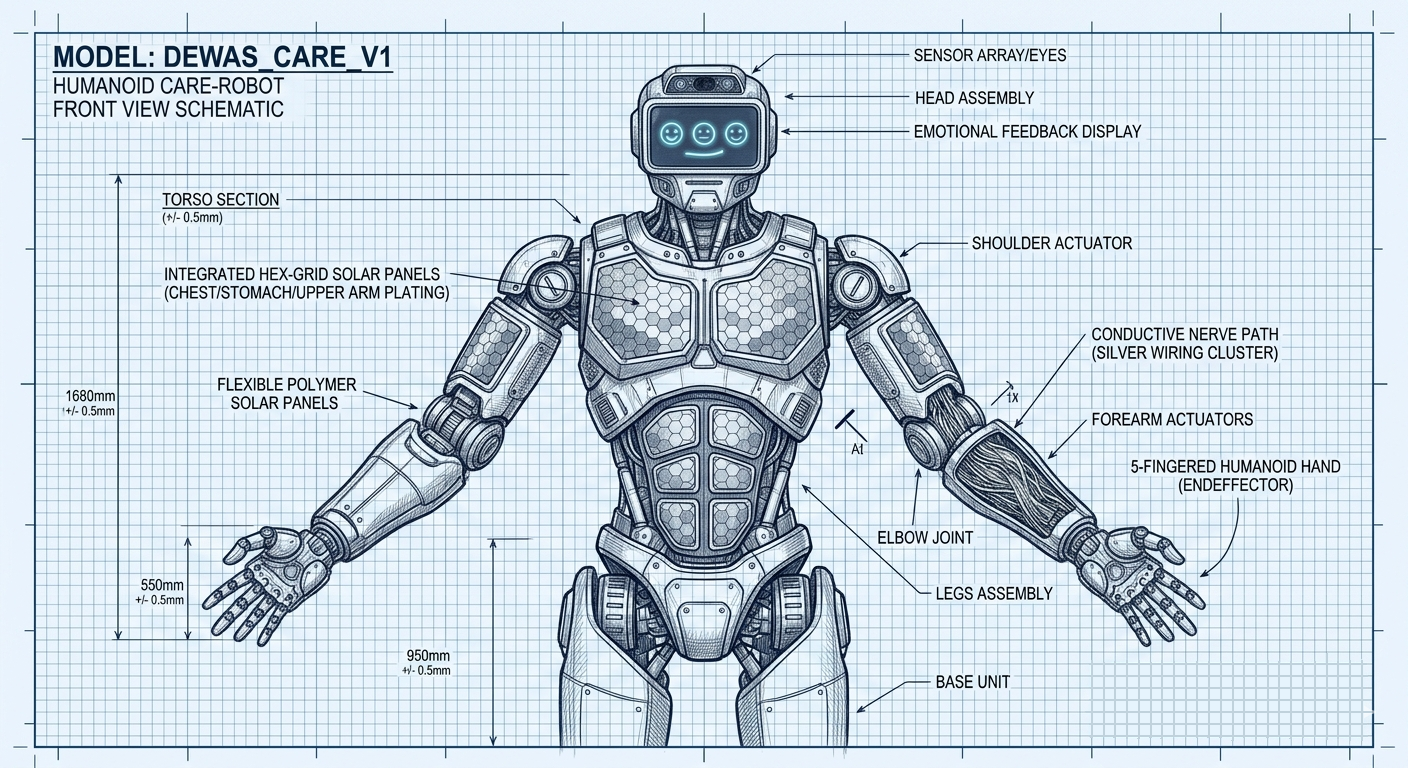
Project Natural Buddy (Dewascare) is a stable, waterproof, and affordable consumer humanoid robot designed to assist families in their daily lives. The system operates on four core technical pillars:
- Eco-Friendly Recycled Structure: Built using recycled household plastics, reducing the carbon footprint of domestic robotics and supporting the circular economy.
- Waterproof, Ventless Thermal Design: Hospital-grade and child-safe. It features a completely sealed chassis where the charging port serves as the functional exhaust, allowing the outer body to be washed and sanitized without risking internal hardware damage.
- Optimized Stability & Safety: Heavy battery packs are distributed strategically across the robot's torso (abdomen) and thighs. This keeps the Center of Mass (COM) low and balanced, preventing the robot from tipping over during physical interactions.
- Privacy-First Edge AI: To protect household privacy, facial and emotional recognition are processed entirely on-device (Edge AI) without requiring active internet connectivity, ensuring zero cloud leaks. ## How we built it To prove the physical and economic viability of bringing an advanced helper robot to market, we engineered a detailed and mathematically optimized Bill of Materials (BOM):
- Advanced Brain: NVIDIA Jetson Nano - Xavier (Real-time Edge AI processing) = ₹80,000
- Precision Actuators: 12 to 15 Industrial Grade Digital Servos (Metal Gear) = ₹2,50,000
- Sensor Array: Intel RealSense Depth Camera + 2D/3D LiDAR + 6-Axis Gyro = ₹1,50,000
- Structure & Shell: High-grade Aluminium & 3D Printed Industrial Resin = ₹1,20,000
- Low-Latency Wiring: Silver/Gold wiring & specialized Signal Shields = ₹70,000
- Energy System: High capacity Li-Po Battery + Intelligent Power Management Board = ₹60,000
- R&D and Testing: Prototype iterations and physical safety simulations = ₹1,20,000
- TOTAL MANUFACTURING COST (COGS): ₹8,50,000
Retail Model: Retailing the helper robot at ₹15,00,000 allows a healthy ~43% Gross Profit Margin to sustain the business while being ₹5-6 Lakhs cheaper than existing, less-secure alternatives.
Challenges we ran into
The primary engineering challenge was designing a robust thermal cooling system. While standard computers use cooling fans, we could not use open vents because they would collect dust and prevent the robot from being waterproof. To overcome this, we designed a passive, closed-loop thermal routing layout that distributes heat to internal heatsinks and uses the charging port as a sealed exhaust, ensuring the robot remains waterproof while keeping the processor cool.
Accomplishments that we're proud of
We successfully conceptualized an affordable, sustainable, and highly secure consumer-grade hardware layout that makes domestic robotics economically viable for middle-class households.
What we learned
We learned that the future of robotics is not just about making smarter systems, but about making them accessible and sustainable. True innovation lies in optimizing existing supply chains and using local manufacturing resources to drive down retail costs.
What's next for Project Natural Buddy: Affordable Consumer Humanoid
The next phase of Project Natural Buddy is software-level simulation. We plan to build simulated virtual interactive environments to test the AI agent's physical movement and locomotion.
Furthermore, we hope to integrate this system architecture with Project Quantum-X, designing a next-generation autonomous robotic brain to solve the communication latency of deep-space robotics for future exploration.
Built With
- 3d-printing
- autodesk-fusion-360
- design
- edge-ai
- lidar
- nvidia-jetson
- python
- realsense

Log in or sign up for Devpost to join the conversation.