

Incrediscore
Developed by Kaden Daya & Tristen Wang
To run -
- Clone our github repo
- CD into folder
- run
npm run dev - Please note we will be reseating the database several time for maintenece so you may need to remake user accounts.
Inspiration
Students with no experience with credit, the difficulty to get a stable income will likely lead them into a lifetime of bad credit score. Incrediscore was made to assist people who want to be in control of their credit account, simplifying the wild world of debts
What it does
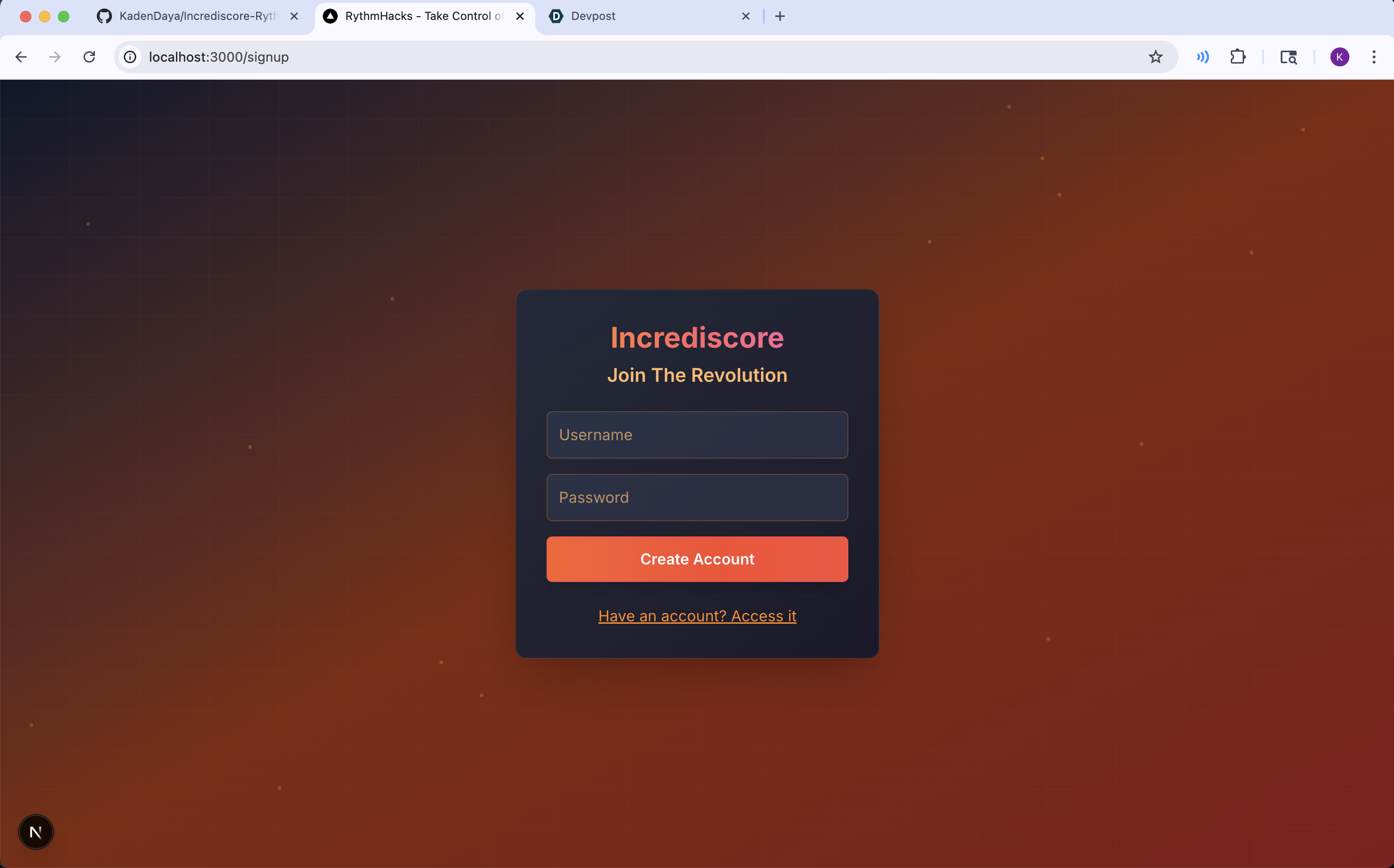
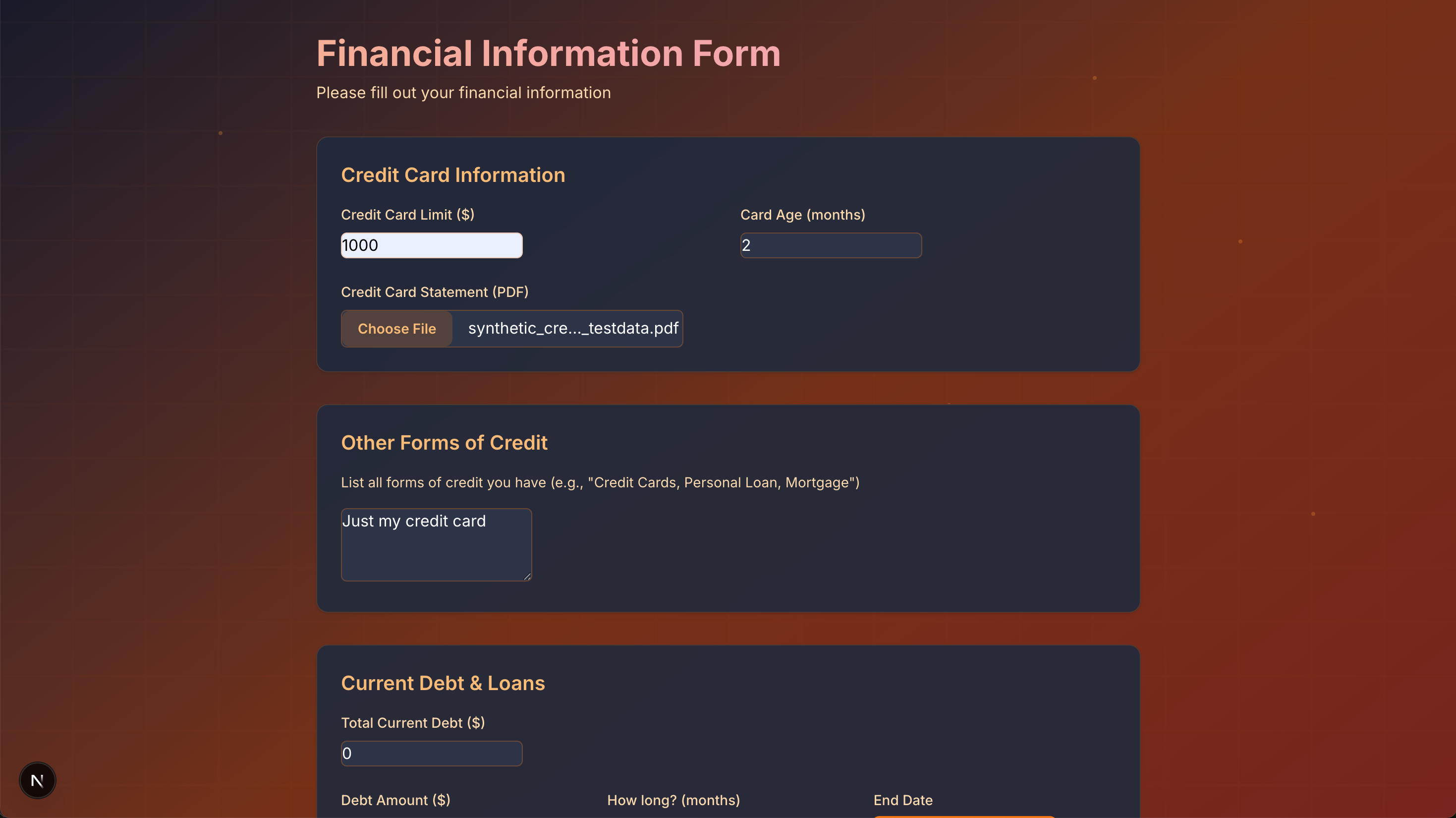
Incrediscore is a fintech app to help people build their credit score. Its so good its almost... incredible. You upload some of your financial data, answer a few questions and Incrediscores pipeline will identify what your doing right and wrong about your credit score and it will build a full step by step plan personally crafted for you to boost your credit score.
How we built it
Tech Stack
Frontend -
- Typescript Language
- Next.js Framework
- Tailwind CSS
- ReCharts
Backend -
- Python Language
- FastAPI Framework
- PostgreSQL
- MartianAPI
Cloud -
- AWS RDS - PostgreSQL
- AWS ECS - FastAPI
- Vercel - Next.js
DevOps -
- Docker
- Github Actions - CI/CD
- Vercel Auto Deploy
How it works
General
We use a Next.js and Tailwind CSS app for the frontend. We do have it hosted on Vercel however the vercel hosted version has some difficulties connecting to the backend so we recommend self hosting the frontend.
The backend is a FastAPI server. We use JWT and a PostgreSQL database to store user authentication. The Postgres database is hosted on AWS RDS and the FastAPI server is deployed to AWS ECS using docker.
Pipeline
User submits their raw financial data
- Data is cleaned and standardized using a type of Transformer model, a LLM. We utilized Martian's LLM router API and used the model GPT-4.1-nano:cheap
- The standardized data is analyzed and sorted using a bubble sort and a simple decision tree classifier
- The data gets categorized with importance, based on the impact it has on the credit score
- An Anomaly search algorithm is used to run through the data set and find any anomalies, which we identified as dense spots of high amounts of purchases or purchase amounts
- The sorted and classified data gets sent to an LLM (Martian GPT-4.1-nano:cheap) to determine if the user is doing good or bad with their credit score habits
- LLM's are also used to generate insights on analytic and data to break it down for user convenience
- Using a more power full LLM: Martian GPT-5:cheap, we build a full step by step plan for the user to build their credit score and make good loan habits.
Challenges we ran into
During the creation of this project, we struggled with connecting the front-end of the code to the back-end. Due to our split programming styles, we had to rely on each other to create an interconnected code.
Built With
- amazon-rds-relational-database-service
- amazon-web-services
- docker
- fastapi
- martianapi
- next.js
- postgresql
- python
- typescript
- vercel

Log in or sign up for Devpost to join the conversation.