-
-
FLAIM/Project_Thumbnail
-
FLAIM/Project_Theme
-

FLAIM/Project_Logo_1
-

FLAIM/Project_Logo_2

FLAIM
by Aparna Krishnan Reshmy
- Prototype link
- Describe your project (max 150 words)
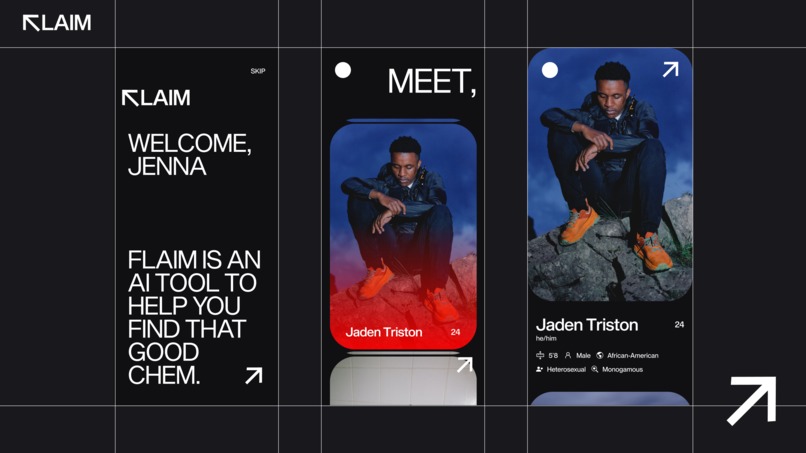
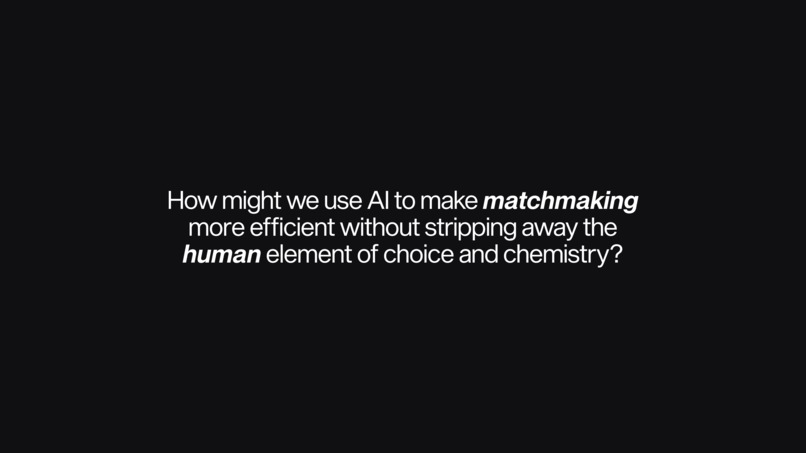
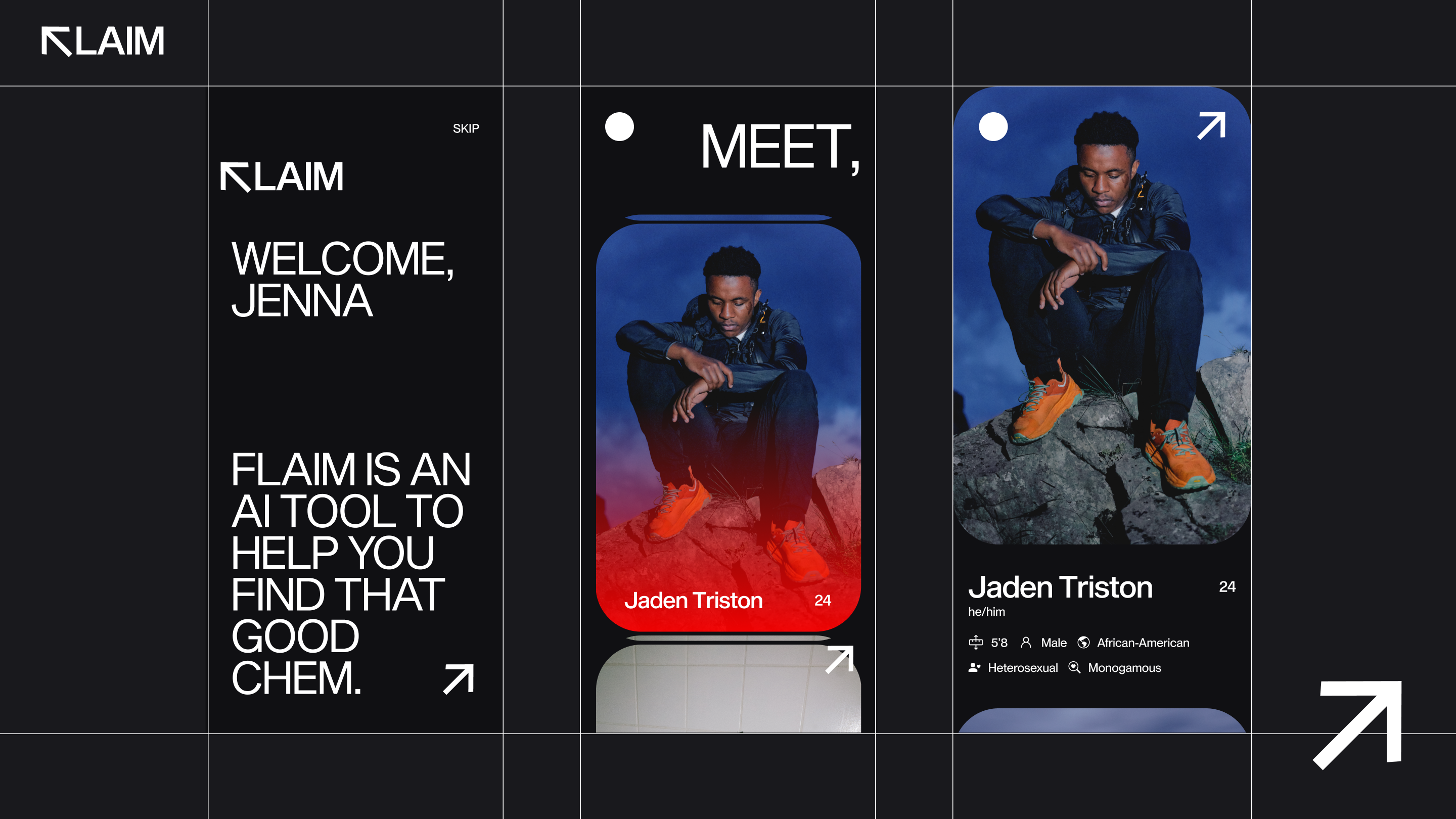
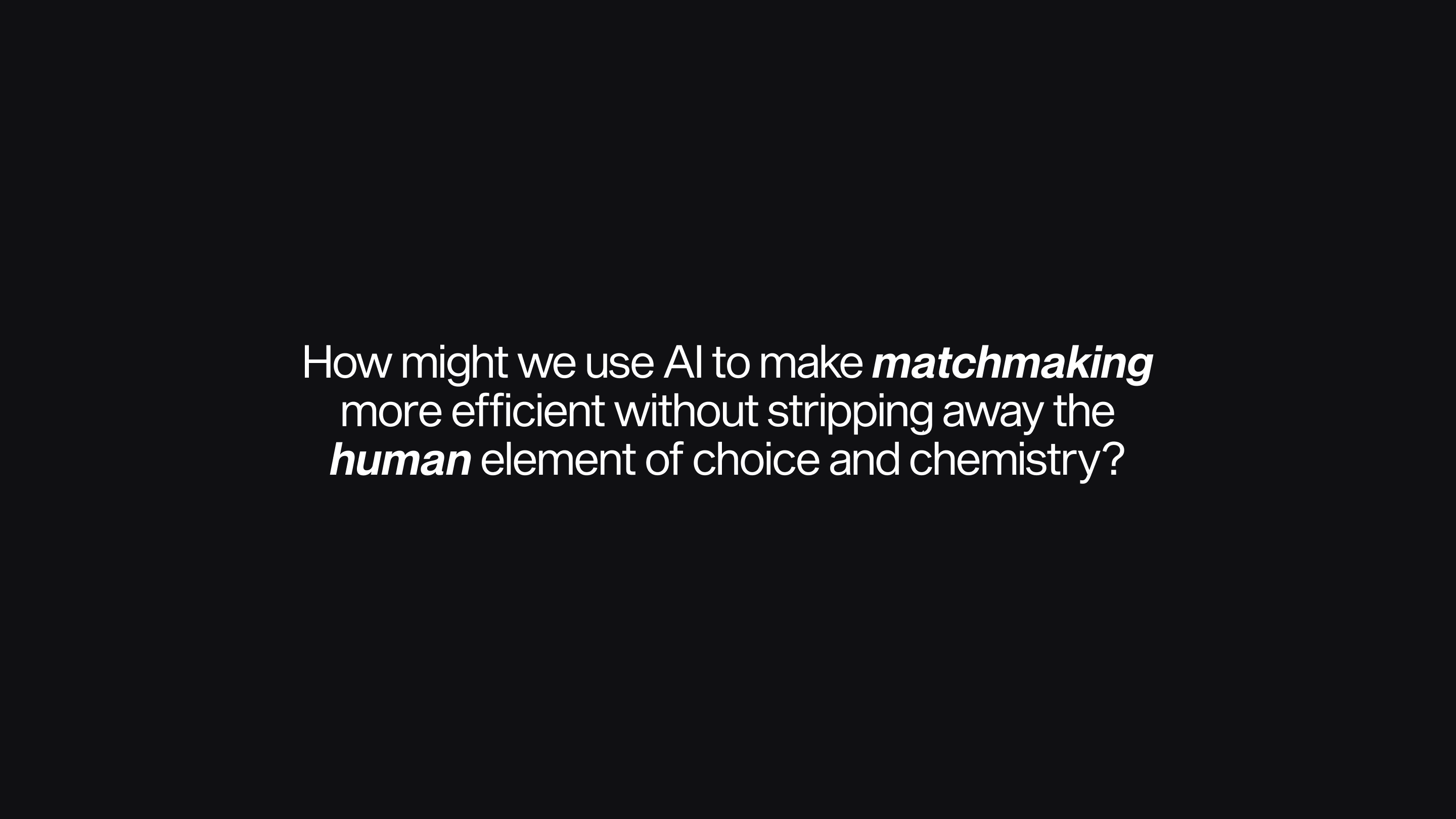
Finding genuine connection in online dating can feel like an exhausting game of chance, often clouded by misleading profiles and surface-level interactions. This led me to ask, “How might we use AI to make matchmaking more efficient without stripping away the human element of choice and chemistry?” Thus came about, FLAIM—an AI-powered matchmaking tool that redefines compatibility testing through Federated Learning, ensuring both privacy and personalization. By securely analyzing real text interactions from an individual's prior text conversations, FLAIM constructs a unique private persona, allowing individuals to be matched based on authentic conversational dynamics rather than generic questionnaires set up by dating apps. Designed to be both a standalone app and a plug-in extension for existing dating platforms, FLAIM also integrates into your preferred matchmaking app, delivering analytical insights on compatibility if both users have enabled the plug-in. Inspired by The Substance (2024)), FLAIM’s visual language mirrors the paradox of control and dependence in the age of AI. In a world where dating apps often feel like an endless loop, FLAIM offers a new path—one where compatibility is not just assumed, but proven by analyses.
- Describe your research process and findings. If you conducted any surveys or interviews, please include the survey form and/or interview questions here. If you conducted secondary research by pulling from online sources, please include a link to your sources. (Max 500 words)
For my research process, I conducted both primary and secondary research to understand the main pain points associated with modern dating apps and how AI could enhance matchmaking while preserving genuine human connection.
Primary Research
To gather insights, I created a Google Form link survey and distributed it across multiple university and networking groups in NYC, Reddit threads focused on dating, online dating, and AI in dating. I received 26 anonymous responses link , which provided valuable qualitative and quantitative data on the frustrations and expectations users have regarding current dating apps.
Simultaneously, I had informal discussions with three of my friends who have experience with online dating. These conversations helped me contextualize my survey findings and gain a deeper understanding of users' personal experiences with apps such as Hinge, Bumble, Tinder, Grindr, and niche dating apps designed for specific ethnic or local communities.
Key Findings
The survey responses and conversations revealed several core frustrations:
- Compatibility Issues: Many users felt that existing apps failed to facilitate meaningful connections and often matched them with incompatible partners.
- Authenticity Concerns: A significant number of respondents expressed fears of being catfished or encountering misleading profiles.
- Redundant Questionnaires: Users found the existing personality and compatibility tests on dating apps to be repetitive, ineffective, and lacking real insight into compatibility.
- Emotional Burnout: Some respondents noted that dating apps felt more like job applications, requiring extensive filtering and selective decision-making—turning what should be an organic process into a draining experience.
One particularly insightful remark from a friend likened the dating app experience to hiring managers filtering through candidates, which sparked my idea of streamlining the profile setup process using AI-driven analysis. Instead of manually answering compatibility questions, users would provide minimal basic information during onboarding, allowing AI to analyze their natural text-based interactions to identify genuine compatibility.
Secondary Research
In addition to my survey and personal conversations, I examined user-generated content on Reddit, watched TikTok videos discussing dating app experiences, and read online articles analyzing trends in modern dating. Through this, I learned about the rise of niche dating apps and growing skepticism around traditional swipe-based platforms. I also researched AI’s potential in personalizing matchmaking while maintaining user privacy.
I deliberately chose user-generated content for my secondary research to ensure a human-centric perspective in my findings. Unlike AI-generated content that is increasingly prevalent online, user-driven discussions retain authenticity and reflect real emotions and experiences. Additionally, Reddit’s bot moderation system effectively distinguishes AI-generated responses from genuine user interactions, ensuring reliability. Most importantly, I needed insights from real users who actively engage with dating apps—not just academic perspectives from scientists studying dating behaviors in a theoretical sense.
Research-Inspired Solution: FLAIM
The culmination of my research led me to develop FLAIM, an AI-powered matchmaking tool designed to enhance compatibility testing while preserving user autonomy. The core question driving my project was: How might we use AI to make matchmaking more efficient without stripping away the human element of choice and chemistry?
FLAIM leverages Federated Learning to analyze an individual’s real text-based interactions privately, creating a personalized compatibility profile without exposing their data to external servers. Federated Learning is a machine learning technique that allows models to be trained across decentralized devices without transferring raw data to a central server. This ensures privacy and security while still improving AI-driven recommendations.
Unlike traditional dating apps that rely on static questionnaires, FLAIM ensures matches are based on authentic conversational dynamics rather than self-reported traits. The tool functions as both a standalone app and a plug-in extension for existing dating platforms, allowing users to integrate compatibility insights seamlessly.
Here I referenced, to understand Federated Learning:
- Google AI Blog: https://ai.googleblog.com/2017/04/federated-learning-collaborative.html
- YouTube Explanation: https://youtu.be/zqv1eELa7fs?si=GMhS6TMrQd0XM3DM
- Describe your most important design decisions. What research findings and/or user testing results led you to make these decisions? (Max 500 words)
The most important design decisions I made while developing FLAIM were centered around creating a AI-enhanced matchmaking experience that addressed user frustrations with existing dating apps. These decisions were heavily influenced by my primary research findings, user surveys, and secondary research from user-generated content on Reddit and TikTok.
1. Minimal Onboarding Process
One of the major pain points discovered through user surveys was the tedious onboarding process on dating apps, where users had to answer extensive personality and compatibility questionnaires. Users described this process as feeling like a job application, which created decision fatigue. Some even felt that they were unable to share their “real personality” through the pre-determined prompts.
Decision: To address this, I designed FLAIM to require only basic onboarding information. Instead of traditional questionnaires, the AI not only analyzes a user’s previous conversational patterns, but also analyses it concurrently, evolving over time to determine compatibility at any given point of time. This ensures a streamlined user experience without compromising match quality.
2. AI-Powered Conversational Compatibility Matching
Another key frustration found in user surveys was the lack of meaningful matches. Many responders on my Questionnaire felt that existing dating app algorithms were ineffective at facilitating genuine compatibility beyond surface-level interests. Some of my friends also expressed concerns about the authenticity of profiles, fearing that they were going to get catfished.
Decision: FLAIM leverages Federated Learning to privately analyze real text interactions, constructing a compatibility profile based on users' actual communication styles rather than self-reported traits. This approach ensures greater authenticity and a more personalized matchmaking process while maintaining data privacy.
3. Integration with Existing Dating Apps
A significant insight from my secondary research on TikTok and Reddit, was that users were hesitant to migrate to an entirely new platform. Many were already invested in existing dating apps and found it inconvenient to switch or toggle between various platforms.
Decision: Instead of forcing users to adopt a standalone app, I designed FLAIM as both a standalone app and a plug-in extension that integrates with existing dating platforms. This way, users can gain analytical insights on compatibility while still using their preferred dating app. If both users enable the plug-in, they can see compatibility insights before engaging in conversation.
4. Visual Identity Inspired by the Paradox of AI-Driven Romance
I had initially designed a completely different visual system for FLAIM; however, felt that I was straying away from my conceptual approach, until I decided to re-design the whole thing! That is when I took a break from the research and sought out visual references for my concept. This led me to be inspired by The Substance (2024), a film that recently became acclaimed for its fine balance between convenience and the risk of dehumanization; I wanted the visual identity of FLAIM to reflect this paradox.
Decision: I developed a minimal yet enigmatic design language that mirrors the tension between control and dependence in AI-assisted matchmaking. The branding uses certain icons and elements to represent the evolving dependance of humans on technological guidance in a data-driven age, all while passing the WCAG accessibility standards.
P.S. I also made a cheeky little animation for the Logo to make it seem more legitimate!
5. Privacy-First Approach
Privacy concerns were a raised in my Questionnaire as well as feedback from my friends, especially with the growing mistrust of AI-powered platforms handling sensitive data.
Decision: FLAIM employs Federated Learning to ensure that user data never leaves their device. Compatibility profiles are generated locally, preventing data from being stored on centralized servers, thus enhancing security and trust.
Each of these design decisions was a direct response to the pain points uncovered during my research, ensuring that FLAIM not only solves common dating app frustrations but also enhances the matchmaking process in a way that respects user autonomy, privacy, and authenticity.
Built With
- adobe
- deathtostock
- figma
- jitter

Log in or sign up for Devpost to join the conversation.