-
-
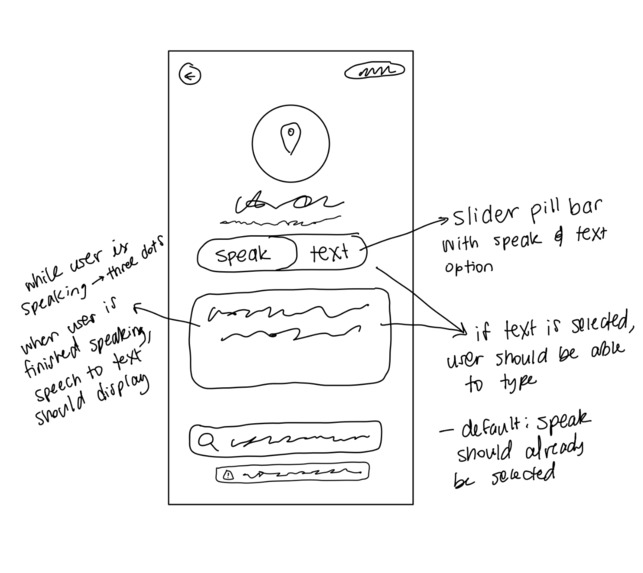
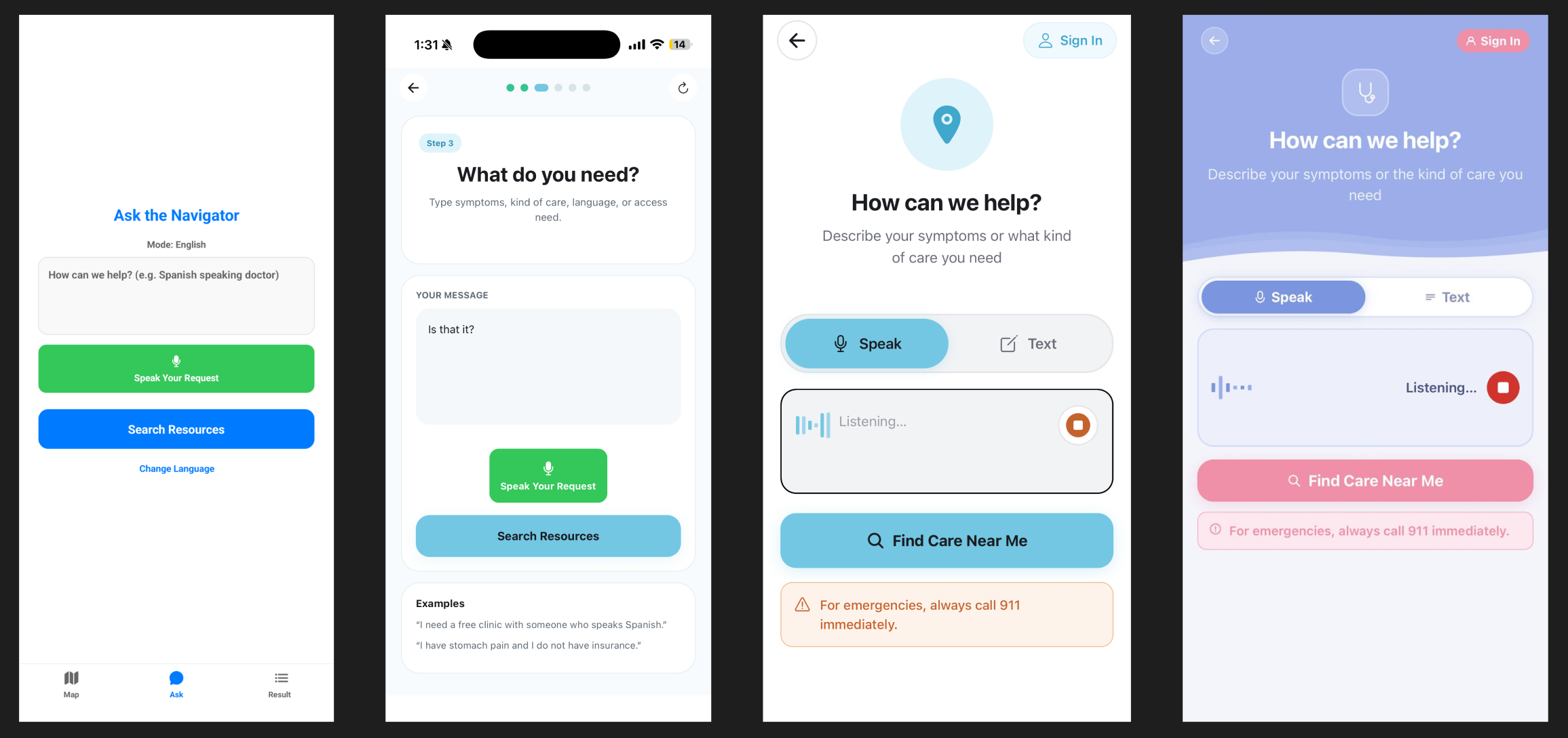
UI Sketch - Ask Screen
-
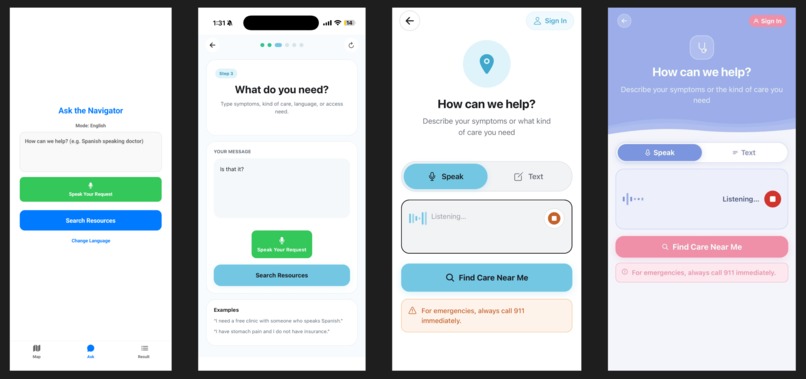
UI Iterations - Ask Screen
-
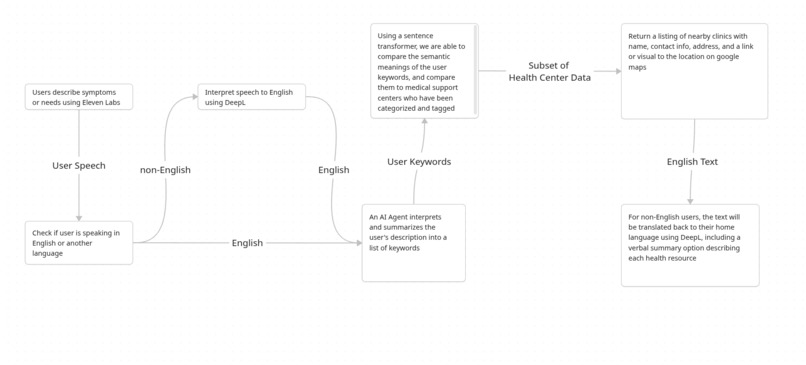
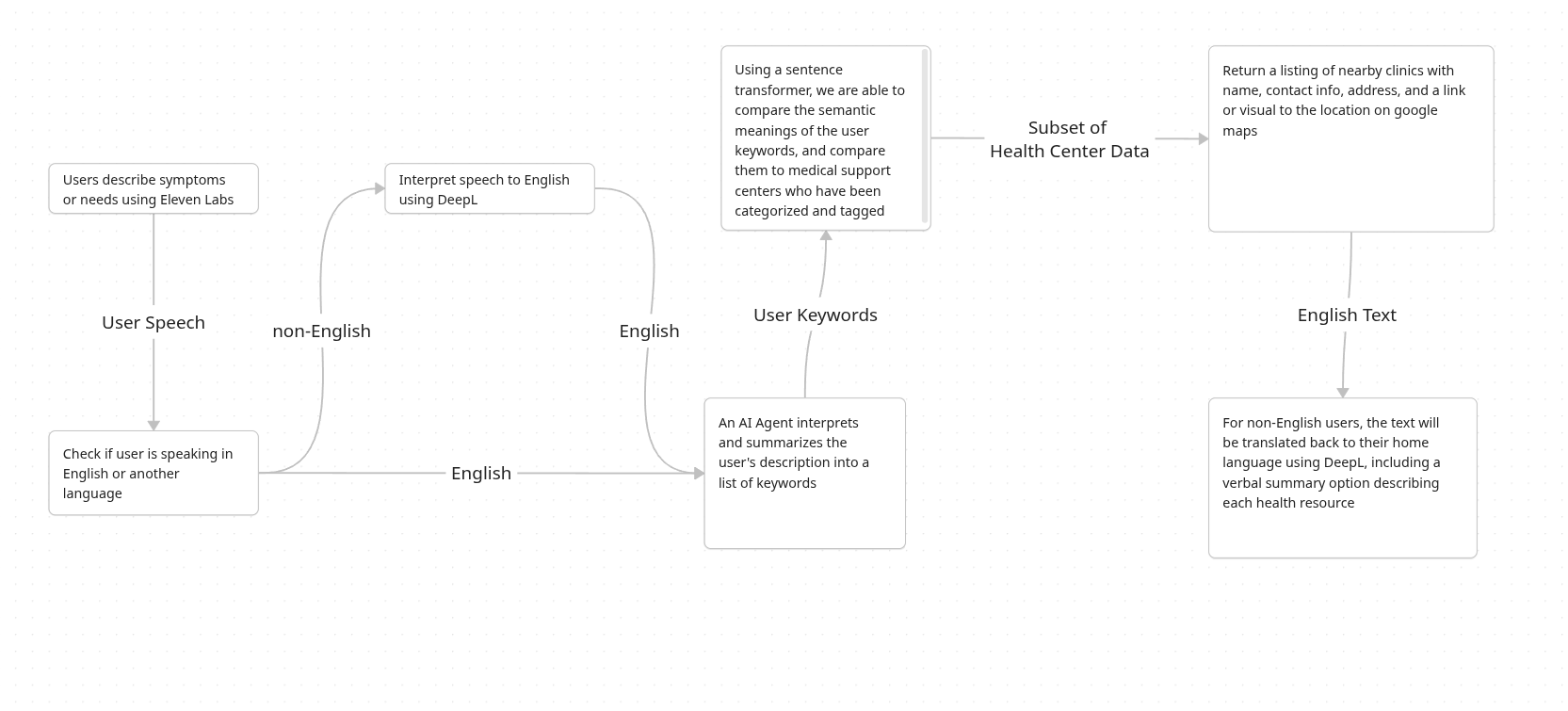
Application Pipeline
🌍 Claro – Multilingual AI Health Resource Navigator
The Problem
Many undocumented immigrants, refugees, and other vulnerable communities struggle to access healthcare resources in the United States.
Barriers like language differences, lack of information about local clinics, and difficulty navigating healthcare systems prevent people from finding the care they need.
Even when services exist nearby, people often don’t know where to look or how to ask for help.
Our goal was to build a tool that makes discovering healthcare resources simple, accessible, and language-inclusive.
Our Solution
Claro is a multilingual, voice-enabled mobile app that helps users find nearby clinics and health resources using natural language.
Instead of searching through complicated websites, users can speak in their own language, and the app processes their request and guides them toward relevant healthcare services.
Claro removes key barriers by combining speech recognition, translation, and AI-powered understanding to make healthcare discovery easier and more accessible.
Why the Name “Claro”?
The word “Claro” means “clear” in Spanish.
We chose this name because our goal is to provide clear guidance to healthcare resources, regardless of the user’s language or background.
Healthcare systems can often feel confusing and overwhelming, especially for vulnerable communities. Claro aims to make the path to care simple, understandable, and accessible, breaking down language barriers that prevent people from getting help.
Core Features
🎙 Voice-Based Requests Users can record their request instead of typing, making the app accessible to people who may not feel comfortable navigating text-heavy interfaces.
Powered by:
ElevenLabs Speech-to-Text
🌐 Multilingual Translation User requests are translated so the system can process them regardless of the language spoken.
Powered by:
DeepL API
🧠 AI-Powered Request Understanding The system interprets natural language requests and determines what type of healthcare assistance the user is looking for.
Powered by:
Google Gemini API
📍 Local Clinic Discovery The app retrieves relevant healthcare resources from a database of clinics and services, powered by MongoDB
How We Built It
Frontend:
- React Native
- Expo
Backend:
- Python
- FastAPI
- Uvicorn
APIs:
- Google Gemini
- DeepL
- ElevenLabs
Database:
- MongoDB
Antigravity Usage
Our team used Google Antigravity as our primary AI-powered development environment (IDE) throughout the project.
Antigravity helped accelerate development by assisting with code comprehension, debugging, and implementation across both the frontend and backend portions of the application. As we integrated multiple APIs (Gemini, DeepL, and ElevenLabs) and built a mobile frontend with a Python backend, Antigravity allowed us to quickly understand unfamiliar code, generate implementation ideas, and iterate on fixes.
We used it to:
- analyze and understand existing code
- troubleshoot integration issues between APIs
- generate and refactor functions
- improve error handling and request flow
- speed up iteration during development
By using Antigravity as an AI-assisted IDE, our team was able to move faster during the limited time of the hackathon and focus more on building features rather than getting stuck on implementation details.
Challenges We Faced
One of the biggest challenges was coordinating development across multiple parts of the system. While some teammates worked on the backend APIs and database, others worked on the mobile interface. Managing Git branches, merges, and syncing environments required careful coordination.
Another challenge involved debugging the voice processing pipeline. At one point, the app successfully recorded audio but would get stuck processing the request. Solving this required tracing the issue across the frontend recording system, backend endpoints, and AI APIs until we improved the request flow and error handling.
We also faced API integration challenges, including deprecation warnings from AI libraries, timeout errors during requests, and ensuring that speech recognition, translation, and AI interpretation worked smoothly together.
Impact & Future Work
Claro aims to make healthcare discovery more accessible for underserved communities, particularly those facing language barriers.
Future improvements could include:
- expanding the clinic database to additional cities
- adding map-based navigation for nearby clinics
- integrating conversational AI guidance for healthcare questions
- implementing full voice responses using text-to-speech
Our vision is to create a platform where finding healthcare help is as easy as asking a question — in any language.
Built With
- antigravity
- claude
- css
- deepl
- elevenlabs
- expo.io
- fastapi
- figma
- gemini
- html
- javascript
- mongodb
- obsidian
- python
- react
- reactnative
- typescript
- uvicorn


Log in or sign up for Devpost to join the conversation.