-
-
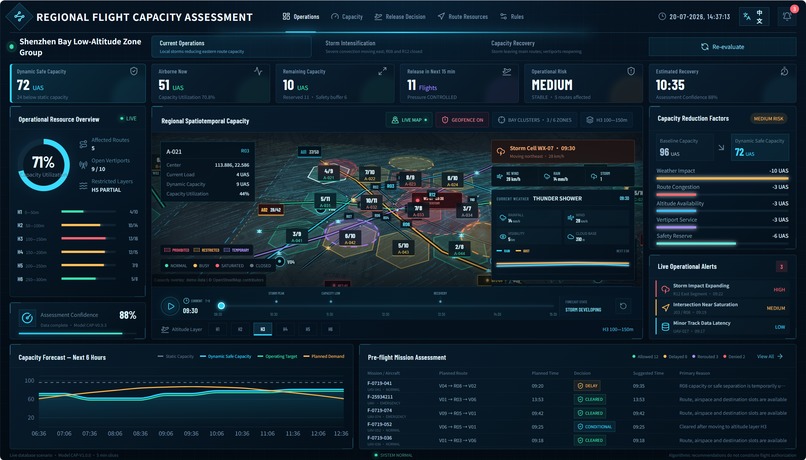
Operations
-
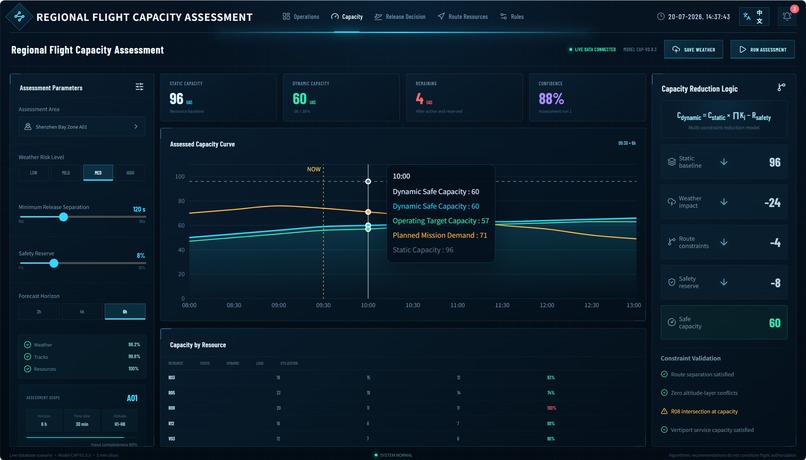
Capacity
-
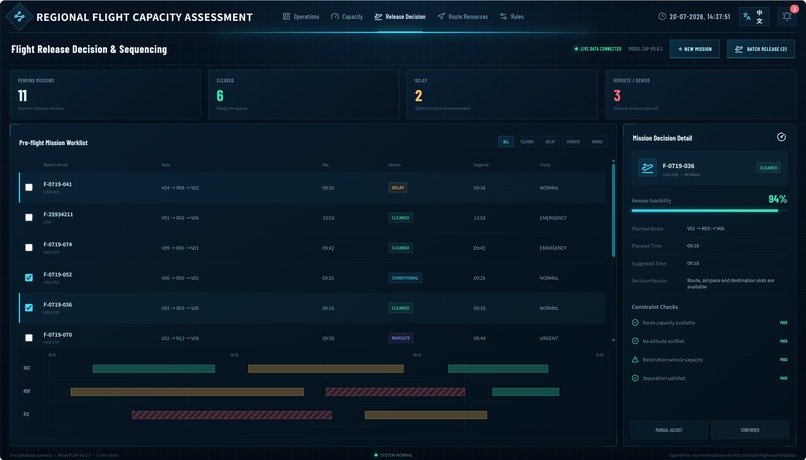
Release Decision
-
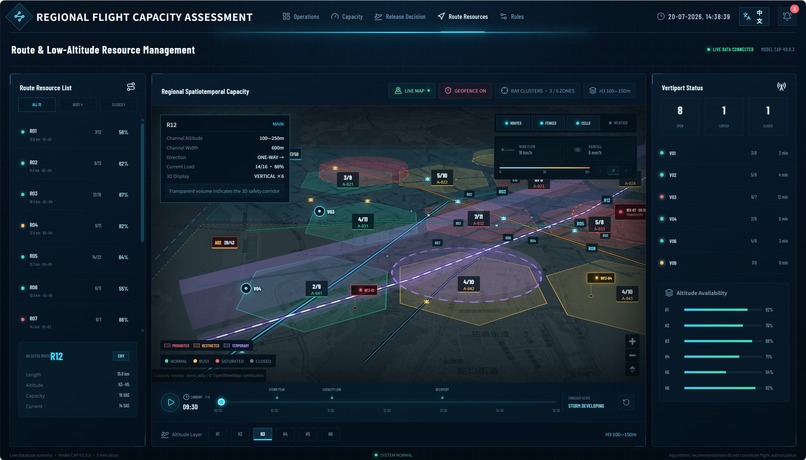
Route Resources-2
-
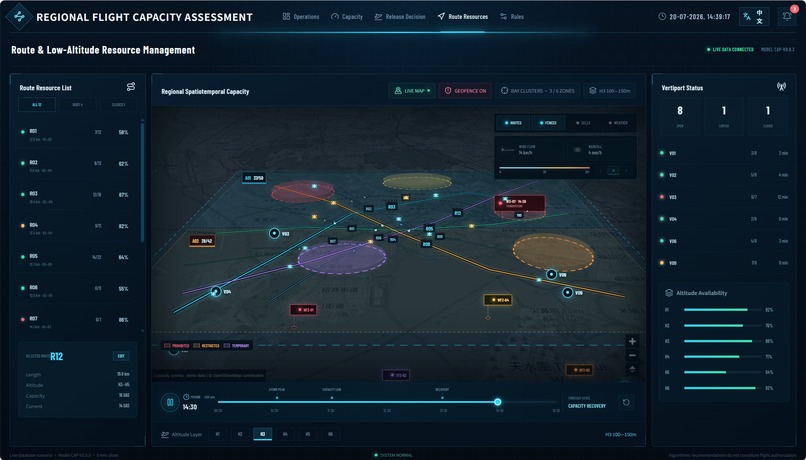
Route Resources-3
-
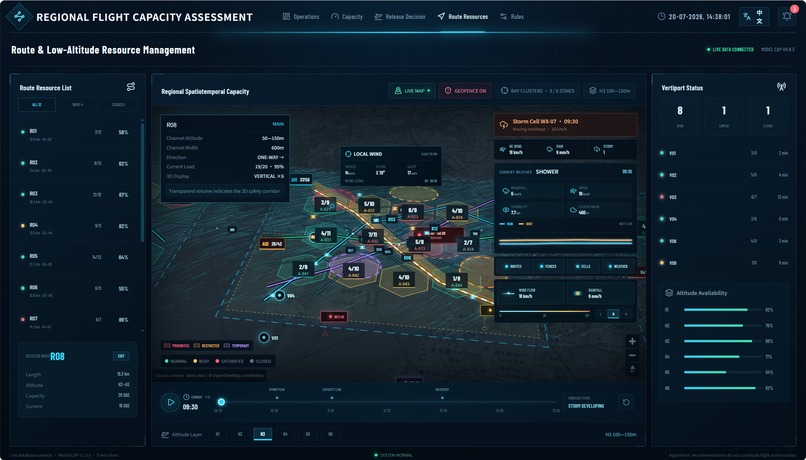
Route Resources-1
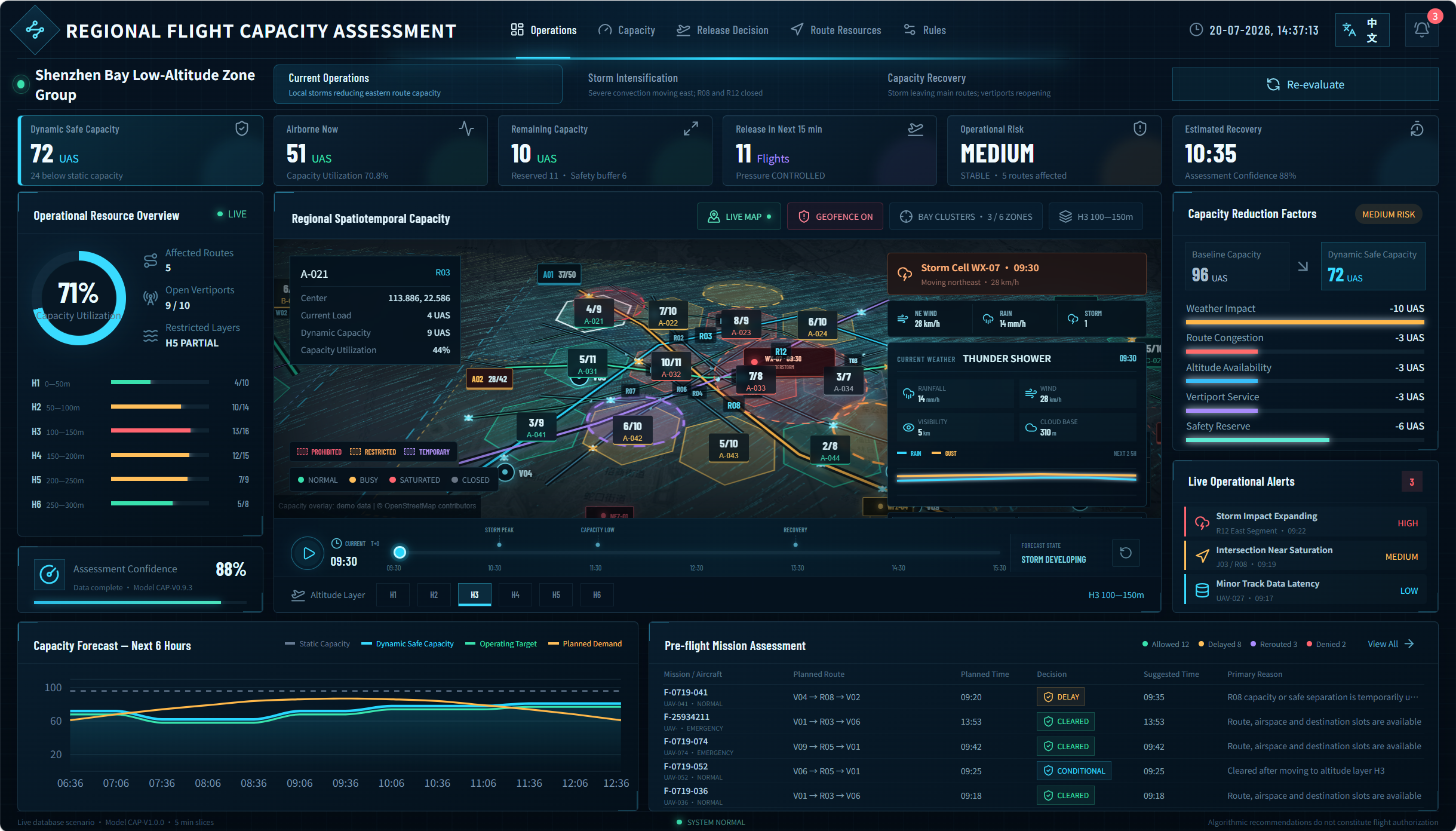
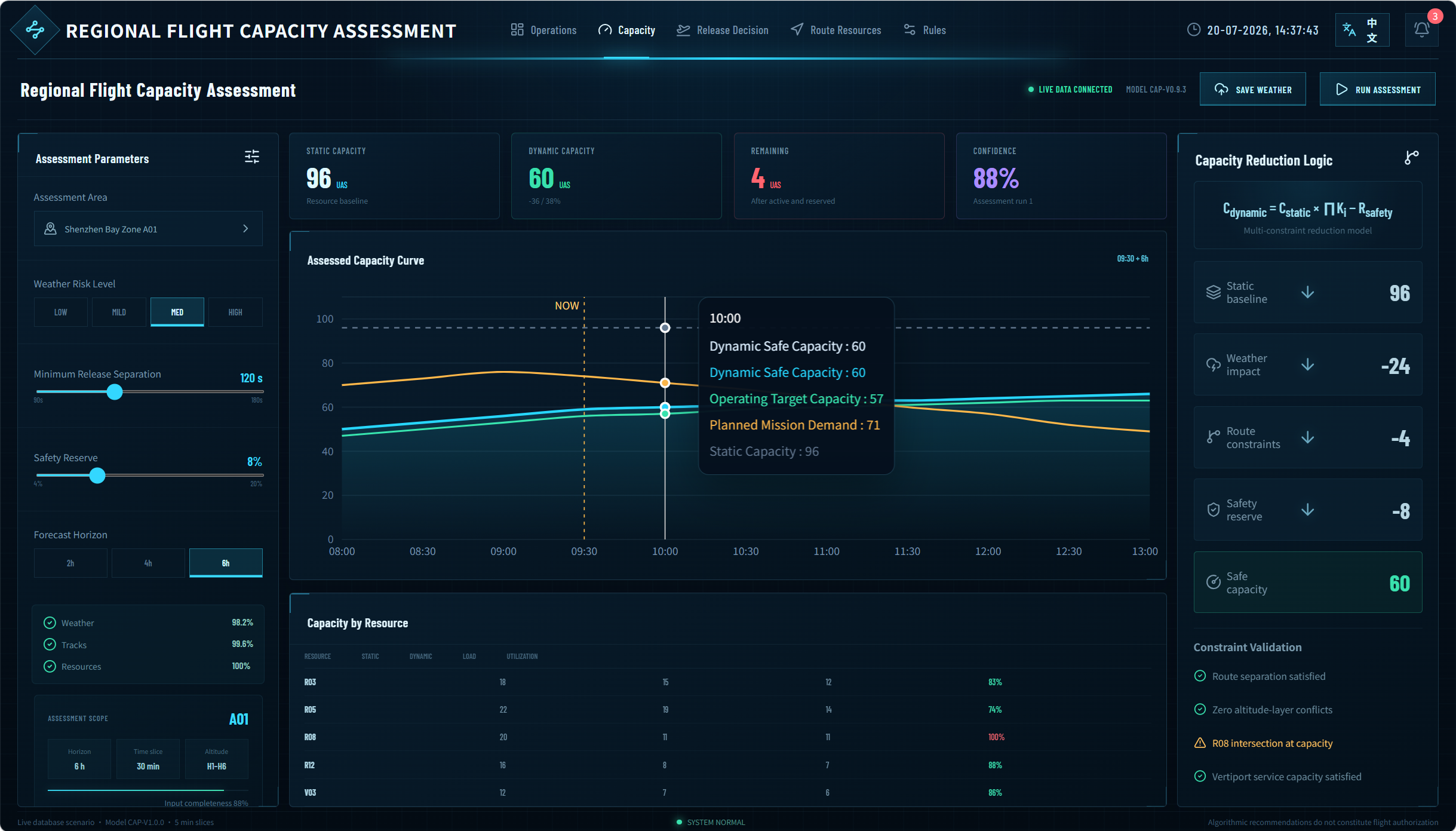
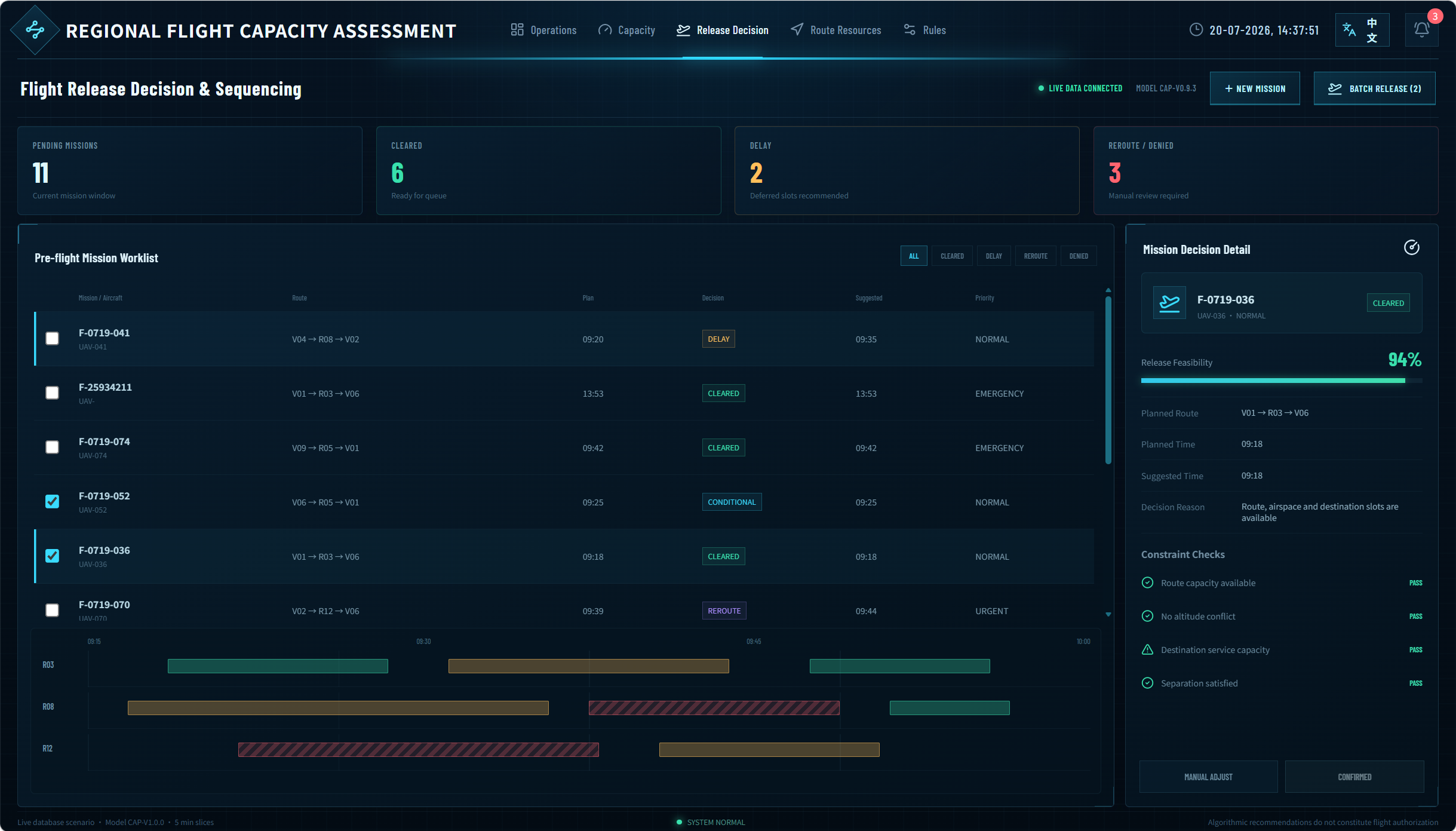
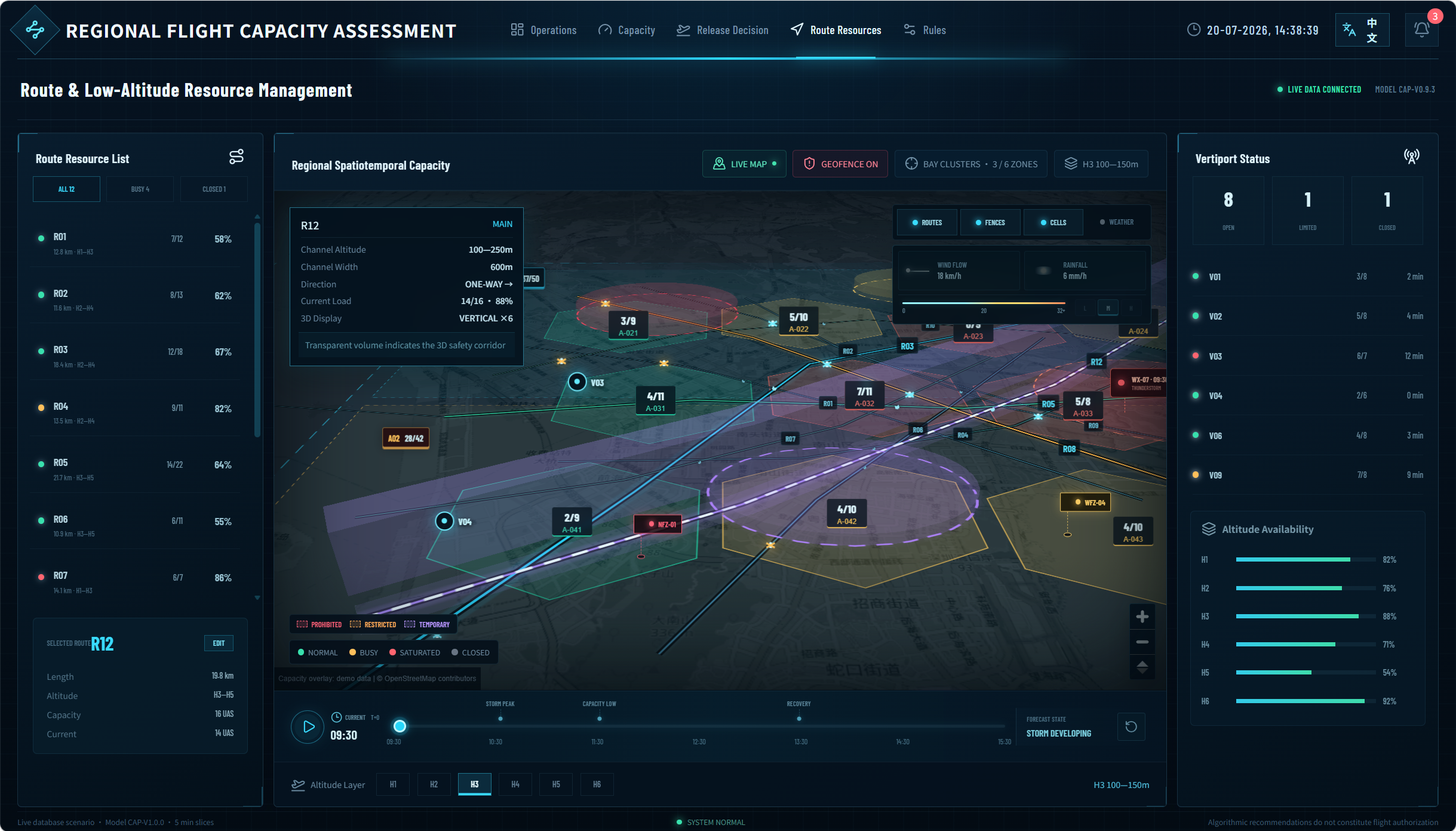
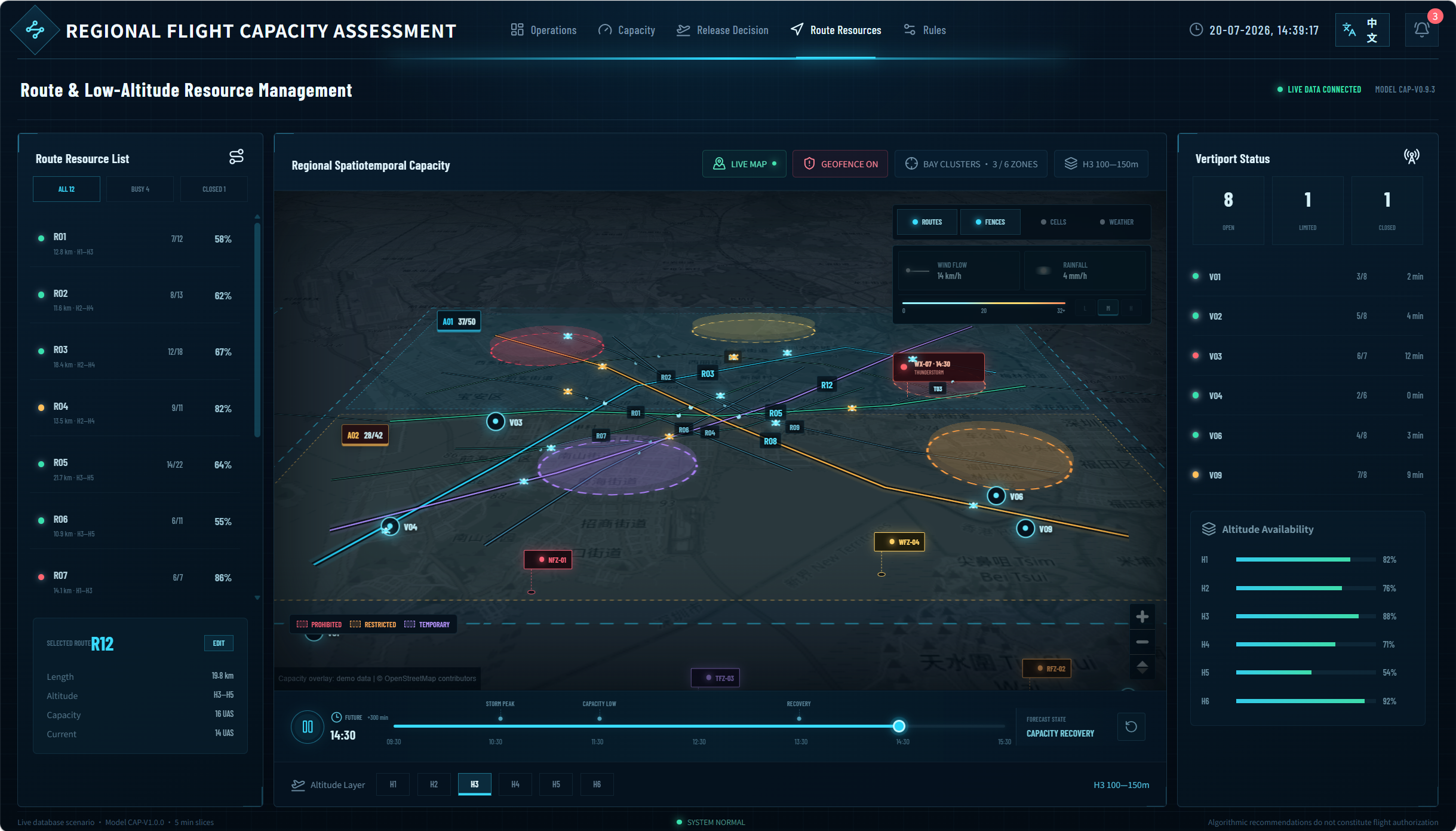
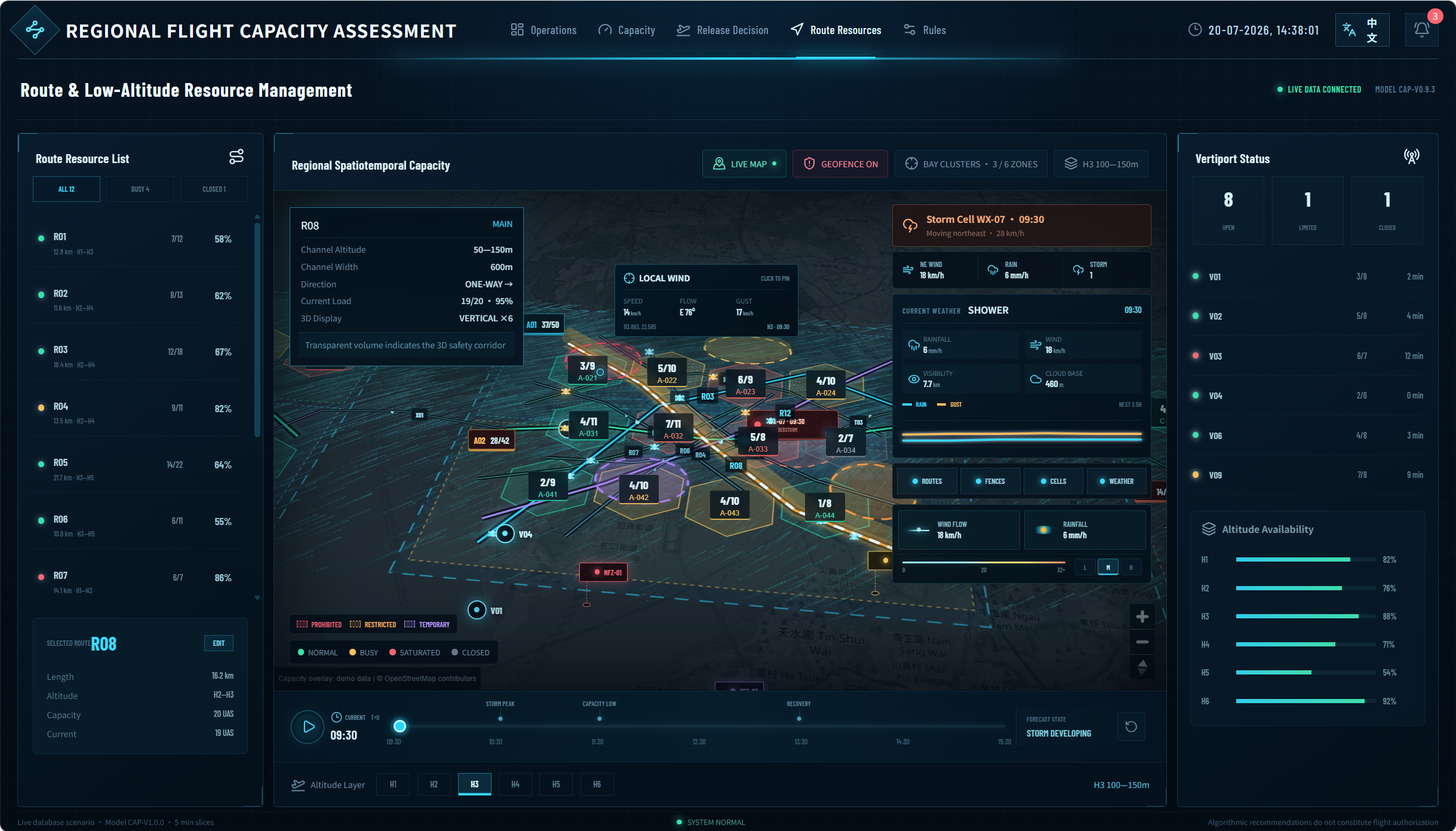
Each reduction factor includes its contribution and explanation. The decision engine evaluates spatial, temporal, altitude, separation, priority, and vertiport constraints to recommend clearance, conditional clearance, delay, rerouting, or denial. The complete platform can be launched with a single Docker Compose command. What We Learned Capacity assessment is not valuable because it produces a number. It is valuable because it explains why that number changed and what operators should do next. We also learned to balance algorithmic sophistication with practical usability. We began with transparent, testable rules while leaving room for more advanced spatial analysis and forecasting. Challenges One major challenge was keeping complex frontend interactions, realtime events, and backend domain models consistent. Database behavior was another lesson: differences between SQLite and PostgreSQL foreign-key enforcement exposed initialization-order issues that helped us build a more reliable seeding process. We also ensured that inconsistent states—such as negative capacity or occupancy exceeding capacity—could never pass silently. This project strengthened our belief that the future of low-altitude transportation requires more than additional airspace. It requires clear, explainable, and trustworthy digital decision-making.
Built With
- airspacecapacity
- aviationsafety
- digitaltwins
- docker
- fastapi
- gis
- lowaltitudeeconomy
- postgresql
- python
- realtimecalculation
- uav


Log in or sign up for Devpost to join the conversation.