Inspiration
Making cocktails at home sounds simple until you face the real questions: What should I make for this occasion? Which recipe fits my taste and budget? What ingredients do I already have, and where can I buy the rest nearby?
We created 品酒 to make the entire cocktail journey feel more personal and practical. Instead of only providing a recipe, 品酒 connects taste preferences, cocktail recommendations, ingredient planning, nearby purchasing, step-by-step guidance, and post-drink feedback into one experience.
What it does
品酒 is an AI-powered cocktail experience assistant. It helps users:
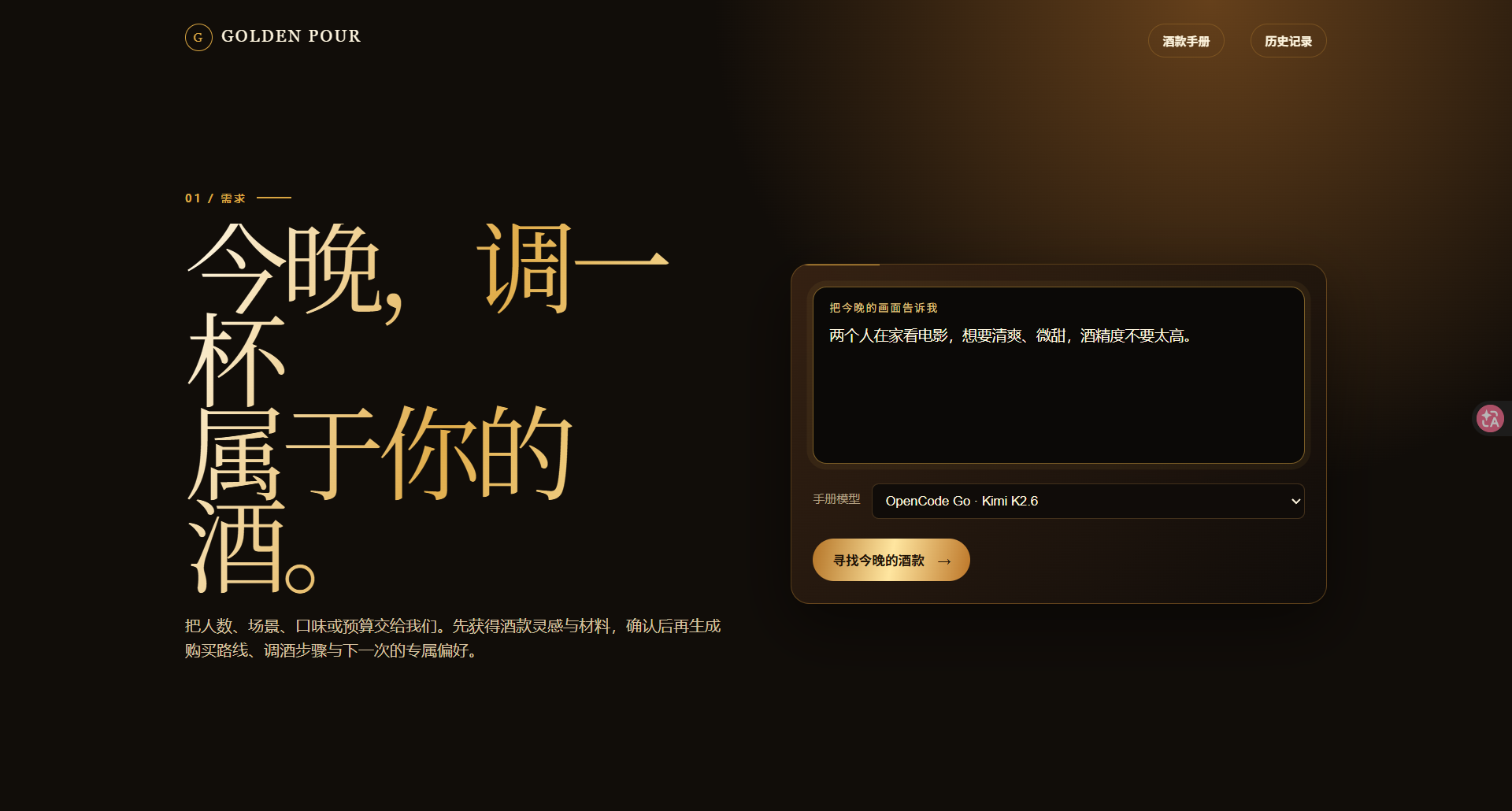
- Describe an occasion, taste preference, serving size, and budget.
- Receive personalized cocktail recommendations.
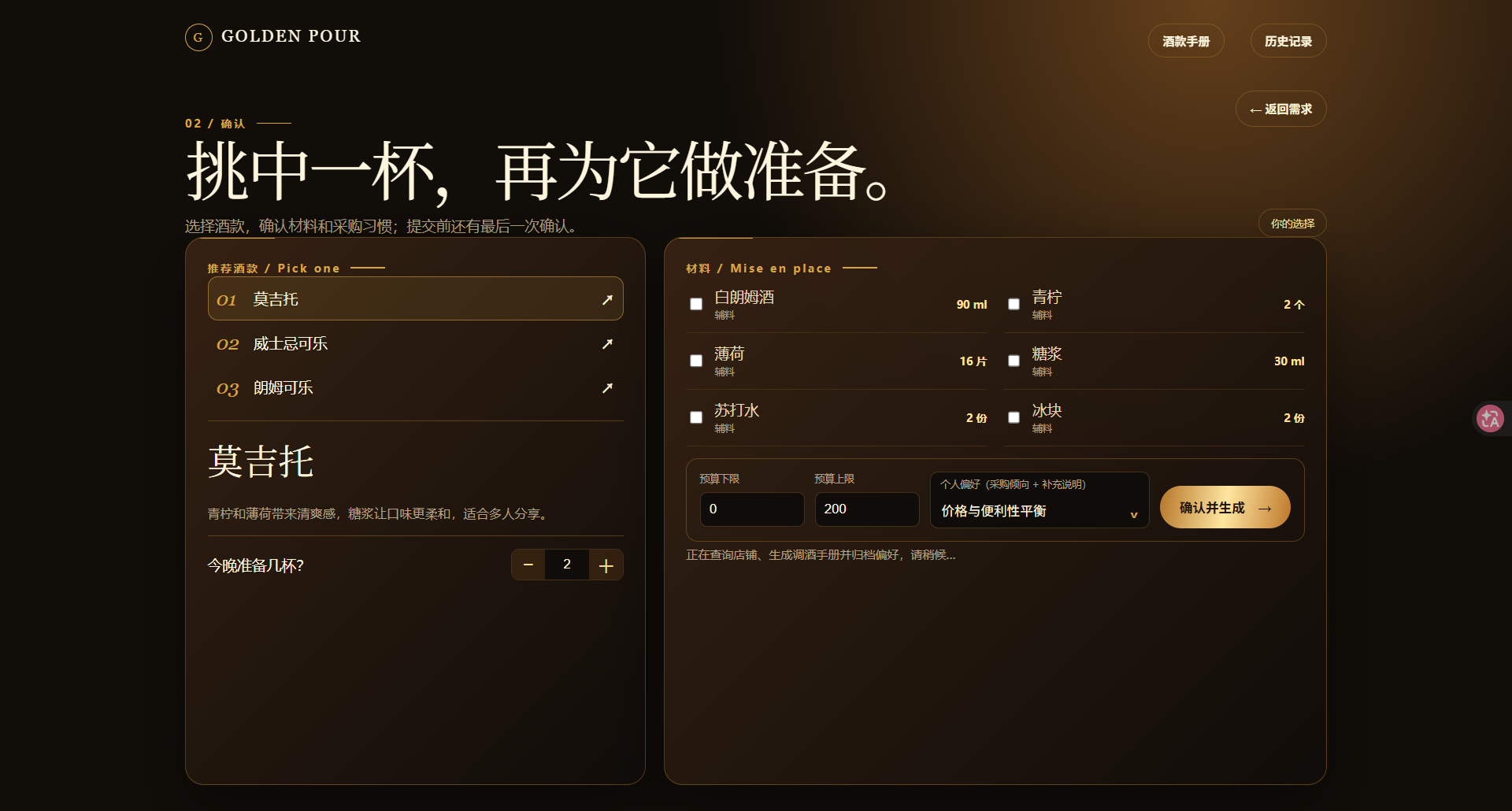
- Select a cocktail and specify ingredients already available at home.
- Generate a standardized ingredient list with quantities.
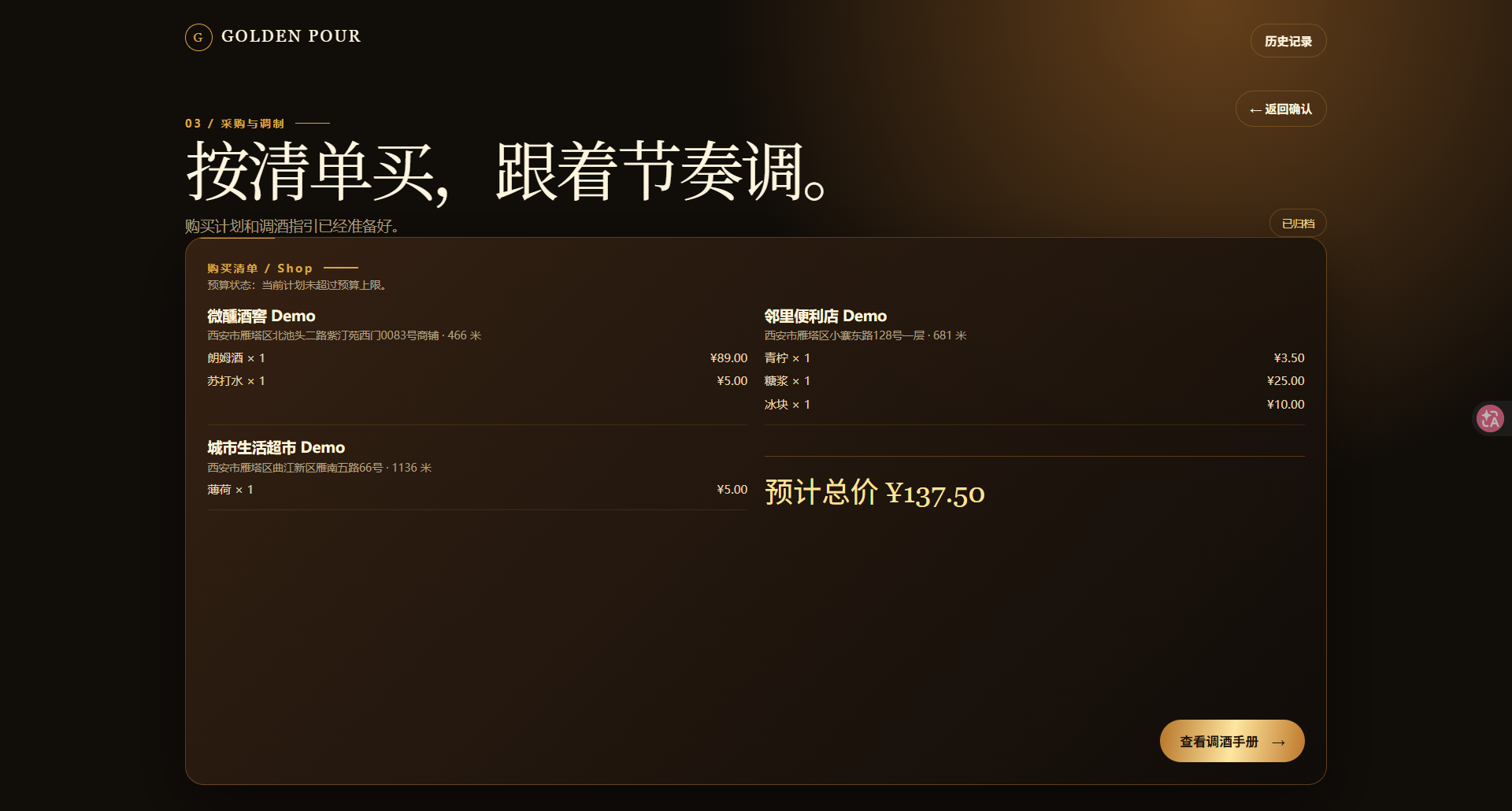
- Build a purchase plan based on budget and preferences such as lowest price, nearest store, or fewer stores.
- Find nearby stores and compare demo inventory, prices, and availability.
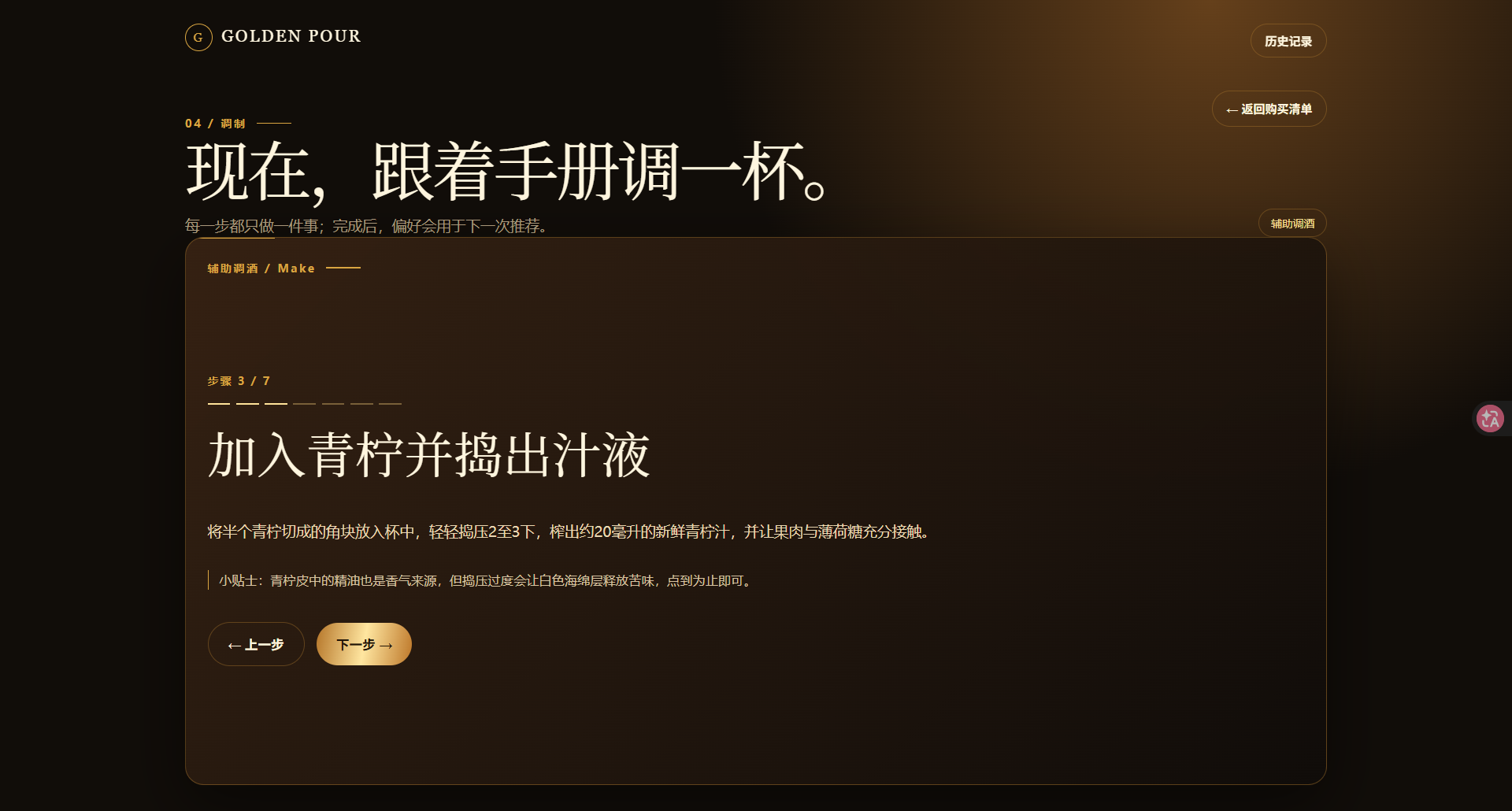
- Receive beginner-friendly cocktail-making instructions based on web-sourced recipe information.
- Save feedback and session summaries so future recommendations can better reflect the user’s preferences.
How we built it
We built 品酒 as a modular Python web application using FastAPI for backend APIs and HTML/CSS/JavaScript for lightweight interactive frontends.
The AI workflow is organized with LangGraph: it turns user intent into cocktail recommendations, confirms serving and budget constraints, normalizes ingredient quantities, and prepares structured purchase requests. We used DeepSeek through an OpenAI-compatible API for recommendation, recipe explanation, and memory summarization.
For cocktail knowledge, the project can use Firecrawl to search and extract relevant recipe sources. For purchasing, we designed a merchant-profile layer that separates store discovery from product-level price and inventory data. The current demo uses local store data, while the architecture supports future integration with Amap for nearby POI search.
We also added a SQLite-backed memory agent that records meaningful milestones—recommendations, purchases, instructions, and feedback—and compresses them into useful preference summaries for later sessions.
Challenges we ran into
The biggest challenge was connecting a creative experience with real-world constraints. A cocktail recommendation is easy to generate, but a useful recommendation must account for ingredient availability, quantities, units, price, budget, and the user’s willingness to visit multiple stores.
We also had to normalize ingredient names and units. For example, “Gin,” “琴酒,” and “杜松子酒” may refer to the same ingredient, while vague recipe wording such as “a little lime juice” is not usable for procurement. We introduced material aliases, a controlled unit list, and quantity validation before an ingredient enters the purchasing flow.
Another challenge was data reliability. Map POI data can identify stores, but it cannot guarantee real-time inventory or price. We therefore designed clear source types and confidence fields so that only sufficiently complete and trustworthy merchant data is used for price comparison.
Accomplishments that we're proud of
We are proud that 品酒 goes beyond being a recipe generator. It creates an end-to-end flow from “I want a drink” to “I know what to buy, where to buy it, and how to make it.”
We are especially proud of:
- Combining personalized recommendation, purchasing, and preparation in one workflow.
- Supporting budget limits and multiple purchasing preferences.
- Building ingredient normalization and alias matching for practical store search.
- Designing a merchant data model that treats price and inventory reliability seriously.
- Adding persistent session memory to make the experience improve over time.
- Providing graceful local fallbacks when external web-search services are unavailable.
What we learned
We learned that AI experiences are most valuable when they turn open-ended user intent into clear, actionable decisions. Good prompts alone are not enough; structured data, validation, fallback strategies, and transparent assumptions matter just as much.
We also learned how to design an agent workflow around confirmation points. Asking users to confirm servings, existing ingredients, budget, and shopping preferences greatly improves the usefulness of the final plan.
Most importantly, we learned that personalization should be built responsibly. Remembering meaningful preferences can improve future recommendations, but storing unnecessary raw conversations or sensitive information should be avoided.
What's next for 品酒
Next, we want to connect 品酒 to real-time merchant APIs and verified inventory sources, so purchase plans can reflect actual availability.
We also plan to add:
- Route optimization that balances total cost, distance, opening hours, and number of stores.
- More detailed flavor profiles and visual cocktail recommendations.
- Barcode or image-based recognition of ingredients already at home.
- Health-aware suggestions, including low-alcohol and low-sugar options.
- Social features for planning cocktails with friends.
- User controls for viewing, editing, exporting, or deleting saved preference memories.
Built With
- artificial-intelligence
- cocktails
- fastapi
- food-and-drink
- generative-ai
- langgraph
- llm
- mixology
- personalization
- python
- recommendation-engine
