-
-
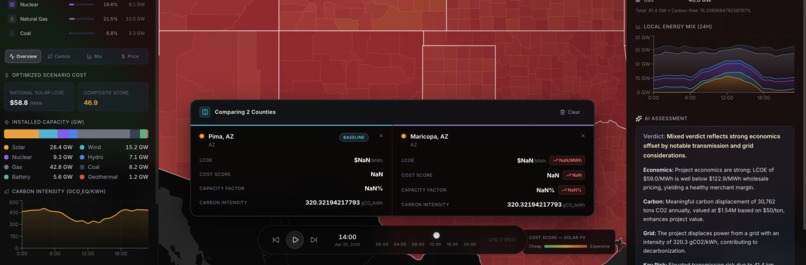
Comparing two counties
-
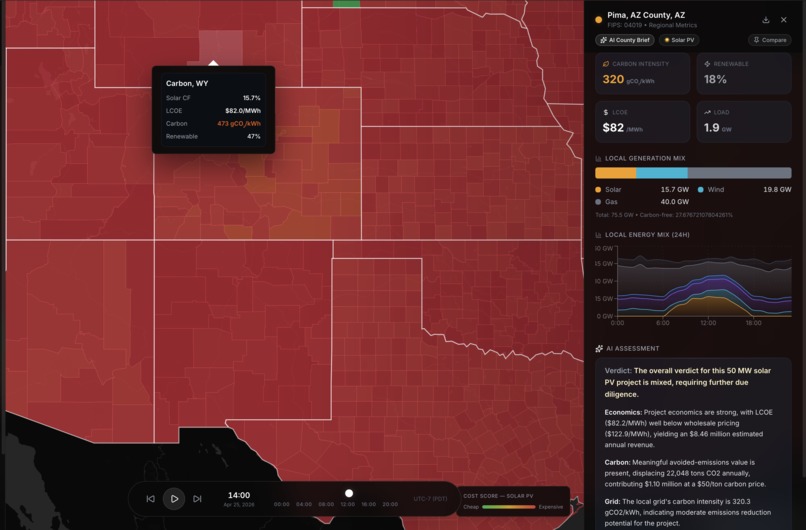
Display counties detail
-
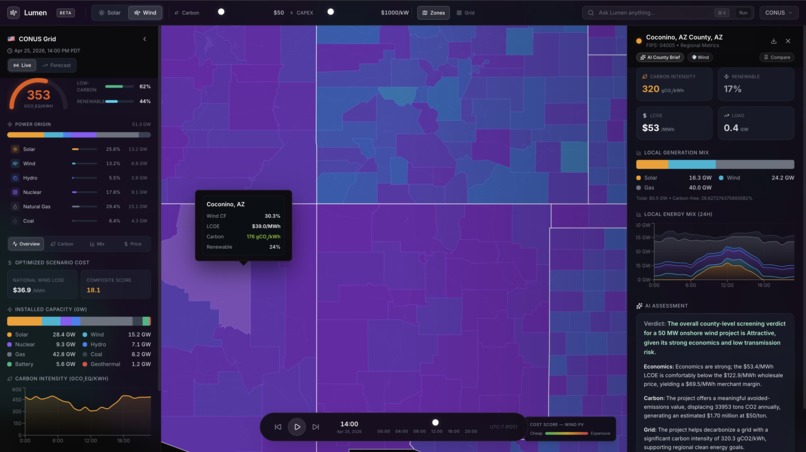
Weather Map
Inspiration
The clean energy transition is accelerating, but renewable energy planning is still slow, fragmented, and expensive. Developers, corporations, and policymakers often need to compare weather conditions, electricity prices, carbon intensity, and infrastructure access across many disconnected sources.
We were inspired by one question:
What if anyone could instantly discover the best places to build or buy renewable energy using AI?
Project Lumin was created to make renewable energy intelligence fast, visual, and accessible.
What it does
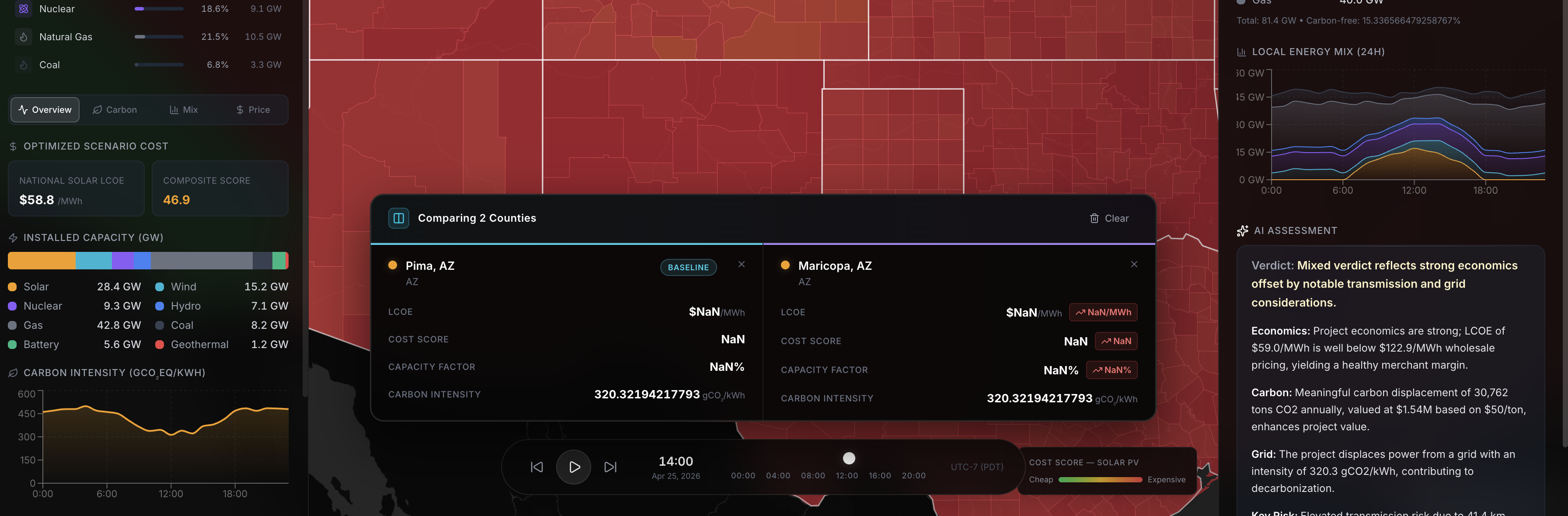
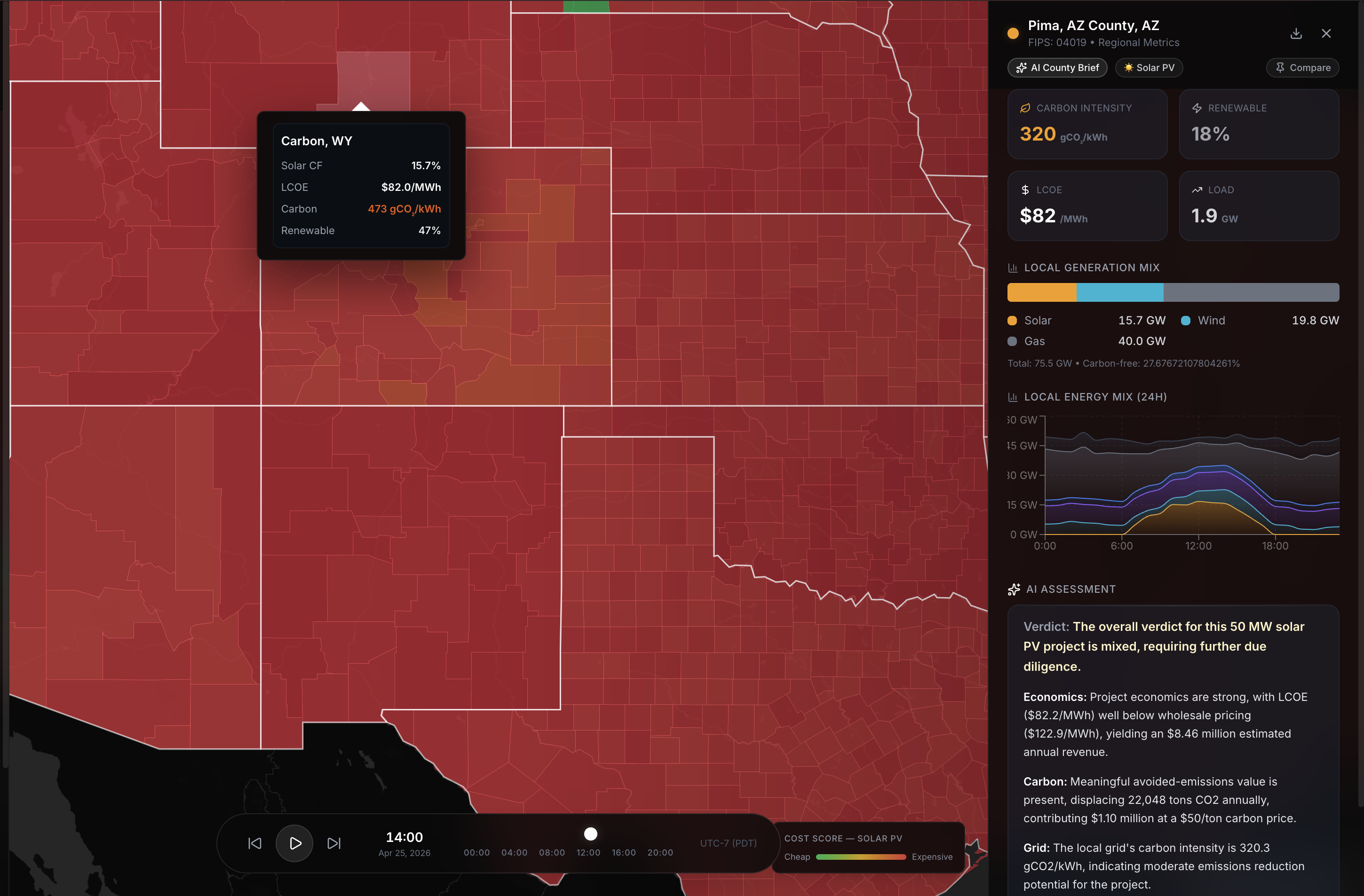
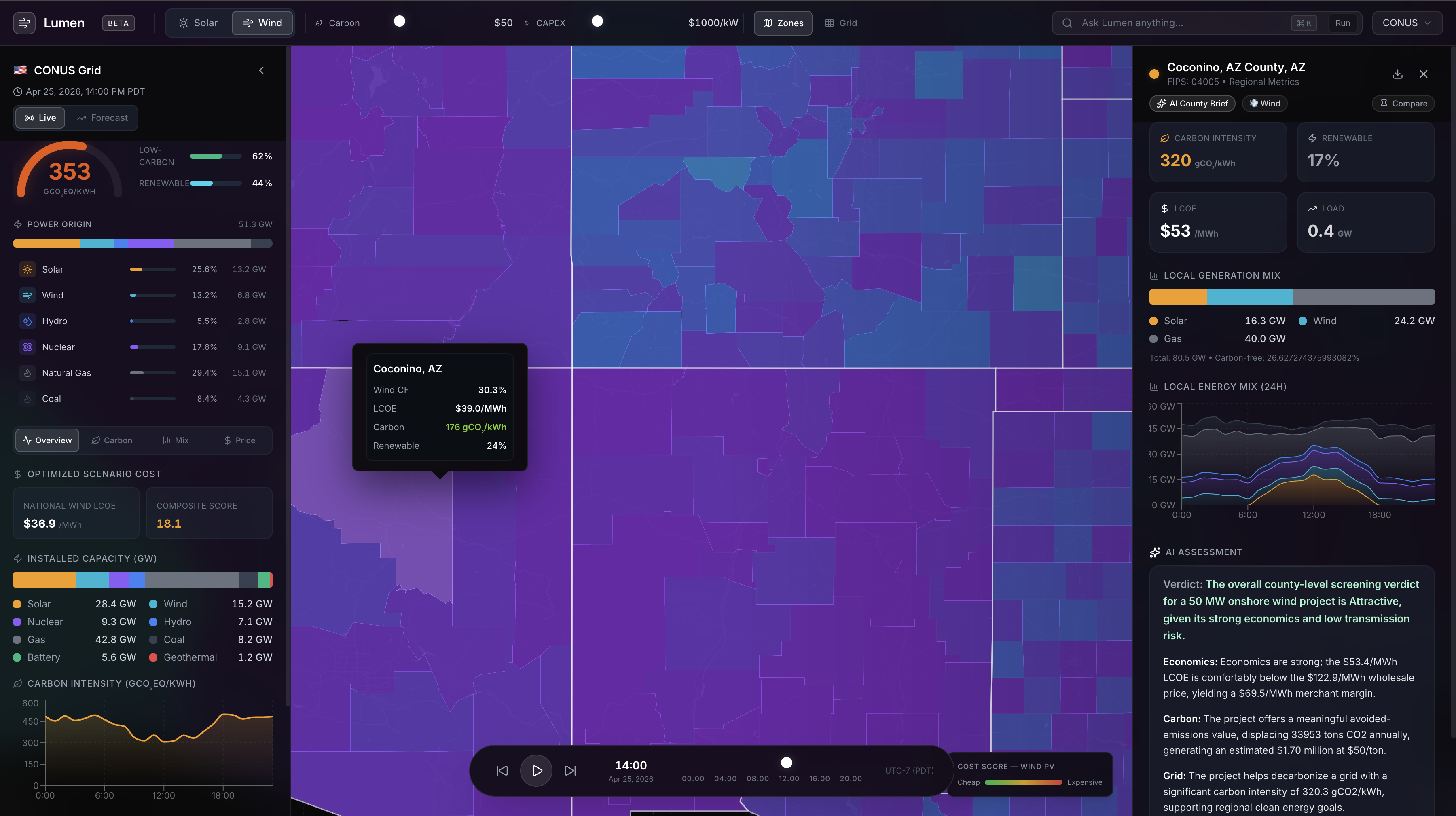
Project Lumin is an AI-powered renewable energy optimization platform that helps users identify the most cost-effective and sustainable locations for clean energy projects.
Users can:
- View an interactive U.S. heatmap of renewable energy opportunity
- Compare regions for Solar PV and Wind development
- Analyze projected LCOE, revenue potential, and carbon impact
- Search using natural language queries
- Click locations to receive AI-generated site assessment briefs
- Explore how scenario changes affect outcomes in real time
Example query:
Show me the cheapest places to build 50MW of wind in Texas.
How we built it
Frontend
- React
- TypeScript
- Deck.gl
- MapLibre
Backend
- FastAPI
- Python
- REST API architecture
- SQLite database
Data & Analytics
We combined multiple public datasets covering:
- Renewable resource availability
- Grid carbon intensity
- Electricity pricing
- Transmission infrastructure
- Power generation assets
We developed scoring models using:
- Estimated generation potential
- LCOE calculations
- Revenue opportunity
- Carbon displacement value
- Infrastructure proximity
AI Layer
We used the Gemini API with Google's gemini-2.5-flash model to:
- Generate AI site assessment briefs
- Power natural language query parsing
- Improve user interaction with scenario search
Challenges we ran into
- Combining multiple datasets with different formats and units
- Making calculations fast enough for live map updates
- Designing a scoring model that was realistic and intuitive
- Building natural language search for technical energy queries
- Delivering a polished experience within hackathon time limits
Accomplishments that we're proud of
- Built a full working prototype from idea to product
- Created an interactive optimization heatmap
- Integrated AI-generated site intelligence
- Added natural language scenario search
- Combined sustainability and financial metrics into one platform
- Built something with real-world climate tech potential
What we learned
- Great climate tech products require both strong engineering and strong UX
- AI works best when paired with structured domain-specific data
- Performance matters when visualizing large geographic datasets
- Simplicity is powerful when solving complex decision problems
- Sustainability challenges are often optimization problems
What's next for Project Lumin
We plan to expand Project Lumin with:
- Real-time market forecasting
- Battery storage optimization
- Portfolio optimization across multiple sites
- Downloadable investment reports
- Enterprise clean energy procurement tools
- International market support
- Utility and corporate partnerships
Our long-term vision is to become the AI operating system for renewable energy planning.
Built With
- fastapi
- gemini
- numpy
- pandas
- react
- typescript
- vite


Log in or sign up for Devpost to join the conversation.