-
-
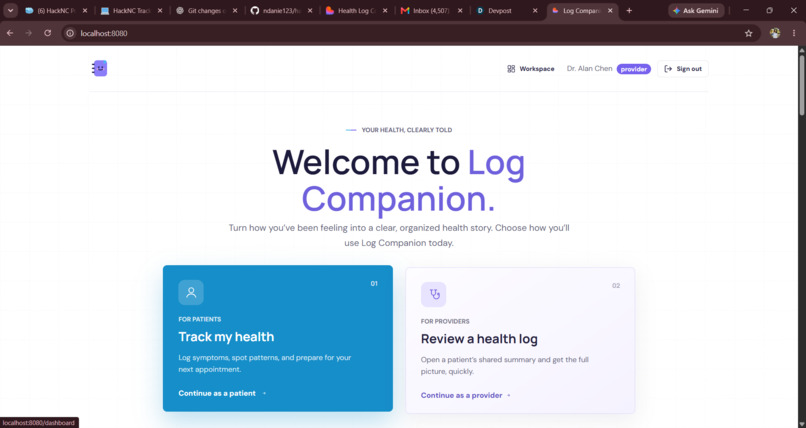
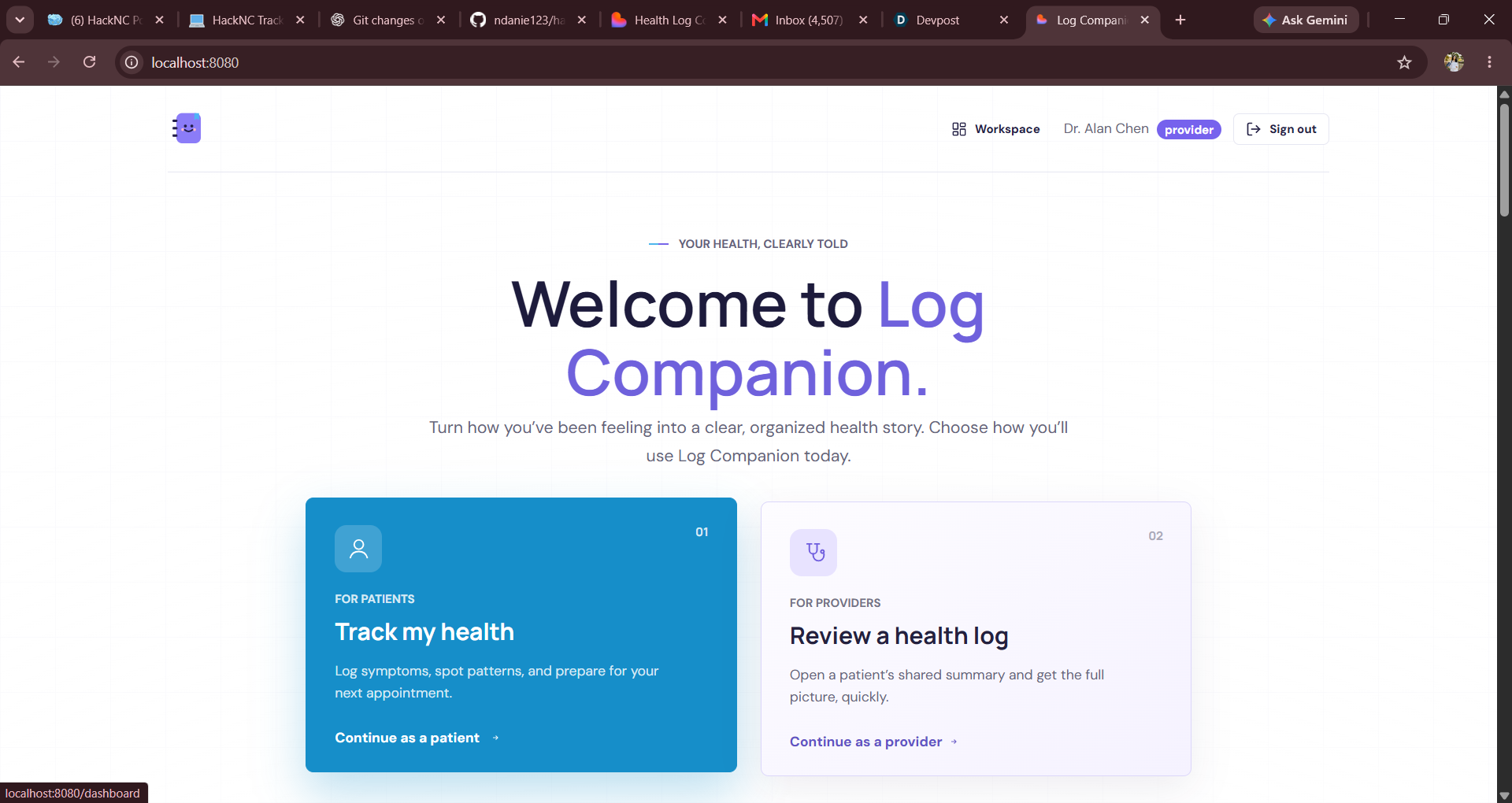
Home Page of Log Companion
-
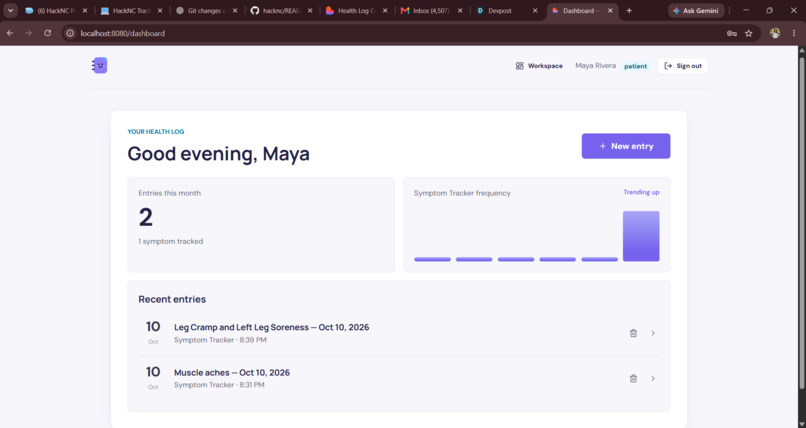
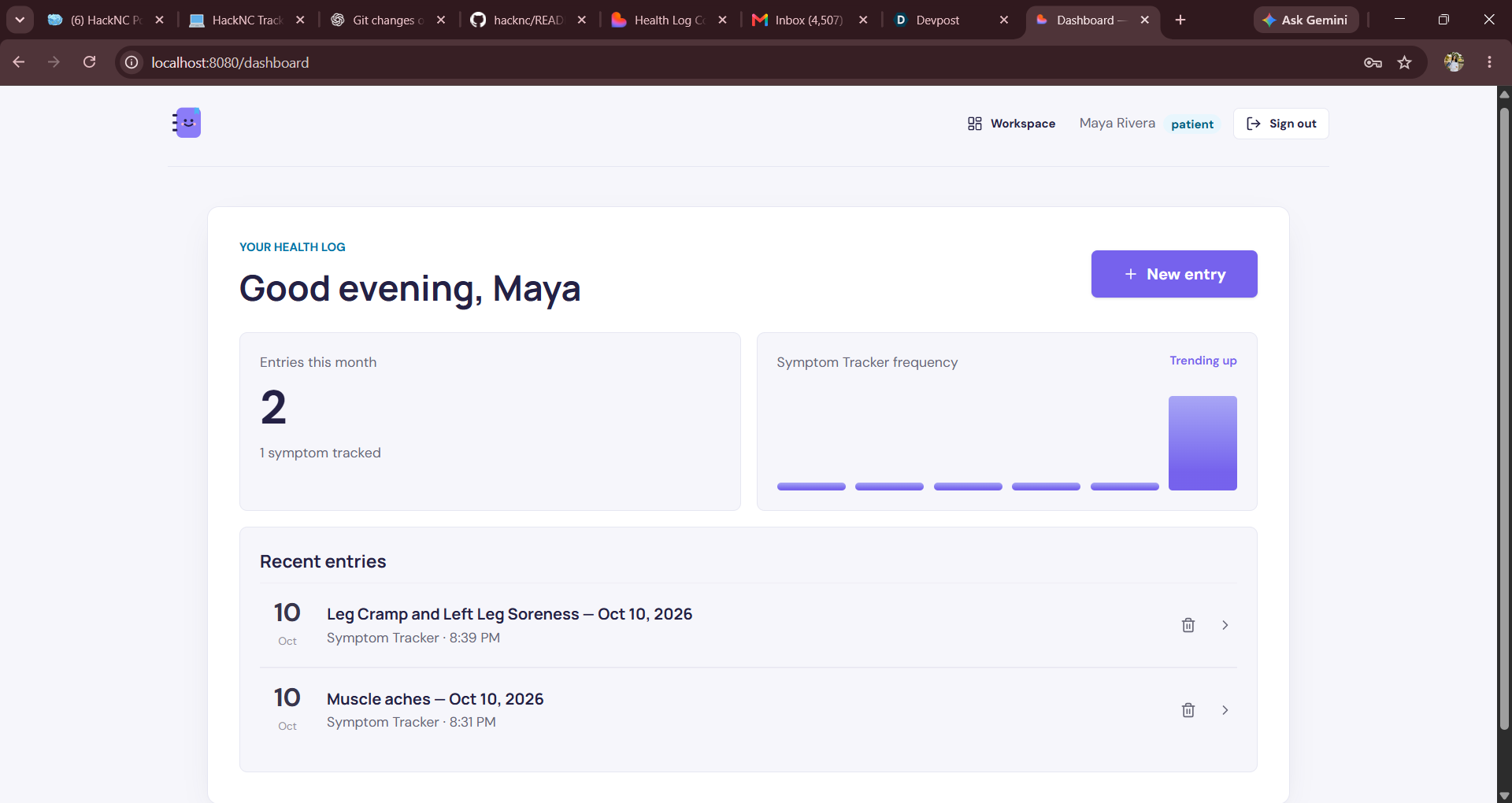
Dashboard
-
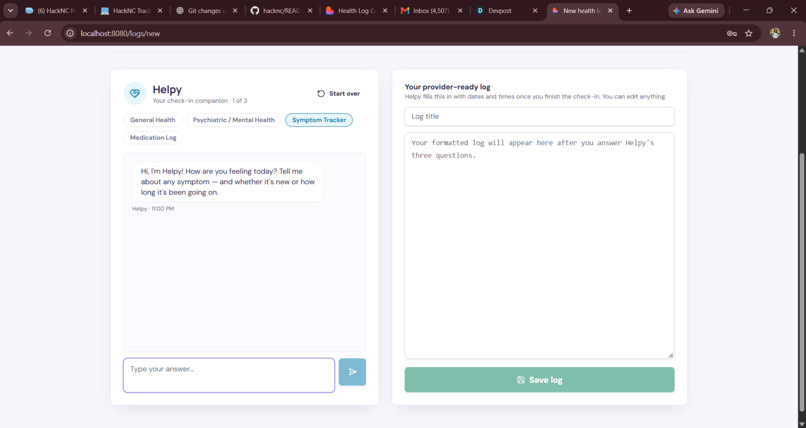
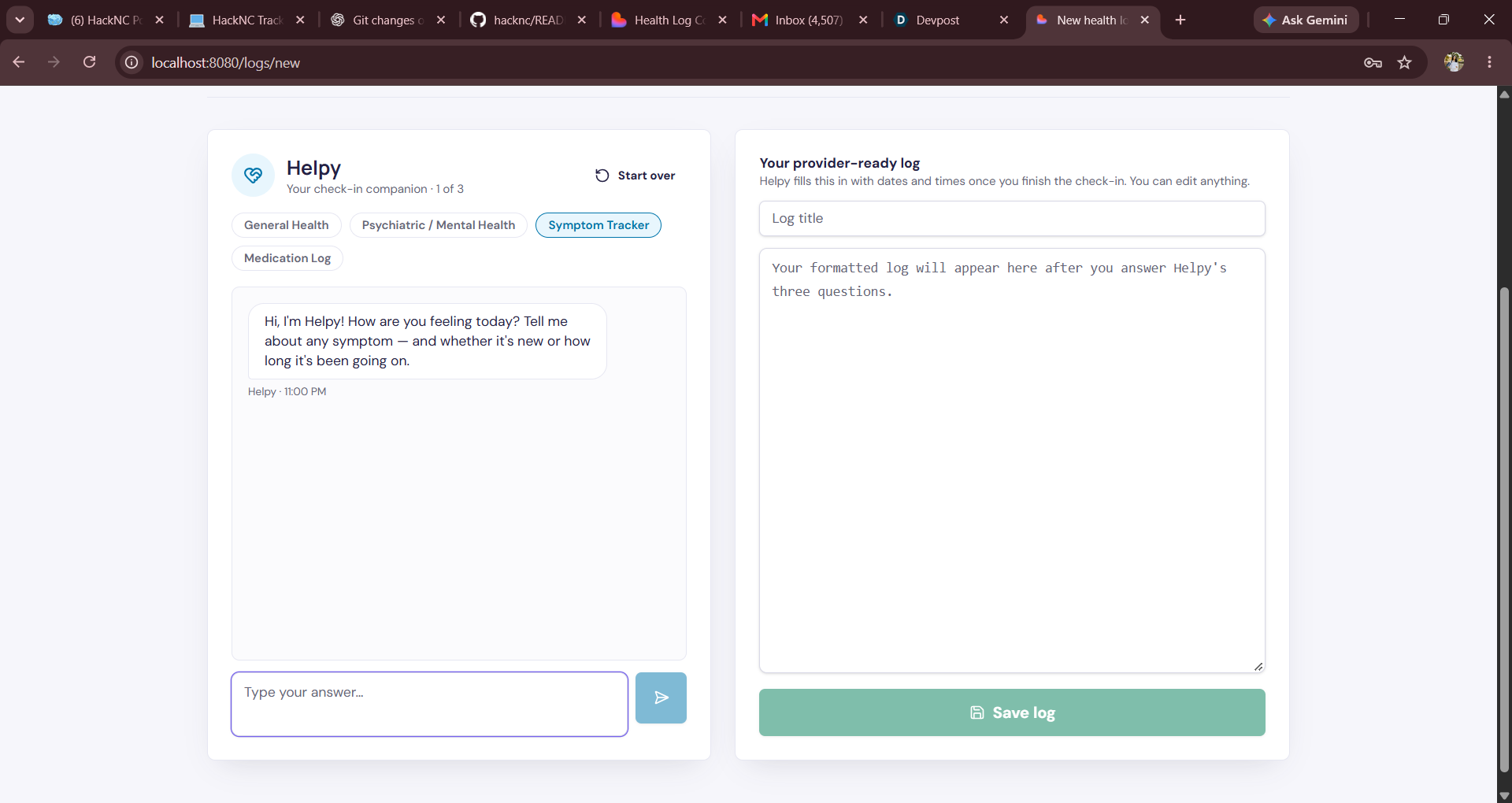
AI Agent Helpy
Inspiration
Every time one of our teammates saw a new doctor, she had to explain her health history from scratch: past symptoms, the medications she takes, and when things started. It was frustrating, and because it all relied on memory, details sometimes got lost.
Many people face the same problem, especially those managing mental health conditions, memory difficulties, or care across several providers. We wanted a place where that information is recorded as it happens, so it's ready when you walk into the appointment.
What it does
Our app is a daily health journal for patients, with a sharing option for providers.
- Patients and providers create accounts and log in.
- Patients pick a category and write their thoughts in their own words, as short or as long as they like.
- Google Gemini turns those free-text entries into a structured summary, formatted like nurse's notes, which patients can download as a PDF.
- As entries build up, patients can review their history over time.
- Patients decide who sees their log. A provider can only view a patient's entries if the patient chooses to share them. Otherwise, the PDF stays private to the patient.
The app organizes and summarizes what the patient reported. It does not diagnose or give medical advice.
How we built it
- Frontend and design: Lovable and Figma
- Login, roles, and data storage: Lovable Cloud, with separate patient and provider accounts and patient-controlled sharing
- AI: Google Gemini API, which converts journal-style entries into structured output for the PDF
- Synthetic data: we generated fake patient data for testing, so no real health information was used
Our team split the work: one member built the frontend, one built the synthetic dataset, one built the Gemini structured-output feature, and one helped with brainstorming, slides, and our logo.
Challenges we ran into
- Tiger Data integration. We planned to use Tiger Data for real-time time-series storage of log entries. Connecting it to a Lovable-managed project, mapping login IDs to patient records, and handling database authentication took far more time than we had, so we kept our data in Lovable Cloud instead.
- Working with Lovable. Its generated code and design output didn't always match what we wanted, so we moved our design work to Figma.
- Team workflow. Several people building different parts at once meant learning to use Git branches and merge carefully.
What we learned
- How to collaborate on one codebase with Git branches
- How Lovable projects are structured, and where they limit what you can change
- How to attempt a database integration, and how to decide when to change course
- That health apps must be friendly and accessible, but also built with privacy and HIPAA in mind from the start
Privacy and responsibility
- Patient data is shared with a provider only when the patient chooses to share it.
- We only collect what we need. We avoid sensitive identifiers like SSNs, and if one were ever required, it would be masked.
- Our demo uses synthetic data only.
- A production version would need HIPAA-compliant hosting, a full security review, and legal review.
What's next for Project Log Companion - Team Yoshi
- A provider dashboard
- Medication tracking
- Appointment preparation tools
- Guided prompts that help patients describe their symptoms, without giving medical advice
- A real security and privacy review
Built With
- figma
- gemini-api
- github
- google-gemini
- jspdf
- loveable
- loveable-cloud
- postgresql
- python
- react
- supabase
- tailwindcss
- tanstack-start
- typescript
- vite

Log in or sign up for Devpost to join the conversation.