-
-
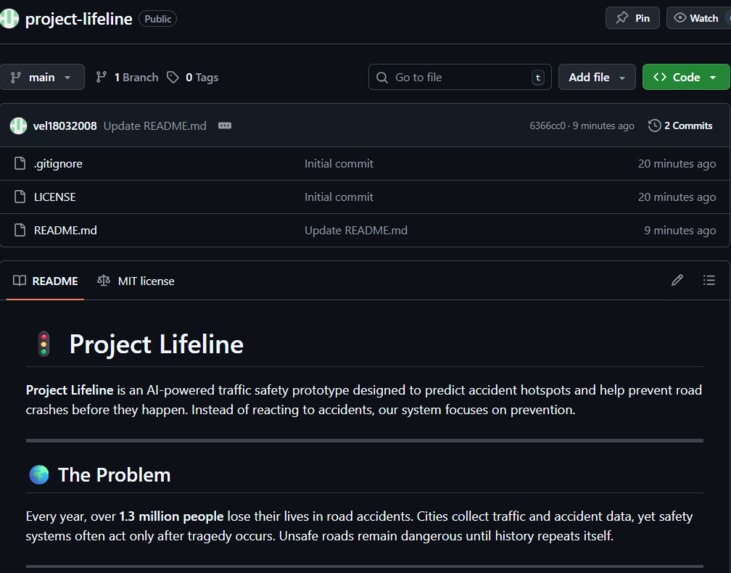
Project Lifeline overview and AI safety dashboard
-
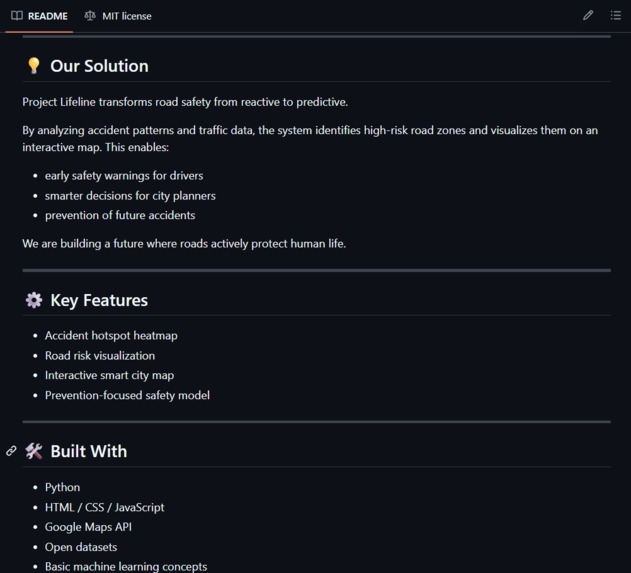
Accident hotspot prediction and risk visualization
-
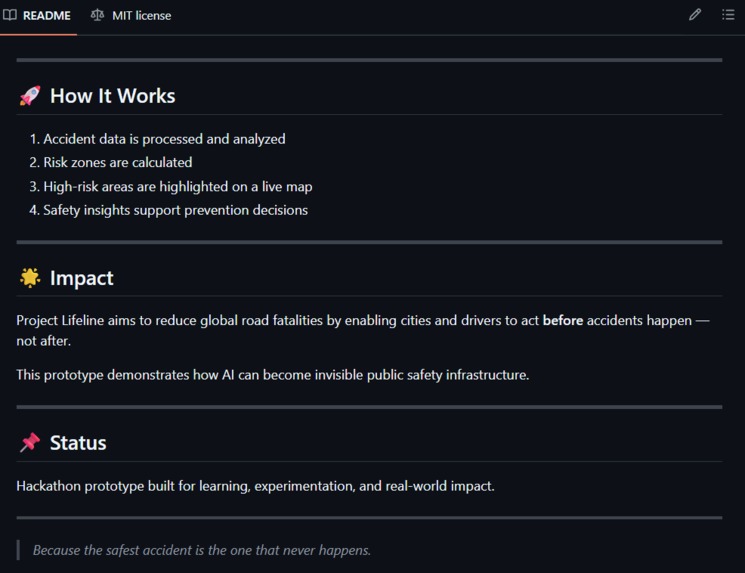
Smart city map showing prevention-focused safety model
Inspiration
Every year over 1.3 million people die in road accidents. We were shocked to learn that most cities already collect accident and traffic data, yet safety systems still react only after tragedies happen. We asked a simple question: What if roads could predict danger before crashes occur? That idea inspired Project Lifeline — a system designed to shift road safety from reaction to prevention.
We wanted to build something with measurable global impact. Roads connect every society, and improving them means protecting millions of lives. This project is our step toward intelligent infrastructure that actively protects people.
What it does
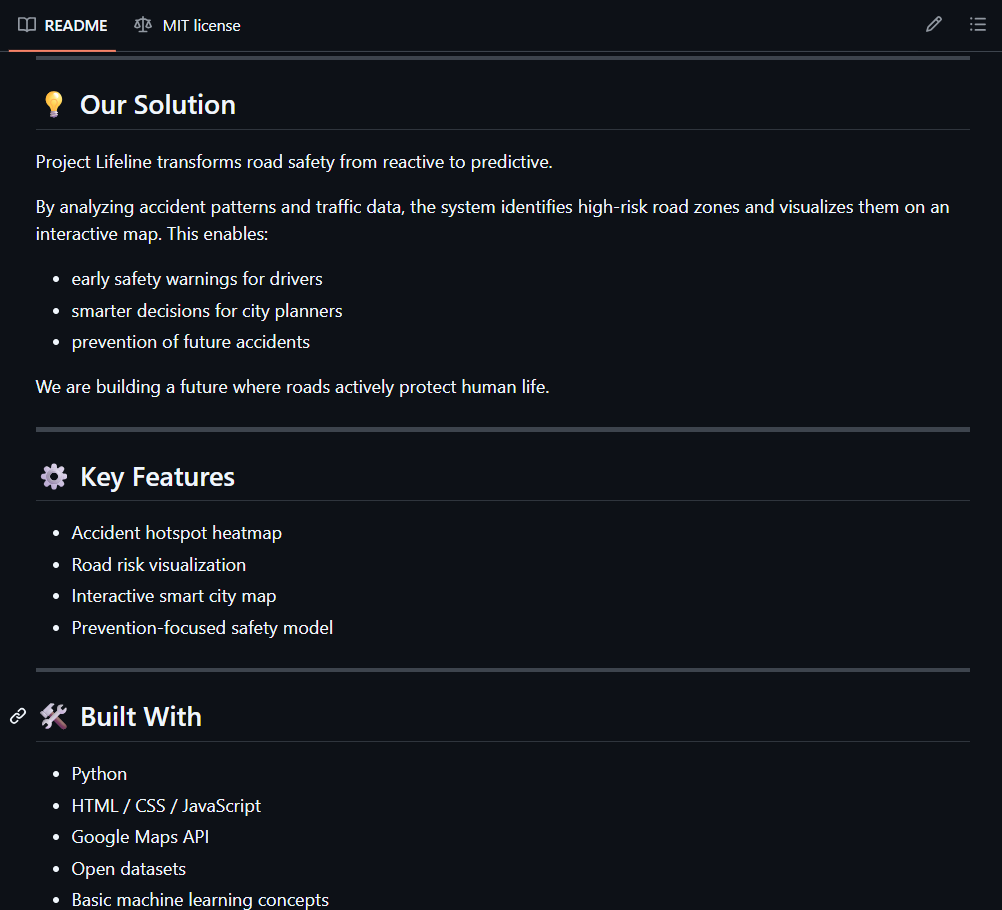
Project Lifeline is an AI-powered traffic safety platform that predicts accident hotspots and warns drivers and city planners in advance. It analyzes traffic patterns and historical accident data to generate real-time risk scores for road segments.
Drivers receive safer route suggestions. Cities gain a dashboard highlighting dangerous intersections and prevention opportunities.
Instead of responding to crashes, we help prevent them.
How we built it
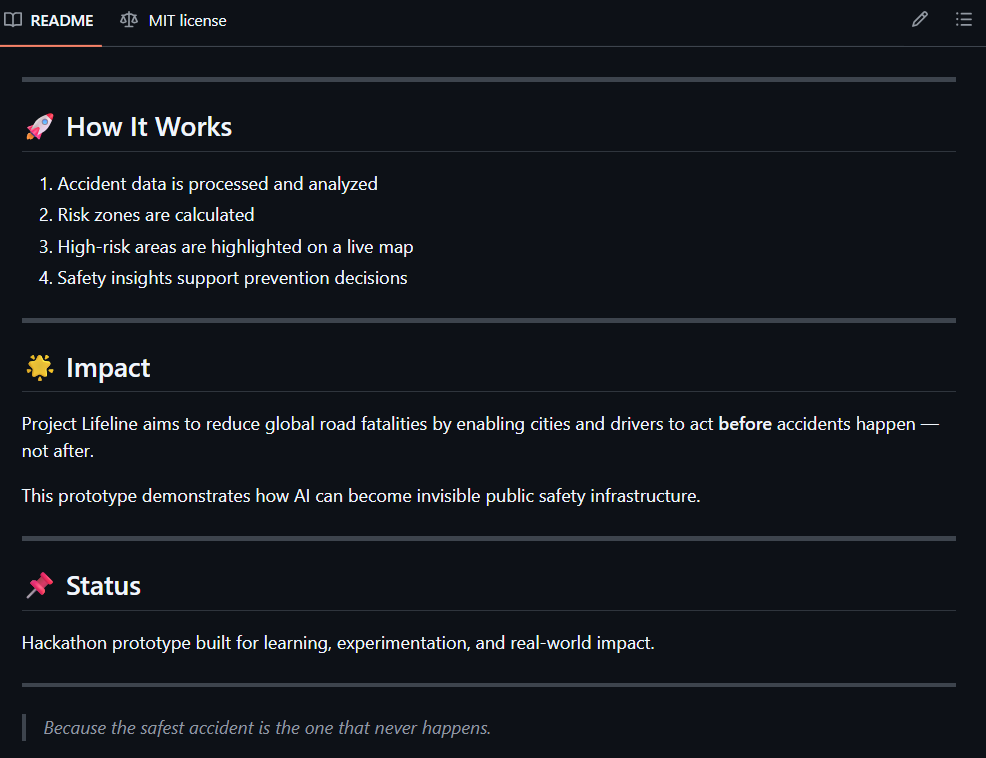
We built a web-based prototype using a mapping interface connected to a Python backend. Accident datasets were processed into risk zones, and a lightweight prediction model generates safety scores. The system visualizes hotspots as a live heatmap and simulates driver alerts and safer routing.
Our focus was clarity, speed, and a believable prevention model rather than perfect accuracy.
Challenges we ran into
One major challenge was transforming messy public accident data into a format usable for prediction. Another was balancing technical complexity with hackathon time limits. We had to simplify the AI while still making the system feel realistic and scalable.
Designing a clear visual demo that judges could understand instantly was also critical
Accomplishments that we're proud of
We built a working AI prototype that predicts accident hotspots and demonstrates how cities can prevent crashes instead of reacting to them. Turning real traffic data into a clear, impactful safety system within a hackathon timeframe is our biggest achievement.
What we learned
We learned how predictive infrastructure differs from traditional apps. We explored data cleaning, risk modeling, and smart city design thinking. Most importantly, we learned how technology can move from reactive systems to preventative systems.
This project showed us how AI can become invisible public safety infrastructure.
What's next for Project Lifeline
Future versions could integrate live IoT sensors, insurance risk modeling, and government partnerships. With real-time data, Project Lifeline could evolve into a global smart road safety network.
Our long-term vision is simple: roads that actively protect human life.
Built With
- api
- basic
- css
- datasets
- html
- javascript
- learning
- machine
- maps
- open
- python

Log in or sign up for Devpost to join the conversation.