-
Intro
-
Onboarding-mock
-
Assessment-mock
-
Homepage
-
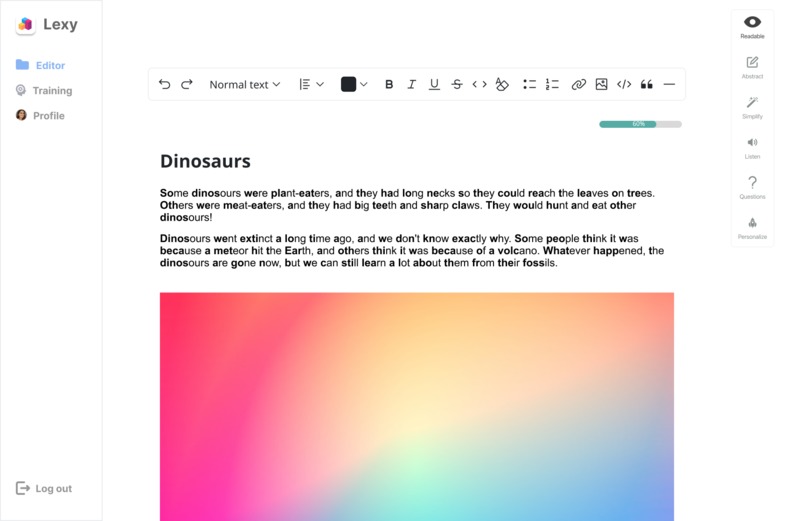
Bionic font- Viewer-mock
-
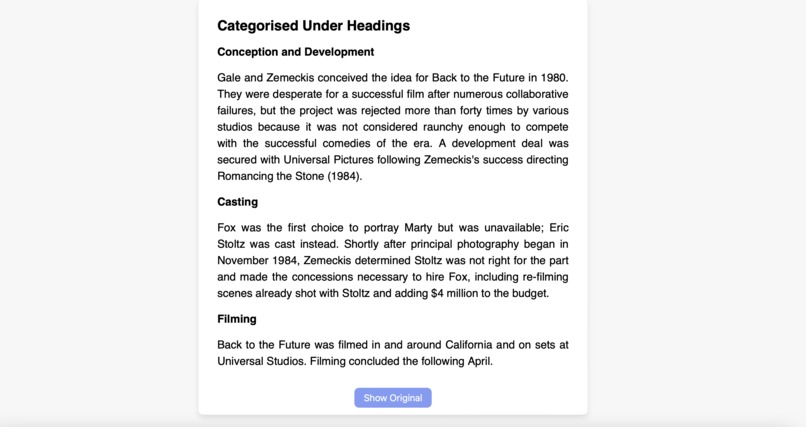
Categorization by Headings
-
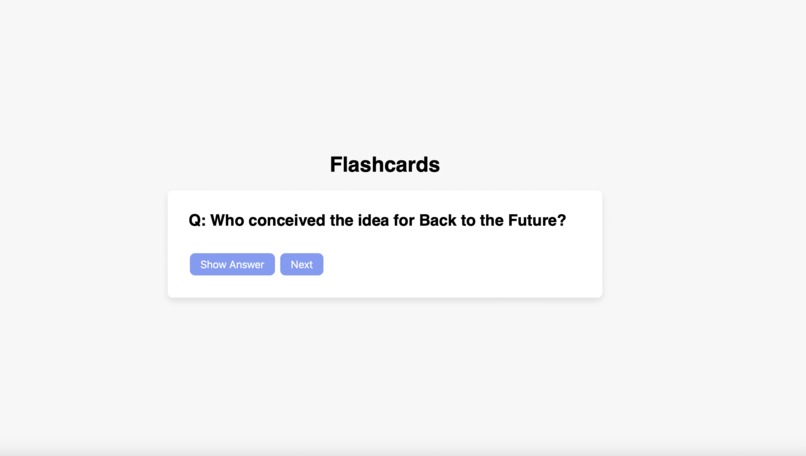
Flashcards Demo
-
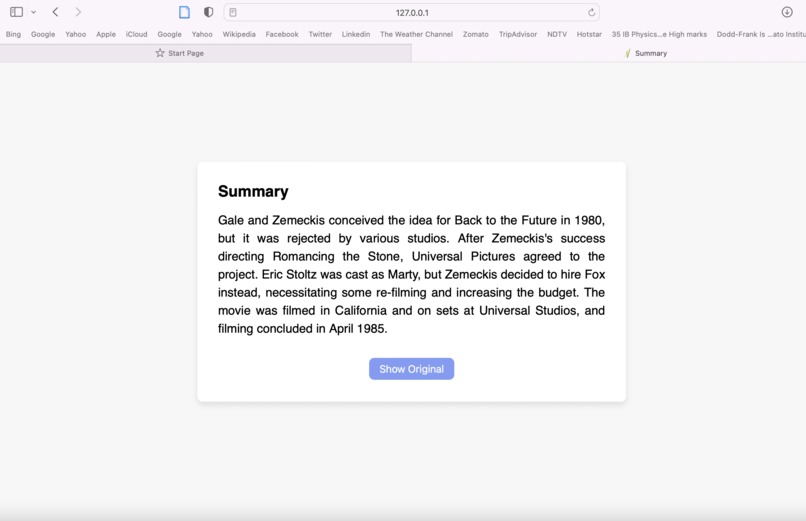
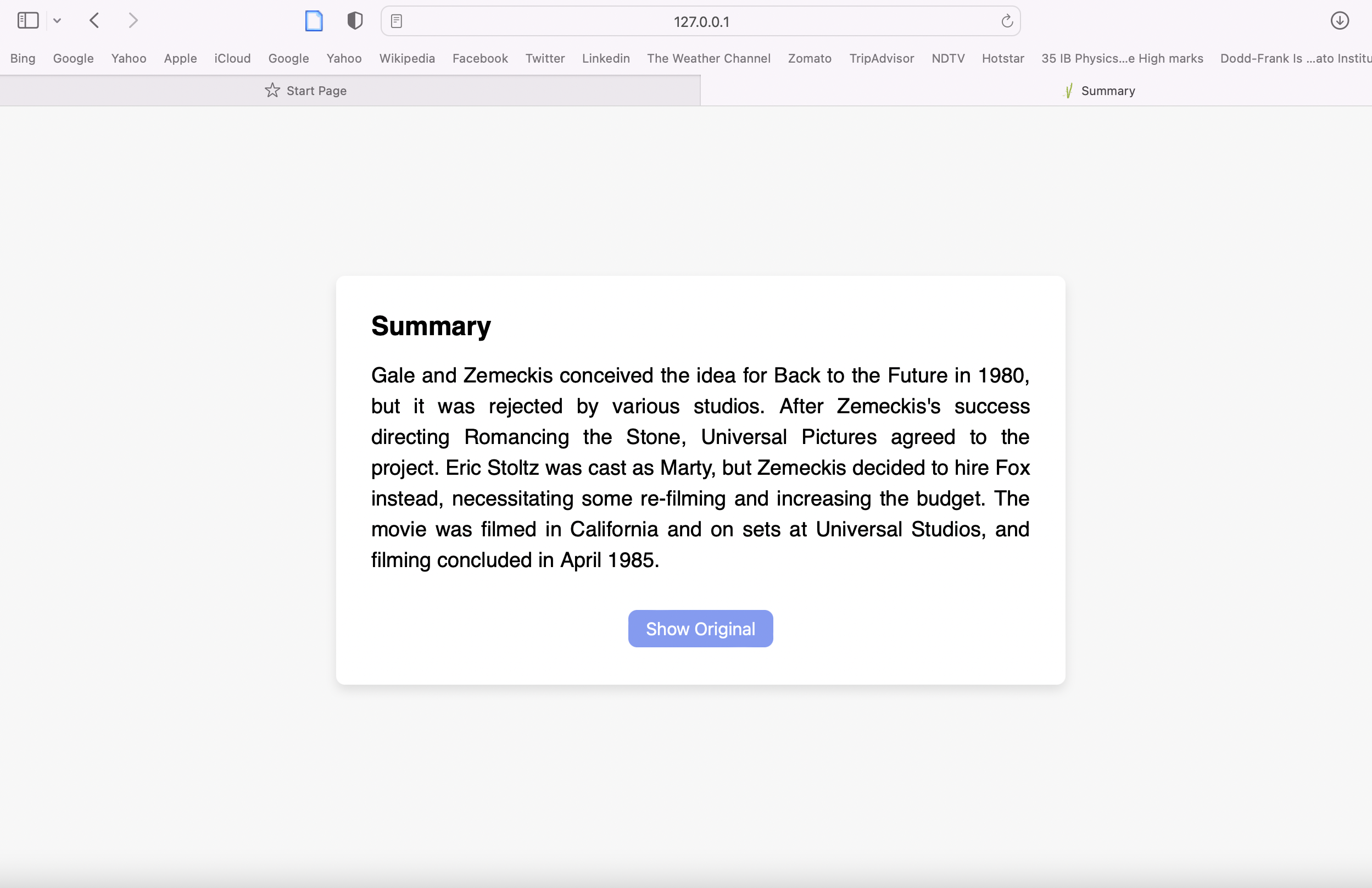
Summary of Input text
-
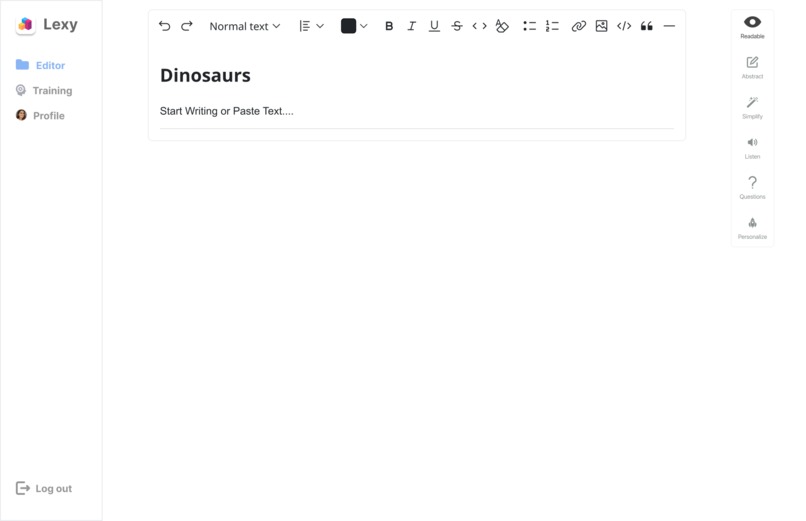
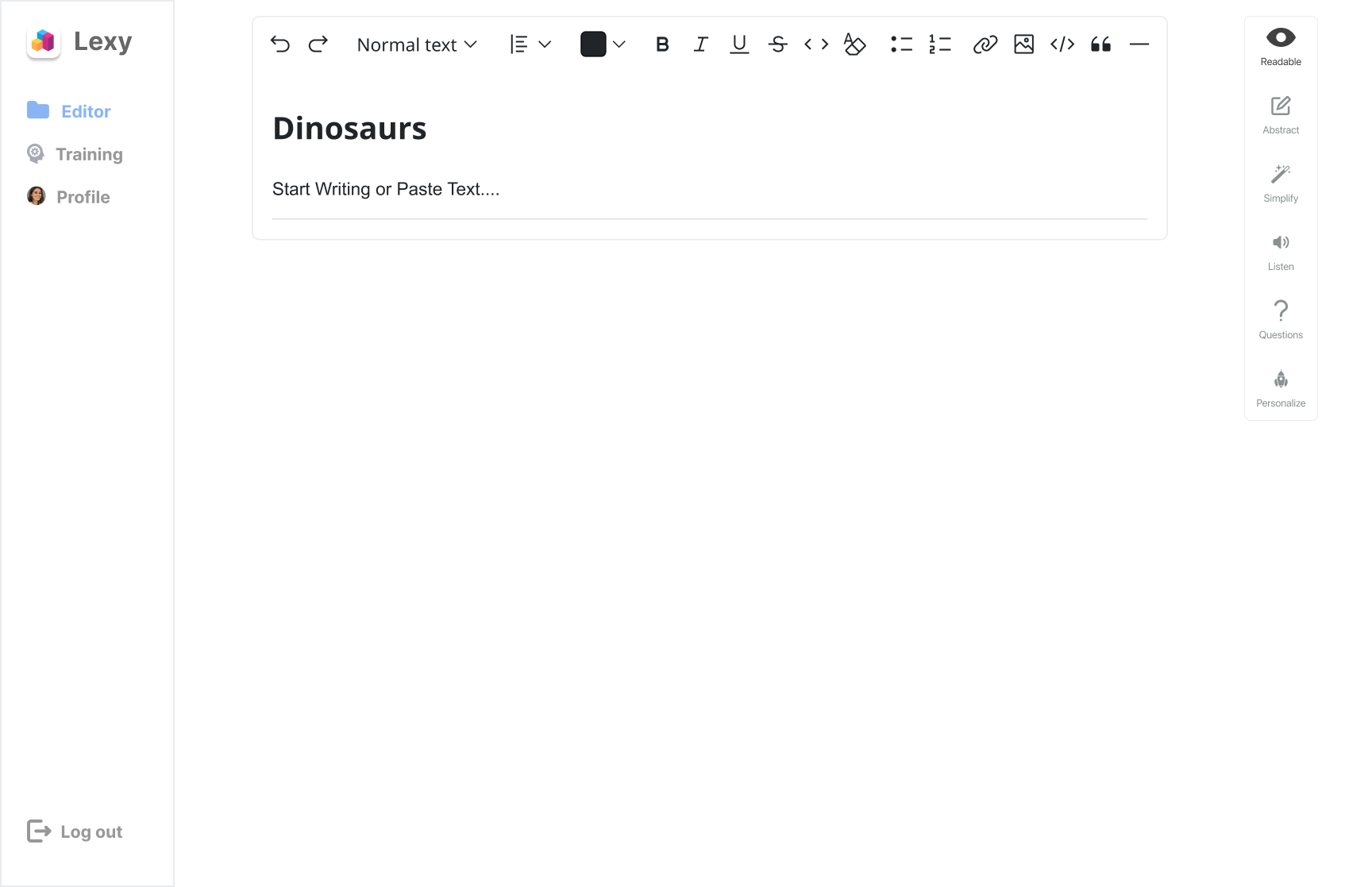
Editor-mock
-
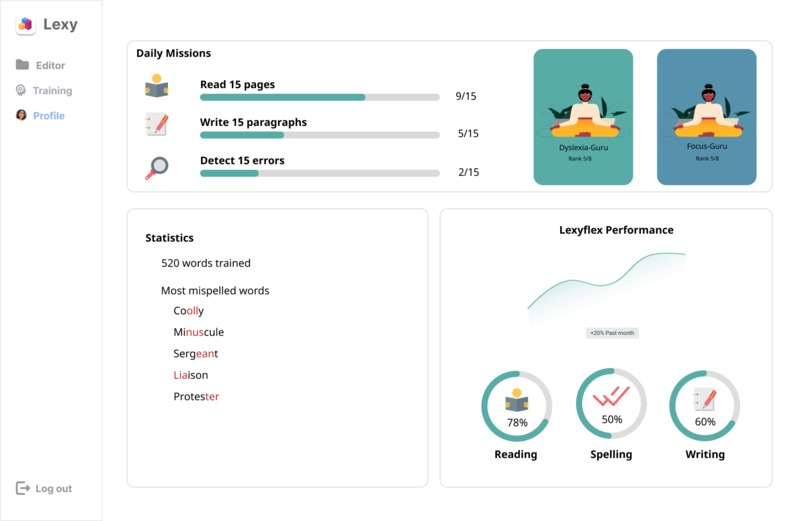
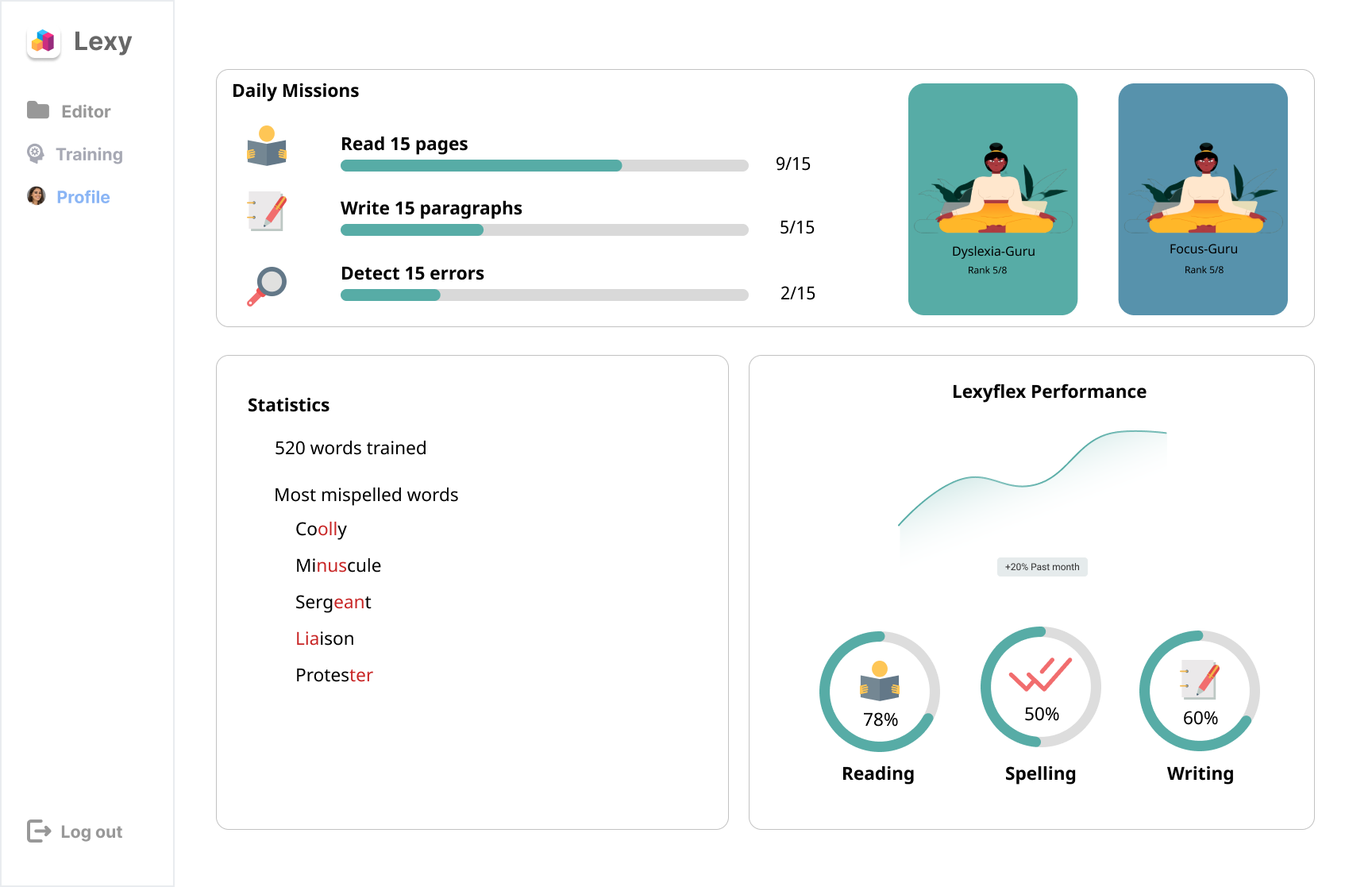
Learner Dashboard-mock

Inspiration
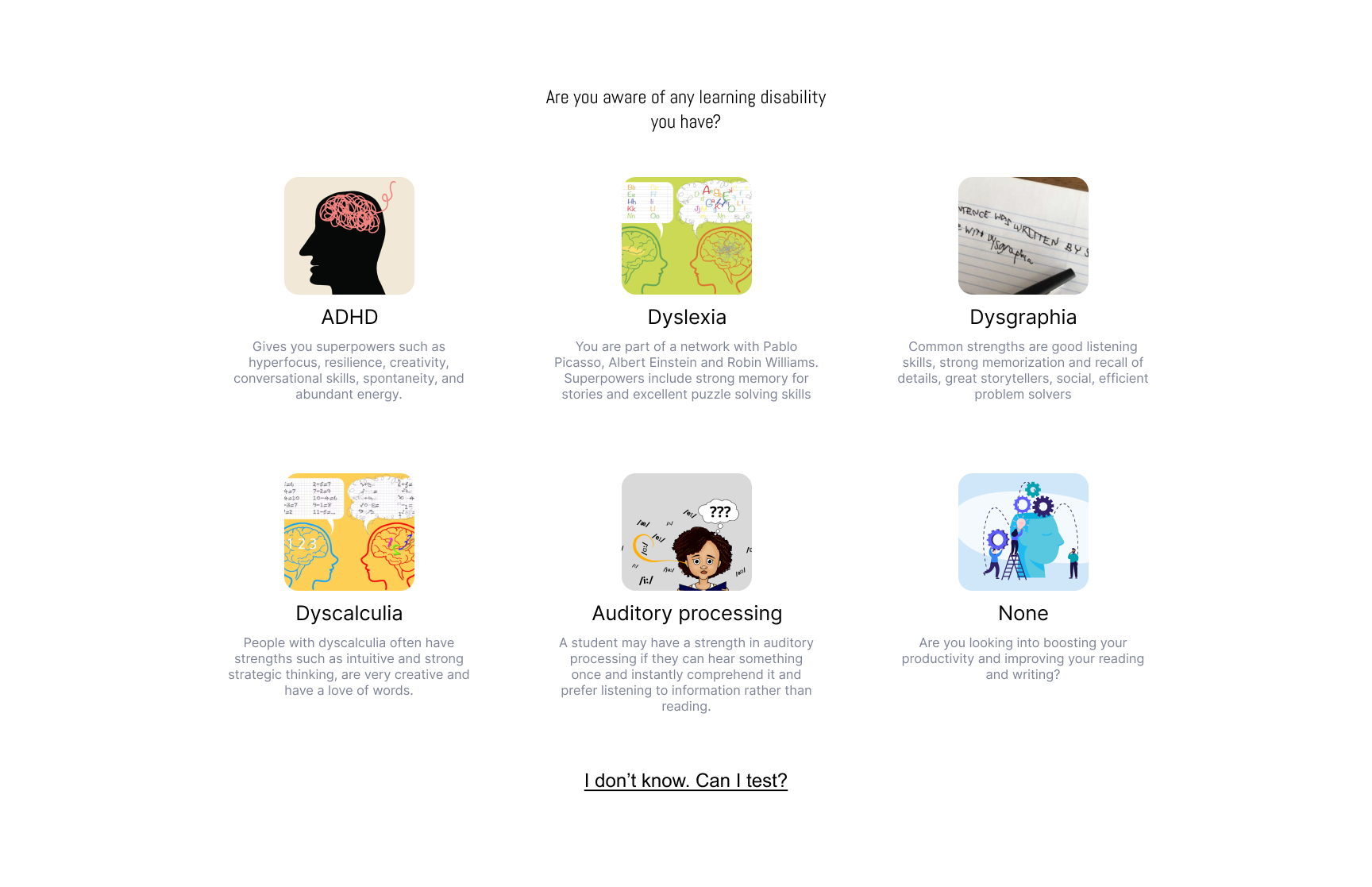
20% of people worldwide have a learning difference such as dyslexia or ADHD, representing 70 million people in the US alone. All of us had observed and were familiar with the problems such students face. For example, our teammate Samim started an NGO in Germany that started offering workshops at German schools when COVID-19 started. During these workshops he began to realize how difficult it is for every student to keep pace with educational/instructional materials, especially those with learning difference such as dyslexia or ADHD, and even more during the pandemic. As a PhD student in AI,he knew the power of software applications and AI in creating support tools and a personalized learning experience.
What it does
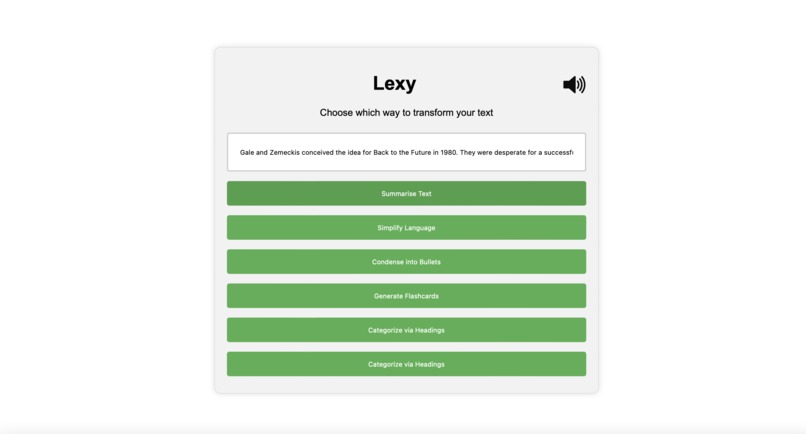
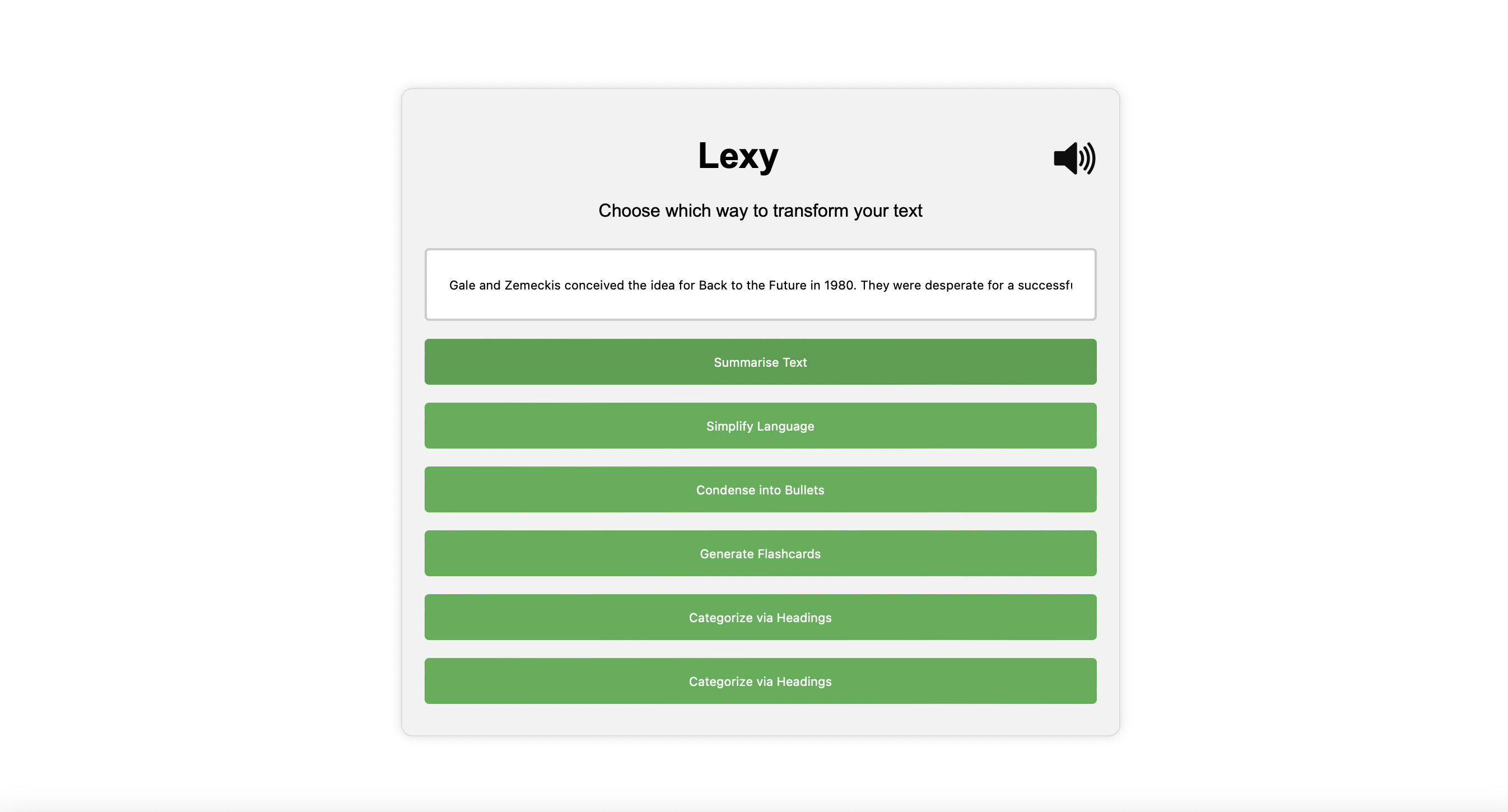
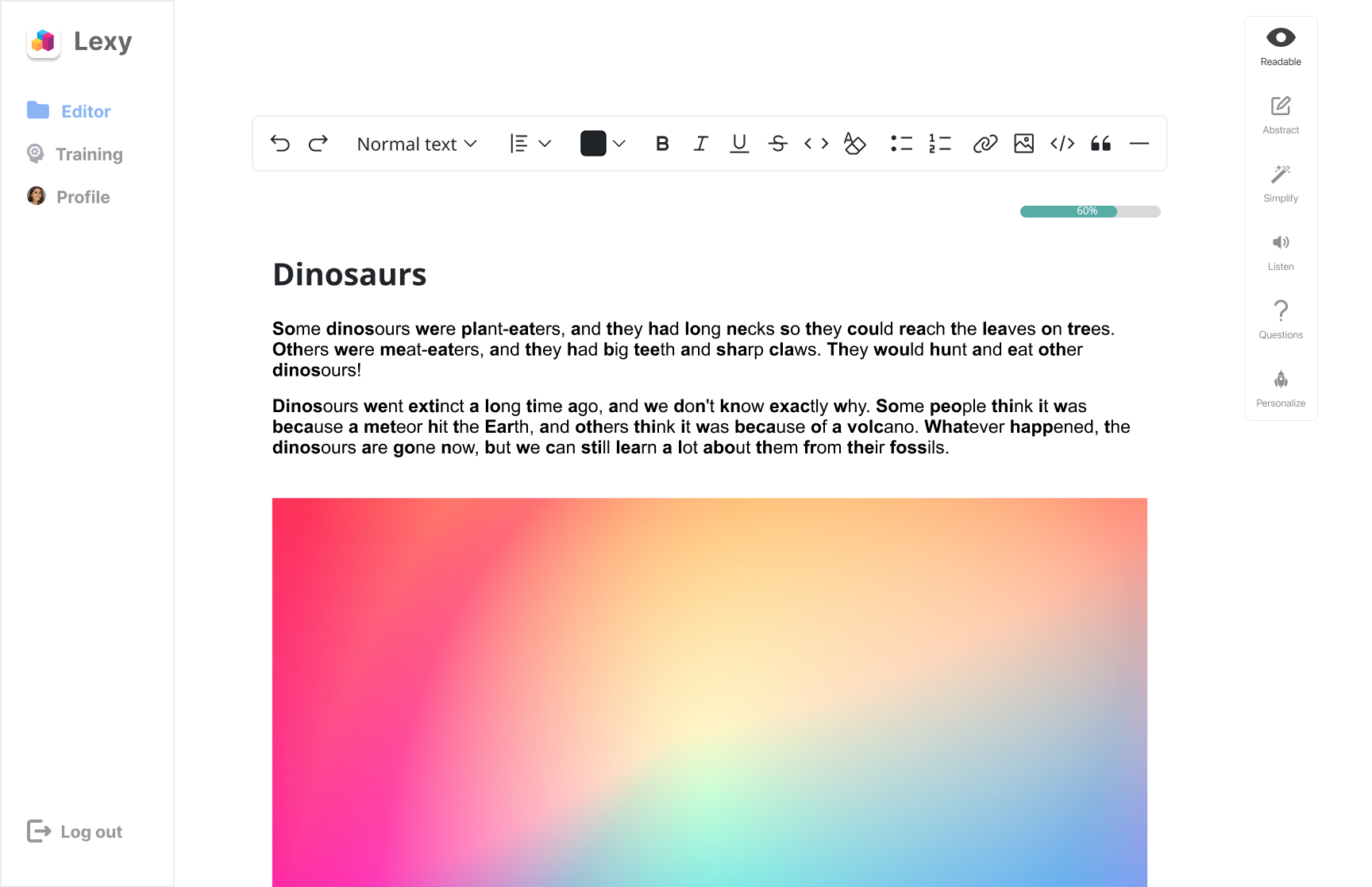
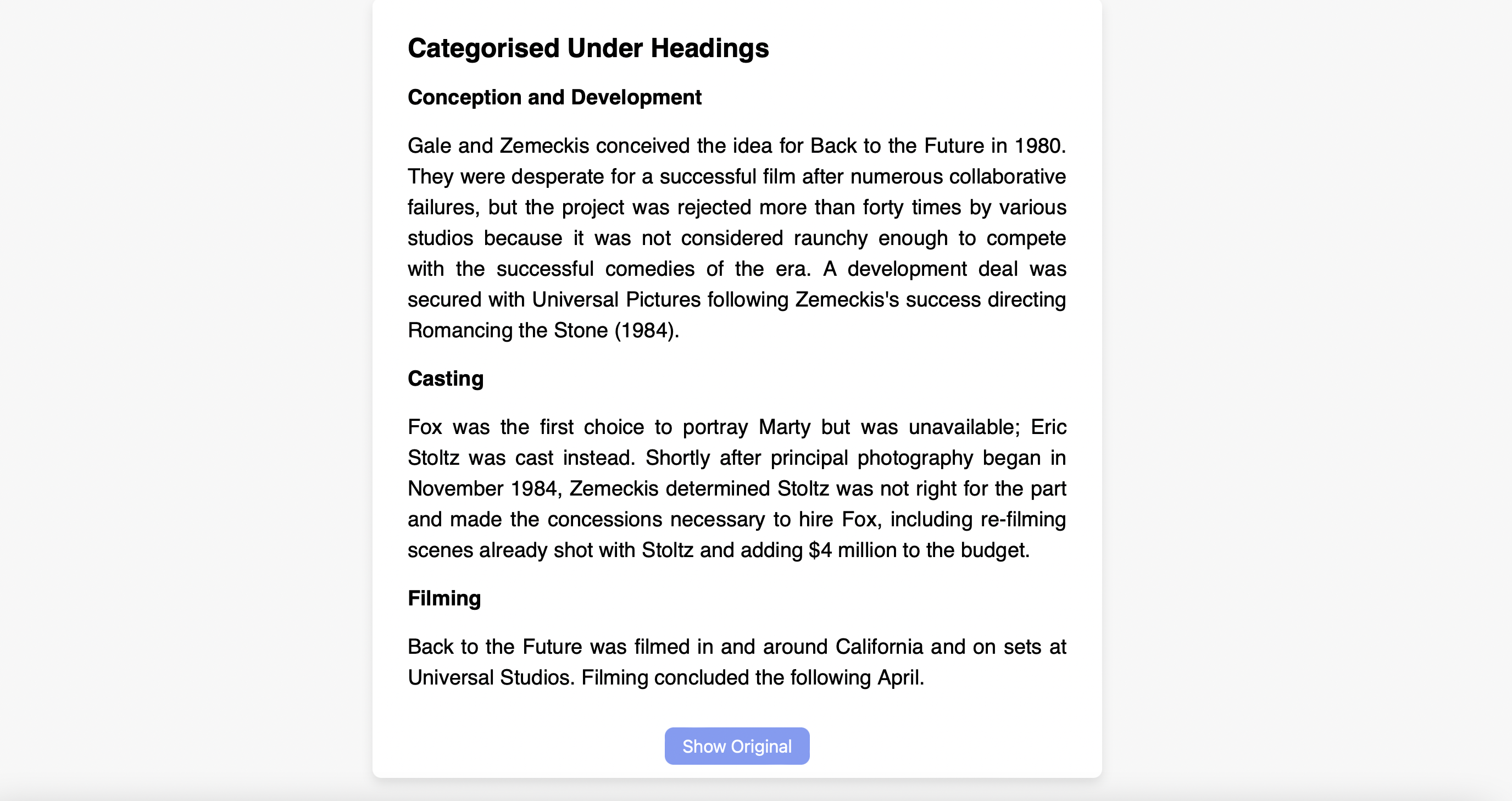
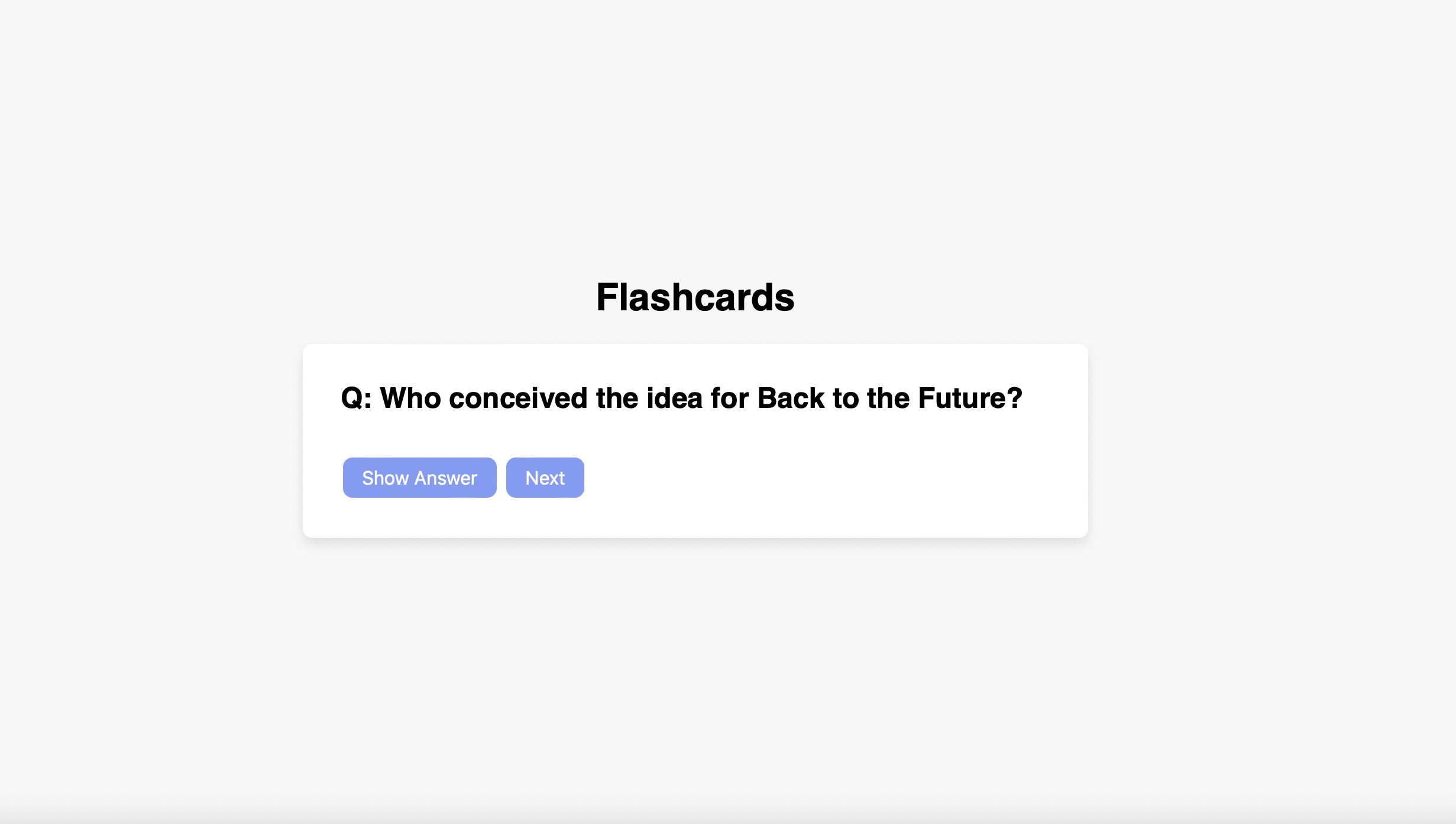
As of present, Lexy provides a suite of support tools for students with learning impairments or difficulties based on transformations of a given text input to an output. For example, students having trouble processing a certain material have the option to choose whether they want a text to be summarized or to be transformed into flashcards/categorized by heading etc. It is thus entirely a user-specific experience at the moment and they get to modulate how they want the app to support them, and the app will perform the natural language processing based on that to obtain the output. No other software offers/integrates such a comprehensive suite of support tools for struggling students and students with learning impairments, making our solution unique.
How we built it
- Design Prototypes in Figma
- Set up the GPT-3 API (from OpenAI) in Flask to perform a specific task when prompted
- Extended our NLP configuration to all the support tools we were hoping to cover
- Implemented text to speech transformation of text for individuals with learning impairments who prefer to listen to the text. Completed backend at this point.
- Built on top of our backend to add a UI using React, CSS and Bootstrap.
- Began working on the personalization elements of the project, wherein individual datapoints regarding a student would be used to transform the material accordingly. The datapoints would be provided either by the teacher (who would fill out a survey) or externally through some LMS. Then, based on the datapoints the customization of the output will take place.
Challenges we ran into
Deciding on what to build took us a while until Saturday morning so the challenge of making the best out of our time became very significant
Frontend and tech stack proved to be much more tedious than expected, taking away crucial time which prevented us from acheiving the project's true potential of a personalized learning experience.
Accomplishments that we're proud of
Our use of NLP and OpenAI's GPT-3 API in particular :) Coming in, we didnt know much about these technologies but are extremely glad to have gotten hands on experience in working with LLMs.
What we learned
Ideating before you start. be prepared before you start and align on the idea, tech stack and team roles.
If you fail to plan you plan to fail. As time is limited make sure to have a generally roadmap and time plan. Compensating the lack of time for sleep has it's limit and the team needs a good rest to perform at it's best.
Fight & be nice. You might disagree on priorities or certain directions you need to go together as a team. Conflict is useful to debate for the best solution but never forget the fun!
What's next for Lexy: Duolingo for Students with Learning Disabiltiies
The personalization elements of the project need to be completed so that Lexy can be taken to its full potential. Here, individual datapoints regarding a student would be used to transform the material accordingly. The datapoints would be provided either by the teacher (who would fill out a survey) or externally through some LMS. Then, based on the datapoints the customization of the output will take place. For example, someone who is identified as having dyslexia but specifically struggles with reading for long periods could be given the ability to use the text to speech function, while someone who specifically struggles with direct or indirect comprehension could be given the text broken down by categories with each one having a heading. Thus, this personalized learning experience would be the main USP of our app going forward.
Additionally, in the future we would like to make Lexy a plugin or Chrome Extension so that it can be used while someone is reading digitally in another application, making the lives of those students much smoother and efficient.


Log in or sign up for Devpost to join the conversation.