-
-
Split Tracking
-
Tracking Dashboard
-
Dashboard
-
Dashboard
-
Graph World Structure
-
Graph World Structure
-
Graph World Structure
-
Graph World Structure
-
Graph World Structure
-
Graph World Structure
Project KORTEX
Inspiration:
Construction projects rarely fail because of a single delayed shipment, they fail because of the chain reaction that follows. A delayed delivery can postpone fabrication, idle crews, delay dependent activities, and significantly increase project costs. While today's construction software can track where a shipment is, it often cannot explain what that delay means for the rest of the project.
This inspired us to ask a simple question: What if construction projects had a brain instead of just dashboards?
That question became the foundation of Project KORTEX - a cognitive operating system designed to understand construction projects as interconnected systems rather than isolated events.
What it does:
Project KORTEX is a cognitive operating system for construction supply chains.
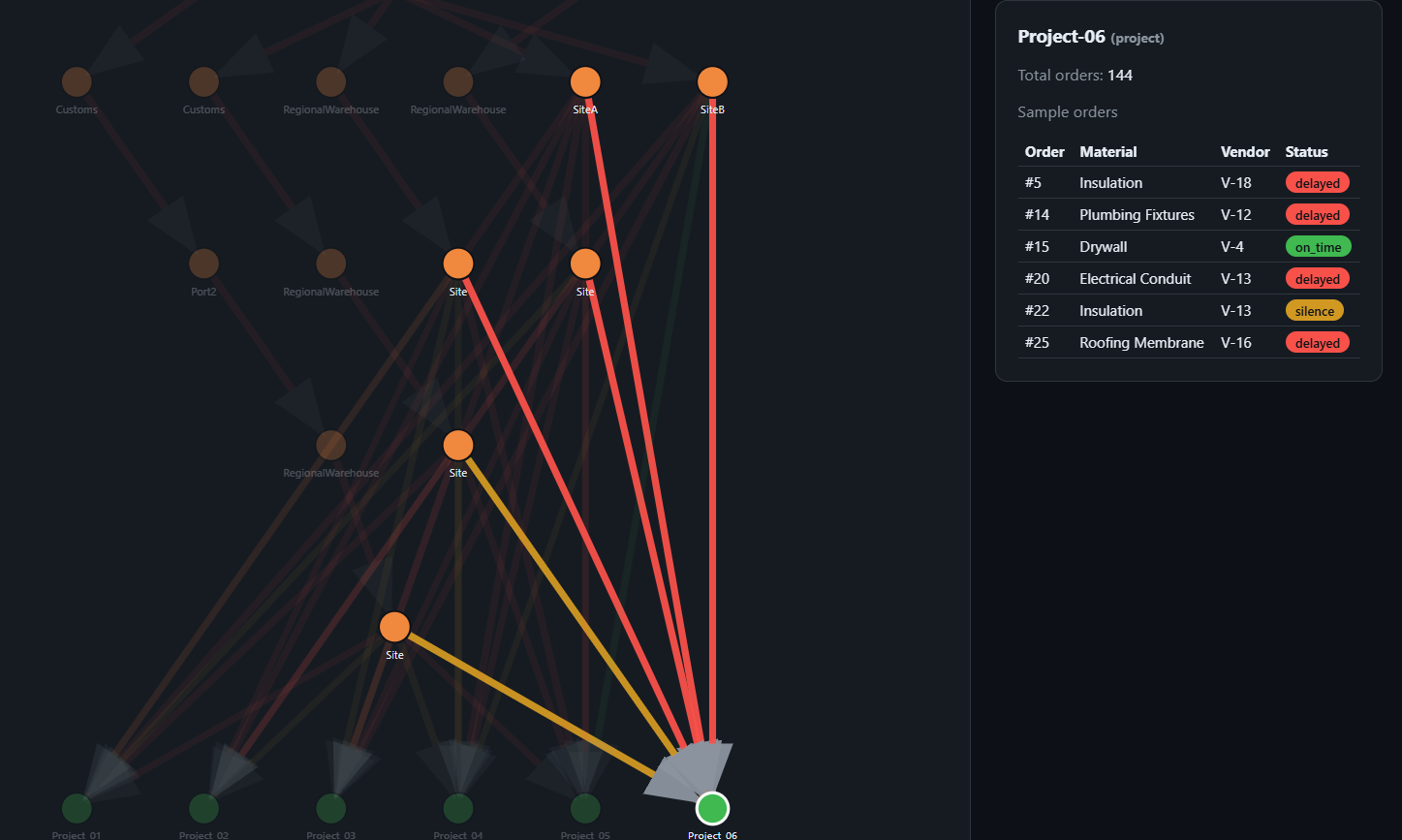
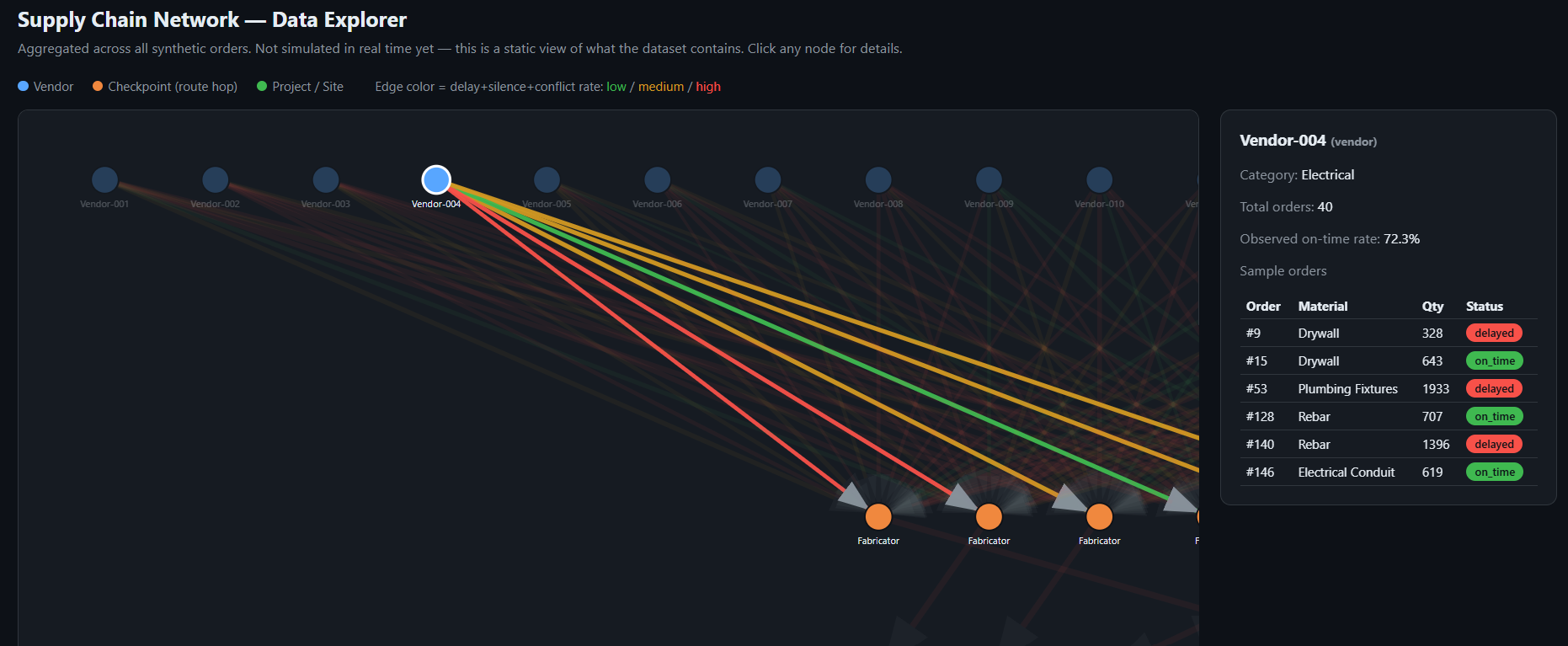
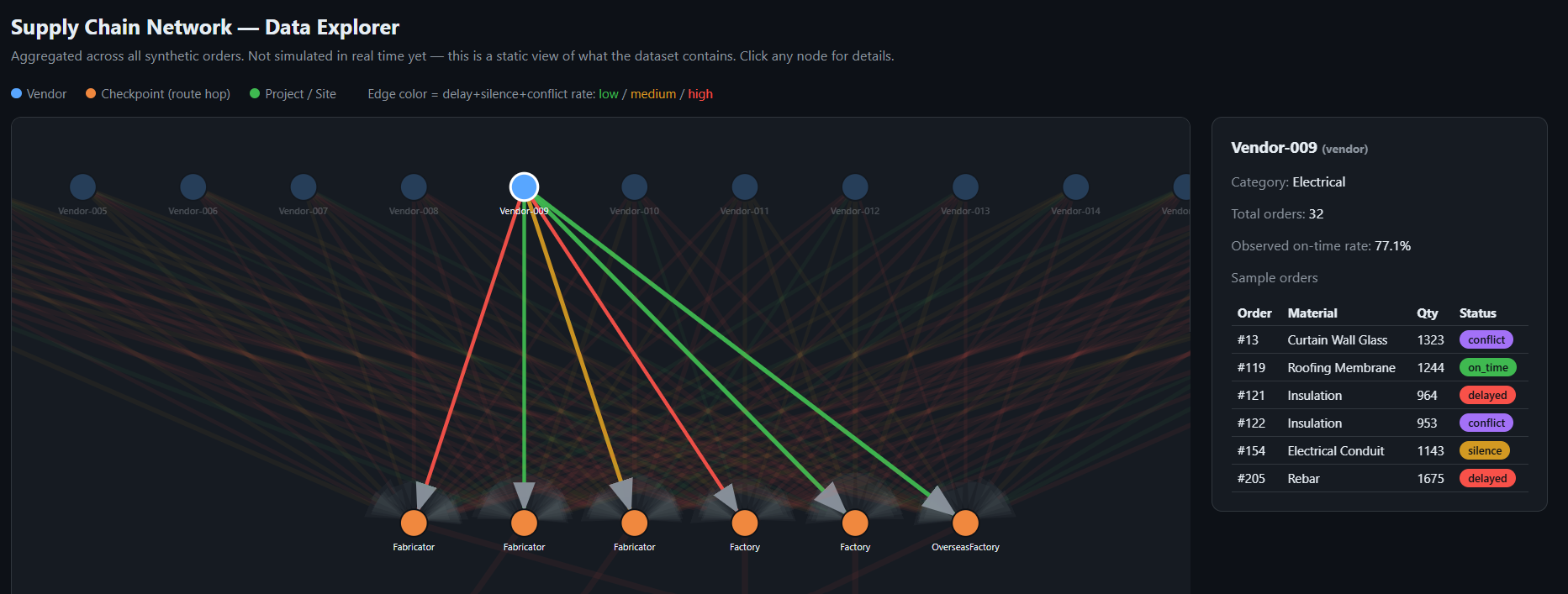
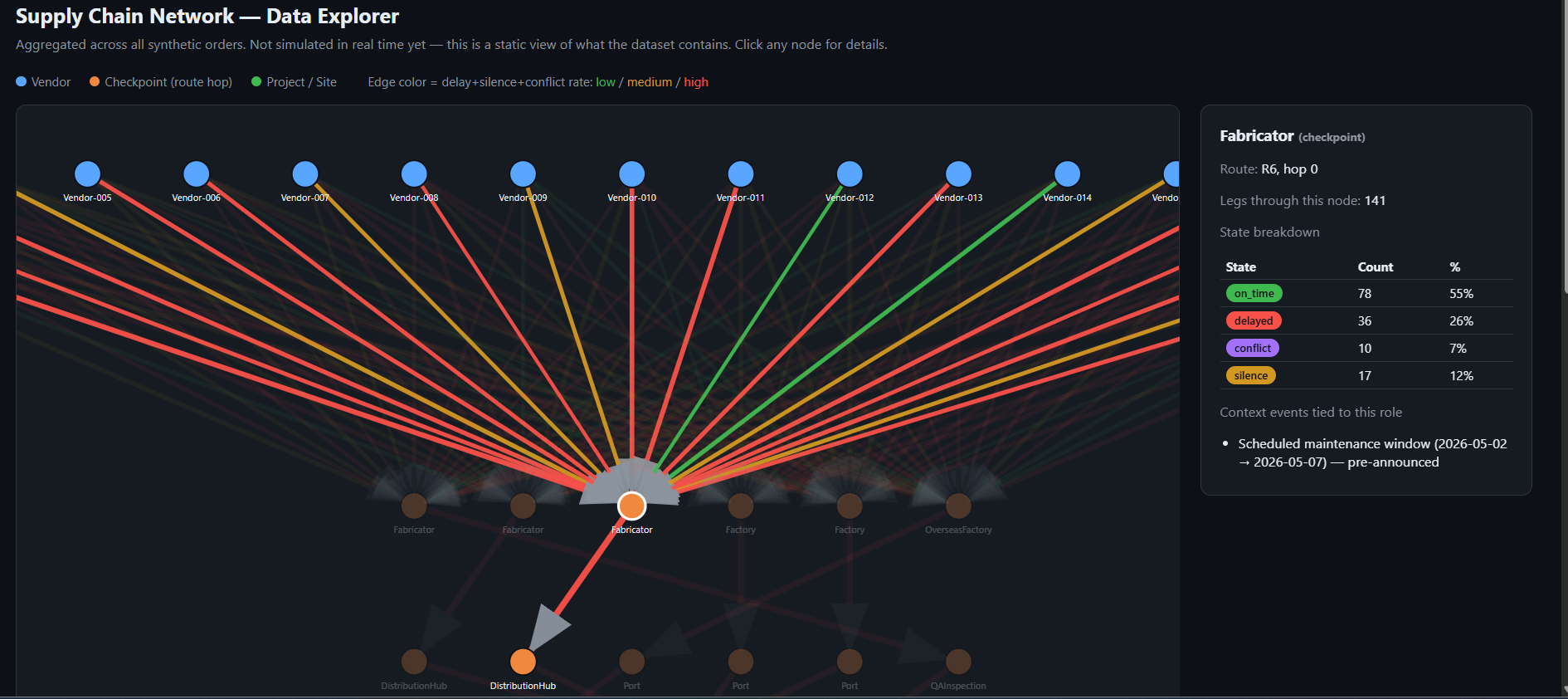
Instead of simply tracking logistics events, KORTEX continuously builds a Construction World Model that connects vendors, materials, fabrication facilities, transportation routes, schedules, and project dependencies into a single, evolving knowledge graph.
KORTEX follows four cognitive stages inspired by human decision-making:
- Perception: Understands ERP systems, purchase orders, invoices, schedules, construction documents, and live logistics events.
- Memory: Learns from historical projects through a Construction Memory Engine that captures organizational knowledge. -Reasoning: Simulates multiple recovery strategies using graph reasoning, forecasting, optimization, and multi-agent intelligence.
- Action: Presents explainable recommendations with confidence scores, expected business impact, and optimized recovery plans.
Rather than only detecting problems, KORTEX recommends the best course of action before delays cascade across an entire construction project.
How we built it:
We designed KORTEX as a modular AI platform centered around a continuously evolving Construction World Model.
Our architecture consists of:
- VisionCore™ : Extracts information from ERP systems, purchase orders, invoices, schedules, drawings, and logistics updates.
- BuildSync™ : An event synchronization layer that converts logistics updates into standardized construction events.
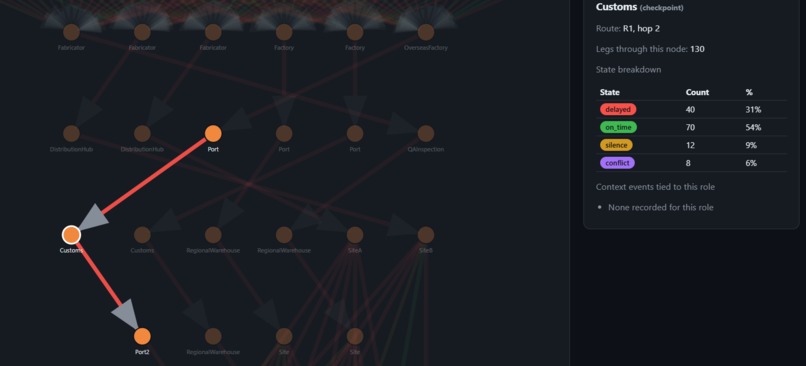
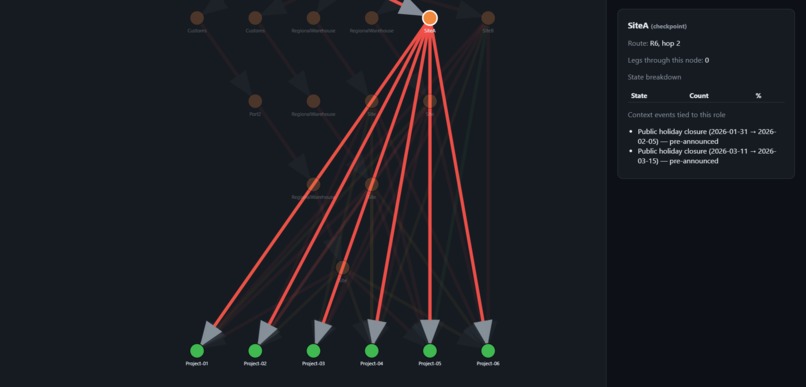
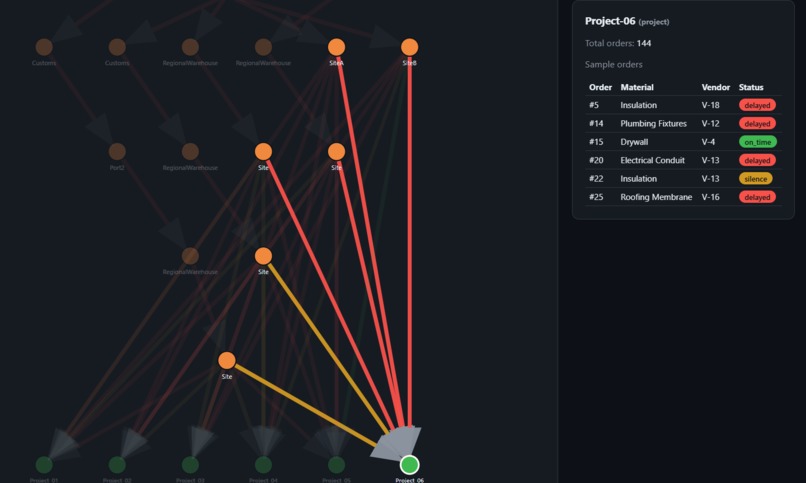
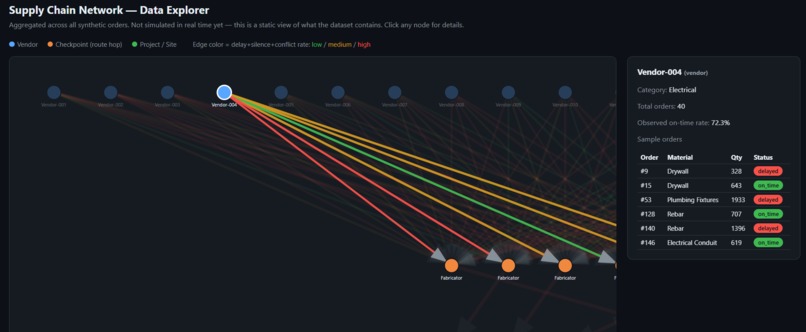
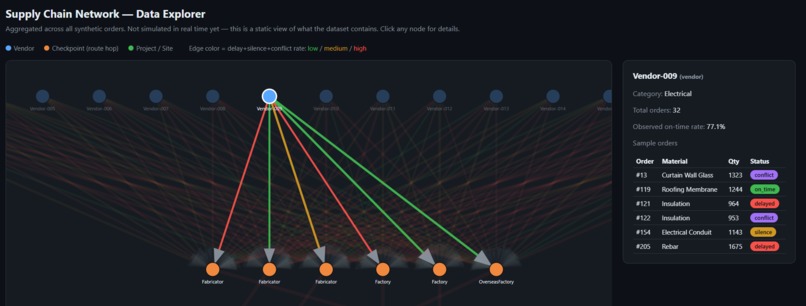
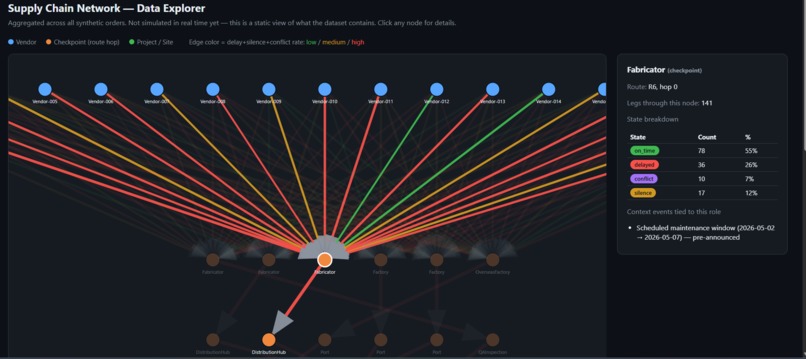
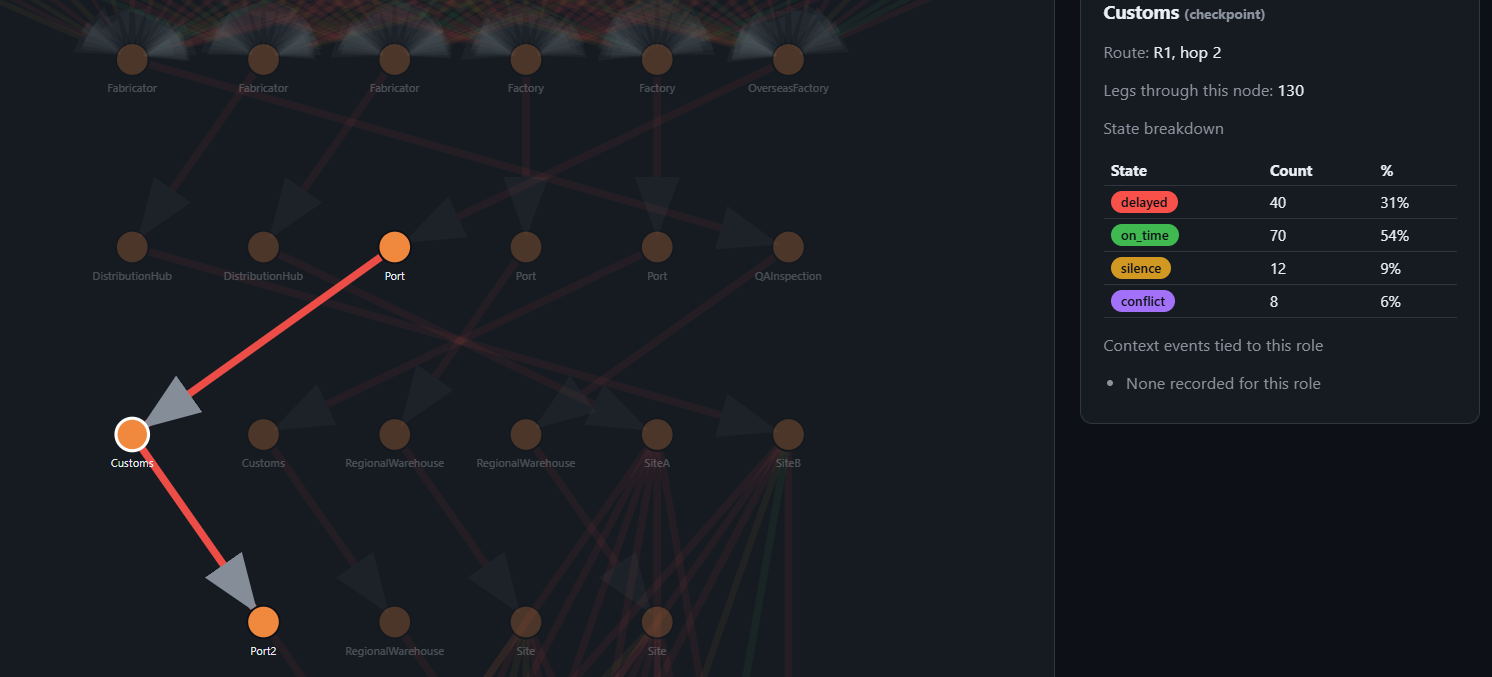
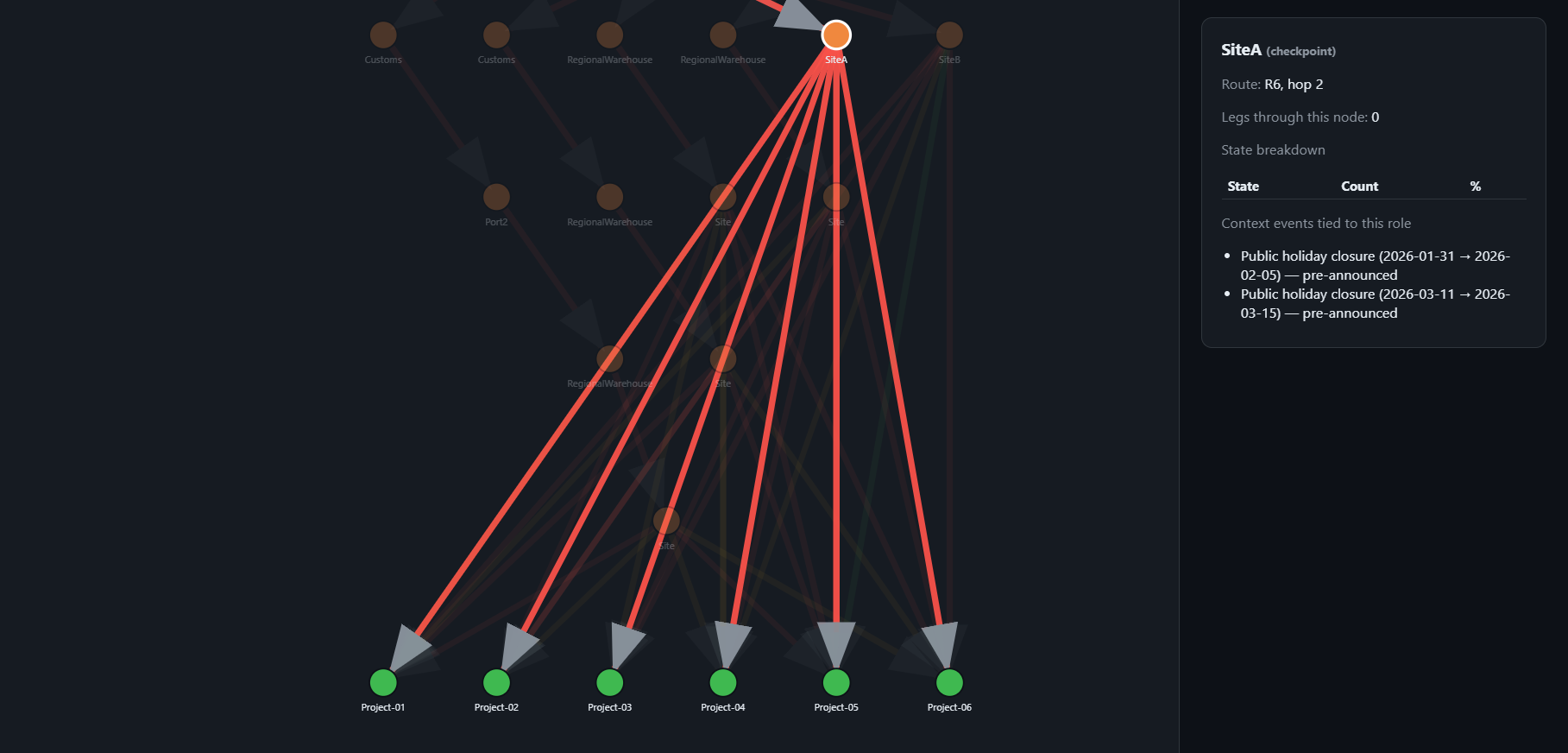
- Construction World Model: A graph-based representation connecting vendors, factories, transportation routes, checkpoints, materials, and project sites.
- Construction Memory Engine: Stores project history, vendor performance, recovery strategies, and organizational learning.
- DecisionCore™: Combines graph reasoning, forecasting, optimization, and multi-agent AI to evaluate multiple recovery strategies before selecting the optimal recommendation.
- KORTEX Command Center: Presents explainable recommendations, confidence scores, expected business impact, and recovery workflows through an executive dashboard.
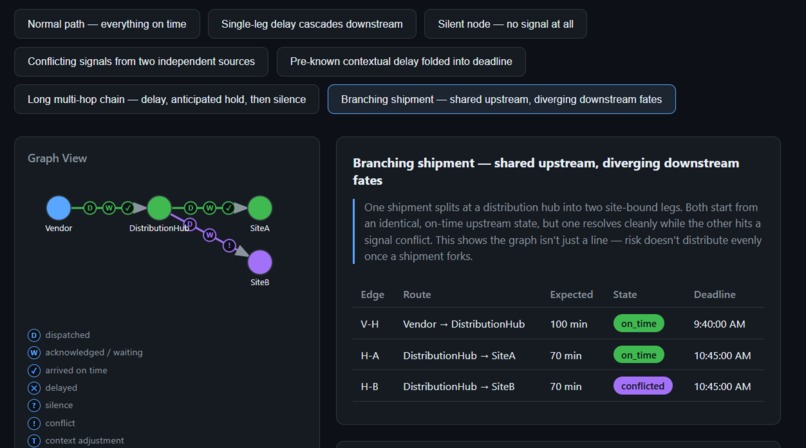
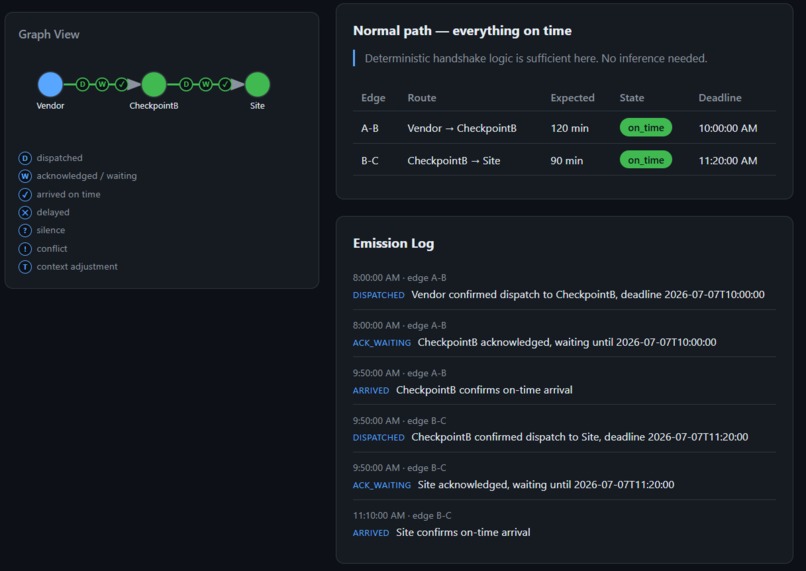
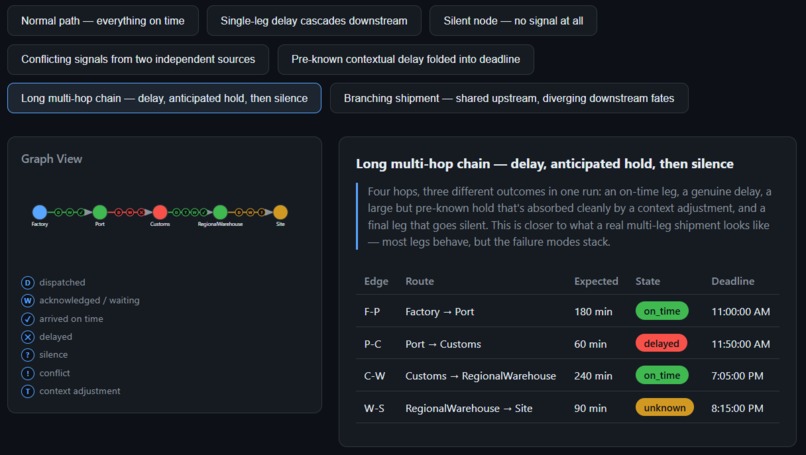
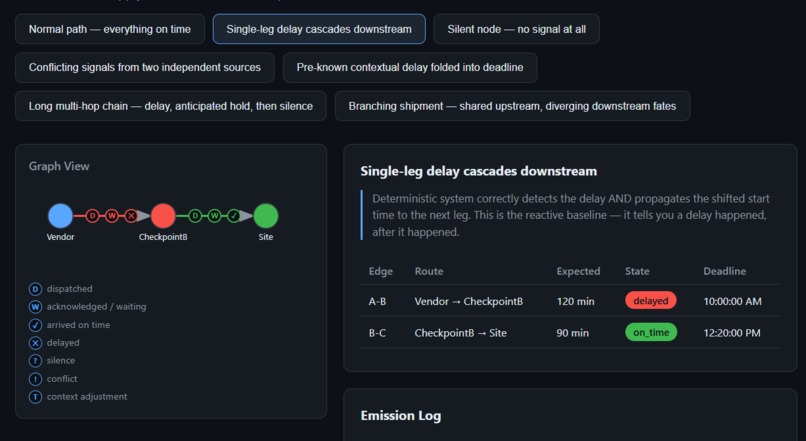
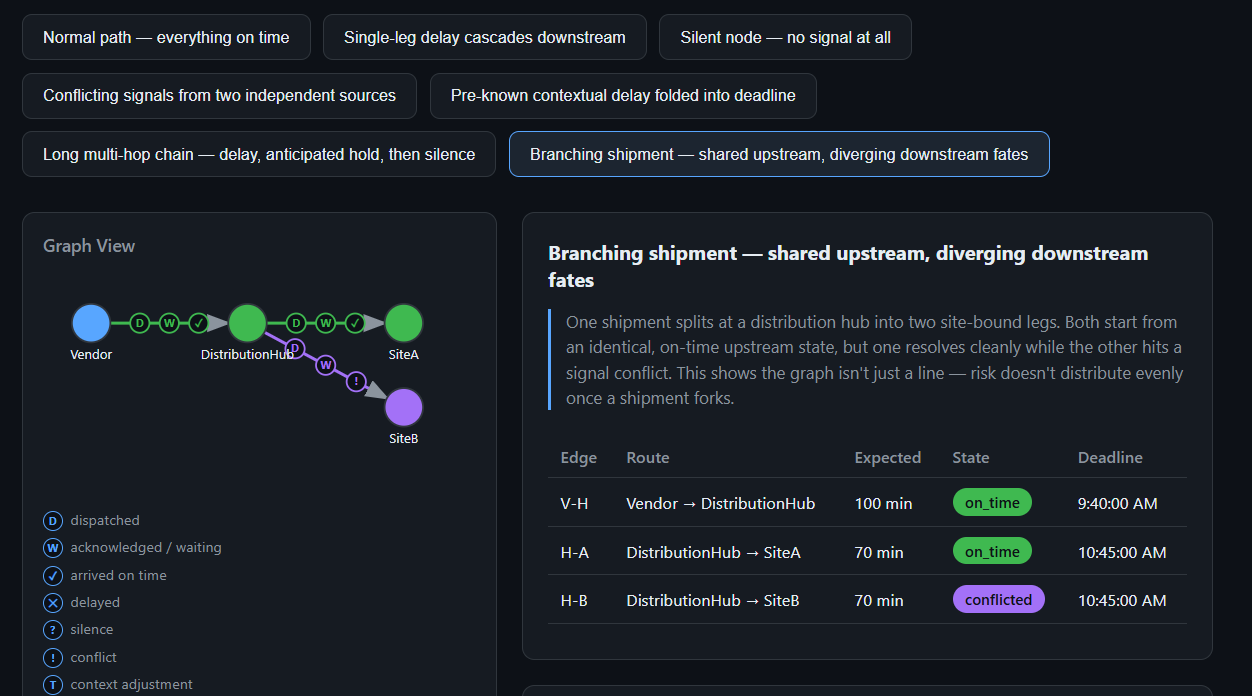
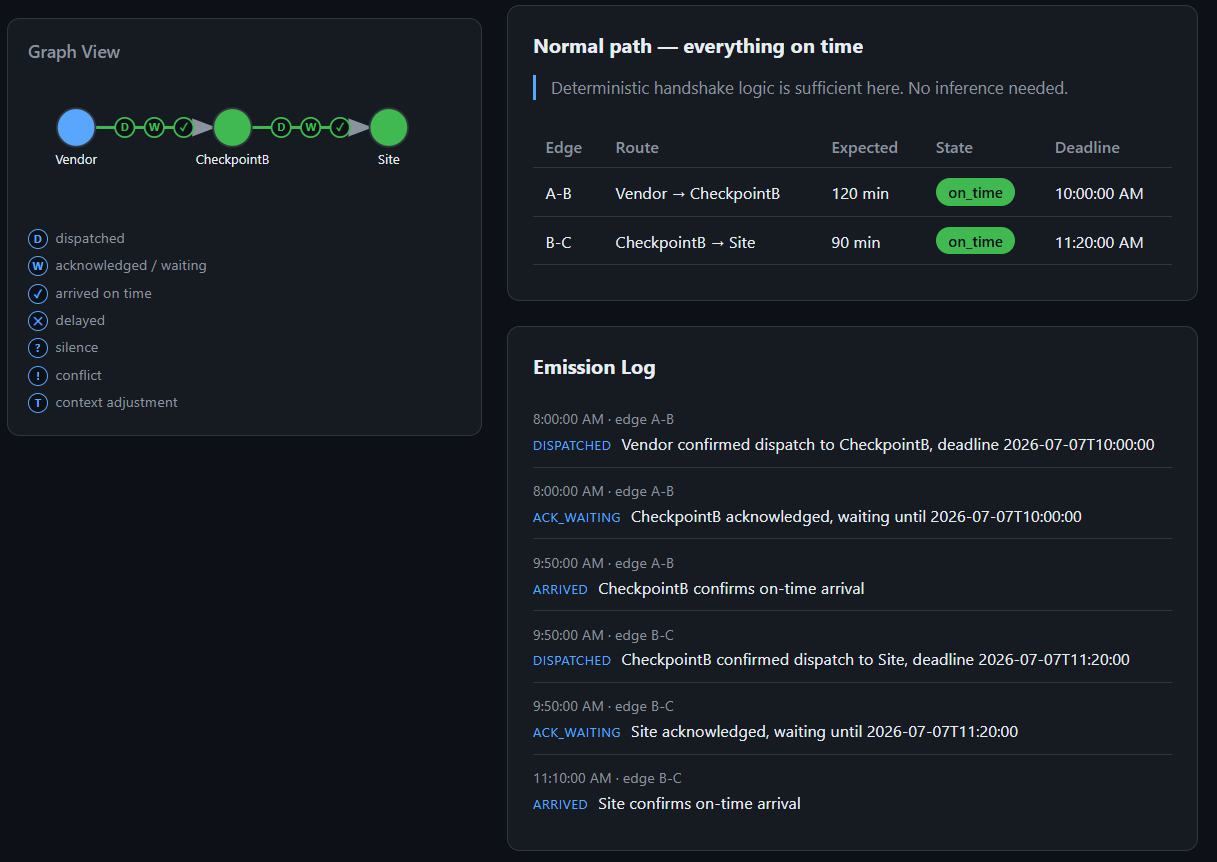
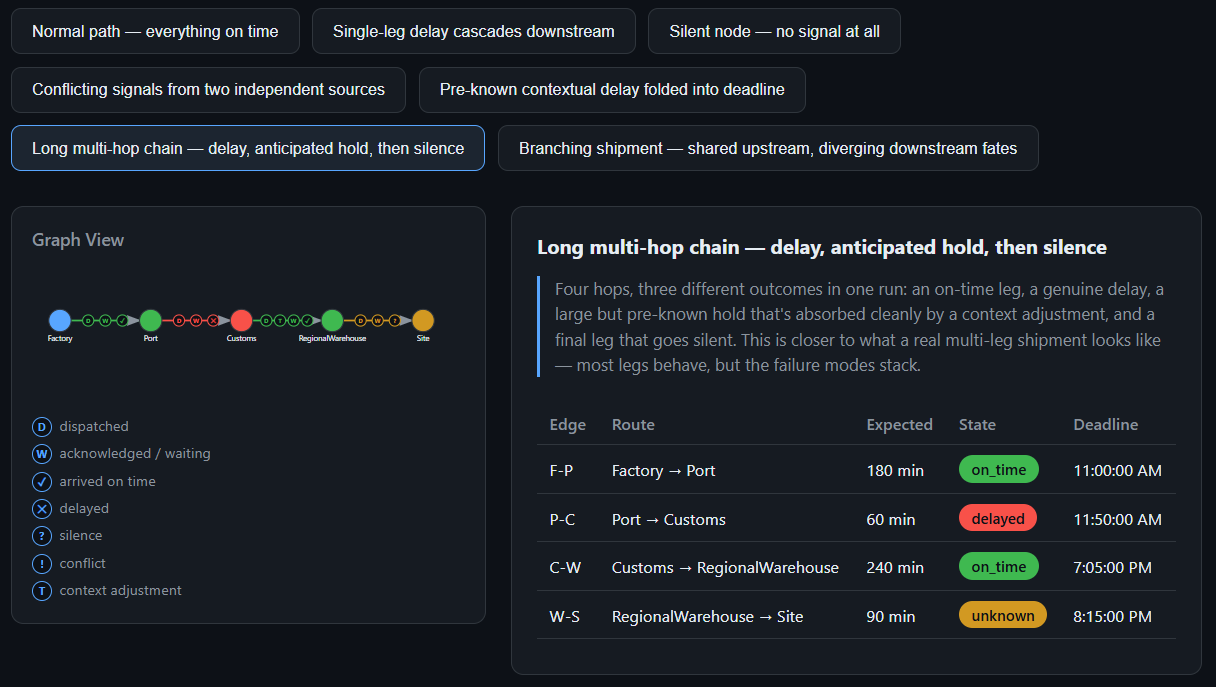
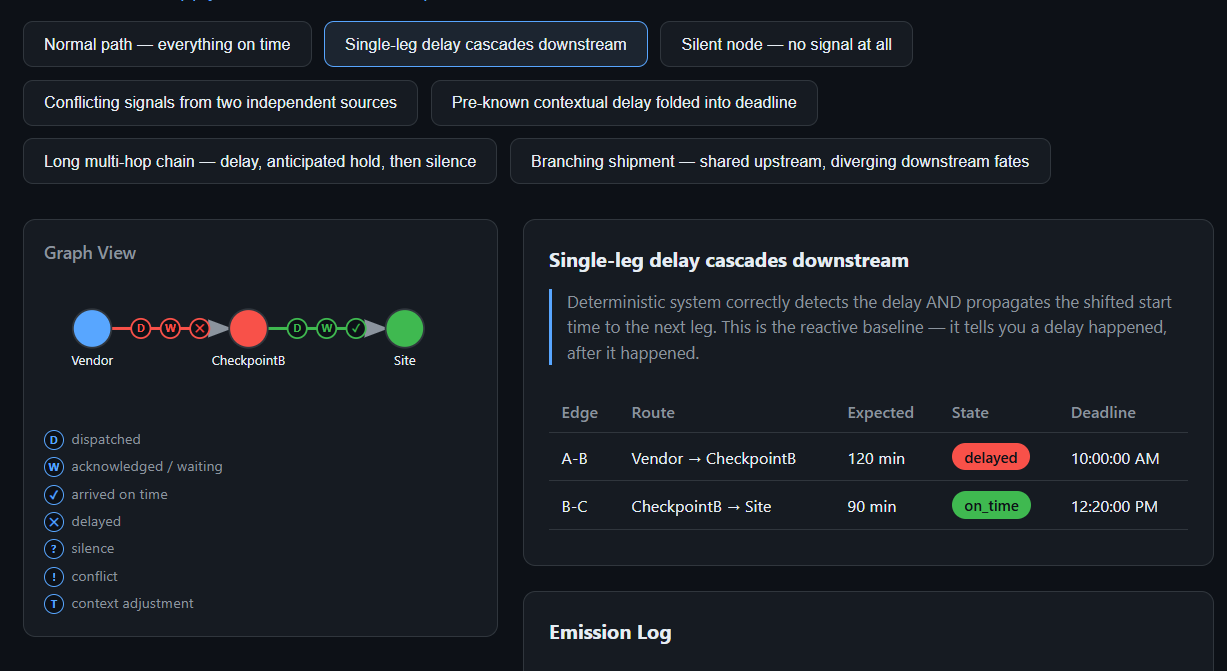
To demonstrate the concept, we built an interactive event synchronization prototype, a live supply chain explorer, and a complete cognitive workflow from event detection to decision recommendation.
Challenges we ran into:
One of our biggest challenges was moving beyond the idea of building another chatbot.
Construction problems are fundamentally relationship problems, where understanding dependencies between vendors, materials, schedules, logistics, and project milestones is more important than answering isolated questions.
Another challenge was designing a system capable of continuously updating project understanding rather than relying on static data. We addressed this by introducing BuildSync™, an event-driven synchronization layer that continuously updates the Construction World Model.
Finally, balancing ambitious AI concepts with the limited timeline of a hackathon required us to carefully prioritize modularity, explainability, and technical feasibility while still demonstrating an end-to-end cognitive workflow.
Accomplishments that we're proud of:
- Designed a complete cognitive architecture inspired by human intelligence: Perception → Memory → Reasoning → Action.
- Built an interactive prototype demonstrating real-time event synchronization and supply chain visualization.
- Created a dynamic Construction World Model instead of relying solely on document-based AI.
- Developed a modular architecture that combines graph reasoning, forecasting, event-driven systems, and explainable AI.
- Focused on explainable decision-making rather than black-box predictions.
- Designed the platform to naturally extend Kaya AI's vision around Amber while remaining scalable for enterprise deployment.
What we learned:
This project reinforced an important lesson:
AI becomes significantly more valuable when it understands relationships instead of isolated pieces of information.
Throughout this project, we explored how graph reasoning, organizational memory, event-driven architectures, explainable AI, and multi-agent systems can work together to solve real industrial problems.
More importantly, we learned that successful AI products are not defined by the models they use,they are defined by the quality of the decisions they enable.
What's next for Project KORTEX:
KORTEX is designed as a foundation rather than a standalone application.
Our roadmap includes:
- Integration with Kaya AI's Amber platform.
- AI-powered procurement intelligence.
- Physical AI through smart glasses and edge computing for on-site workers.
- Digital twins of construction projects for continuous simulation.
- Cross-project organizational learning.
- Autonomous scheduling, resource allocation, and risk mitigation.
Our long-term vision is to build a cognitive operating system that helps construction teams understand every project, predict every delay, and optimize every decision.
Construction already has data. KORTEX gives it intelligence.

Log in or sign up for Devpost to join the conversation.