Inspiration
What it does
How we built it
Challenges we ran into
Accomplishments that we're proud of
What we learned
What's next for Project k
👉 Identify shy/hesitant students who are
Inspiration
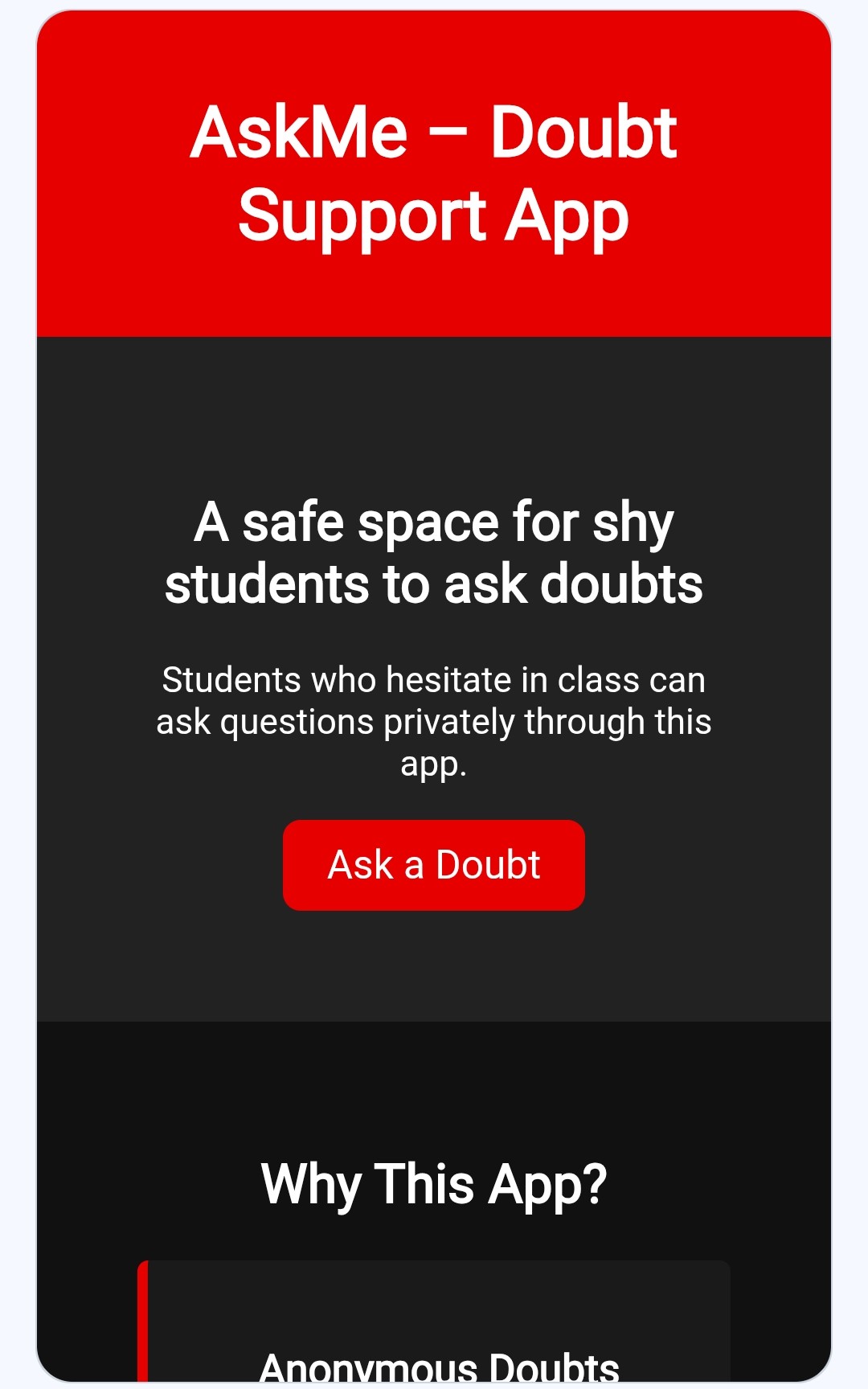
In most classrooms, many students hesitate to ask doubts because they are shy, introverted, or afraid of being judged. These silent doubts often lead to bigger learning gaps. We wanted to build a solution that gives every student — especially shy learners — a safe space to ask questions without fear.
What it does
Our project creates a two-part system:
A Teacher Dashboard – shows which students may need help based on their interaction patterns.
A Student Doubt App – a private app where shy students can:
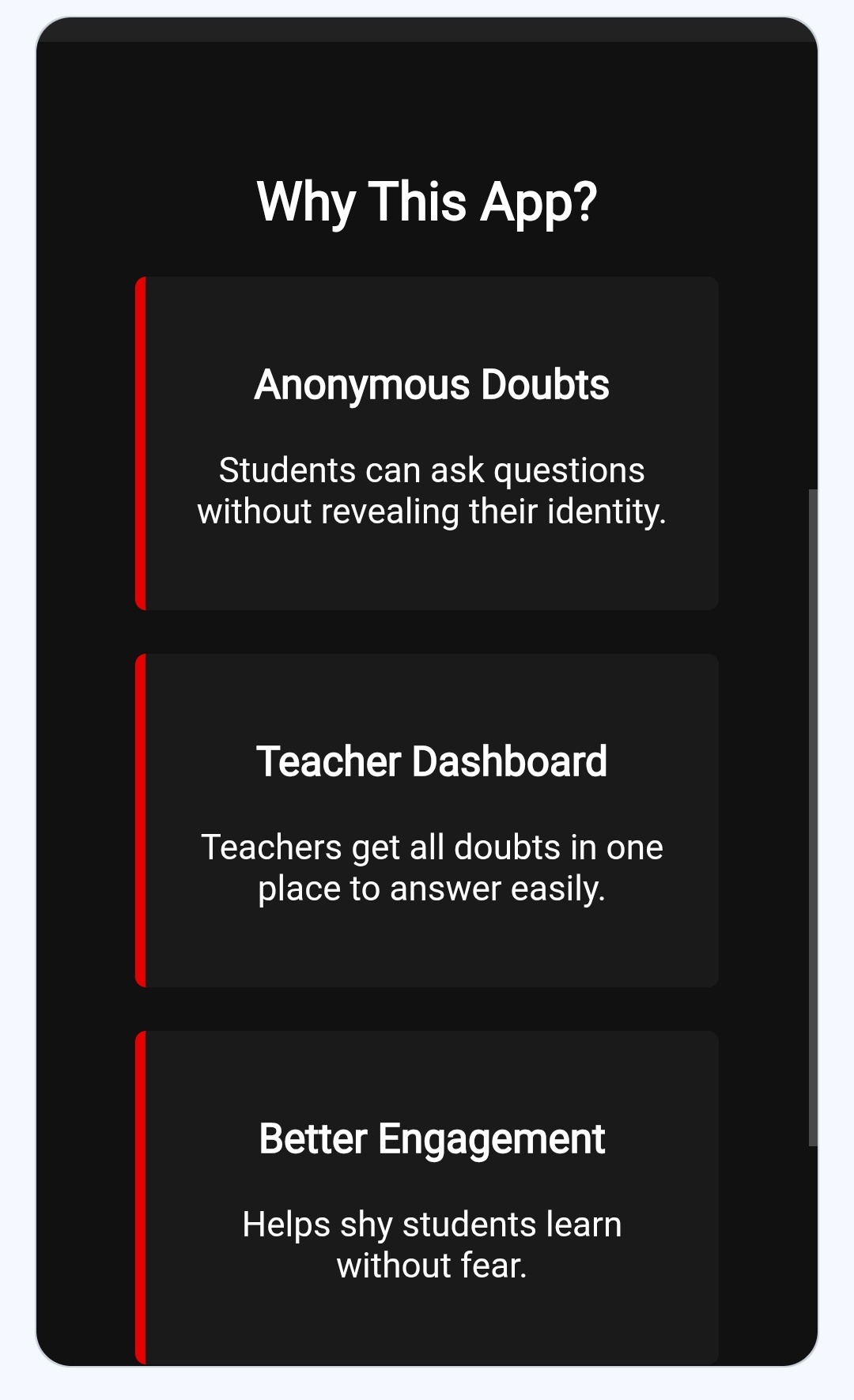
Ask doubts anonymously
Chat privately with the teacher
Bookmark explanations
Get personalized guidance
The system identifies non-interactive or quiet students by analyzing:
Frequency of participation
Response delays
Interaction patterns
Missed answers or silence
This helps the teacher understand who needs attention, even if the student doesn’t raise their hand.
How we built it
Built a student app using Flutter for easy mobile accessibility.
Created a teacher dashboard using React + Tailwind CSS.
Used a simple backend with Firebase for real-time messaging and doubt handling.
Designed an algorithm that tracks participation signals like message count, quiz attempts, and hesitation indicators.
Ensured complete privacy — no face recognition or video needed.
Challenges we ran into
Detecting “shyness” without using cameras or face recognition was a challenge.
Designing an algorithm that doesn’t misjudge students.
Building real-time chat and doubt tracking in a simple and clean UI.
Protecting student privacy while still giving useful insights to teachers.
Accomplishments that we're proud of
Created a safe and non-judgmental app for shy students.
Built a working dashboard that shows student participation levels.
Implemented smooth teacher-student anonymous chat.
Made the system work completely without any face recognition or personal data.
Strong positive feedback from students who tested the prototype.
What we learned
How to analyze classroom behavior using only interaction patterns.
Building user-friendly interfaces for students who may already feel hesitant.
Techniques to protect privacy in education apps.
The importance of designing tech that includes all types of learners.
What's next for the project
Adding voice-to-text so students can send doubts easily.
Integrating AI-based suggestions for common questions.
Providing teachers with topic-based confusion reports.
Adding gamification (points for asking questions).
Expanding the system for use in colleges and coaching centers.

Log in or sign up for Devpost to join the conversation.