Inspiration
- Memory loss can turn normal moments into stressful ones
- We wanted something that helps people recognize familiar faces and objects quickly without making them navigate a bunch of menus
- Caregivers already “hold the context” so we built a system that captures that context once and then makes it instantly retrievable for the patient
What it does
- NeuroVault is a caregiver assisted memory system for people with memory loss.
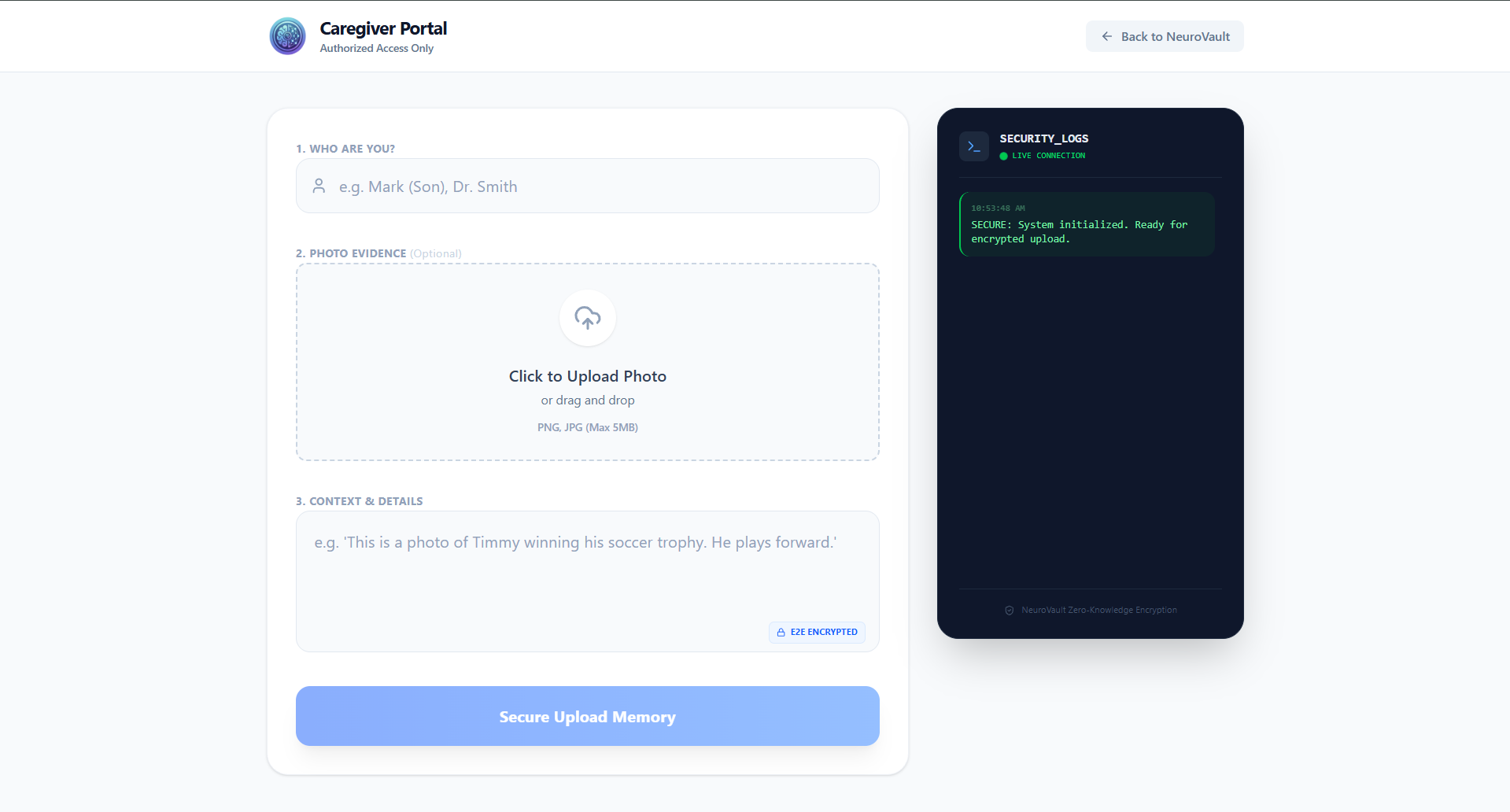
- Caregiver side: Upload a photo and a short explanation like who it is and why it matters then it gets -stored in a database and automatically indexed into a semantic brain so it is searchable in natural language
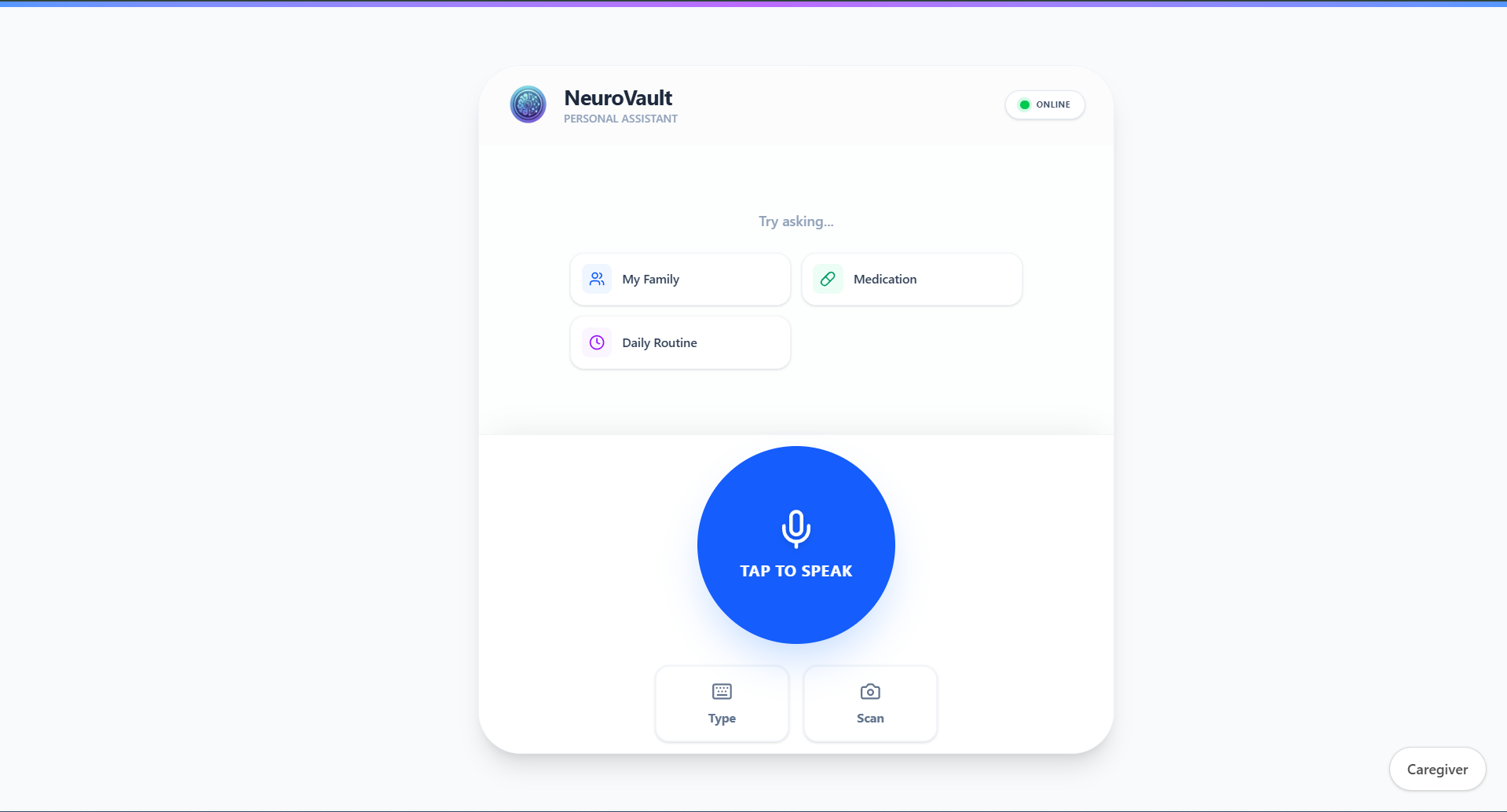
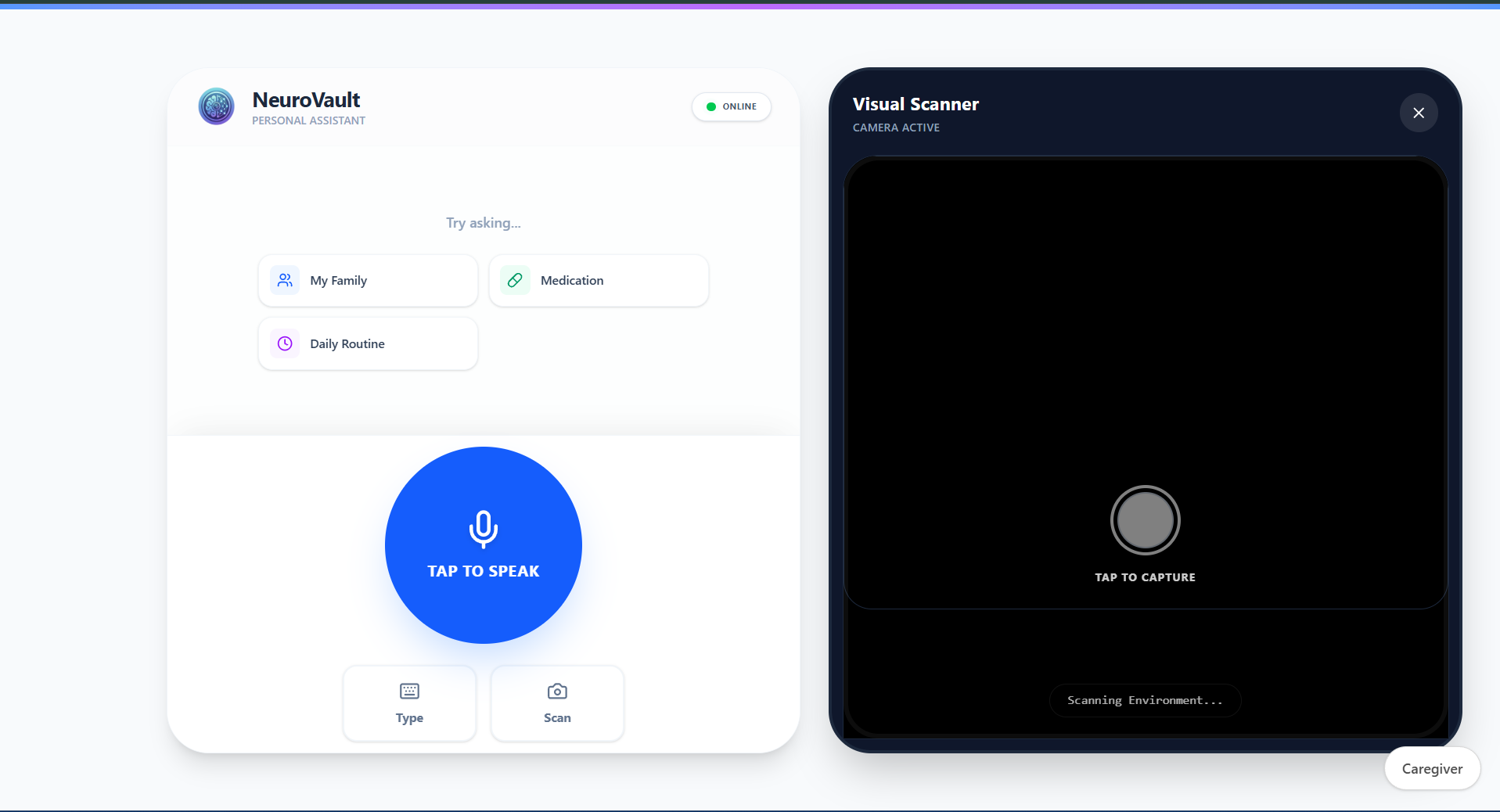
- Patient side: Take a photo then NeuroVault identifies who or what they are looking at using a vision service and instantly pulls the matching memory and explains it in simple language
- The goal is fast private recall with almost no steps for the patient
How we built it
- Patient UI: Next.js and React for camera capture and an accessible one tap “Who is this” flow
- Caregiver portal: Next.js page that uploads text and an optional image
- Storage: MongoDB as the source of truth for memories and metadata
- Vision service: FastAPI and DeepFace using Facenet512 embeddings plus a labels file that maps reference images to memory IDs hosted on Hugging Face Spaces
- Reference images: Stored in a Hugging Face dataset and pulled at runtime with snapshot_download
- Indexing: An ingest script that batches pending MongoDB memories and uploads them into the semantic search namespace for retrieval
- Automation: A cron style runner using GitHub Actions schedule to periodically ingest pending memories
Challenges we ran into
- Hugging Face Spaces rejected pushing binary image files so we moved references to a Hugging Face dataset and downloaded them at runtime
- Repo structure changes broke relative paths and caused missing image errors until we normalized paths and validated the snapshot directory
- Vercel to vision API calls needed careful routing and headers to avoid CORS and proxy issues
- MongoDB Atlas connectivity caused 500 errors due to IP allowlisting and connection settings
- Datetime and metadata formatting mattered a lot for ingestion reliability and retries
Accomplishments that we're proud of
- Built a working end to end flow from caregiver upload to database to auto indexing to patient capture to identification to memory recall
- Deployed a vision microservice on Hugging Face Spaces that bootstraps itself by downloading reference data on startup
- Improved the patient UX by removing extra steps and auto triggering identification after capture
- Designed a simple ingestion pipeline with status tracking and retries so it can run unattended
What we learned
- Deploying ML is as much about packaging storage and environment variables as it is about the model
- Having a single source of truth in MongoDB made debugging and automation much easier
- Small UX changes like one tap vs multiple buttons make a big difference for accessibility
- Cron based ingestion works well if you build idempotency and clear retry behavior
What's next for NeuroVault
- Add authentication and tighter privacy controls including per patient access and encryption at rest
- Improve recognition accuracy with better reference collection calibration and smarter thresholds
- Expand beyond faces to more object memories and multi photo profiles per person
- Move from scheduled ingestion to near real time ingestion using a queue and worker
- Add caregiver tools to edit memories merge duplicates and view an audit history
