-
-
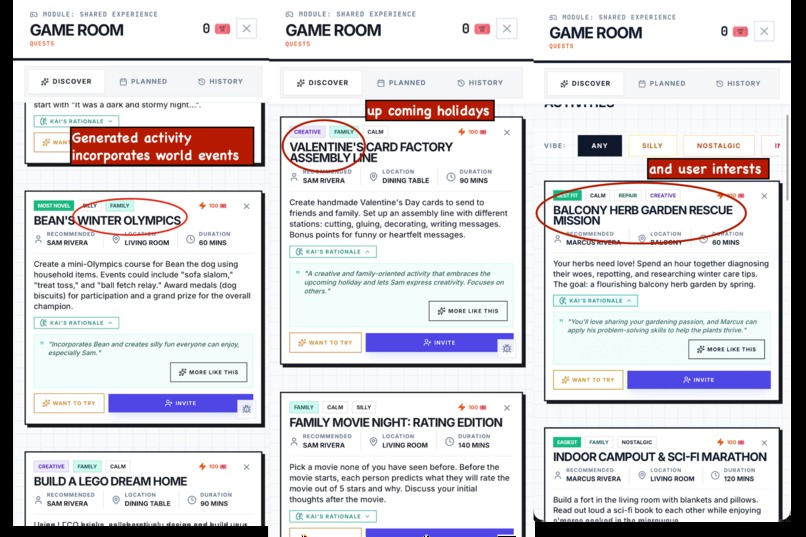
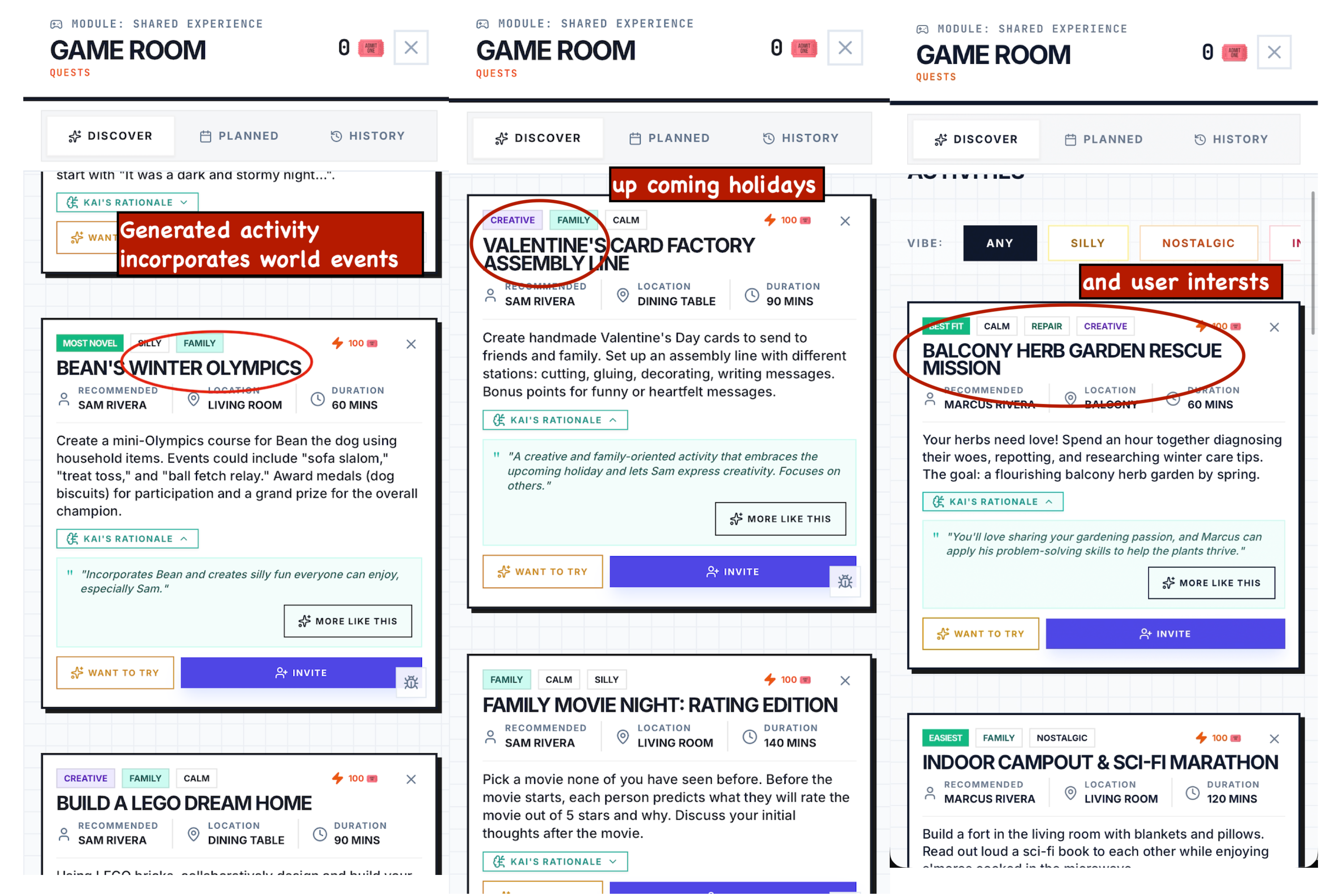
Activity discover feed shows personalized activity cards with vibe tags and Kai’s rationale, tailored to holidays, events, and interests.
-
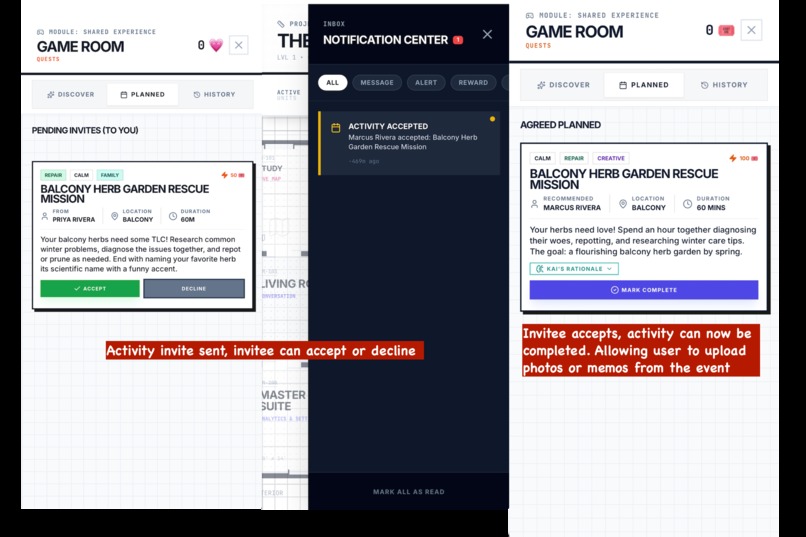
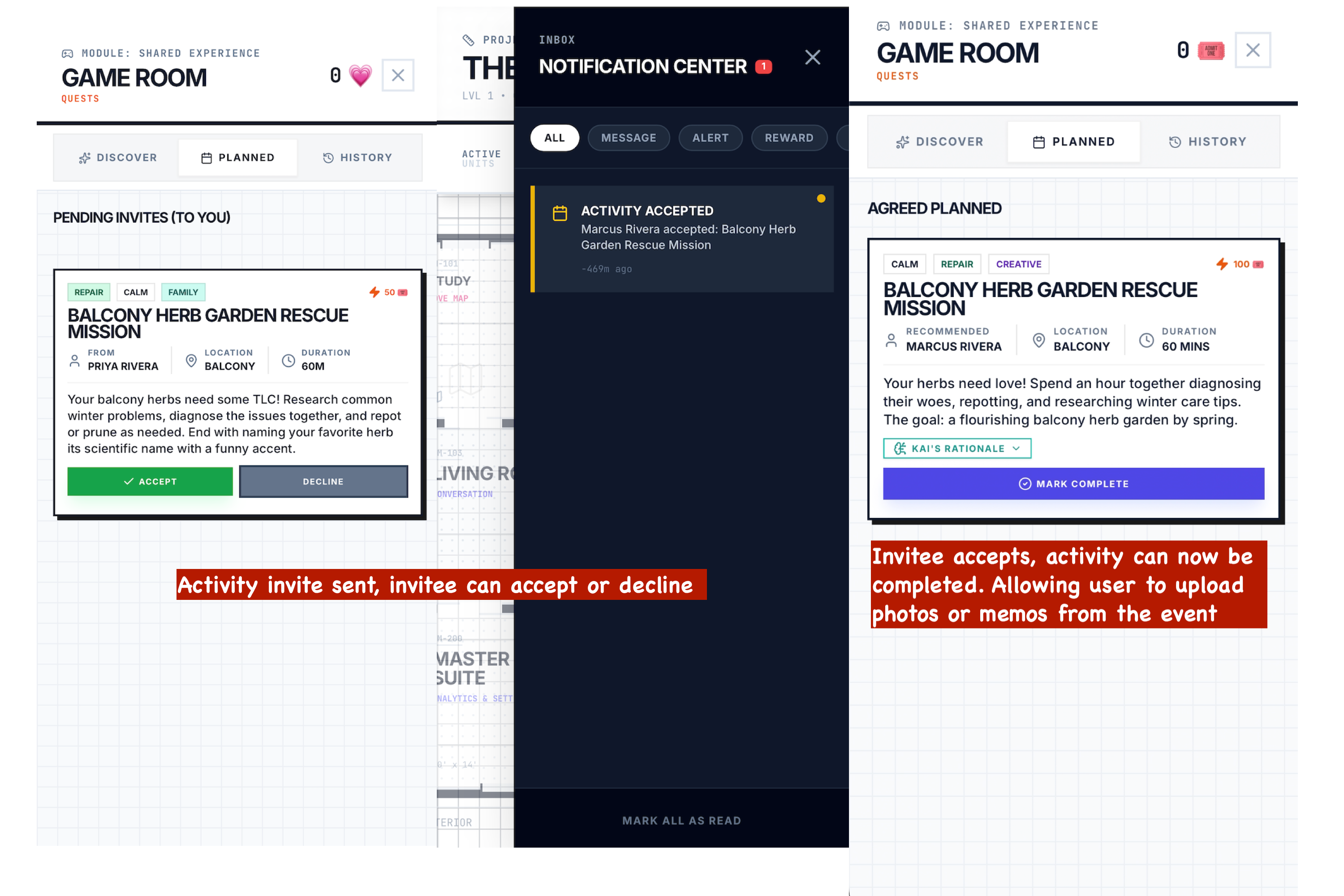
User sends an activity invite, invitee accepts via Notification Center, and the shared plan becomes completable with photos/memos.
-
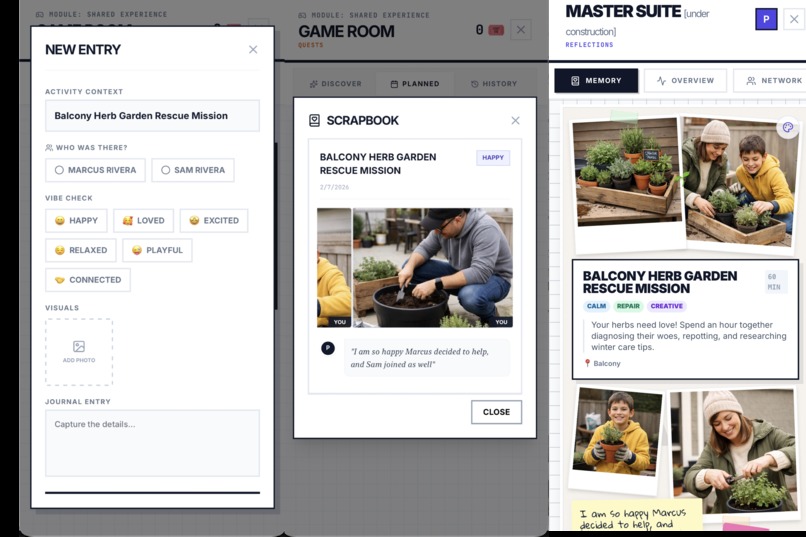
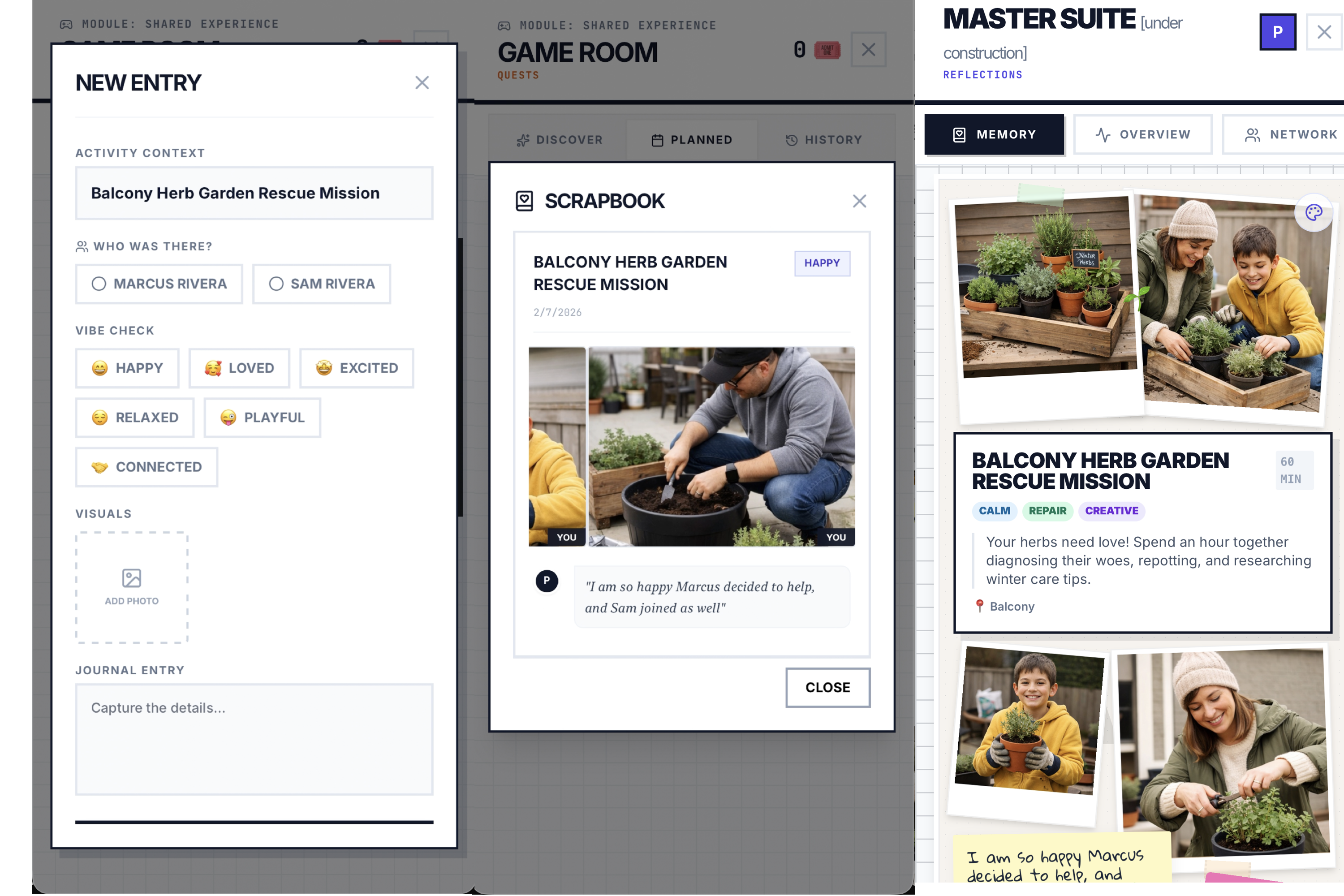
After completion, users log a shared memory—vibe tags, attendees, photos, and a journal note—auto generated into a scrapbook entry.
-
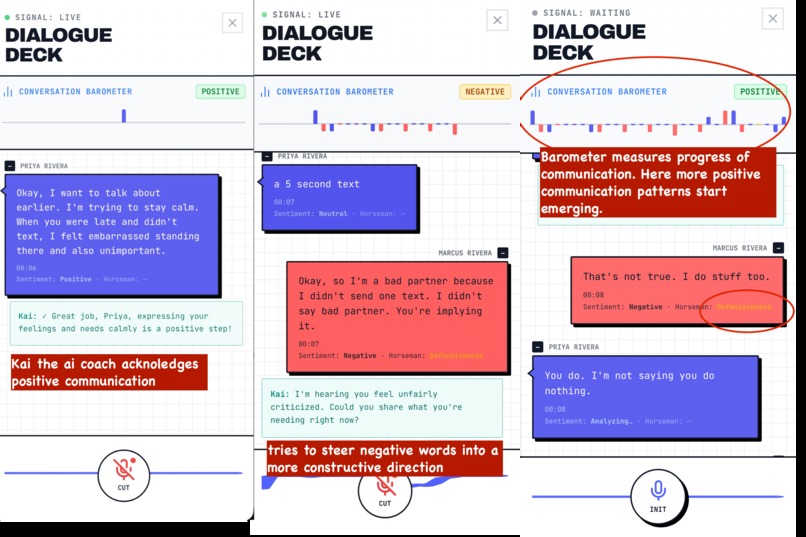
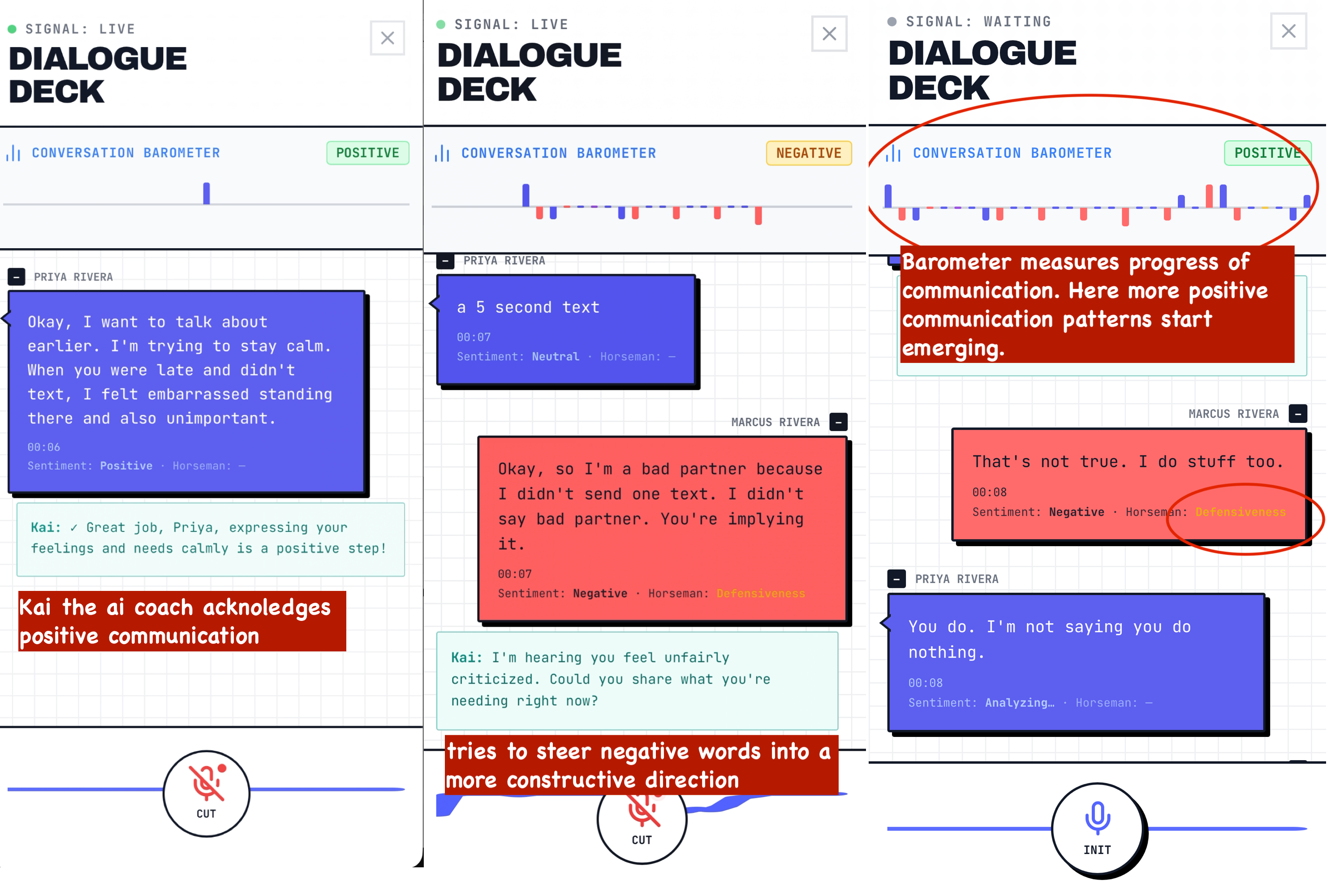
Dialogue Deck visualizes live sentiment and Four Horsemen signals with a conversation barometer, while Kai nudges talk toward calmer repair
-
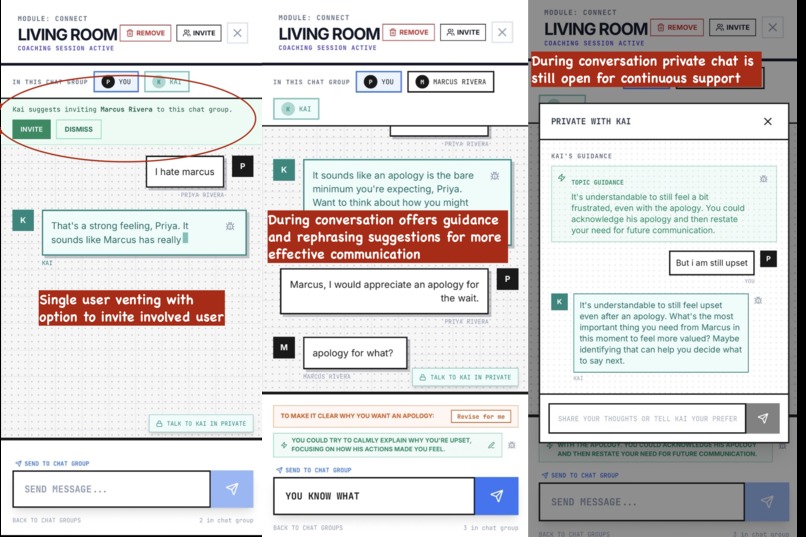
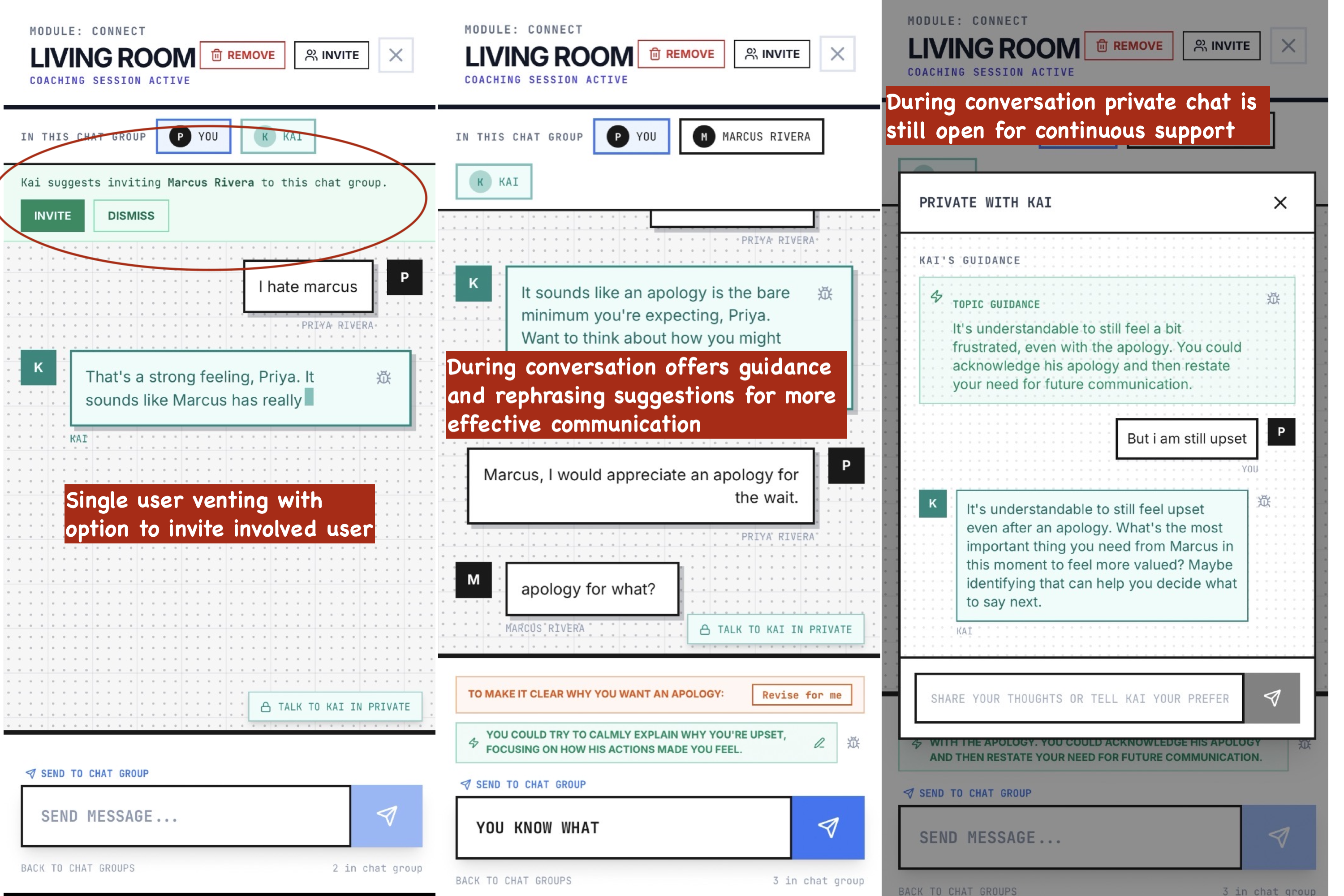
User chats privately with Kai. Kai suggests inviting the other person and offers guidance and concrete prompts to help resolve the conflict.
-
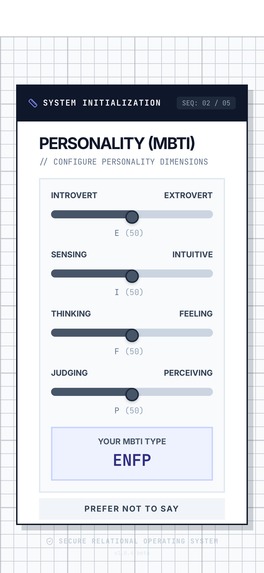
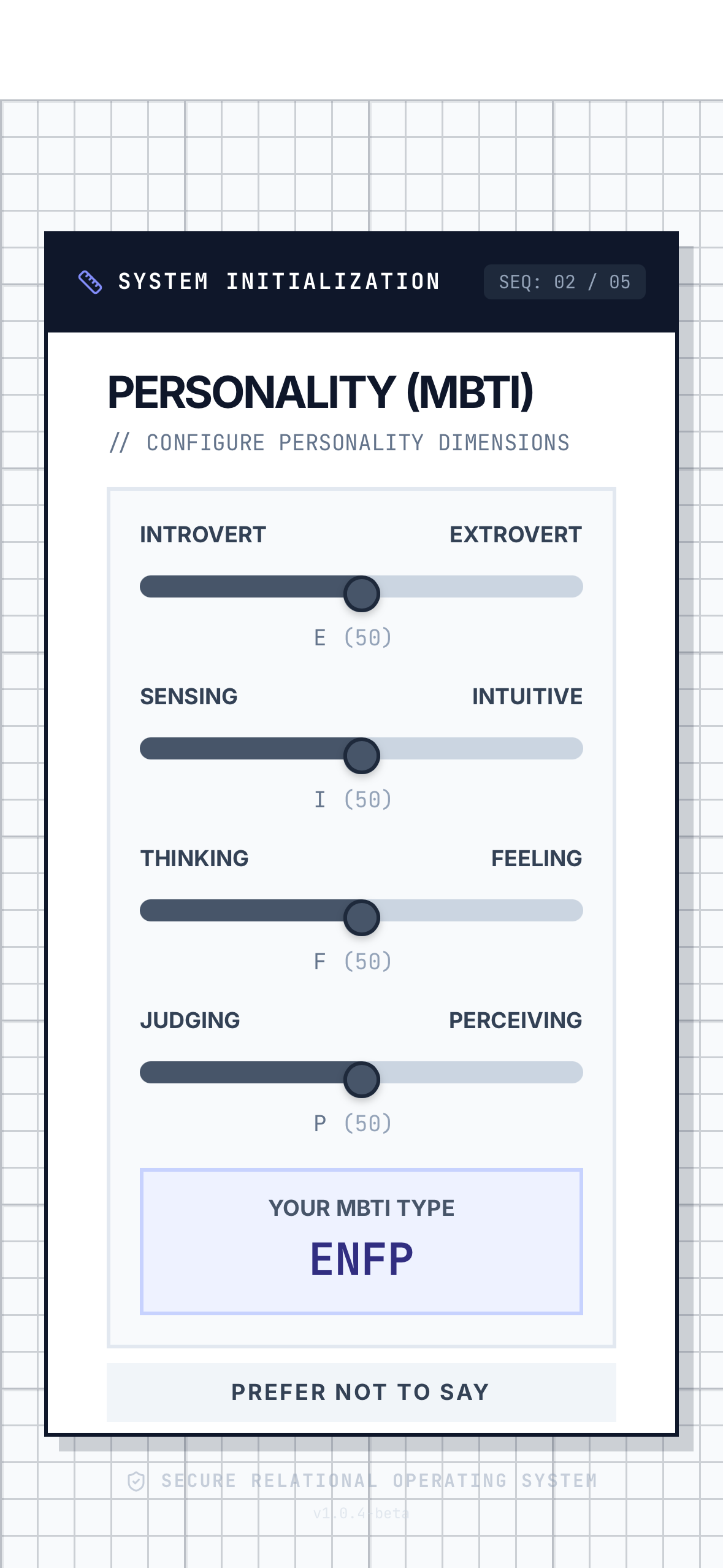
Signup page, asking user personality to help Kai to personalize this response.
-
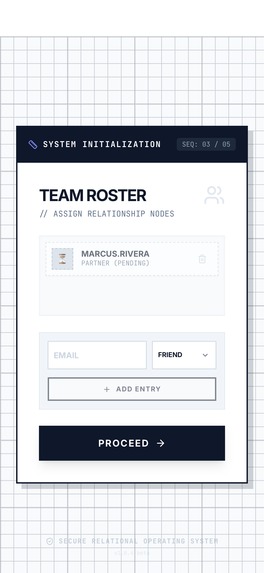
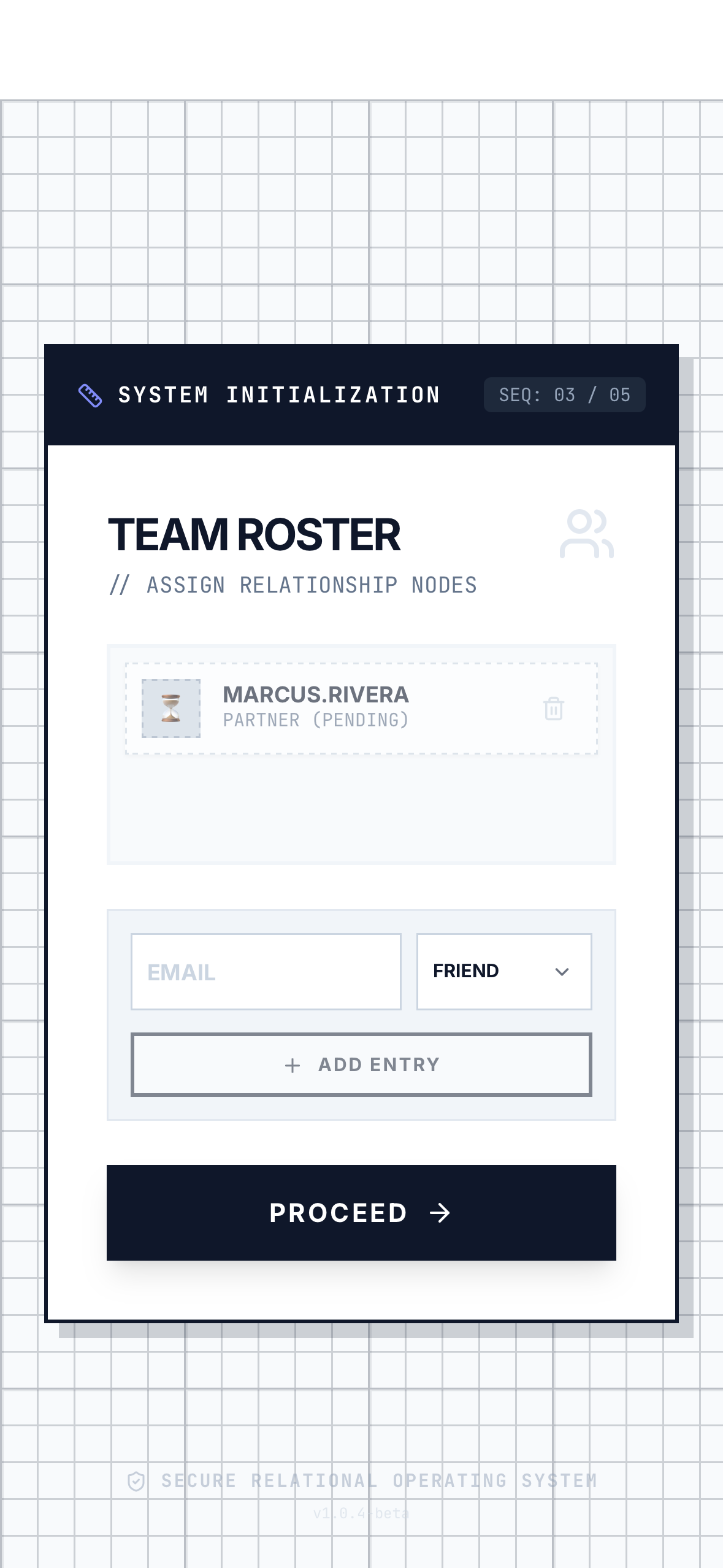
Adding connected users.
-
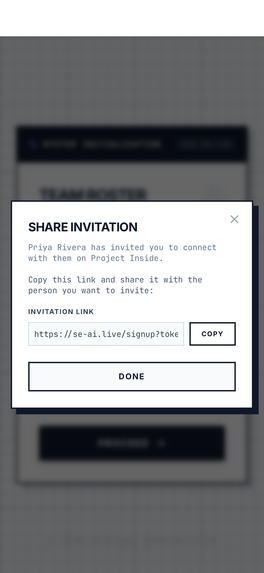
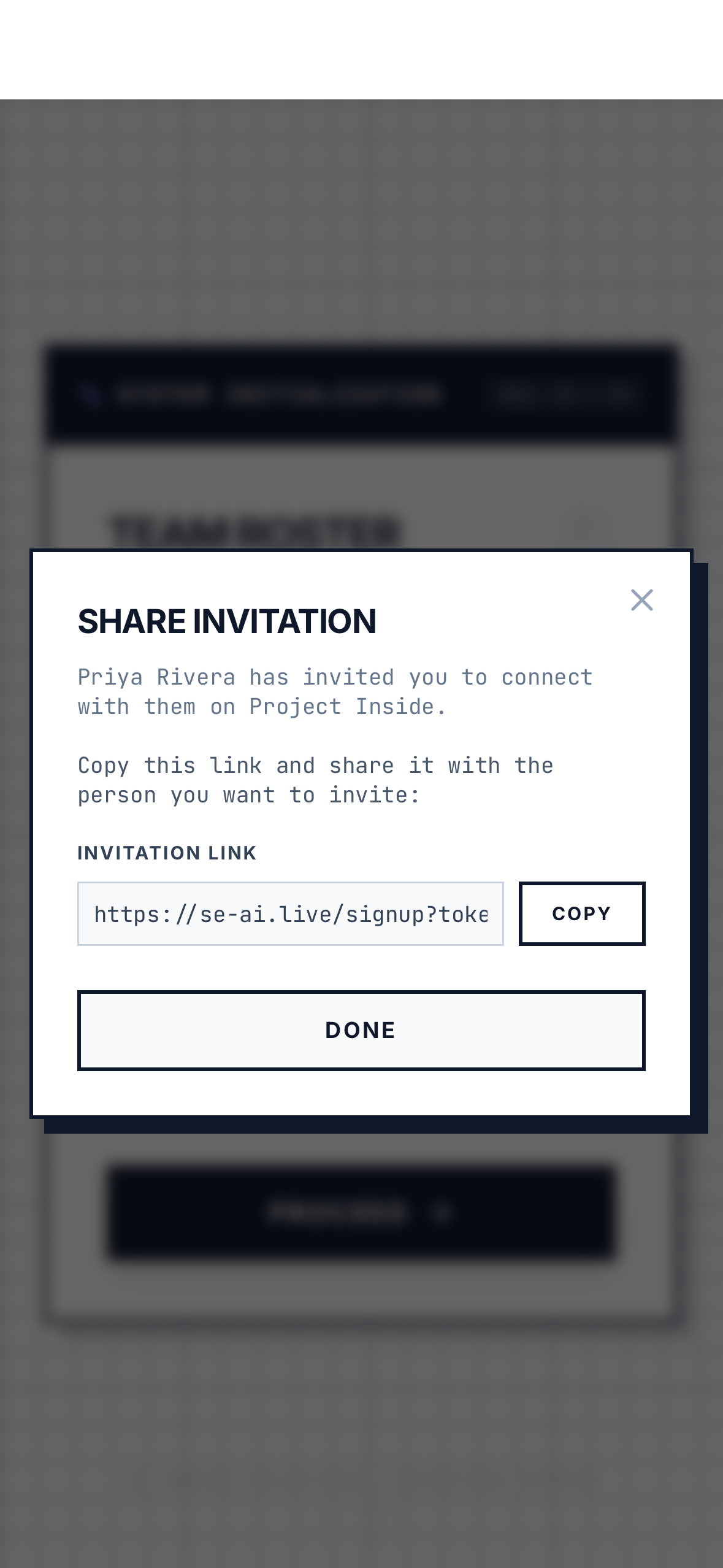
If the added user is not registered, prompting user to invite them to join
-
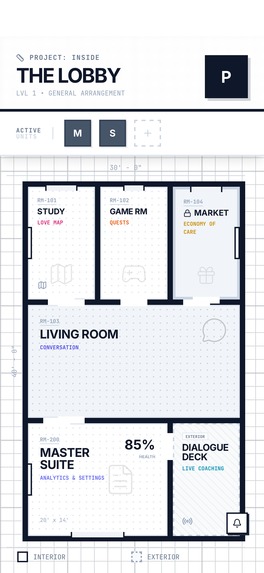
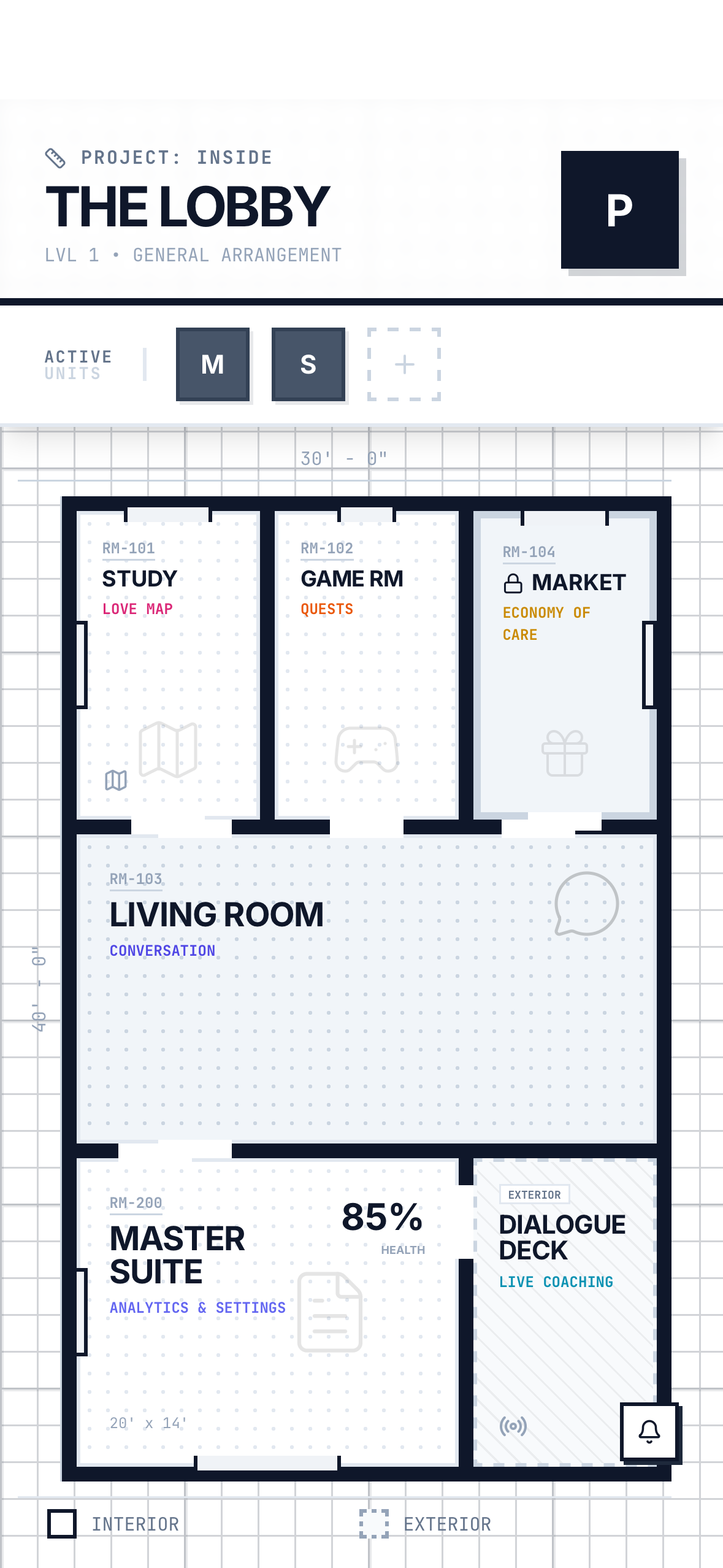
Main page after login
-
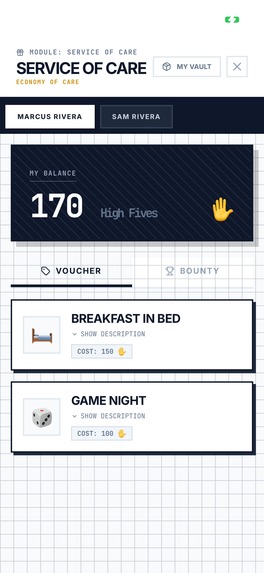
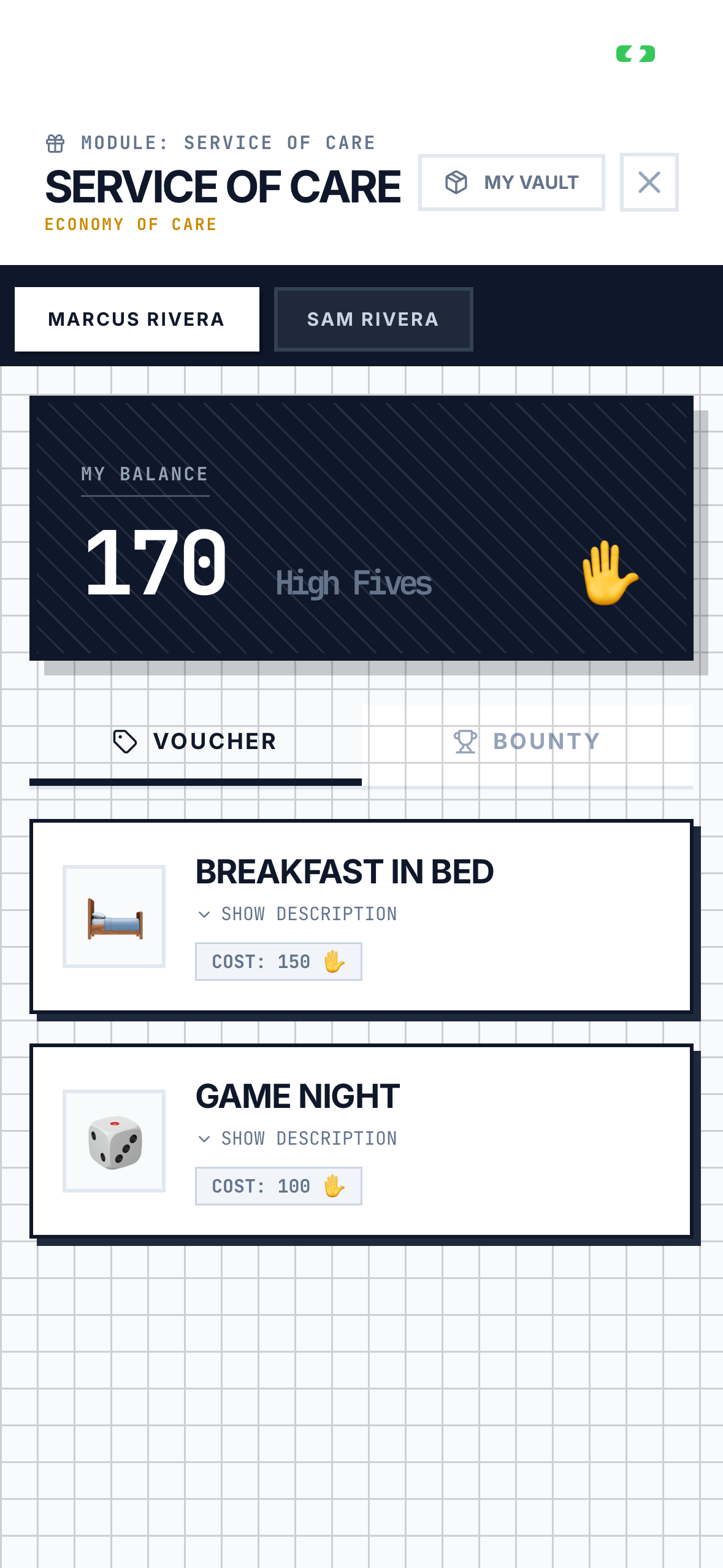
In market place, user can "purchase" vouchers other user offer
-
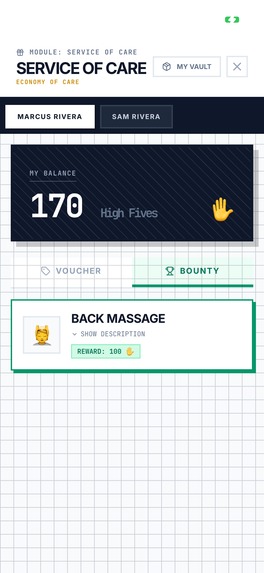
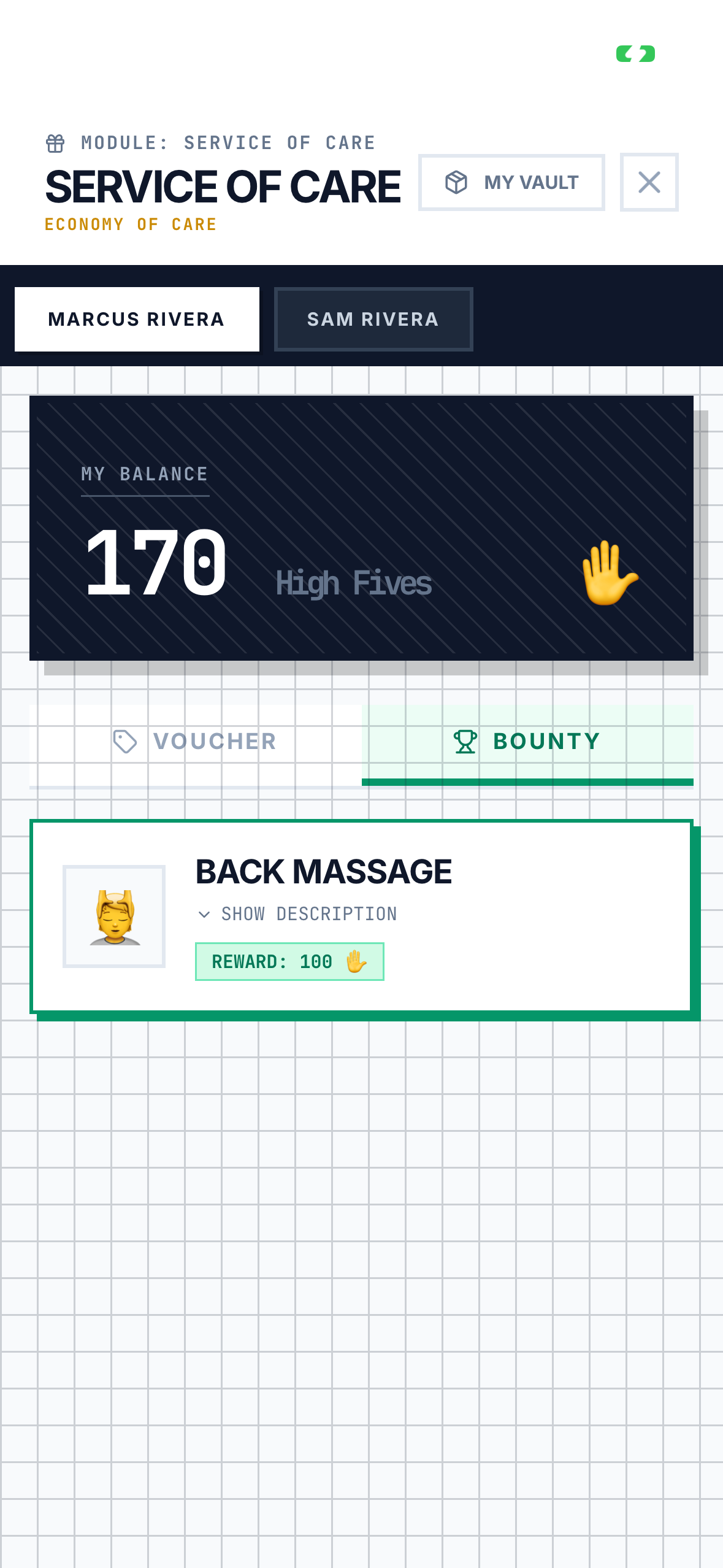
In market place, or they can "claim" bounties to offer service to others
-
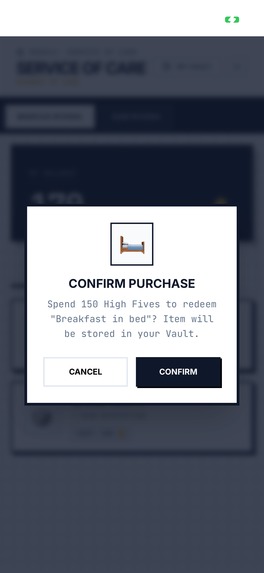
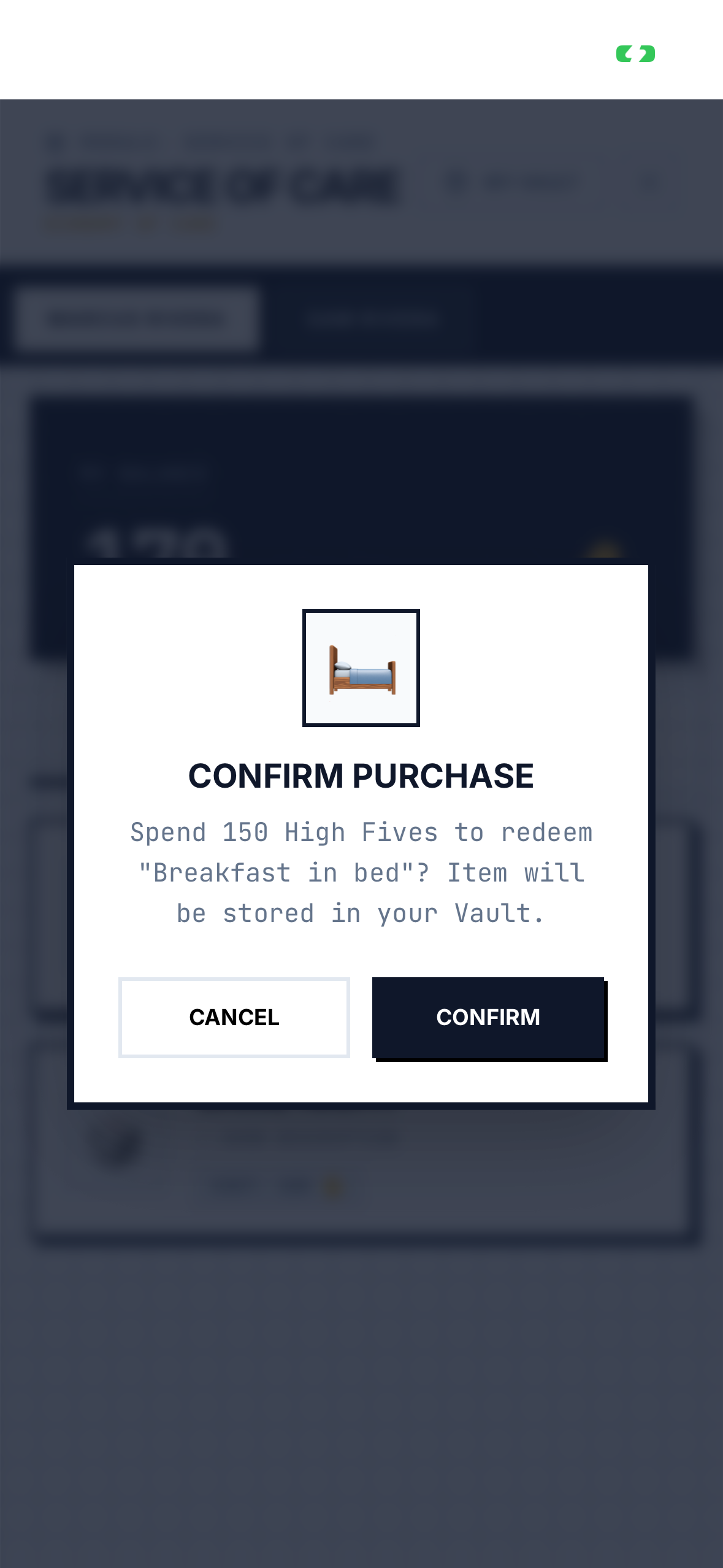
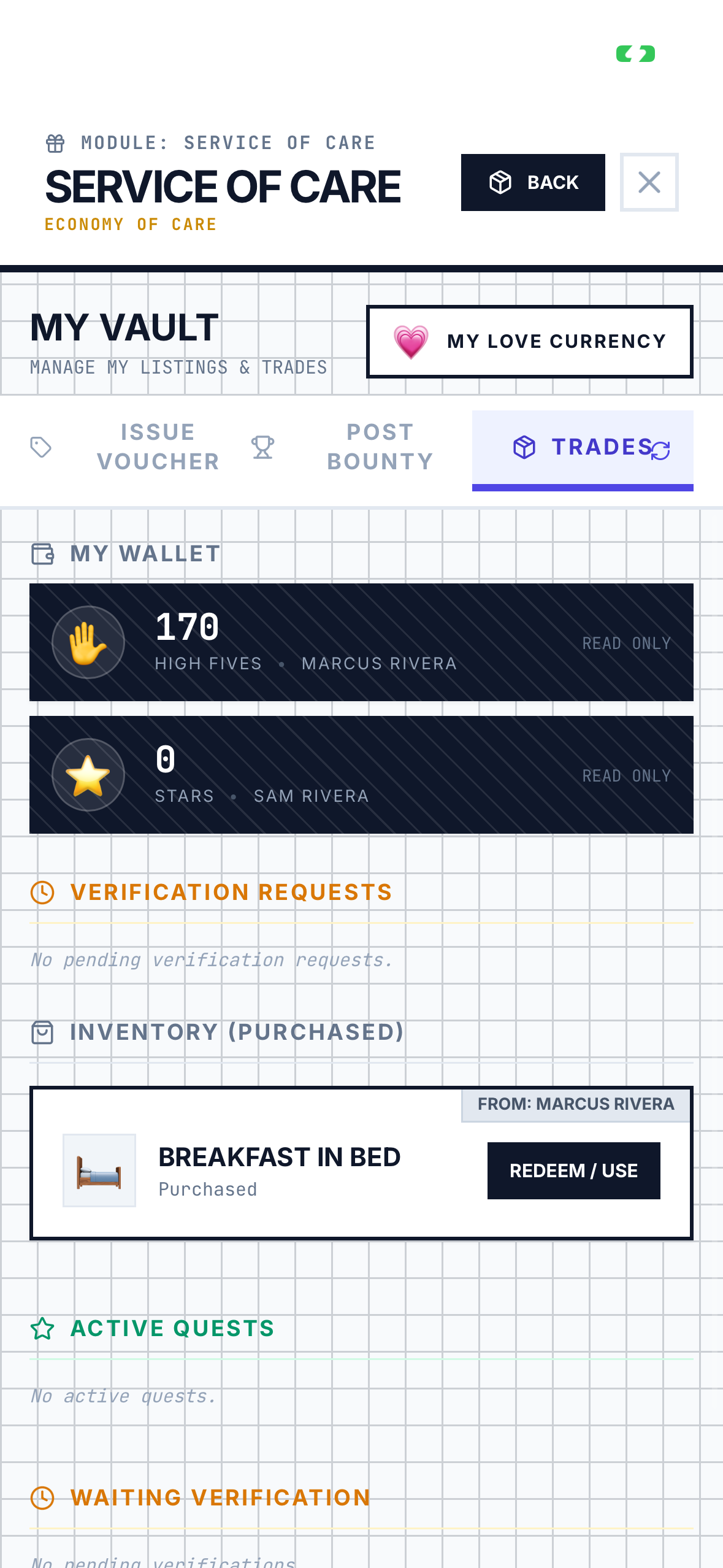
Purchasing a voucher costs them the "love currency" their loved one sets
-
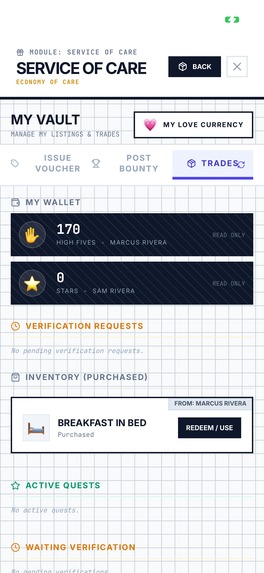
Wallet shows the current status of all their vouchers and bounties
-
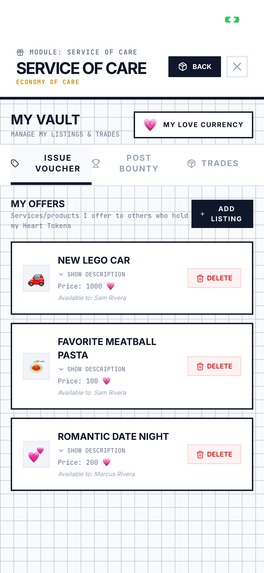
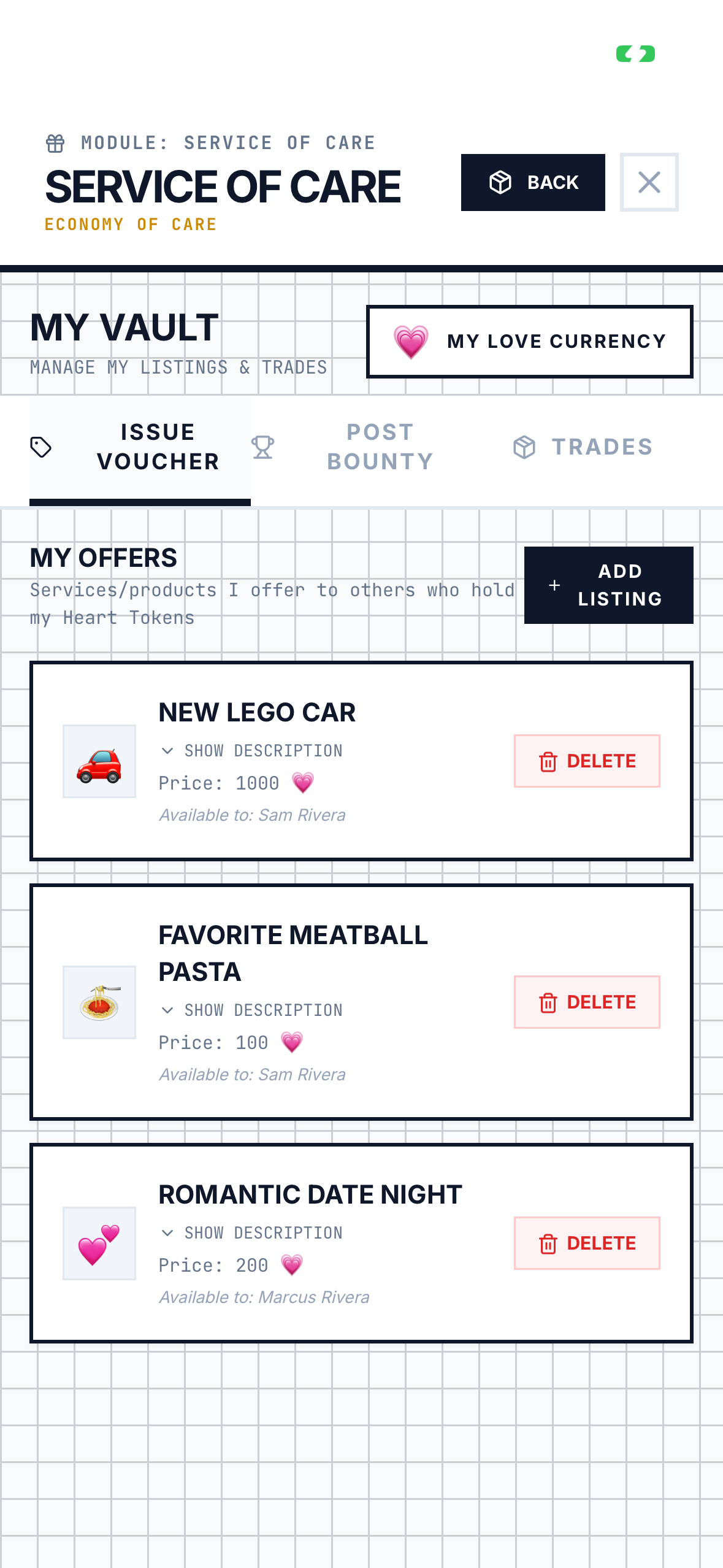
User can list up what they want to offer in "Issue Voucher"
-
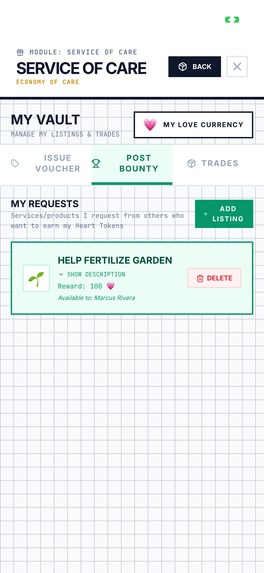
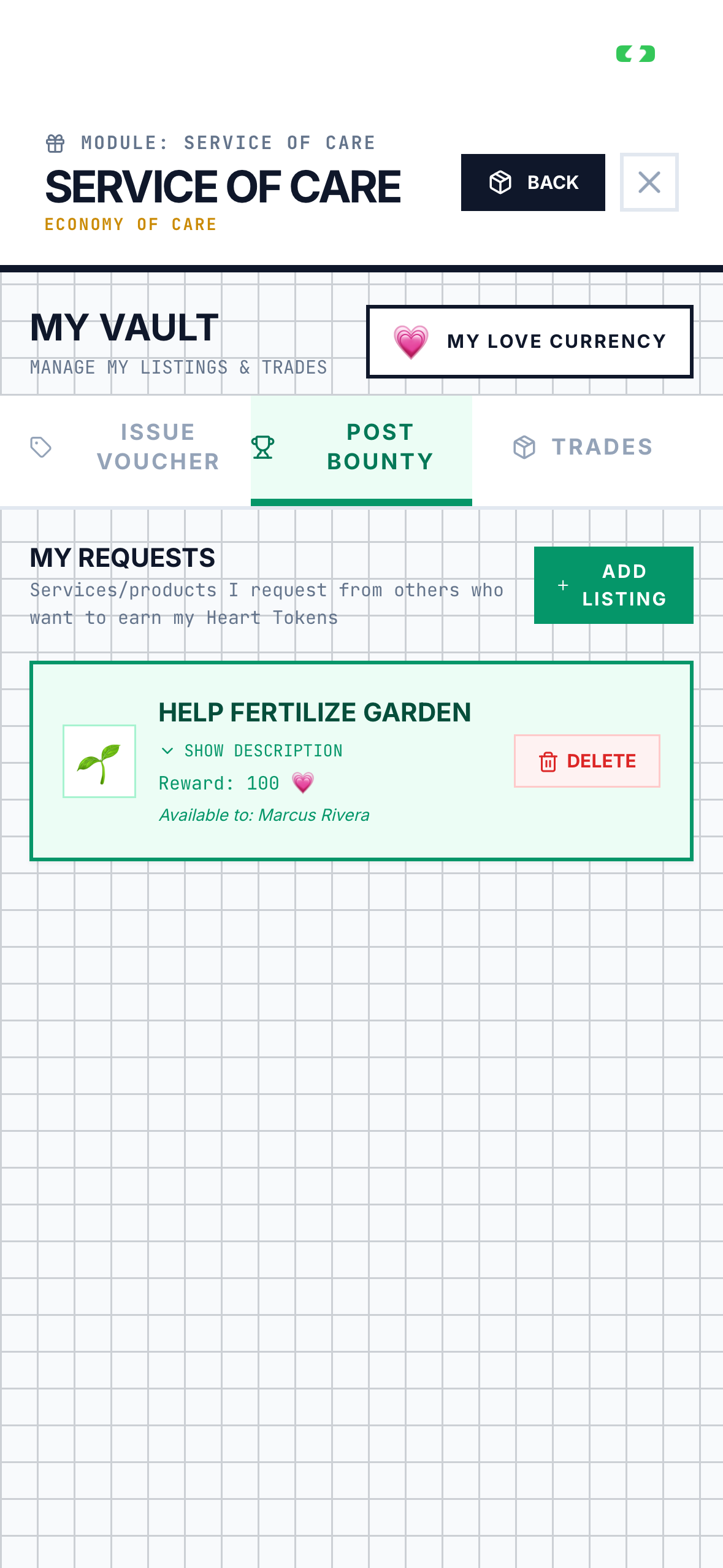
Or list what they want to receive as "Post Bounty"
-
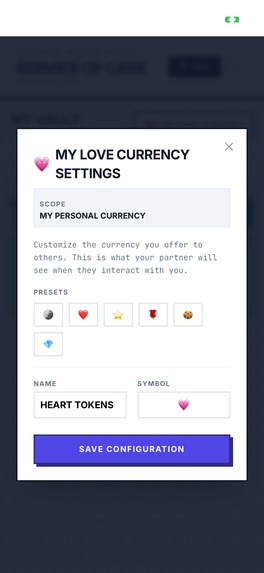
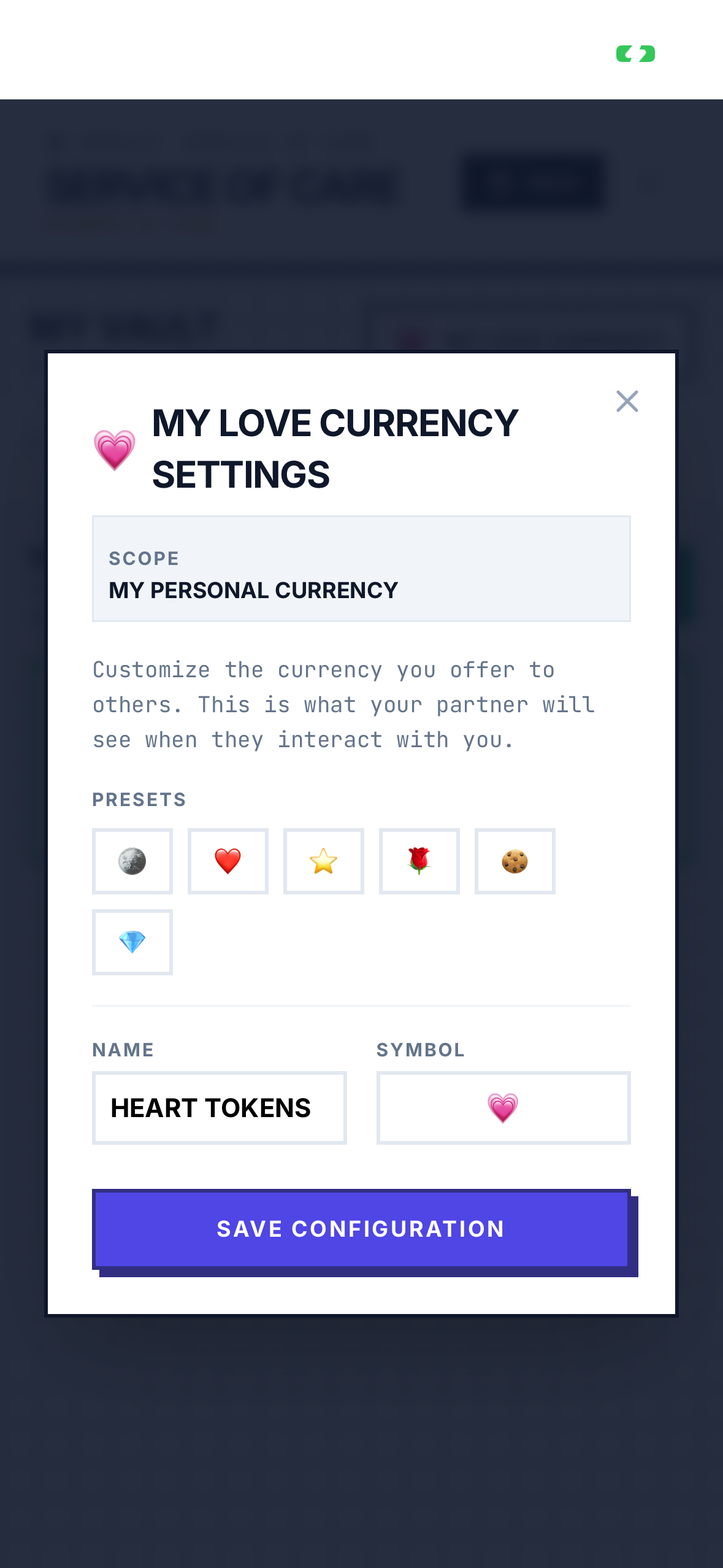
Users can choose their own love currency.
Project Inside
Inspiration
I built Project Inside to solve a problem I kept running into in my own relationship: the draining cycle of trying to be right instead of staying close.
After watching a reality show where couples repaired their bonds through guided mini-games and objective observation, it clicked: what makes connection possible—especially when emotions run hot—is structure + perspective. Structure is the shared container: clear rules, a repeatable flow, and guardrails that keep conversations from derailing. Perspective is the lens: seeing the need under the complaint, assuming good intent, and staying in “us vs. the problem” mode.
Project Inside is a builder’s toolkit for building your Sound Relationship House—blueprints, daily upgrades, and guided repairs. It brings relationship principles out of the therapist’s office and into daily life, so growth happens through small, painless actions that compound over time.
At the core are three loops that build the house floor by floor:
1) Blueprints (Build understanding) — Love Maps strengthen perspective
2) Guided repairs (Find the gaps) — Chat + Live Coach add structure in real time and perspective in reflection
3) Daily upgrades (Build deeper bonds) — Personalized Activities + Memory Boards + Marketplace deepen connection and increase perspective over time
What it does
Project Inside is a builder’s toolkit for your relationship—it turns relationship skills into concrete daily actions.
1) Blueprints: Love Maps (Build understanding)
A gamified discovery layer that helps people learn each other’s inner world—values, stressors, dreams, preferences—and treats that understanding as dynamic, not static.
- Trivia + deep questions about each other
- Builds context that makes interpretation kinder (“this is a stress trigger,” not “they don’t care”)
- Feeds personalization so everything feels tailored (activities, coaching, suggestions)
2) Guided repairs: Dialogue Deck (Live Coach) (Find the gaps)
A real-time communication guardrail that helps you stay connected during live conversations—without acting as a judge.
- Uses live audio + speaker attribution to track who said what
- Detects escalation patterns (e.g., Four Horsemen-style signals)
- Maintains a “conversation barometer” to reflect the direction of the talk
- Provides immediate, private nudges: slow down, validate, repair, reframe
- Wearable nudging is WIP (haptic “pause” when heat spikes)
3) Guided repairs: Conversation Mode (Find the gaps)
A guided reflection and resolution space for individuals, couples, and families—more deliberate than Live Coach, less reactive, more “let’s work through this.”
- AI-guided flow that prevents escalation
- Rephrasing and validation prompts (“try saying…”, “reflect back what you heard…”)
- Helps shift from accusation → need → request (lens + structure)
4) Daily upgrades: Personalized Activities (Build deeper bonds)
Personalized “do something together” actions that turn intention into shared experience—because closeness is built through repetition, not lectures.
- Recommendations tailored to the couple/family (e.g., Deep Dive Walk, Nostalgia Night)
- Activities designed to practice specific skills (repair, appreciation, turning toward)
- Optimized for “small wins” that are easy to repeat
5) Daily upgrades: Memory Boards (Build deeper bonds)
A visual scrapbook that turns shared moments into a relationship history—so growth is tangible and the relationship story becomes more generous over time.
- Turns completed activities (and ad hoc moments) into story-like memory artifacts
- Creates emotional “proof” that reinforces goodwill and shared meaning
- Increases perspective by making progress and care visible
6) Daily upgrades: Marketplace / Relational Economy (Build deeper bonds)
A playful economy that makes care and effort visible—reducing friction and turning daily life into a lightweight exchange of appreciation.
- Partners can earn/spend relationship currency
- Bounties (requests like chores) and Vouchers (offers like massage, a favor, a treat)
- Converts division of labor into an “economy of connection” that reinforces “we take care of each other”
How we built it
The modules below map to the toolkit: a shared “blueprint” layer, real-time and reflective “repair” tools, and daily “upgrade” systems that compound perspective.
Horizontal User Portrait + Personalization (the shared brain)
A central system that learns from everything the relationship does, so the app feels like it truly knows the people inside it.
- Uses Gemini 3 to build structured + unstructured portraits from:
- profile and onboarding data
- Love Maps answers
- conversations and reflections
- activities and memories
- marketplace offers/requests
- profile and onboarding data
- Ingests new events continuously to update portraits as the relationship evolves
- Powers personalization across the app (recommendations, prompts, coaching tone, timing)
Live Communication Coach (Dialogue Deck)
- [Chirp 3] streaming STT + speaker attribution to track “who said what”
- [Gemini 3] detects escalation signals and suggests de-escalation/repair
- [Gemini 3] generates quick reframes and calm-down prompts to keep connection first
- Wearable haptics for “pause” interventions (WIP)
Conversation Mode (“Therapist” / Mediator)
- [Gemini 3] guides couples/families through structured problem-solving
- Suggests rephrasing and coaching steps (validate → share impact → request)
- Supports private processing before/during engagement to increase perspective and reduce reactivity
Personalized Activities
- Uses understanding of the couple’s issues + interests
- [Gemini 3] generates low-pressure activities that help them practice skills together
- Personalized to their dynamic, not generic date ideas
Memory Boards (Scrapbook)
- [Gemini 3] generates a scrapbook from photos + text notes after an activity or moment
- Creates a visual history of the relationship over time
Relational Economy
- Marketplace for offers/requests in daily life
- Converts chores and care into a playful exchange
- Reinforces rituals, appreciation, and shared meaning
Love Maps (WIP)
- Gamified questions that deepen understanding
- Builds the foundational data layer: preferences, history, values, patterns
- Feeds portraits and improves everything downstream
Challenges we ran into
1) The latency trade-off
We initially used Gemini Live Audio for end-to-end analysis. As sessions got longer, context growth introduced noticeable lag.
Pivot: backend ASR + diarization + speaker ID + text analysis
- Sometimes slightly slower per round
- But better streaming behavior, parallelism, and responsiveness in long sessions
- Enables immediate partials (critical for perceived presence)
2) The “vibe” problem
“Relationship reasoning” isn’t logical reasoning. Early prompts were hypersensitive, flagging normal directness as hostility.
Fix: prompt iteration focused on:
- close-relationship context and shorthand
- distinguishing “upfront” from “toxic”
- reducing false positives while still catching real escalation signals
3) AI-generated UI consistency
AI tools accelerated frontend work, but screens generated in isolation drifted in style.
Fix: a manual unification pass
- standardized layout patterns
- consistent spacing/typography
- cohesive blueprint/floor-plan visual language across screens
Accomplishments we’re proud of
1) The “Insider” personalization loop
We built a central brain that learns from every interaction—so the product feels personal instead of generic.
- reflections and conversations
- Love Maps answers
- activities + Memory Boards
- marketplace offers/requests
All of it feeds unified portraits so recommendations and coaching feel like they come from someone who truly knows the relationship.
2) Operationalizing empathy
We translated relationship theory into product behavior:
- Blueprints that strengthen perspective (knowing each other over time)
- Guided repairs that add structure and calm during conflict
- Daily upgrades that compound connection and goodwill through action
What we learned
1) Action speaks louder than knowledge
Love Maps builds understanding, but users felt closest when they did things together and saw their relationship story accumulate.
This pushed us to emphasize:
- Personalized Activities
- Memory Boards
- Marketplace rituals that make care legible
2) Reactiveness is emotional currency
In live conversations, silence feels like disconnection. Perceived responsiveness mattered more than raw speed.
Design takeaway: show partials immediately:
- streaming transcripts
- “thinking” states
- progressive updates
Even if deep analysis takes time, immediate feedback keeps trust and flow.
What’s next
- Finish the loop: complete Love Maps so it feeds richer context into every feature
- Polish personalization: refine portraits so recommendations feel intuitive and “magical”
- Add wearable intervention: when heat spikes, send a haptic “pause” + guided calm-down to re-enter with structure
- Fine-tune for relationships: train a specialized model for relationship reasoning (nuance, sarcasm, couple shorthand, long-term dynamics)

Log in or sign up for Devpost to join the conversation.