Inspiration
Project Indus draws inspiration from Clash of Clans and Totally Accurate Battle Simulator (TABS), combining base-building and resource management with playful, physics-driven battles.
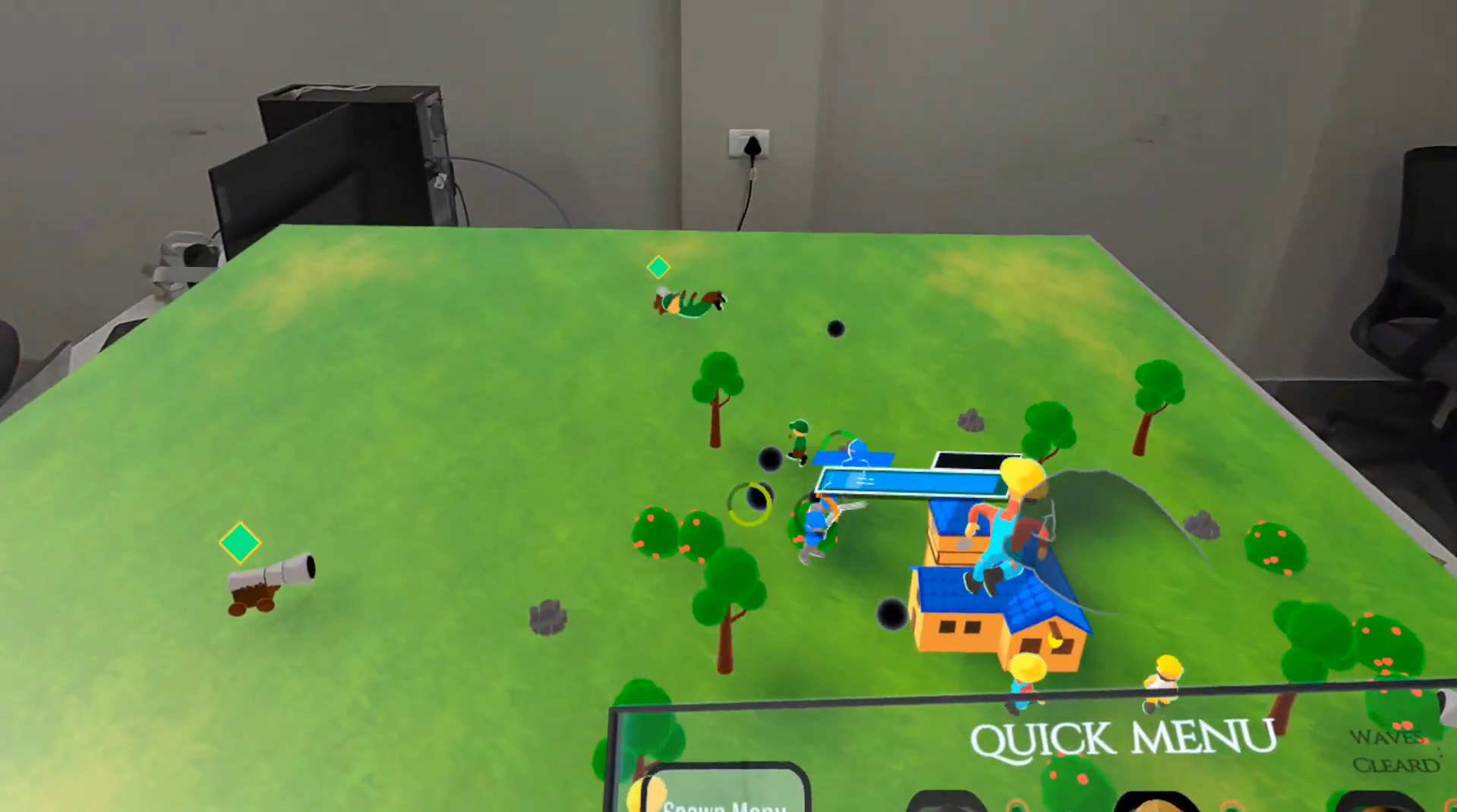
We wanted to bring these ideas into mixed reality turning a real table into a miniature settlement where players can place buildings, gather resources, and deploy units using their hands, then watch battles unfold in their own space.
What it does
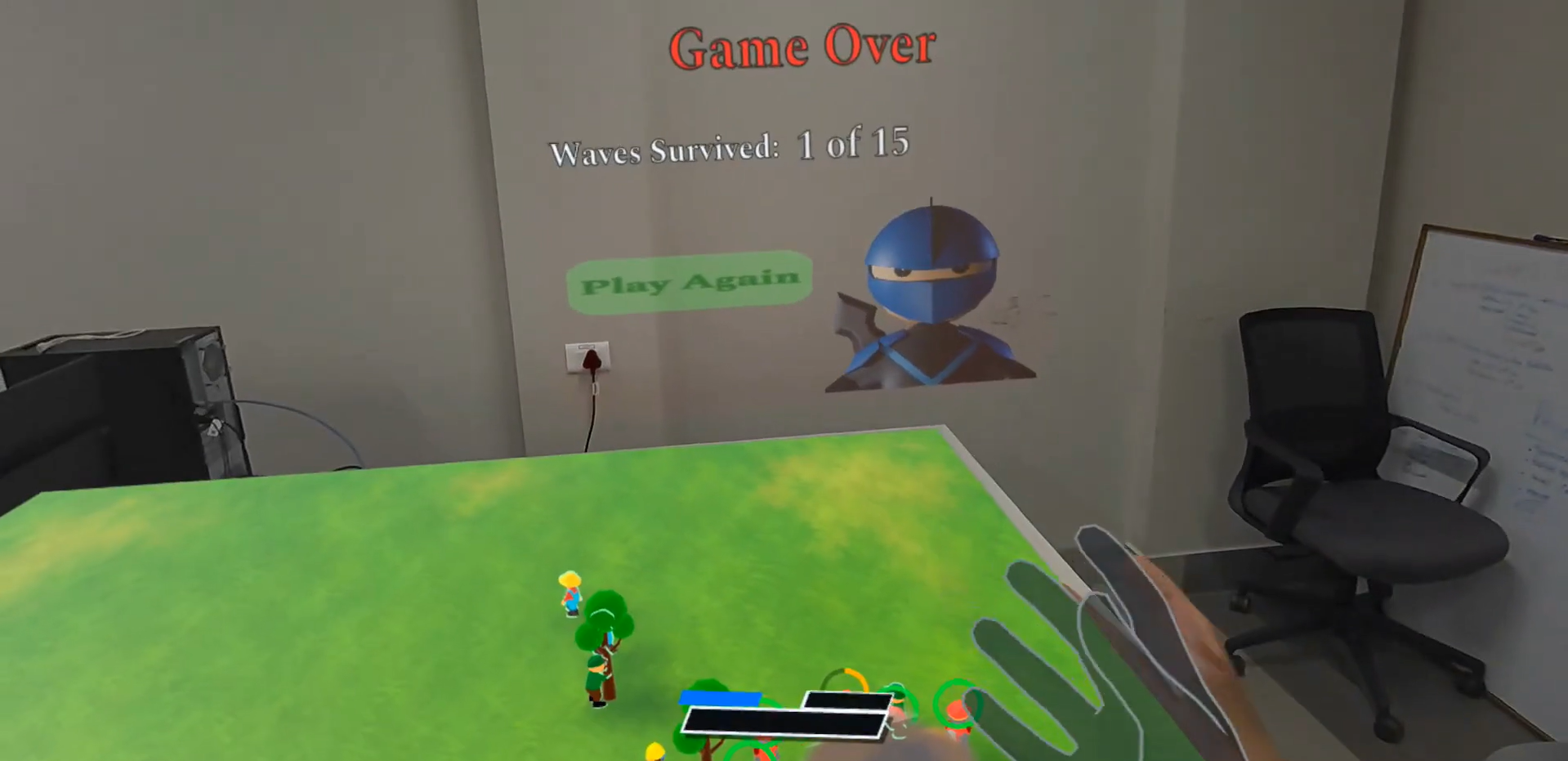
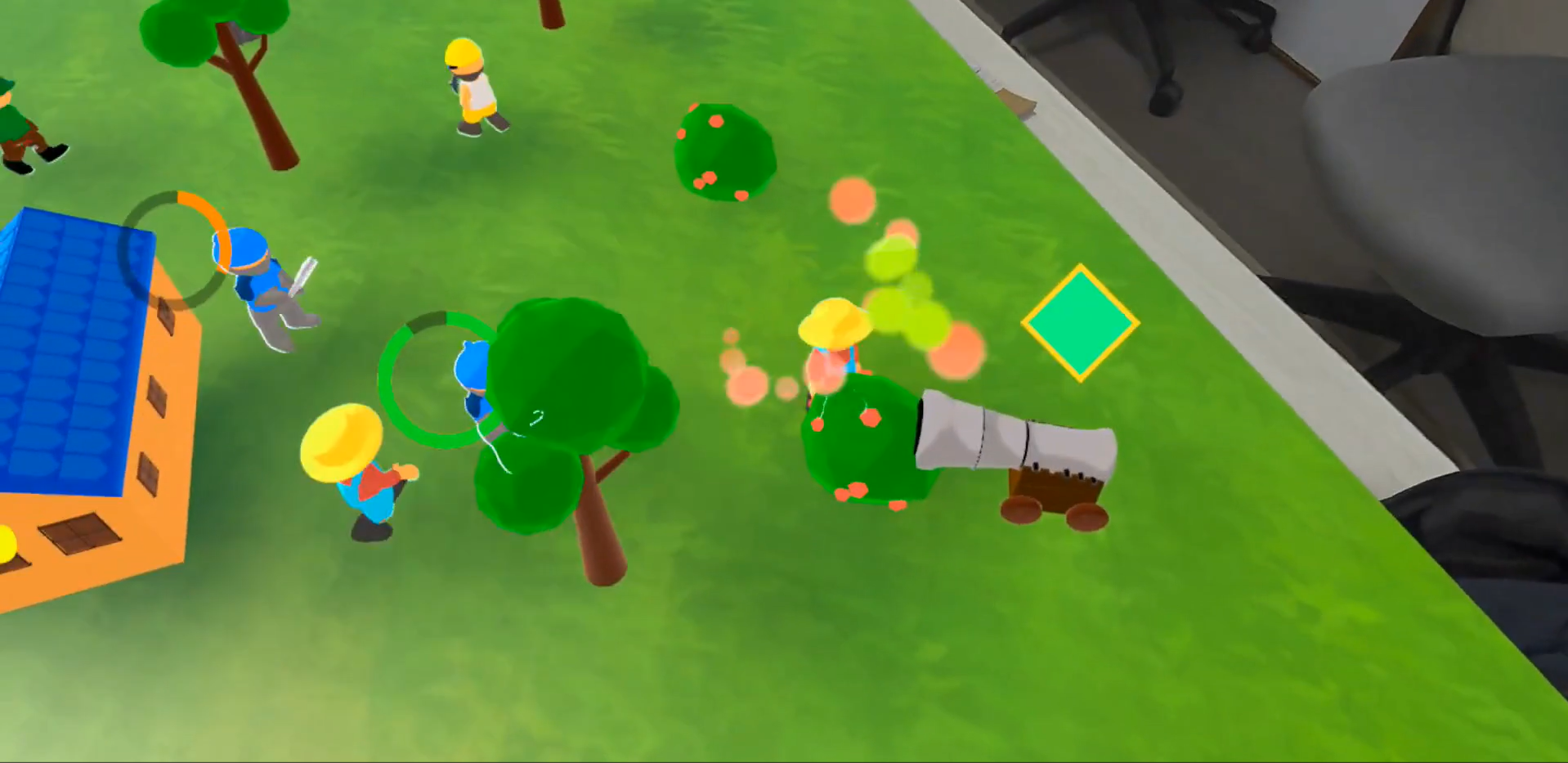
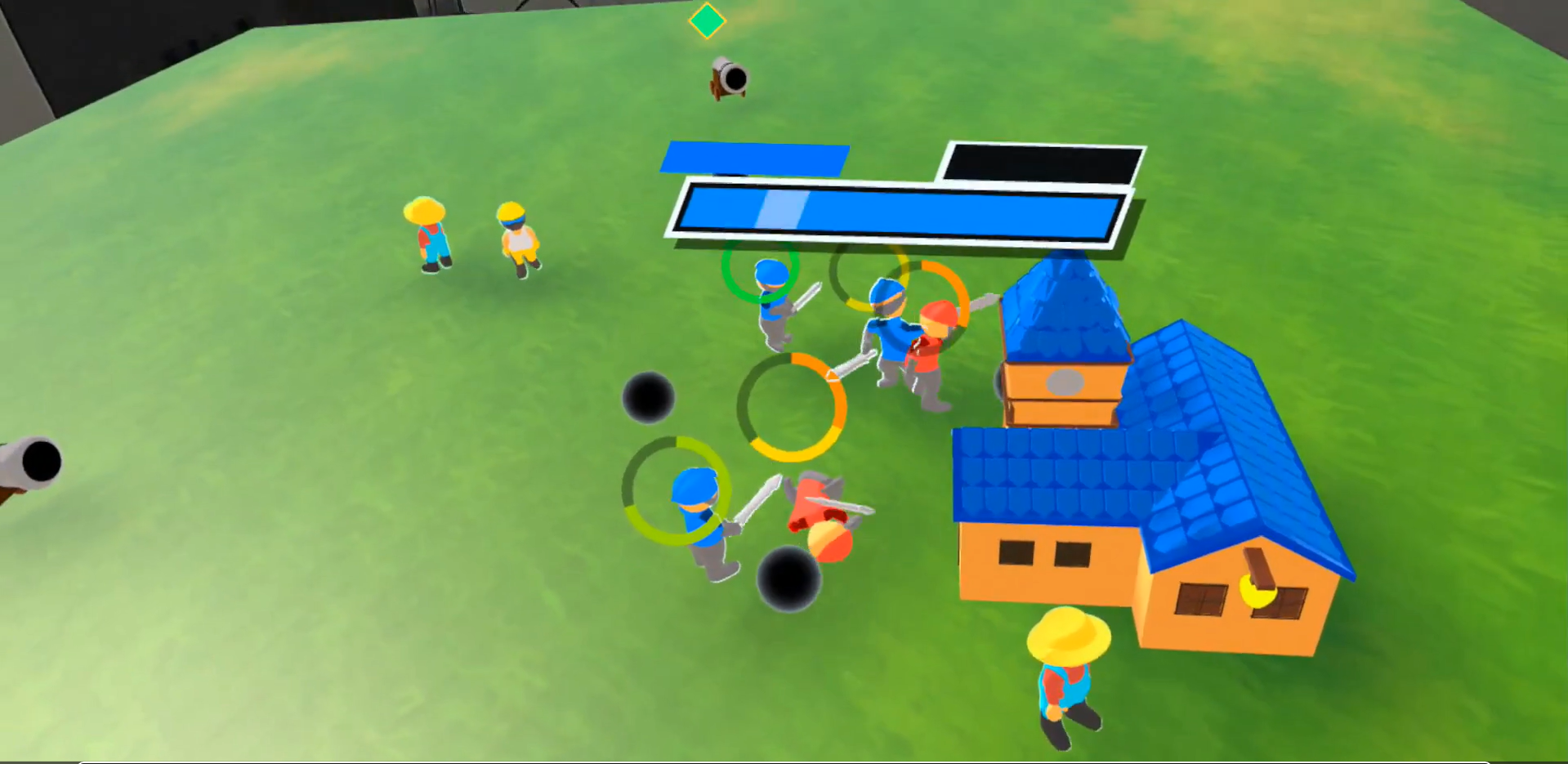
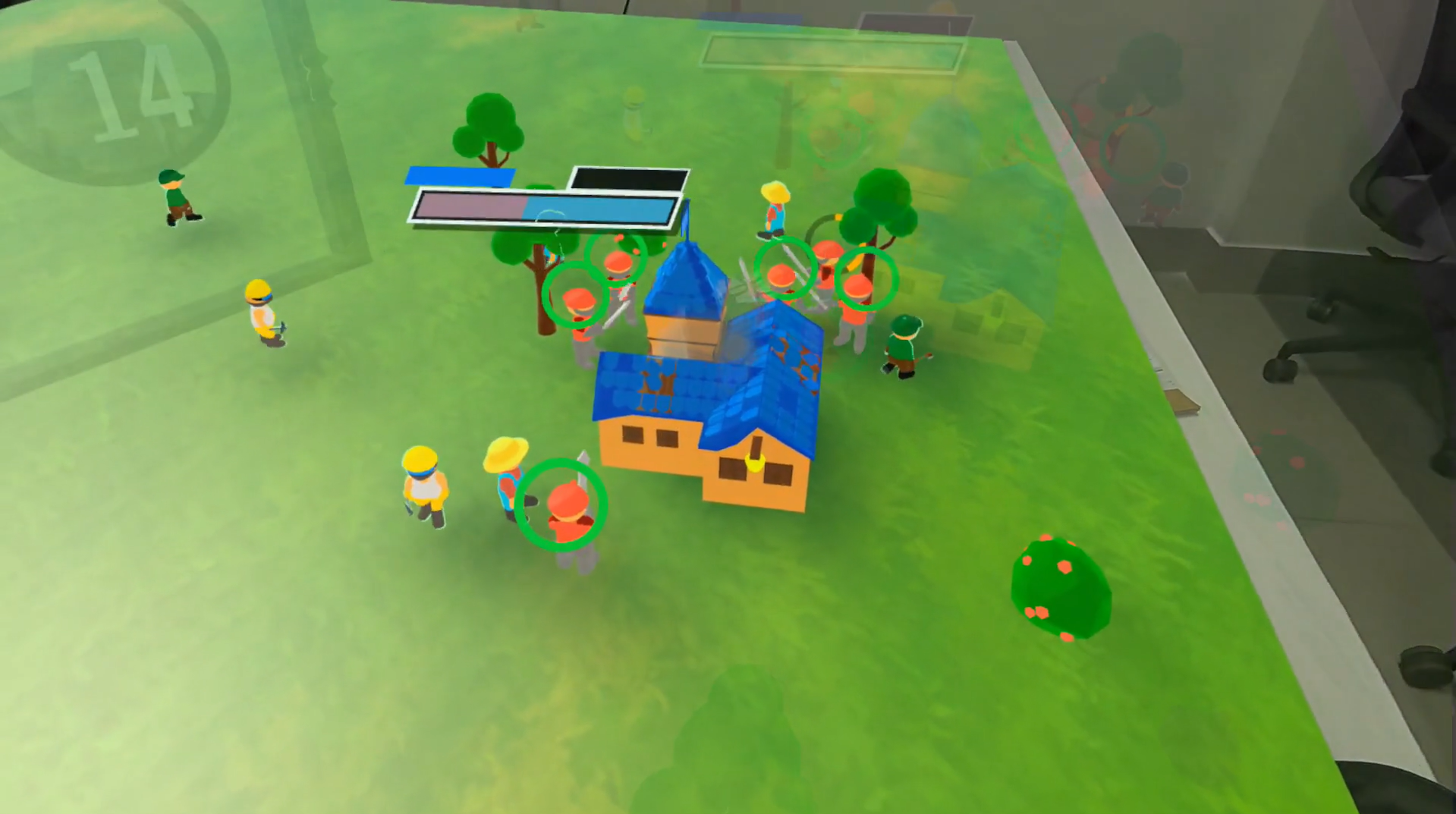
Project Indus transforms a detected tabletop into an interactive game board. Players place buildings, deploy workers, gather resources, and defend their settlement with soldiers and cannons.
Farmers gather food, woodcutters collect wood, and miners gather stone. Hand interactions and a wrist-mounted menu let players manage their settlement while remaining connected to their surroundings through passthrough.
How we built it
We built Project Indus in Unity using C# and the Meta XR SDK. Meta’s Mixed Reality Utility Kit helps detect the table, while our custom board system scales the game to fit the available surface.
We developed grid-based placement with previews, hand-grab interactions, and placement validation. Unity NavMesh and Behavior graphs drive unit navigation and resource gathering, while custom scripts handle resource management, combat, and projectiles. We used GitHub to collaborate and integrate our work.
Challenges we ran into
One of our biggest challenges was keeping gameplay consistent across different table sizes. Models, navigation settings, interaction distances, and projectiles all needed to work at miniature scale.
We also encountered floating character previews, navigation meshes that included unintended geometry, and obstacles that prevented workers from reaching resources. Integrating hand tracking, wrist UI, and changes from multiple contributors required repeated testing both in the editor and on the headset.
Accomplishments that we're proud of
We brought together tabletop detection, building placement, autonomous workers, resource management, and combat into an interactive mixed-reality prototype.
We’re particularly proud of seeing workers move around a real tabletop settlement and giving players a direct way to arrange their world through hand interactions.
What we learned
We learned how much spatial computing changes familiar game-development problems. Scale affects more than appearance it also influences navigation, physics, interaction, and how readable the experience feels.
We gained practical experience with Meta XR development, behavior graphs, runtime navigation, and collaborative workflows. We also learned to test early on the headset and use targeted diagnostics to understand problems before changing settings.
What's next for Project Indus
Our next steps are to improve navigation and combat reliability, refine hand interactions, and balance resource gathering and unit costs.
We also plan to improve onboarding, audio feedback, and visual clarity, then expand the building and enemy variety. Testing across different tabletop sizes will help us make the experience more consistent and comfortable.

