Inspiration
I work at a startup investment firm in Korea, and Korean startup demo days are stiff. Founders in suits recite memorized scripts from a stage. Judges sit behind a long table with name cards. Everyone is polite, nobody is relaxed.
That stiffness has a cost. A founder who can explain their company perfectly over coffee tenses up under those lights and stumbles. The pitch gets worse, not because the company is worse, but because the room is cold.
We should be more casual and warm. Founders and investors should be closer. Same level, same temperature.
Korea already has a place for that: the public bathhouse. In the steam nobody has a title, and it is very hard to be formal in a towel. So I moved demo day into a shower, and made the temperature of the room literal.
What it does
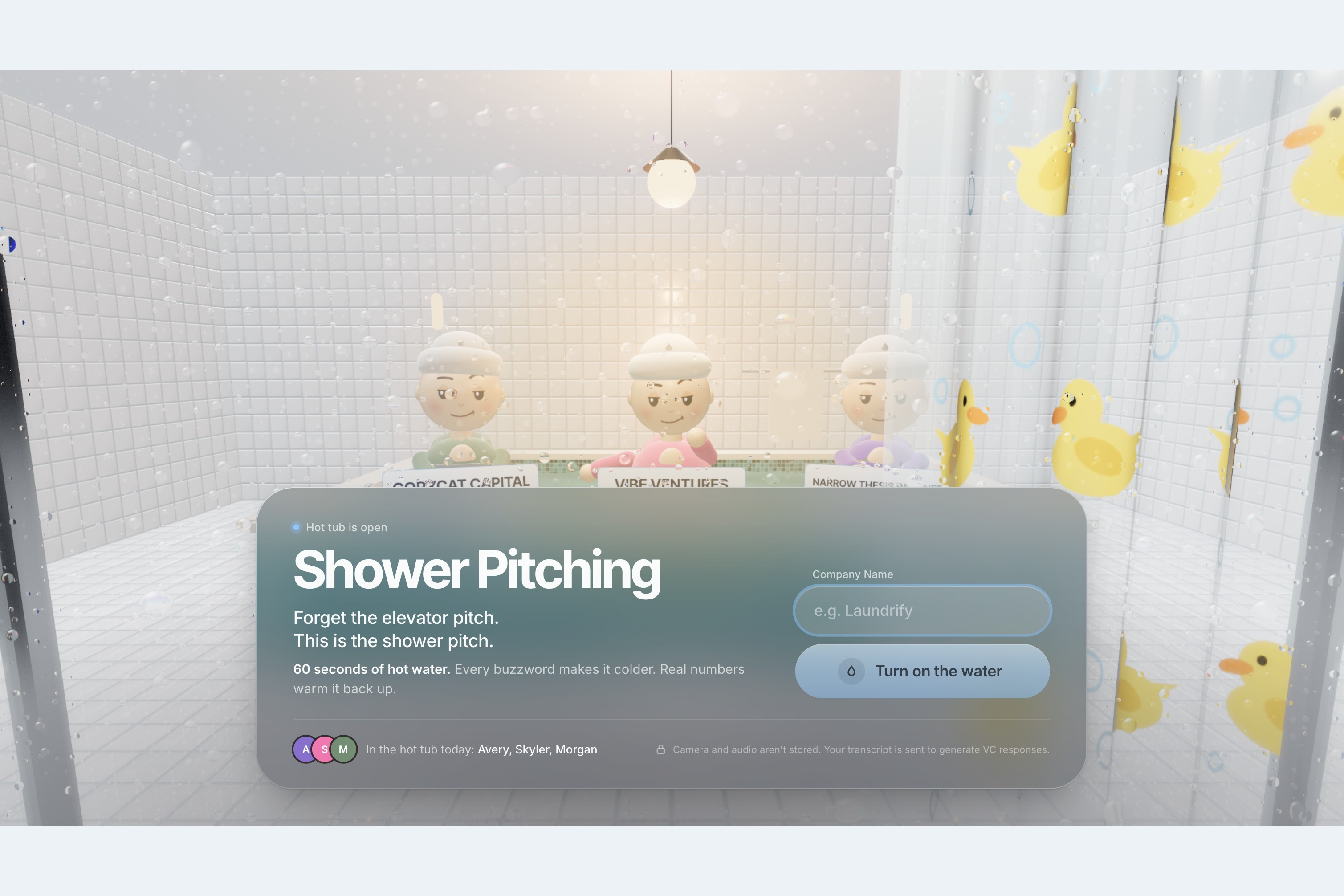
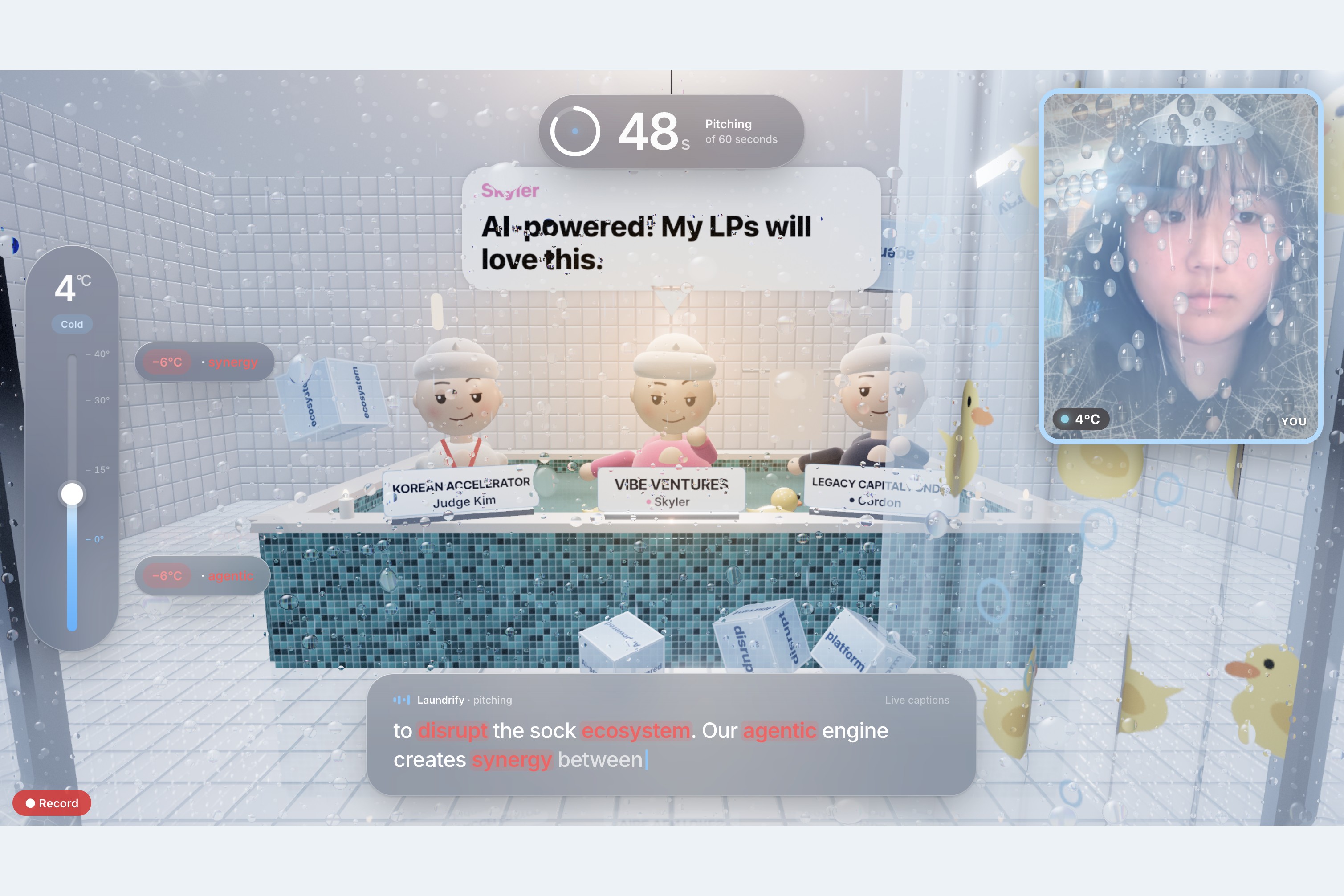
You pitch standing in a shower stall, with 60 seconds of hot water. Right in front of you, three VCs soak in a steaming hot tub, completely comfortable, name cards and all. You are in the shower. They are in the hot tub.
Your water is the mood of the room.
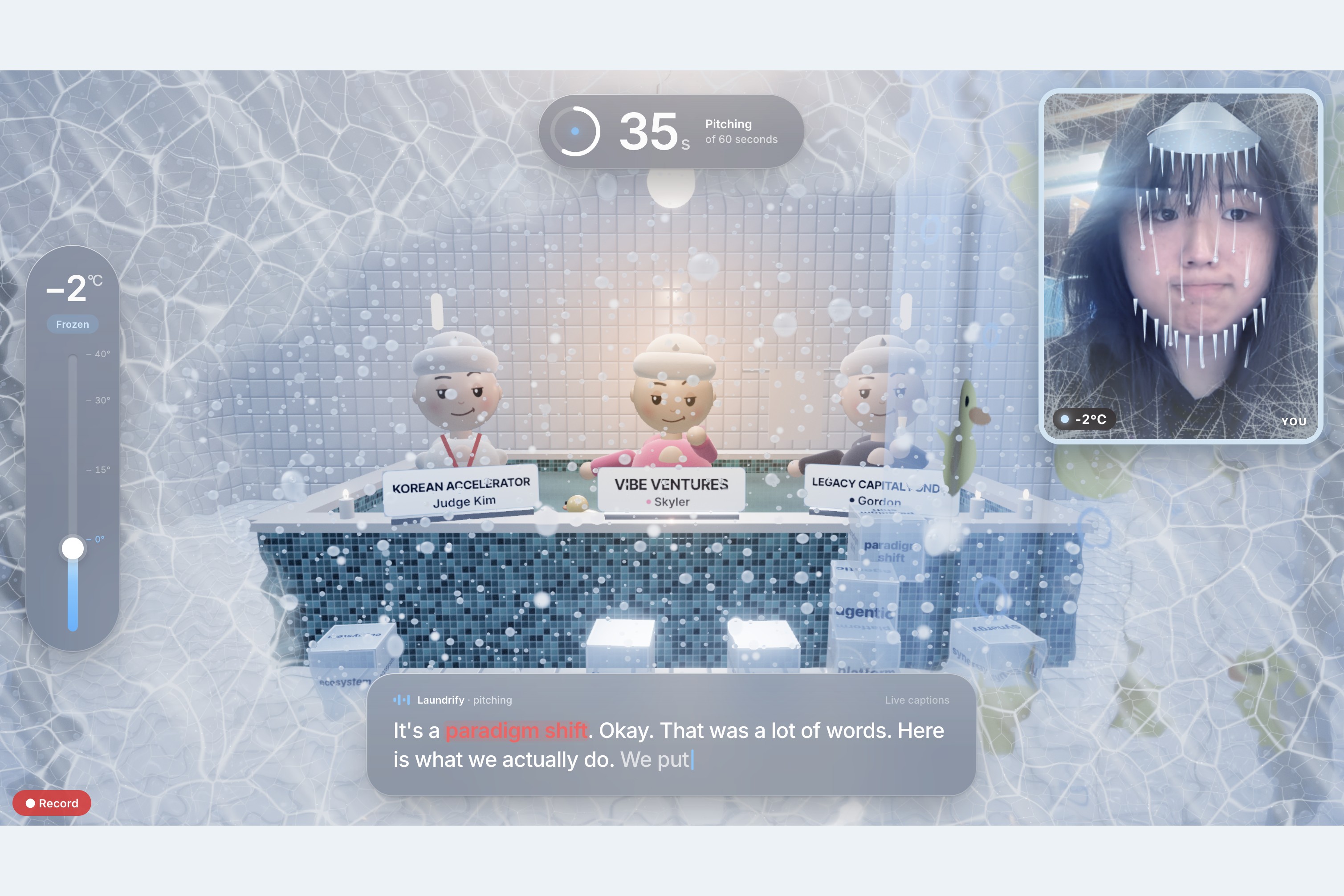
- Hide behind buzzwords ("disrupt", "synergy", "AI-powered") and the room cools on you. Each one drops the water 6°C and falls to the floor as a block of ice.
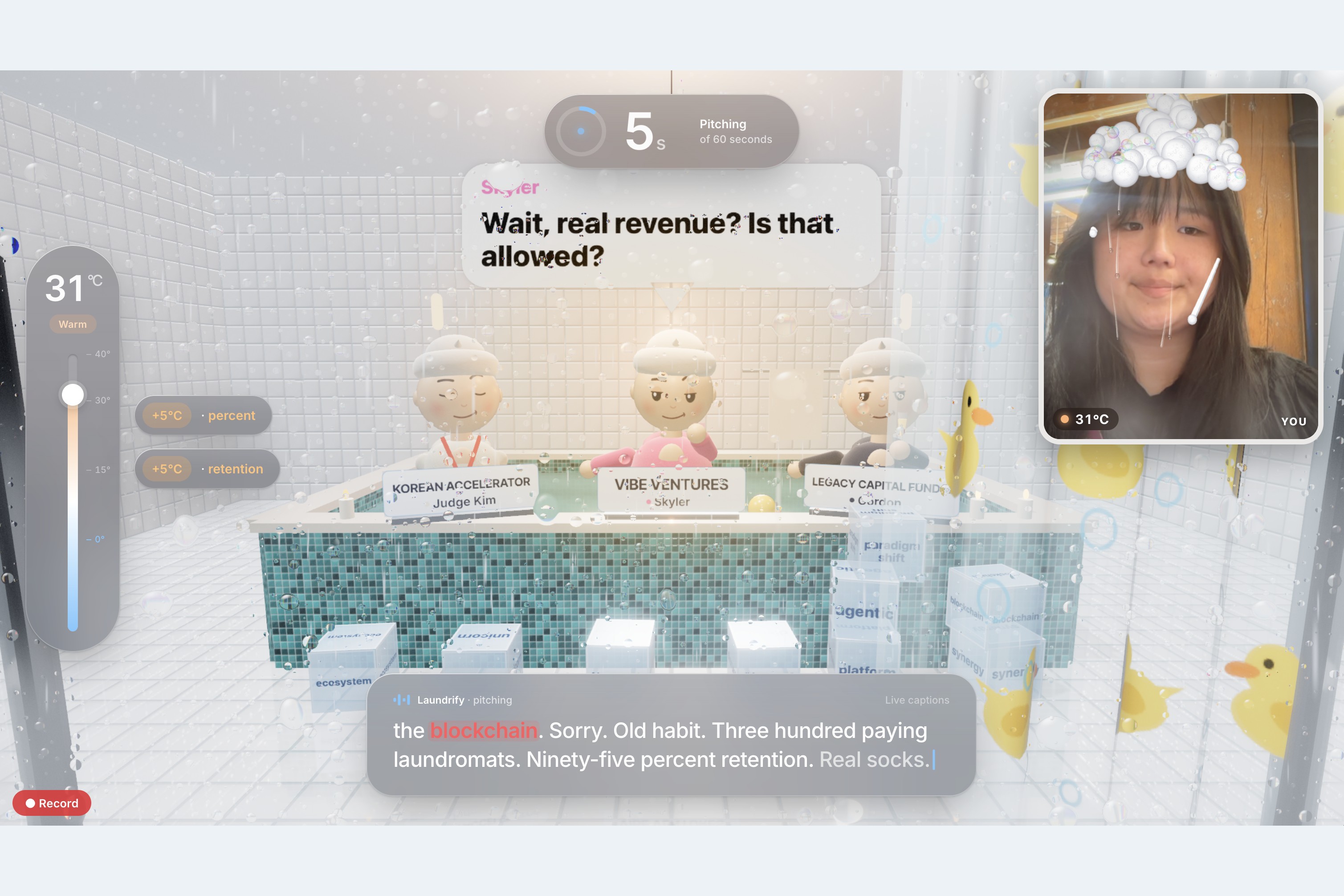
- Say something real (paying customers, revenue, retention) and a VC finally leans in. The water warms back up.
- The VCs listen and cut in with the one sharp question you hoped nobody would ask. One of them cheers every buzzword anyway.
- Your own face is in the shower too, with a live filter that goes from shampoo foam to icicles as the room turns on you.
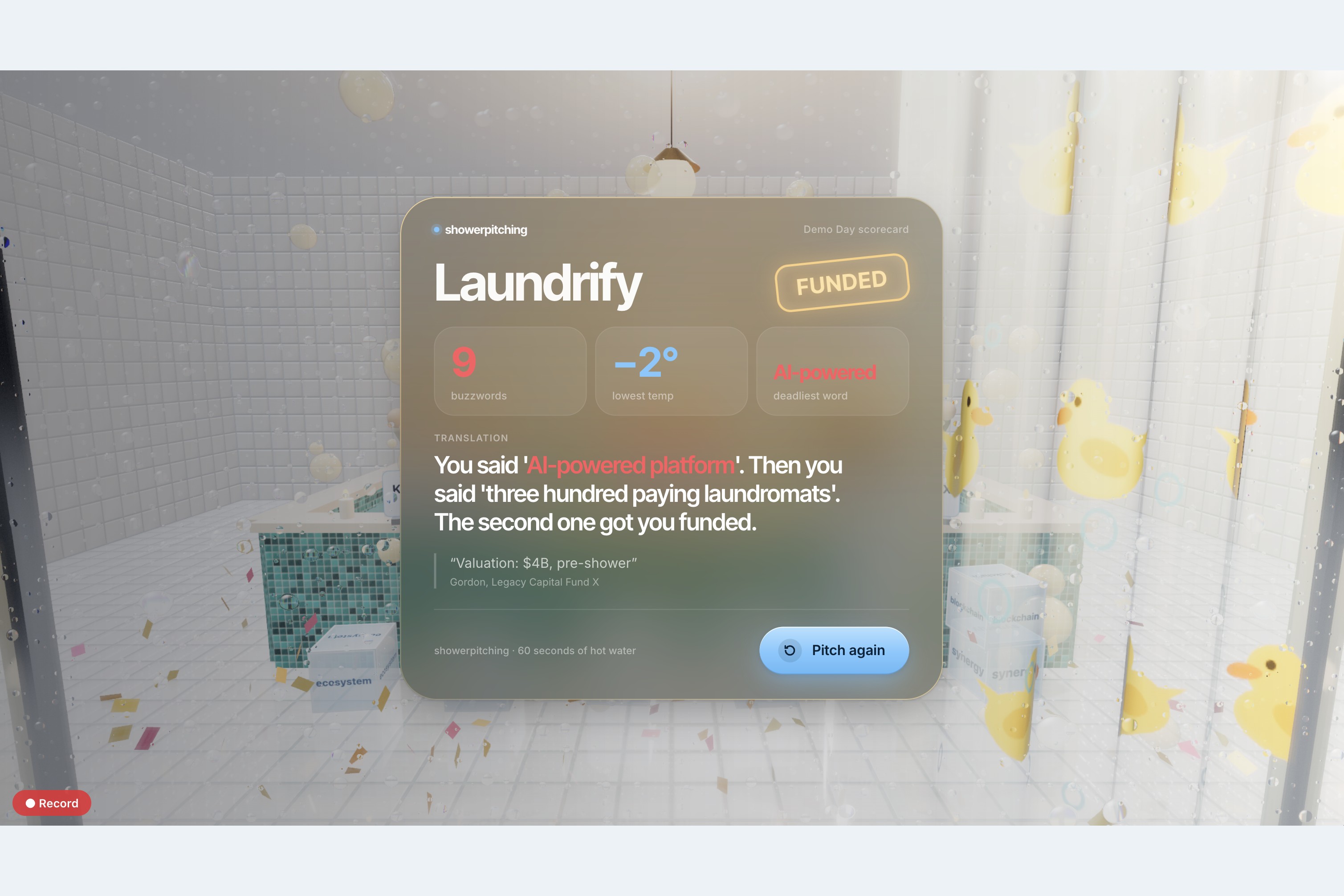
- End warm and you get an absurd term sheet ("Board seat: in the hot tub"). End cold and you get a very polite rejection, plus one line translating what you actually said.
The joke is on pitch culture, not on the person pitching.
How we built it
Everything runs live in the browser: a three.js shower room with a custom wet-glass shader, MediaPipe face tracking for the filter, the Web Speech API for live captions, and instant in-browser buzzword detection so the ice drops the moment you say the word. The VCs' questions come from Featherless AI (Qwen3) in about a second. Hosted on Vercel.
I am not a developer. I wrote the spec, directed the art, and tested every build. The code was written by several Claude Code instances working in parallel on a shared contract. Every visual choice was made by building three options side by side and picking one by eye.
Challenges we ran into
- The hardest part was not technical. I work at a startup investment firm, so my brain is trained to look for real problems, real customers and a business model. A hackathon judged on shock value asked for the opposite, and thinking that way was genuinely hard. In the end I stopped fighting the habit and put it in the game: the one thing that warms the water back up is a real number.
- Timing is the whole joke. A VC who interrupts one second late is not funny, so buzzword reactions never touch a server.
- Keeping the VCs' side warm while your side freezes took its own "warm pocket" in the glass shader.
- A room of 400 hackers is loud. Speech recognition restarts itself, and you can always type.
Accomplishments that we're proud of
- The temperature actually tells the story: you can watch a pitch lose the room, then win it back.
- A 3D scene, live face tracking, speech recognition and AI questions in one browser tab.
- Outside the words we quote to make fun of them, this write-up passes our own buzzword detector with zero hits.
What we learned
- The fastest way to improve a pitch is to make empty words physically cold.
- People pitch better when the room is warm. Even when the room is a shower.
What's next for Shower Pitching
- Taking it offline. Nobody is actually getting in a shower, but the idea works without the water: demo days that feel more like a networking party, where founders and investors talk on the same level. That culture can be built for real, and it is the one I want to help build in Korea.
- A Korean demo day mode.
- Real investors in the hot tub. Every firm has its own way of questioning founders, and I want to capture that. A Y Combinator partner who wants to know what you do in one sentence and how fast you are growing week over week. An a16z partner who pushes on the big picture and why the future bends your way. And my own firm, MYSC, an impact investor that will ask what problem in society you are actually solving and how you measure it. Built with each firm's permission, so founders can practice with the exact room they are about to walk into.
Built With
- claude
- featherless-ai
- glsl
- javascript
- mediapipe
- qwen3
- three.js
- vercel
- web-audio-api
- web-speech-api
- webgl

Log in or sign up for Devpost to join the conversation.