-
-

app icon
-
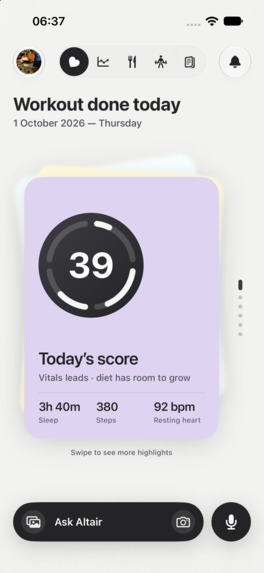
home
-
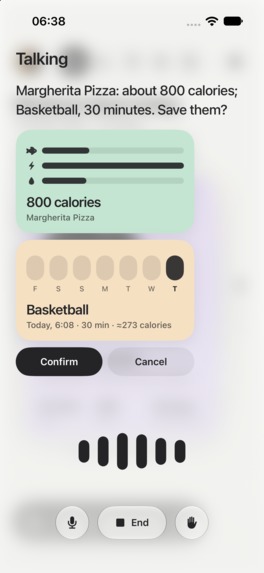
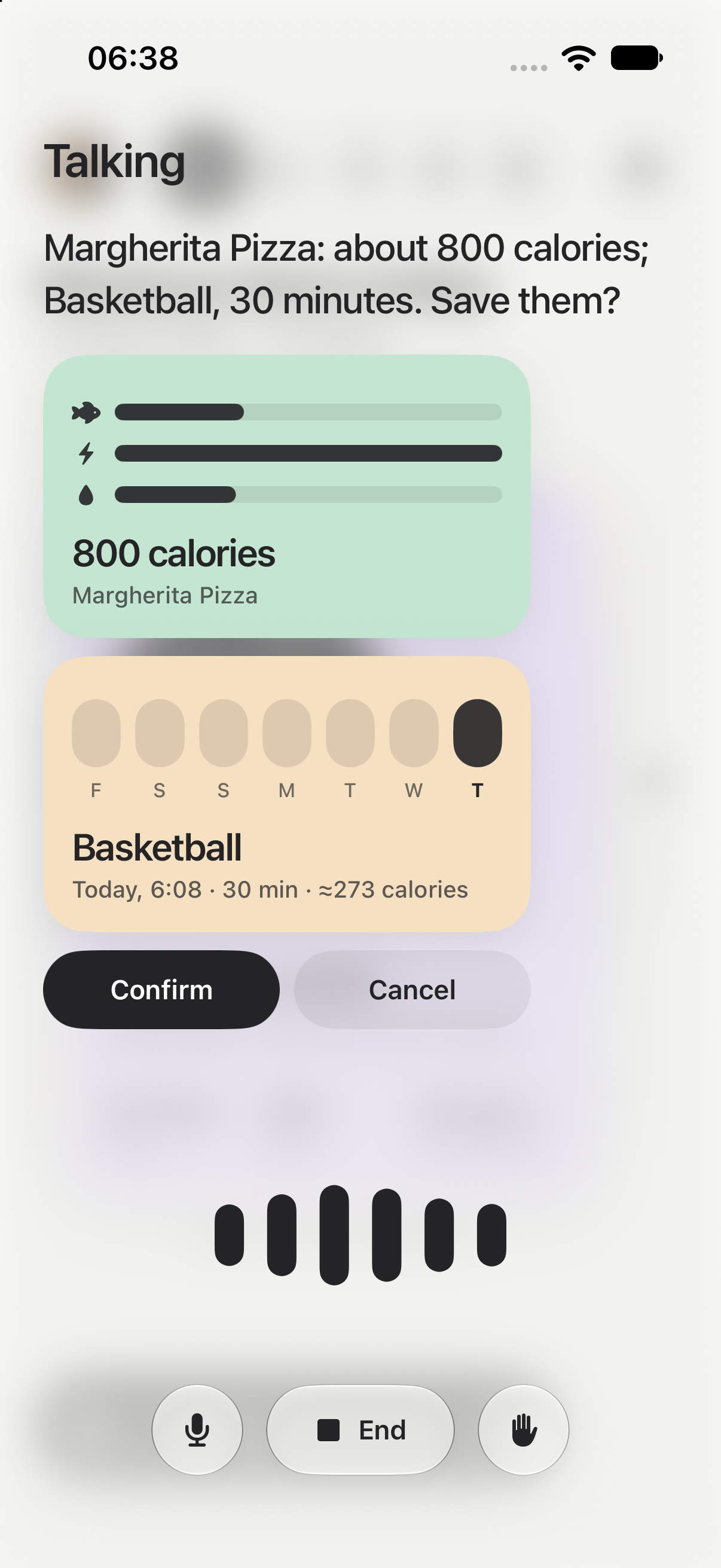
logging meals and workouts
-
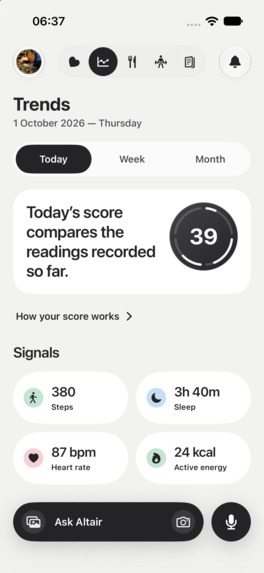
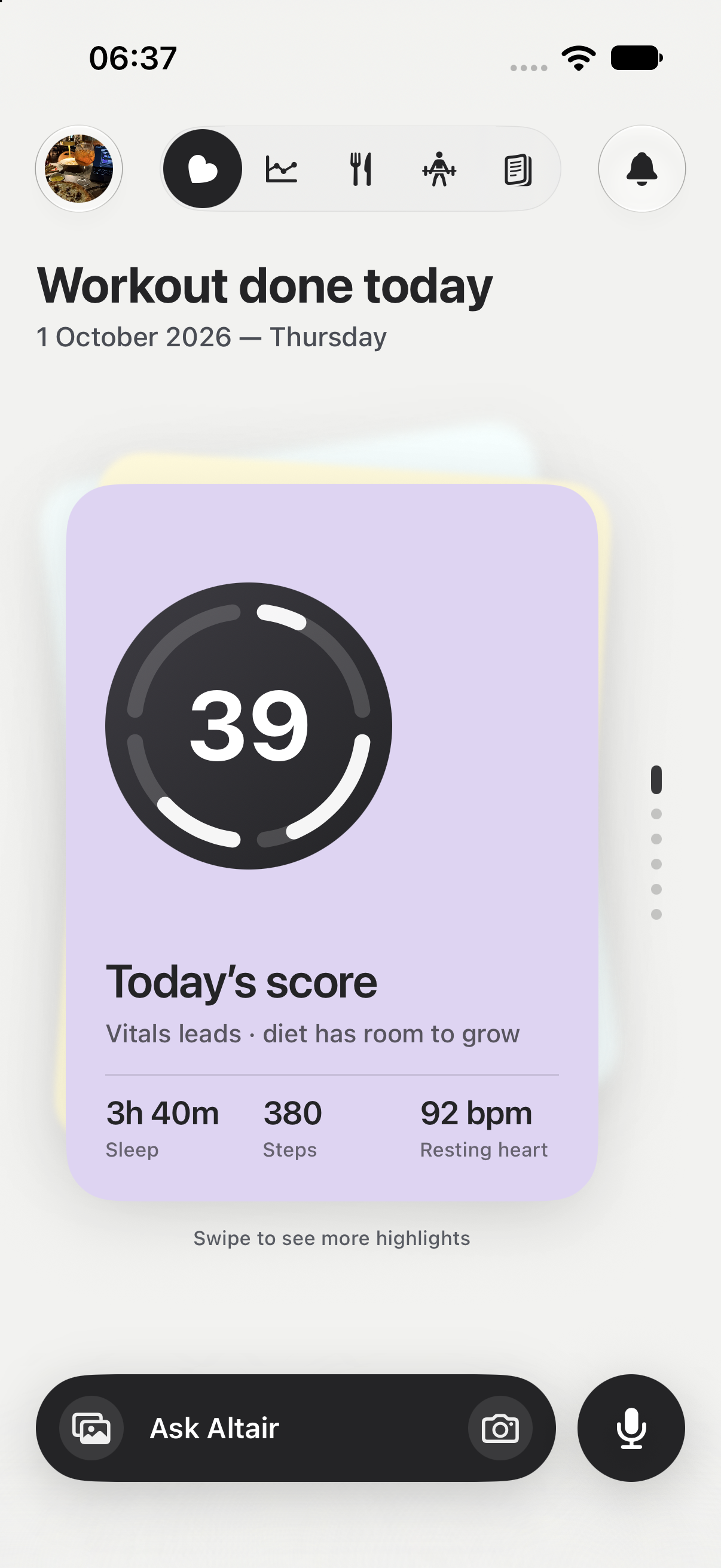
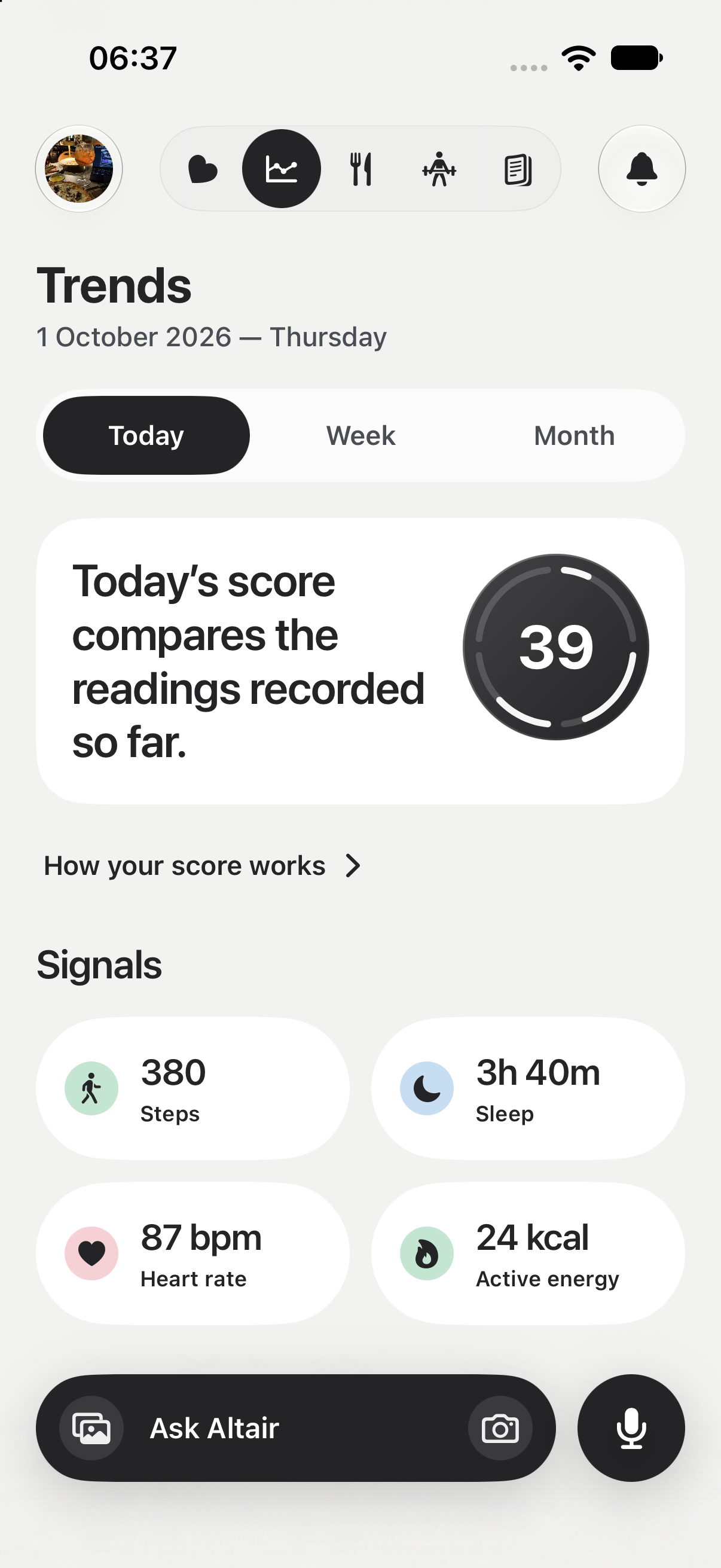
recovery score
-
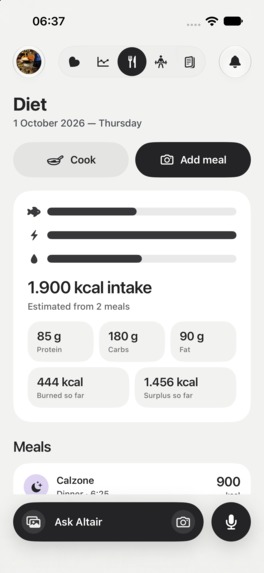
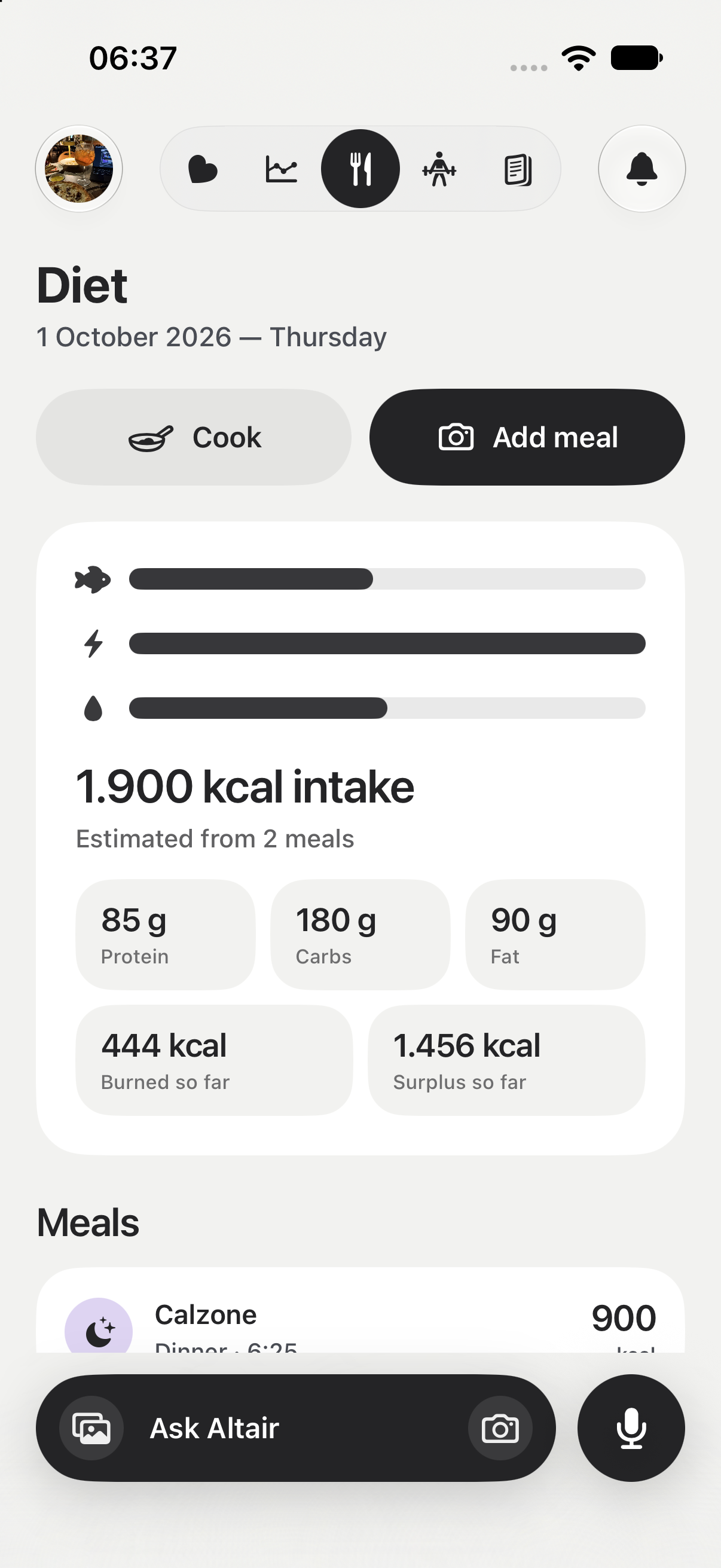
diet
-
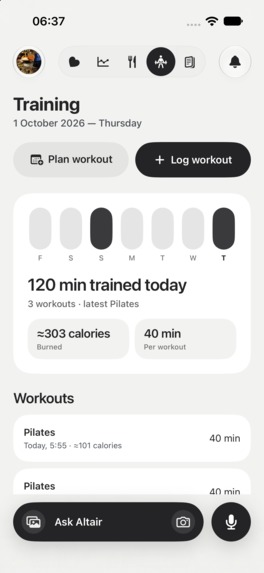
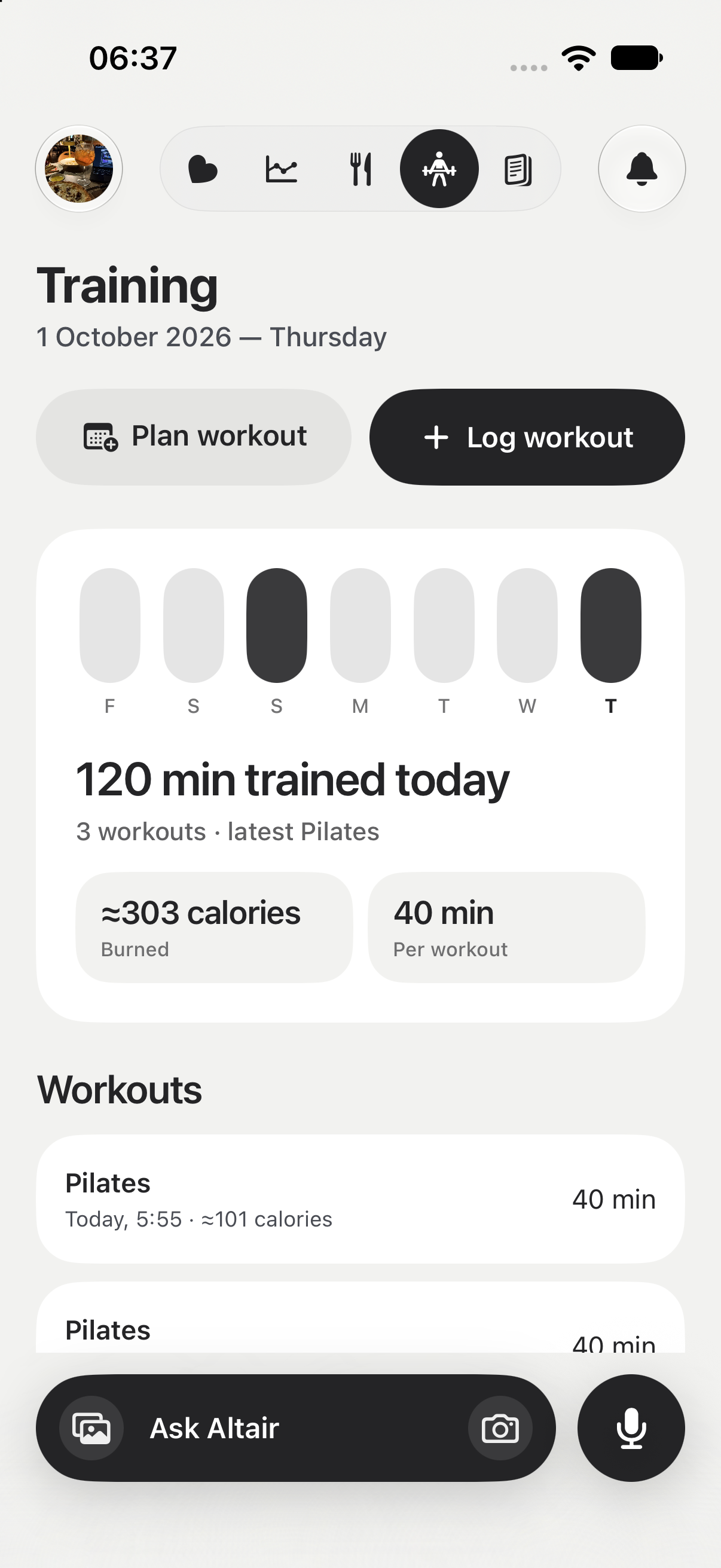
training
-

Inspiration
I lost 55 lb with four apps open every morning: sleep in one, meals in another, workouts in a third, weight in a fourth. All the data was there, and the one question I had, "what should I do today?", was never answered. I did the maths myself, every day. Altair is the app I wished I'd had: the AI agent for your health. It already knows your body from your phone and wearables, you talk to it like a coach who has seen your week, and when you tell it to do something, it does it.
Altair is the app I wished I'd had: the AI agent for your health. It already knows your body from your phone and wearables, and the more you talk to it, the better it knows you. You talk to it like a coach who has seen your week, and when you tell it to do something, it does it.
What it does
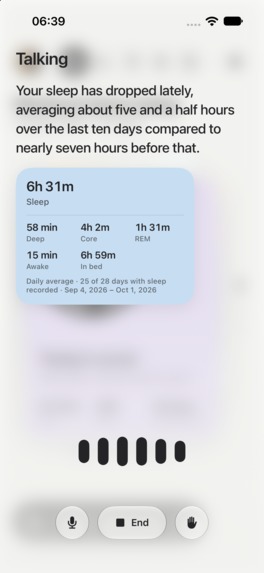
Altair reads all the health data from your phone and wearables: sleep stages, resting heart rate, HRV, workouts, activity, and more. Then you talk to it, by text or by voice.
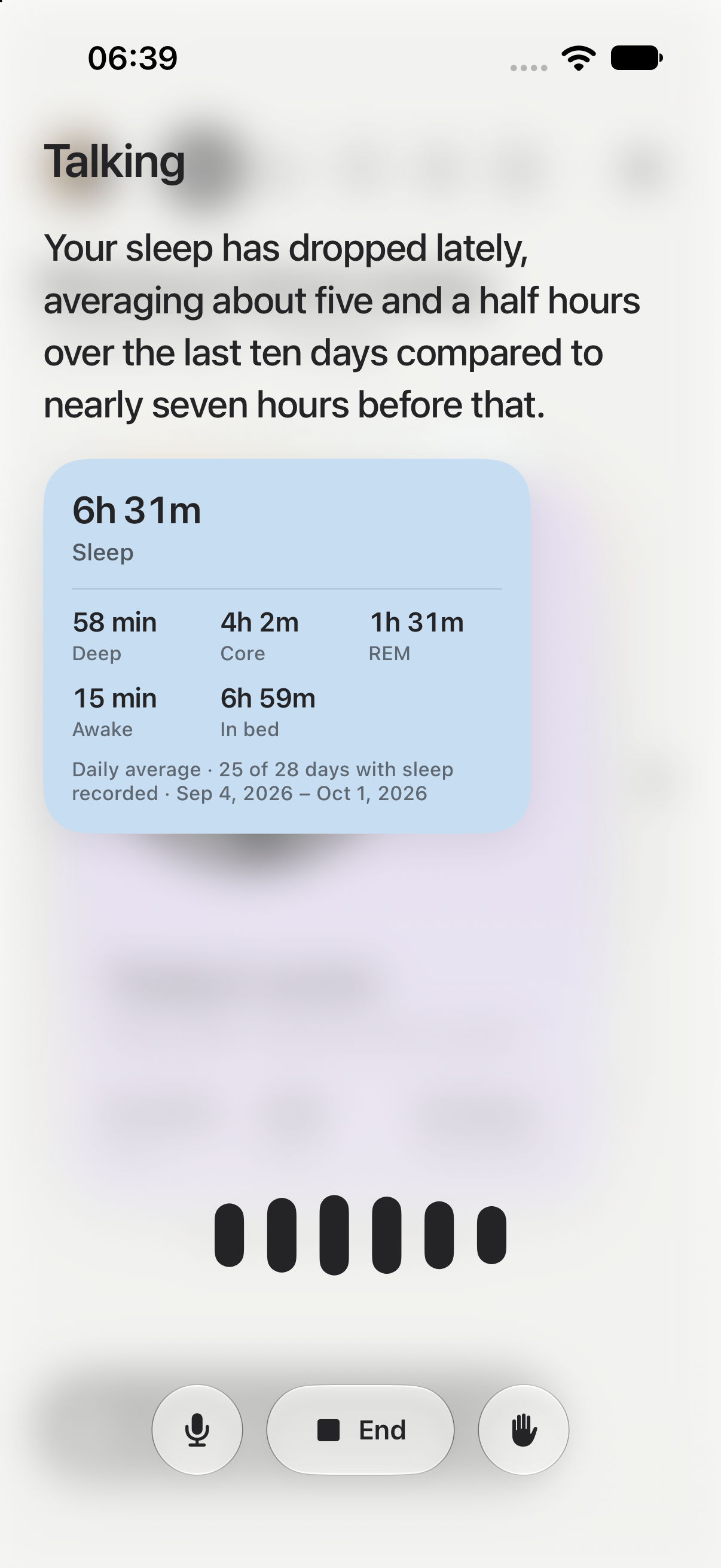
Ask anything. "How's my recovery today?", "Why is my resting heart rate up?", "What time should I go to bed tonight?"... Altair answers from your own data.
Get a plan for today. "Should I run, or do something easier like Pilates?" Altair weighs your night and your week and picks one thing to do now.
Log by saying it. "Log 40 minutes of Pilates and a protein shake" creates both records from one sentence. Meals can also be added by pointing the camera at the plate or scanning a barcode.
Plan ahead. "Put a 30-minute Pilates session on my plan for tomorrow at 6 pm." Set goals in conversation. Tell Altair your goal weight, protein target or anything else; it is kept under Assistant memory → Your goals, and every answer uses it.
How it is built
The iPhone app uses Swift and SwiftUI, HealthKit, Firebase authentication and a Go backend. Optional AI uses OpenRouter and Google Vertex; ElevenLabs provides live voice transcription and spoken replies. RevenueCat powers the Altair+ monthly offering, localized pricing, purchases and restore, with entitlement verification on the backend.
Design and interaction
Altair is a white page. Color appears only where there is data.
Home deck: Home is a stack of up to six paper cards. One flick turns one card; the page itself never scrolls. Each card draws its own illustration from your data in a single stroke as it arrives. The title is one line computed from your day: "Steady day so far."
Voice call: Your words sit just above the voice pill, Altair's at the top, so a call reads like a page.
Self-confirming cards: When Altair logs something, the card shows a few seconds clock and saves itself. Deletes, sign-out and account actions still ask.
Conversation sheets: Everything saved lands as a compact sheet tinted by topic; the clock in its corner becomes a stamp.
Sound: Every cue is synthesised at runtime. Four data colors map to four notes.
Introduction: The heart blinks, becomes the voice pill, and spoken lines turn into Home sheets, then the camera, then a food sheet. It is built from real app components, so the first real interaction already feels familiar.
Challenges and what the project taught me
The hardest interaction problem was making conversational actions trustworthy. A fluent answer is not enough when a person is saving a meal or workout. Draft review, corrections, confirmation, durable receipts and local Undo make that process visible. Another challenge was preserving a consistent experience across dashboards, chat and live voice while handling loading, microphone activity, transcription and playback.
Data handling was the other big one. Due to both regulations and Apple's guidelines, I'd like to say a bit about how Altair handles and stores data.
Altair doesn't store any of your health data on its servers. When you ask Altair how many hours you slept, it first determines which type of health data it needs to answer the question. Then it reads that data directly from your phone, which lets it give you an accurate answer.
In other words, Altair keeps all personal data on the device, including the assistant's memory and your goals, and uses that data in real time only when needed, with zero-data-retention models.
Operations like calculating averages, grouping data, and addition and subtraction are, for the most part, not handled by the LLM. This keeps reasoning time to a minimum, so you get fast answers even though health data is sent from the phone to the server each time.


Log in or sign up for Devpost to join the conversation.