Inspiration
When it comes to domestic abuse and crisis intervention, the stakes are literally life and death. We realized that standard Natural Language Processing (NLP) tools, which just look for static "bad words", generate too much noise and fail to capture the subtle, terrifying escalation of coercive control. More importantly, leaving a digital footprint of seeking help is often the most dangerous thing a victim can do. We were inspired to build something that actively protects the user while mathematically filtering out the noise to find the true signal of an escalating crisis. Project Haven matters because it provides a covert, highly accurate lifeline for those who cannot safely pick up the phone to call for help.
What it does
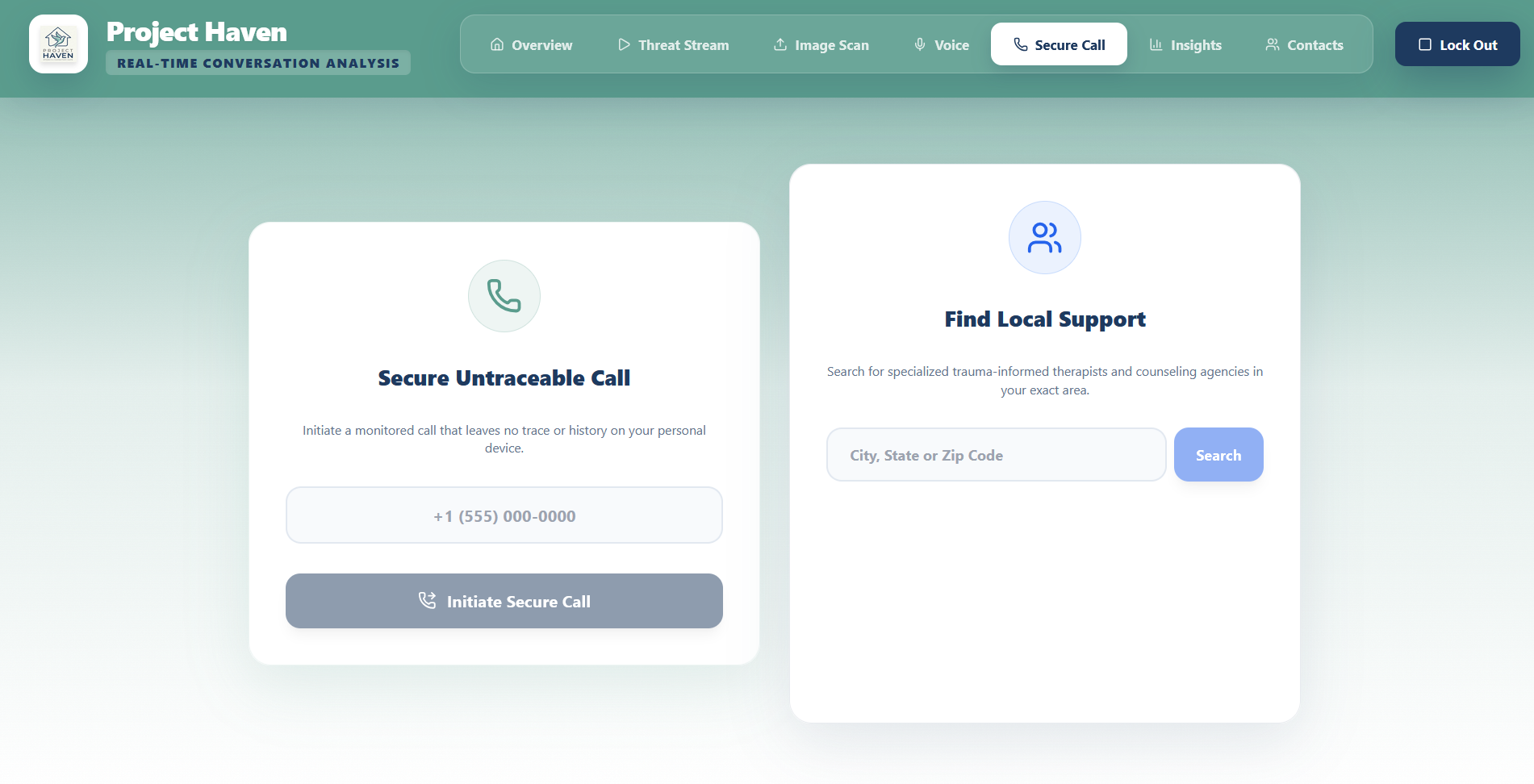
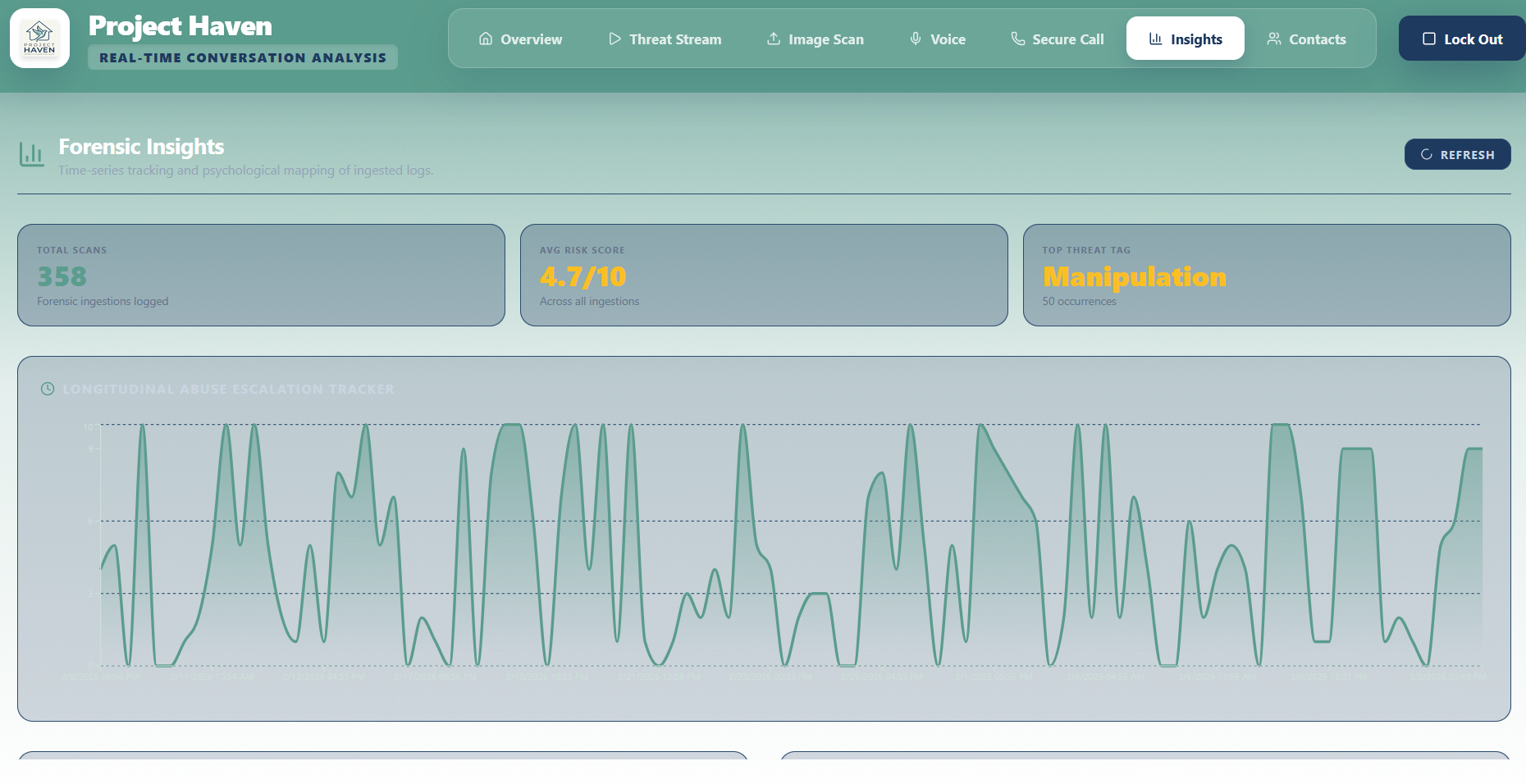
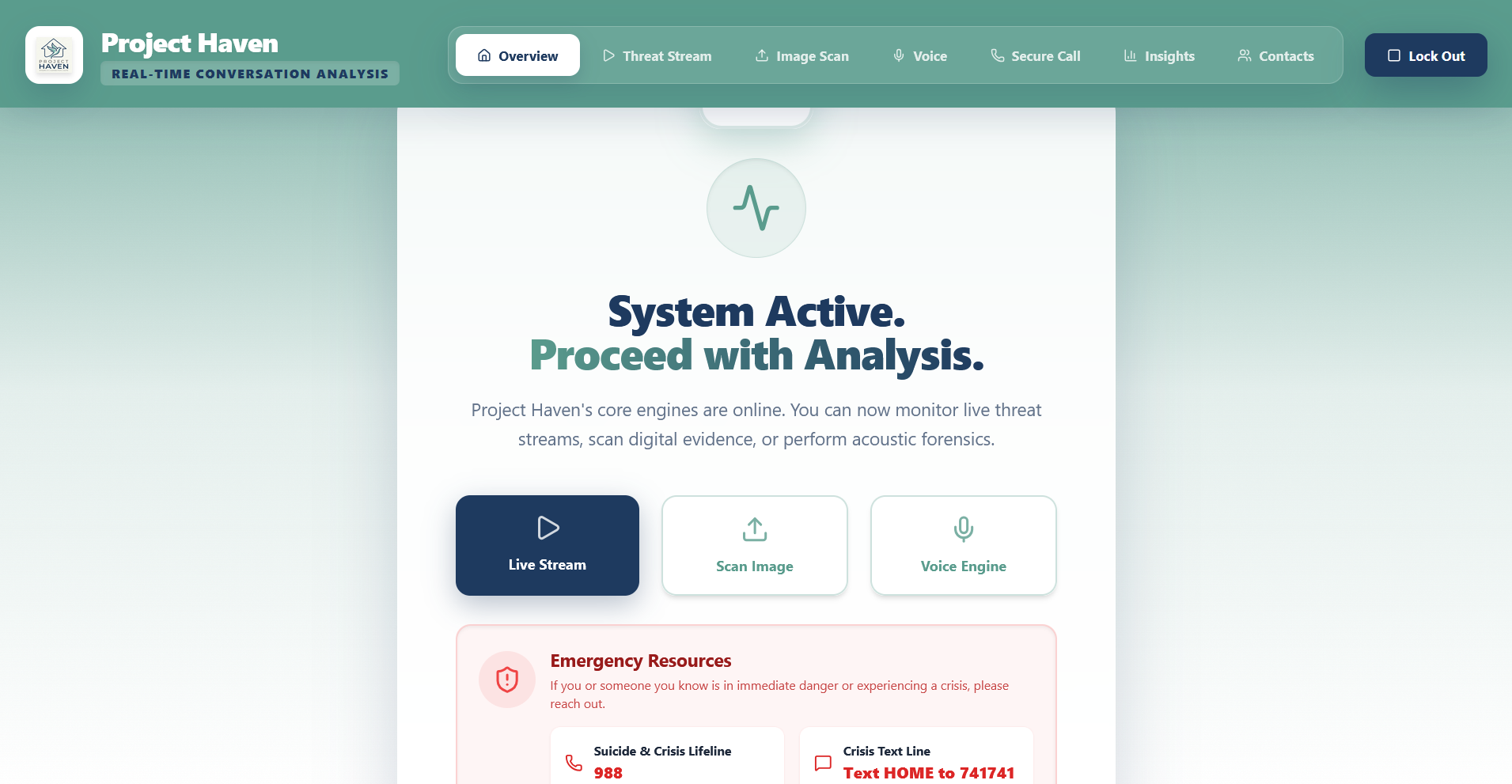
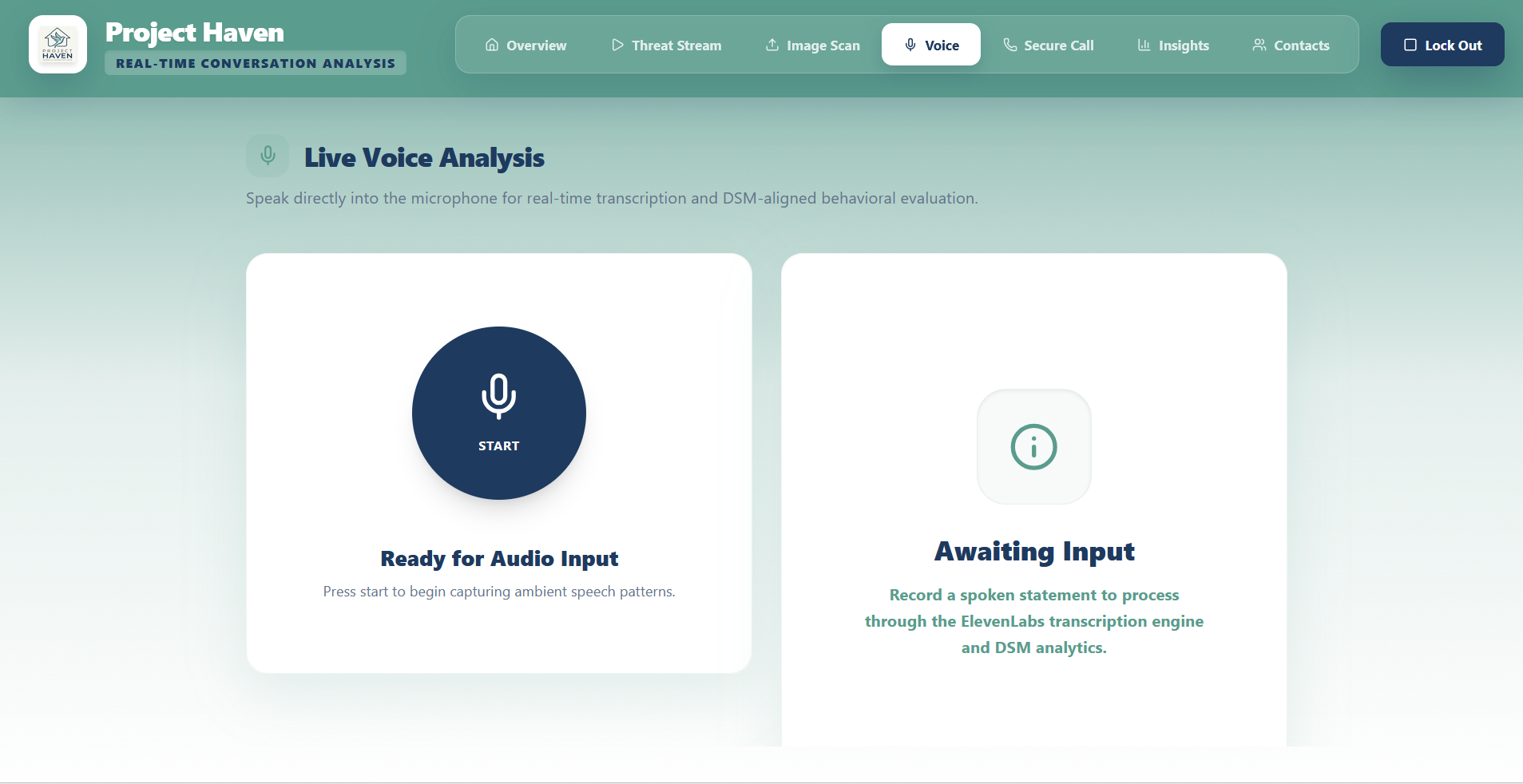
Project Haven is a secure, stealth-first crisis monitoring platform. To an abusive partner glancing at a screen, it looks like a mundane corporate portal or a standard app. Beneath the surface, it actively monitors text, screenshots, and live audio streams. It processes these interactions in real-time, scoring them for toxicity, control, and gaslighting. If a situation begins to escalate, the platform logs the data in a time-series database and provides grounded, actionable exit strategies or intervention protocols, all without breaking its covert disguise.
How we built it
Challenges we ran into
Integrating live voice calls was by far our biggest hurdle. Getting functional, programmable phone numbers on free API tiers proved to be a massive bottleneck, with strict outbound limits and locked-down routing. To bypass this, we had to architect a Frankenstein solution—stitching together multiple different telecom and audio streaming sources to piece together a functional, bi-directional live WebSocket flow without hitting rate limits. Furthermore, ensuring our statistical math engine didn't crash from division-by-zero errors during the initial stream initialization required surgical debugging.
Accomplishments that we're proud of
We successfully brought algorithmic rigor to human psychology. By applying quantitative finance concepts to our NLP data, we created an anomaly detection engine that only triggers a crisis alert when an interaction deviates by two standard deviations, mathematically proving a violent escalation.
Beyond the math, we are incredibly proud of our Decoy Mode. The application actively analyzes background noise for aggressive acoustic tones. If it detects a sudden, dangerous spike in vocal hostility, the UI instantly shifts to a disguised state, and the emergency hotline routing seamlessly switches to mimic a pizza delivery service. This allows a victim to call for help in plain sight without alerting their abuser.
What we learned
Technically, we leveled up our ability to handle complex asynchronous data, specifically routing live WebSocket audio through multiple external APIs simultaneously. More profoundly, researching the DSM-5 criteria and real-world hospital resources for this project opened our eyes to the terrifying realities of domestic abuse. We learned how nuanced manipulation, isolation, and gaslighting can be, and how critical it is to design software from the perspective of a victim whose devices might be heavily monitored.
What's next for Project Haven
Our immediate next step is to scale the network architecture so that thousands of concurrent users can utilize the WebSocket streams safely and reliably. From there, we want to partner directly with hospitals and clinical psychologists to audit our Gemini prompt engineering, ensuring that every piece of automated advice and every triggered alert is backed by verified, expert medical protocol.

Log in or sign up for Devpost to join the conversation.