Inspiration
Emergencies don't wait for a stable internet connection.
Whether someone is dealing with an accident, getting stranded, facing severe weather, or finding themselves in an unfamiliar situation, access to essential information and practical tools can make a difference.
I wanted to create a single application that brings together emergency assistance, first-aid knowledge, survival guidance and practical field utilities without requiring users to depend on multiple applications or constant internet connectivity.
That idea became Project HAVEN.
What it does
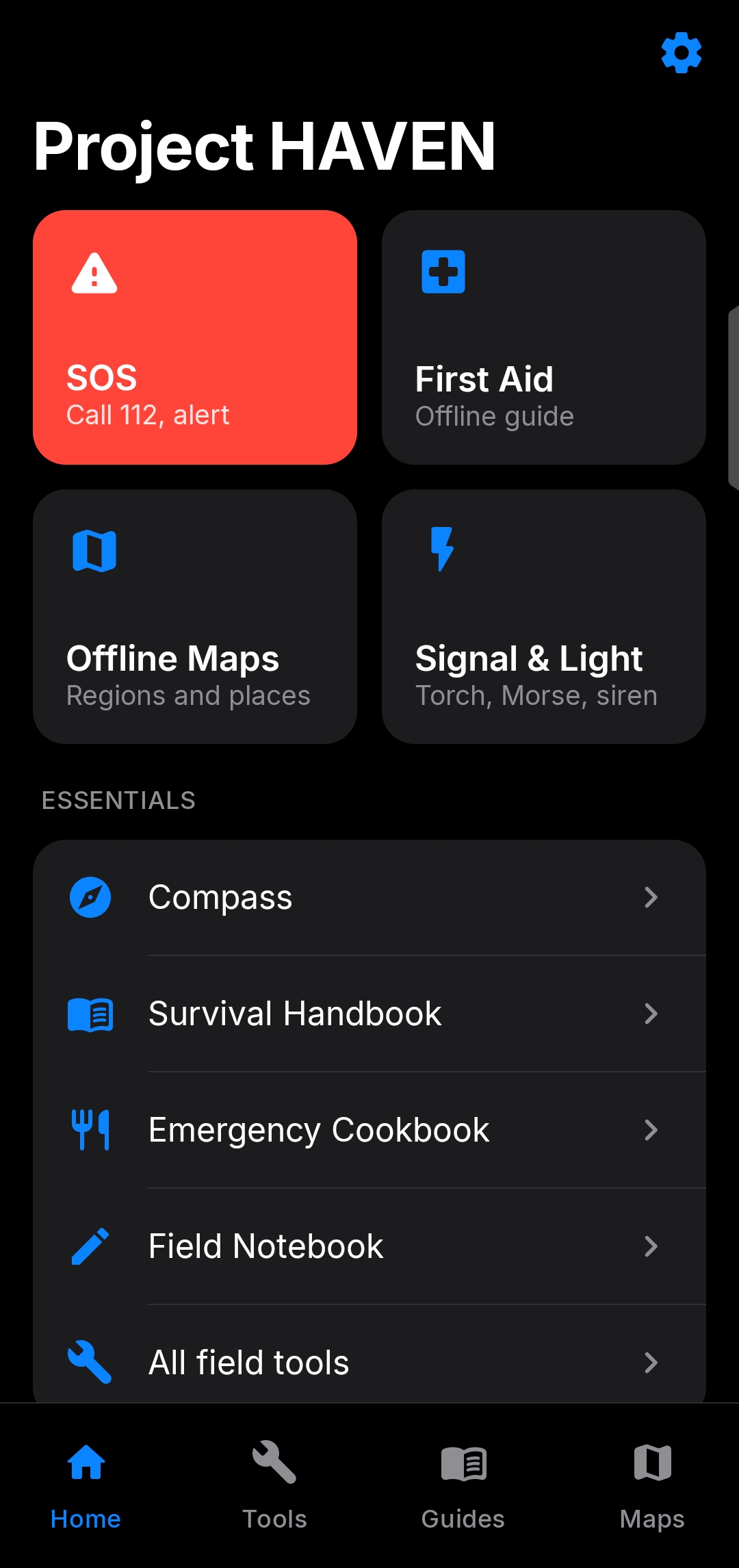
HAVEN is an offline-first emergency and survival toolkit for Android, designed around accessibility, preparedness and privacy.
The application brings together:
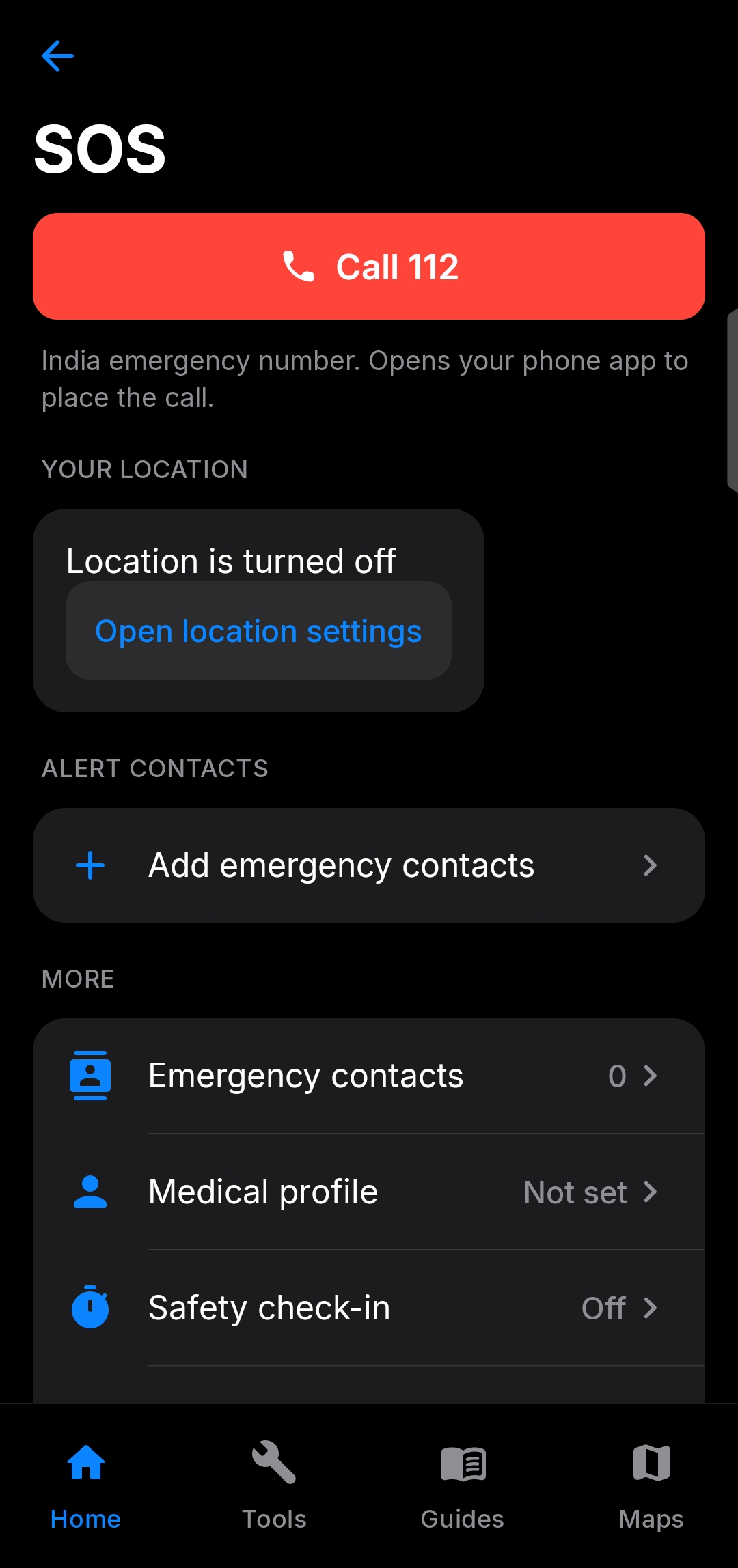
Emergency Assistance
- Quick access to India's emergency number 112 through the system dialler.
- Live GPS coordinates and location accuracy.
- Emergency contact management.
- Safety check-in timers with notification alerts.
- Preparation of emergency messages for user review.
First Aid & Survival
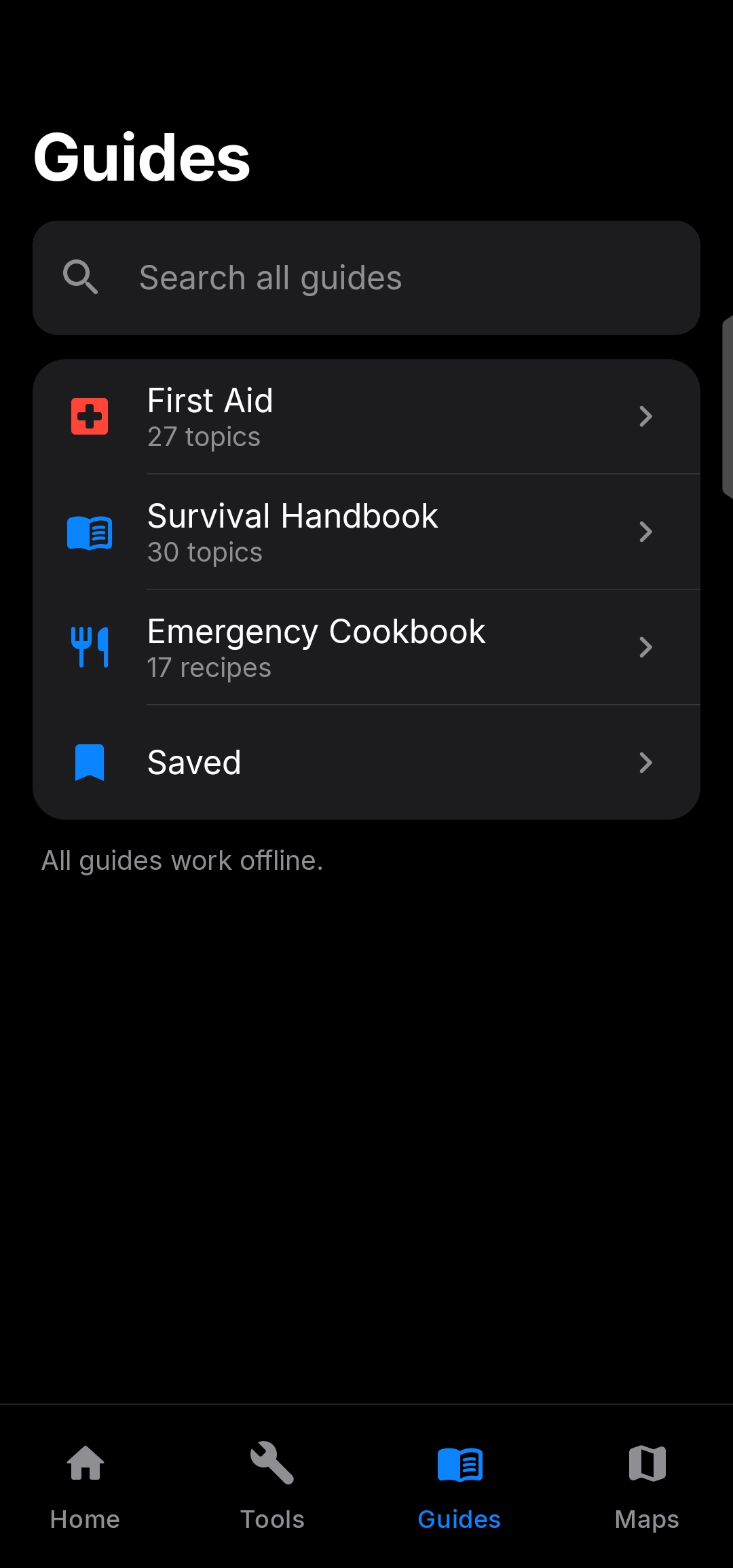
- 27 searchable first-aid articles across 6 categories.
- 30 survival handbook articles covering water, shelter, weather, navigation, signalling and preparedness.
- Step-by-step guidance, warnings and reference material.
Emergency Cookbook
- 17 recipes based on Indian pantry staples.
- Filters for limited water, limited fuel, no-cook meals and vegetarian options.
- Food safety guidance.
- Emergency ration and water planning.
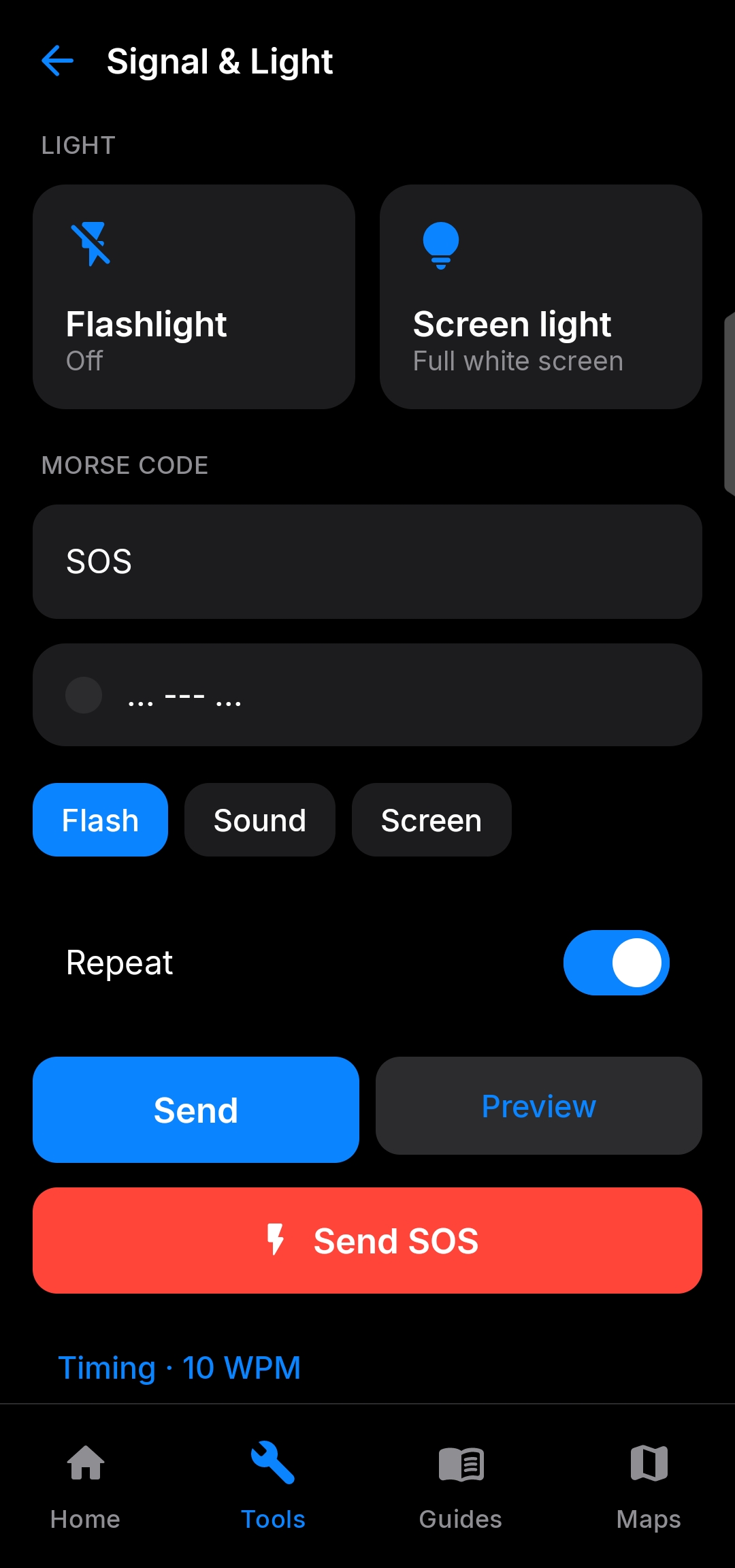
Signal & Light
- Flashlight functionality.
- Morse code signalling through flash, sound and screen.
- SOS signalling and adjustable timing.
- Siren and full-screen light utilities.
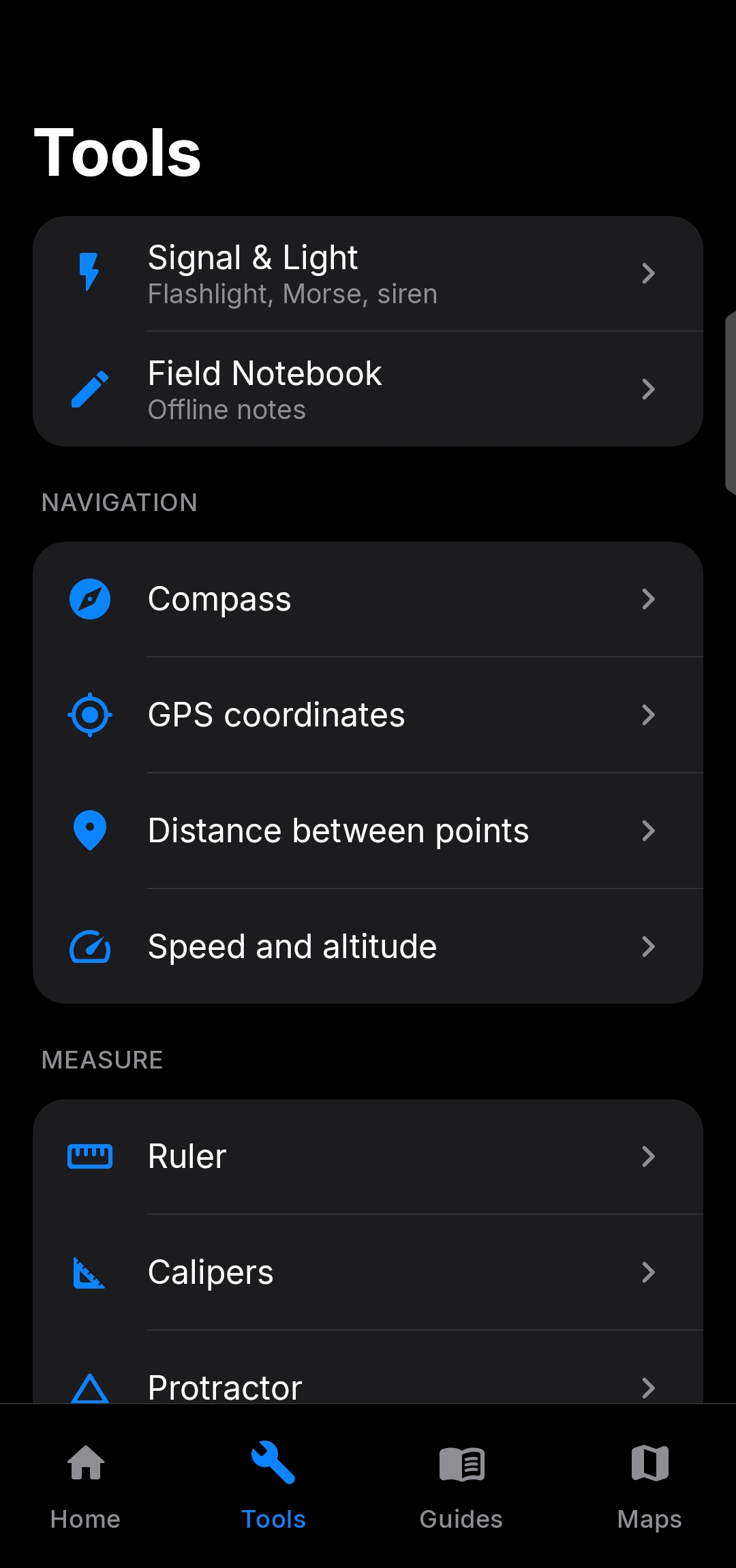
Field Instruments
- Compass with magnetic and true north.
- GPS coordinates in decimal and DMS formats.
- Distance, bearing, speed and altitude.
- Ruler, calipers, protractor and spirit level.
- Unit converter, calculator and battery information.
Field Notebook
- Private, autosaving notes.
- Search, tags, favourites and pinning.
- Location attachment.
- JSON import/export with duplicate protection.
Offline Maps
- Vector map rendering using locally installed PMTiles packs.
- Offline place search and emergency points of interest when included in map data.
- Resumable map downloads with verification before installation.
The central idea is simple: essential tools should remain accessible even when mobile data isn't.
How I built it
HAVEN is an independent Android application developed using Kotlin, Jetpack Compose and Gradle.
I used an AI-assisted development workflow, directing implementation through prompts, reviewing generated code, making technical decisions, investigating issues and iterating on the application.
AI assistance was a development tool, not a replacement for engineering involvement. I was responsible for directing the implementation, integrating features, investigating errors, resolving build configuration issues and validating the resulting application.
I also established a GitHub Actions continuous integration pipeline to automate content validation, unit testing, Android builds and APK artifact generation.
The application follows an offline-first approach, prioritising local storage, user-controlled permissions and privacy. It does not require an account and does not include analytics or tracking.
Challenges
One of the biggest challenges was bringing together such a diverse collection of utilities without compromising usability.
Each feature introduced different technical requirements.
Location-based utilities needed to account for Android's permission model and hardware availability. Safety check-ins required consideration of Android's background scheduling and battery restrictions. Offline maps introduced an entirely different set of challenges involving map data generation, downloads, verification and installation.
The Android build environment also presented difficulties. Dependency configuration, Gradle issues and failed CI runs required investigation and iterative fixes.
I also had to establish clear boundaries around offline functionality. Not every emergency action can work without a network, and not every device has the same sensors or hardware.
Rather than presenting offline functionality as unlimited, HAVEN communicates its limitations wherever necessary.
What I learned
Building HAVEN taught me to think beyond individual features and consider how an entire application behaves under real-world constraints.
I gained practical experience with Android development, local persistence, sensor integration, location services, map data, background scheduling, build automation and testing.
It also reinforced an important lesson about AI-assisted development: generating code is only one part of the process. Directing implementation, identifying incorrect output, debugging failures, making technical decisions and validating the final result remain essential.
Most importantly, HAVEN pushed me to approach software development from the perspective of the people who might actually depend on the application.
What's next
HAVEN is an evolving open-source project, and version 1.0.0 represents its initial public release.
Future development will focus on expanding offline capabilities, improving usability and exploring additional emergency utilities.
Some planned improvements include:
- Offline turn-by-turn routing.
- Bluetooth peer-to-peer messaging.
- Camera-based Morse code decoding.
- On-device AI assistance.
These are planned features and are not currently part of V1.
The project is released under the GPL-3.0-or-later licence, with the intention of keeping its source code accessible and open to further development.
Project HAVEN is built around one simple principle: essential tools and information should remain within reach, especially when connectivity doesn't.

