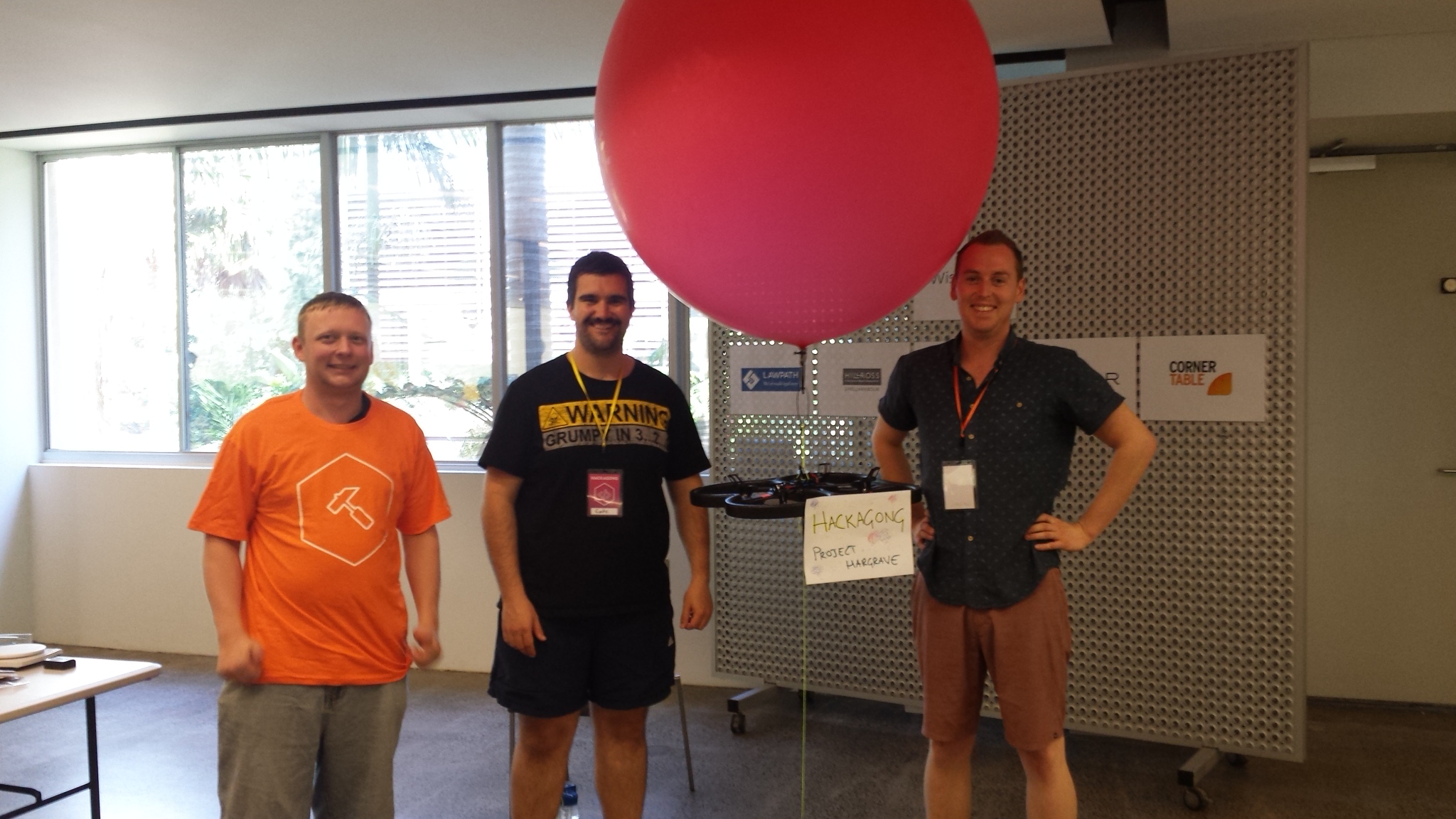
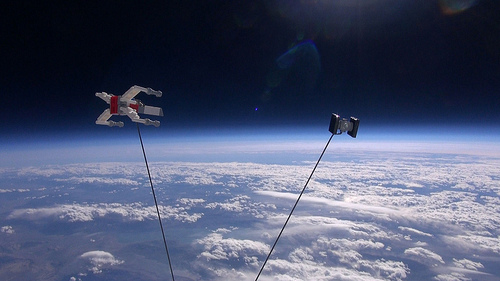
Our future is in space, if not for the wonder of the unexplored that drives us as humans but out of necessity. Technologies are now available that allow us to venture out from our cradle, our nest Earth and explore the rest of the neighborhood, the rest of our universe. Taking images from near space is no longer reserved to those with the enormous resources previously required such as governments but now school children are able with a simple weather balloon and a sturdy camera.
Our Project Hargrave aim's is to develop hybrid lighter than air/multi tilt rotor vehicles enabling increased flight time and near space altitudes.
A myriad of applications are possible utilizing such a platform including: telecommunications, observation (fire identification, traffic, disaster, agriculture etc etc) and sensing. Education, industrial, entertainment, meteorology and military are viable sectors.
As a proof of concept, a simple cheap quadcopter tethered to a 100g weather balloon is used to demonstrate that increased longevity of flight and control-ability is made possible utilizing such a system. The next iteration is intended to compose of a rotational bi-rotor drone fixed to a high quality balloon with the potential to increase payload exponentially with diameter as well as solar power. With future developments, such a system may be a desirable choice for currying cargo upon Mars due to it's relatively thin atmosphere.
This novel design may offer advantages over alternative systems such as satellite, fixed wing and balloon such as lower cost, recover ability and modification, increased payload and higher control over a wide range of altitudes.

Log in or sign up for Devpost to join the conversation.