-
-
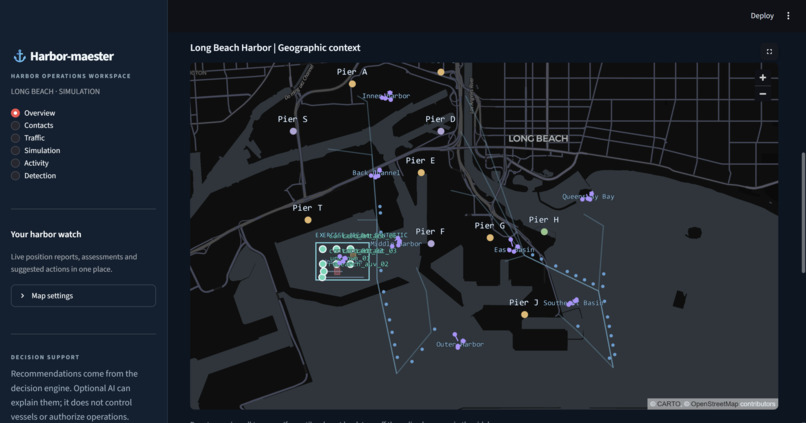
City Map
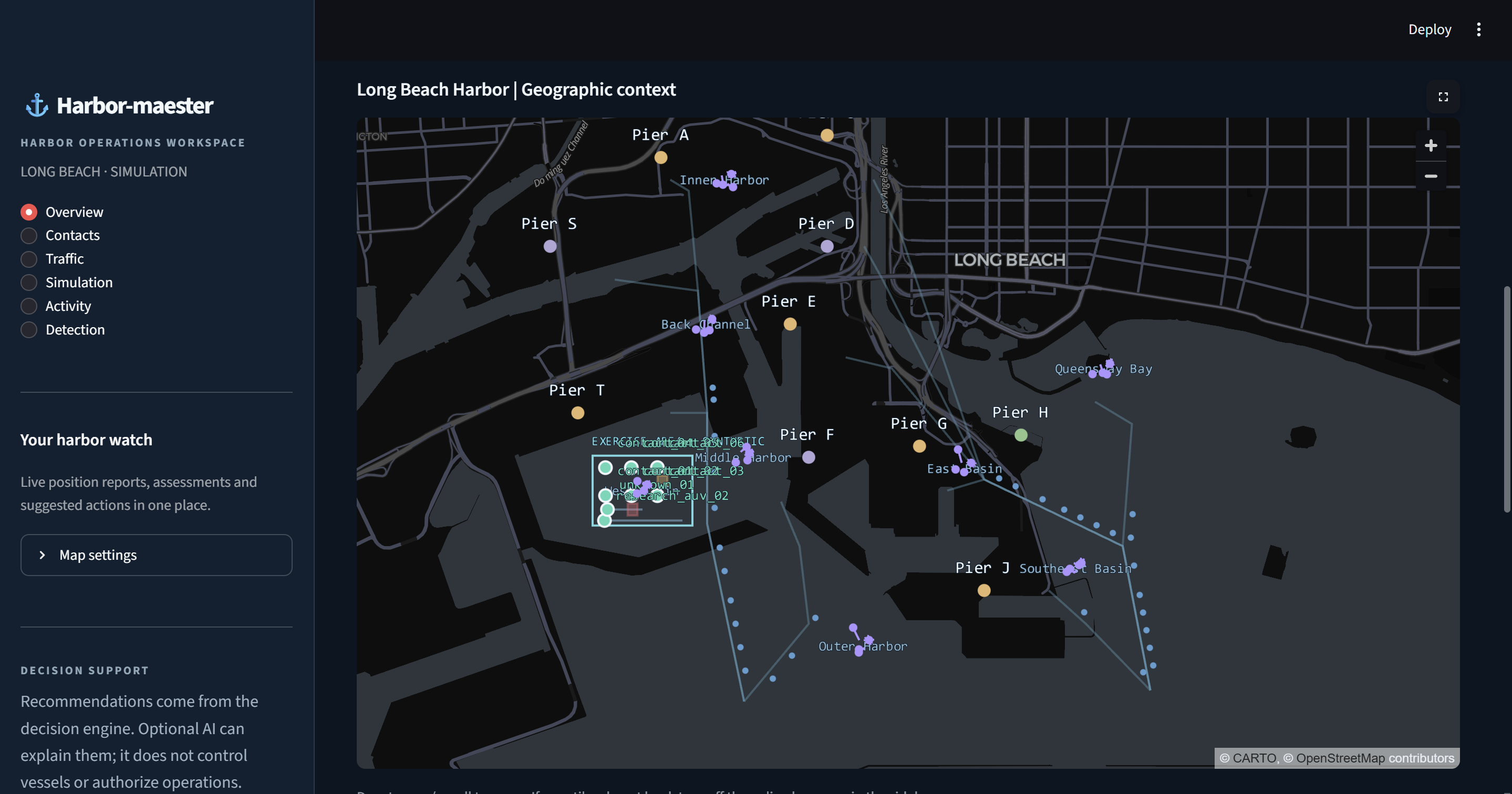
Inspiration
We wanted to do something out of the box, and as such, we were drawn to the prompt because it asked us to find a very specific angle. Detection, according to the prompt, is easy; it's what's done with this information that matters. Not only that, but it was also very specific on the fact that our job ended the moment we handed off our results to a human, and that physical intervention was not the scope of the problem. Lastly, it specifically asked us to consider something without a straightforward answer: "what should a small, low-cost platform decide alone, and what must a person approve?"
What it does
It detects nautical objects coming in and out of the harbor, identifies them, analyzes their speed and trajectory, then suggests a course of action for the human operator if it determines it necessary.
How we built it
We used IBM Bob to review and suggest modifications to our code based on our stated goals and ideas, as well as other tools such as Claude and ChatGPT to make the researching and brainstorming process much faster and achievable in our very tight timeframe. We made sure to not overload conversations with Bob since that increases token consumption quite a bit and we made sure to mention files that needed revision directly in order to prevent Bob from searching through the entire code.
Challenges we ran into
The fact that this was our first hackathon for Snigdha and I meant we didn't exactly have the knowledge that comes with experience, so we weren't really sure if we were doing things right or not; and in Siddharth's case, working with newbies meant he had to be patient with us. That being said, I think I can confidently say that the biggest challenge was staying up working and trying to power nap with the freezing AC, uncomfortable couch, and mysterious noises. Alas, getting to participate in such an awesome experience has made this arduous crusade worth all the challenges that came with it.
Accomplishments that we're proud of
The fact that we've managed to put up a pretty decent software and learned how to use IBM Bob in the span of just a few hours, (we didn't want to waste our tokens before the competition, though we did watch the tutorial videos beforehand), is something that we are absolutely proud of; not only that, but for those of us who had never done this before, just getting past the fear and actually taking the leap is also incredibly satisfying and rewarding in-and-of-itself.
What we learned
We learned how to use tools like IBM Bob and other AI Models to accelerate, streamline, and increase the efficiency of our work, as well as polishing our planning and networking skills.
What's next for Project Harbor-Maester
Guess it all depends on whether any of our esteemed judges and guests find our project eye-catching; but let it be known that we would absolutely be interested in moving forward with our idea.
Built With
- asynchronous-python-programming
- containerized-application-deployment
- cpu-based-model-inference
- evidence-grounded-ai-explanations
- geospatial-policy-enforcement
- graceful-ai-service-degradation
- human-in-the-loop-incident-review
- ibm-bob
- kalman-filtering
- maritime-traffic-simulation
- monte-carlo-trajectory-forecasting
- policy-driven-decision-support
- random-forest-ensemble-classification
- streamled-simulator
- synthetic-trajectory-modeling
- vessel-route-deviation-detection
