Inspiration
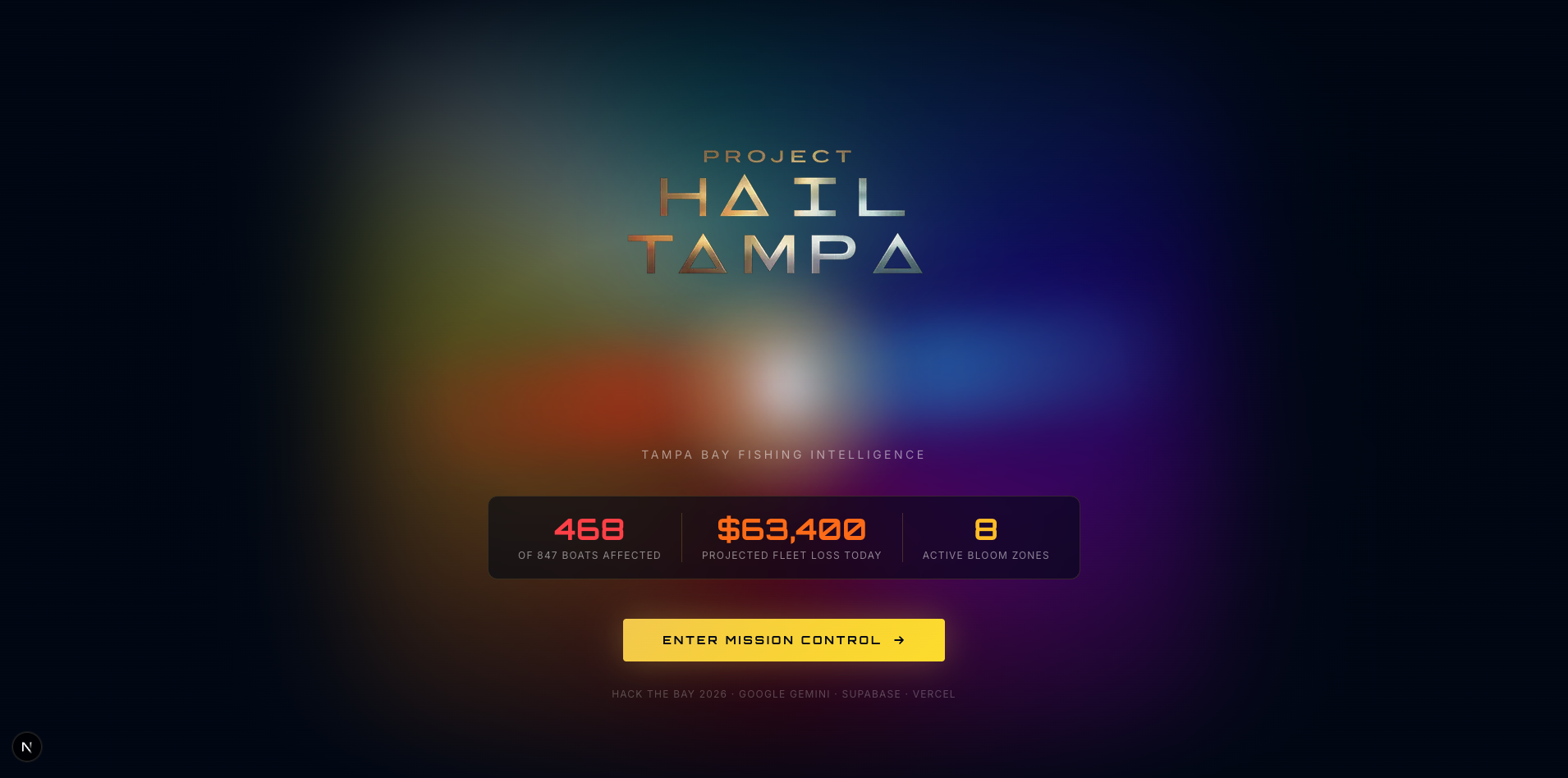
Tampa Bay commercial fishing boats lack reliable, real-time data to determine if a target zone is safe, leading to significant financial losses from dead catches and fouled engines. Project Hail Tampa was built to provide a "Mission Control" that transforms fragmented environmental data into actionable intelligence for every operator.
What it does
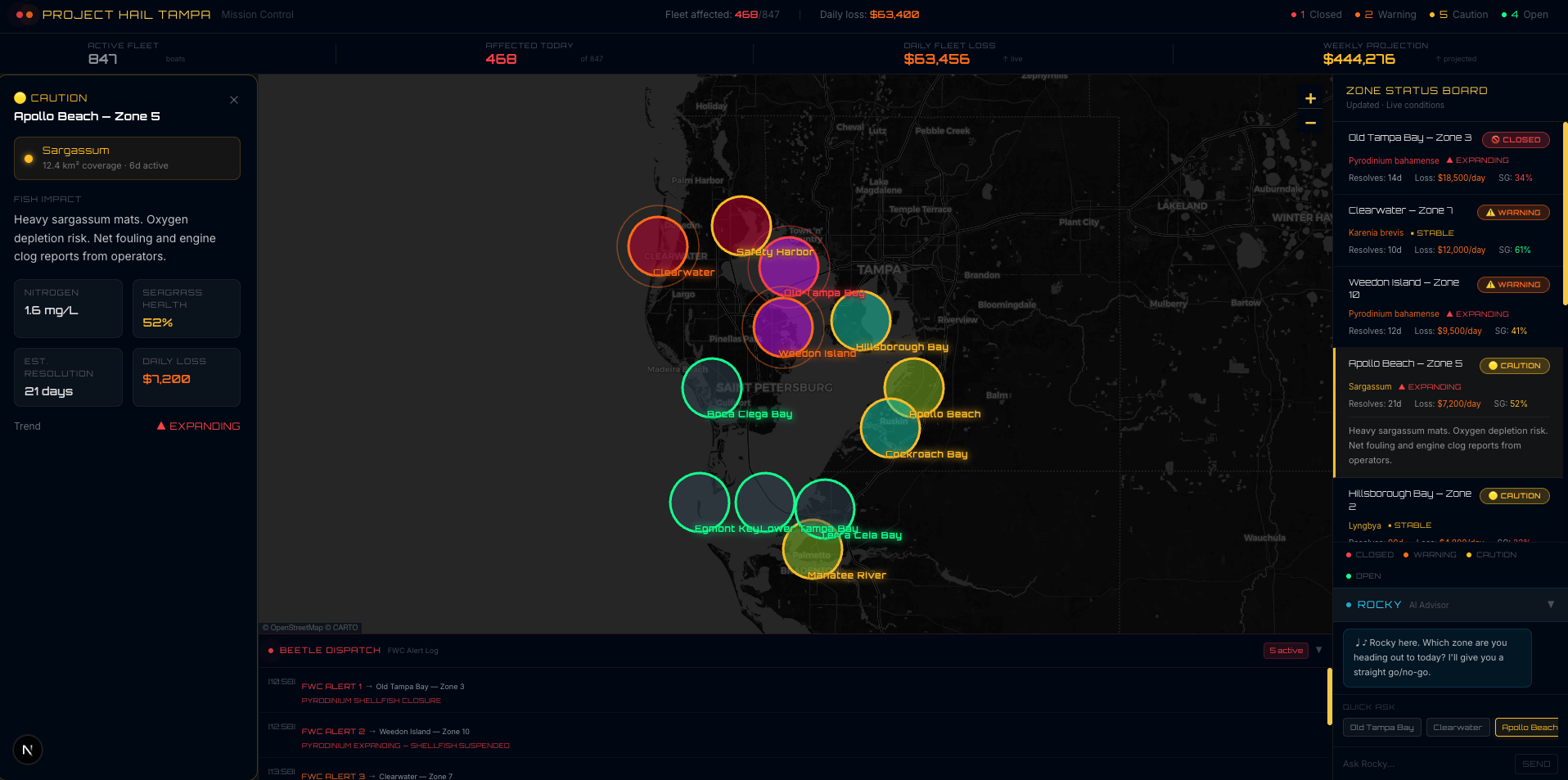
The platform features an interactive multi-spectral map tracking four major algae threats and "Rocky," a Gemini-powered AI advisor that provides clear "Go/No-Go" trip recommendations. It also includes a Fleet Loss Estimator to track economic impact and a real-time Beetle Dispatch system for official FWC zone alerts.
How we built it
The project utilizes a Next.js and Tailwind CSS frontend integrated with Google Gemini 1.5 Flash for the intelligent advisor. Real-time data synchronization for the alert dispatch system is powered by Supabase, while React-Leaflet handles the interactive mapping.
Challenges we ran into
Architecting a complex multi-spectral map and a robust AI advisor within a strict 5-hour window required meticulous planning and discipline. Balancing scientific accuracy with a direct, practical persona for the AI advisor’s system prompt was a significant technical hurdle.
Accomplishments that we're proud of
The team successfully built a unified solution that simultaneously addresses sustainability, health, automation, and fintech tracks. We are especially proud of deploying a real-time AI advisor that offers specific, localized safety recommendations for commercial operators.
What we learned
We learned the critical importance of a shared "Single Source of Truth" PRD for maintaining zero merge conflicts and total team alignment during a high-pressure hackathon. We also discovered how to effectively ground AI responses in specific environmental datasets using only system instructions.
What's next for Project Hail Tampa
Future development will focus on replacing mock data with live NOAA and FWC API feeds and launching a mobile app for direct-to-phone status alerts. We also plan to implement predictive modeling to forecast bloom spread based on wind and nitrogen data.
Built With
The project was built using Next.js, Tailwind CSS, shadcn/ui, Framer Motion, React-Leaflet, Supabase, Google Gemini API, and Vercel.
Built With
- javascript
- supabase
- typescript

Log in or sign up for Devpost to join the conversation.