-
-
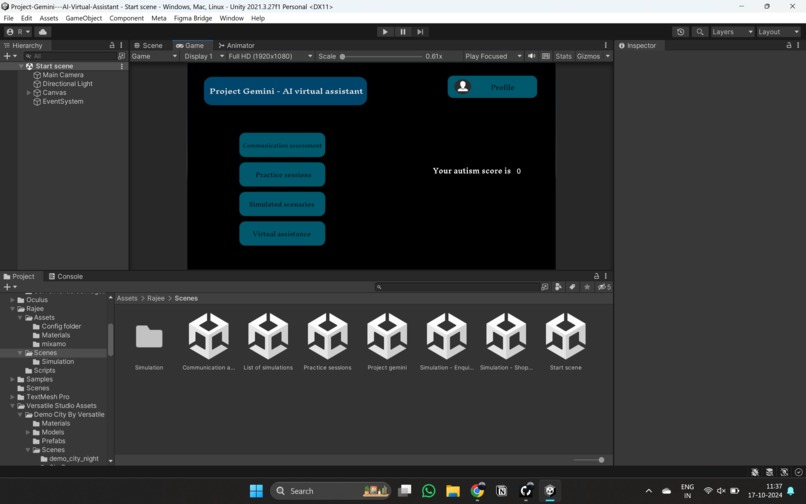
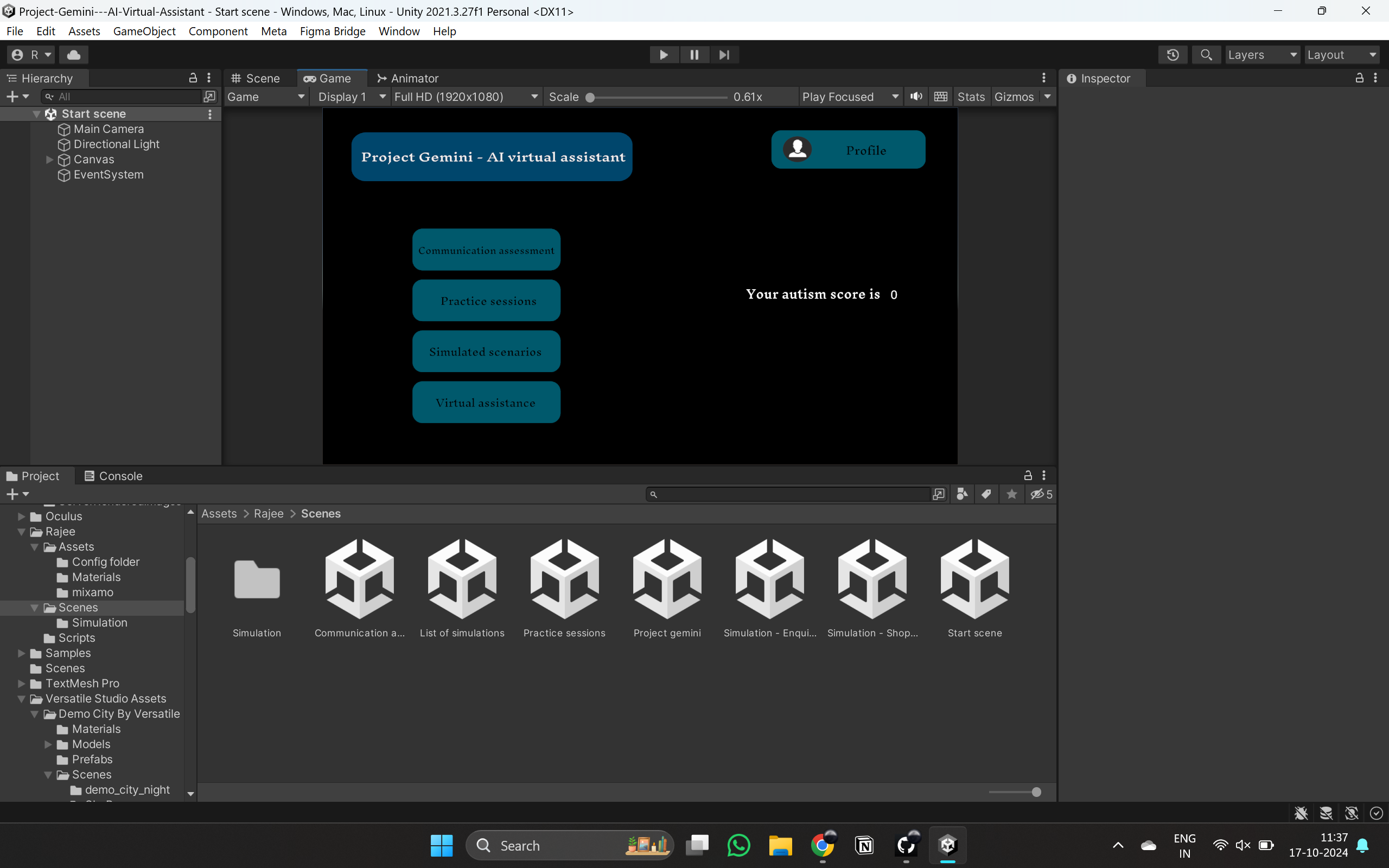
Scenes for distinct modules like practice, assessments, simulations, virtual assistance etc...
-
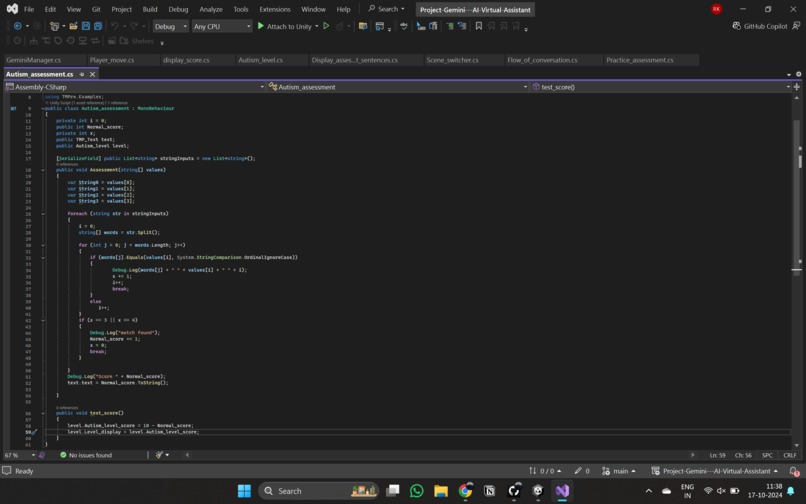
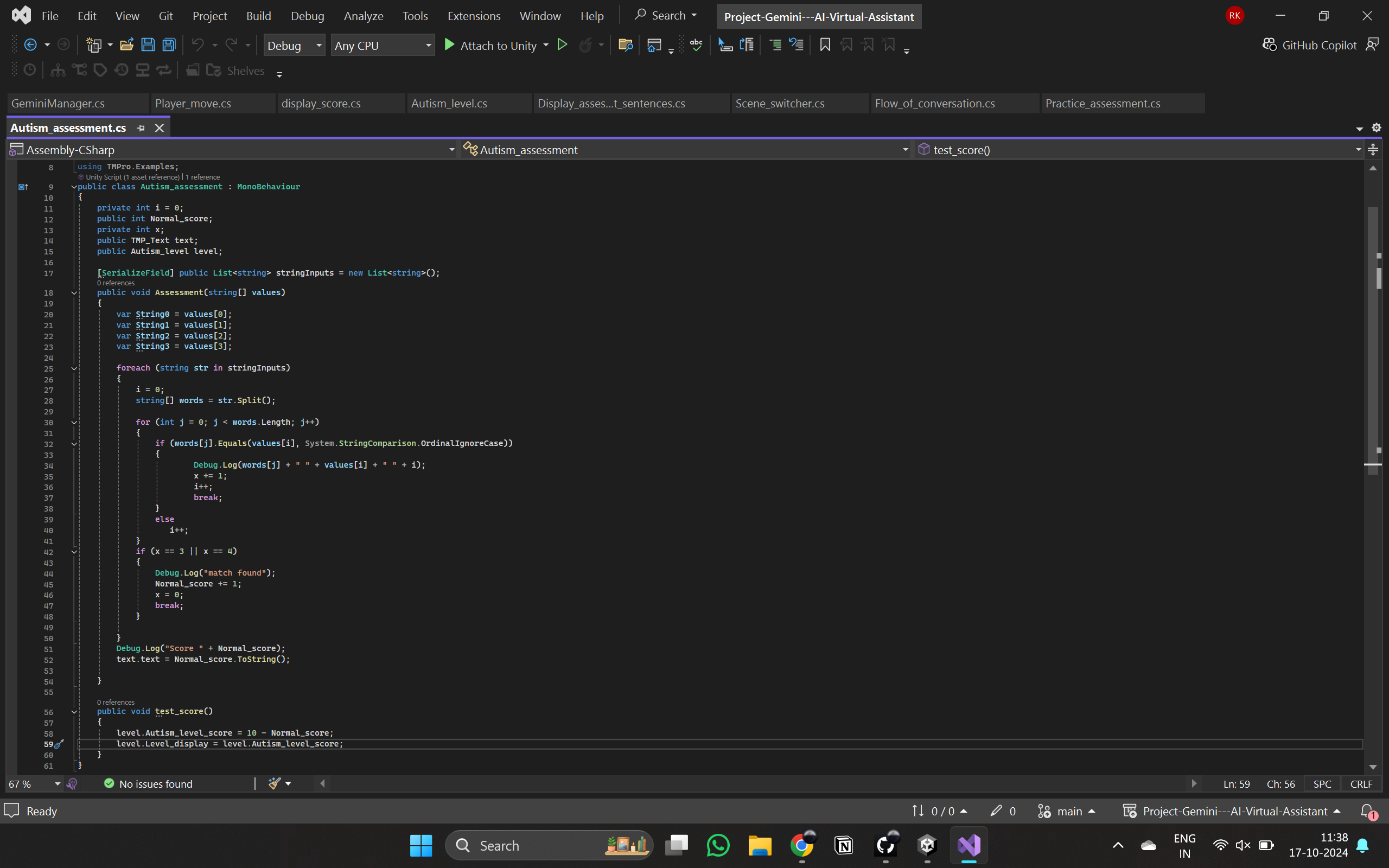
Wit AI speech evaluator script
-
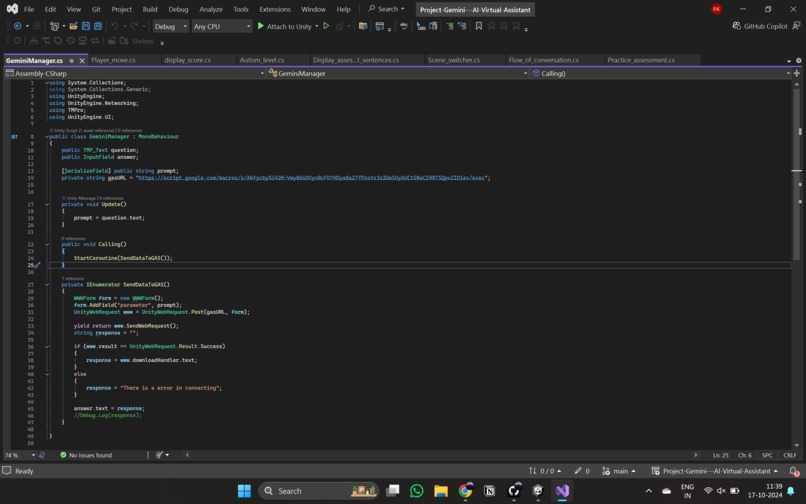
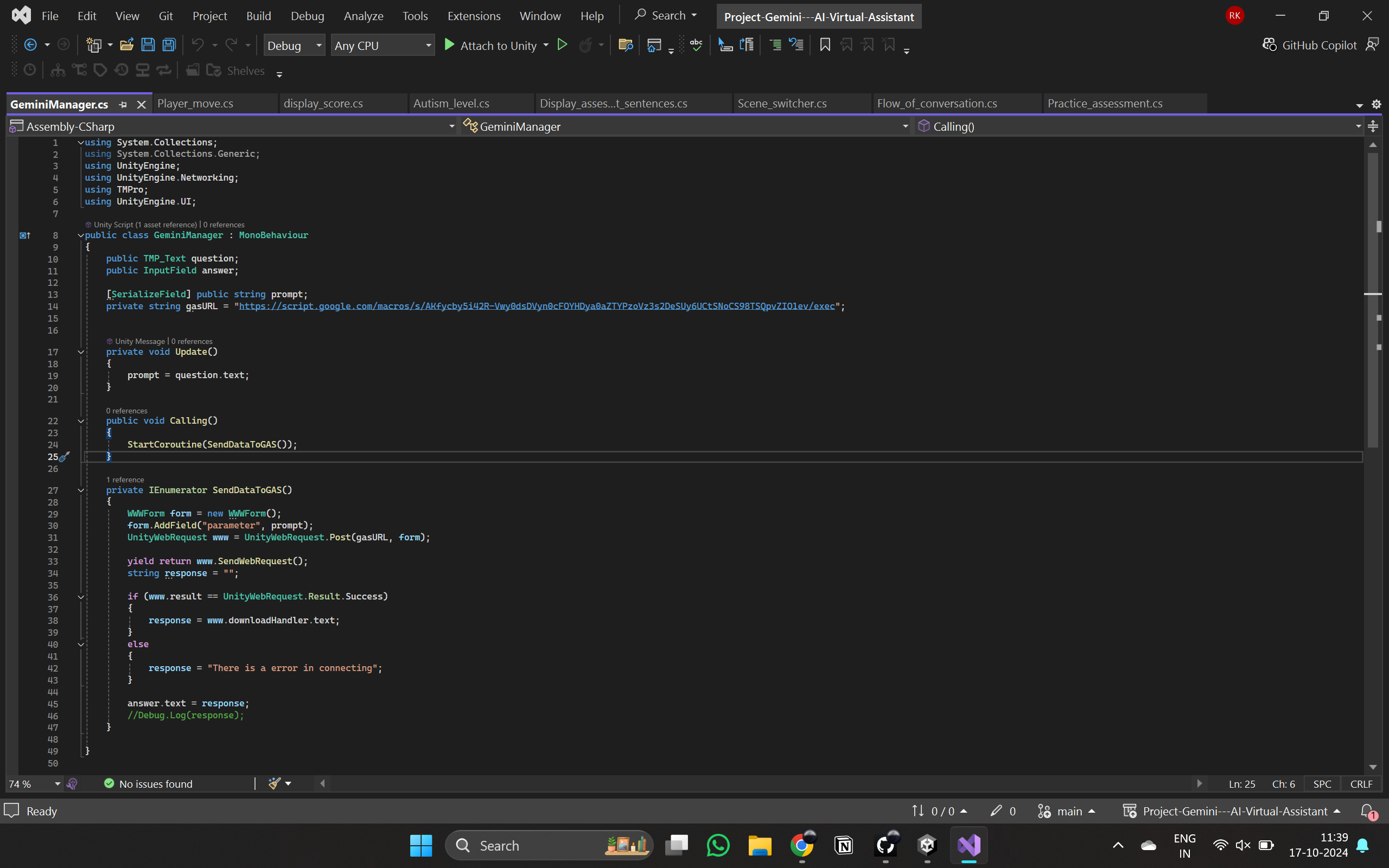
Gemini integration script - Virtual assistant
-
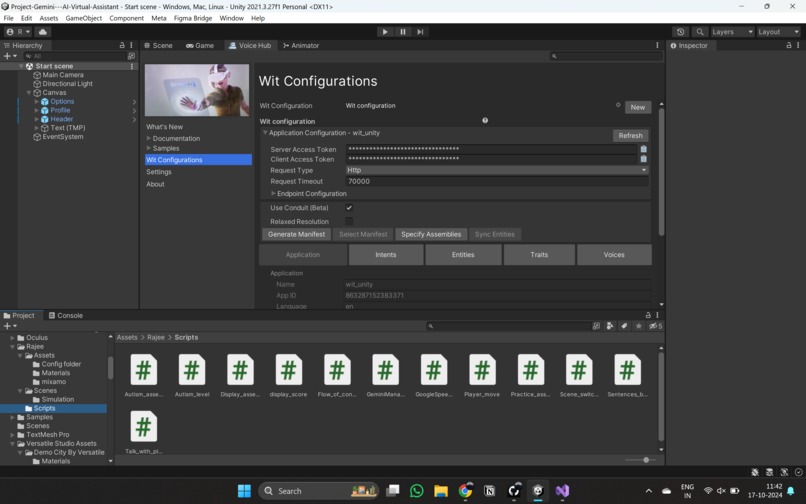
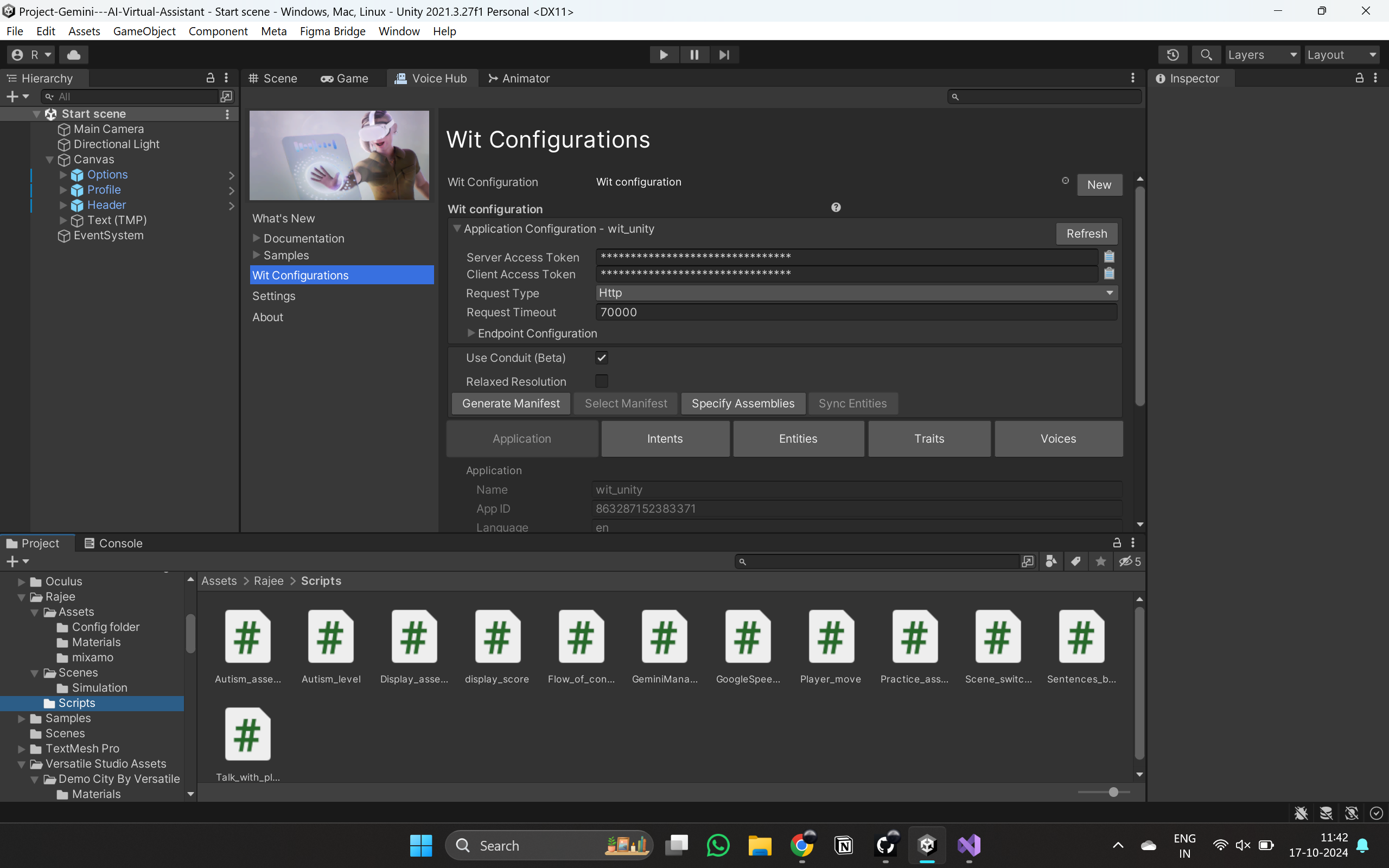
Wit - Unity Configuration
-
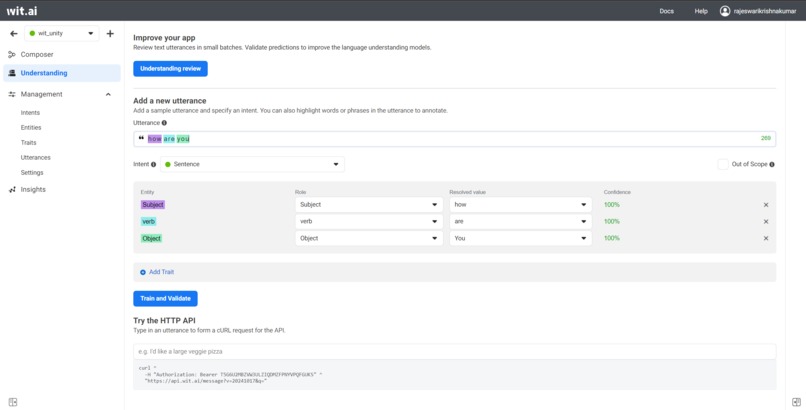
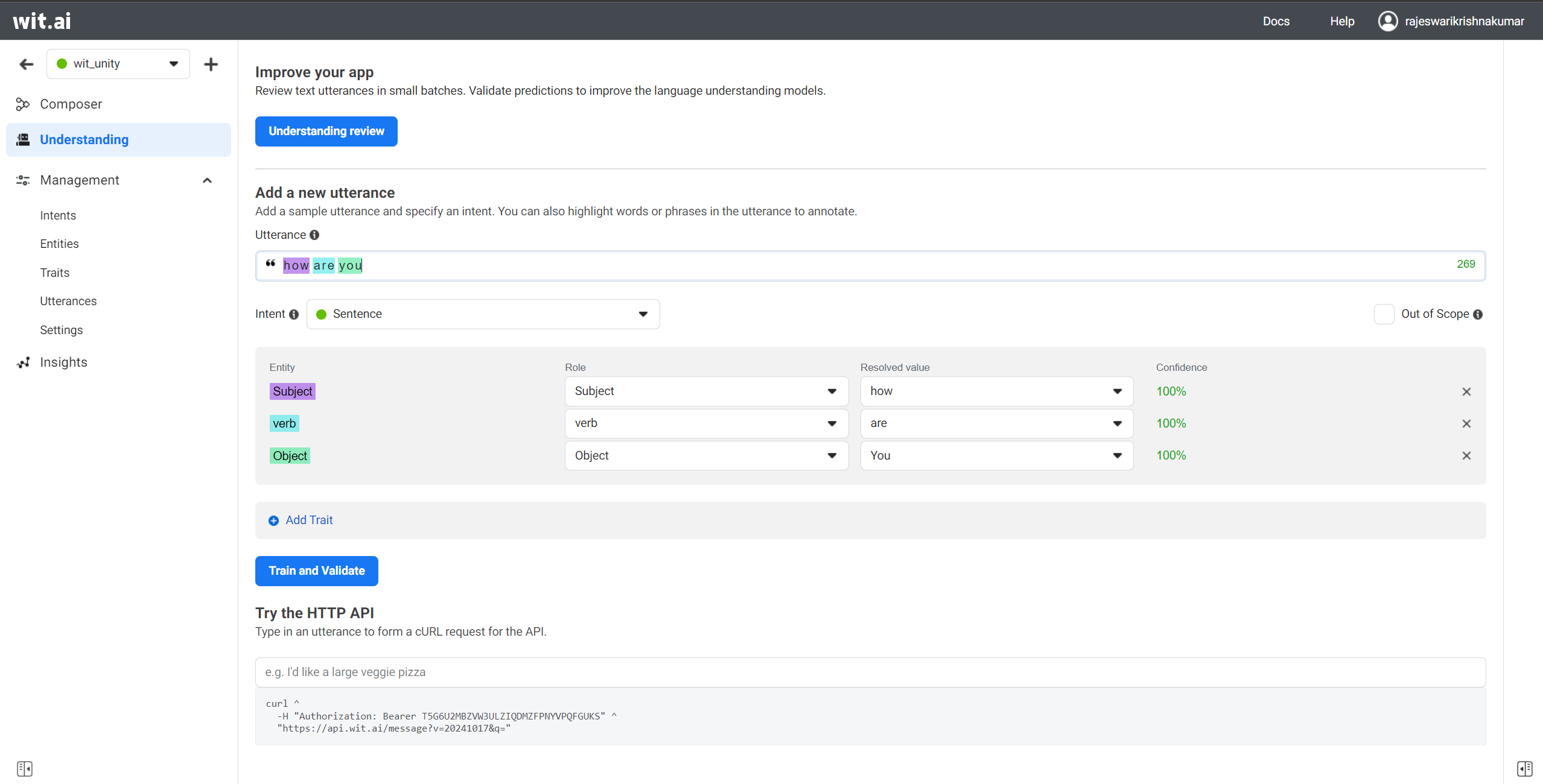
Wit AI text classifier
-
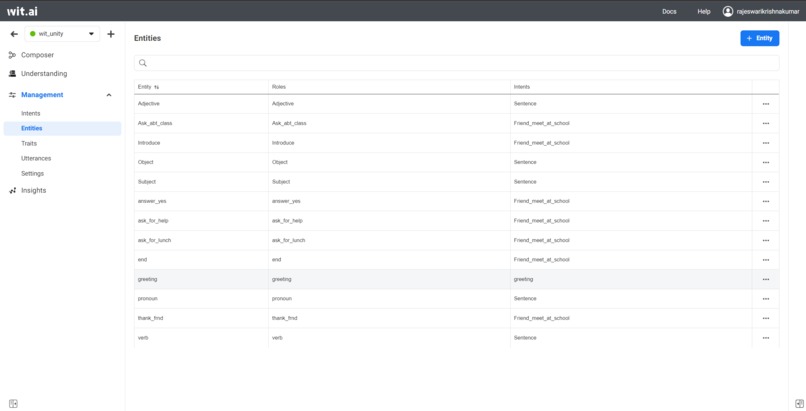
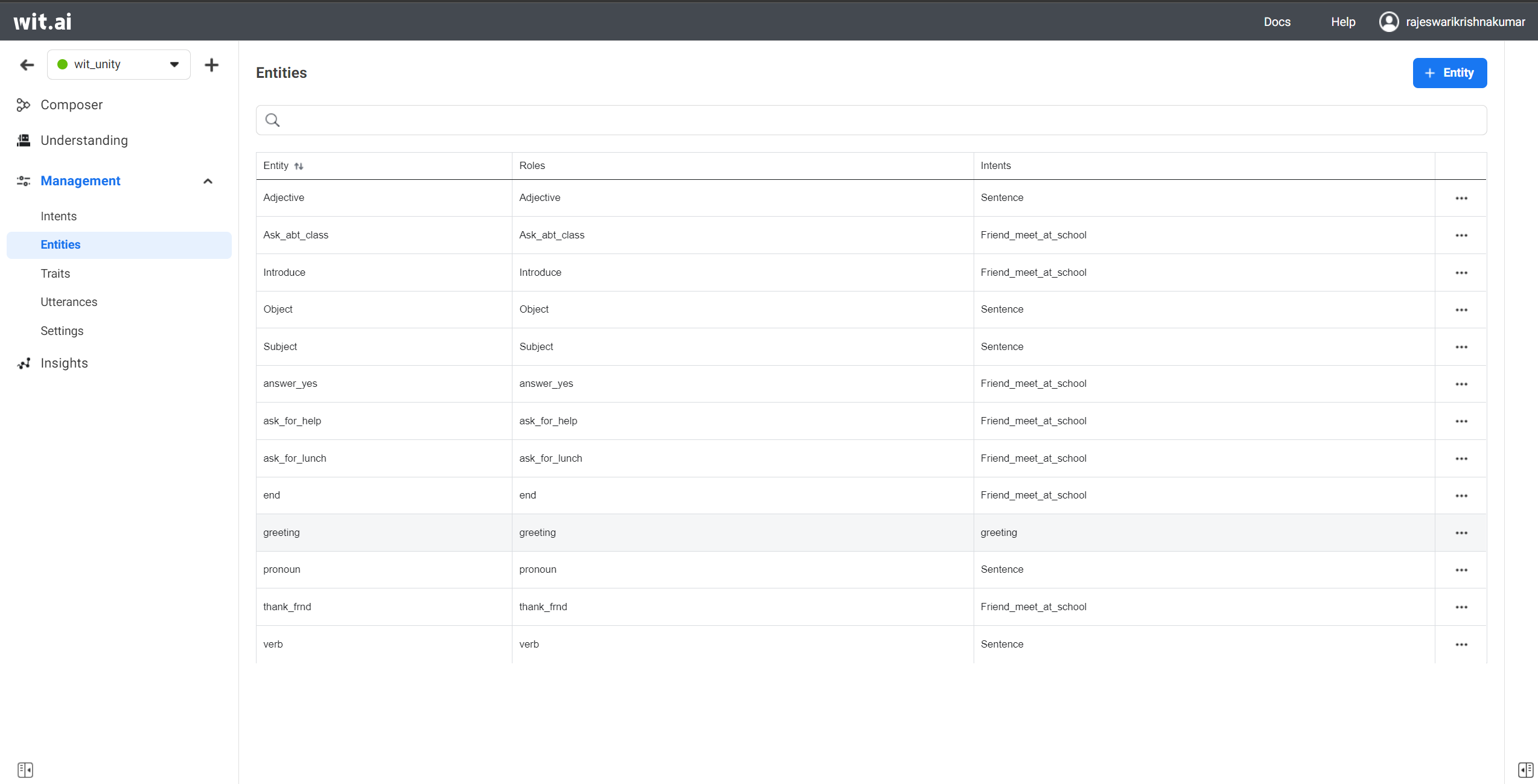
Wit AI Intents and entities for text classification
-
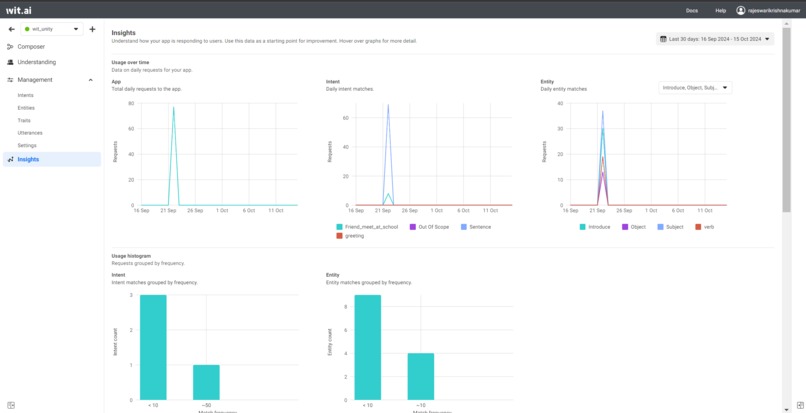
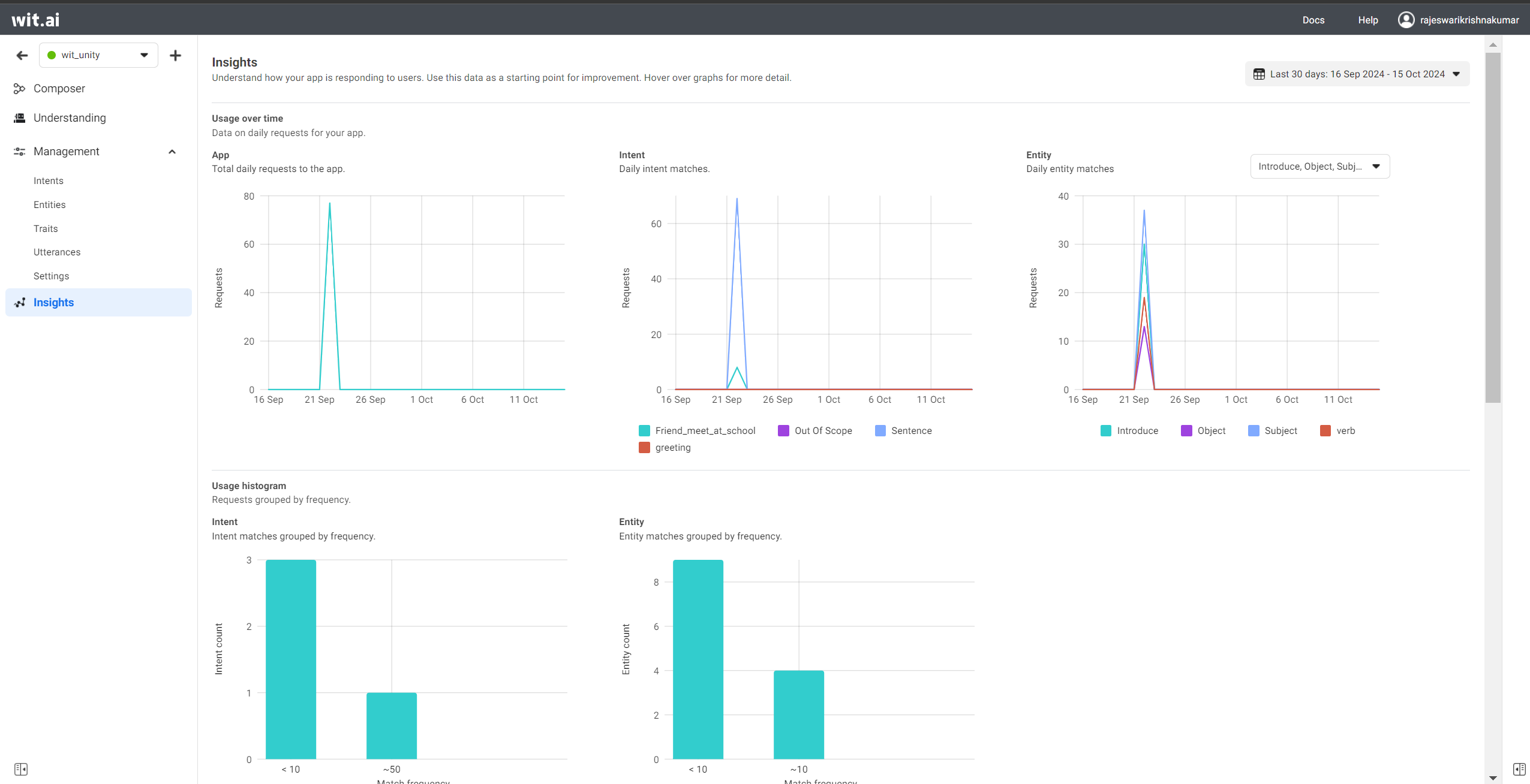
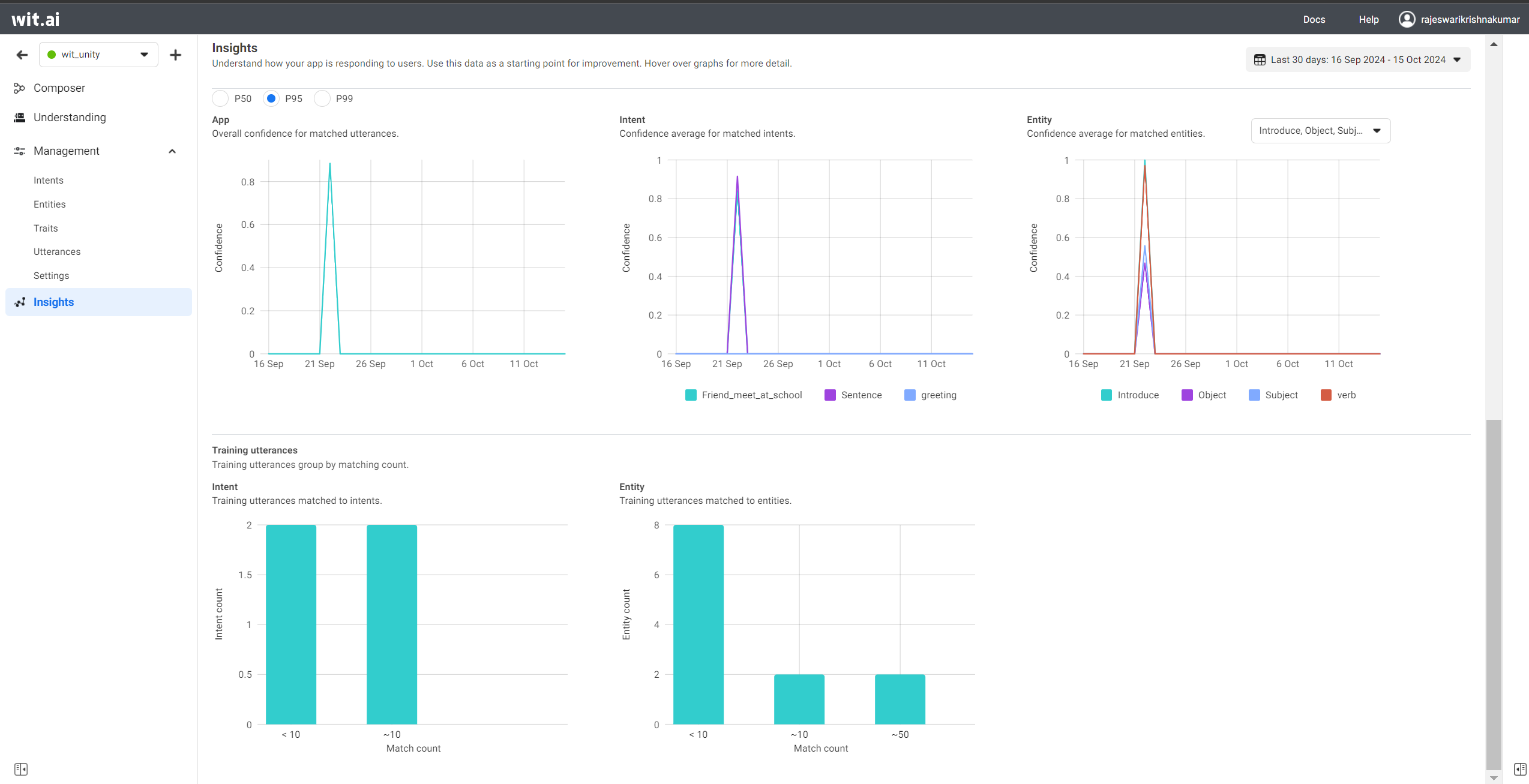
Wit AI usage statistics
-
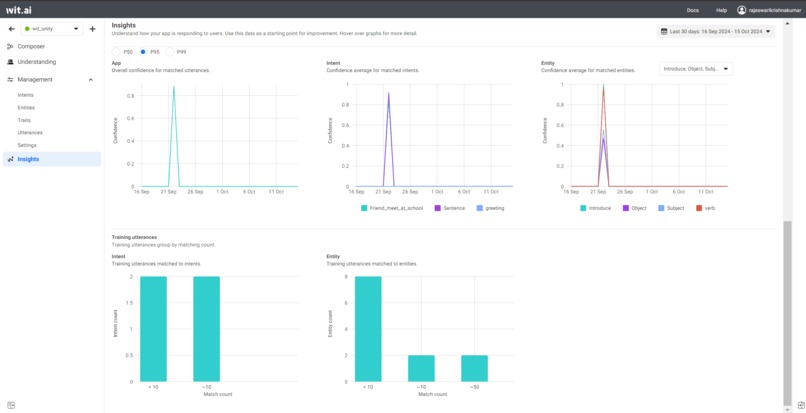
Wit AI usage statistics
-
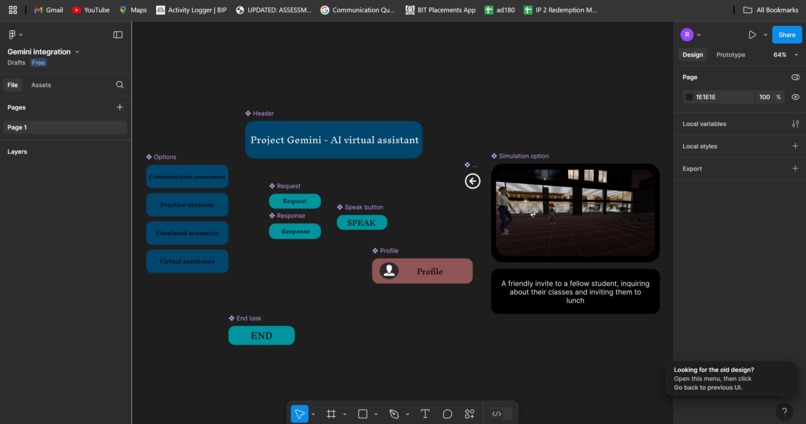
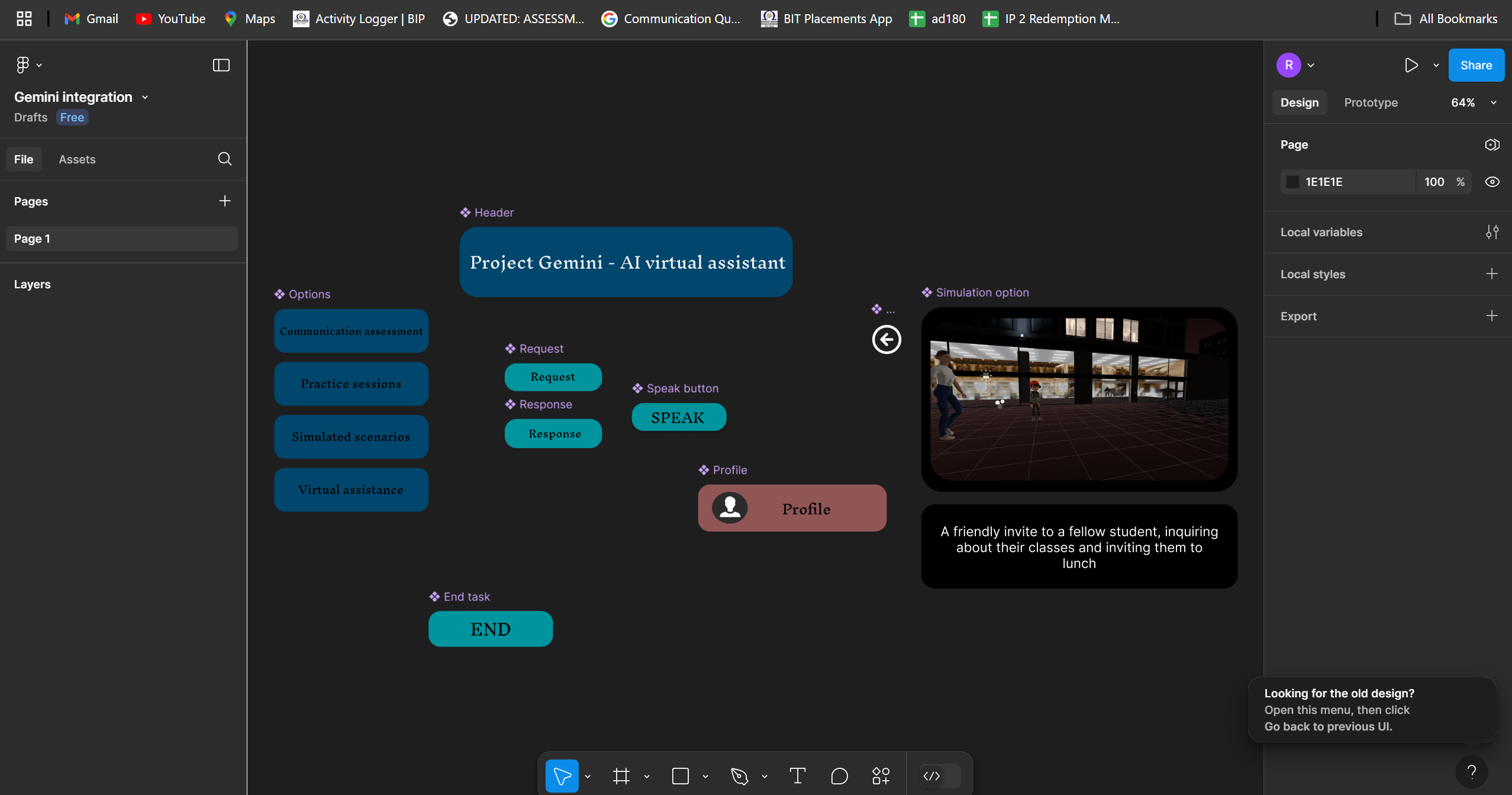
Figma for UI designing
Inspiration The difficulties that people with autism spectrum disorder (ASD) confront in their daily lives served as the impetus for Project Gemini. We recognised the need for a solution that goes beyond conventional therapies and provides individualised, flexible support to aid with everyday chores, social interactions, and communication. By developing a virtual assistant that changes with each user, the initiative seeks to close these gaps and give them the confidence and independence they need to go about daily life.
What it does An AI-powered virtual assistant called Project Gemini was created especially for people with ASD. It offers daily help, communication support, and individualised speech therapy. It recognises and reacts to each user's distinct behavioural patterns using adaptive learning algorithms, providing real-time cues, reminders, and guidance to support social interaction and everyday tasks.
How I built it I used adaptive learning models, AI-powered algorithms, and speech recognition technology to build Project Gemini. To make sure the assistant meets real-life demands, the development approach involves close collaboration with people with ASD, their families, and industry specialists. Through constant learning from user interactions, the AI model enables the assistant to offer a customised experience that changes over time.
Challenges we ran into Developing the AI to comprehend a variety of behavioural patterns and incorporating speech therapy exercises that accommodate varying communication ability levels were two of the main obstacles. There were also many difficulties in protecting user data privacy while preserving the assistant's capacity for learning and adaptation. Furthermore, it took significant thought to collect feedback from people with ASD and integrate it into a responsive, adaptive system.
Accomplishments that I'm proud of Developing the AI to comprehend a variety of behavioural patterns and incorporating speech therapy exercises that accommodate varying communication ability levels were two of the main obstacles. There were also many difficulties in protecting user data privacy while preserving the assistant's capacity for learning and adaptation. Furthermore, it took significant thought to collect feedback from people with ASD and integrate it into a responsive, adaptive system.
What we learned I discovered how crucial user-centric design is, particularly when developing technologies for a wide range of users. Creating useful features required an understanding of the variety of difficulties experienced by people with ASD. The importance of constantly changing AI models that adjust to the unique behavioural patterns and preferences of every user was further highlighted by our experience.
What's next for Project Gemini-AI Virtual Assistant for ASD speech therapy Next, I aim to expand Project Gemini's capabilities by incorporating more advanced speech therapy exercises, improving social interaction support, and integrating sensory management tools. I plan to conduct more user trials to gather feedback for further fine-tuning. In the future, we envision Project Gemini becoming a comprehensive support system, helping individuals with ASD not just in daily life, but also in educational and professional settings.


Log in or sign up for Devpost to join the conversation.