-
-
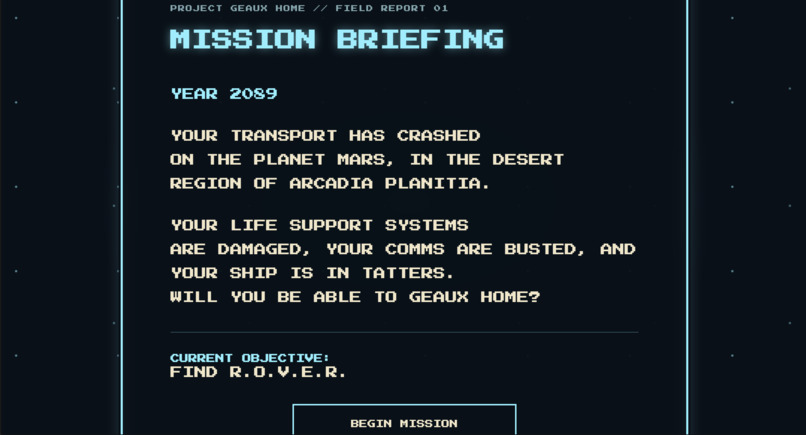
Mission Log
-
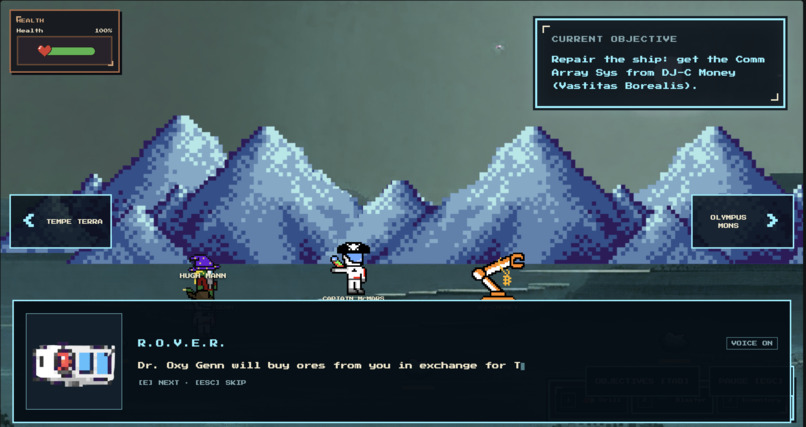
Trading Post
-
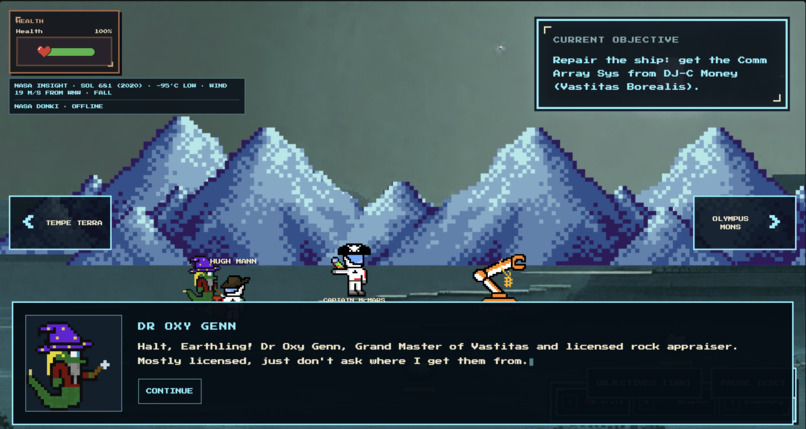
Dr Oxy Genn
-
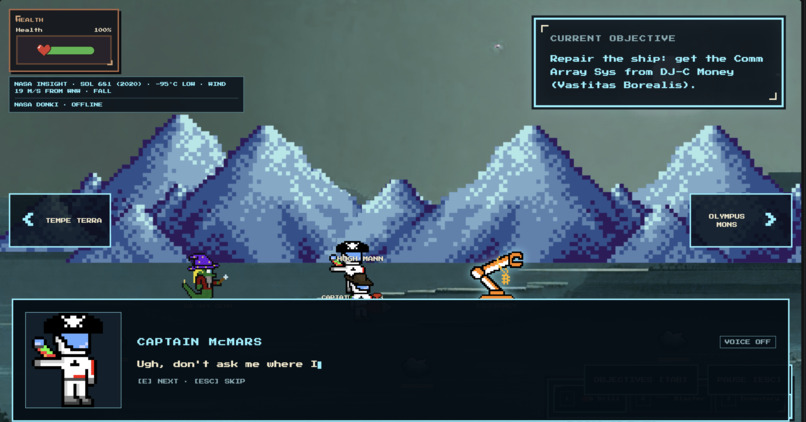
Captain McMars
-
Rover - Vastitas
-
Mission Progress
-
DJ-CMoney
-
Rover - Arcadia
-
Terre Tompe
-
Sandstorm
-
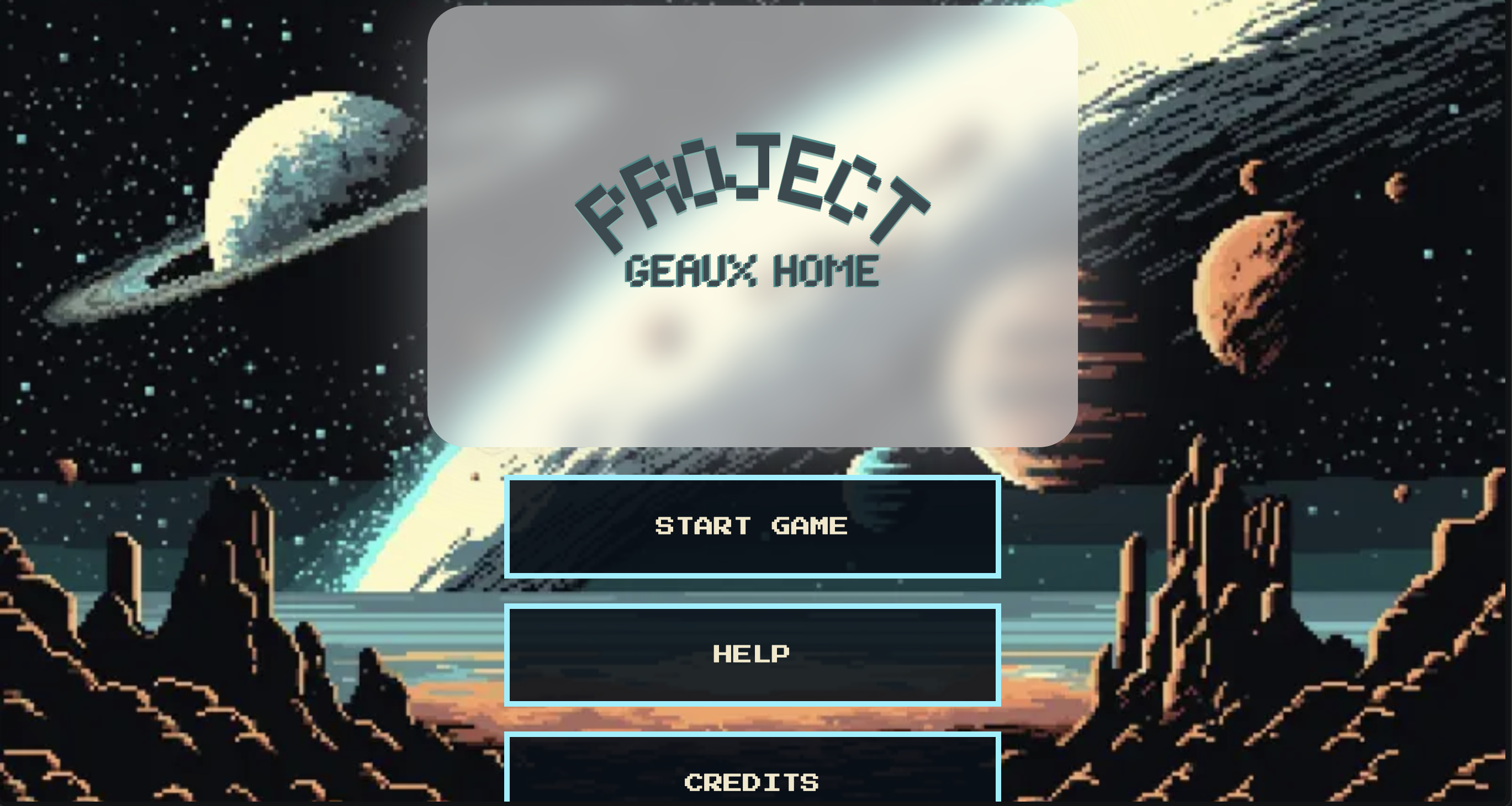
Home Screen
-
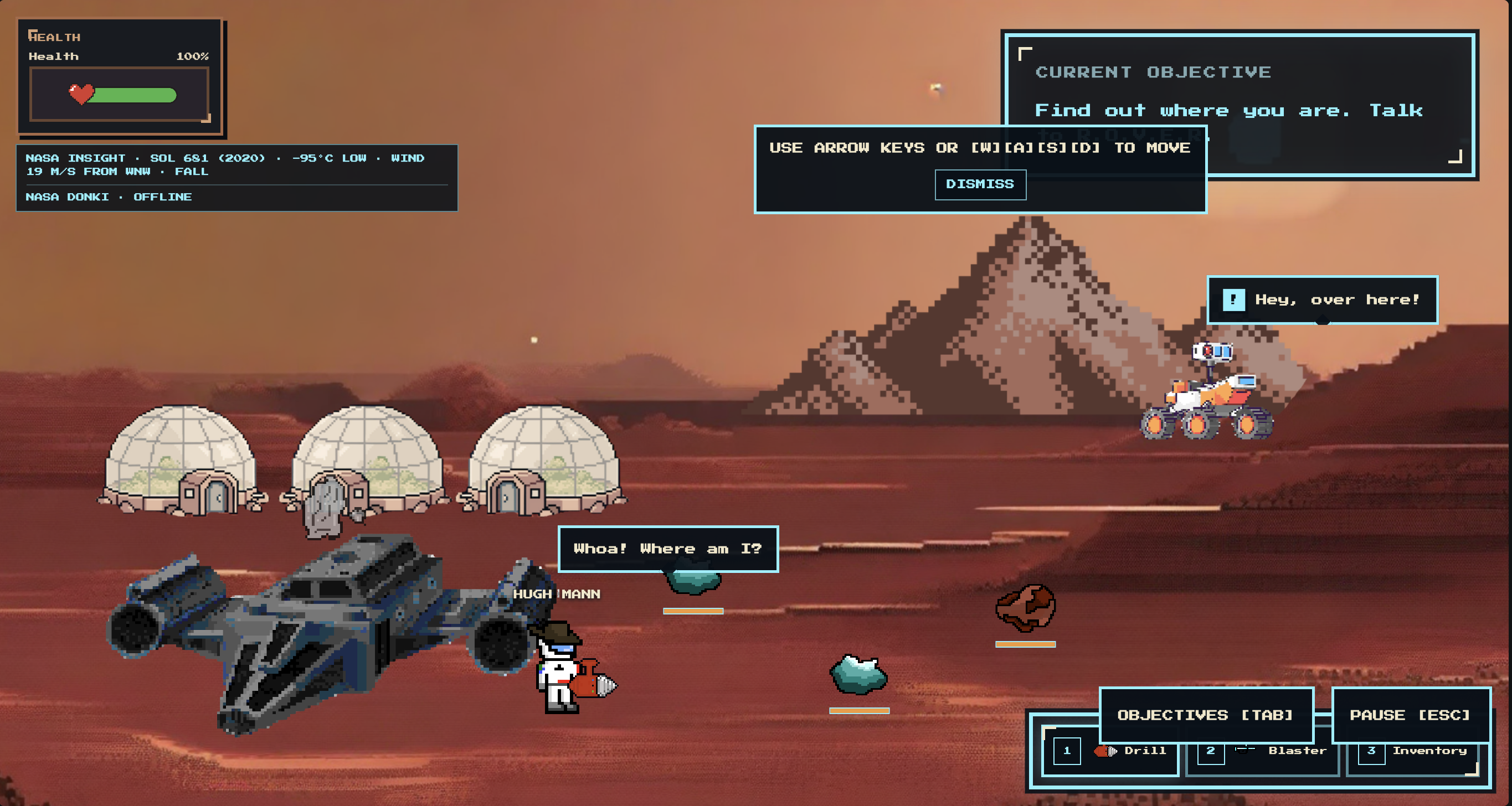
Opening - Arcadia
Inspiration
Our inspiration for this project stemmed from the unique theme of human survival through interplanetary terraforming at Geaux Hack 2026. We wanted to create a unique vision of a possible future on Mars while keeping the simulation entertaining and educational for all audiences. Our end goal was to create an entertaining simulation integrated with excellent storytelling and accurate space informatics to create a seamless, interactive video game that immerses players in a new Earth.
What it does
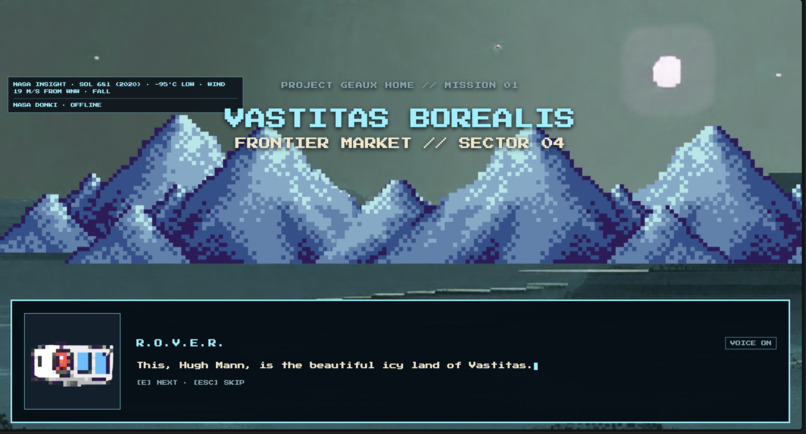
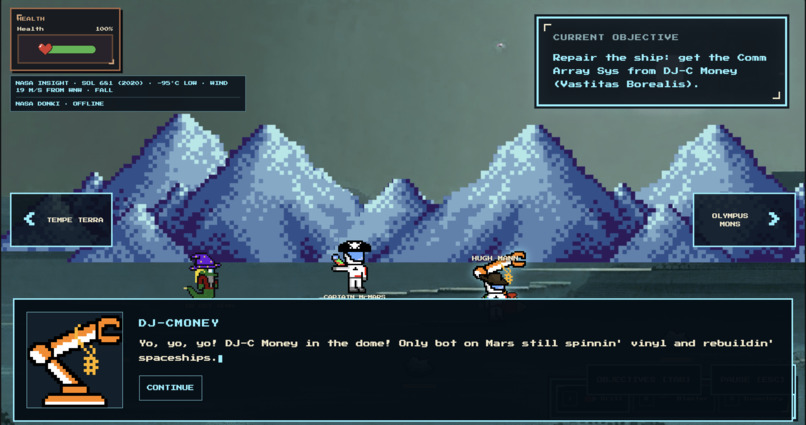
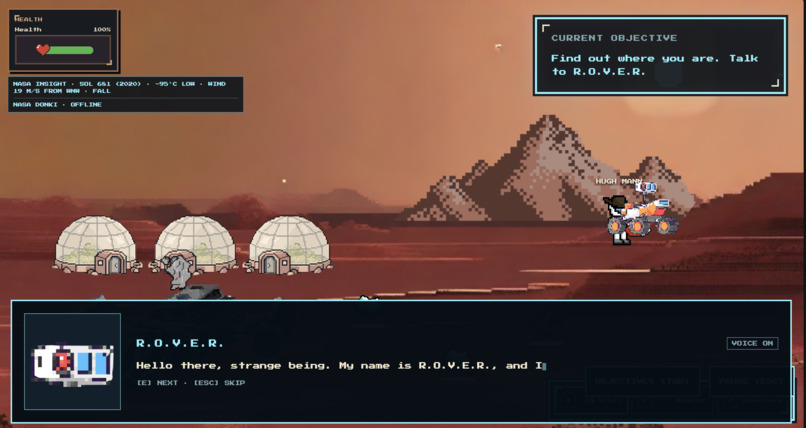
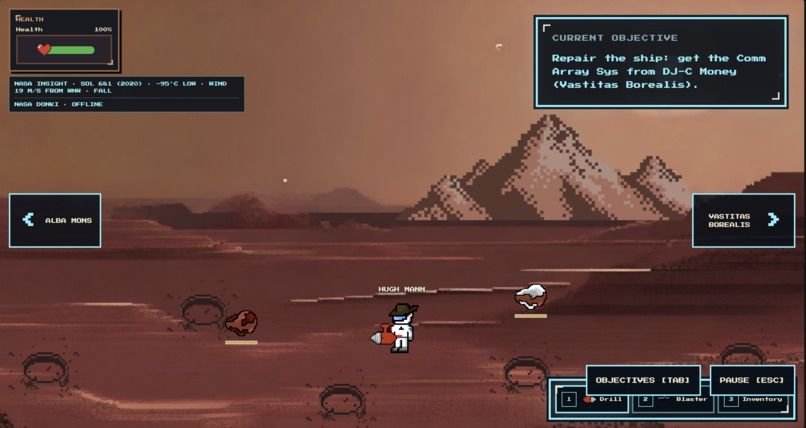
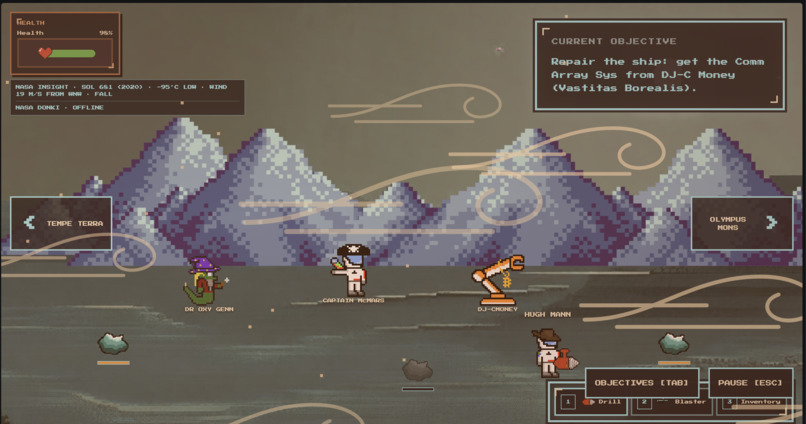
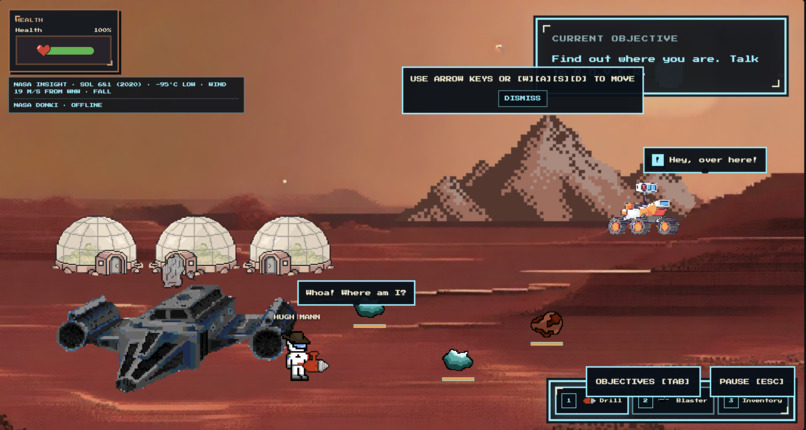
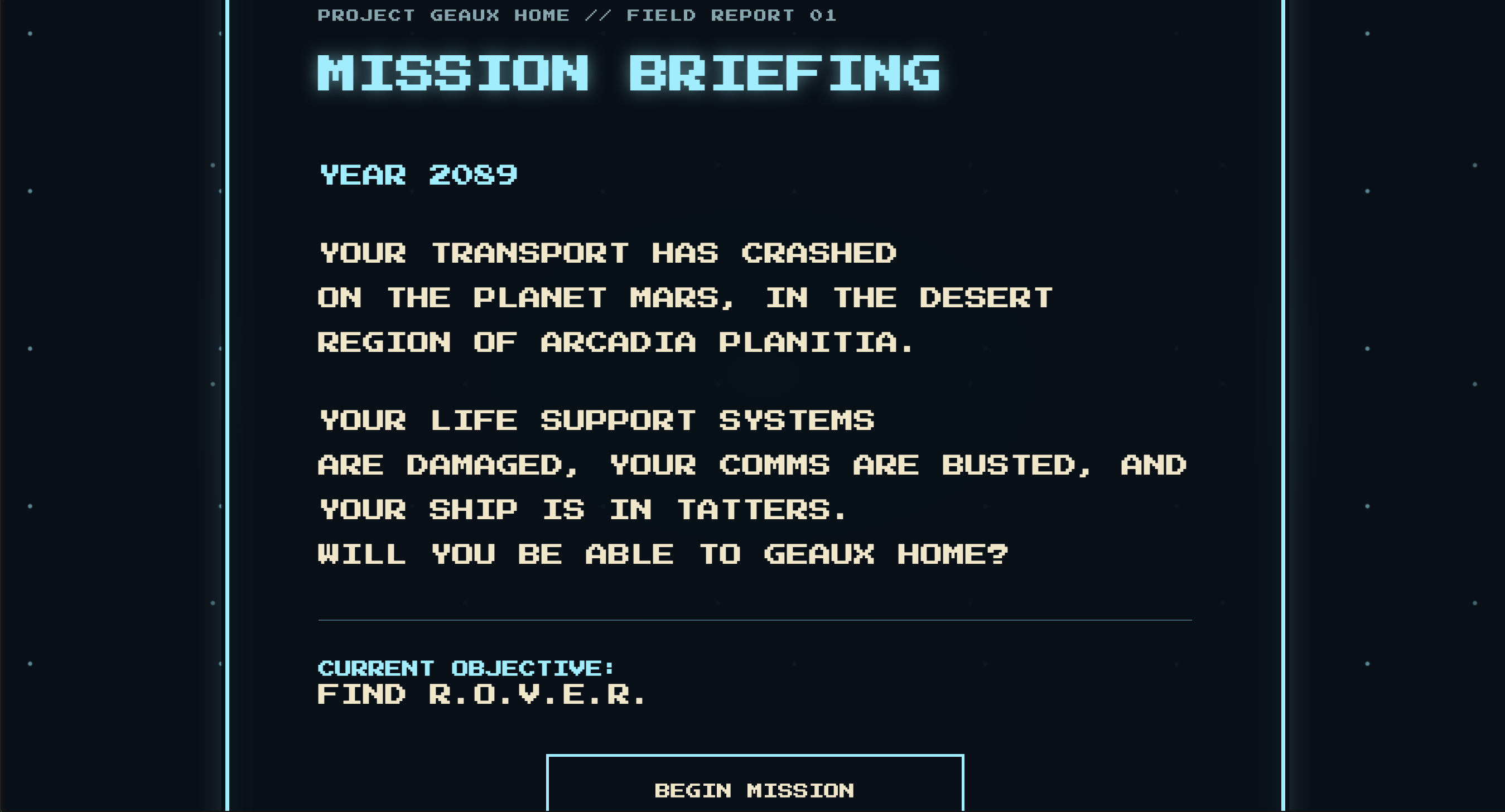
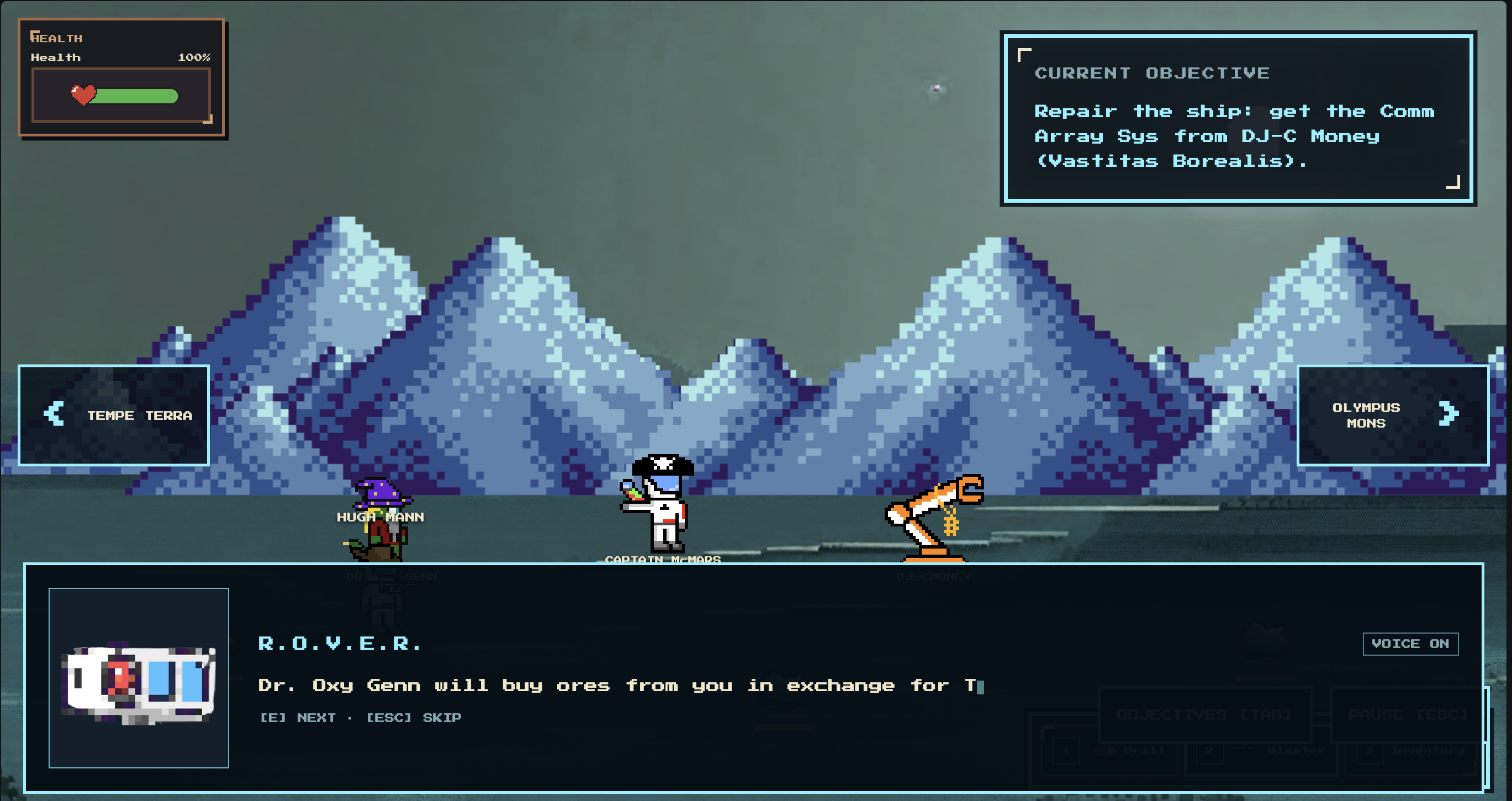
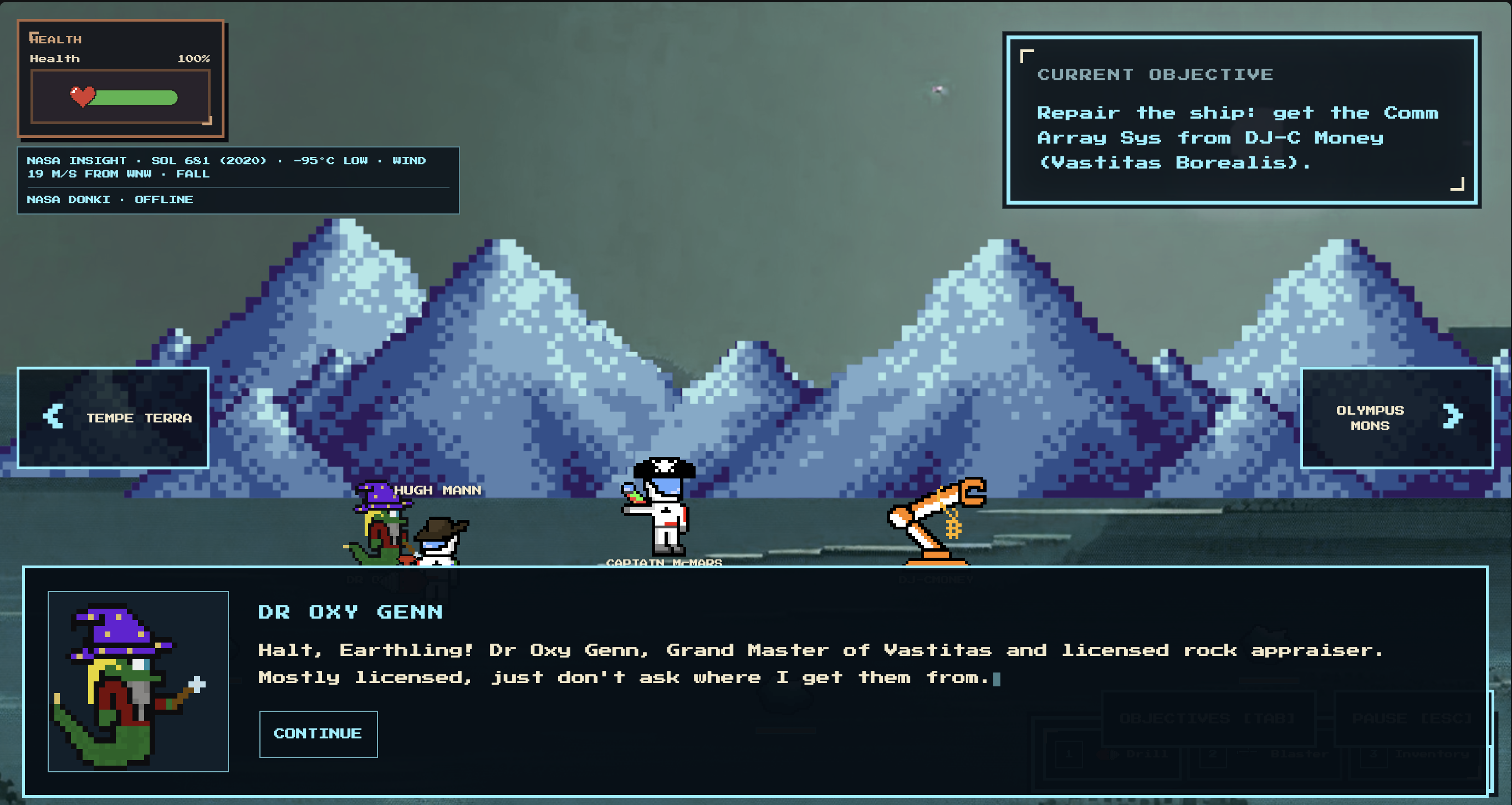
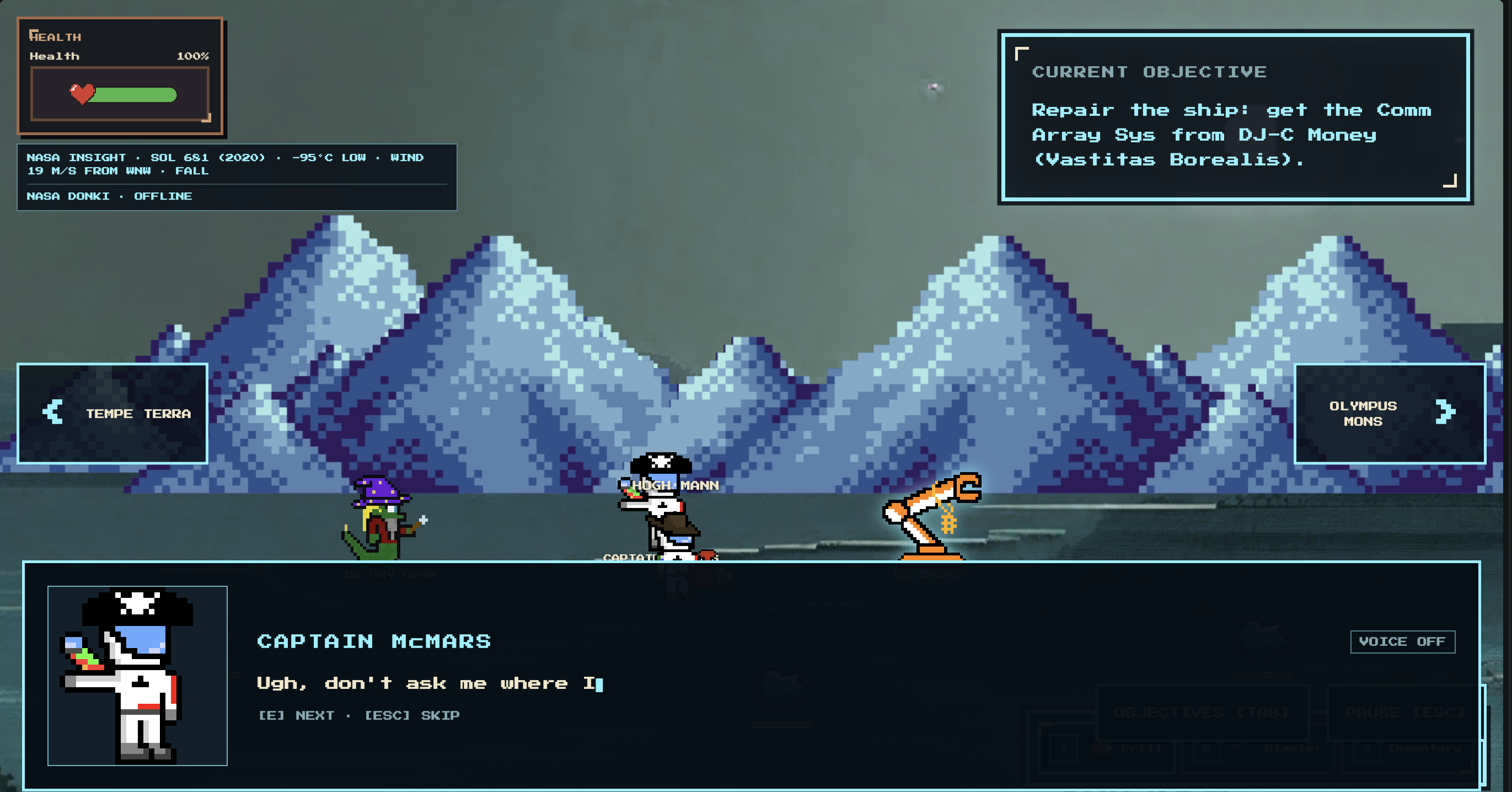
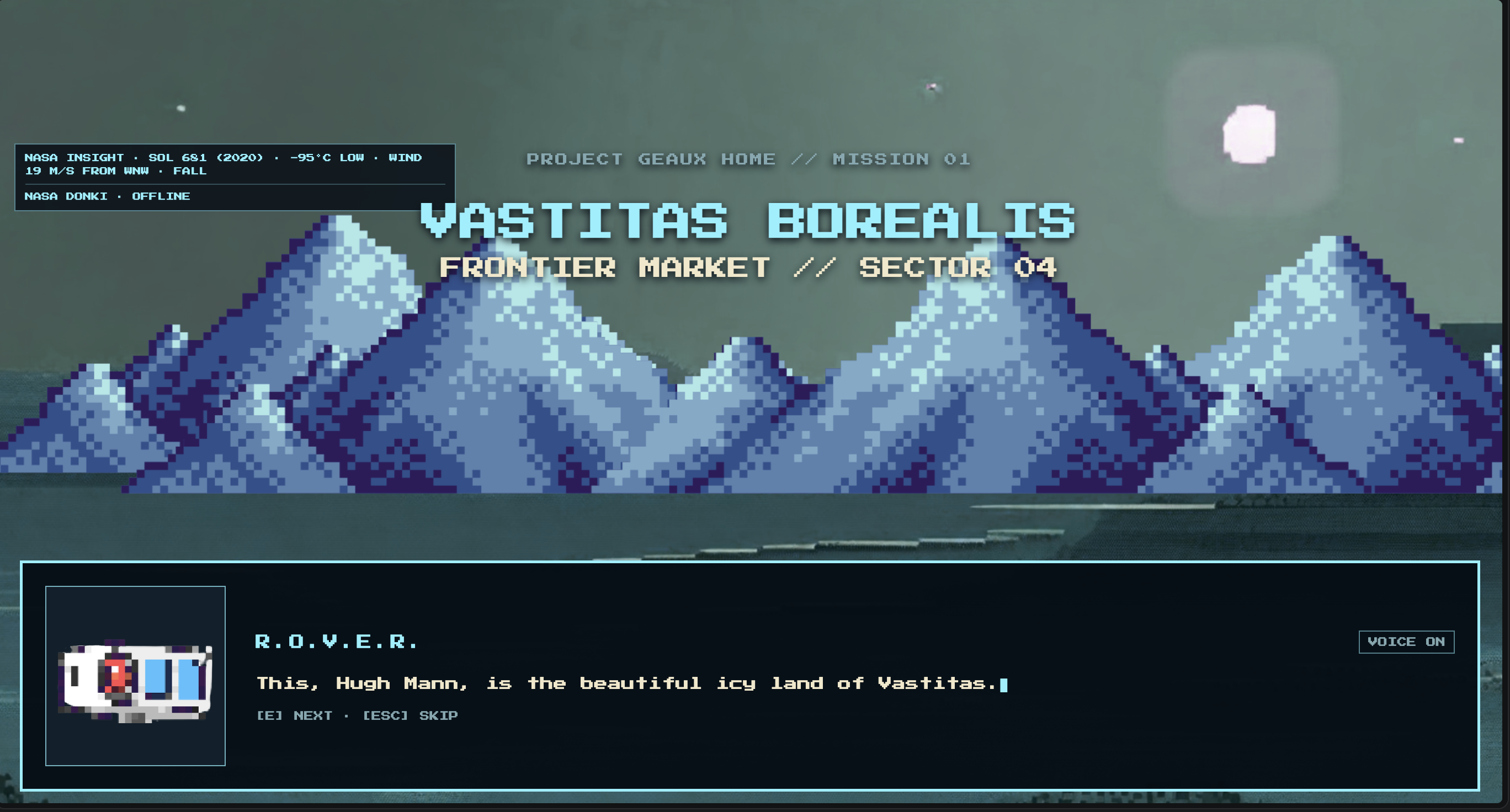
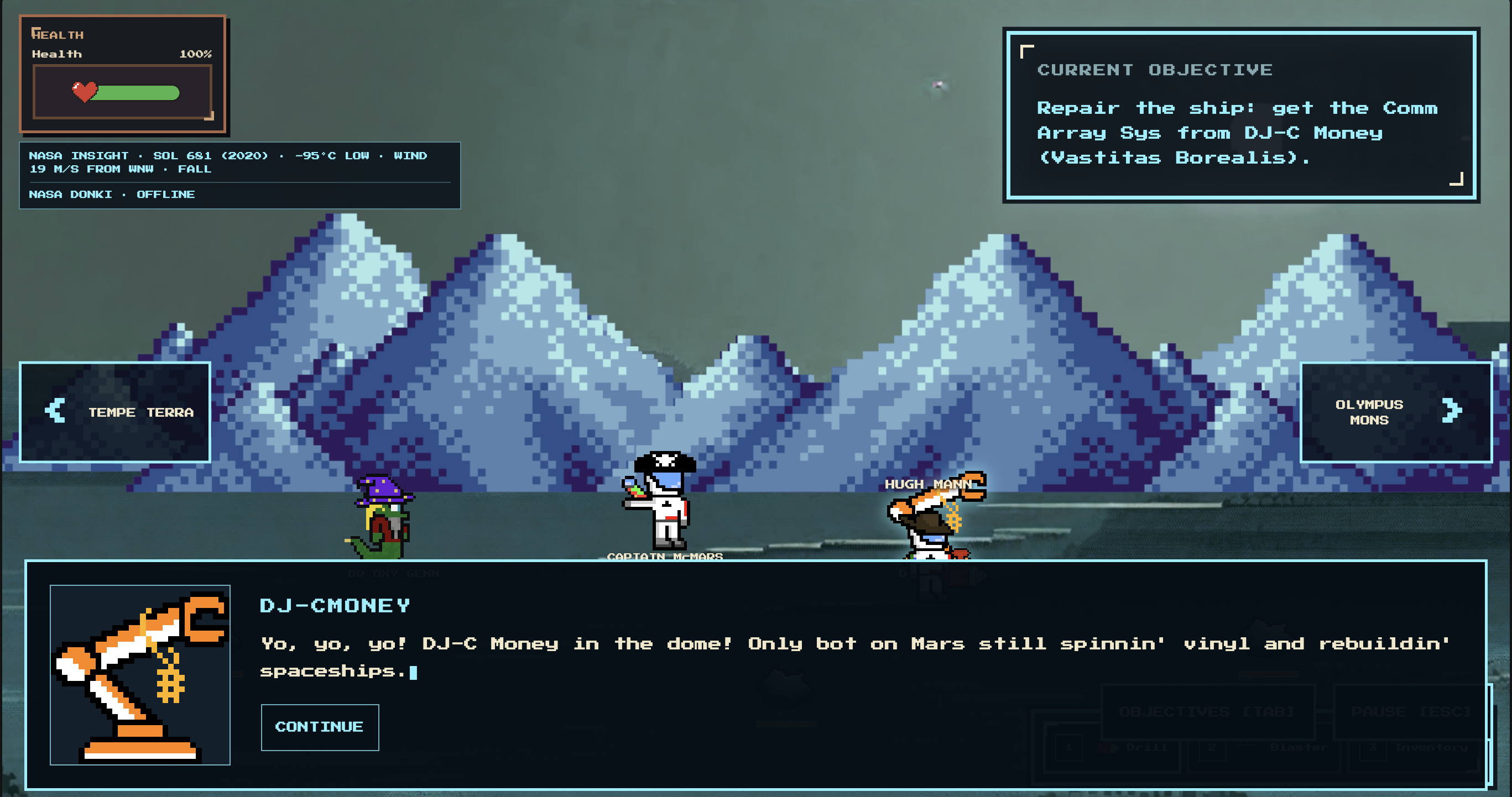
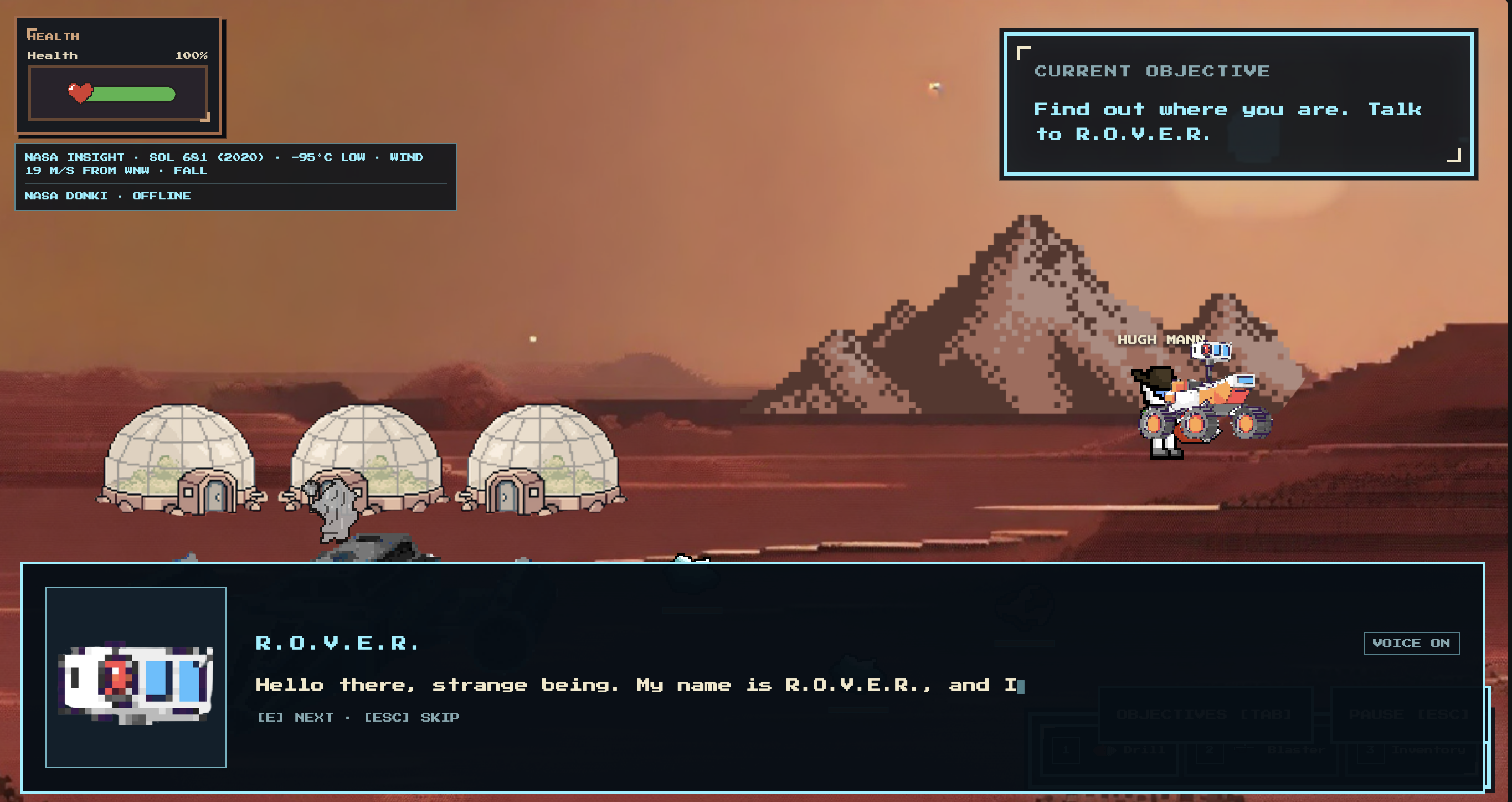
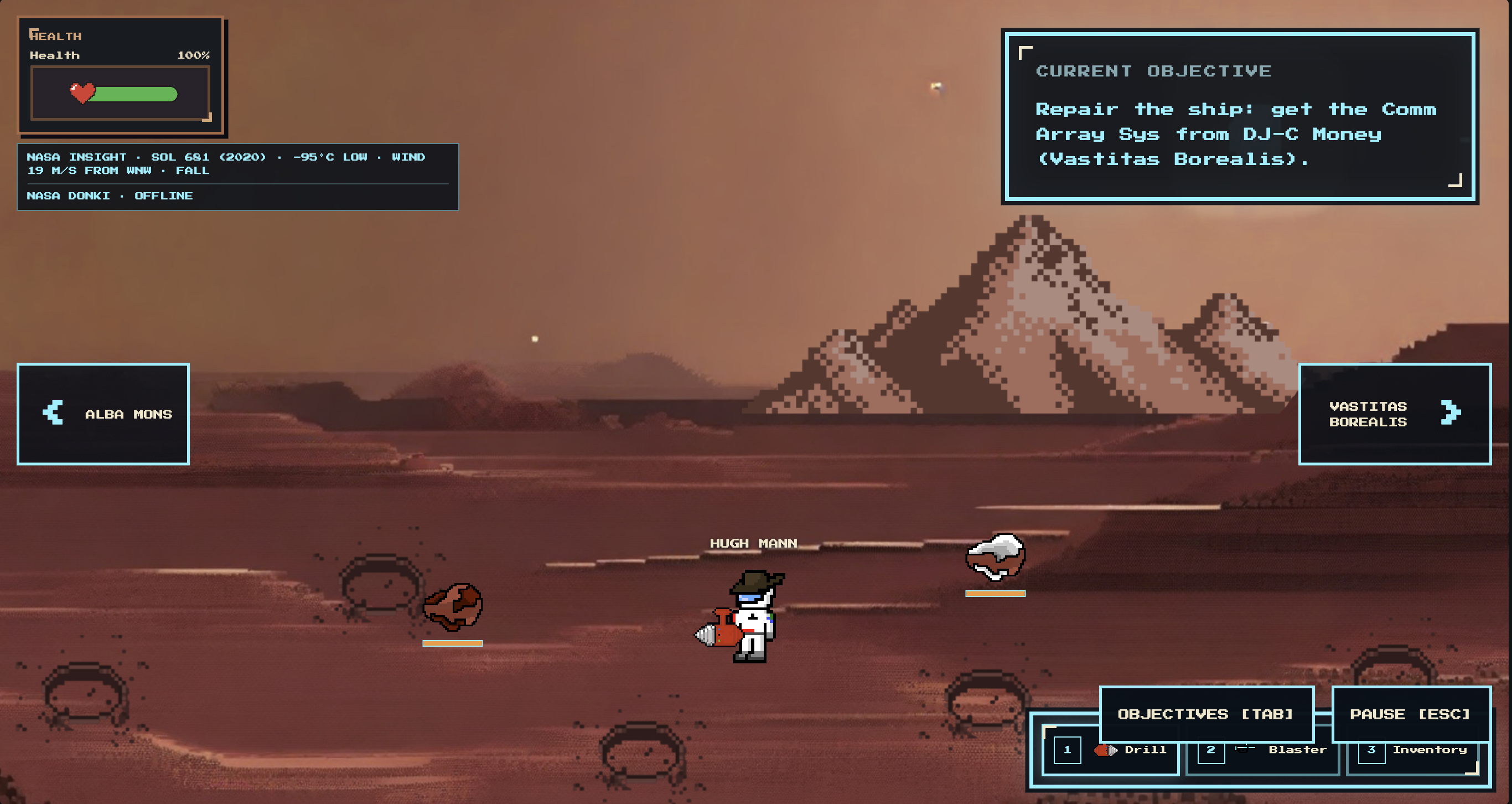
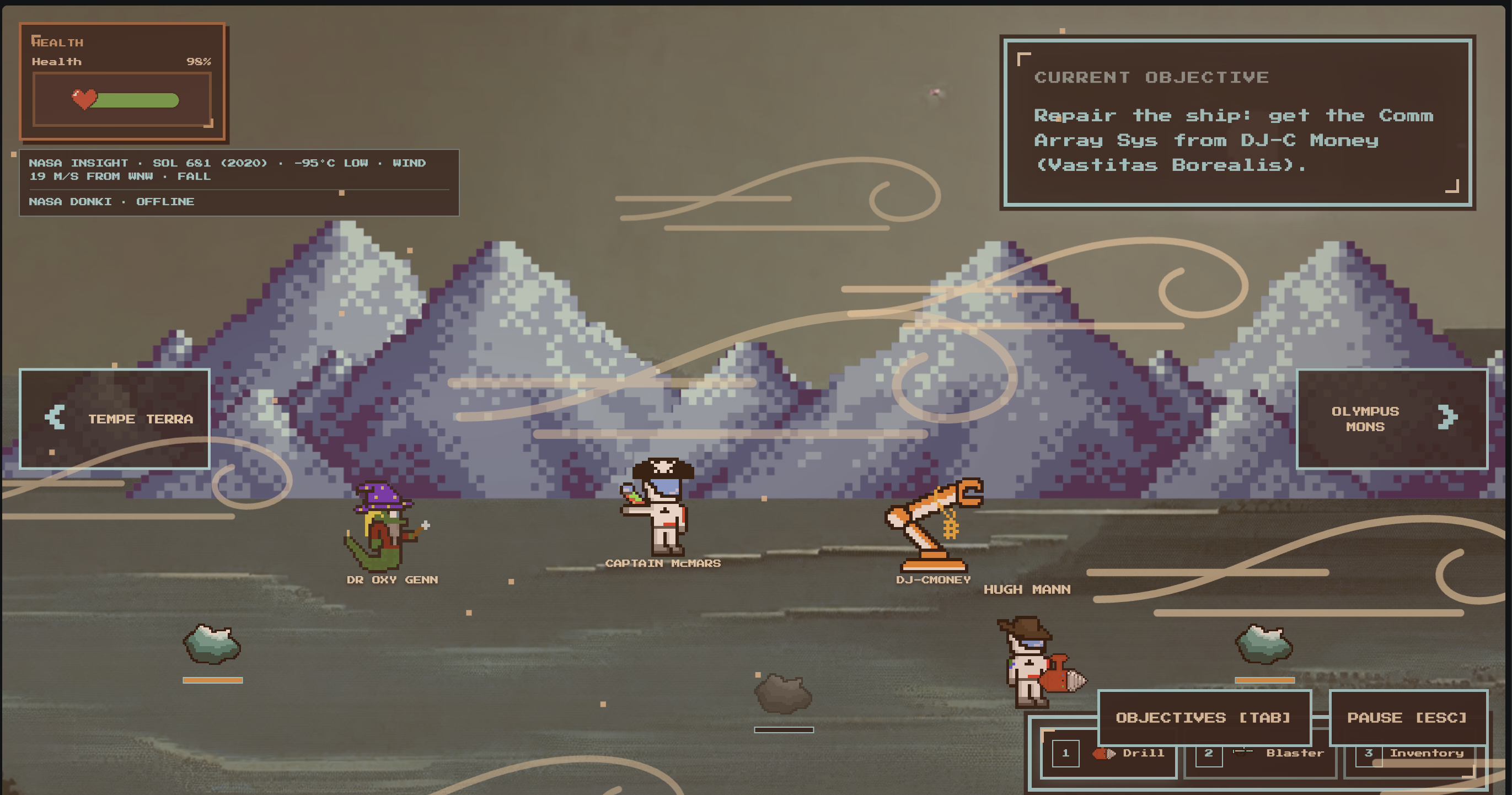
We built the project around a central character, Hugh Mann, a space exploration astronaut who becomes stranded on the colonized (but not necessarily safe!) planet Mars. You, the user, play as Hugh Mann and meet an array of eccentric characters on Mars, including the friendly R.O.V.E.R., Dr. Oxy Genn, Captain McMars, and DJ-CMoney, as well as a couple of hostile Martian natives called Zenos. These characters inhabit the four main regions of Mars: Arcadia Planitia, Alba Mons, Tempe Terra, and Vastitas Borealis. Your main goal is to mine ores on the planet, trade with the locals for resources, and repair your ship to geaux home. Easier said than done, since you have to watch out for terrible dust storms and mobs that could deplete your health to smithereens! You also have access to the weather on Mars, but be careful! Dust storms happen spontaneously, and you could be seriously hurt if you don't take them seriously.
The economy and process of acquiring the missing pieces for your broken ship are intricate and detailed:
Hugh Mann's main purpose is to buy equipment, sell ores, and craft upgrades through the three respective traders. Dr. Oxy Genn, a (licensed?) wizard/doctor/lizard mutation specializing in shiny, shiny ores, is your first stop. Mine ores (namely ice, iron, and silica) and trade them for Mars currency, Tintinas, which you can then use to purchase better equipment and a filter for unbreathable areas. You can take your Tintinas to Captain McMars and his trusty sidekick, Mr. Squawkers. This is where your second objective comes into play. With the default drill you receive at the start of the game, you continue mining and trading for Tintinas, which you can then use to buy upgraded drills, filters, and blasters for the more hostile areas of Mars. These weapons are tiered from one to three, with each tier dealing higher damage than the previous one. A filter is needed to access the hostile sulfuric acid of Olympus Mons, a long-dormant volcano that now seems to rumble beneath the surface.
However, this feat won't be easy. To mine the required final basalt, you have to venture into Olympus Mons, where a violent Alpha Zeno awaits. Once (or if!) you defeat this terrifying alien, it will drop the required material for the final upgrade. Upon completion of the boss fight, an eruption event will force the player to hurry back to Vastitas Borealis, where you can then repair your ship and geaux home!
How we built it
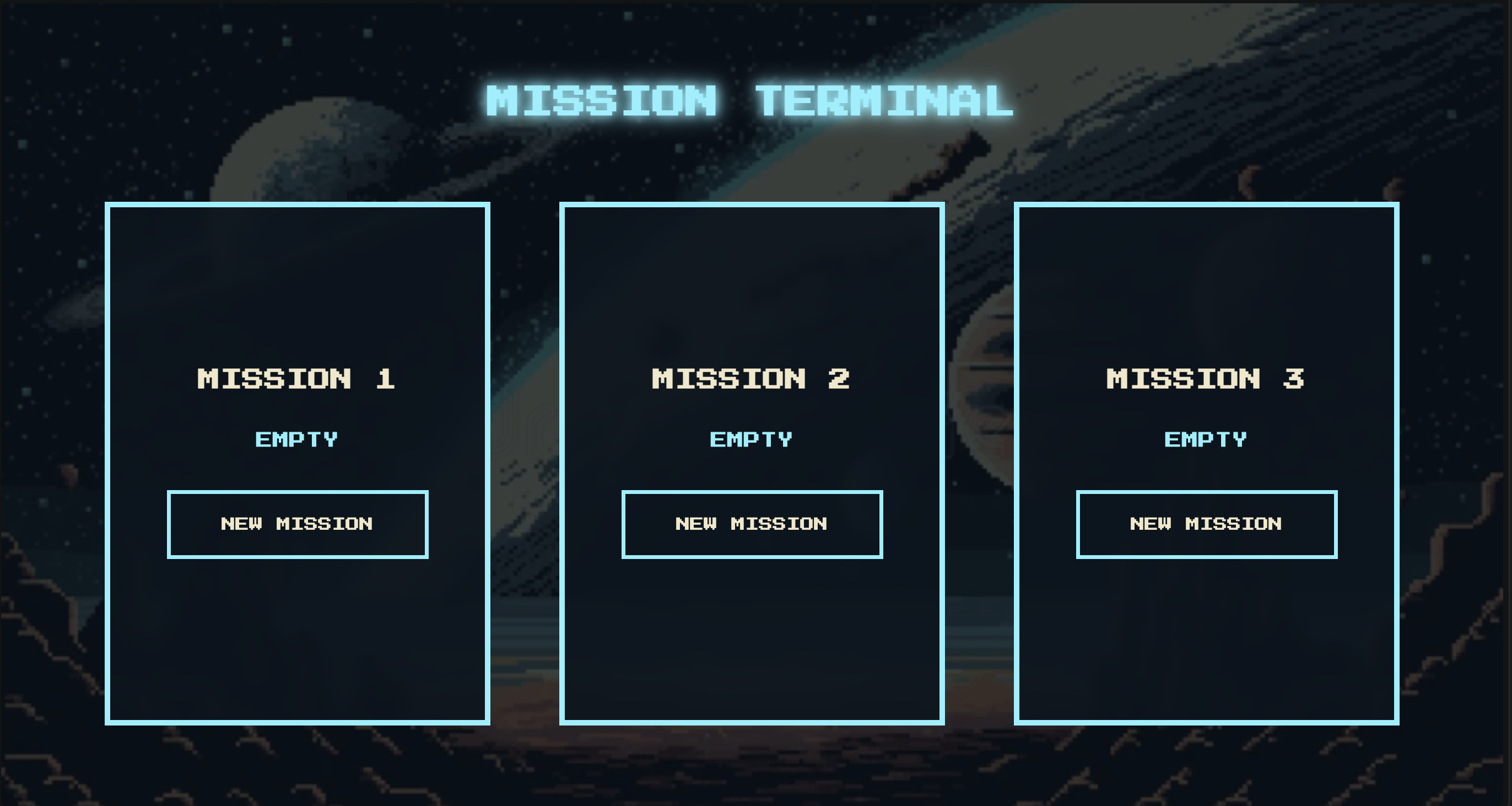
We built the application utilizing React.js, Tailwind, Piskel, TypeScript, JavaScript, Zustand, and ElevenLabs, weaving together software with complex data and backend architecture to make our world come alive. We drew most of the graphics ourselves using Piskel and developed the backend architecture and data around our own storyline. We also used ElevenLabs to integrate AI-generated voices for our dialogue and sound effects. We utilized Zustand for state management, allowing us to save the user's progress across mining, selling, traveling, and resetting. Tailwind was used for our CSS styling to create a pixelated UI that complemented our graphics and color scheme.
Challenges we ran into
We initially ran into bugs during setup, as well as nonfunctioning audio, unresponsive UI changes, and a learning curve involving video game components like arrow-key movement.
Accomplishments that we're proud of
We are extremely proud of our hand-drawn, pixelated images and the sophisticated ecosystem we generated to create a scientifically accurate (with creative liberties) application showcasing humans surviving on hostile interstellar terrain.
What we learned
While we're not Mars connoisseurs just yet, we learned a great deal about the geology, minerals, and topography of Mars. We also learned the complex backend concerning video game development.
What's next for Project Geaux Home
We plan to add more cutscenes and integrate a more intensive storyline into the system in order to produce a full-scale video game for all audiences, Martian or Earthling!
Note:
This project was developed with assistance from AI tools for brainstorming, code generation, debugging, and commit message creation.
Built With
- canva
- elevenlabs
- javascript
- piskel
- tailwind
- typescript
- zustand

Log in or sign up for Devpost to join the conversation.