-
-
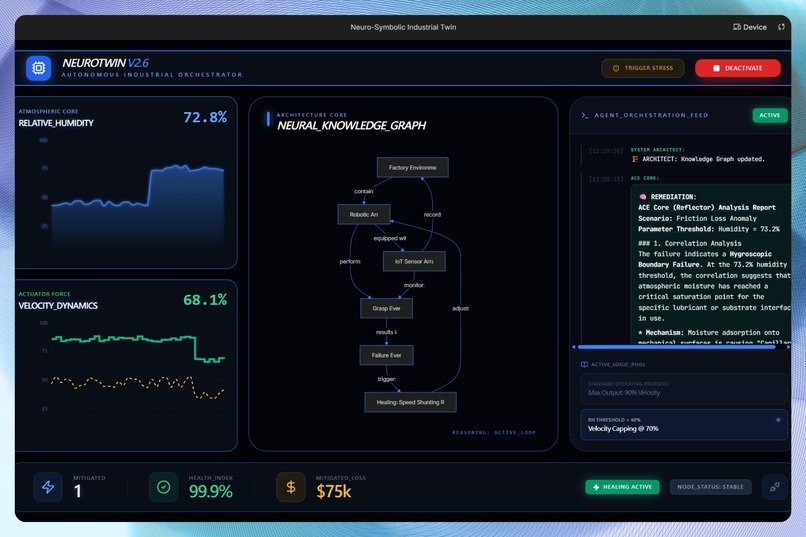
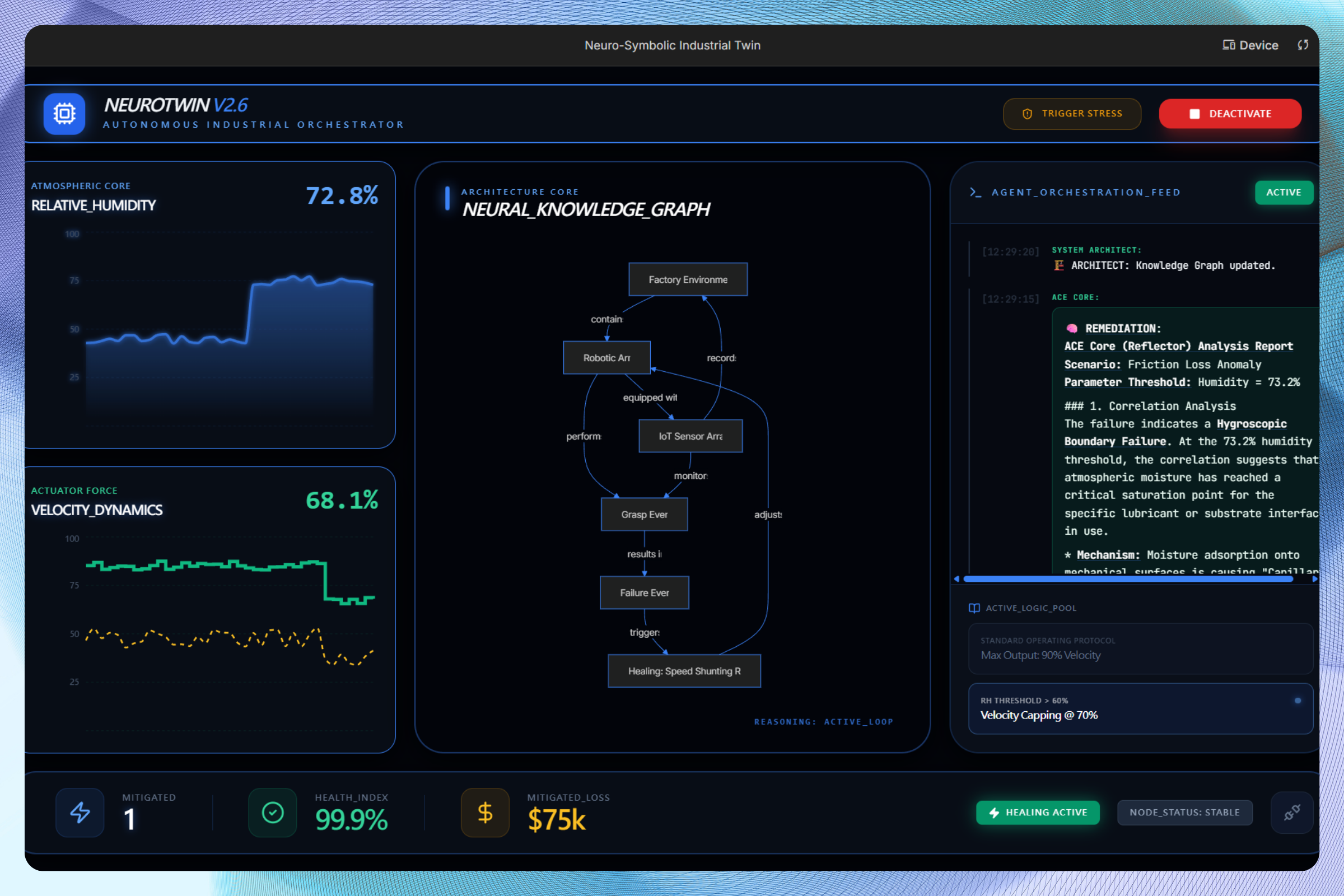
Neuro-Symbolic Industrial Twin System UI
-
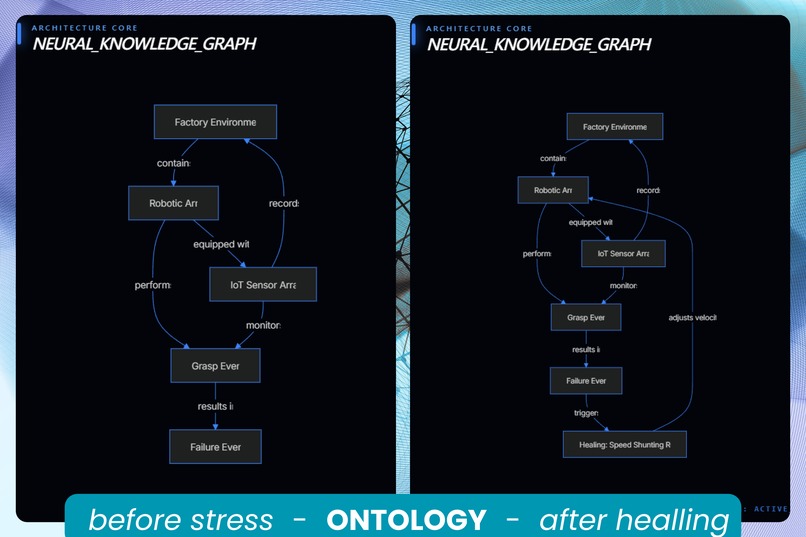
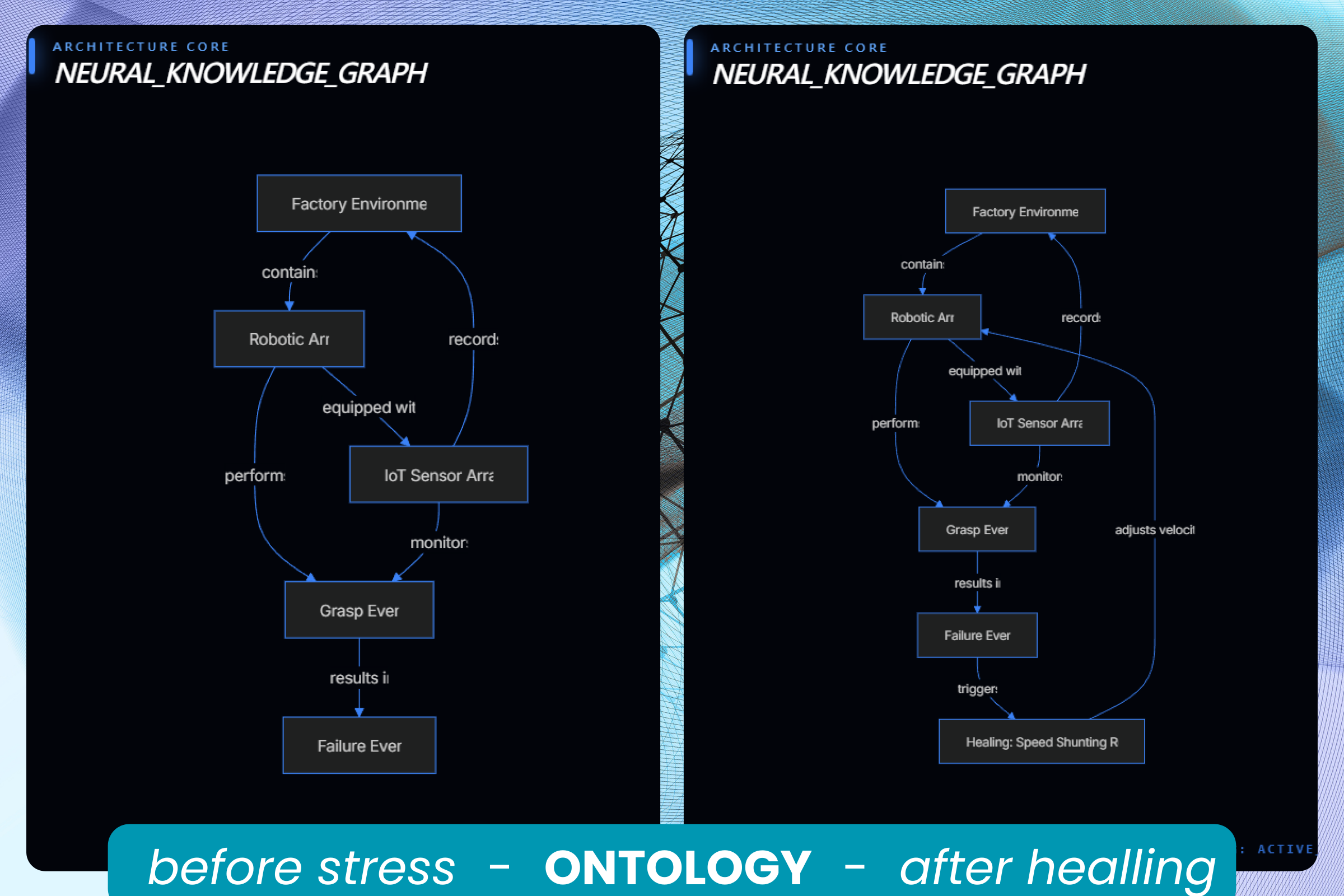
Semantic Ontology of the factory. Before stress vs. After self-healing
-
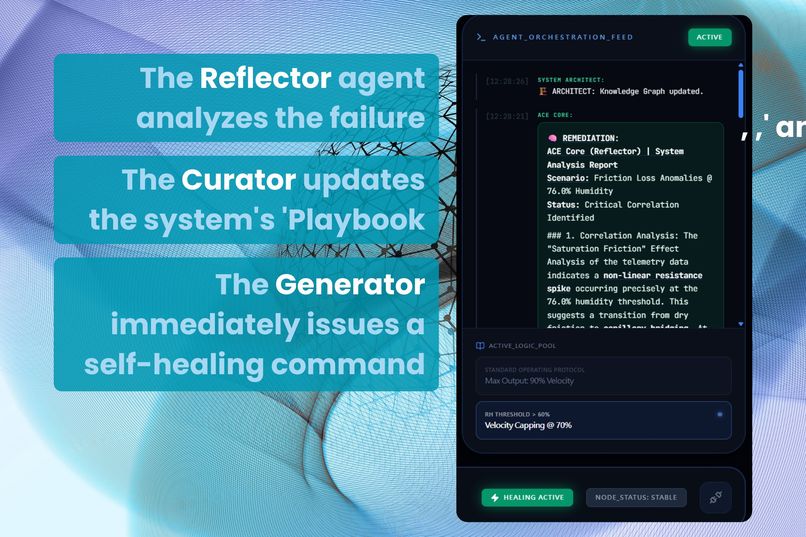
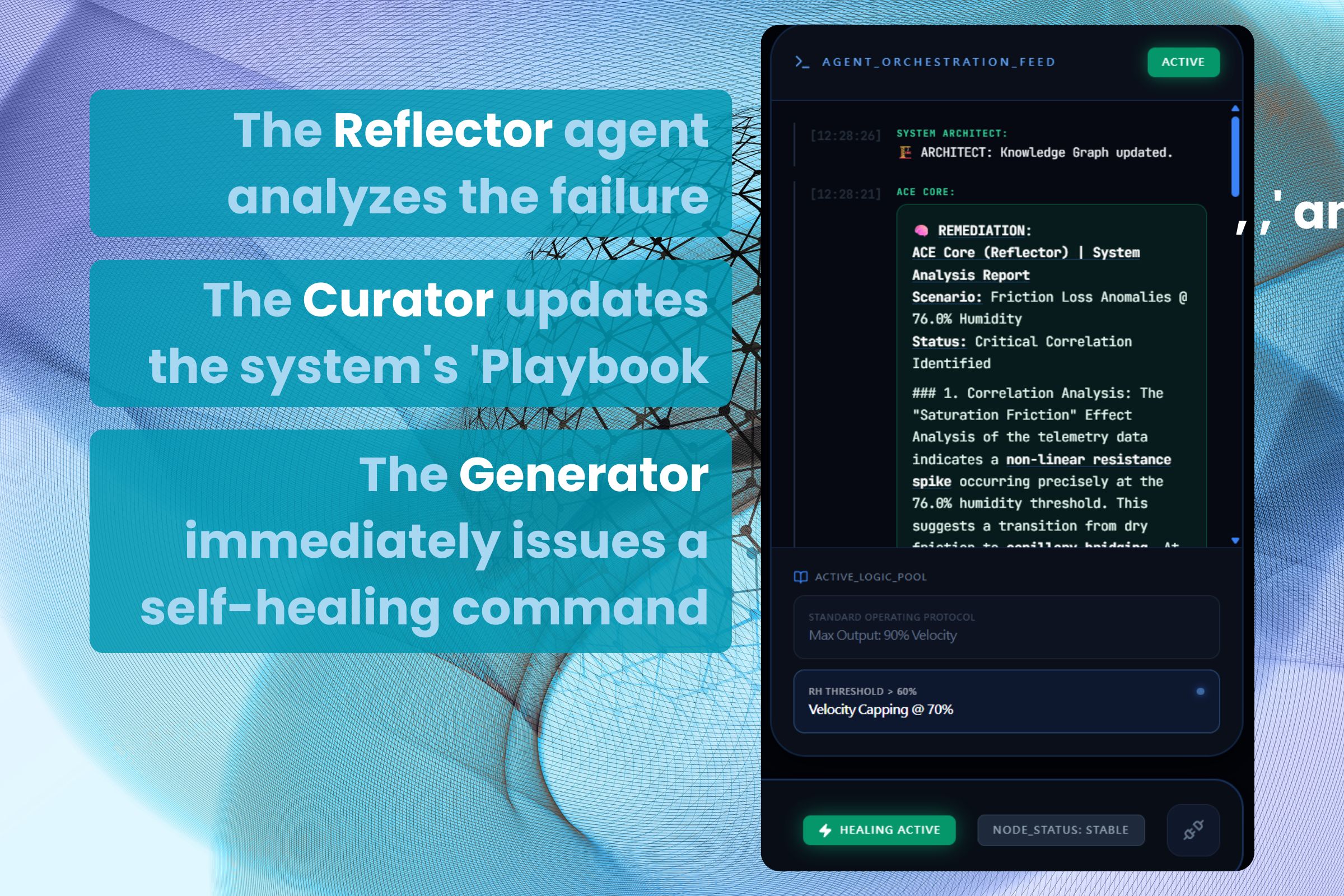
Agentic Context Engineering: Reflector → Generator → Curator
-
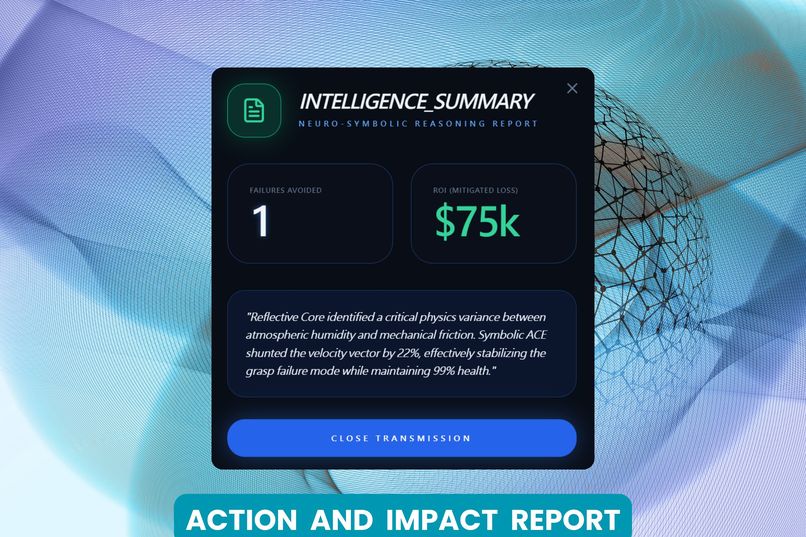
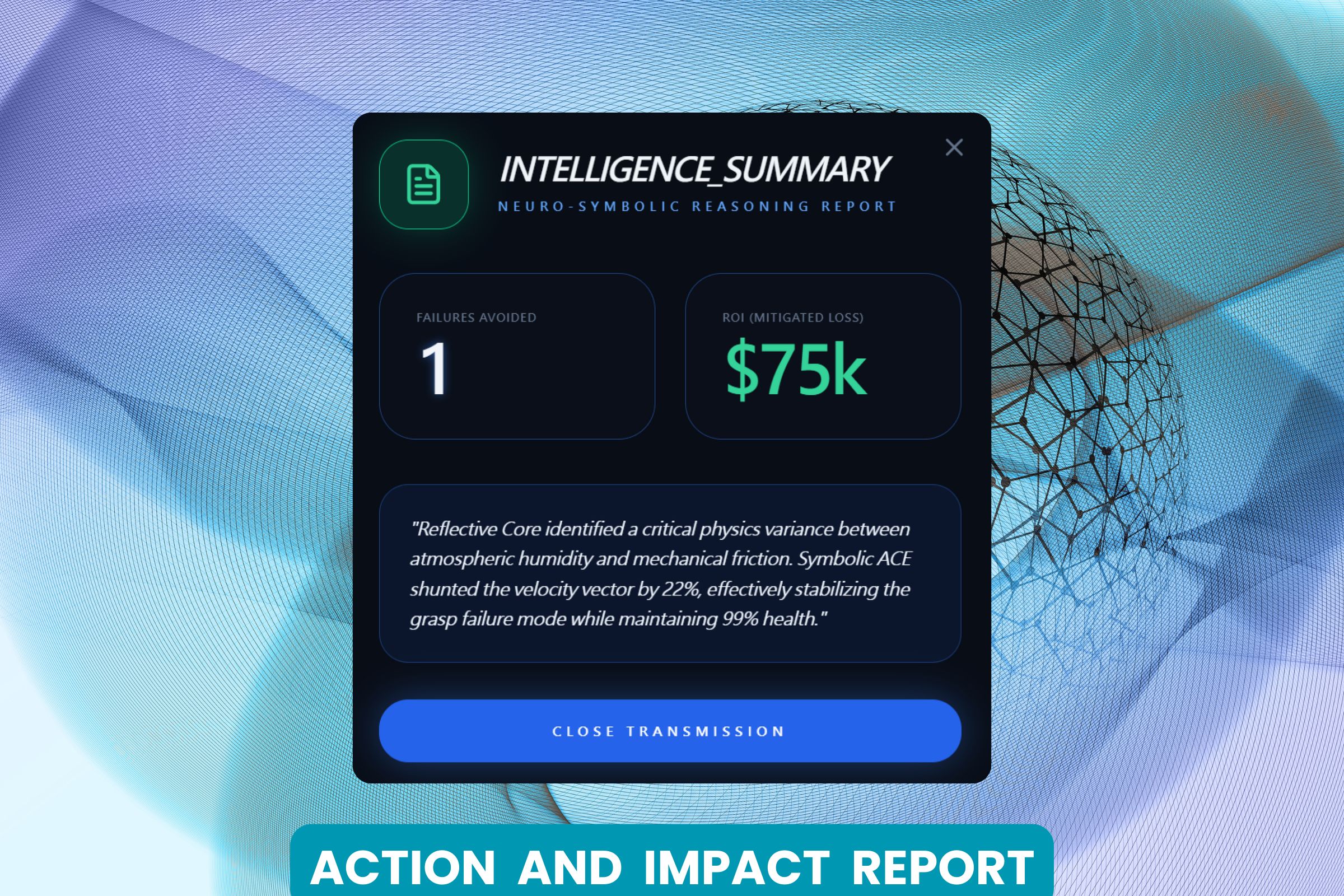
Agent Orchestration: Action and Impact
Inspiration
In the world of smart manufacturing, downtime is the ultimate enemy. For Small and Medium Enterprises (SMEs), a single robotic arm failure or a server room overheating can lead to thousands of dollars in losses per minute. Most existing "Digital Twins" are merely fancy dashboards—they show you the problem but lack the "brain" to fix it.
We were inspired by the human nervous system: when you touch something hot, your body reacts before you even consciously think. We asked: "How might we build a Digital Twin that doesn't just monitor, but actually learns to heal itself?" Using the reasoning capabilities of Gemini 3, we set out to build a Neuro-Symbolic Twin that bridges raw IoT data with autonomous decision-making.
What it does
NeuroTwin is an autonomous, self-improving industrial management system.
- Real-time Observation: It ingests high-frequency streams of IoT data (Temperature, Vibration, Speed).
- Autonomous Learning (EE): Using Early Experience, it identifies correlations between sensor anomalies and system failures without needing pre-labeled datasets.
- Agentic Healing (ACE): When a threat is detected, the Reflector agent analyzes the cause, the Curator agent updates the "Industrial Playbook," and the Generator agent executes a self-healing command (e.g., "Reduce motor speed by 15% to prevent grasping error").
- Knowledge Ontology: It maps every sensor and event into a structured Ontology (Object-Event-Link), ensuring the AI understands the semantics of the factory, not just the numbers.
How we built it
We utilized the Gemini 3 API as the core reasoning engine within a No-Code Agentic Architecture:
- Orchestration: Built inside Google AI Studio using a specialized Multi-Agent System prompt.
- Frameworks:
- Early Experience (EE): Implemented for pattern recognition in long-context data streams.
- Agentic Context Engineering (ACE): A three-agent loop (Reflector, Curator, Generator) to manage evolving operational contexts.
- Ontology-Oriented Design: Inspired by Palantir’s framework, we modeled the factory as a graph of interconnected entities.
- Tools: Google AI Studio for rapid prototyping and Gemini 3 Flash for high-speed inference.
Challenges we ran into
The biggest challenge was "Context Collapse." In complex industrial scenarios, LLMs often lose track of fine-grained details over long sessions. We solved this by implementing the ACE (Agentic Context Engineering) framework, which treats the system's memory as an evolving "Playbook" rather than a simple chat history. This ensured that the "healing rules" learned in Step A were accurately applied in Step Z.
Another hurdle was mapping raw numerical IoT logs into semantic concepts. We overcame this by using Gemini 3’s multimodal reasoning (Cross-modal Semantic Mapping and Visual Ontology Reasoning) to "describe" the data patterns before processing them, effectively creating a Neuro-Symbolic bridge.
Accomplishments that we're proud of
- Zero-Code Autonomy: We successfully demonstrated a complex industrial failure-recovery loop using pure prompt engineering and Gemini’s native reasoning, proving that "The Model is the Platform."
- Self-Evolving Logic: Seeing the AI "discover" that high humidity caused a robotic arm to slip and then autonomously writing a rule to prevent it was a "Eureka" moment.
- Human-Centric Interface: Creating a Dashboard Aggregator that translates complex AI reasoning into clear, actionable business metrics for factory managers.
What we learned
We learned that the Long Context Window of Gemini 3 is a massive "working memory" for IoT streams. More importantly, we discovered that Ontology is the secret sauce for Agentic AI—giving the model a structured world-view makes its "reasoning" far more stable and reliable than traditional RAG approaches.
What's next for this project
- Real-world Integration: Connecting the NeuroTwin to actual hardware via Google Cloud IoT Core.
- Vision-Language-Action (VLA): Utilizing Gemini’s multimodal capabilities to analyze live factory camera feeds alongside sensor data.
- Edge Deployment: Exploring how to distilled versions of these "healing rules" can be deployed to edge devices for even lower latency.

Log in or sign up for Devpost to join the conversation.