-
-
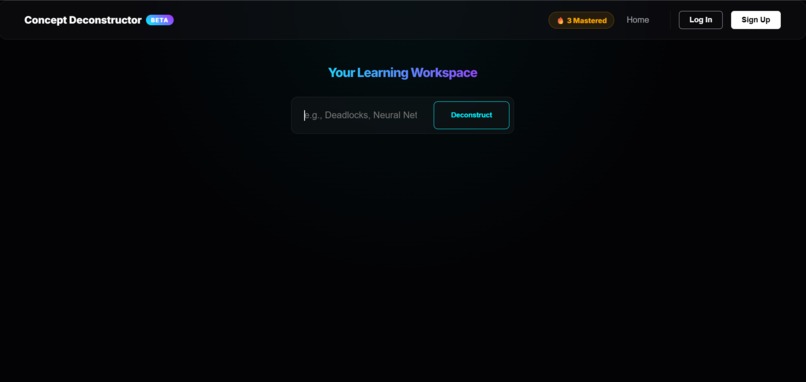
Search here
-
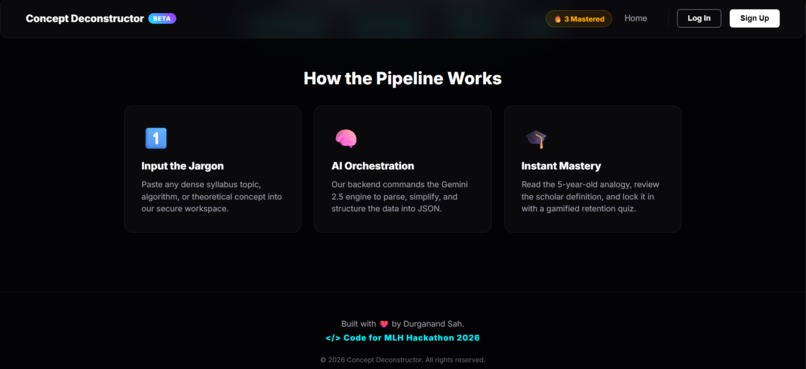
Some details
-
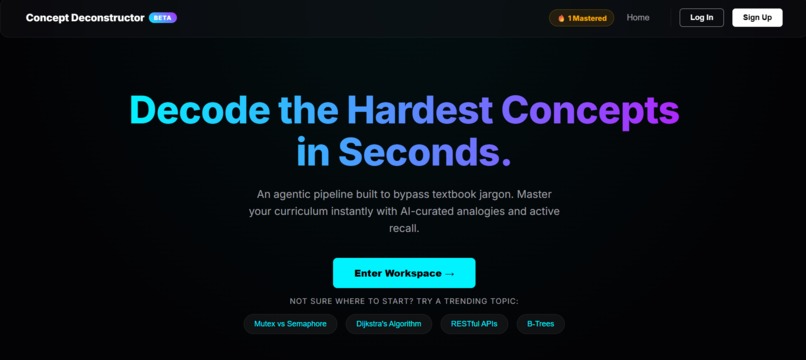
Hero section
-
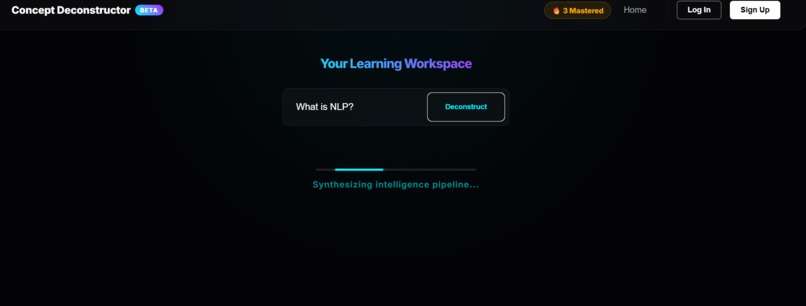
Fetching...
-
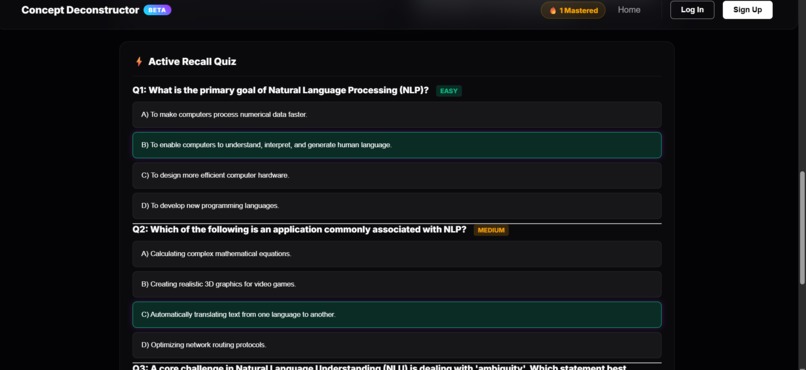
Quizzes
-
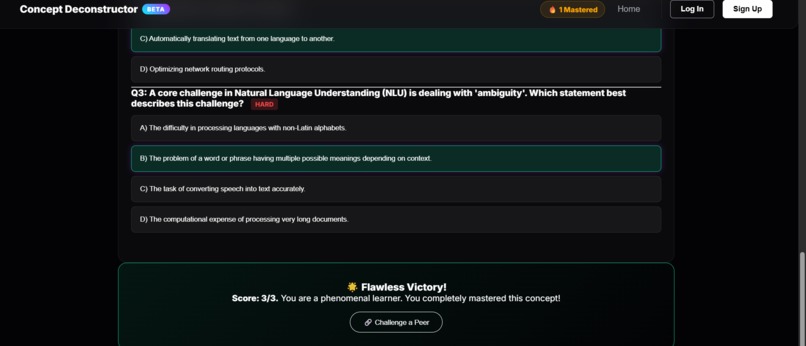
Celebrate your achievement with peers
-
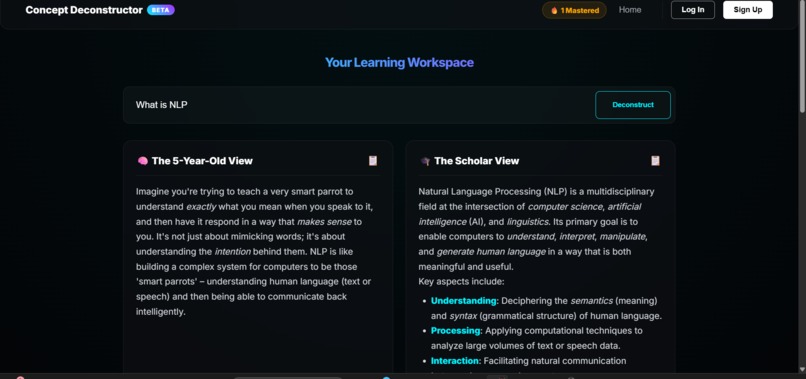
Your Answer curated only for you..
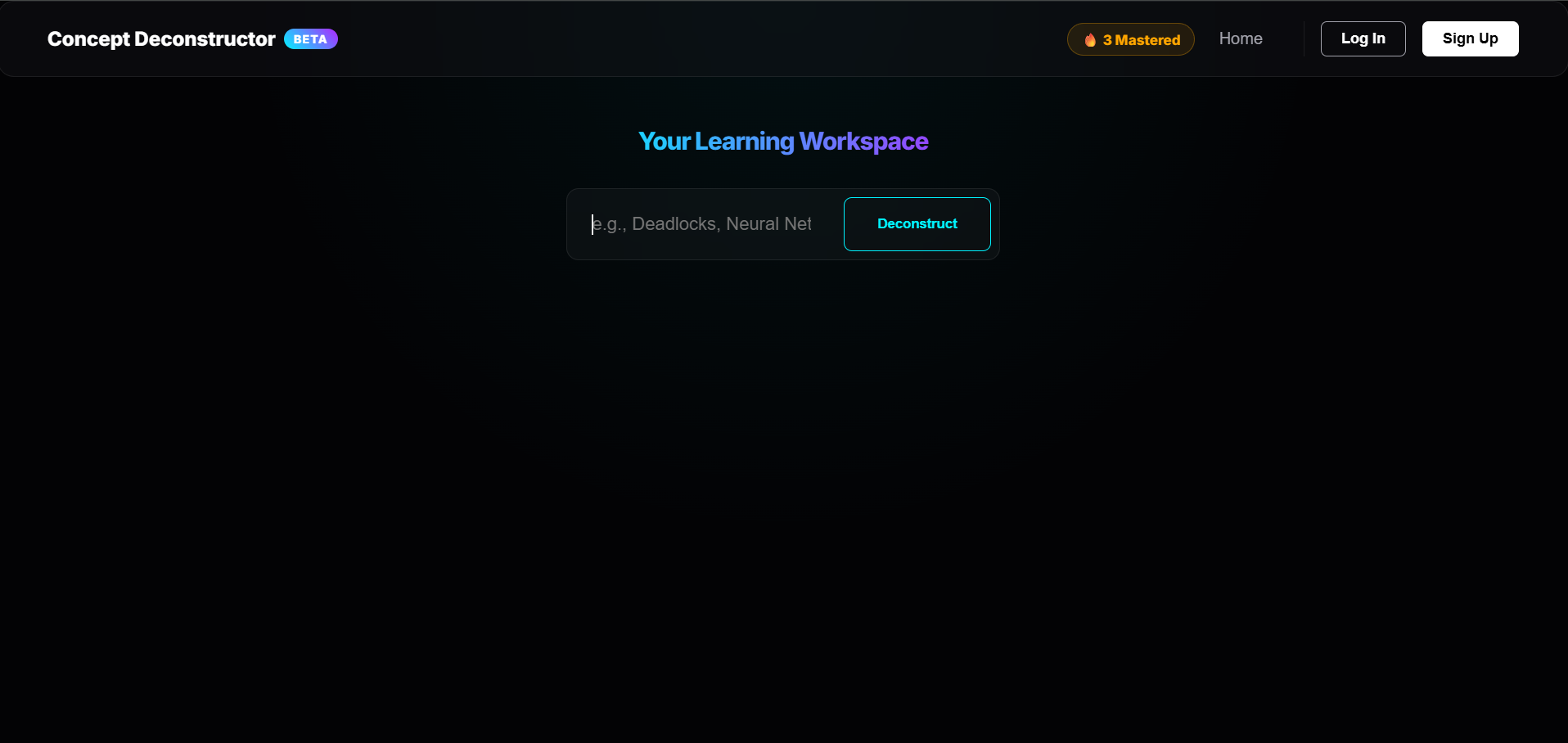
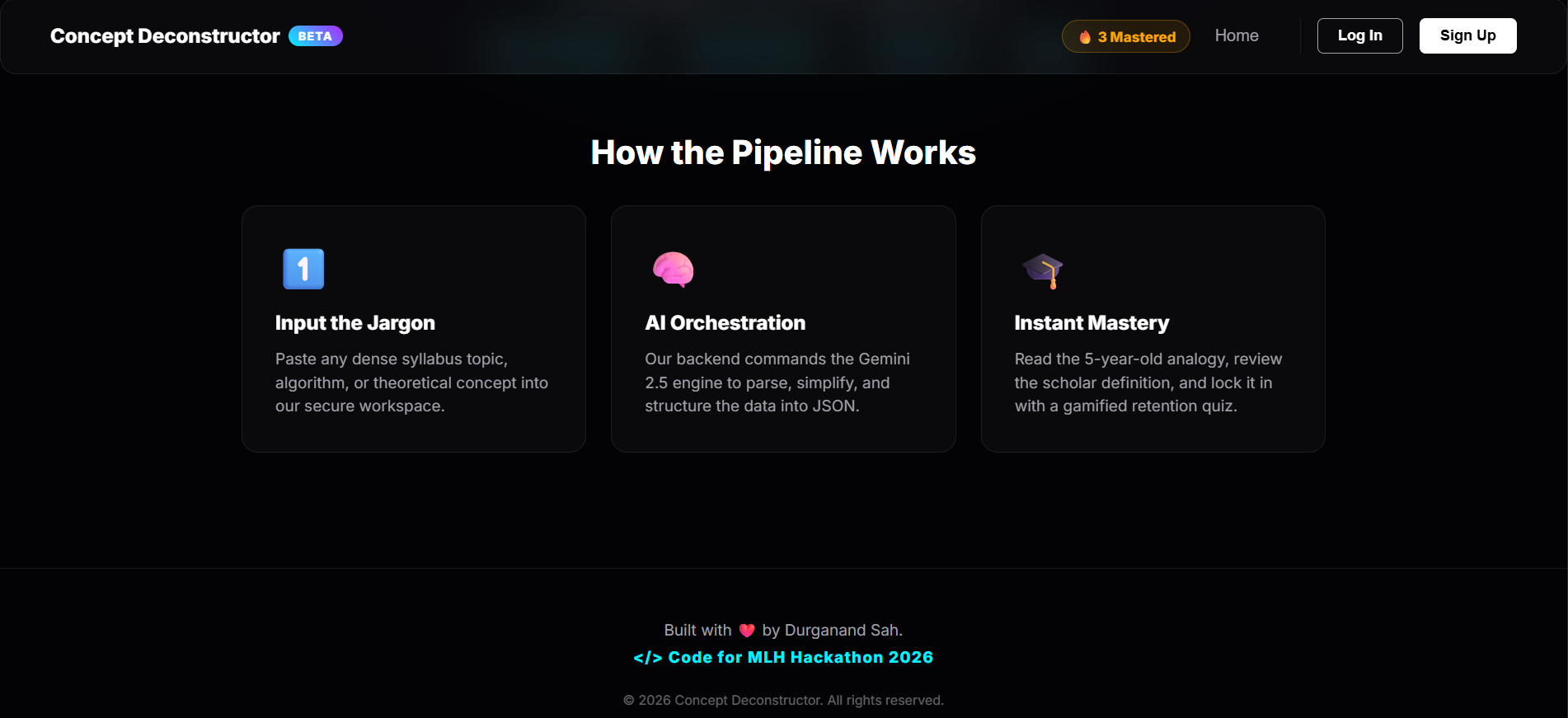
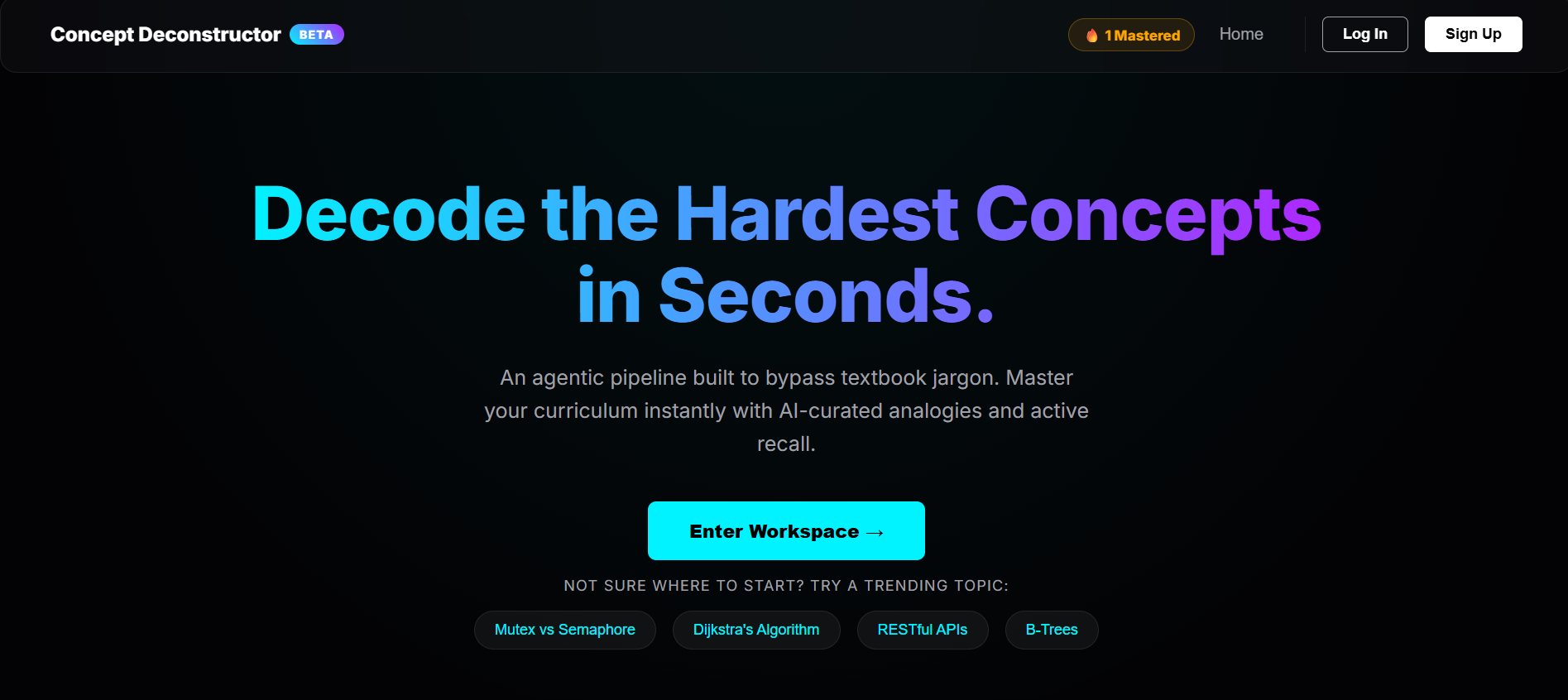
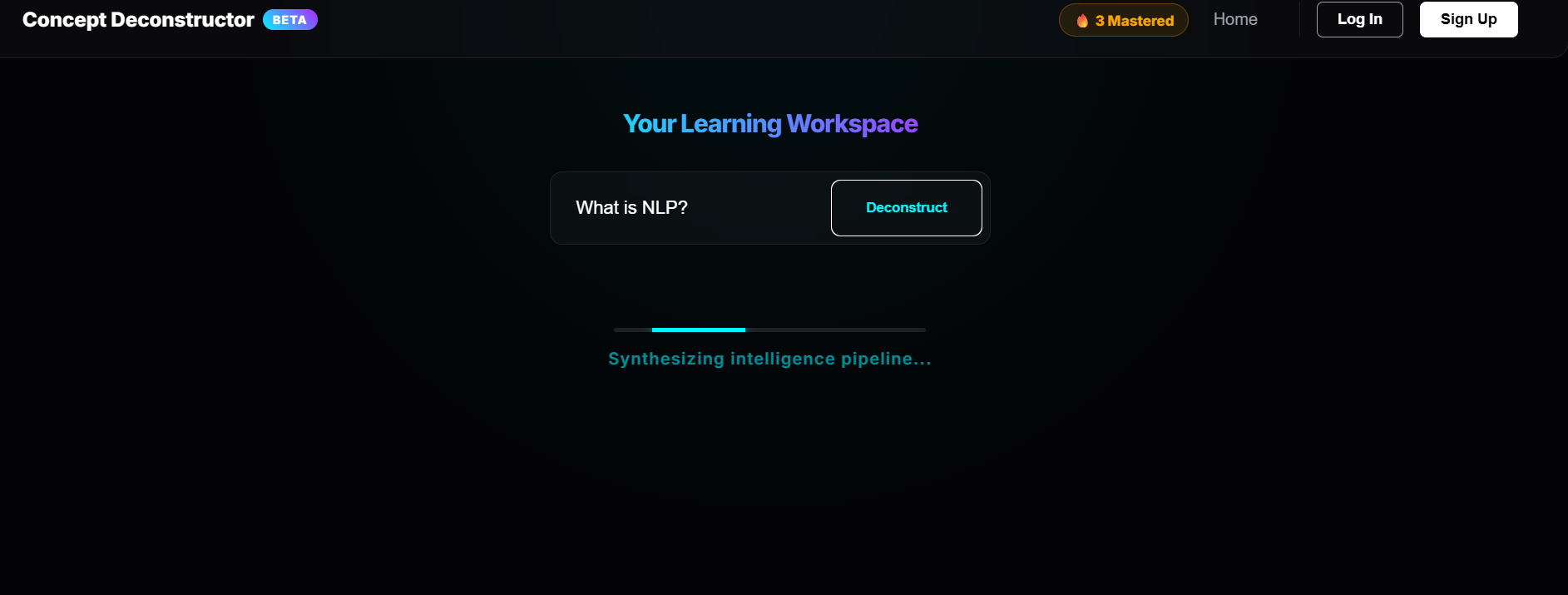
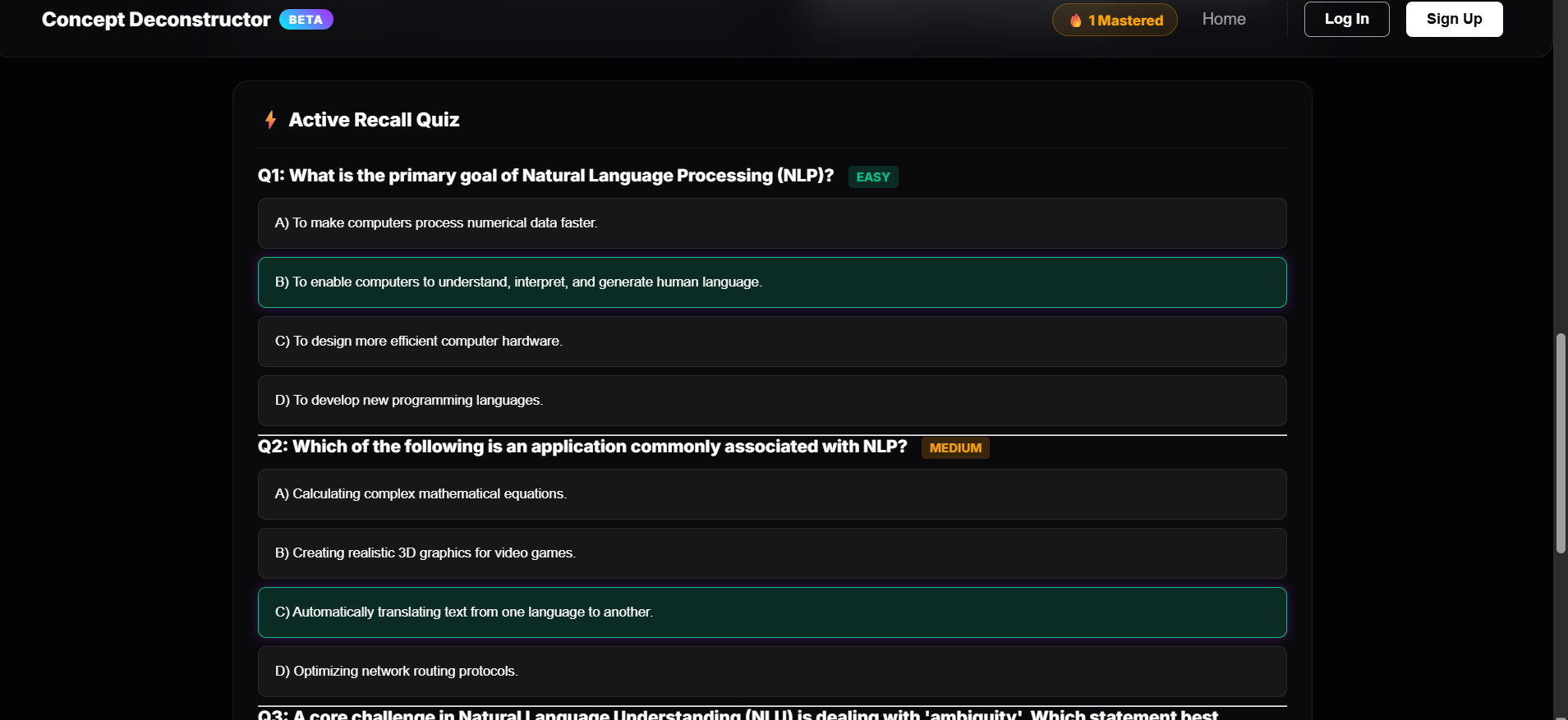
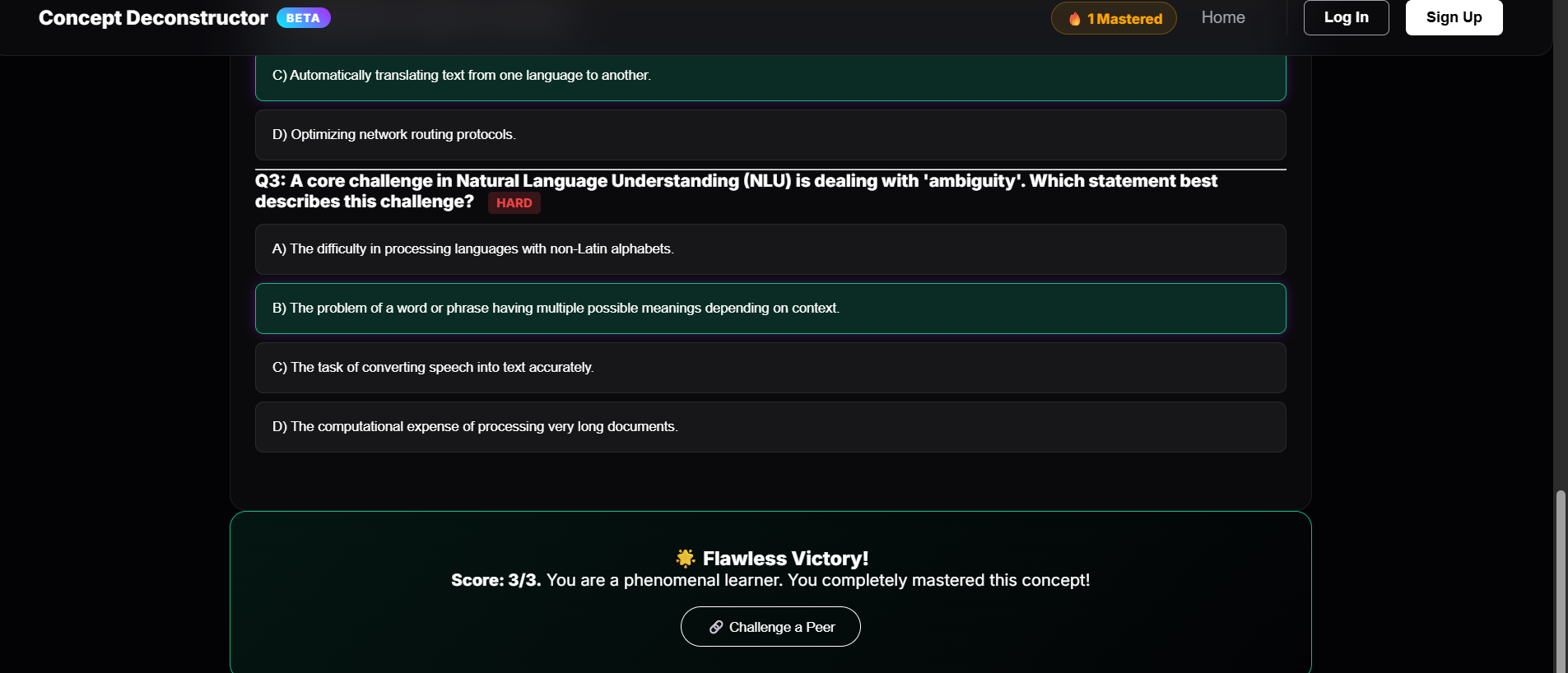
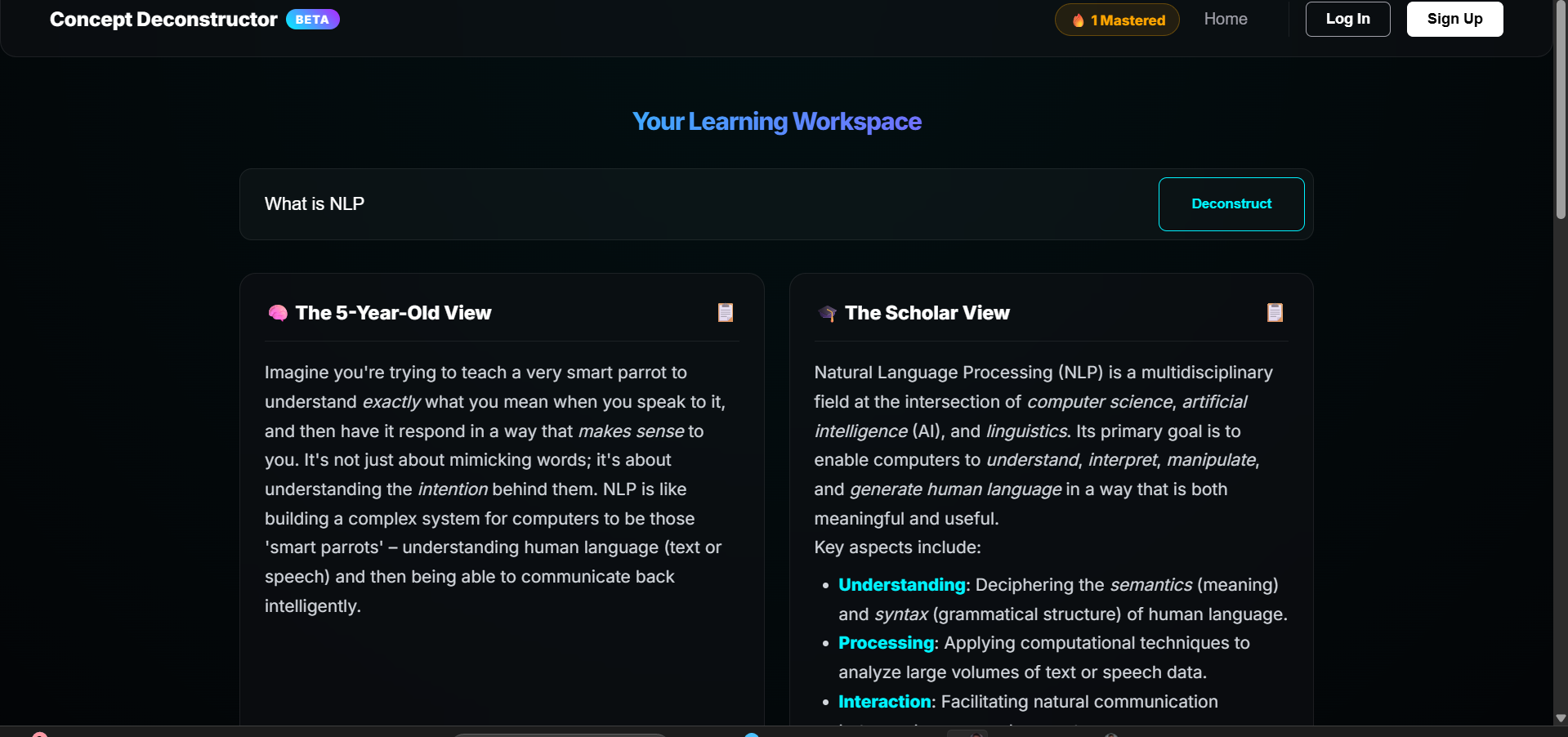
The Inspiration: As a Computer Science student, I often found myself staring at dense documentation and complex GATE-level concepts that felt impossible to digest. I realized that the best way to learn isn't through rote memorization, but through the Feynman Technique: explaining a concept so simply that a 5-year-old could understand it, then gradually layering on the technical complexity. I wanted to build a tool that didn't just "summarize" text, but actually re-engineered the learning process. I was inspired to create an automated intelligence pipeline that bridges the gap between "I've heard of this" and "I've mastered this."
How I Built It: The project is built on a Modern Tech-Noir Stack. I designed a custom glassmorphic UI using CSS variables and backdrop filters to create a high-focus environment.
The "brain" of the project is a Node.js/Express backend that orchestrates the Gemini 2.5 Flash model. Unlike a standard chatbot, I engineered this as a structured data pipeline. The backend uses strict system prompting to force the AI to return a specific JSON schema. This allowed me to programmatically separate the output into a three-stage learning journey:
The 5-Year-Old View: A low-friction analogy. The Scholar View: High-fidelity technical definitions. The Active Recall Quiz: Automated assessment to lock in knowledge.
The Challenges I Faced: The biggest hurdle was JSON integrity. Large Language Models (LLMs) often wrap their responses in Markdown formatting (like ```json), which causes standard parsers to crash. I solved this by implementing a Regex-based cleaning layer in the backend to strip away artifacts before the data hits the frontend. Another challenge was UI Responsiveness. Ensuring the complex "Scholar" and "Analogy" split-view looked perfect on mobile required a total rewrite of the CSS layout using Media Queries and the implementation of a custom JavaScript-driven Hamburger Menu.
What I Learned: Through this build, I mastered Middleware Security. I learned how to use .env files and .gitignore to keep sensitive API credentials out of the public eye. I also gained a deep understanding of Asynchronous JavaScript, specifically using async/await to handle AI latency without freezing the User Interface.
For the future, I plan to integrate real-time collaborative workspaces and deep-learning-based adaptive difficulty to personalize every student's learning journey. I also aim to expand the platform into a mobile application, providing a seamless, "on-the-go" deconstruction tool for academic success.
Built With
- 2.5
- ai
- and-scalability.-frontend-(the-ui/ux-layer)-html5-&-css3:-custom-styles-featuring-glassmorphism-and-responsive-grid-layouts.-vanilla-javascript:-for-dom-manipulation
- canvas-confetti
- css3
- design
- express.js
- flash
- gemini
- generative
- github
- glassmorphism
- grid
- html5
- javascript
- layouts
- marked.js
- model
- node.js
- render
- responsive
- sdk
- state-management
- vanilla


Log in or sign up for Devpost to join the conversation.