-
-
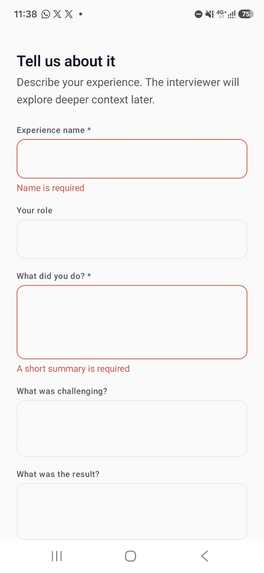
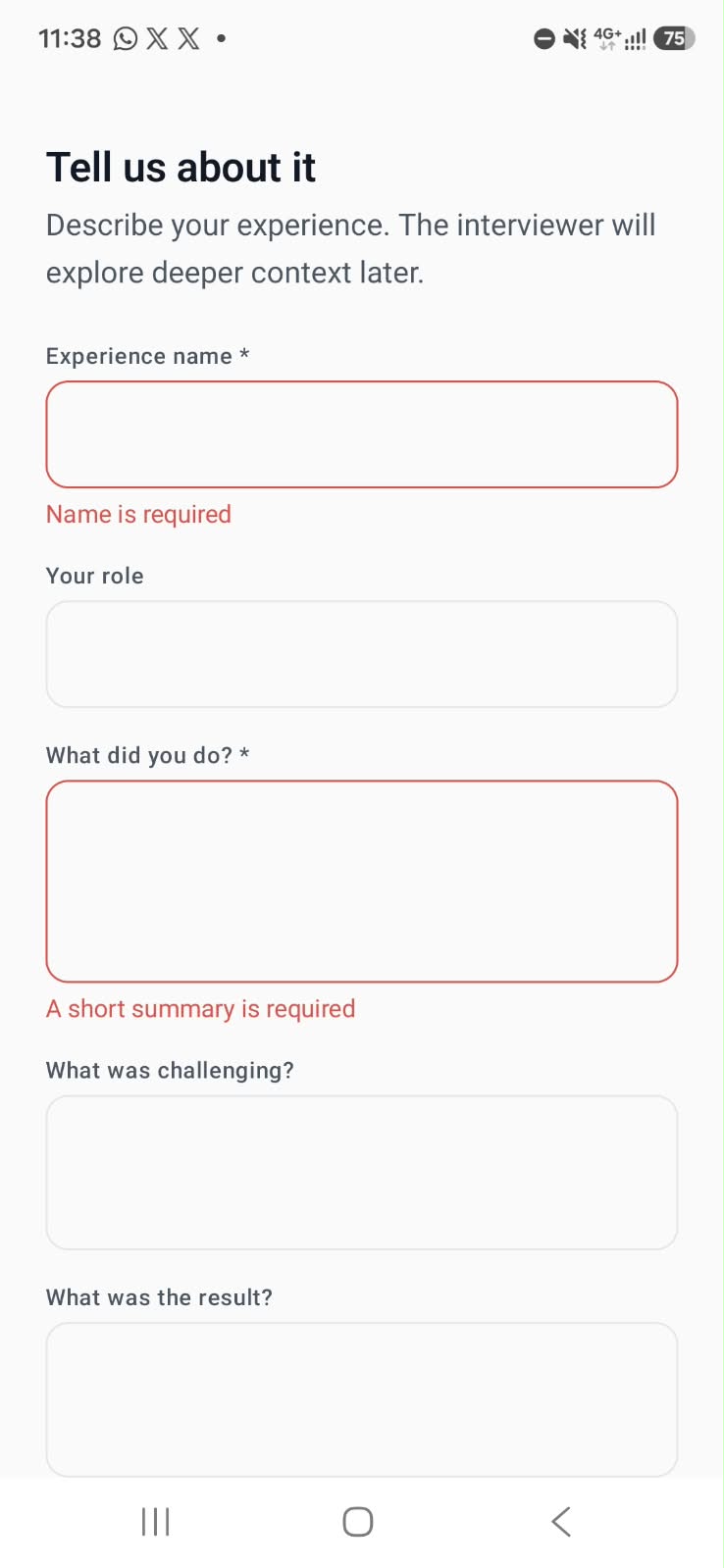
Experience Form
-
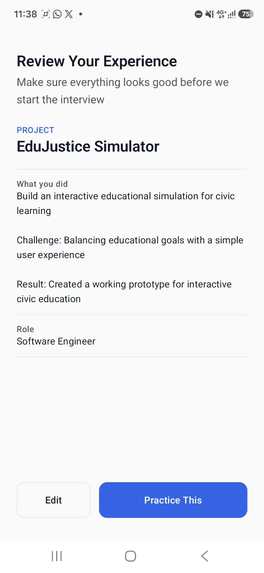
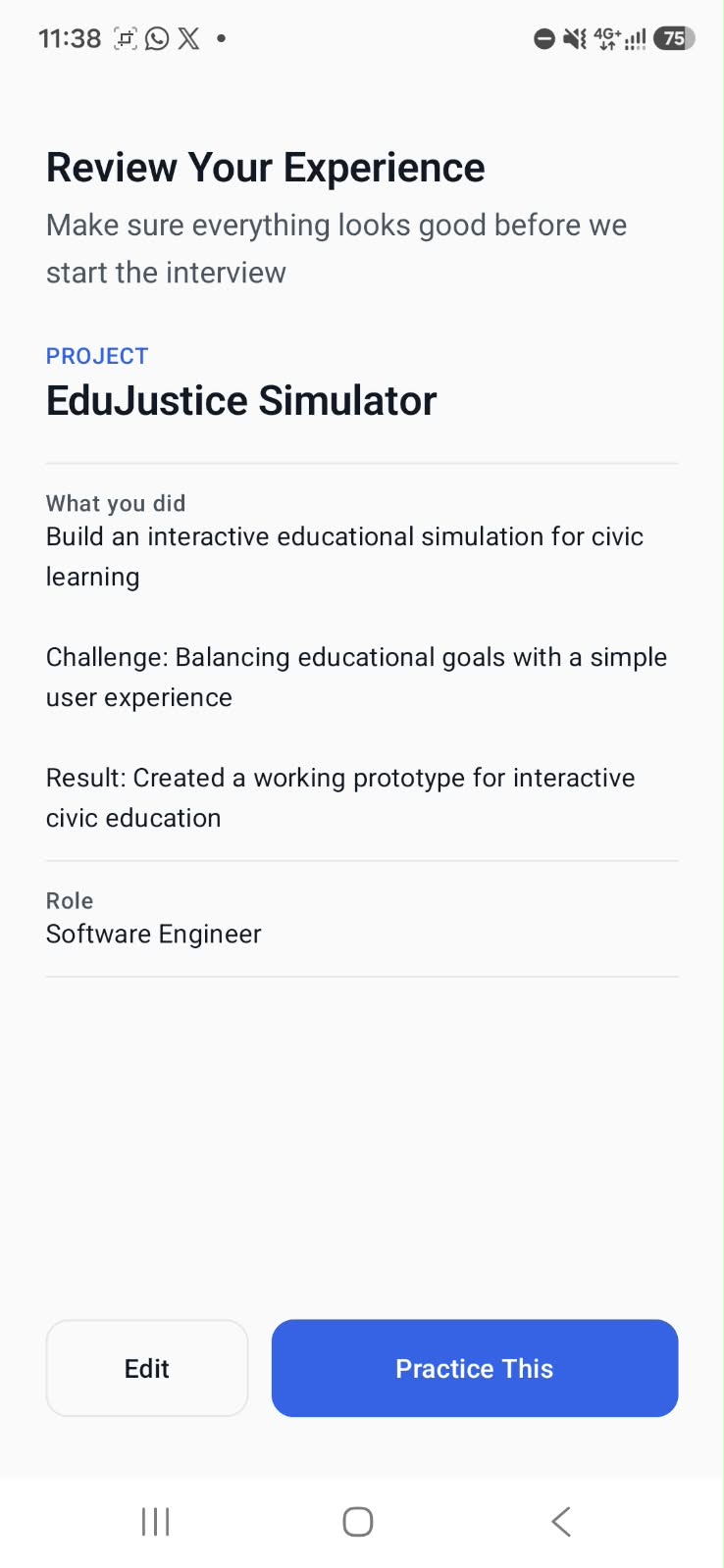
Review Experience
-
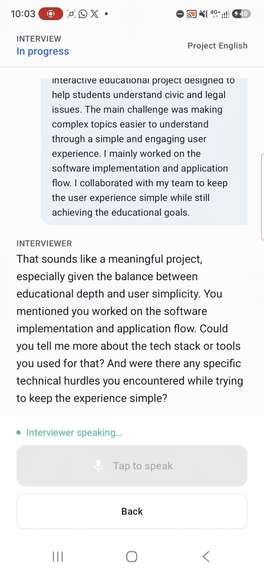
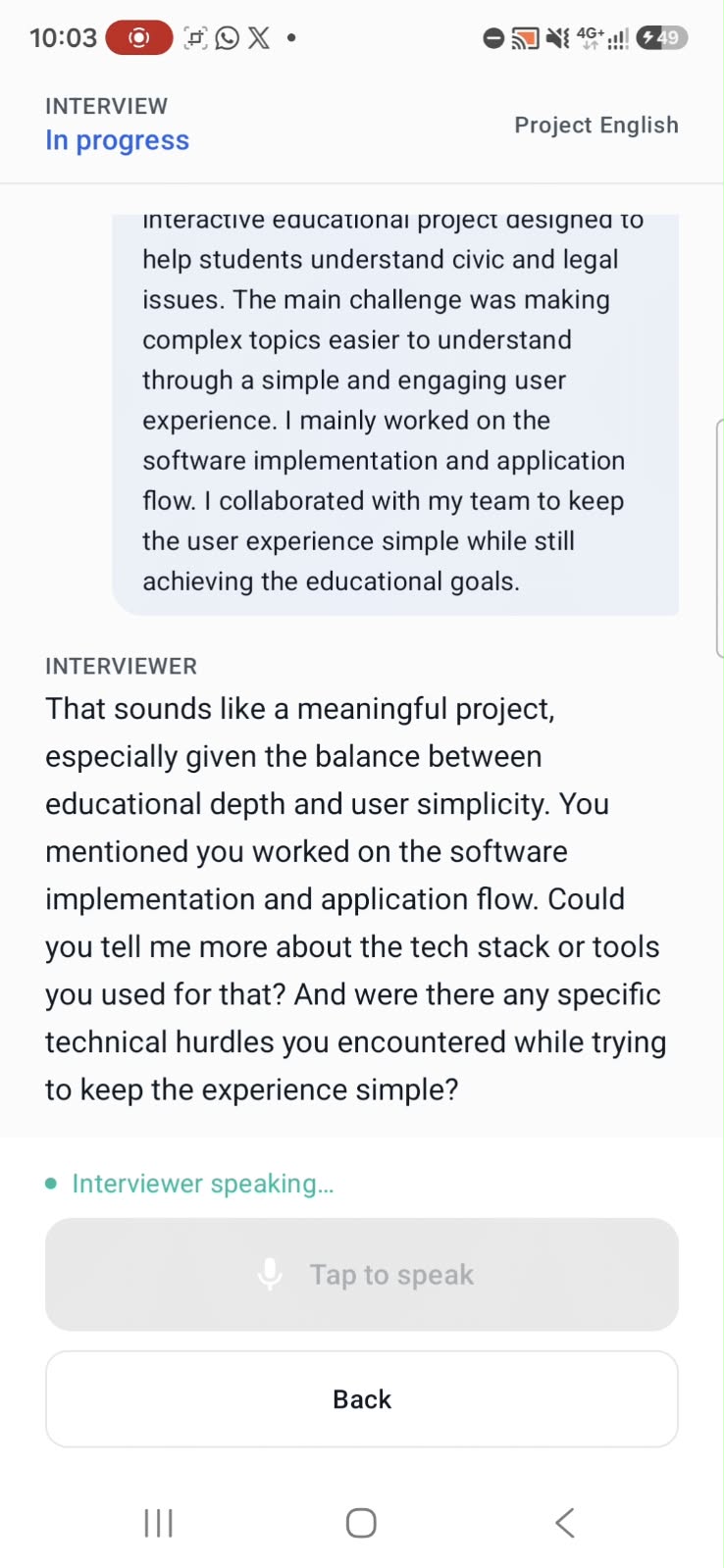
AI Interview / contextual follow-up
-
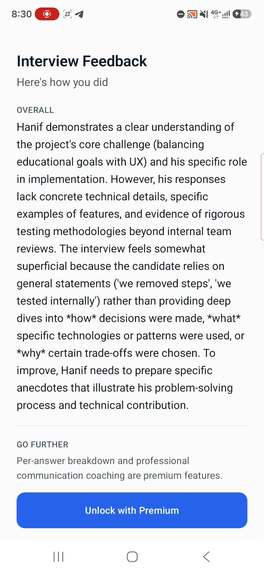
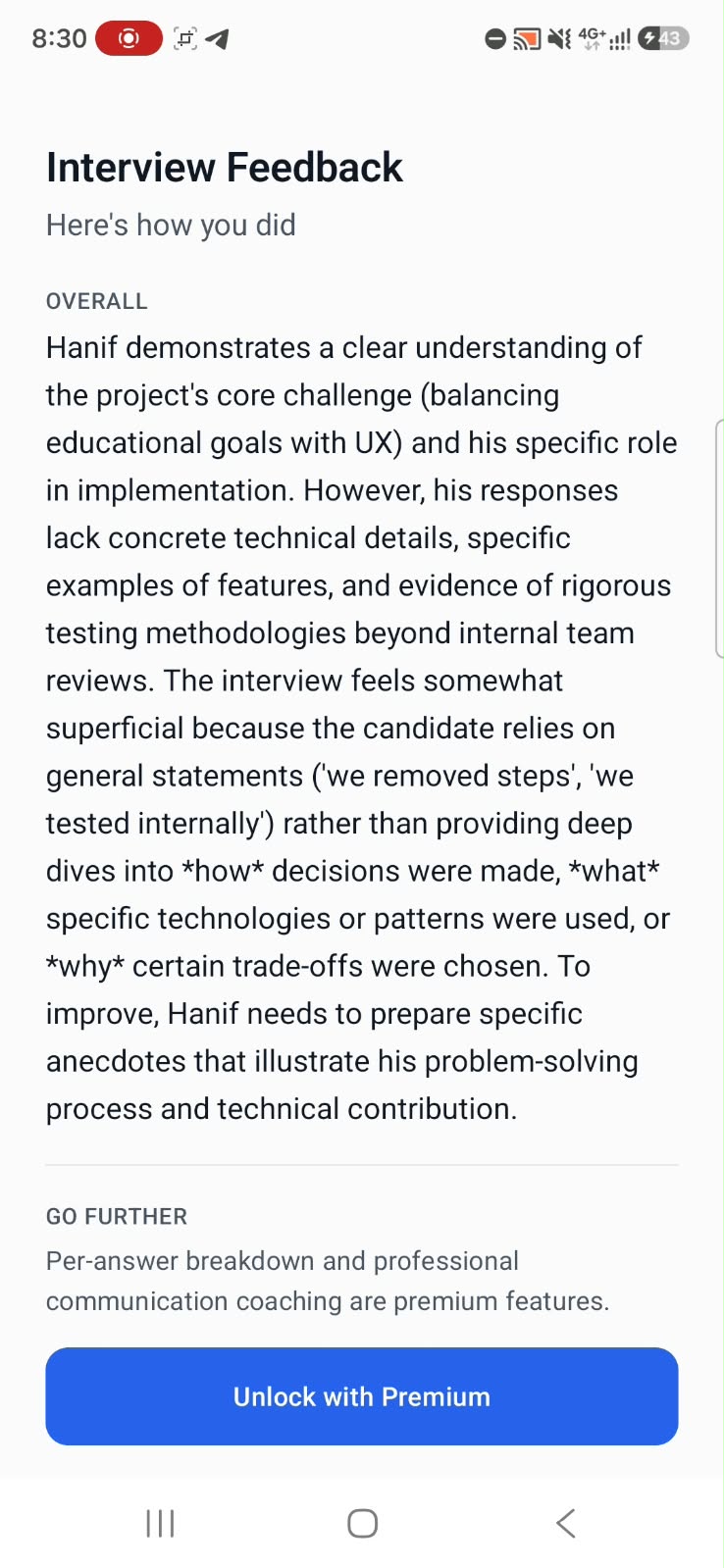
Overall Feedback
-
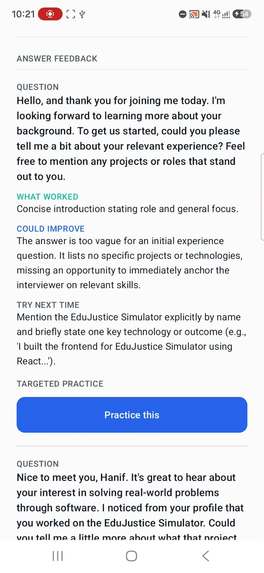
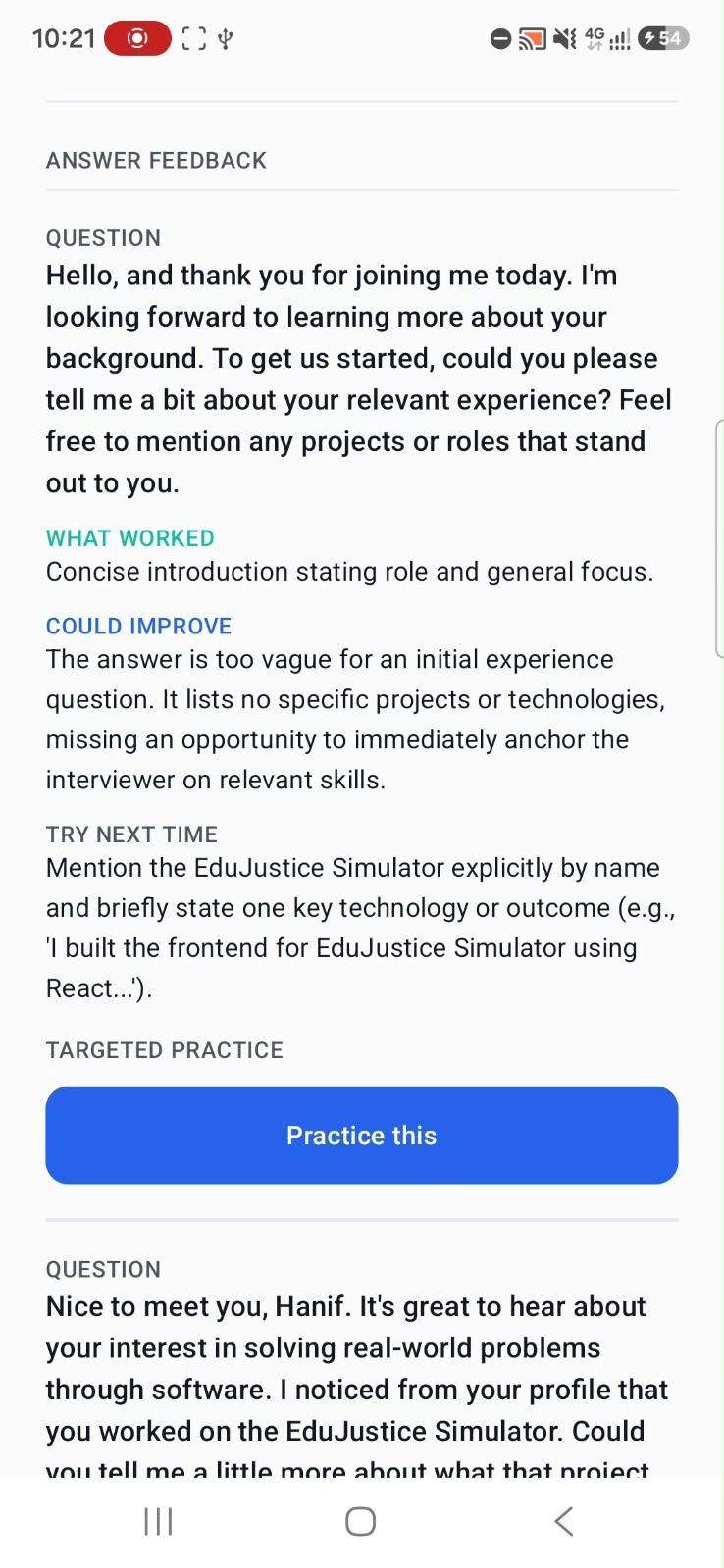
Detailed Answer Feedback
-
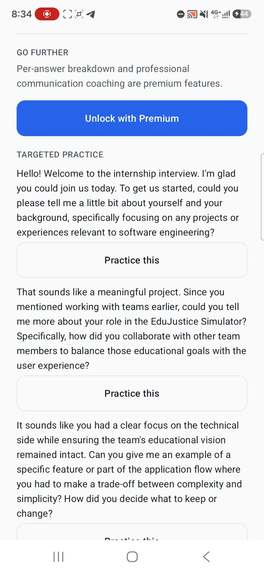
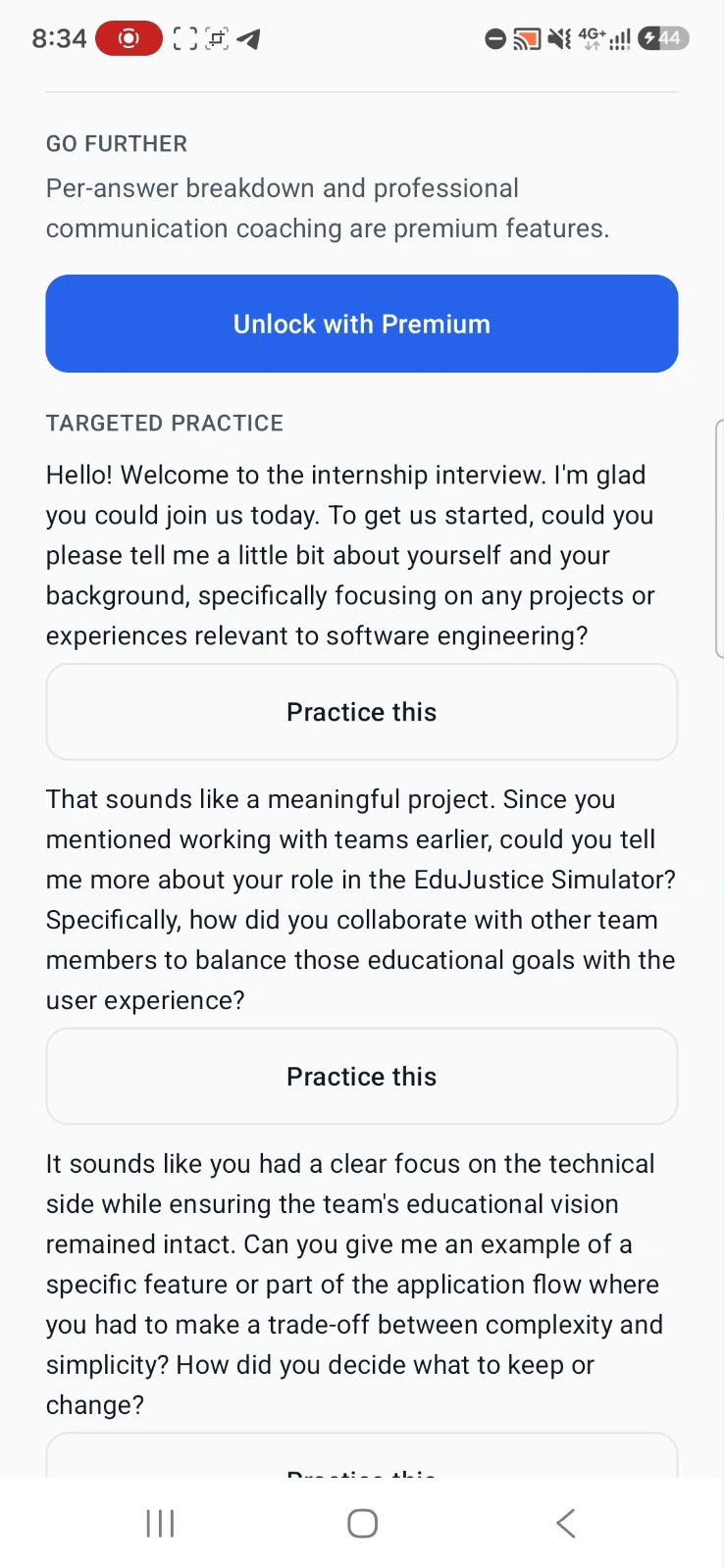
Targeted Practice
-
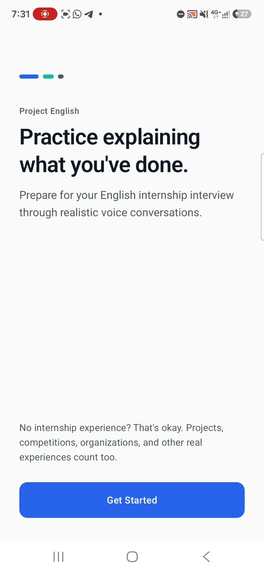
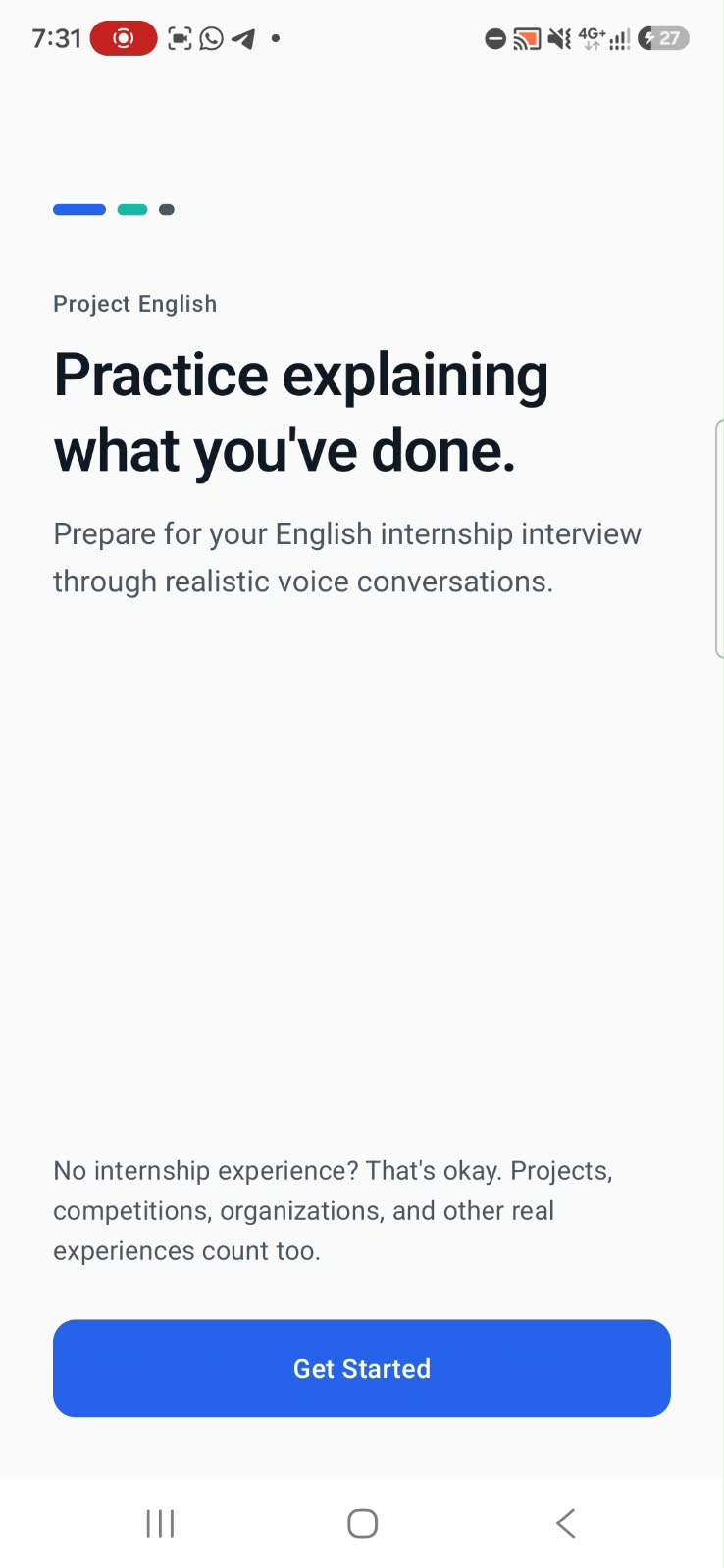
Welcome
-
Thumbnail
-
Icon
Inspiration
Students build valuable experiences through projects, internships, competitions, research, and organizations. But having an experience and being able to communicate it professionally are two different skills.
We noticed this especially among technology students preparing for internships. A student may be able to build an application, contribute to an internship, or work on a competition project, yet struggle when asked to explain what they actually did, why they made certain decisions, or how they handled challenges in a real conversation.
This becomes even more relevant in an era of AI-assisted development. AI can help students build things faster, but building something is only part of the challenge. Students still need to understand their work, take ownership of their contributions, and communicate them clearly to other people.
We wanted to build a way for students to practice that skill using experiences that are actually theirs.
What it does
Our project is an AI-powered professional communication simulator that helps students practice communicating their real experiences through contextual conversations, feedback, and targeted practice.
Students can bring their own experiences — such as projects, internships, competitions, and organizational activities — and use them as the foundation for realistic professional conversations.
The conversation starts with a professional scenario and becomes grounded in the student's experience as they respond. The AI follows the user's answers and asks contextual follow-up questions about the projects, roles, challenges, and decisions they have mentioned.
After the conversation, students receive qualitative feedback on their responses, including what worked, what could be improved, and what to try next time. Feedback considers areas such as content, clarity, and English, along with professional-communication observations — without reducing communication to a numeric score.
When a response has a concrete practice opportunity, students can use targeted practice to revisit that specific response and work on the improvement identified in their feedback.
The core experience is:
Bring your experience → Start a conversation → Answer → Follow-up → Feedback → Targeted Practice
How we built it
We designed the product around the idea that a student's own experiences should be the foundation of professional communication practice.
The system consists of several core components:
- Experience grounding — the user's projects, internships, competitions, organizations, and other experiences are passed into the conversation context so follow-up questions can reference what the student has actually done.
- Contextual AI conversation — the AI maintains conversation state, tracks topics, considers previous answers, and progresses through the conversation instead of treating every question as an isolated prompt.
- Voice interaction — students can answer interview questions by voice and hear the AI interviewer respond.
- Qualitative feedback — the system generates overall and per-answer feedback describing what worked, what could improve, and what to try next time.
- Targeted practice — eligible responses can be practiced again through a dedicated retry flow, with new feedback generated for the practice response.
- Premium experience — RevenueCat manages the premium entitlement and purchase experience, gating premium features such as detailed per-answer feedback and targeted practice.
The core interaction loop is:
Experience → Conversation → Contextual Follow-up → Feedback → Targeted Practice
We built the conversation as a stateful experience so that the AI can maintain continuity across multiple turns, track topics that have already been discussed, and naturally progress toward conversation completion.
Challenges we ran into
One of our biggest challenges was making the AI conversation feel genuinely contextual without making it unpredictable or repetitive.
Generating questions is easy. Generating the right next question based on what a student just said is much harder. We had to design the conversation around the user's story: maintaining conversation state, tracking topics, prioritizing meaningful follow-ups, and knowing when the conversation should conclude.
Another challenge was designing feedback that leads to action. We did not want students to receive a long list of corrections and simply move on. This led us to connect feedback directly to targeted practice, allowing students to practice a specific response and receive fresh feedback.
We also had to balance AI flexibility with a predictable mobile experience. This required careful decisions around conversation state, structured response schemas, prompt design, validation, and the boundaries of what the AI should control.
Finally, integrating monetization into the core experience required us to make premium access meaningful rather than simply placing a paywall in front of the entire product. RevenueCat is used to manage the premium entitlement, offerings, purchase flow, restore flow, and feature gating.
Accomplishments that we're proud of
We built a complete end-to-end mobile experience that goes beyond generating generic interview questions.
A student can provide their own experience, enter a realistic professional conversation, answer using their voice, receive contextual follow-up questions, complete the conversation, receive qualitative feedback, and use targeted practice to revisit specific responses when more practice is needed.
We are especially proud of making the student's own experience the center of the interaction. The AI is not simply creating another generic interview session — it uses the student's experiences and previous answers to drive the conversation.
We also built the feedback-to-practice loop as part of the core product rather than treating feedback as the final screen. The student can act on feedback immediately and practice a specific response again.
What we learned
We learned that professional communication practice is not simply about speaking more English.
The harder part is often knowing what to say, how to structure it, how to explain your contribution, and how to respond when someone asks a follow-up question you did not expect.
We also learned that personalization becomes more meaningful when it is grounded in something the user actually cares about. Using a student's own experiences gives the conversation a reason to exist and makes the practice more relevant than generic scenarios.
Most importantly, we learned that a good AI experience is not just about generating better outputs. It is about designing the interaction around what the user is trying to accomplish. For us, that meant designing the AI to listen, follow the user's story, ask relevant follow-up questions, provide actionable feedback, and give the student another chance to try.
What's next for Project English
We see this as the beginning of a broader professional communication practice platform for students.
Our initial focus is technology students preparing for internships and early-career opportunities, but the same experience-grounded approach can extend to other students and professional scenarios — from internship interviews and project presentations to networking, case competitions, organizational experiences, and workplace communication.
Future iterations could expand the range of professional scenarios, improve the depth of experience grounding, support more forms of communication practice, and help students track their development across repeated practice sessions.
Our long-term goal is simple:
Help students turn the experiences they have built into stories they can confidently communicate.
Built With
- android
- compose
- fastify
- kotlin
- materialdesign
- node.js
- postgresql
- prisma
- qwen
- retrofit
- revenuecat
- typescript


Log in or sign up for Devpost to join the conversation.