-
-
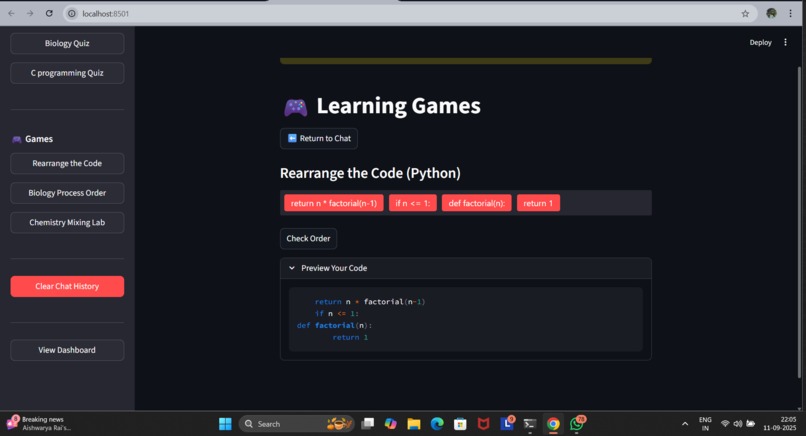
Gamified for wide range of subjects.
-
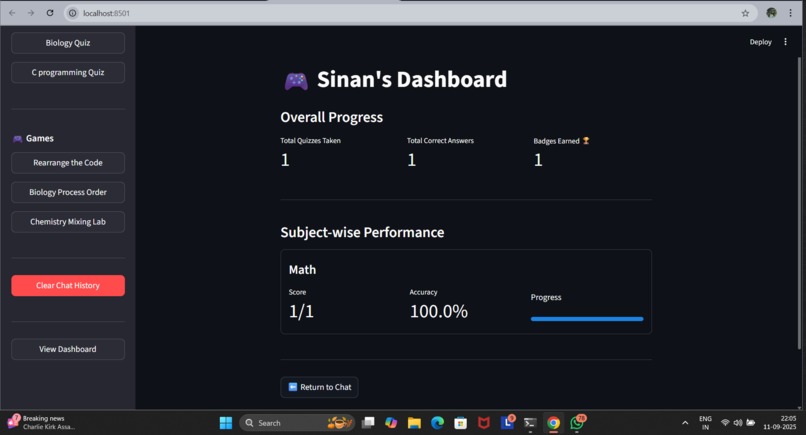
Dashboard to track your progress.
-
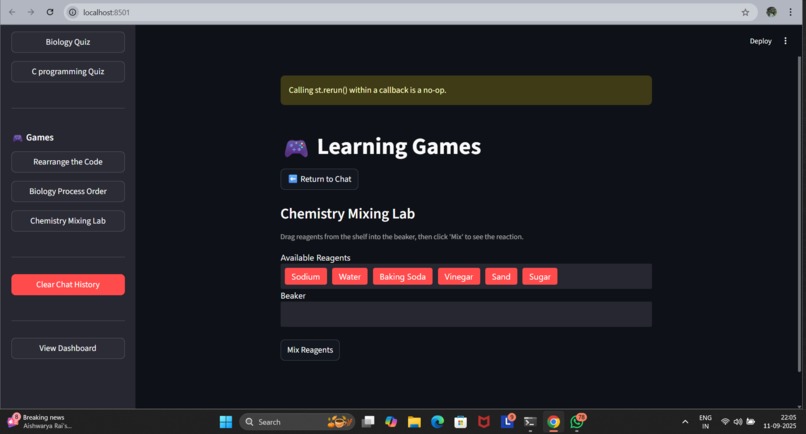
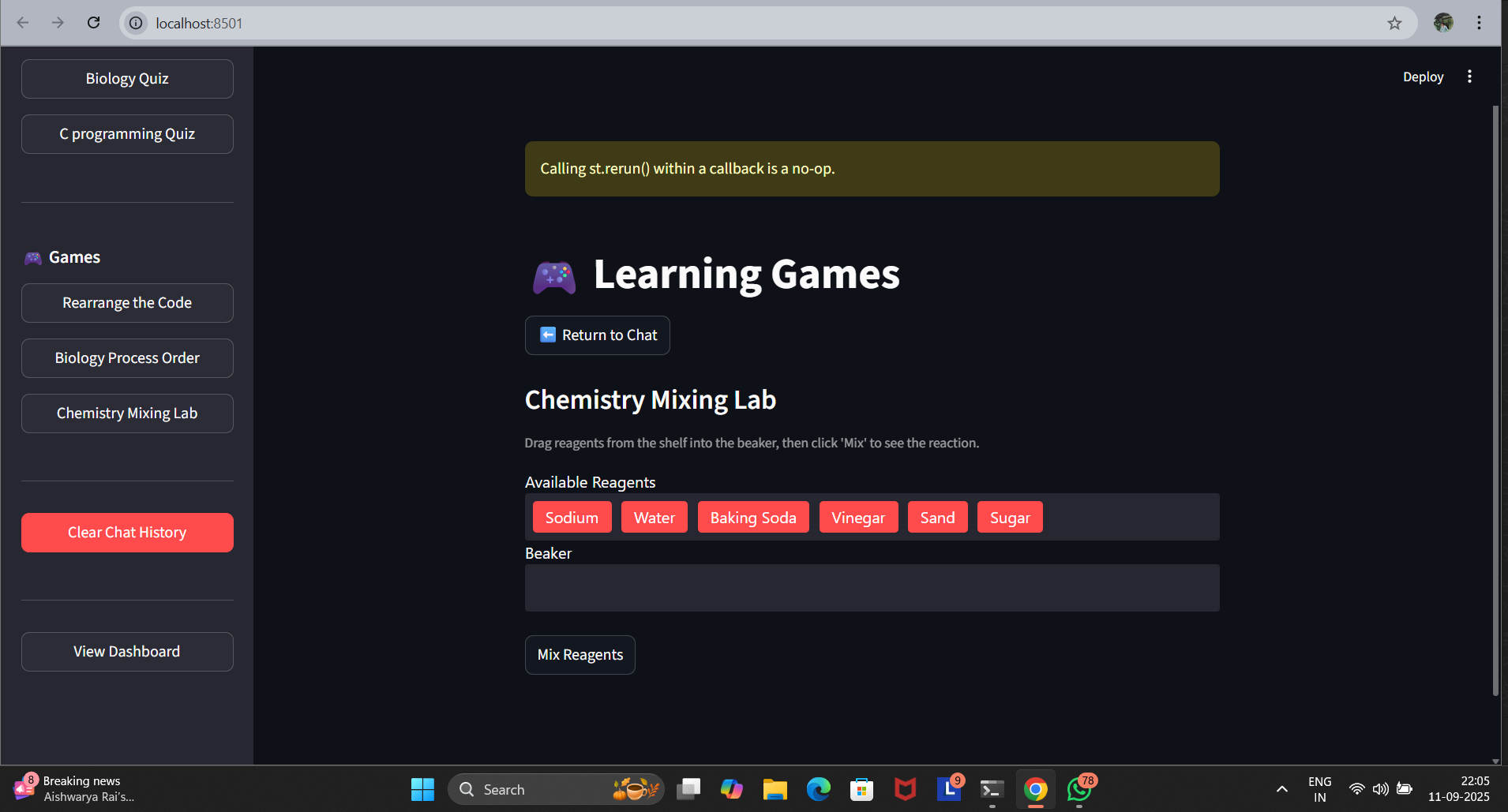
Gamified learning experience subject-wise and show's progress in dashboard.
-
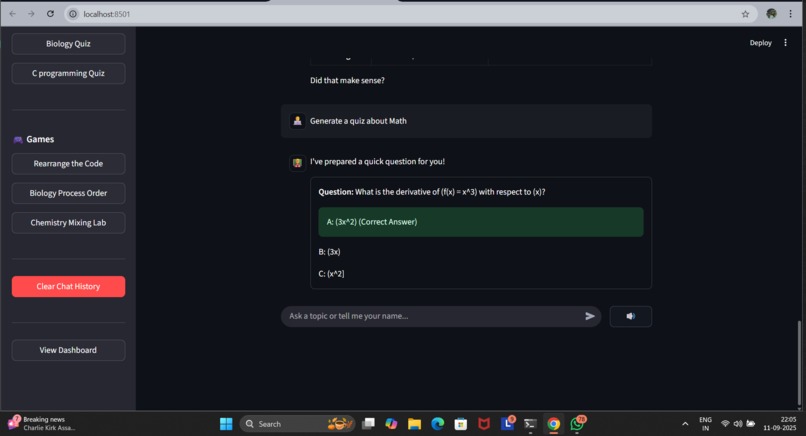
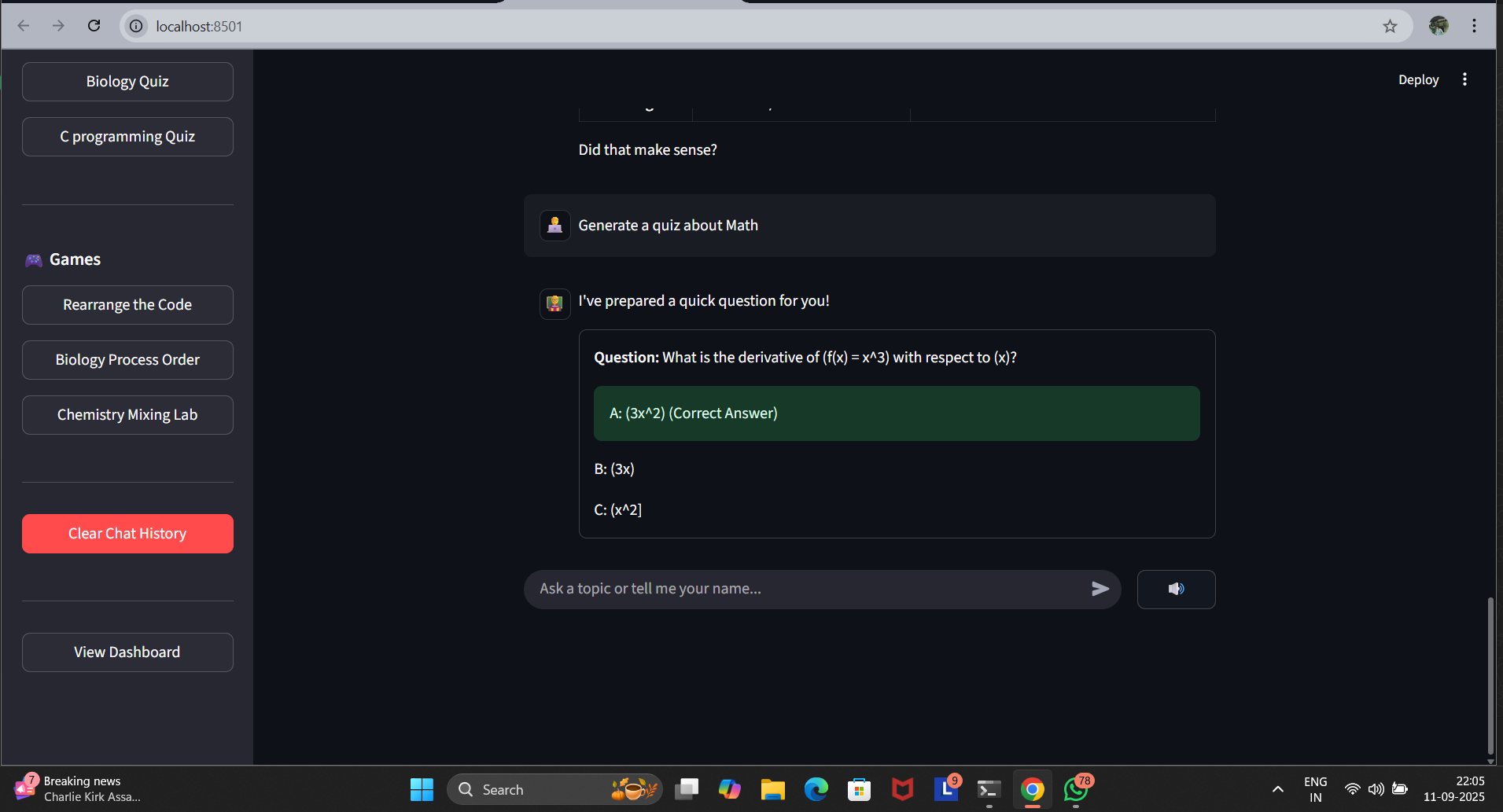
Socratic learning method tests you after you cover a topic.
-
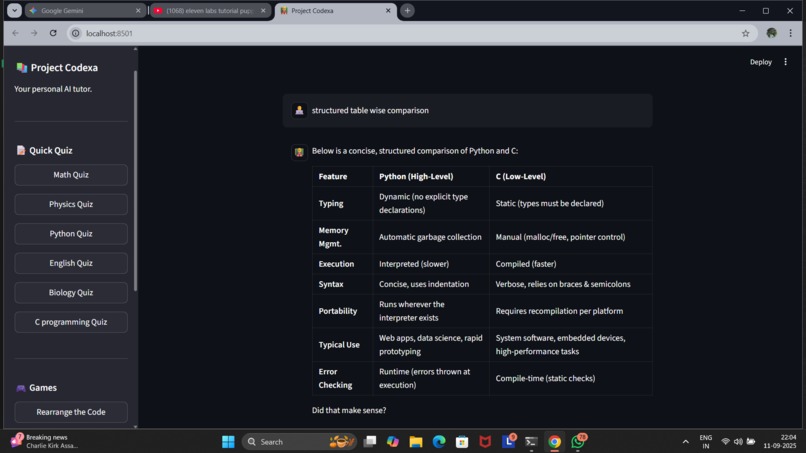
Tabular comparison for students to understand better.



🧑🏫 Project Codexa
🌟 Inspiration
The inspiration behind Project Codexa was the idea of turning learning into an interactive journey instead of just passively consuming text or videos. I wanted to build a personal AI tutor that feels encouraging, fun, and adaptive — combining quizzes, games, and explanations to simulate a classroom experience, but available anytime.
What makes Project Codexa special is that it runs completely offline, powered by an open-source GPT-20B model. This means no internet connection is required, giving learners privacy, accessibility in low-connectivity regions, and independence from cloud services — a step toward making AI education tools more valuable for humanity.
📚 What it does
- Acts as a personal AI tutor with conversational explanations.
- Generates quizzes inside styled boxes, where users can answer and get instant feedback.
- Provides interactive games like:
- Rearranging scrambled Python code
- Ordering biological processes (DNA → RNA → Protein)
- Mixing virtual chemicals with reactions
- Rearranging scrambled Python code
- Tracks progress and accuracy, awarding badges (🥉 Bronze → 💎 Diamond).
- Includes Text-to-Speech (TTS) support so the tutor can “speak” responses.
- Offers a dashboard for subject-wise performance and achievements.
- Runs completely offline — no internet needed for tutoring, quizzes, or speech.
🛠️ How we built it
- Streamlit: For chat interface, sidebar, quizzes, games, and dashboard.
- Regex parsing: To extract structured quizzes from AI tutor responses.
- streamlit-sortables: For drag-and-drop functionality in the games.
- pyttsx3: For offline text-to-speech audio generation.
- GPT-OSS 20B: An open-source 20-billion parameter model that powers the tutor fully offline.
- Session state management: To persist chat history, quiz stats, and progress across reruns.
- Gamification design: Badges, balloons, and progress bars to boost learner motivation.
⚡ Challenges we ran into
- Managing state across Streamlit reruns (avoiding lost progress).
- Quiz formatting issues: Making sure answers weren’t pre-selected and results displayed clearly.
- Integrating drag-and-drop games without breaking logic when items scrambled.
- Audio generation: Ensuring offline TTS quality with pyttsx3.
- Running large models locally: Optimizing GPT-20B inference speed without internet dependency.
- Time pressure: Balancing features and polish within limited development time.
🏅 Accomplishments that we're proud of
- Successfully built a gamified AI tutor that combines chat, quizzes, and games in one place.
- Designed a system that runs 100% offline, including AI inference and TTS.
- Created a beautiful quiz format in styled boxes, with correct/incorrect answers highlighted.
- Designed a fun learning dashboard that tracks progress and awards badges.
- Integrated interactive educational games that make abstract topics engaging.
- Delivered a project that feels like both a tutor and a study companion.
📖 What we learned
- How to effectively use Streamlit’s session state for persistent experiences.
- Parsing structured responses from AI with regular expressions.
- The importance of user engagement through gamification.
- Running and optimizing a GPT-20B open-source model fully offline.
- Hands-on experience with offline TTS in Python.
- Using LaTeX rendering in Streamlit for clean math formulas:
[ E = mc^2 ]
🚀 What's next for Project Codexa
- 🎤 Add speech-to-text so learners can talk to the tutor naturally.
- 🌐 Multi-language support for global accessibility.
- 📱 Build a mobile app version with offline learning modes.
- 🧑🤝🧑 Enable multiplayer quiz competitions for study groups.
- 📊 Expand the dashboard with more analytics like streaks, time spent, and subject mastery.
Built With
- gpt-oss-20b
- python
- pyttsx3
- regex
- session-state
- streamlit


Log in or sign up for Devpost to join the conversation.