-
-
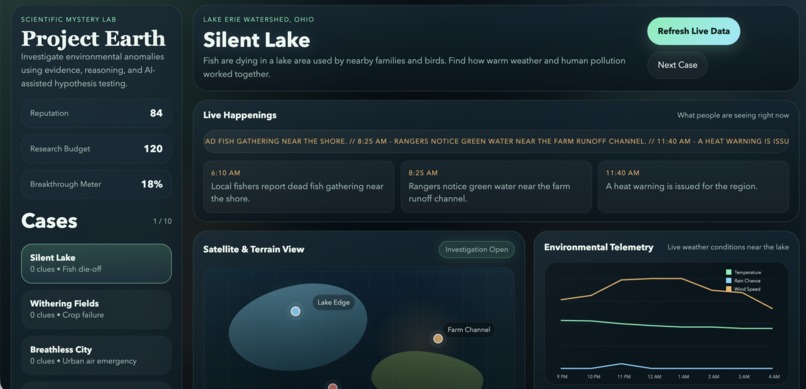
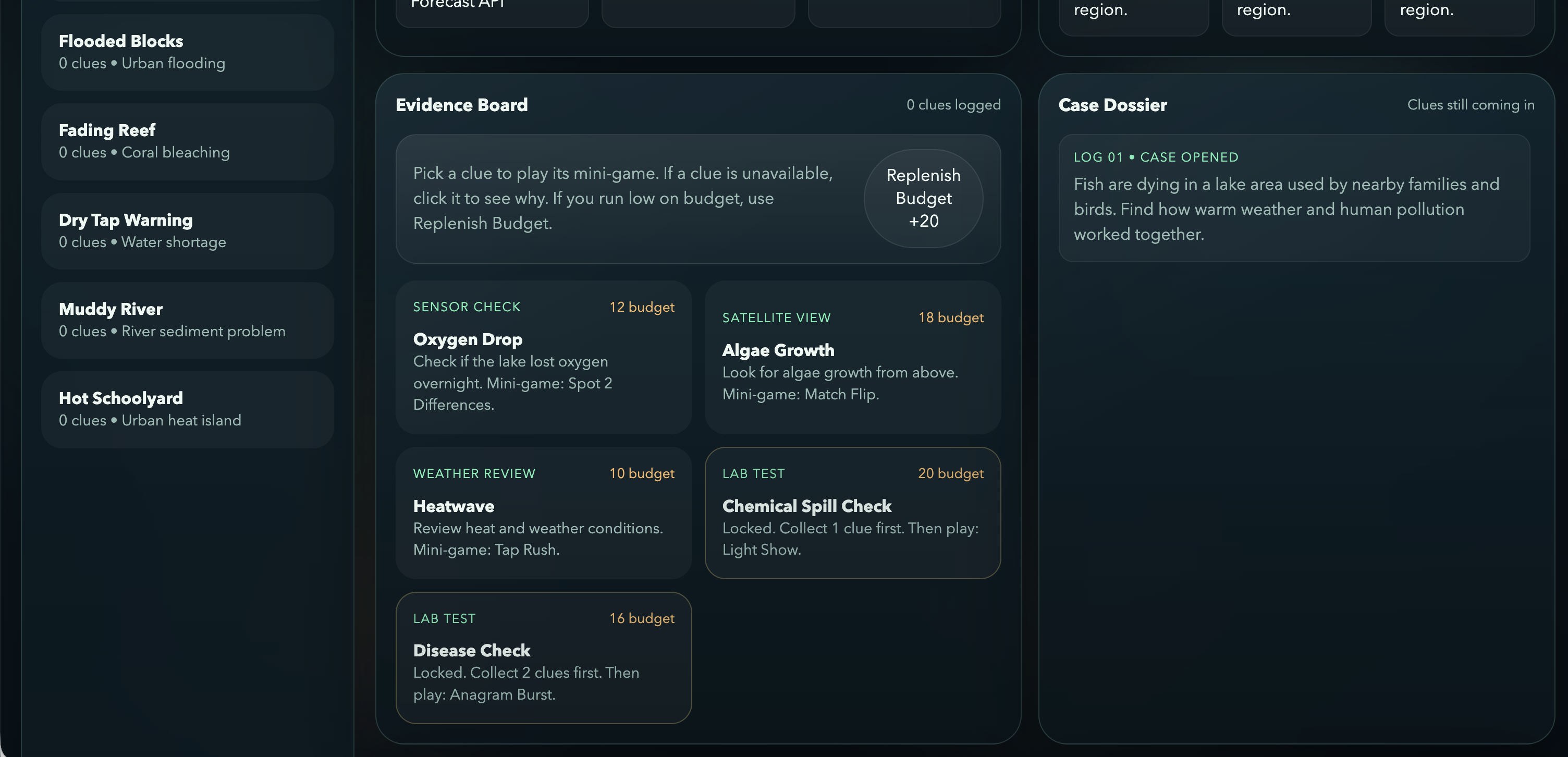
Image of Silent Lake mystery
-
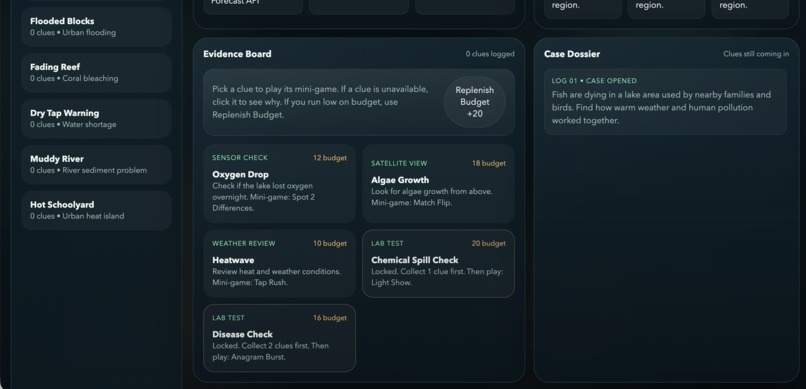
Image of clues for Silent Lake mystery
-
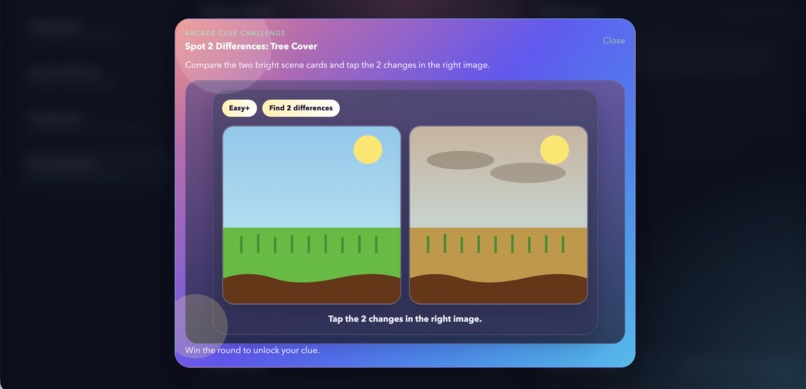
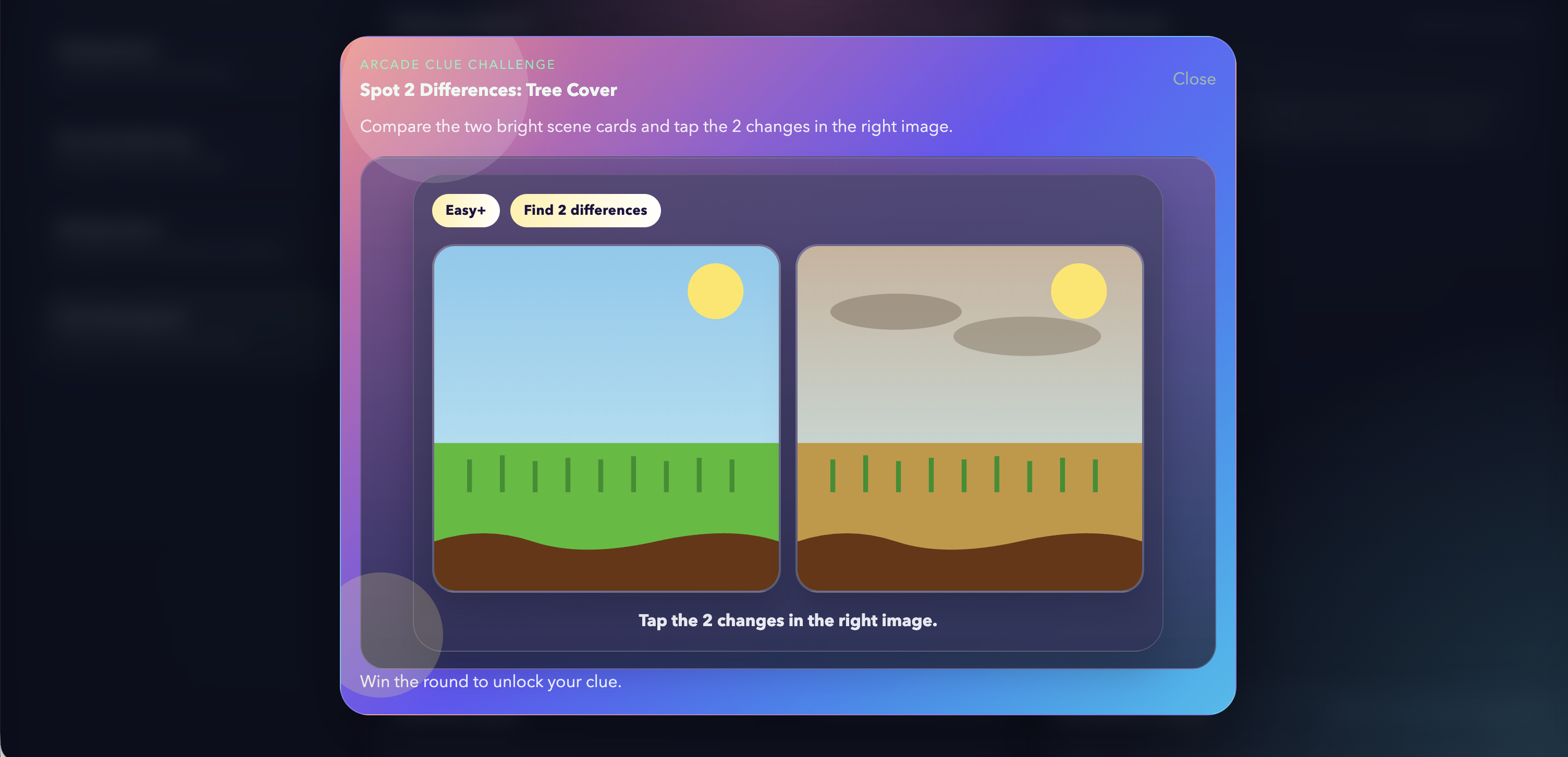
Image of one of the "Spot the Differences" mini-games
General Category
Inspiration
Most climate education follows the same shape. A graph, a problem, an explanation, an answer to memorize. The structure is efficient, but it misses what makes environmental problems actually difficult. Real environmental issues are tangled. A fish die-off is rarely just pollution; a wildfire is rarely just heat; a flood is rarely just rain. The cause is almost always layered, and the lesson is in untangling those layers.
Project Earth grew out of a desire to build that untangling into the experience itself. The detective format made sense because investigation forces a different kind of thinking than reading does. A player who has to choose which evidence to gather, weigh competing explanations, and commit to a conclusion ends up replicating, in miniature, the work of a real environmental scientist. That seemed like a more honest way to teach the subject than a textbook ever could.
What it does
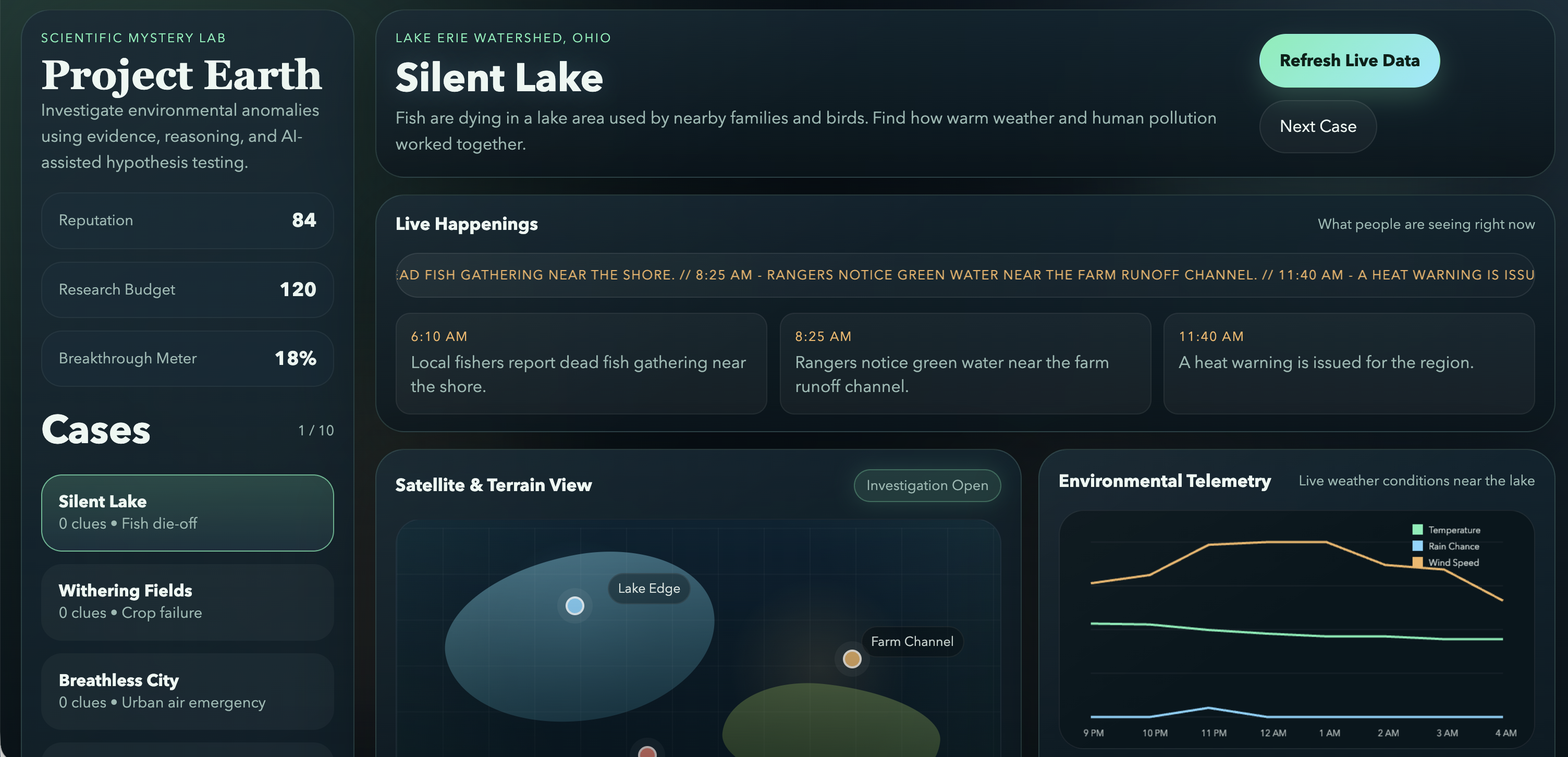
Project Earth: Field Reports is an environmental detective game built around ten cases, each tied to a real US location and a real environmental issue, a fish die-off in Lake Erie, coral bleaching in Key Largo, urban flooding in Houston, wildfire smoke in Redding, and six others. Each case presents a situation, a live data feed for the actual location, and a set of clues the player can unlock to investigate. The player spends a research budget to gather evidence, identifies the cause from a list of possible explanations, and unlocks a prevention guide once the case is solved.
The most important design rule in the game is that the right answer is never a single cause. Every case is built around a combination of a human factor and a natural condition acting together, and the game does not accept a player's answer unless the supporting evidence has been gathered. A correct guess without the underlying science still does not pass, which keeps the focus on reasoning rather than recognition.
How we built it
The project is built as three files: An HTML file, a CSS file, and a JavaScript file with no frameworks or libraries. Live data comes from Open-Meteo, a free public API with separate endpoints for weather and air quality. Each case uses its own coordinates, so the temperature, precipitation, AQI, and ozone readings displayed in the game reflect actual conditions at the actual location.
Each case is structured as a self-contained data object that defines its location, clues, possible causes, and live data feed. Because the same engine runs every case, expanding the project is straightforward: a new mystery is essentially a new entry in the case list. The answer-checking system compares the player's selection against the evidence they have actually collected, not simply the label of the cause they picked, which lets the game reward investigation rather than guessing. Five mini-game types: Spot the difference, card matching, sequence memory, a reaction game, and an anagram unscramble, rotate across clues, with difficulty increasing as the player goes deeper into a case.
Challenges we ran into
The hardest design problem was the evidence system. The game needed to feel fair: strict enough that the science actually mattered, but loose enough that players did not get stuck. The solution was a per-suspect minimum-clue threshold, tuned individually for each case after several rounds of testing.
Working with two API endpoints introduced its own complexity. Open-Meteo's weather and air-quality services use different parameters and return slightly different response shapes, so the data layer had to know which endpoint a case required and adapt to whatever the API returned, including occasional partial or delayed responses.
The most significant creative challenge was visual theming. The first version of the mini-games used generic arcade art, stars, candy, castles, that felt entirely disconnected from the environmental science the rest of the game was teaching. Each scene was rebuilt around environmental change instead: a healthy lake turning green with algae, a forest catching fire, a clean beach gaining a closed sign. The mini-games stopped feeling like filler and started reinforcing the lesson the case was already trying to deliver.
Accomplishments that we're proud of
The project has ten complete cases, each grounded in a real US location and connected to a live data feed. Five distinct mini-game mechanics support the gameplay, all themed around environmental science. A guided onboarding tour walks new players through the dashboard step by step, and the entire project runs in a browser without setup.
The accomplishment that matters most, though, is structural. By the end of the project, adding a new case: A new location, a new set of clues, a new data feed, became essentially a one-entry change. That kind of clean structure transforms a hackathon submission into something worth continuing.
What we learned
One thing we learned was that the mechanics of a game can teach a subject more effectively than the text written on top of it. The rule that requires supporting evidence to confirm an answer turned out to be more effective than any explanatory paragraph could have. Building the science into the rules of the game made the science inescapable, in the best way.
We also learned about the effect of real data. Even when live readings do not directly drive gameplay, the knowledge that the chart on the screen is showing the actual weather over Lake Erie at this exact moment changes the entire feel of a case. Real data grounds a fictional mystery in a way that no amount of carefully written copy can.
What's next for Project Earth: Field Reports
The next step is to expand the case library beyond the US. The same format applies cleanly to global environmental issues, deforestation in the Amazon, glacial melt in the Himalayas, sandstorms in the Sahel, and each new case fits into the existing structure without modification.
A teacher dashboard is also in development, designed so educators can assign cases, monitor student progress, and identify where students are getting stuck. The project's architecture already supports this kind of layer. The longer-term plan is for Project Earth to live in real classrooms, free and open, so teachers can adapt cases to their own region or curriculum and contribute new ones of their own.

Log in or sign up for Devpost to join the conversation.