-
-
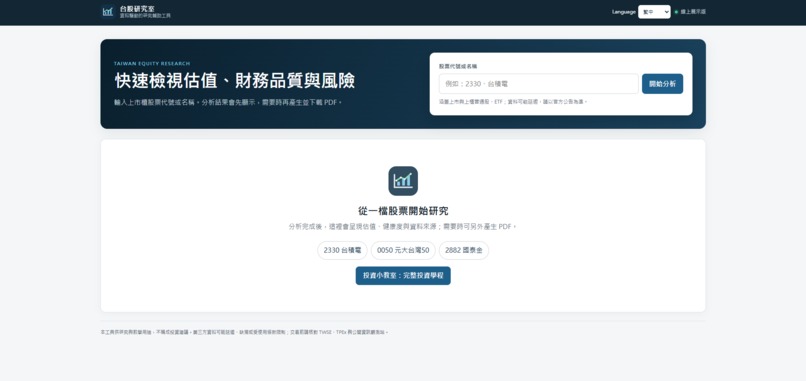
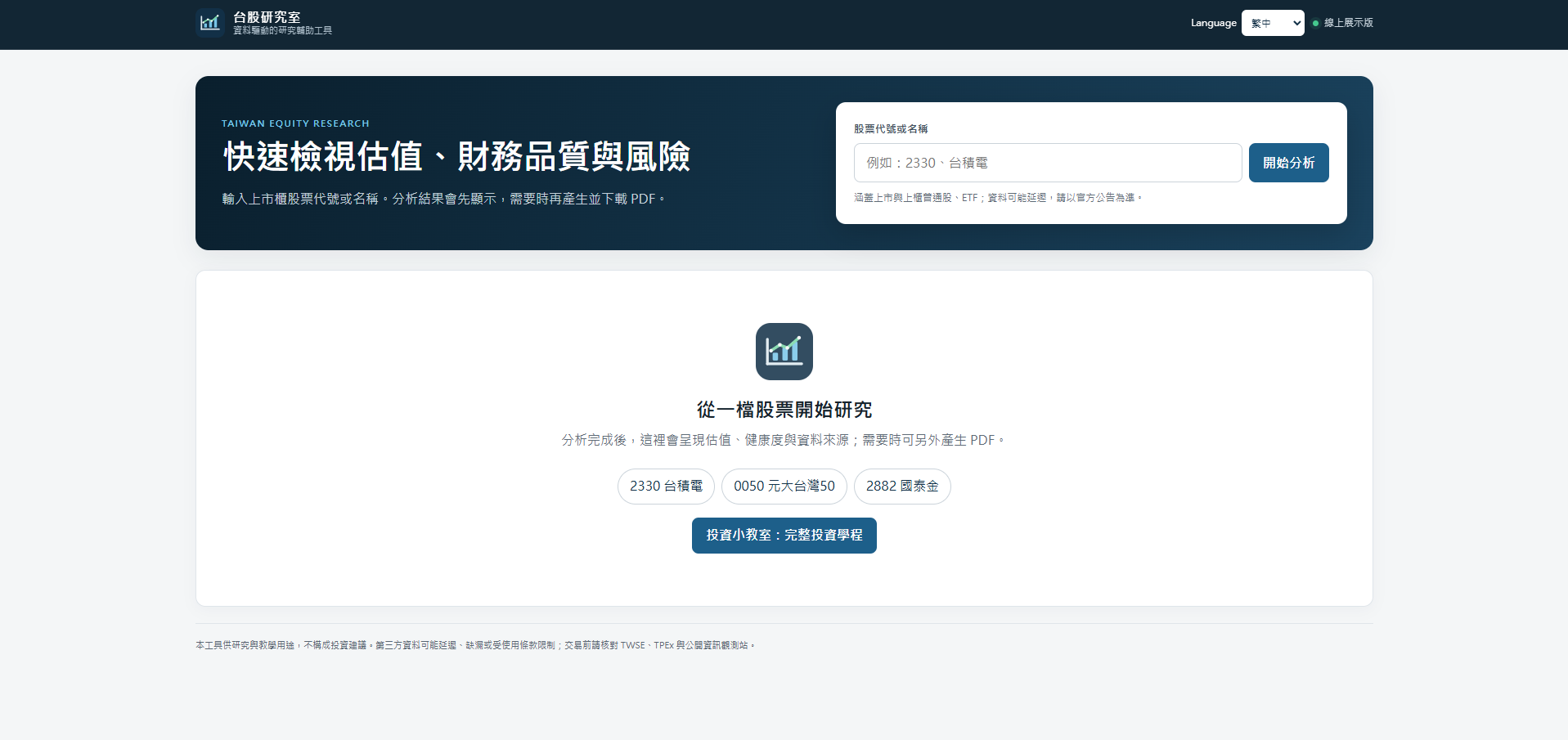
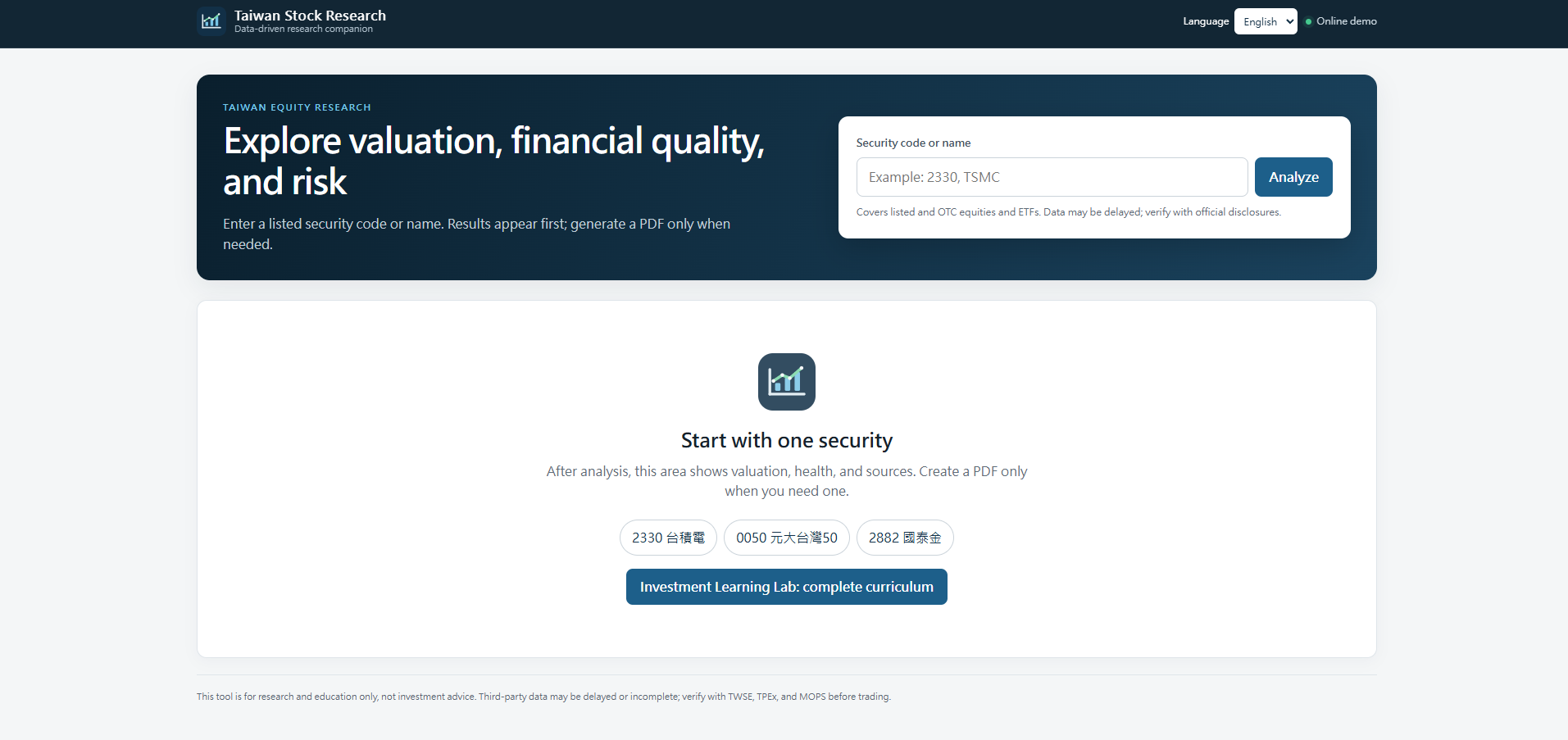
Chinese UI
-
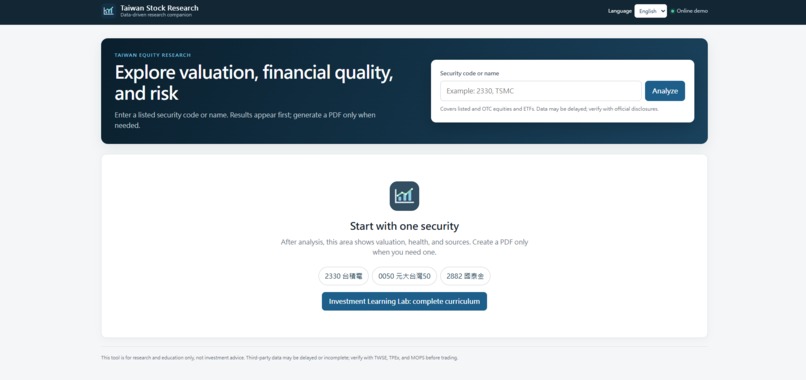
English UI
-
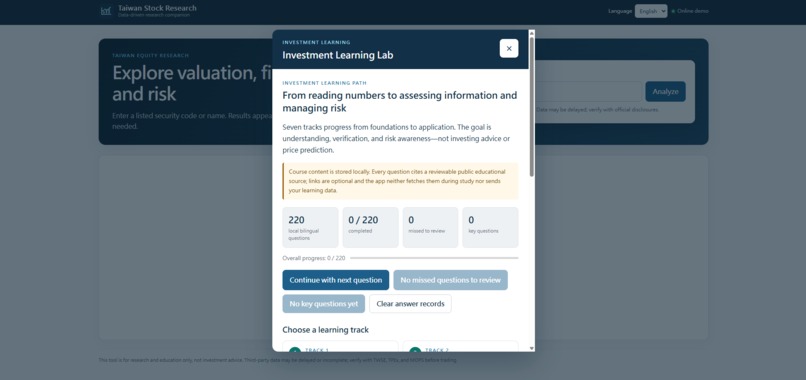
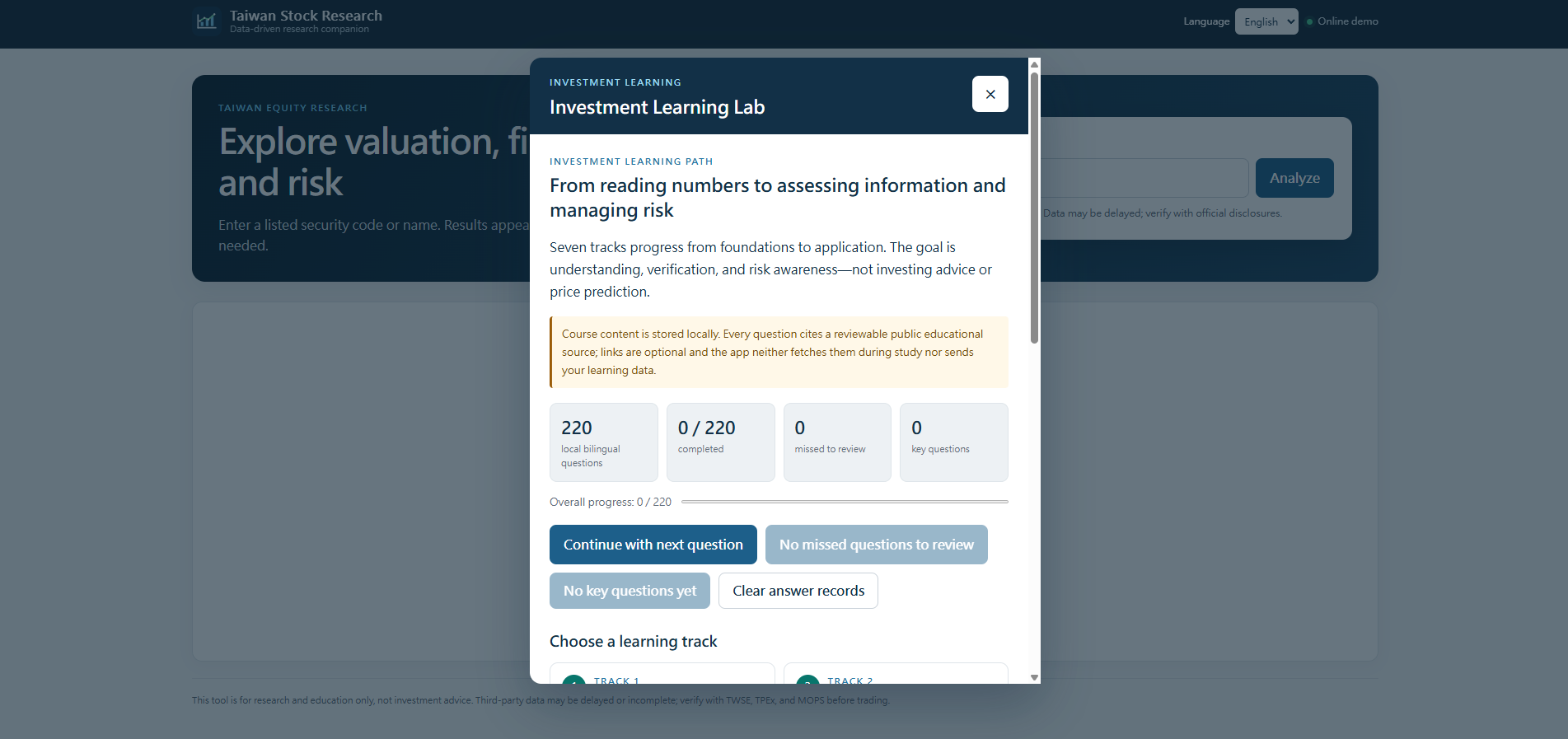
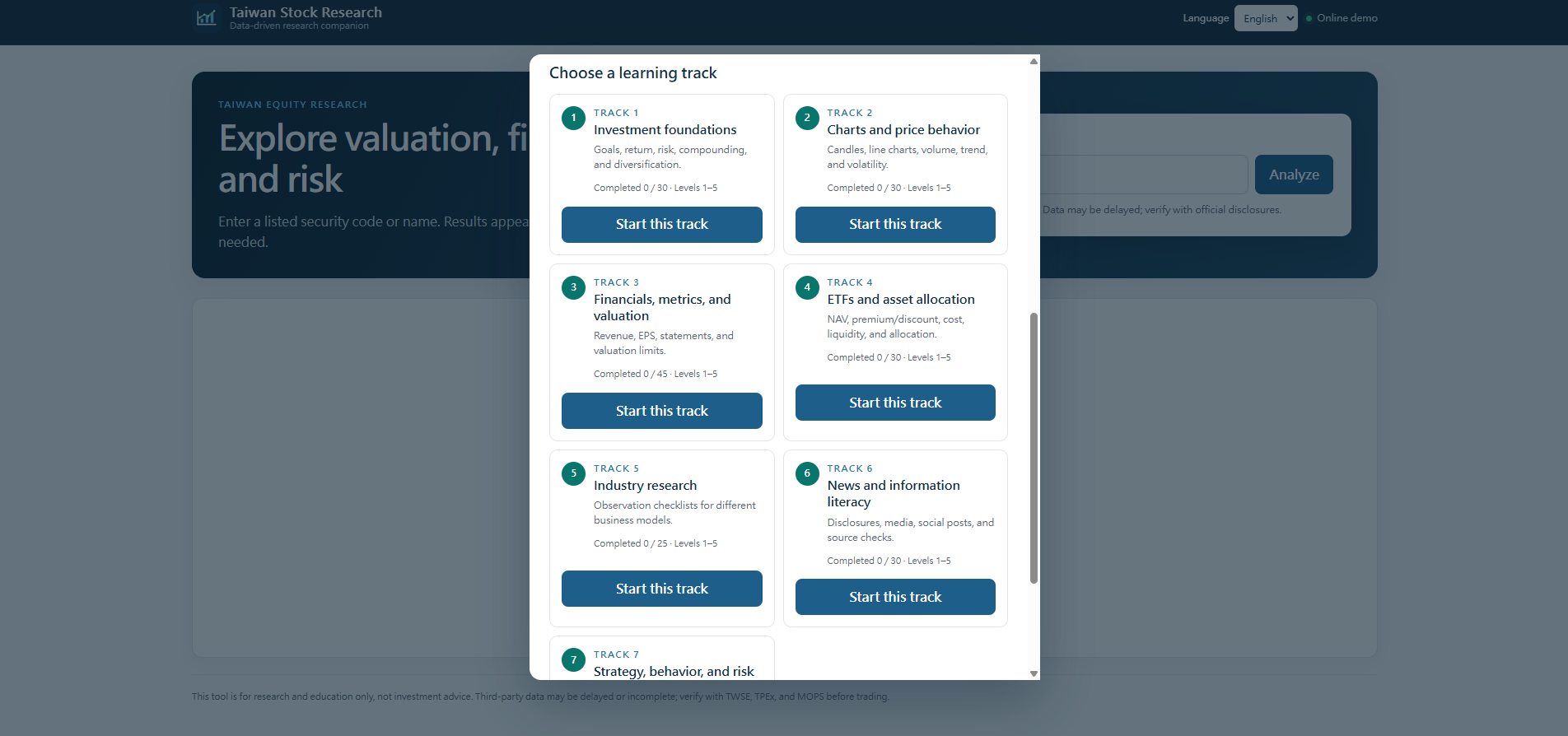
Investment Learning Lab (1)
-
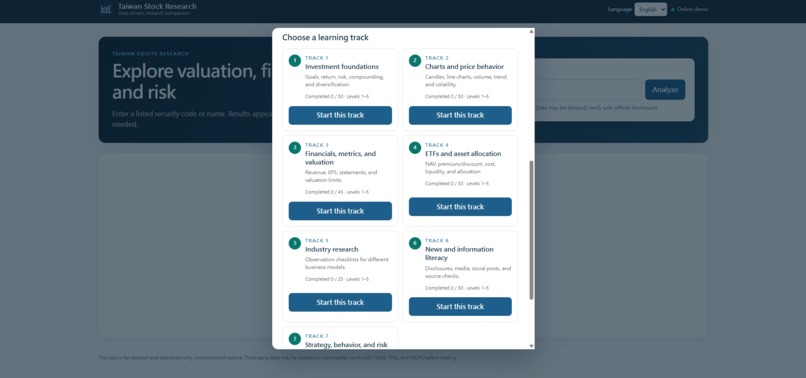
Investment Learning Lab (2)
-
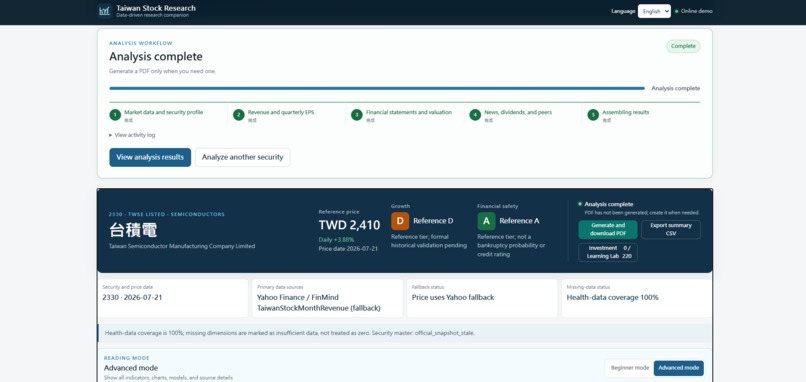
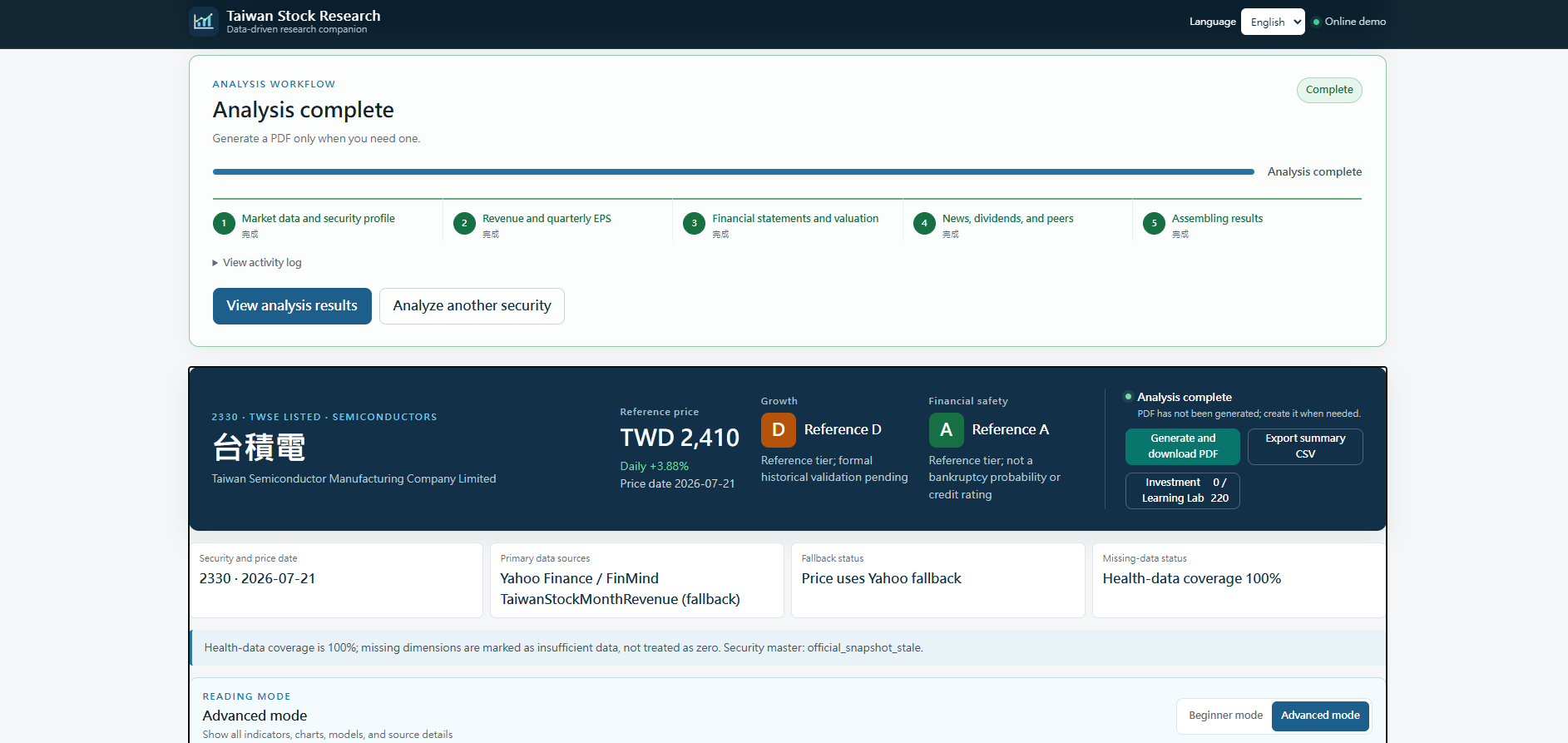
Analysis Interface (1)
-
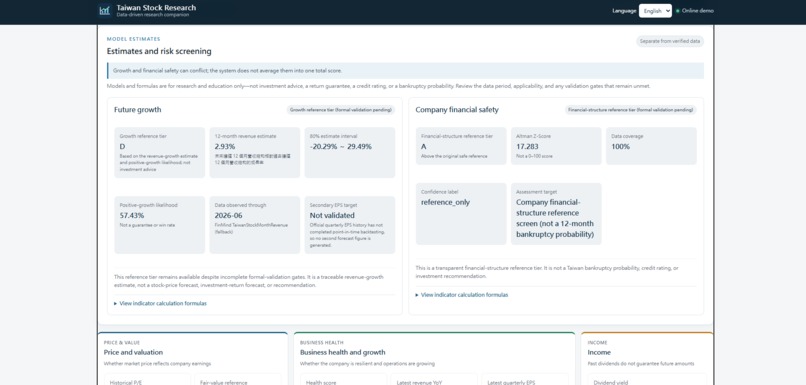
Analysis Interface (2)
-

Generate PDF
-
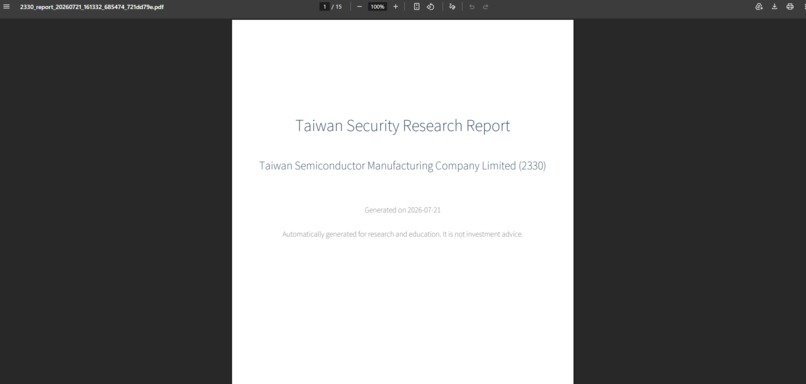
PDF Report
-
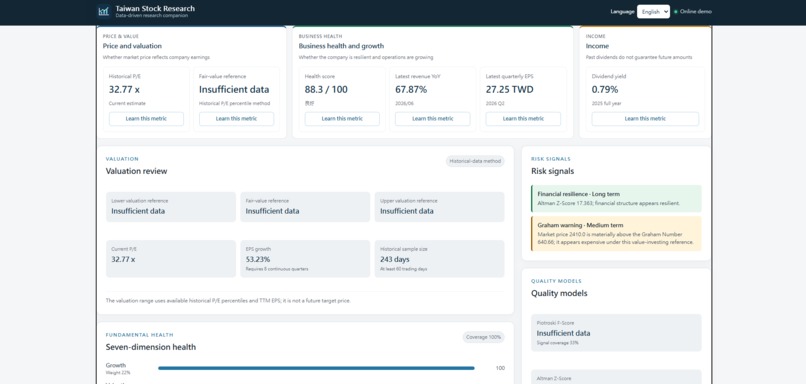
Analysis Interface (3)
-
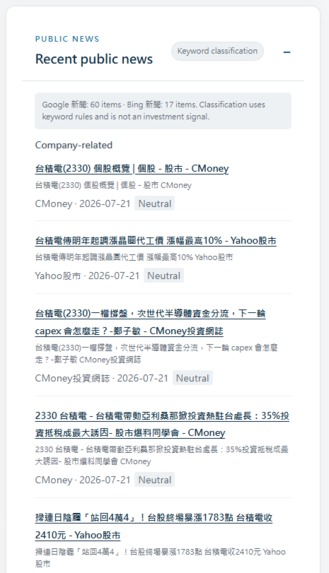
Related news
-
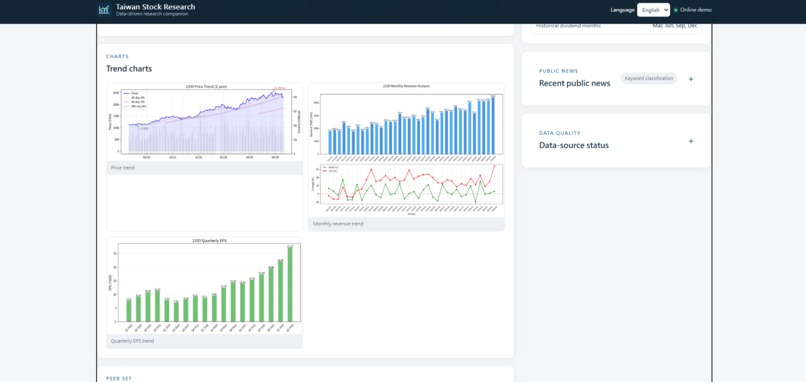
Analysis Interface (4)
-
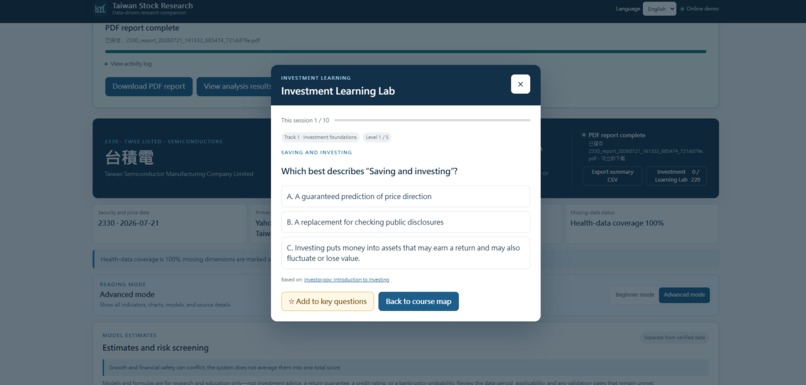
Investment Learning Lab Question

### Inspiration
Investment information is everywhere, but beginners often struggle not to find numbers, but to understand, compare, and verify them. Fat Cat Taiwan Stock Research Lab aims to turn Taiwan stock research from a complex workflow into a practical everyday financial tool that also supports continuous learning.
### What it does
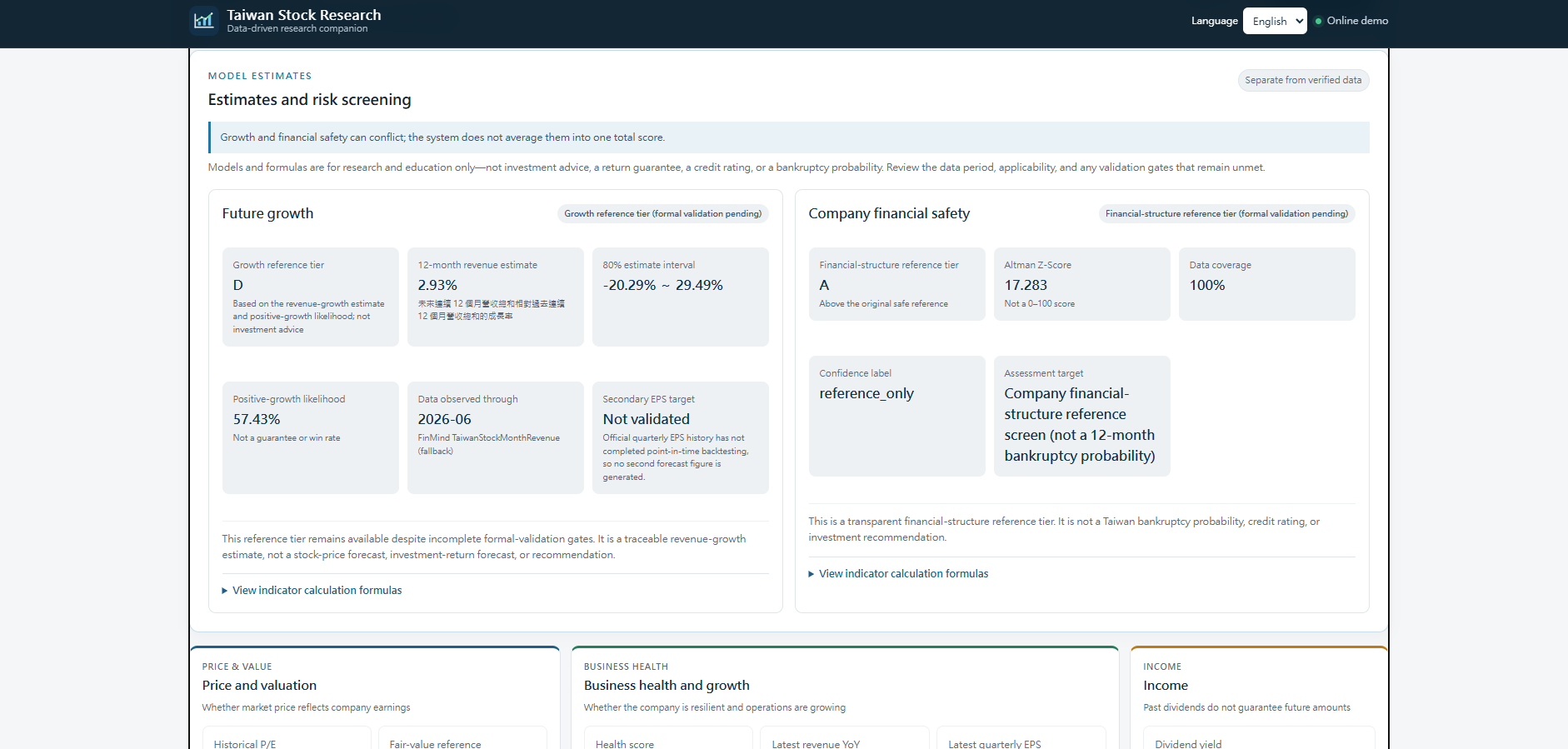
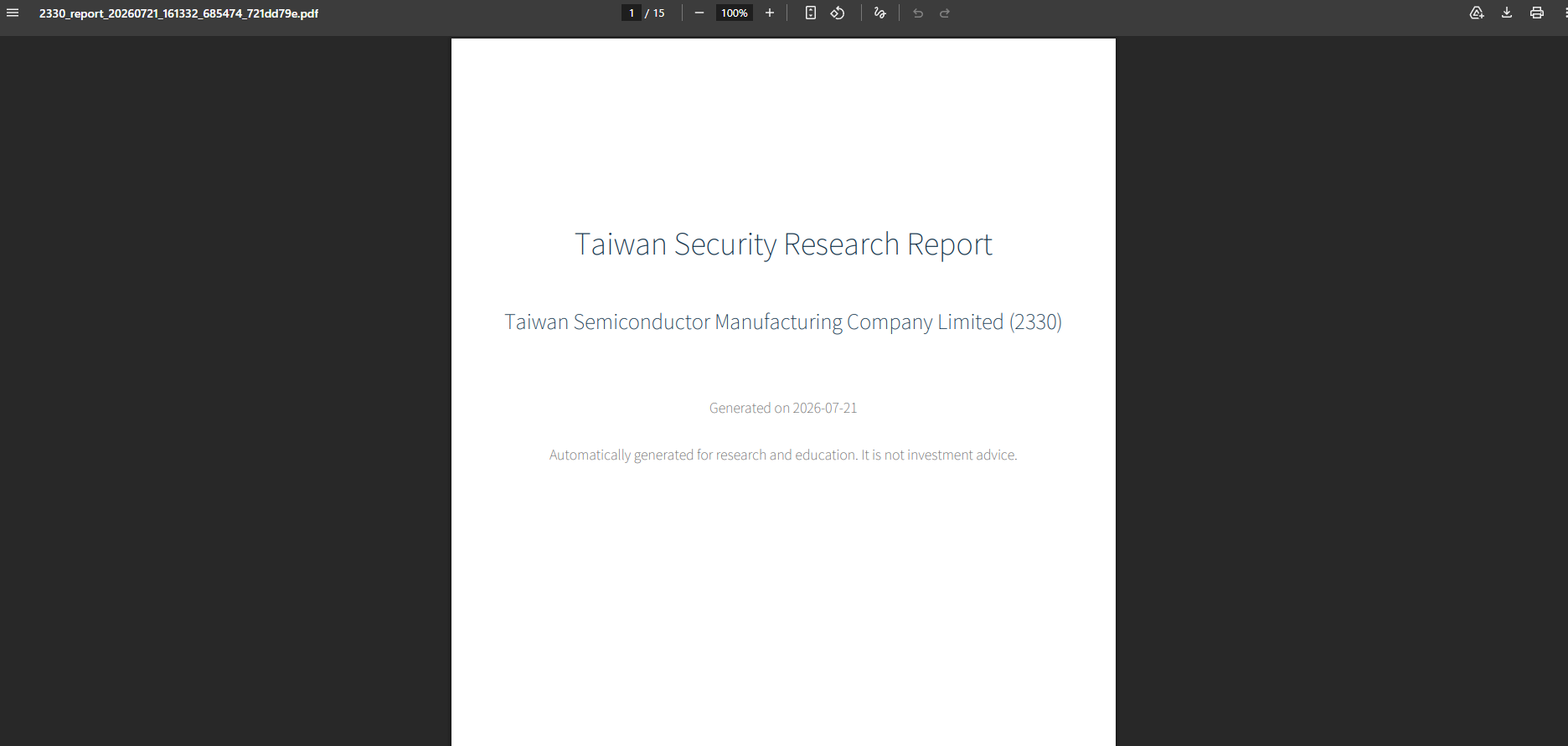
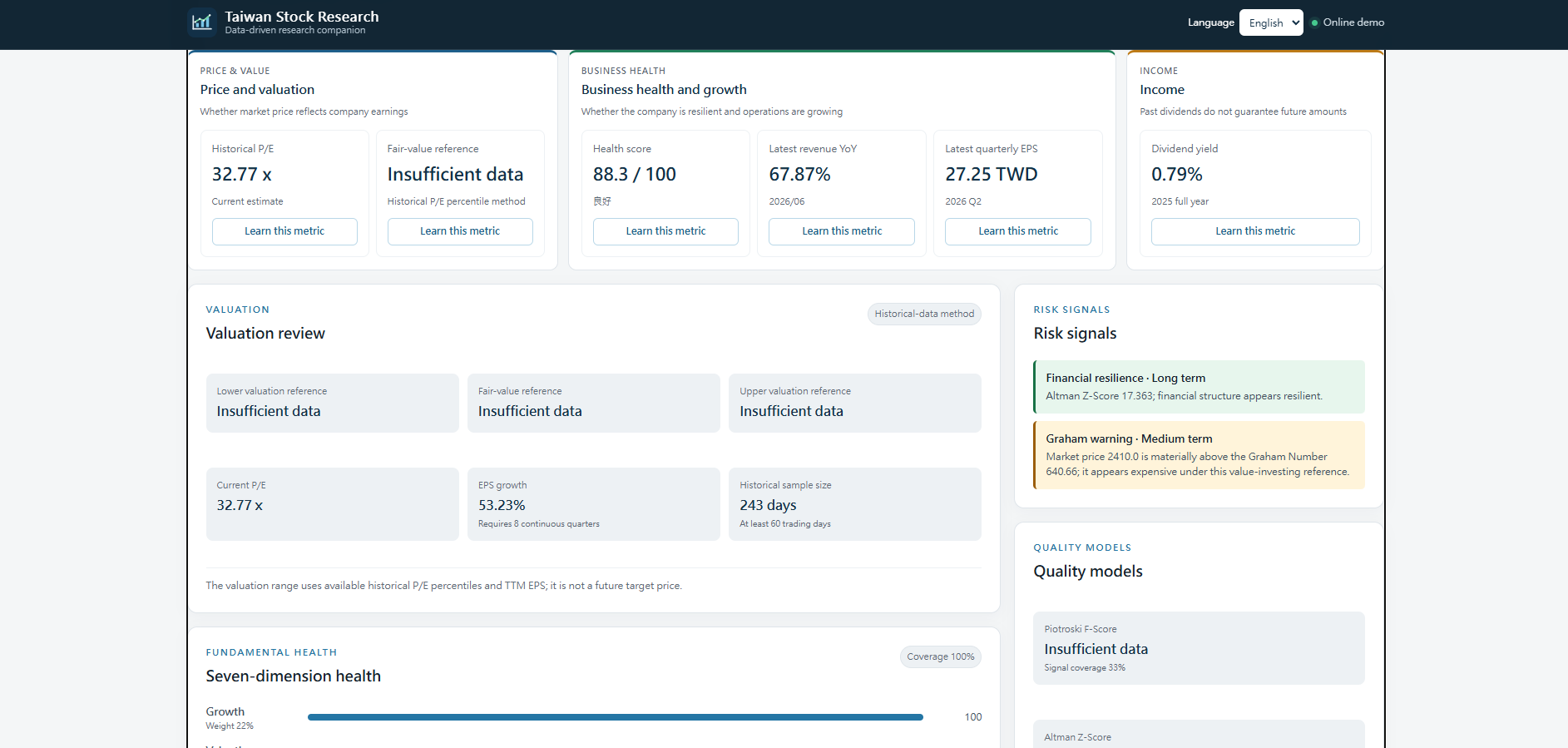
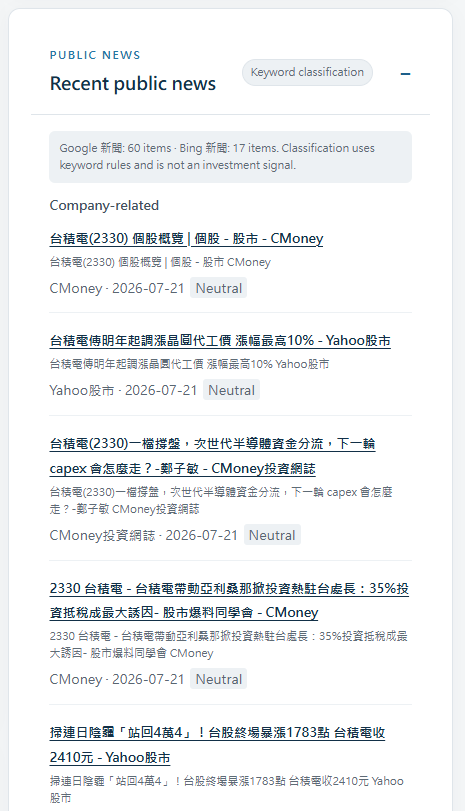
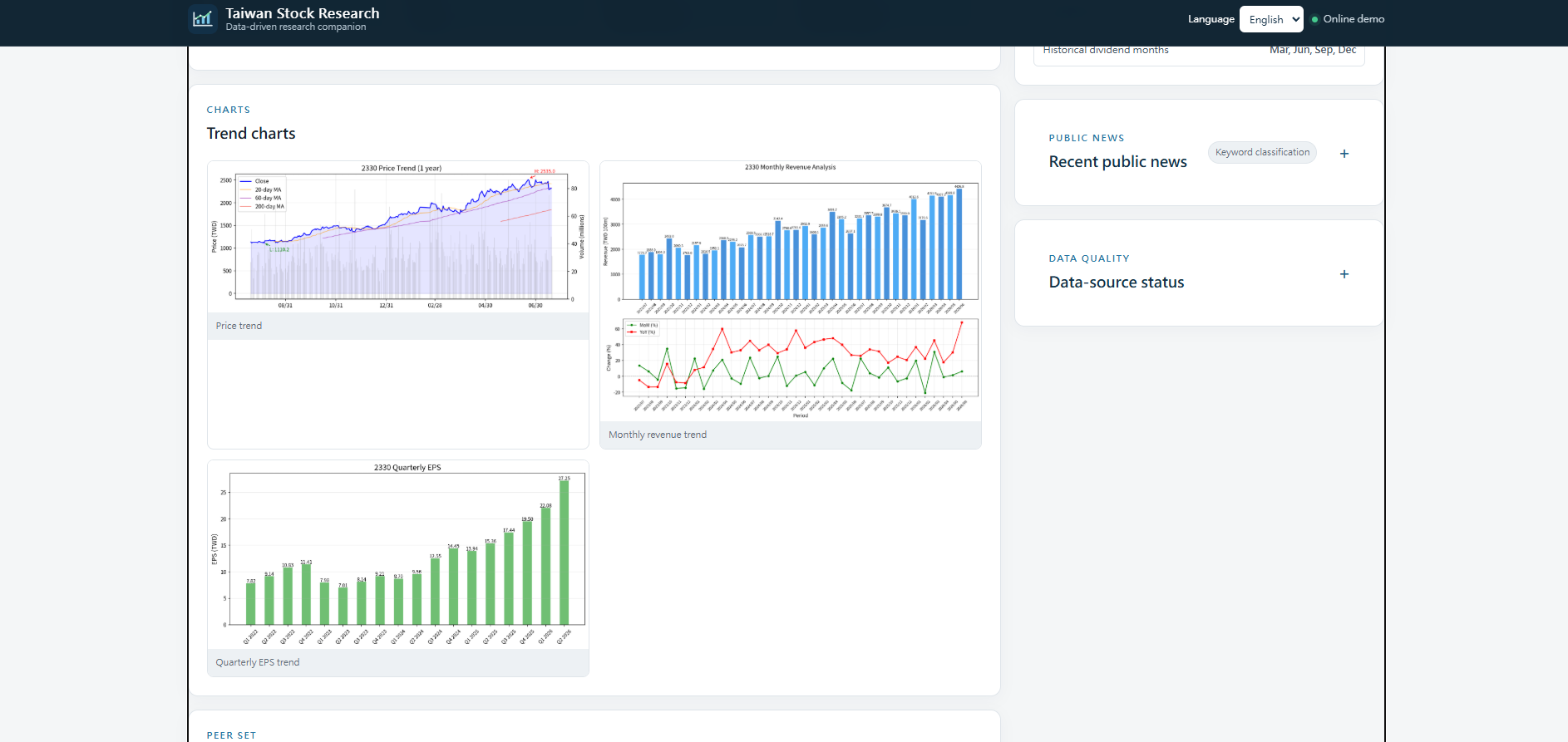
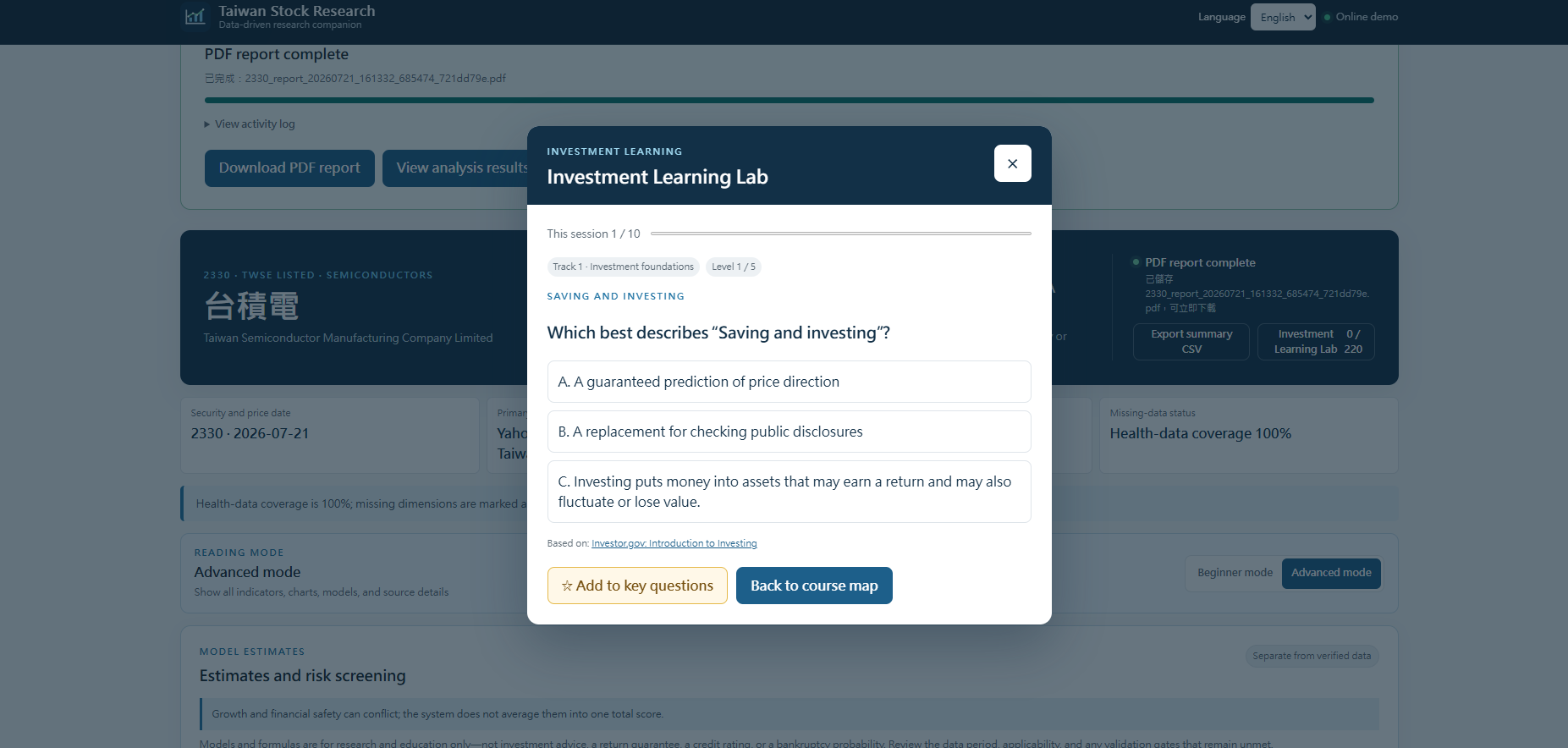
The platform brings together price data, revenue, financial statements, dividends, peers, news, and risk signals. It provides bilingual interfaces, CSV export, and PDF reports. Confirmed facts, fallback data, and model-based references are shown separately so estimates are not mistaken for facts. Its built-in Investment Learning Lab uses interactive questions to teach candlesticks, valuation, financial statements, ETFs, industry research, and news literacy.
### How we built it
We built the platform with Python, Flask, Waitress, a native JavaScript frontend, and an on-demand PDF reporting pipeline. TWSE, TPEx, and the Market Observation Post System are the preferred sources. When official cloud access is temporarily unavailable, the system uses clearly labelled fallback data instead. The system supports both native Windows apps and public render websites. However, the mechanism for multiple users to use the analysis function simultaneously has not been modified, so it currently only supports single-user operation.
### Challenges we ran into
Our biggest challenge was balancing data reliability with source availability. Official endpoints can sometimes return unexpected content in cloud environments, while different sources use different units, update schedules, and field definitions. We also addressed Traditional Chinese PDF garbling, Chinese-English parity for the UI and reports, temporary cloud storage, task concurrency, and the challenge of making many financial indicators understandable for beginners.
### Accomplishments that we're proud of
We are most proud that we did not fabricate data or overstate ratings just to make the interface look complete. The platform clearly identifies official, fallback, stale, and insufficient-data states. Growth and financial safety are presented separately with formulas, limitations, and disclaimers. In addition, the 220-question bilingual Investment Learning Lab makes the project more than a stock-analysis tool: it is also an accessible investment education product.
### What we learned
We learned that the value of a financial product does not come only from models or data volume. It also comes from transparency, traceability, and honest communication of limitations. For beginners, explaining what a number means—and what it does not mean—is often more valuable than presenting a seemingly precise score.
### What's next
Next, we plan to strengthen multi-user deployment, build a more resilient official-data synchronization process, expand specialized analysis for ETFs and financial companies, and continue improving accessibility and educational content. We also aim to build reproducible historical validation workflows so future model assessments can rest on stronger empirical evidence.

Log in or sign up for Devpost to join the conversation.