-
-
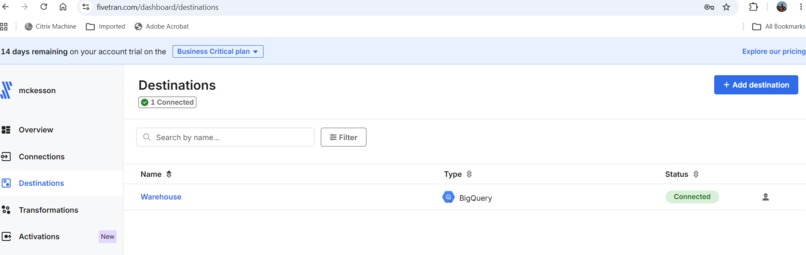
Fivetran Connectors2
-
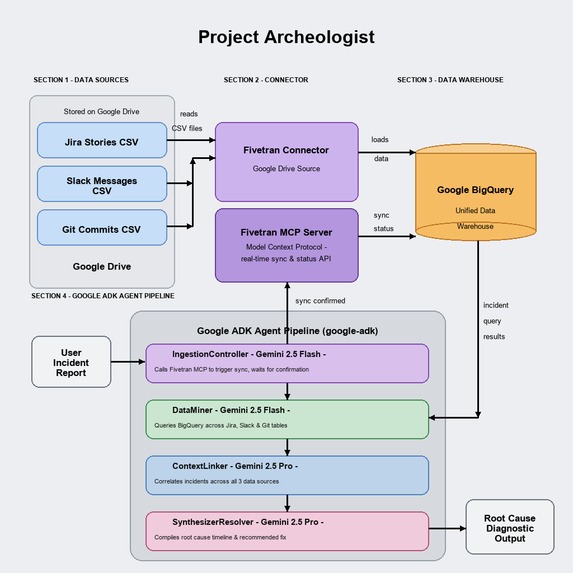
High Level Project Data Archeologist Architecture
-
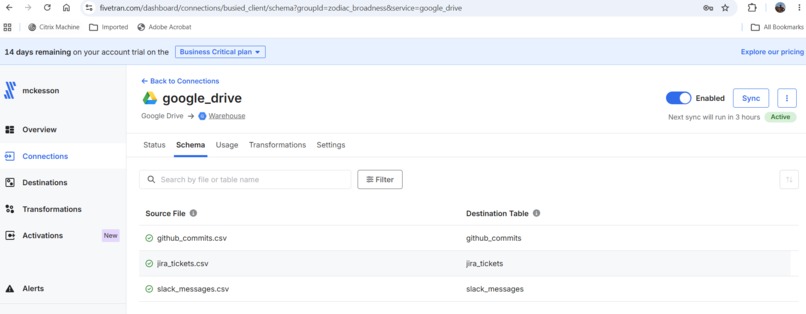
Fivetran Connectors1
-
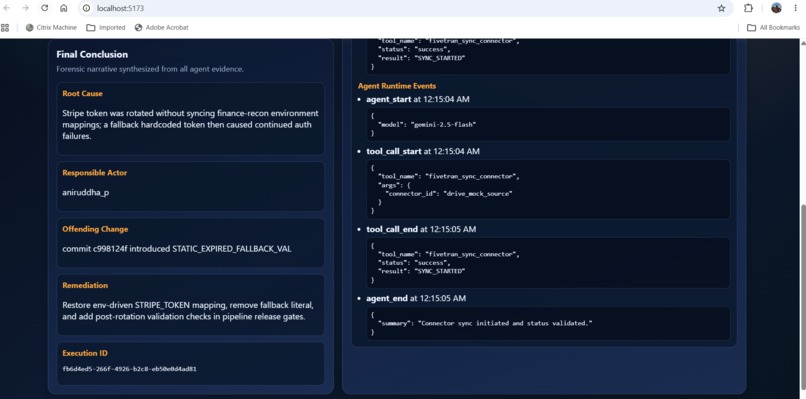
Frontend 2
-
Frontend 1
Inspiration
Project Data Archeologist was inspired by a common real-world failure mode: critical systems break, but the context needed to fix them is fragmented across tools and people. Teams often lose institutional memory due to turnover, siloed communication, and fast-moving changes. We wanted to build a system that could reconstruct that missing context in real time and guide responders toward a concrete fix, not just a vague summary.
Beyond enterprise incidents, we were equally motivated by community impact. The same “lost context” problem appears in public health teams, disaster relief coordination, city services, schools, and nonprofits. In all of these spaces, people are trying to solve urgent problems with incomplete information and distributed workflows. We saw an opportunity to make incident reasoning more accessible, transparent, and actionable across both corporate and community operations.
What it does
Project Data Archeologist is a code-first, autonomous multi-agent platform that helps teams detect and diagnose institutional knowledge gaps and data complexity across enterprise systems as well as applicable to Community Operations. It transforms telemetry ingestion from a passive background routine into a dynamic, agent-directed operation.
How we built it
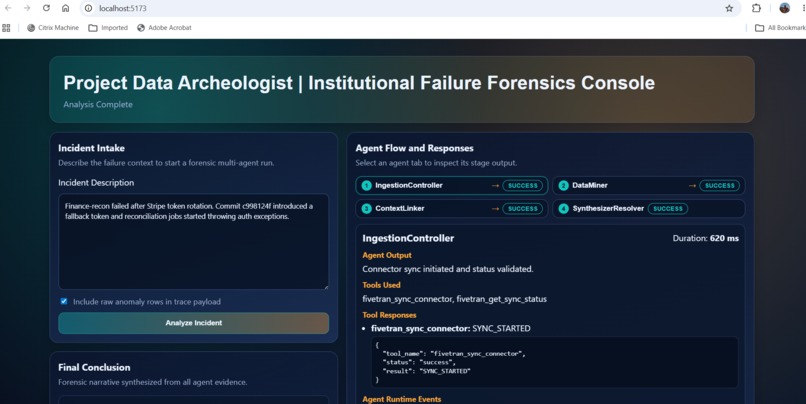
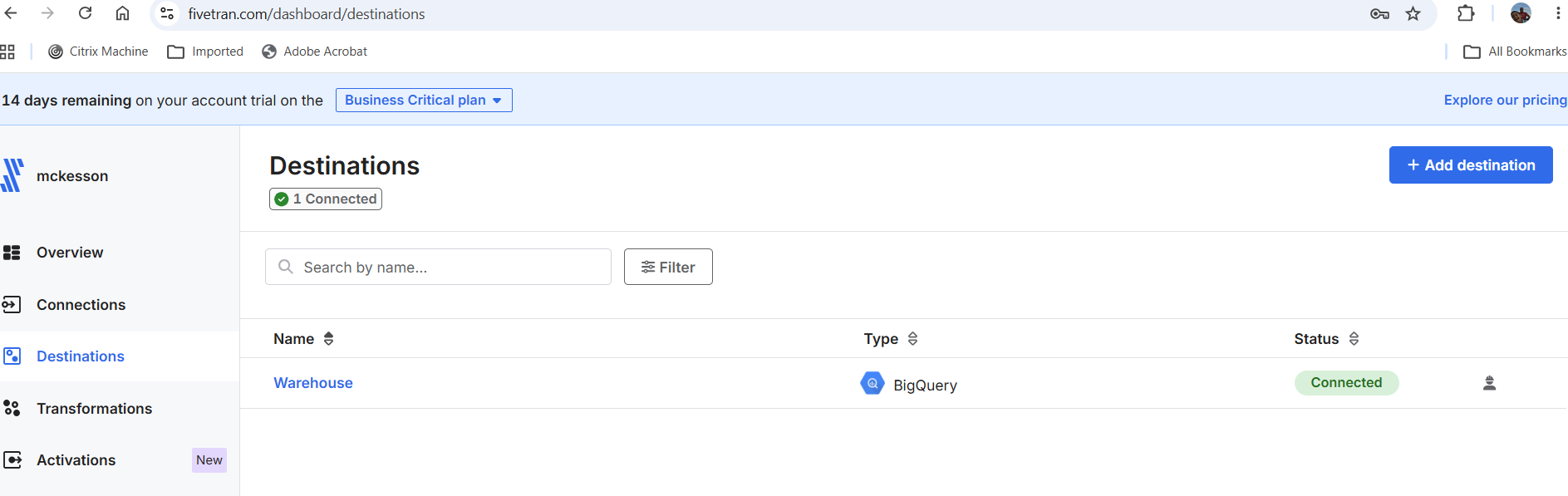
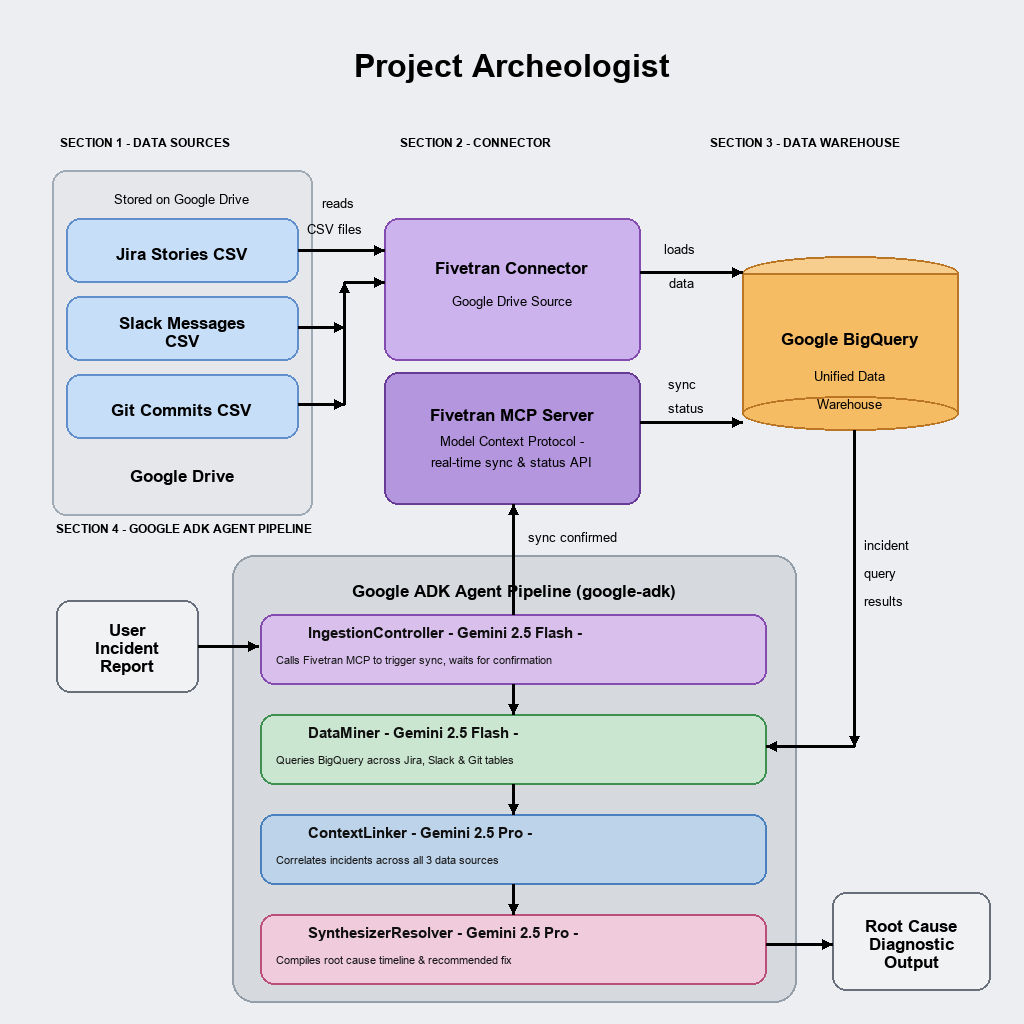
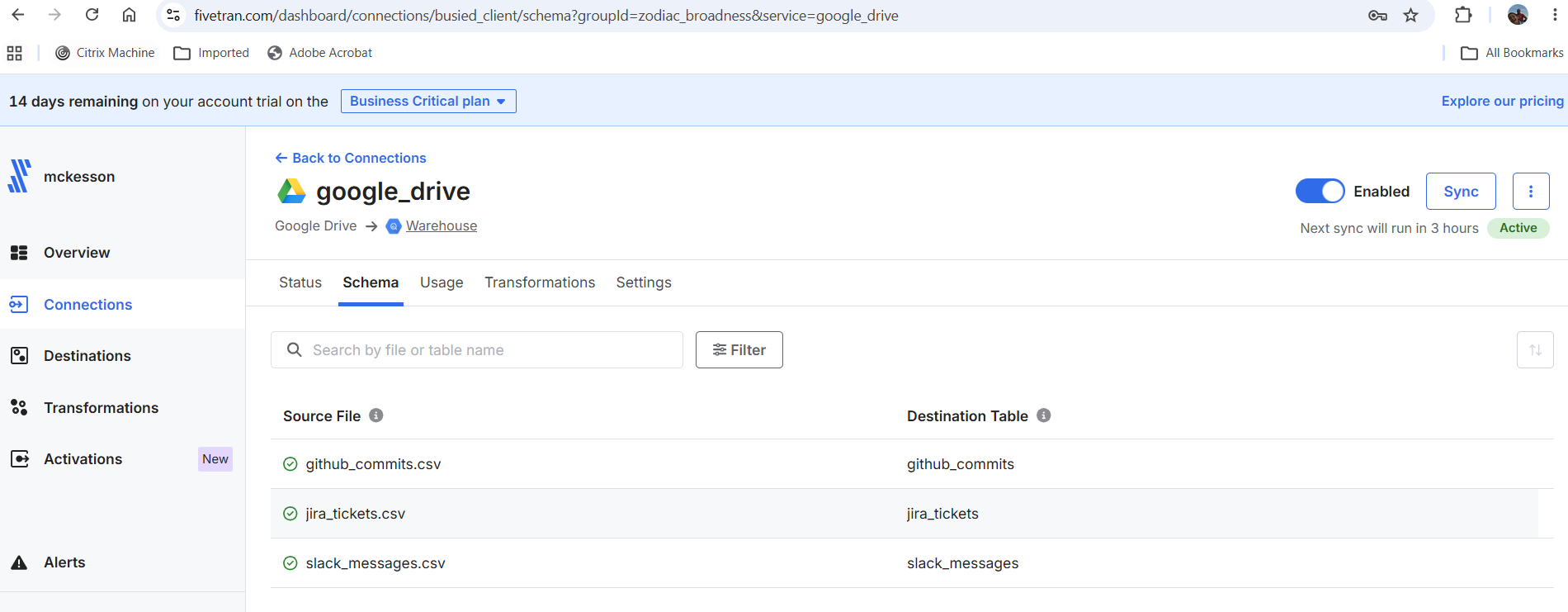
We built Project Data Archeologist as a sequential multi-agent platform using Google ADK with Gemini 2.5 Flash and Pro models. We integrated Fivetran MCP tools to actively trigger and verify ingestion status, then used BigQuery-backed datasets as the analytical foundation for cross-domain investigation. To make it practical and usable, we implemented:
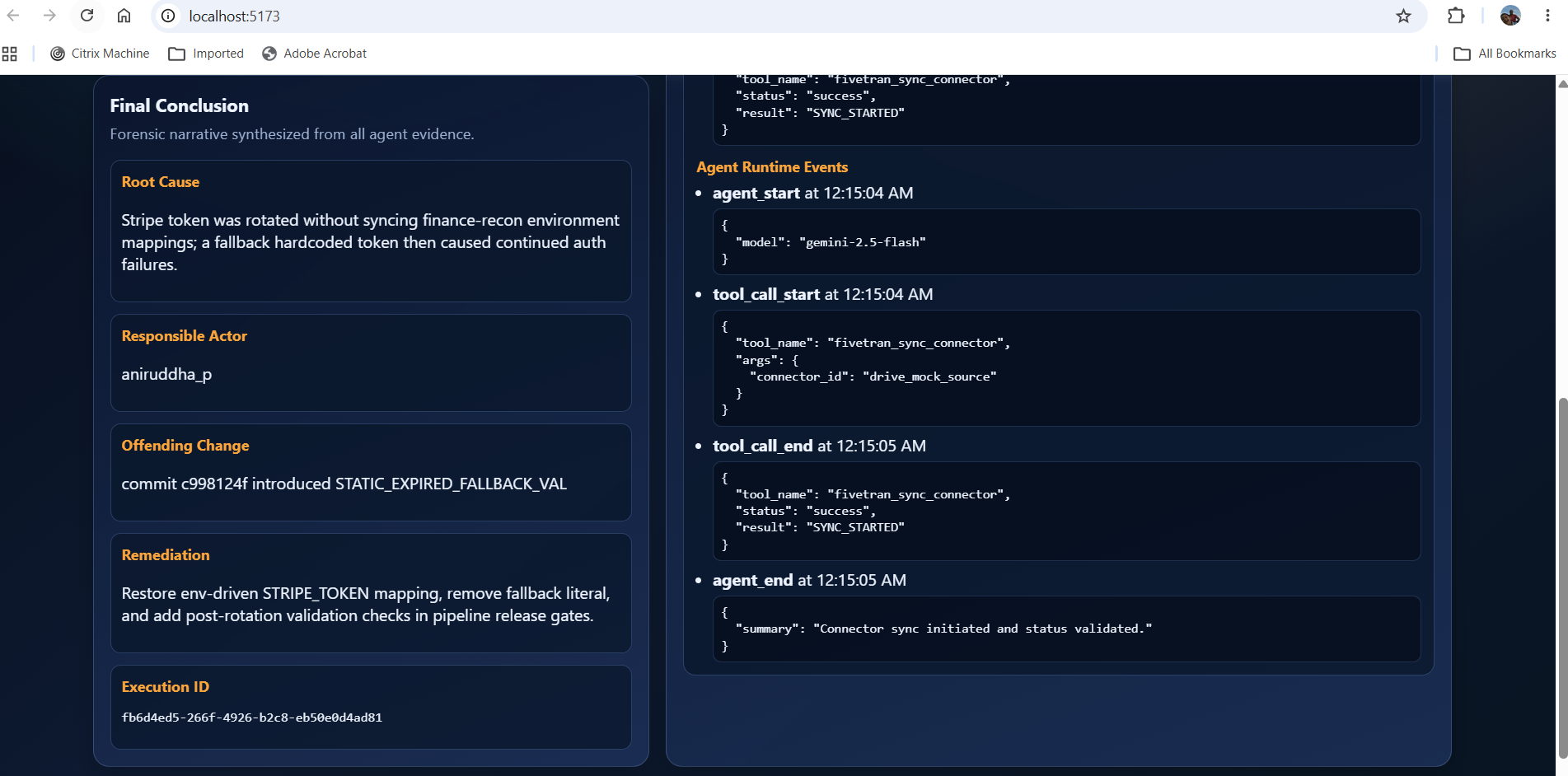
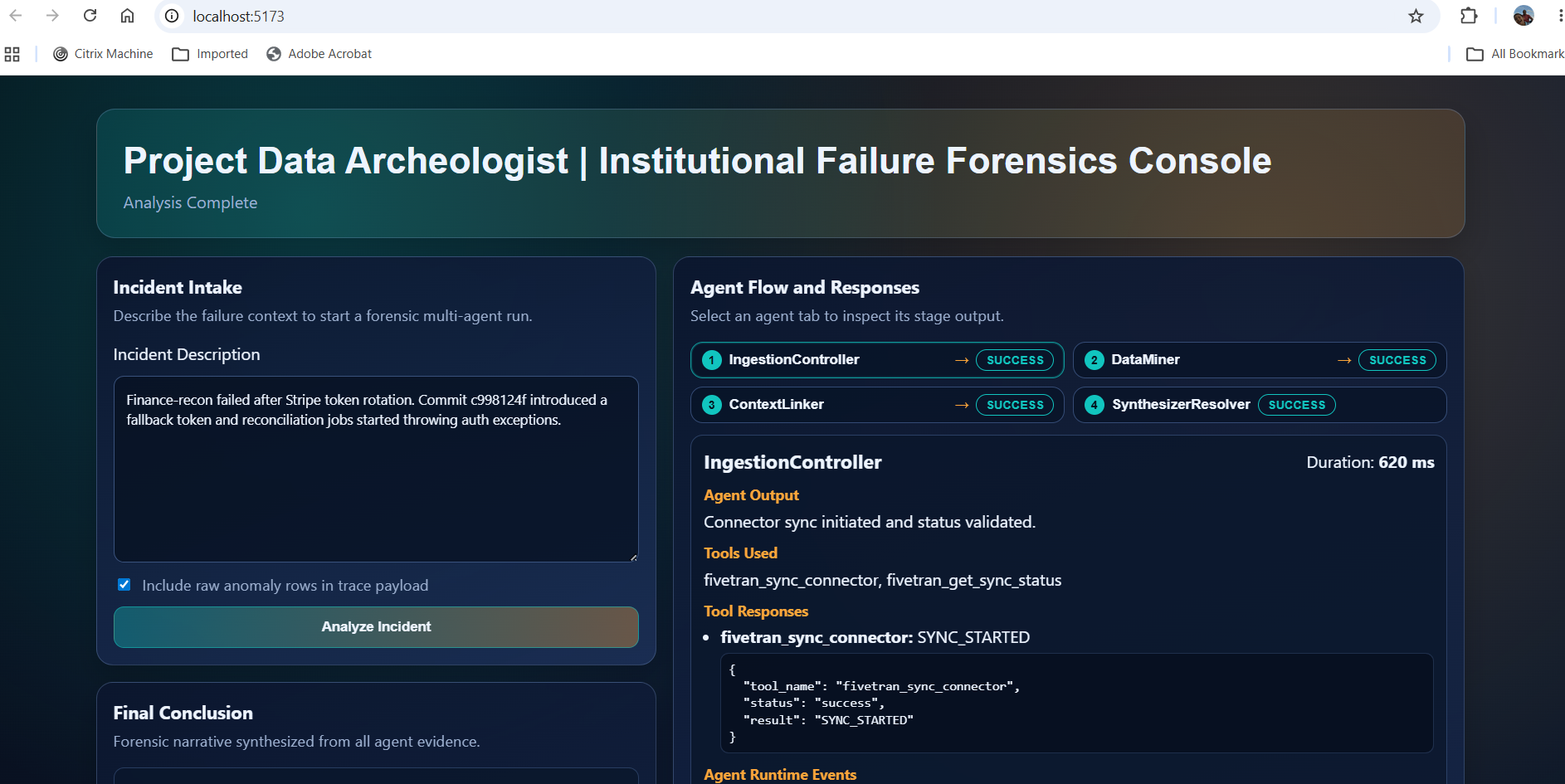
A deterministic multi-agent runtime pipeline for repeatable investigations An API layer for trace execution and structured output A frontend UI for incident intake, agent-by-agent visibility, and final remediation output Mock telemetry generation and testing workflows to validate end-to-end behavior This architecture lets the system move from raw operational signals to timeline-level root cause and recommended resolution.
Challenges we ran into
Our main challenges were technical integration and operational consistency. We navigated dependency and environment constraints while combining ADK runtime behavior, model compatibility, API contracts, and UI expectations.
Accomplishments that we're proud of
I am proud of how we balanced speed and rigor: we wanted fast incident response without sacrificing evidence quality. The solution was a closed-loop design where data freshness is validated before deep analysis, and every conclusion can be traced back to source artifacts.
What we learned
We learned that trustworthy AI operations require more than a strong model. The biggest lesson was that orchestration, data freshness, and traceability matter as much as reasoning quality. A structured multi-agent flow improved reliability by assigning clear responsibilities: ingestion validation, data mining, cross-source correlation, and final synthesis.
We also learned that user trust comes from visibility. Showing the chain of evidence from source events to final conclusion helps users verify outcomes and reduces black-box anxiety. This is especially important in community-serving contexts where accountability and explainability are essential.
What's next for Project Data Archeologist
Expand data connectors beyond the current stack Create a benchmark set of known incidents with expected root causes Strengthen trust and governance Add confidence scores and “why this conclusion” panels Launch community-impact pilots- civic services escalation tracing (recurring service outages).

Log in or sign up for Devpost to join the conversation.