-
-
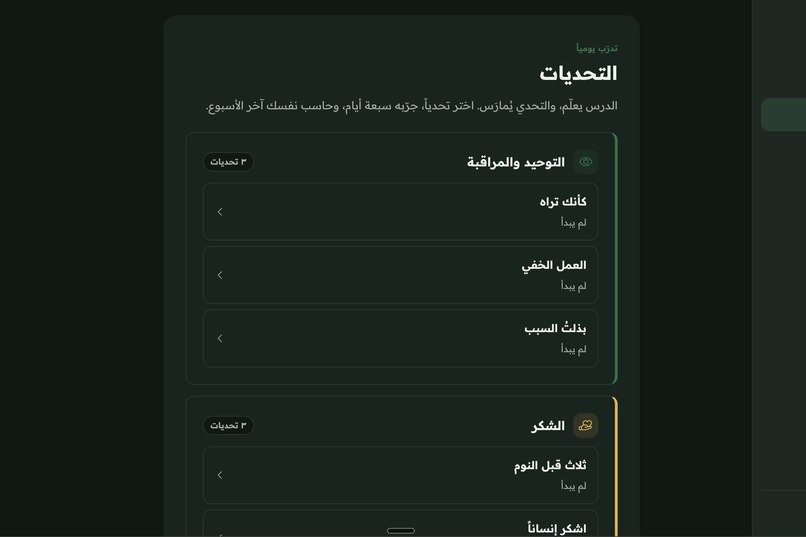
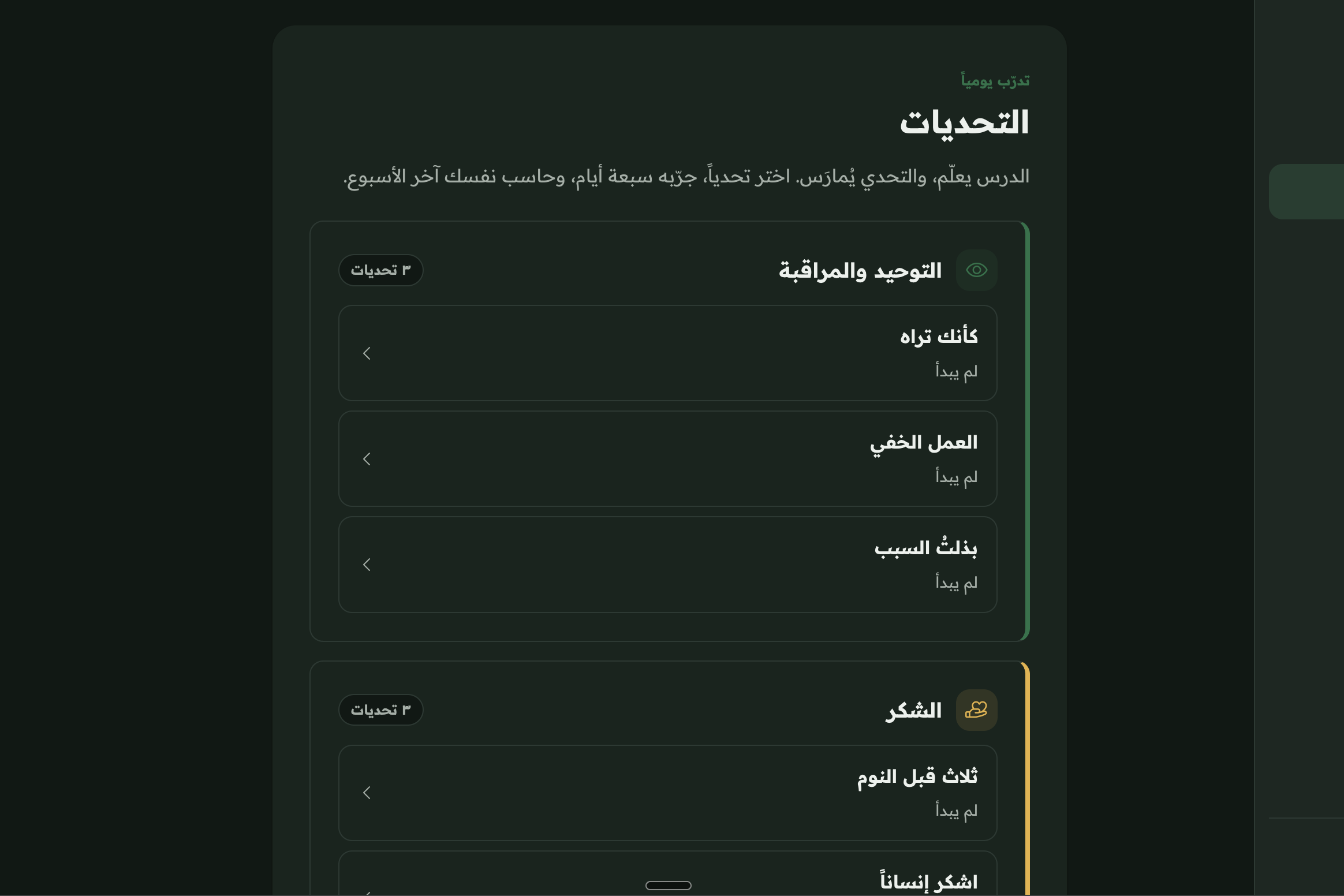
student Challenge page
-
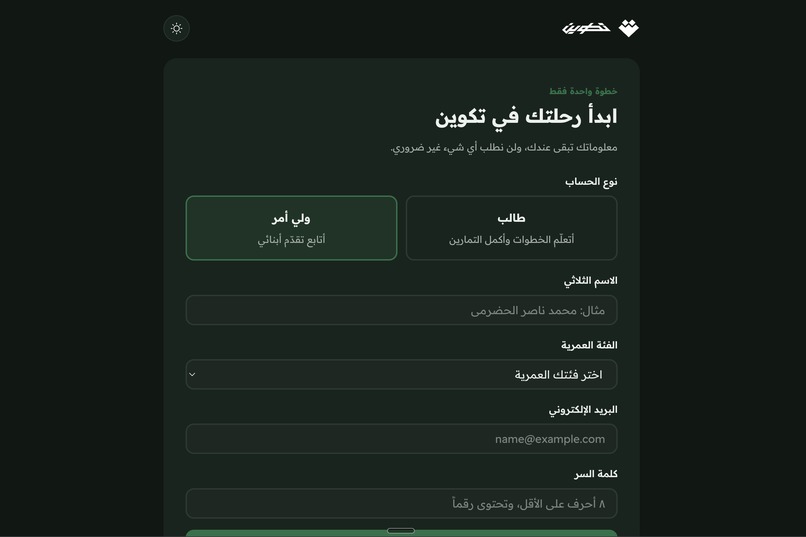
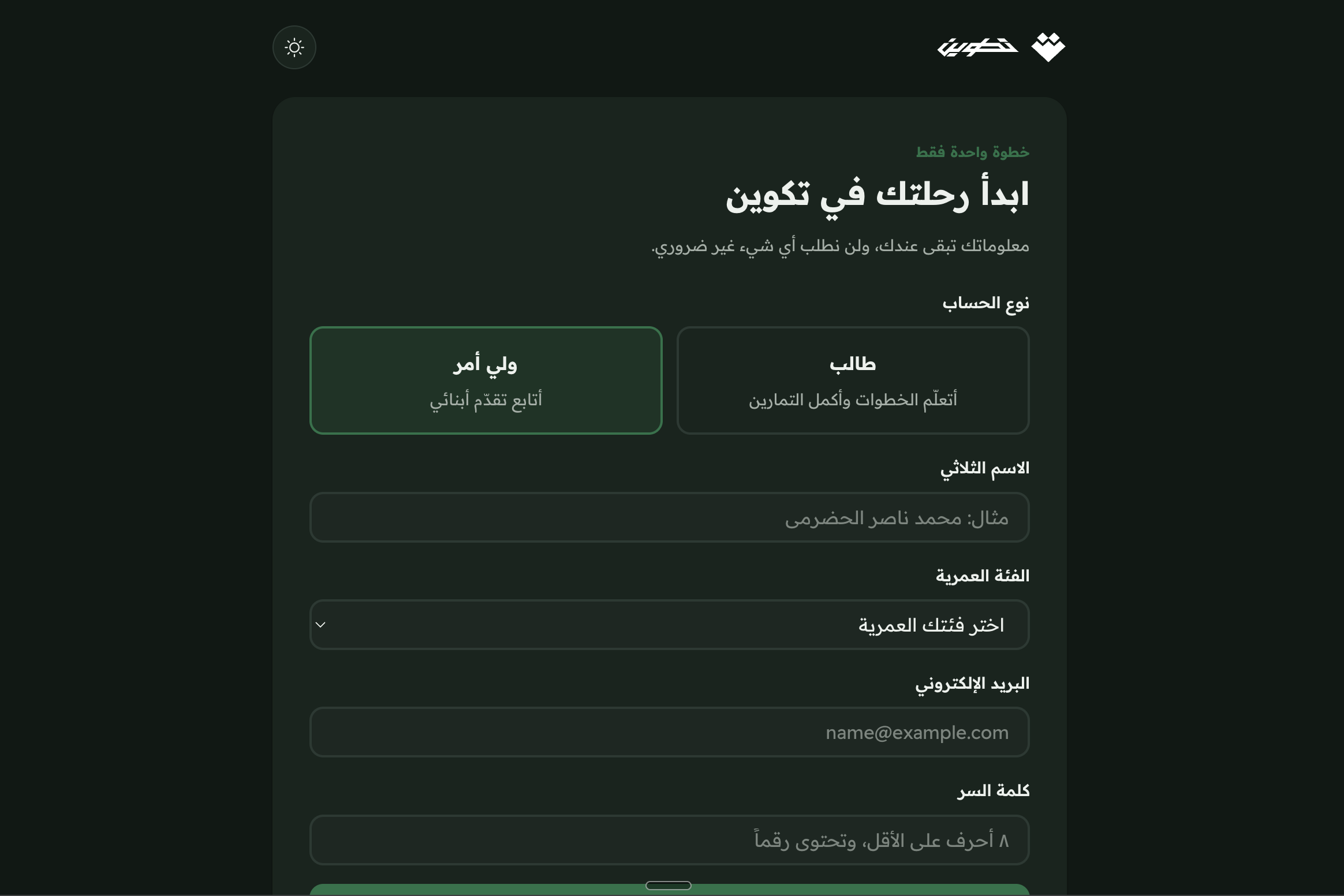
registration
-
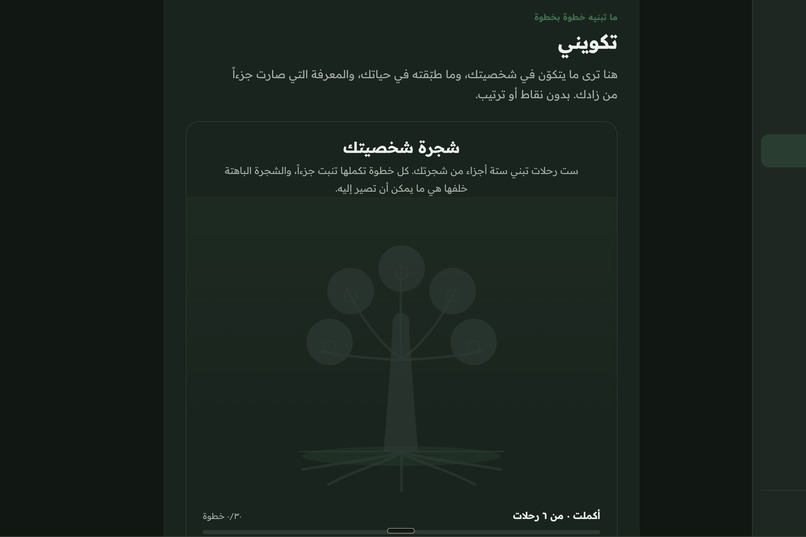
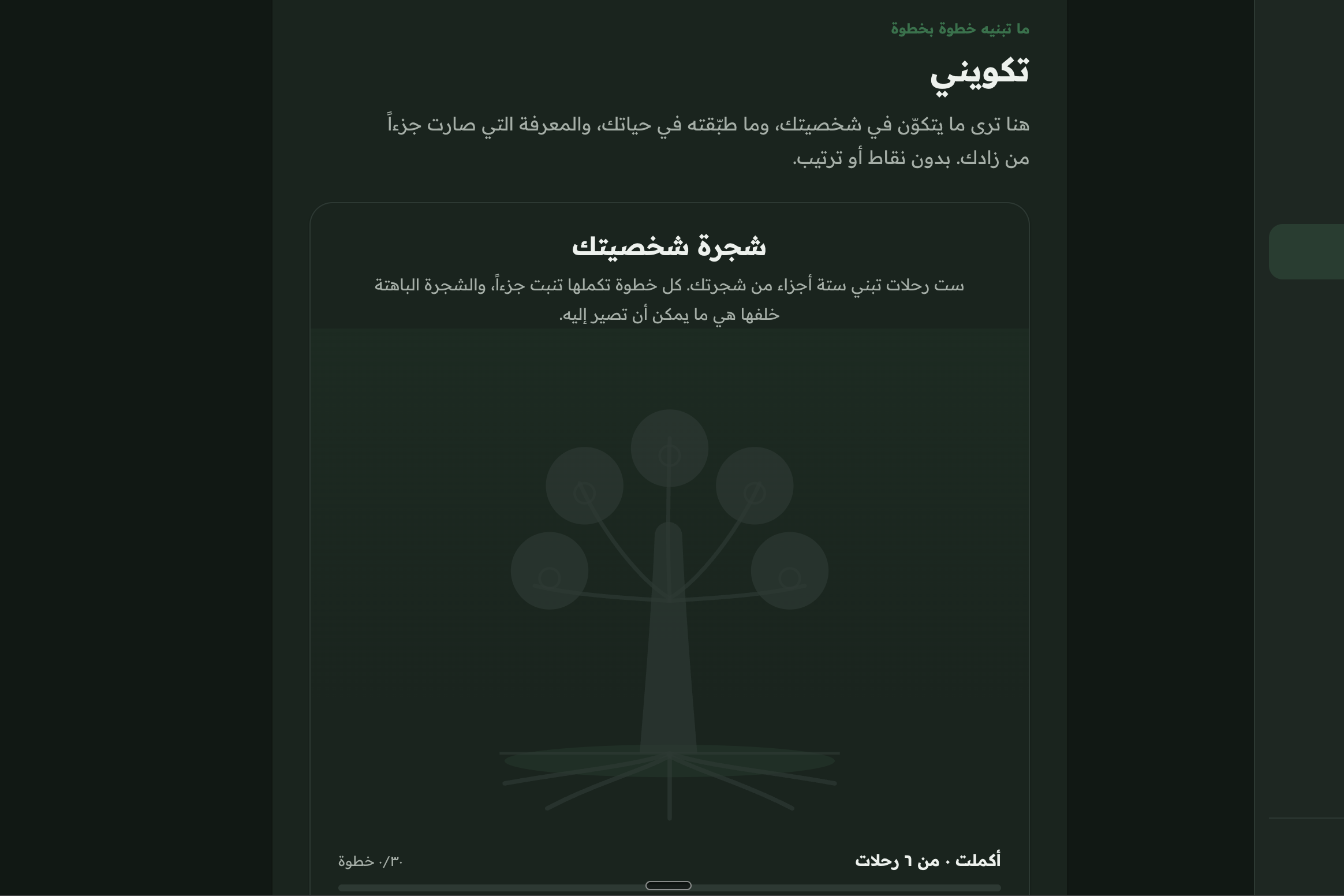
Student Takweeni Page
-
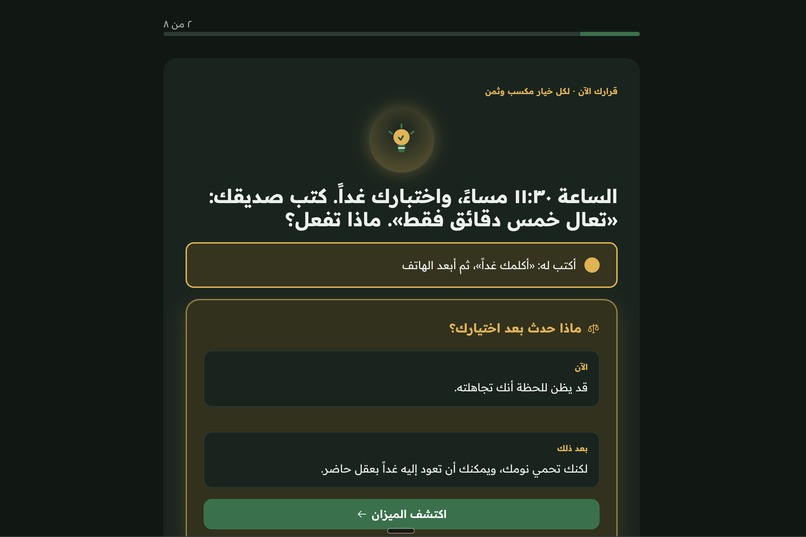
One page of student course (1/4)
-
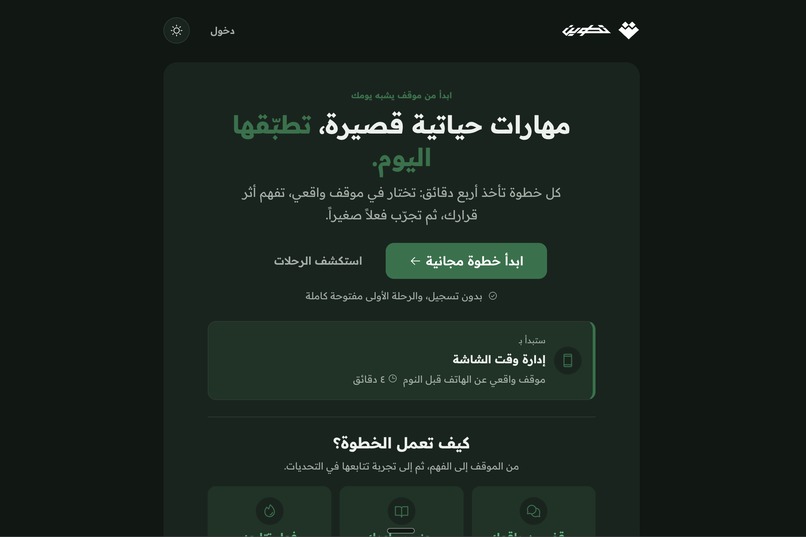
welcome page
-
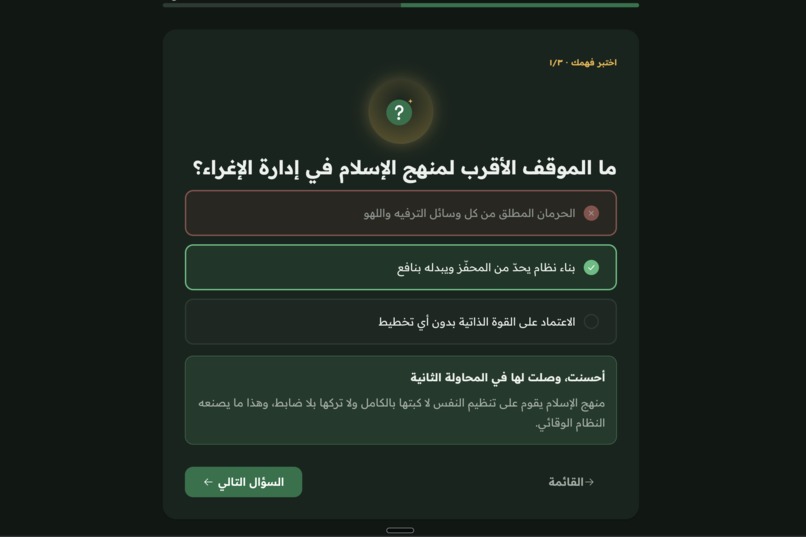
One page of student course (3/4)
-
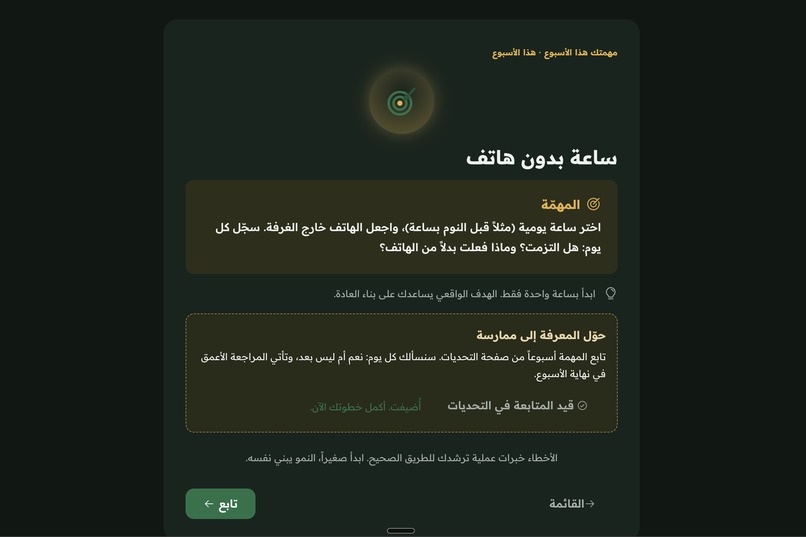
One page of student course (4/4)
-
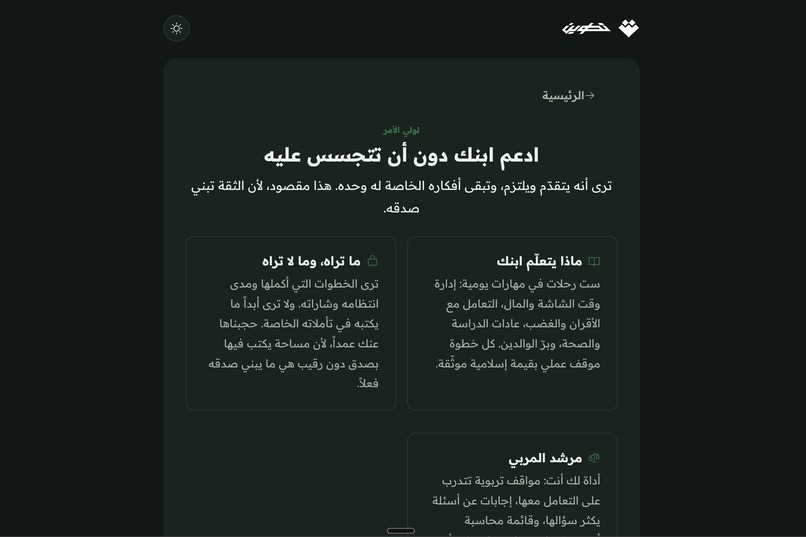
parent welcome page
-
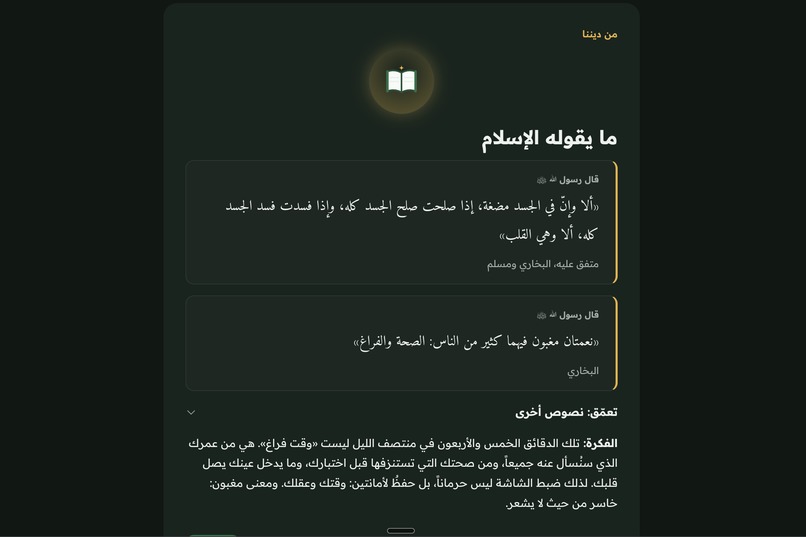
One page of student course (2/4)
-
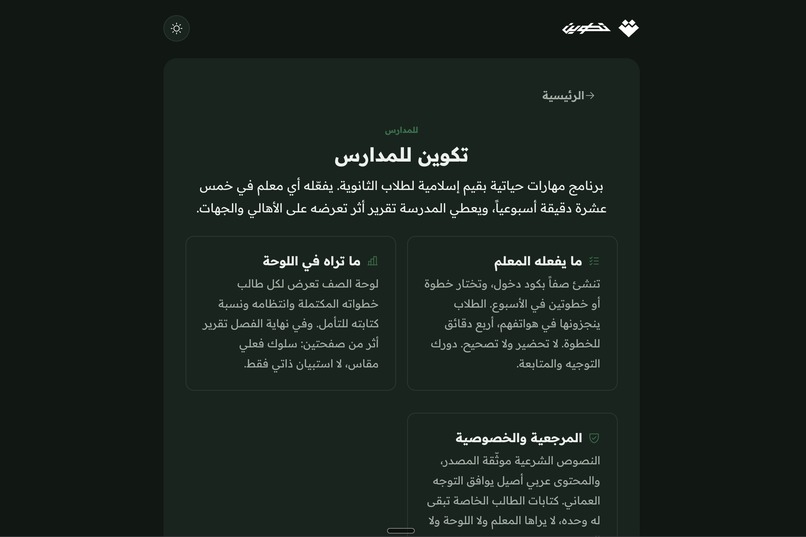
school welcome page
-
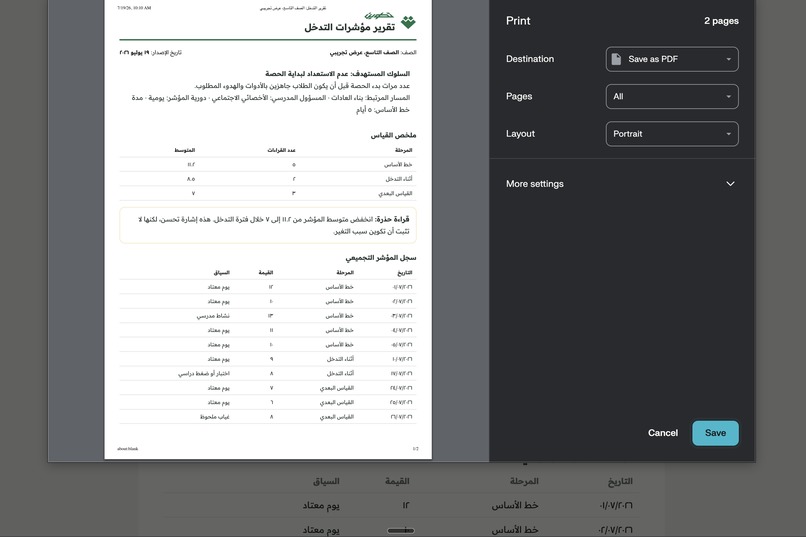
class report
-
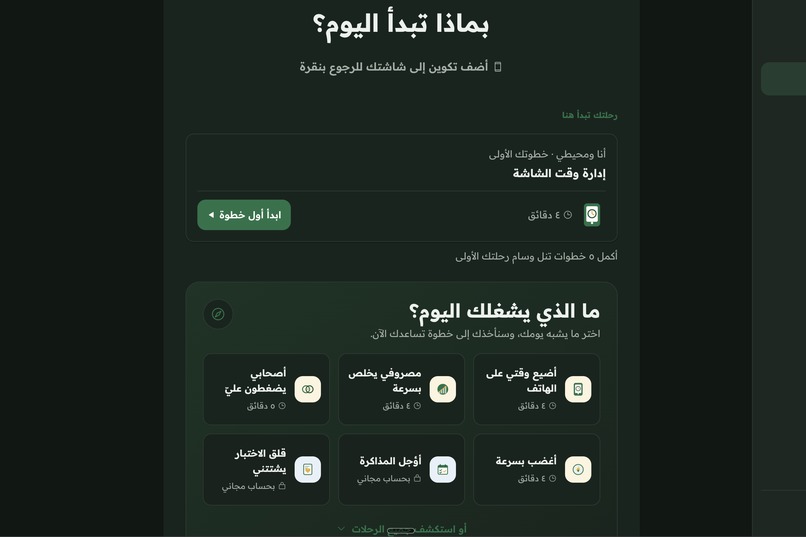
Student Journey Page
Inspiration
While working as an elementary school teacher, I noticed a gap that stayed with me. Students often knew what good behavior looked like, but that knowledge did not always reach the everyday moments that shaped a classroom: how they spoke to a teacher, treated school staff, responded to a parent, handled peer pressure, or managed their own time.
The problem was not simply a lack of advice. Students, parents, and teachers were each trying to help, but they were doing so in separate spaces. I wanted to build a better bridge between what a young person learns, the values rooted in their Islamic faith, and the small decisions they make each day.
That idea became تكوين (Takween), an Arabic platform designed to turn values into lived behavior through short, practical experiences shared across the student, parent, and school journey.
What it does
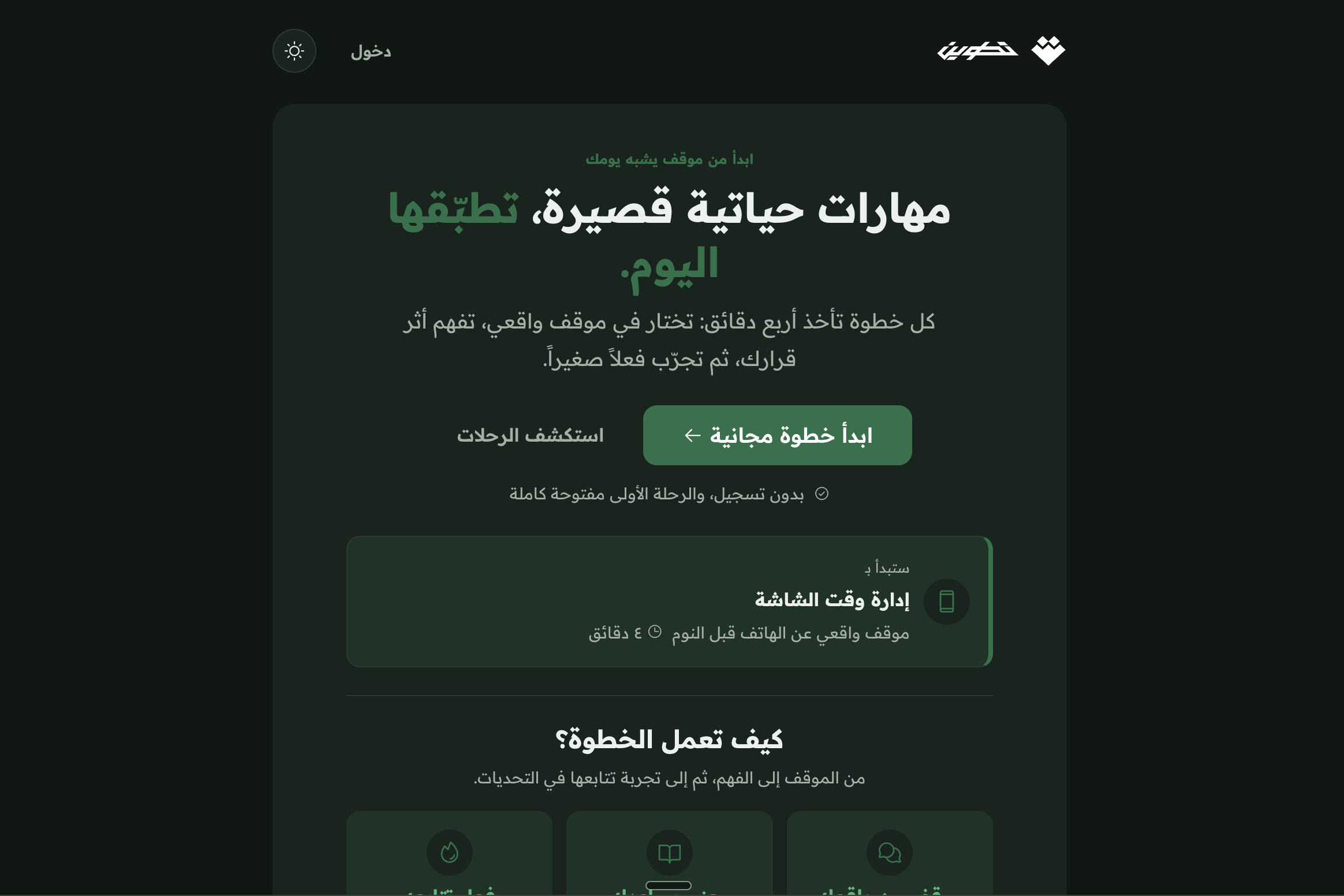
Takween is a free Arabic web platform for individual students aged 12 to 16. It helps them move from knowing a value to practicing it through short learning steps and seven-day challenges.
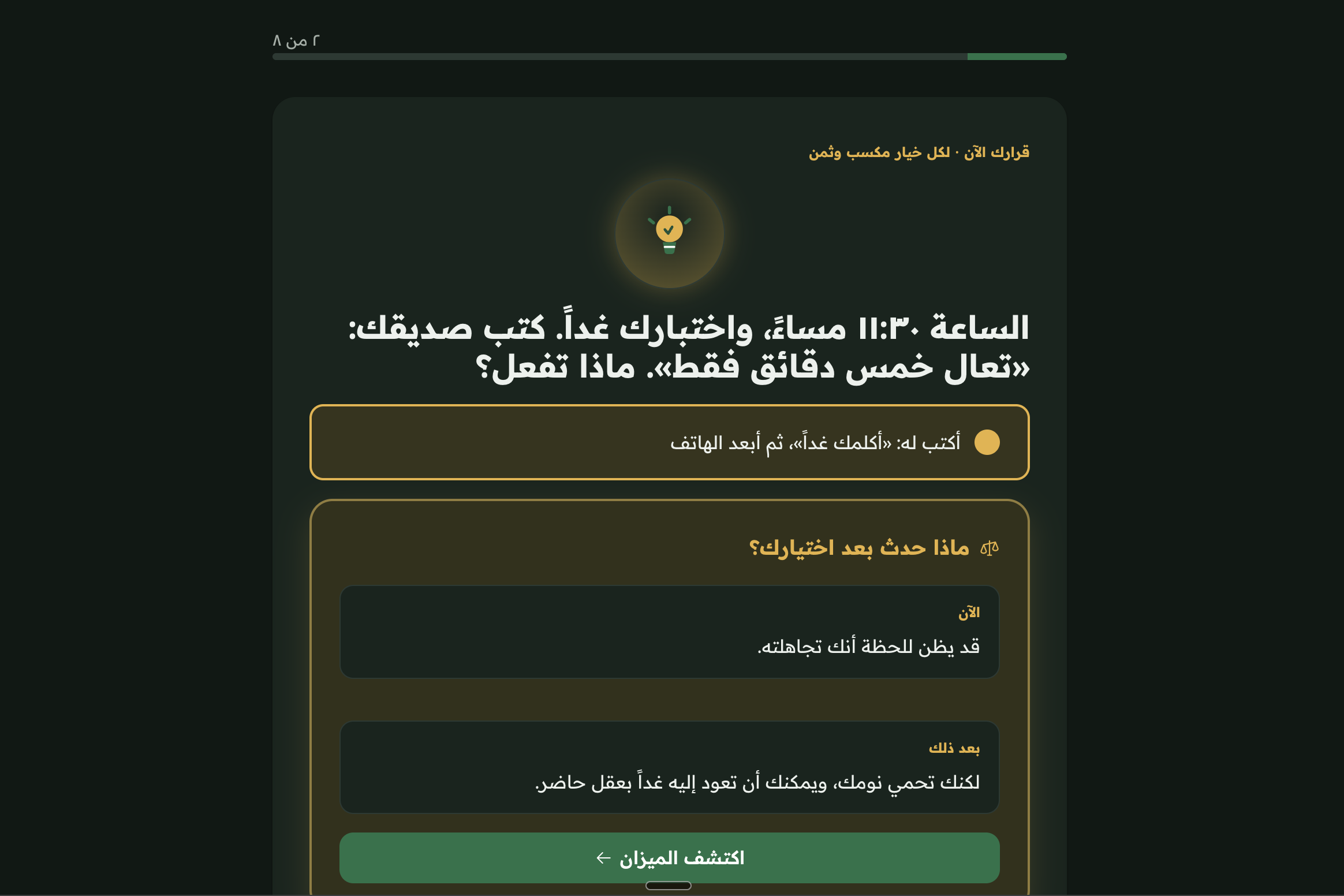
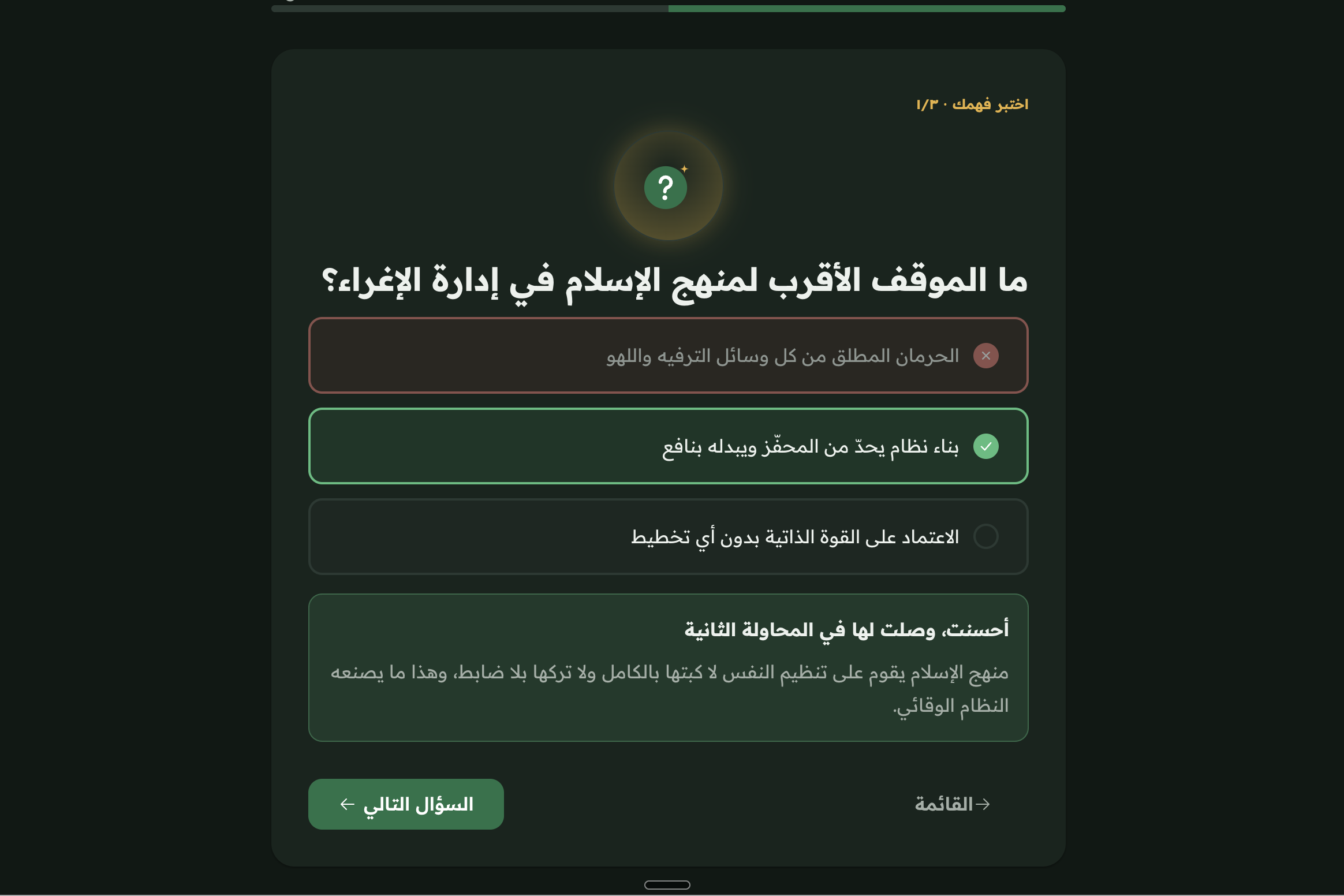
Instead of opening with a lecture, Takween starts with a situation a teenager may actually face, such as excessive screen time, peer pressure, anger, delayed studying, or test anxiety. The student makes a decision, sees its immediate and later consequences, then discovers the relevant Islamic principle and applies it to a new situation. A short quiz gives the student a second attempt and explains the reasoning, so assessment becomes part of learning rather than a final judgment.
The current product includes:
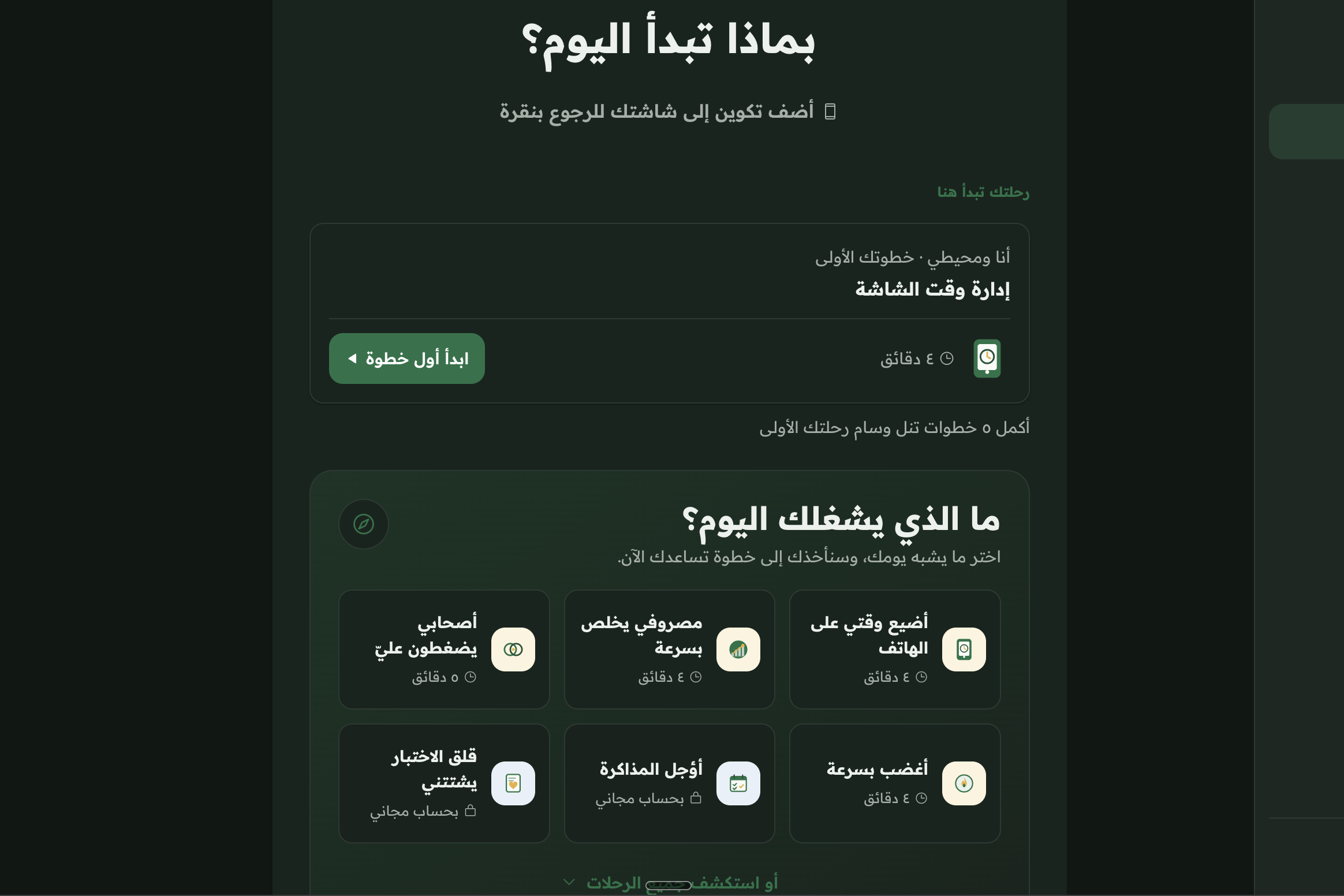
- Six learning journeys with 30 complete steps covering self-awareness, habits, study, health, family, and the Quran.
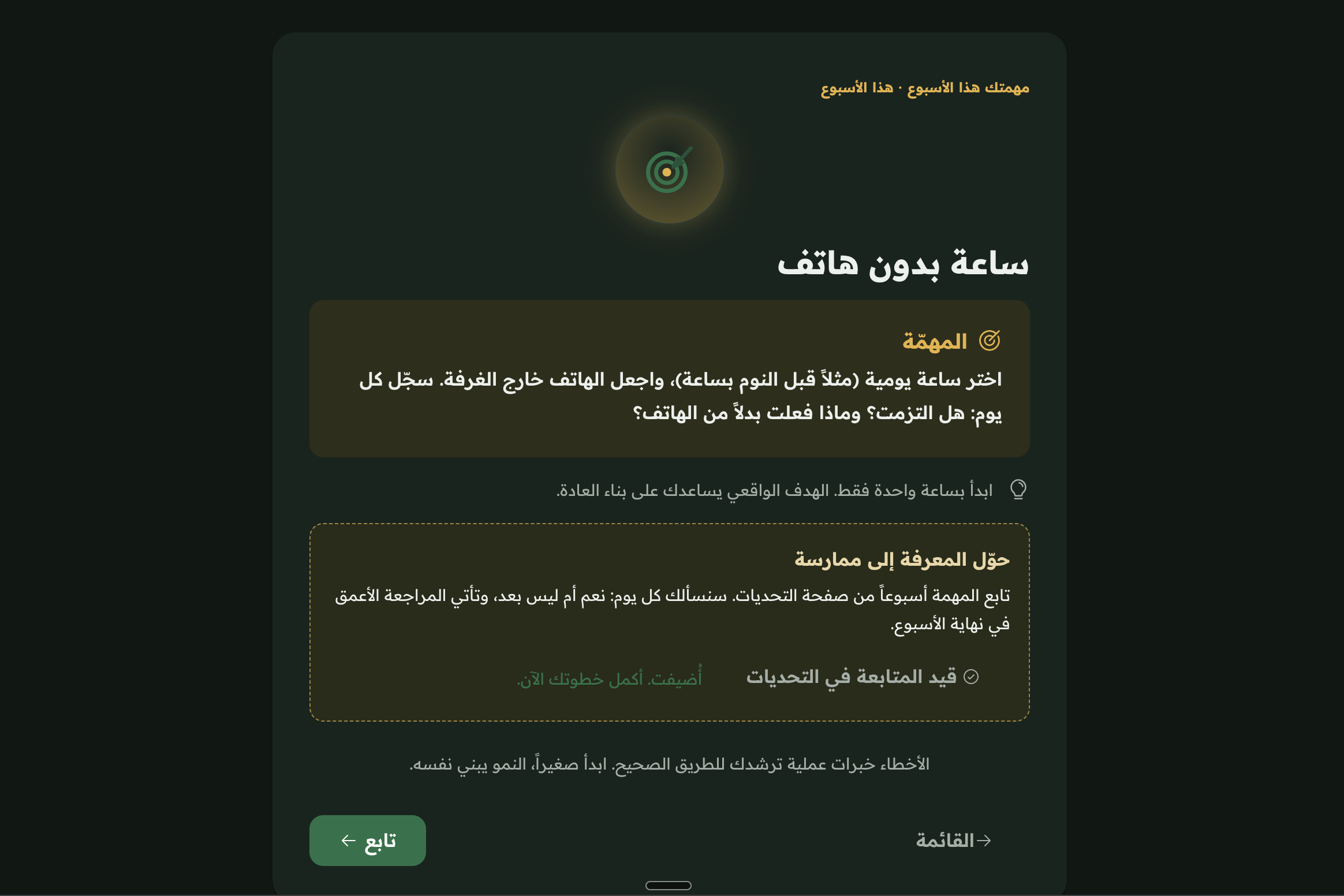
- Eight connected stages in every step: a real-life situation, a decision, an Islamic source, an application, a short quiz, a practical mission, a private reflection, and a closing action.
- A “What is on your mind today?” entry point that takes students directly to a relevant step instead of asking them to understand a course structure first.
- Seven-day challenges that turn a lesson mission into a small daily practice.
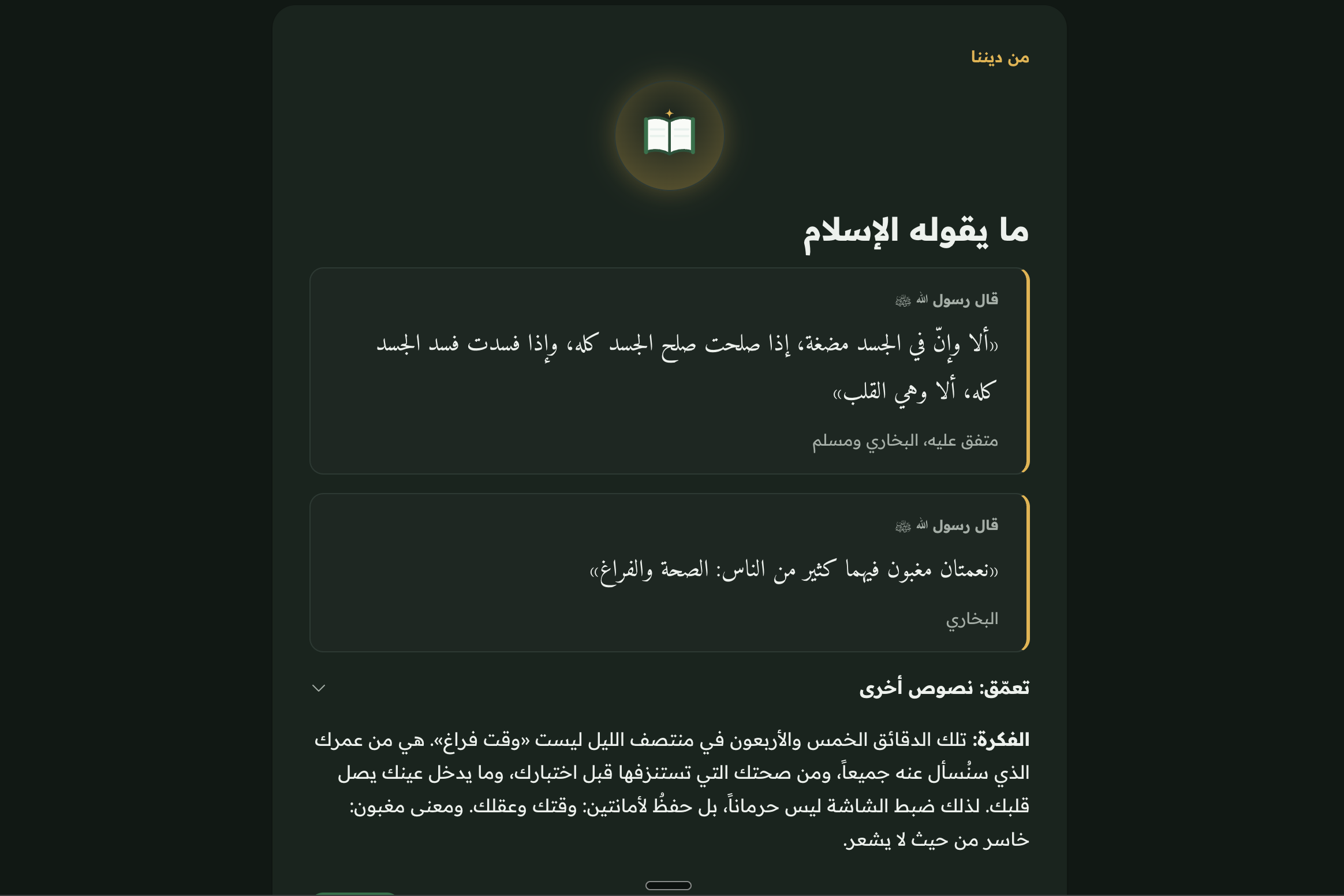
- A personal growth view that shows what the student is building and practicing without turning growth into coins, points, or public competition.
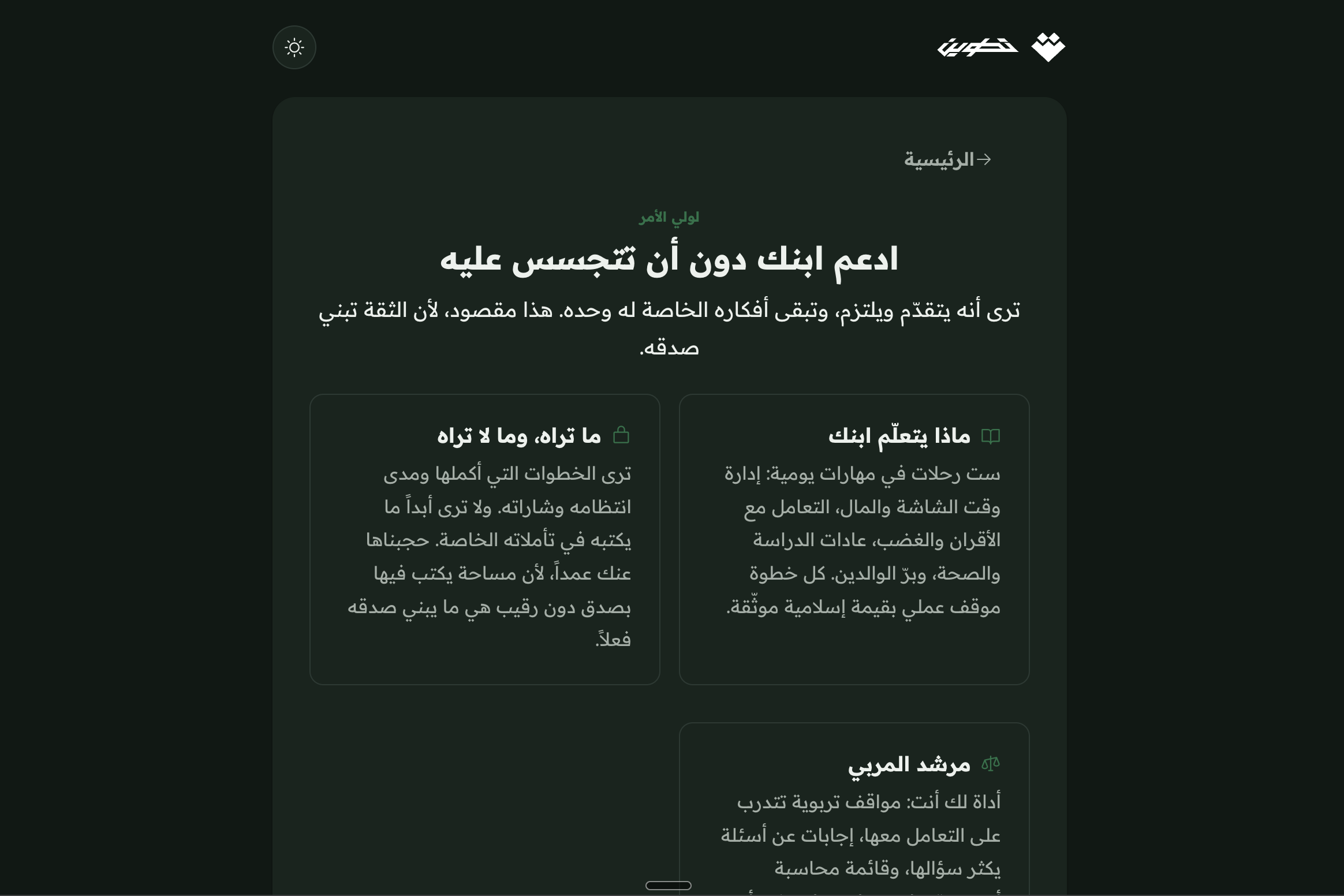
- A parent experience that shows completion indicators and offers practical guidance, while never revealing the student's private reflection.
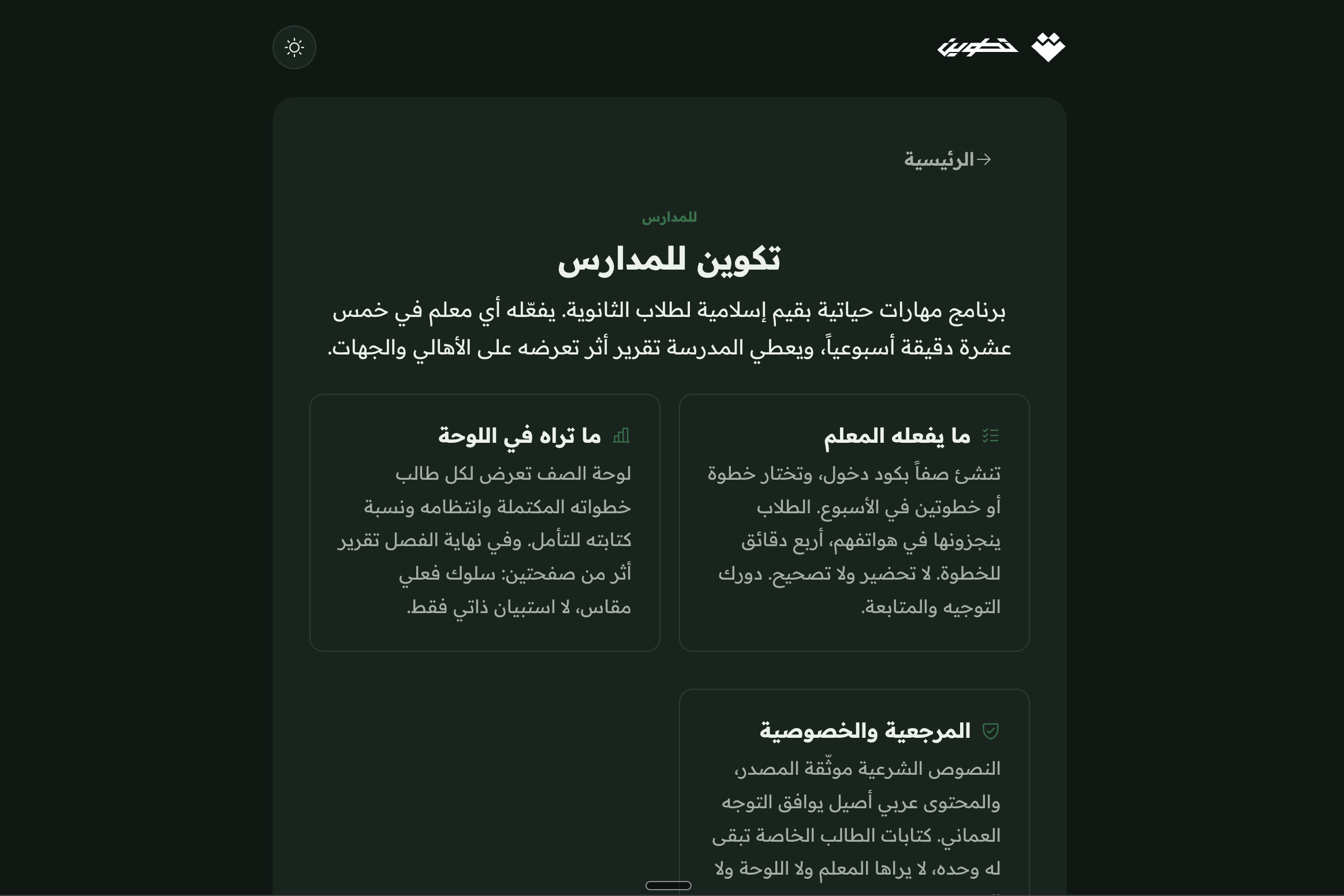
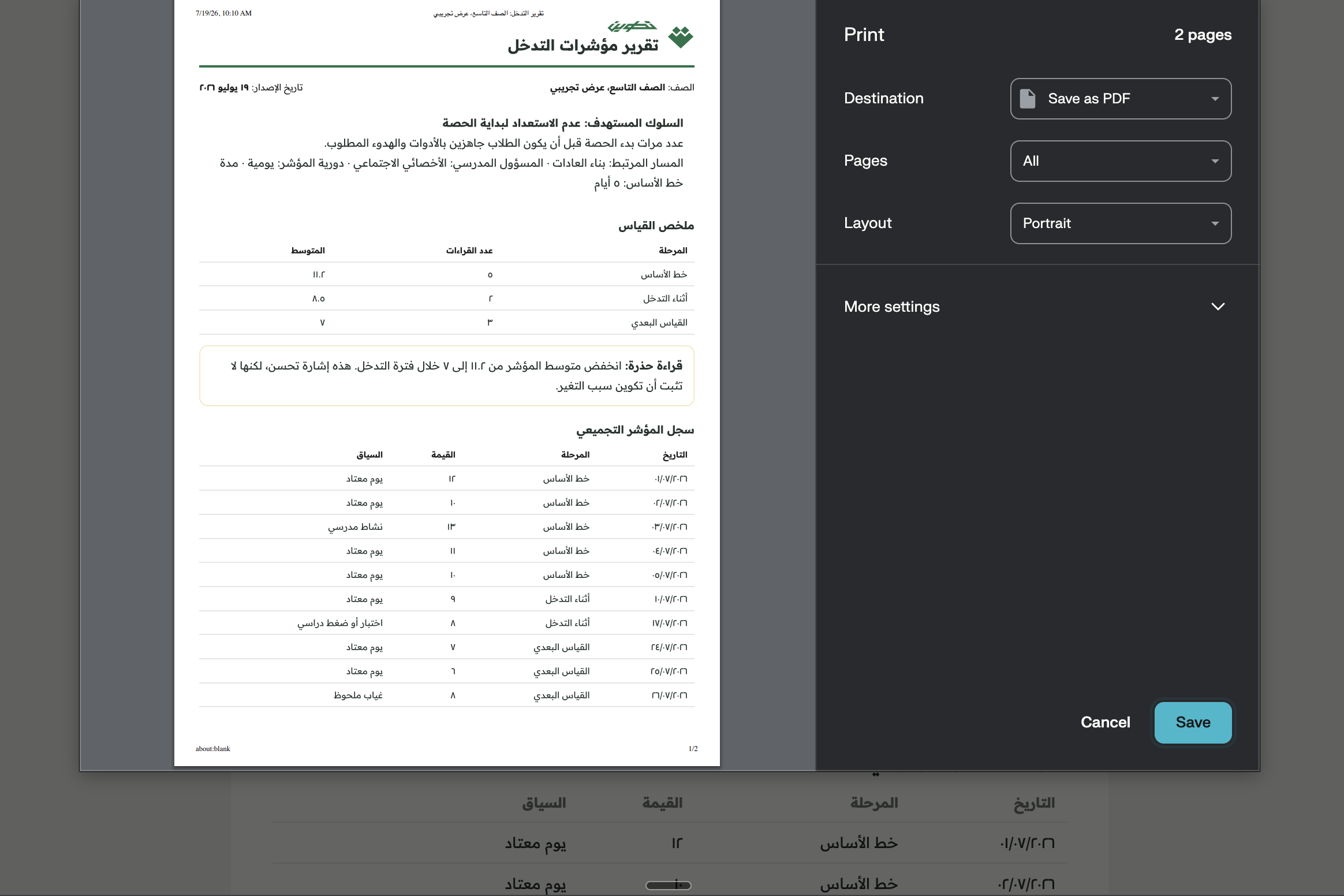
- A teacher dashboard with class progress, an optional classroom behavior intervention, a short baseline, and a cautious before-and-after report.
- A guest mode that lets a student try the experience before creating an account.
Takween is available at tk-wen.web.app.
How we built it
Takween is a progressive web application built with vanilla HTML, CSS, and JavaScript, with Firebase Authentication, Cloud Firestore, and Firebase Hosting. The product is intentionally lightweight and has no front-end framework or build pipeline, which keeps it maintainable by a solo founder and fast on ordinary phones.
The application is fully right-to-left, supports dark mode, works at a 360-pixel mobile width, and uses offline persistence. Lesson content is separated into validated JSON files so it can be revised during field testing without changing application logic.
Privacy shaped the architecture from the beginning. Student reflections are stored in a restricted Firestore subcollection, separate from ordinary progress. Teachers and parents can see only whether a reflection was written, never its text. Class rosters are isolated from student-facing data, reports contain no student email addresses, and analytics events contain identifiers and simple values rather than free text. Fonts and icons are self-hosted so minors' data is not sent to third-party asset services.
We also built the school measurement layer to remain deliberately modest. A teacher can select one observable classroom behavior, record a short aggregate baseline, run a related learning journey, and compare the class-level indicator afterward. The report describes a change as a signal, not proof that Takween caused it.
Challenges we ran into
The hardest challenge was turning abstract values into experiences that felt relevant to a teenager. An early version presented an obvious “correct” choice, which encouraged students to guess what the platform wanted. We rebuilt the interaction around realistic decisions with both a near-term benefit and a later cost, then placed the Islamic principle after the student had considered the consequence.
We also learned that good content can still be skipped if the visual hierarchy is wrong. In an early usability observation, a student moved past the consequence too quickly. We redesigned the screen so the chosen decision remains visible, the other choices disappear, and the immediate and later effects become the center of attention before the student continues.
Protecting minors created a second, deeper challenge. It was not enough to hide private writing in the interface. We had to separate reflections, rosters, progress, events, and reports at the data-model level so a future interface mistake could not easily expose sensitive text.
Another challenge was designing meaningful school measurement without making claims our evidence cannot support. Takween has not yet completed its planned five-student field test or classroom pilot, so we do not claim proven educational impact. The product distinguishes technical readiness from validated outcomes, and every report explains the limits of its data.
Finally, building Arabic-first educational technology meant solving details that are often treated as secondary: clear right-to-left layouts, readable Arabic typography, simplified formal Arabic for younger students, local hosting of fonts, touch targets that work on small screens, and a tone that is grounded in faith without becoming a sermon.
Accomplishments that we're proud of
We are proud that Takween has grown from one teacher's observation into a working, end-to-end product rather than remaining a presentation or prototype.
- We completed 30 structured learning steps across six journeys, including 90 quiz questions with explanations and a second-attempt learning flow.
- We connected learning to action by letting students turn any lesson mission into a seven-day practice.
- We built distinct experiences for students, parents, teachers, and the platform administrator while keeping the student's private writing protected.
- We created a classroom dashboard and privacy-safe before-and-after report that a school can actually use without collecting student names, emails, or reflections in its behavior indicator.
- We removed external font and icon dependencies and designed analytics that collect no free text.
- We made the individual student experience free by design, with a future school licensing model intended to sustain the platform without charging students.
- We prepared a concrete field-test plan with predefined success thresholds, including completion time, understanding, transfer to a new situation, and voluntary return after seven days.
Most importantly, we resisted the temptation to present untested assumptions as results. The platform is ready to be tested, and its next decisions will be based on student and classroom evidence.
What we learned
We learned that young people enter through a problem they recognize, not through a curriculum map. Asking “What is on your mind today?” creates a more natural beginning than asking a student to choose from formal course categories.
We learned that values education becomes more engaging when the student weighs a decision before receiving an explanation. The sequence matters: situation first, consequence second, principle third, and a small action immediately afterward.
We learned that assessment should teach. A second attempt, a specific explanation for a wrong choice, and a final review can preserve honest measurement while giving the student a chance to correct their understanding.
We learned that privacy is a product feature and an architectural boundary, not a policy page. If a reflection is promised to the student as private, every data path, role, report, and future feature must honor that promise.
We also learned to separate what is built from what is proven. A complete platform is an achievement, but only real use can tell us whether students understand it, return to it, and carry a value into daily behavior.
What's next for تكوين
Our immediate priority is evidence, not feature expansion.
First, we will complete the final Firebase deployment checks and run a supervised field test with five students. Each student will complete three steps, try the challenge flow, and return after seven days. We will measure usability, comprehension, transfer to a new situation, and voluntary return without collecting names, email addresses, or private reflection text in the research notes.
Next, we will use those findings to improve only the problems that repeat across students. We will then run a six-week pilot with one class in a private school in Muscat, asking the teacher for no more than 15 minutes a week. The pilot will focus on one observable classroom behavior, a short baseline, student participation, and a careful before-and-after report.
That report will become the evidence we need to reach Takween's first paying school customer and begin a sustainable annual school-licensing model while keeping the individual student platform free.
Prize funding would help us cross this critical gap between a working product and verified field evidence. It would support supervised student testing, school onboarding, accessibility and security review, measurement materials, and the first classroom pilot. The goal is not to add more screens. It is to prove that Takween can help a student carry one good value from a short Arabic learning experience into a real decision, then give families and schools a safe, practical way to support that change.
Built With
- cloud-firestore
- css3
- firebase
- firebase-app-check
- firebase-authentication
- firebase-hosting
- html5
- javascript
- json
- progressive-web-app-(pwa)
- responsive-web-design
- rtl

Log in or sign up for Devpost to join the conversation.