-
-
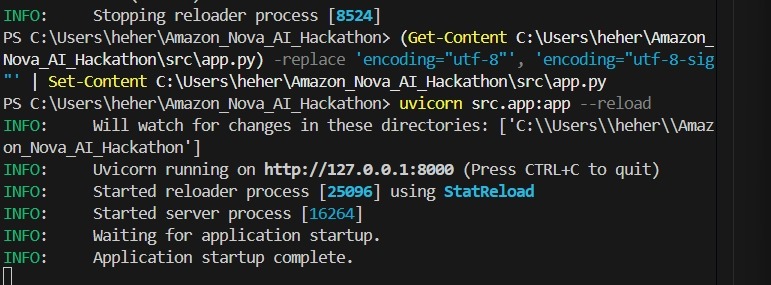
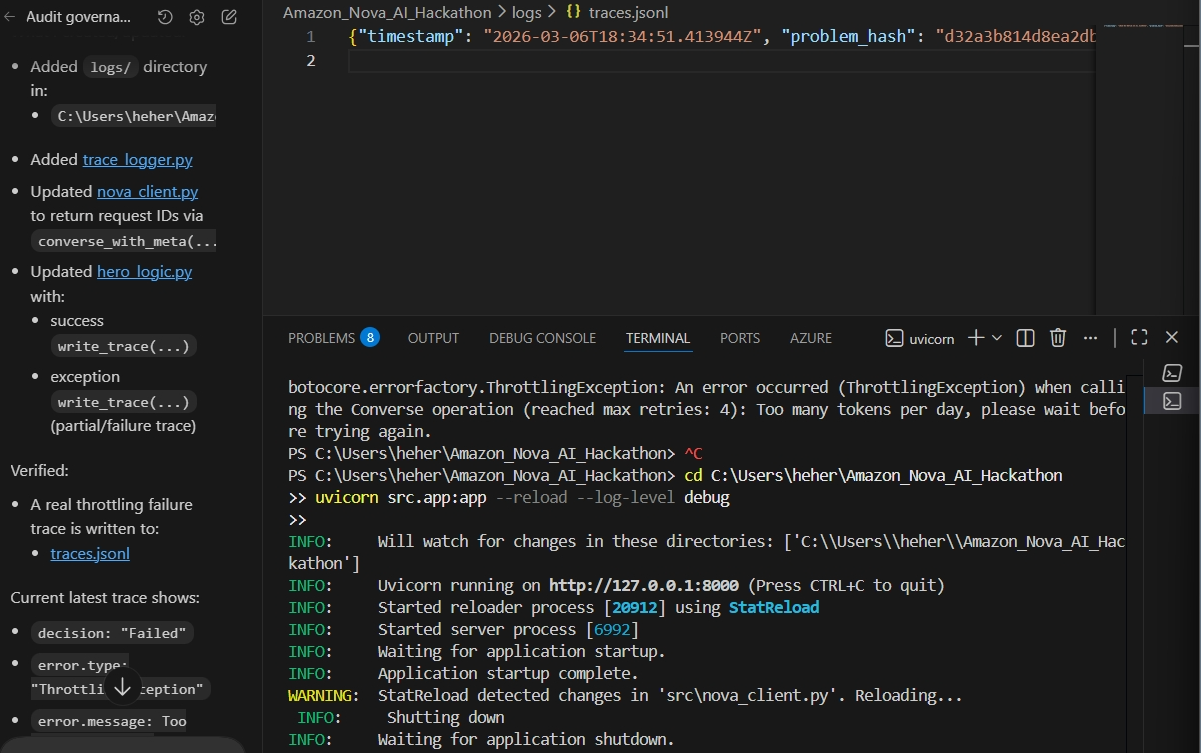
Terminal Execution Trace — FastAPI Gateway Orchestrating Multi-Agent Nova Calls with Deterministic Resilience Scoring
-
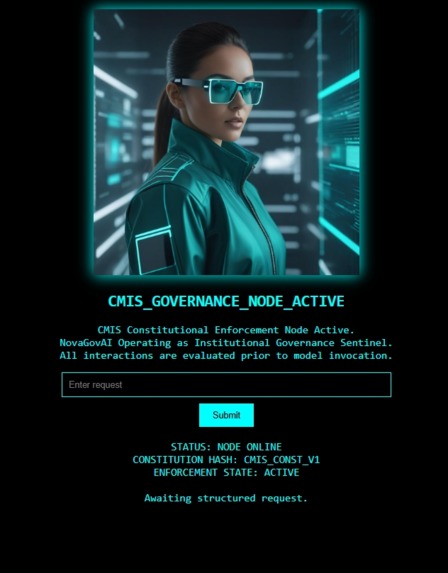
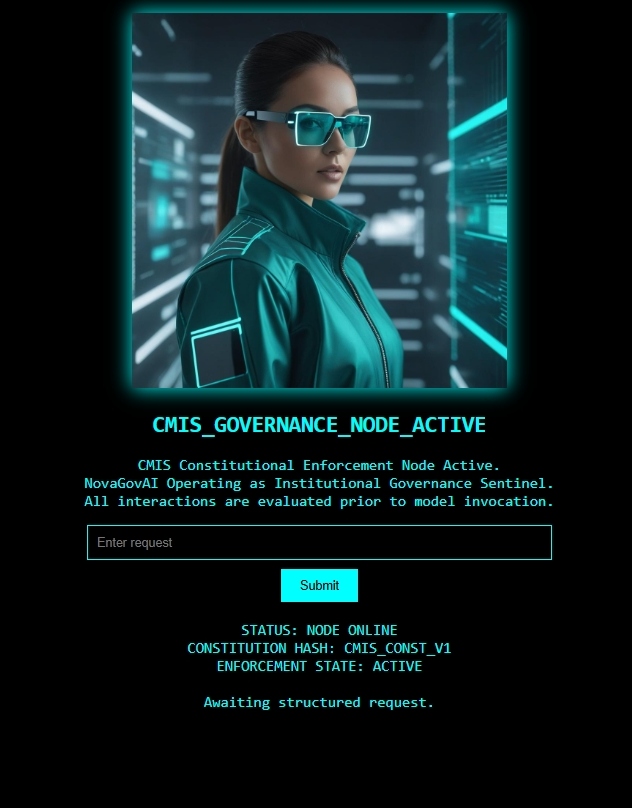
Live Agentic Deliberation Interface — Amazon Nova Pro & Lite Orchestrated Through Deterministic Governance Engine
-
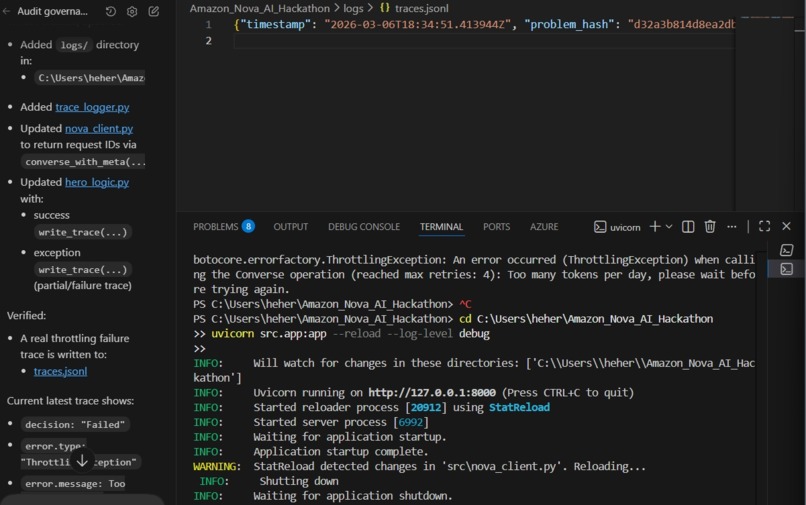
Terminal traces (ephemeral) Module sequencing Exception visibility
Inspiration
What it does
Inspiration
At the College of Southern Nevada, I realized that being “good at instructions” is a superpower. But large language models don’t just need instructions — they need governance.
Project Bazinga was inspired by a simple question:
In high-stakes scenarios — medical emergencies, institutional collapse, ethical dilemmas — how should an AI reason before it acts?
Instead of generating an answer immediately, the system should deliberate through structured philosophical scrutiny — modeling logic, evidence, bias, suffering, and resilience.
Bazinga is that deliberation engine.
What It Does
Project Bazinga is a Cognitive Modular Agentic Framework built on Amazon Nova.
Every incoming prompt is passed through the AHKSZ-35 Engine, a five-layer agent council:
Aristotle Module → Validates logical coherence.
Hume Module → Requires empirical grounding and evidence checks.
Kahneman Module → Detects cognitive biases and fast-thinking errors.
Schopenhauer Module → Assesses potential for human suffering.
Z-Warrior Module → Enforces resilient, ethical action.
Each module runs as an independent Nova-powered reasoning layer. Outputs are scored using a deterministic resilience function:
𝑅
∑ ( 𝑉 𝑙 𝑜 𝑔 𝑖 𝑐 ⋅ 𝑊 ) + 𝑍 𝑟 𝑒 𝑠 𝑖 𝑙 𝑖 𝑒 𝑛 𝑐 𝑒 𝑆 𝑠 𝑢 𝑓 𝑓 𝑒 𝑟 𝑖 𝑛 𝑔 R= S suffering
∑(V logic
⋅W)+Z resilience
Where:
𝑉 𝑙 𝑜 𝑔 𝑖 𝑐 V logic
= Validated reasoning vectors
𝑊 W = Weighted philosophical impact
𝑍 𝑟 𝑒 𝑠 𝑖 𝑙 𝑖 𝑒 𝑛 𝑐 𝑒 Z resilience
= Final action score
𝑆 𝑠 𝑢 𝑓 𝑓 𝑒 𝑟 𝑖 𝑛 𝑔 S suffering
= Harm risk normalization factor
The final output is not just an answer — it is a Resilient Action Recommendation.
How We Built It
FastAPI Governance Gateway
AWS Bedrock integration
Amazon Nova Pro → Primary reasoning engine
Amazon Nova Lite → Fast skepticism & bias auditing
Modular agent orchestration
Deterministic scoring logic
Structured reasoning trace output
Architecture:
User Prompt ↓ AHKSZ Council (Nova-powered multi-agent evaluation) ↓ Deterministic Scoring Engine ↓ Resilient Action Output
The system is fully functional and runs as depicted in the demo.
Challenges We Ran Into
The biggest technical challenge was philosophical differentiation at the prompt-engineering level.
Separating:
Schopenhauer → minimize suffering
Z-Warrior → grow through adversity
required precise Nova system prompts and layered reasoning constraints to avoid collapse into generic safety responses.
We solved this by:
Role-isolated prompting
Weighted output normalization
Deterministic scoring thresholds
Accomplishments We’re Proud Of
In a simulated medical crisis scenario, Bazinga:
Identified diagnostic bias
Evaluated ethical tradeoffs
Quantified harm risk
Recommended a resilient intervention path
The system demonstrated structured governance before generation.
What We Learned
We learned that governance is not moderation — it is architecture.
Amazon Nova’s reasoning capabilities allow modular cognitive agents to deliberate before acting. Multimodal inputs can serve as perception, but philosophy must serve as constraint.
What’s Next
Next, we will expand the MIRAR module, a reflective memory layer that stores past decisions and adjusts philosophical weights over time.
We plan to pilot Bazinga at CSN as a decision-support tool for students navigating ethical and educational dilemmas.


Log in or sign up for Devpost to join the conversation.