Ballast helps people steady themselves when emotions run high, on any phone. Rate how you feel from 1 to 10, do a short, familiar BFP or DBT exercise, and rate again. You can reach a real person at any time. No app, account or personal data needed. In early testing with 15–20 people, emotional intensity dropped 2–3 points on average.
What inspired us
Derek and I both work in tech: I've been on the business side, and Derek on the technical side. But both of us have been called, again and again, to help people in intense emotional distress.
I've been a Black Rock Ranger at Burning Man for 8 years, doing crisis mediation and supporting people in emotional distress, and I've served as a crisis counselor on the San Francisco Women Against Rape (SF WAR) hotline. Derek has supported friends and loved ones living with bipolar disorder and other mental health challenges. That's why this challenge spoke to us.
We've seen that in moments of crisis, simple, accessible, science-backed tools can lower emotional intensity. Dialectical Behavior Therapy (DBT), developed by Marsha Linehan starting in the late 1970s, draws directly on Zen mindfulness. It shares its roots with the practices Boundless Freedom Project already teaches: breath, attention, and noticing without judgment.
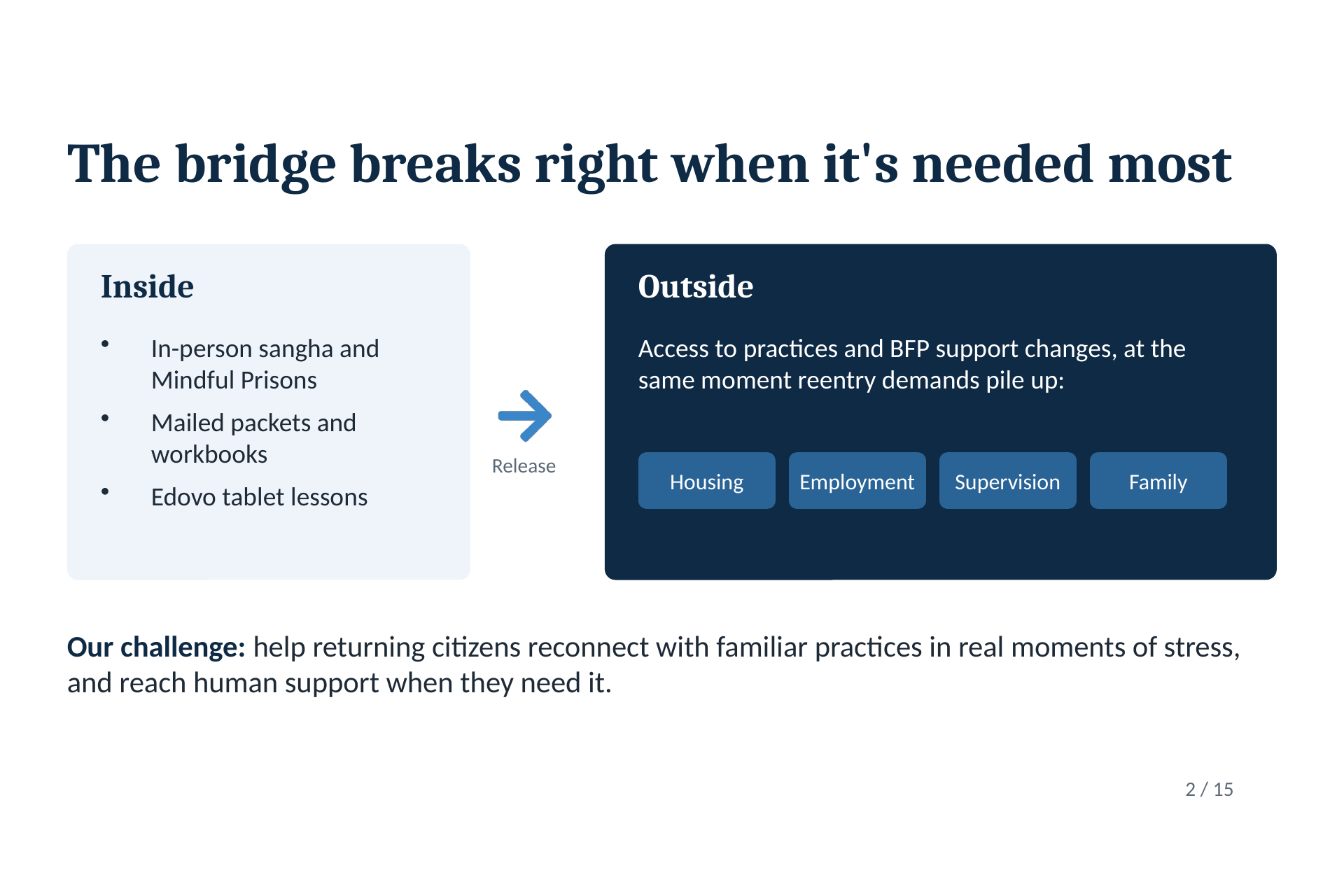
BFP participants learn these practices inside. At release, access to them changes at the exact moment housing, work, supervision and family pressures pile up. We wanted to build a bridge across that gap.
What it does
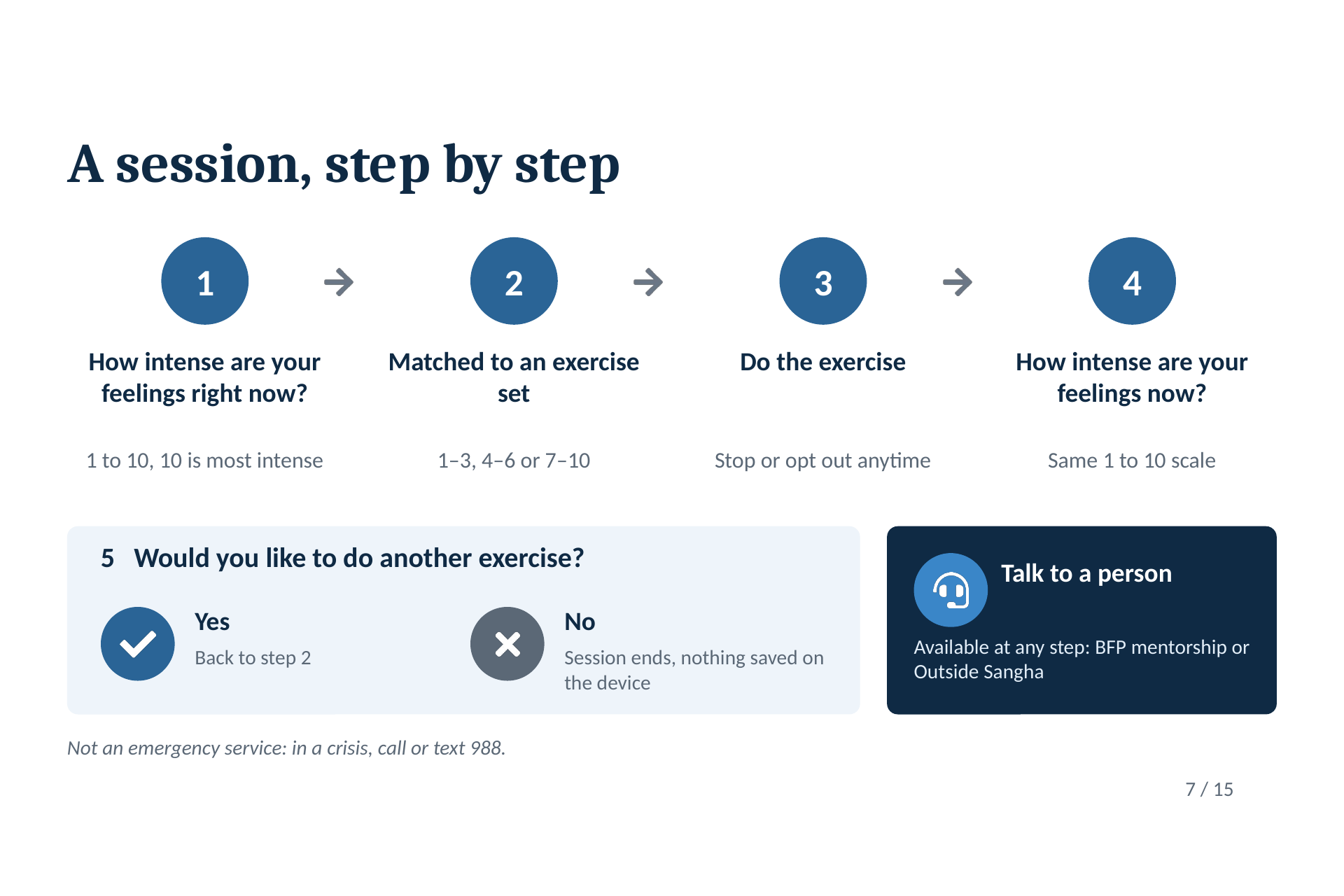
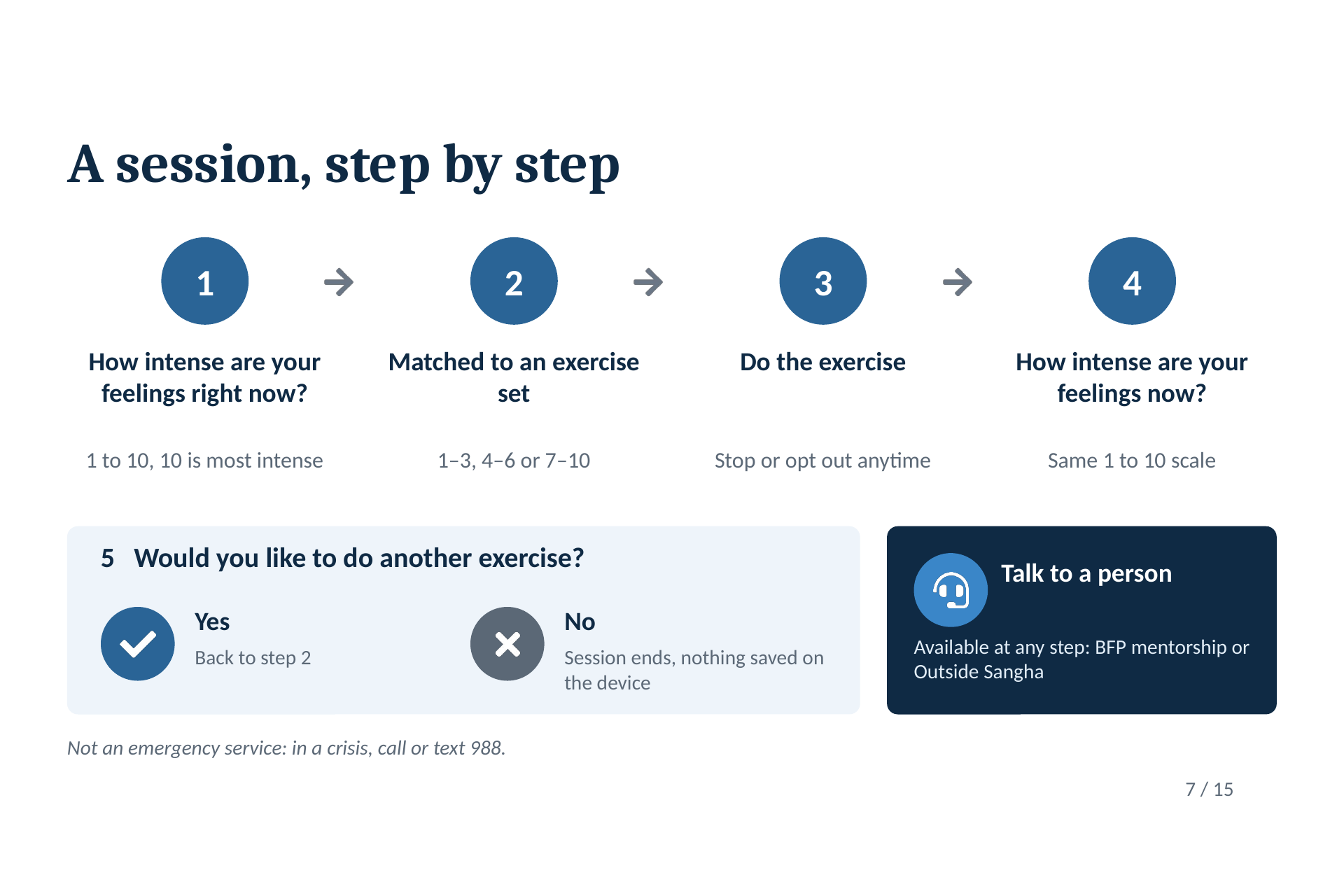
Ballast walks a person through a short, familiar exercise when emotions run high:
- How intense are your feelings right now? (1 to 10)
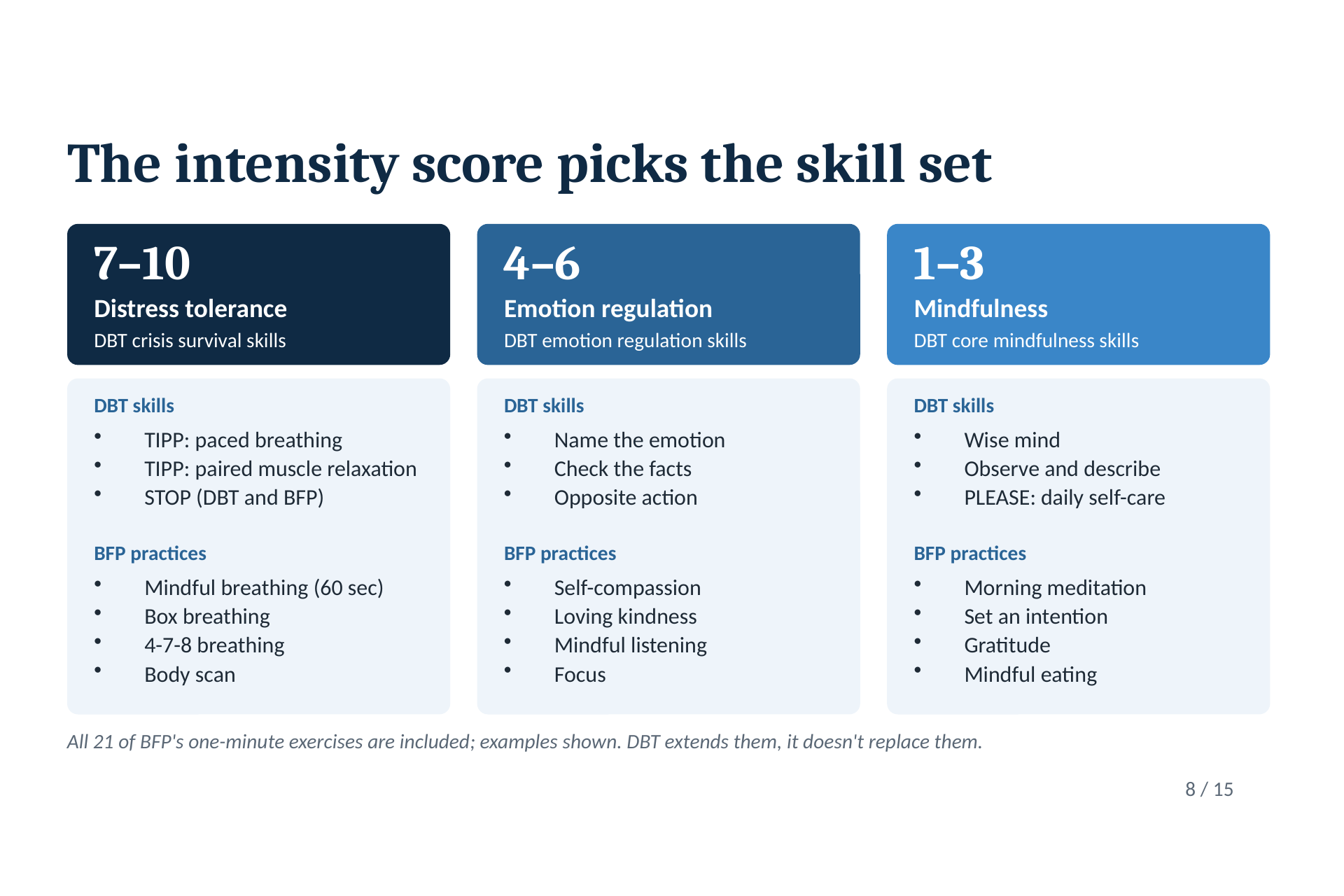
- The answer picks an exercise set:
- 7–10: distress tolerance (paced breathing, STOP, 60-second mindful breathing)
- 4–6: emotion regulation (name the emotion, self-compassion, loving kindness)
- 1–3: core mindfulness (wise mind, set an intention, gratitude)
- Do the exercise, with a clear option to stop at any time.
- How intense are your feelings now?
- Do another exercise, or end the session.
All 21 of BFP's one-minute practices are included. DBT extends them; it doesn't replace them. At every step, the person can choose to talk to a real person at BFP (mentorship or Outside Sangha). Ballast is not an emergency service, and it says so plainly: in a crisis, call or text 988.
How we built it
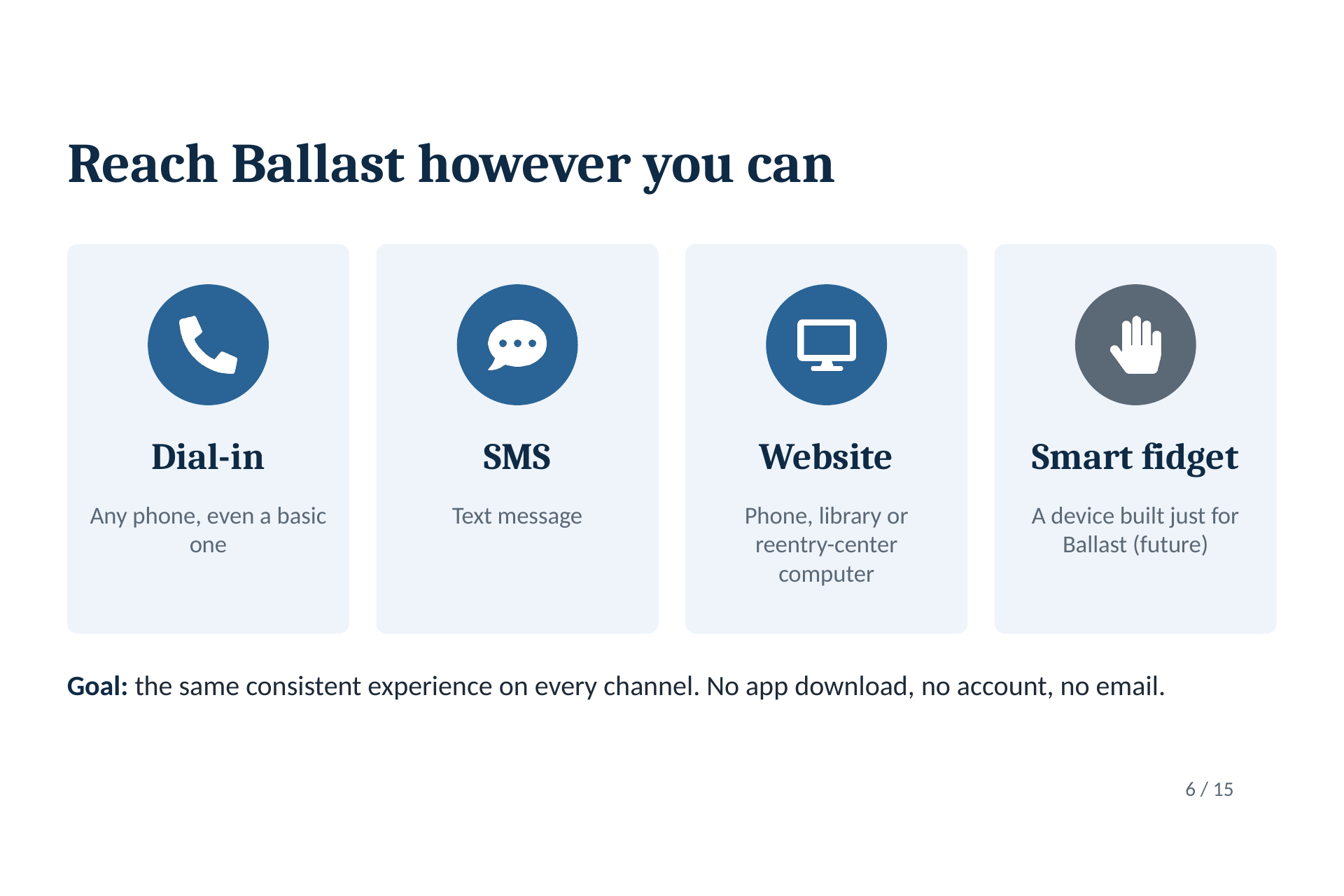
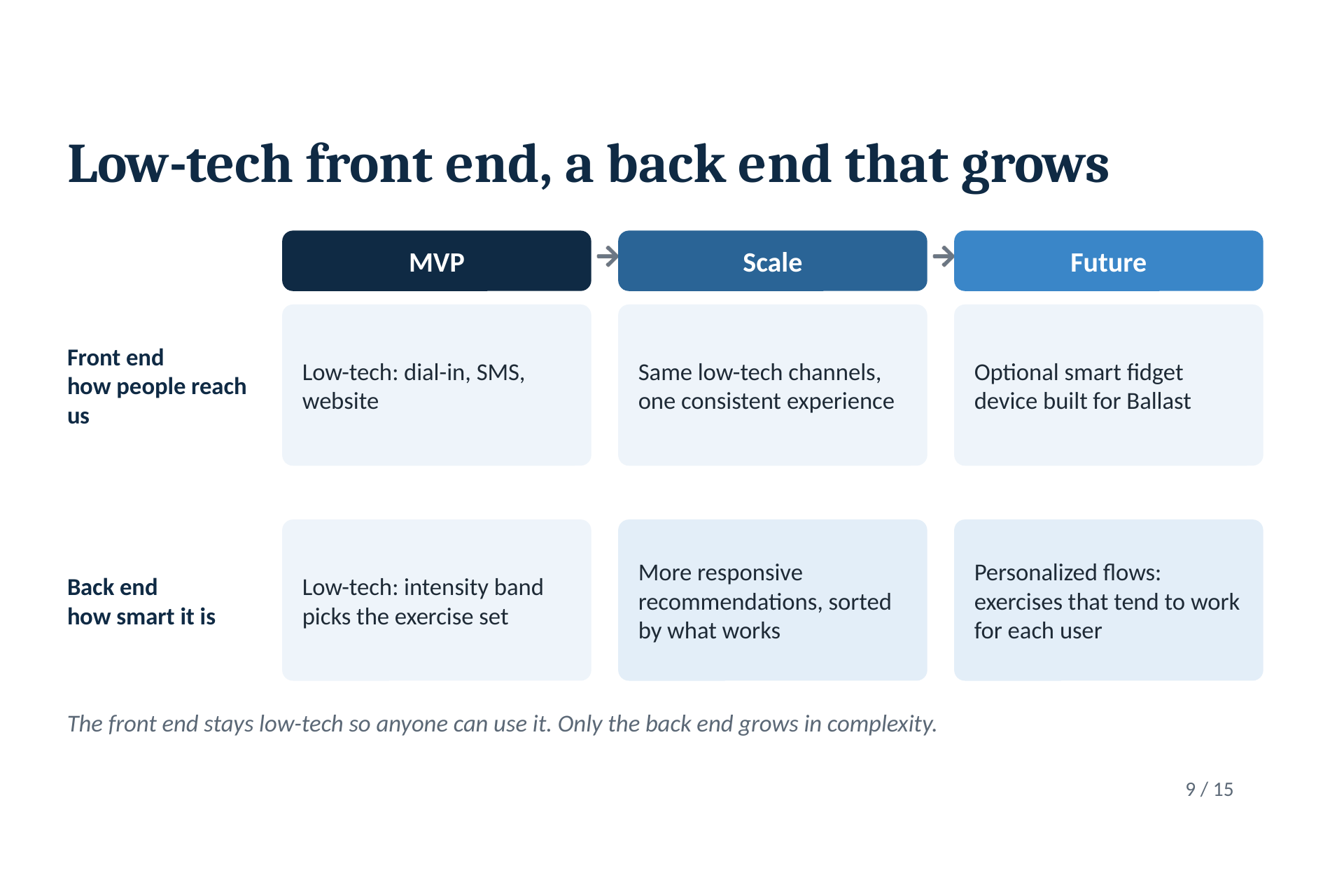
Our vision is for Ballast to work on any phone: a basic flip phone by call or text, no smartphone, app download, account or email needed. For the hackathon, we built a web app as a proof of concept of the core session flow.
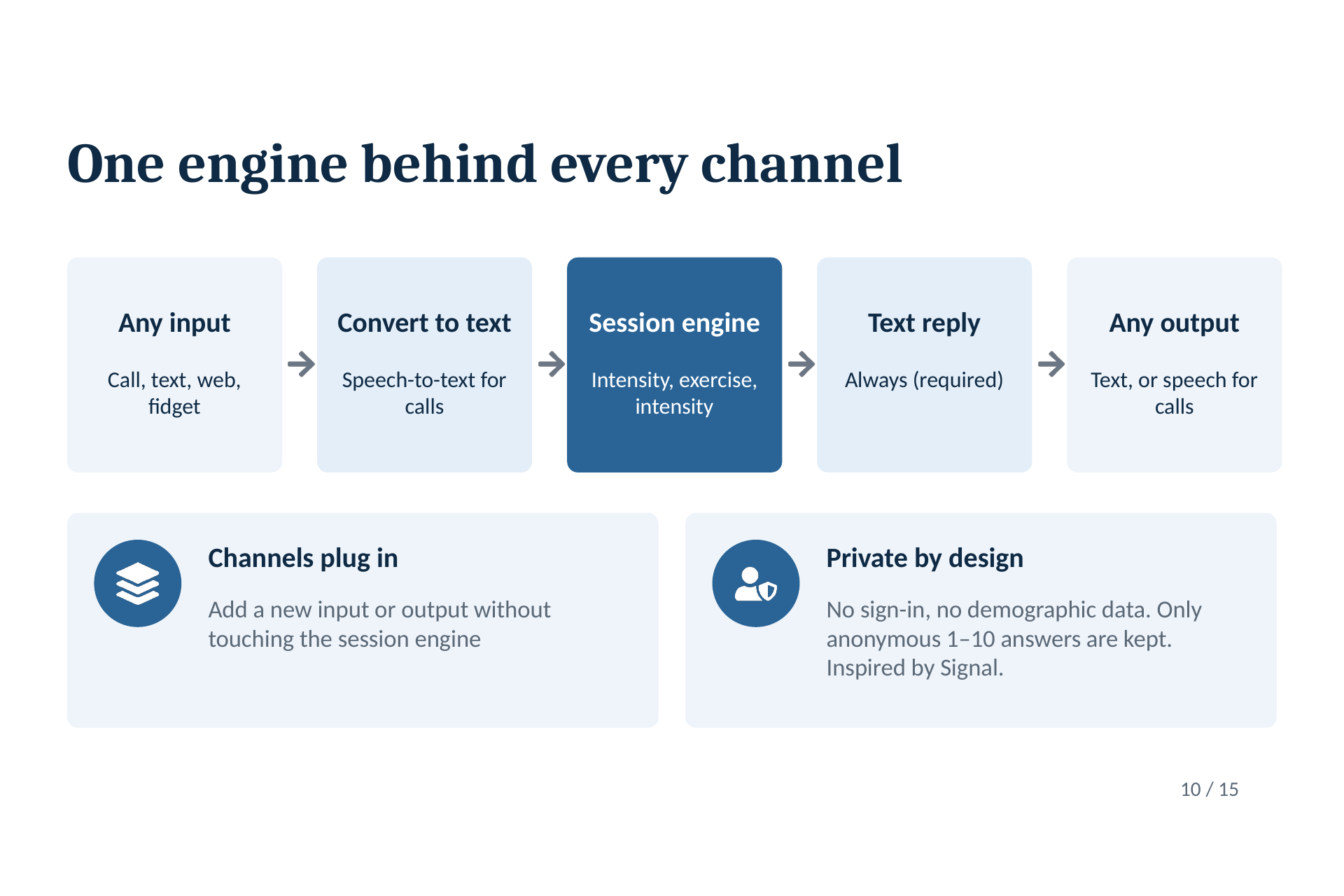
We designed it as one session engine behind every channel. Calls are converted to text, the engine runs the same intensity → exercise → intensity flow, and replies go back as text (or speech for calls). New channels can plug in without changing the engine.
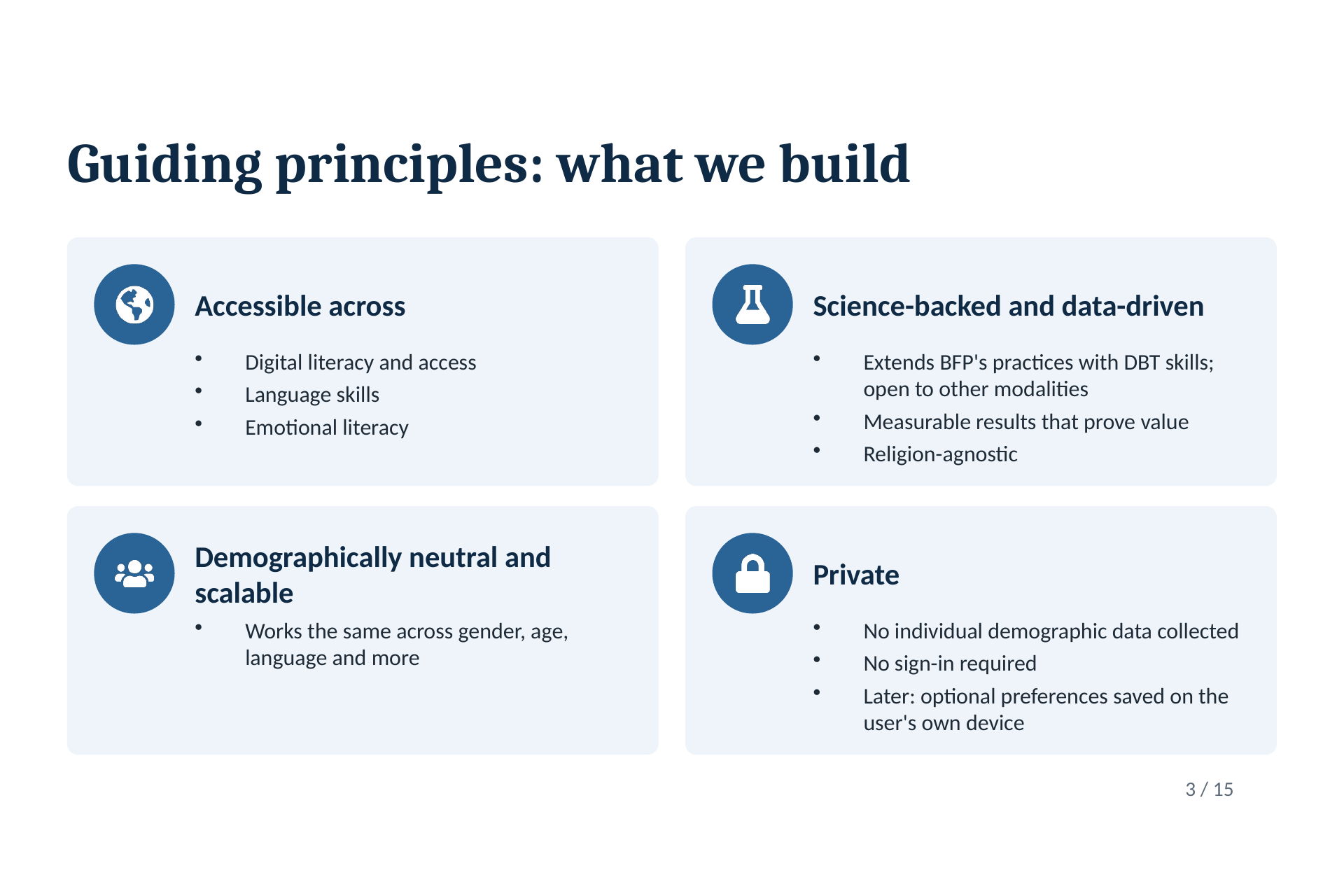
Privacy is built in from the start. There's no sign-in and no demographic data. The only thing kept is the anonymous before-and-after 1–10 score. Names, phone numbers and transcripts are never stored, and a clear exit leaves no history on a shared device.
Challenges we faced
- Writing for real moments of stress. Every prompt had to be short, plain and in a peer voice, not a clinical one. Someone at a 9 out of 10 can't read a paragraph.
- Balancing safety with simplicity. We needed a clear path to a human and to 988 without making the experience feel alarming or complicated.
- Collecting enough data to show impact, without collecting personal data. We settled on two numbers per exercise and nothing more.
- Scoping. We had big ideas (SMS, dial-in, hardware) and a weekend. We focused on one complete, working session.
What we learned
- From therapists: we spoke with several, and got invaluable feedback on how to structure prompts, why DBT works, and how to approach emotional regulation.
- From BFP: Melissa at BFP confirmed what technology returning community members actually have access to.
- From early testers: about 15–20 people tried Ballast, and the response was very positive. On average, intensity dropped 2–3 points per session, which is very encouraging.
- From each other: Paulina learned GitHub and how to build an AI chatbot, with Derek as her guide.
- From a real moment: the most important lesson came after we went home on the first night. Ballast helped someone in real distress, outside the hackathon, in under three minutes.
Derek's story
Last night, after I got home from the hackathon, I was texting with my girlfriend while she rode the bus home from work. Midway through, she wrote: "Omg, my bus just got into an accident. I'm not hurt, but I'm kind of freaked out. I feel like I'm going to cry. I'm just going to take an Uber home."
I asked if she wanted to try the app I'd just been working on while she waited for her car. She said yes.
Three minutes later, she called me back, noticeably calmer. "I tried it and went from a 7 to a 4. My car is almost here, but I already feel so much better."
Moments like this are why we're building Ballast.
What's next
We see Ballast growing to serve people with a wider range of accessibility needs, including people who are blind or have low vision, and people who are Deaf or hard of hearing. For example, we envision a smart fidget: a small, inexpensive device for people who prefer tactile feedback. With a simple screen and a button or two, it walks someone through an exercise anywhere, with no phone at all. Over time, the anonymous scores can show which exercises work best at which intensity levels.
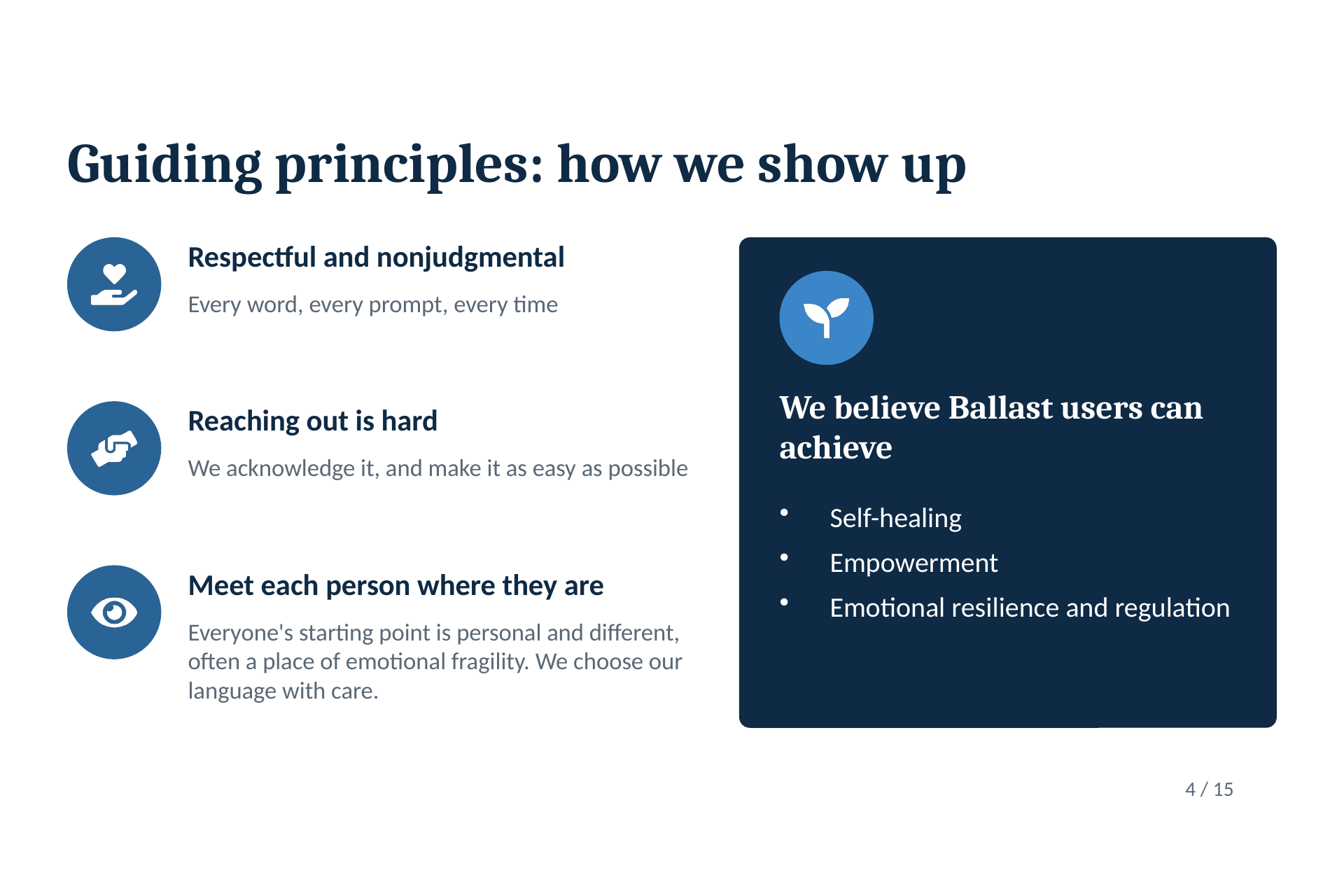
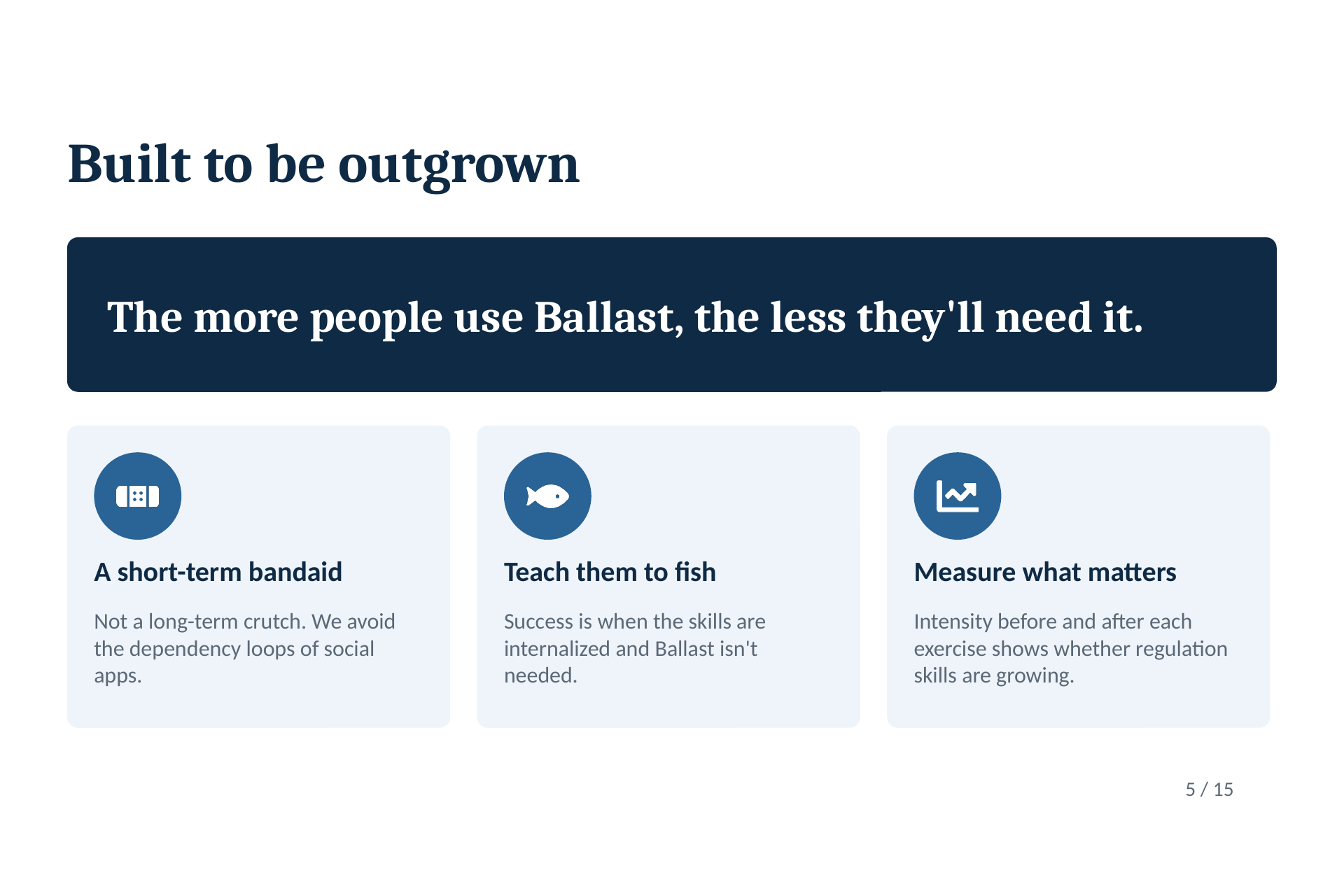
Our values are accessibility, respect for the user, and meeting people where they are. Ballast is built to be outgrown: success means people internalize these skills and need Ballast less over time.

Log in or sign up for Devpost to join the conversation.