-
-
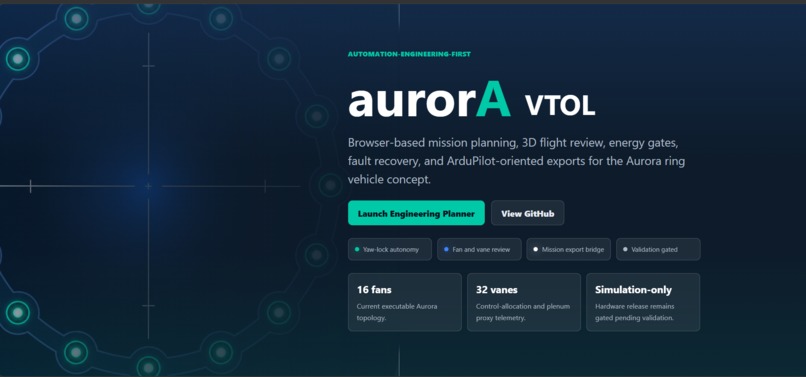
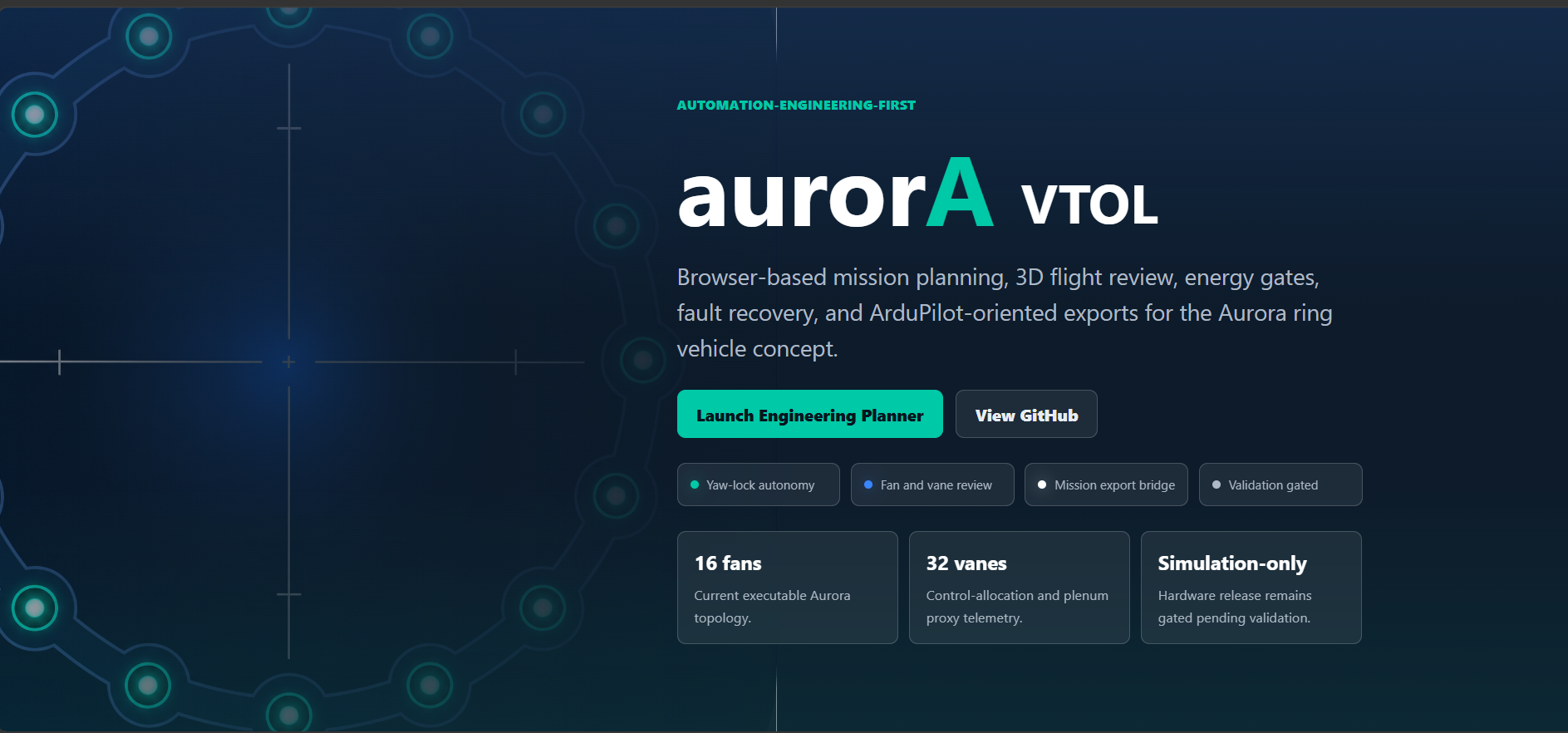
aurorA VTOL landing page
-
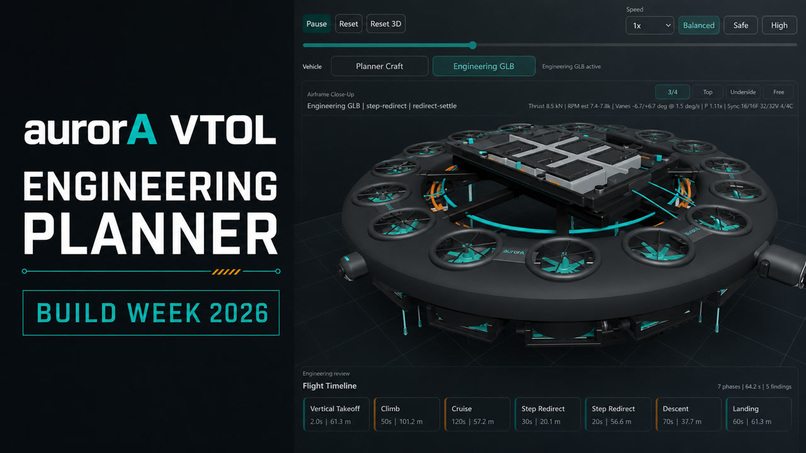
aurorA VTOL OpenAI Build Week
Inspiration
I was inspired by an idea of learning how to fly a DIY drone autonomously with my 4 yr old soon to make it his childhood hobby. I then thought to myself. Let me build something bigger with an approach from a Software Engineering point of view.
What it does
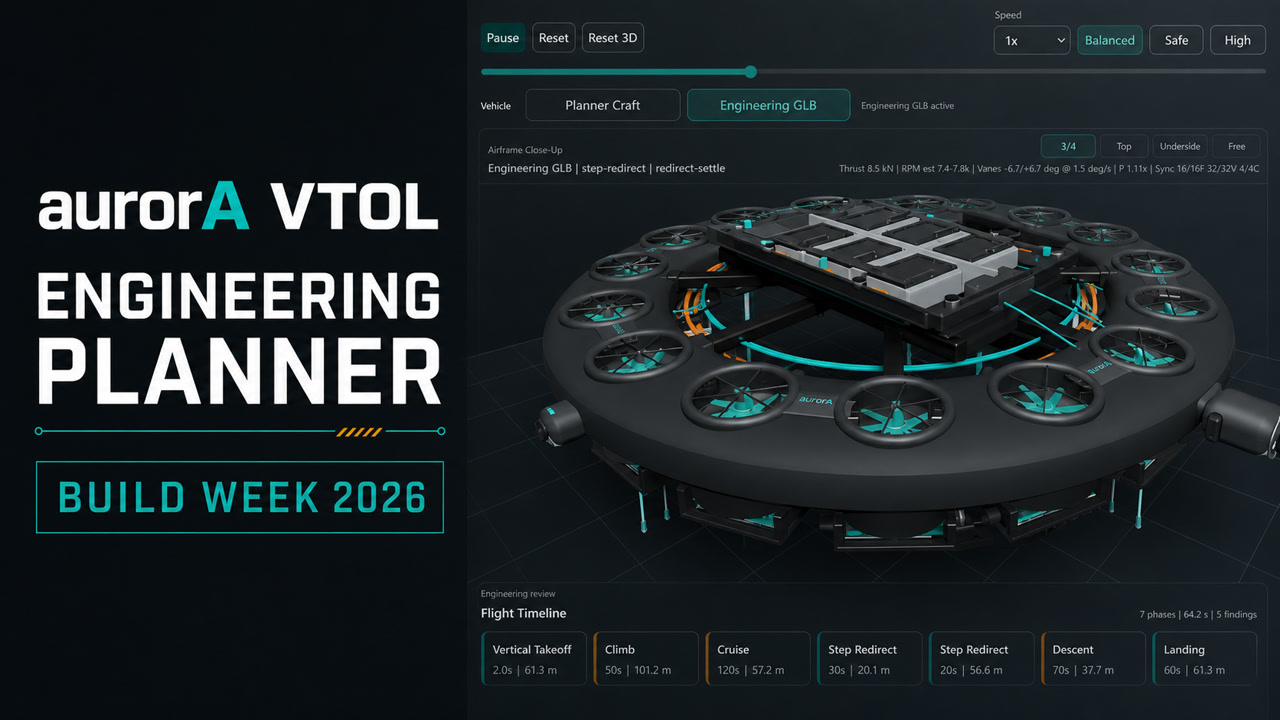
The mission planner that I built with the assistance of GPT and specifically GPT 5.6, demonstrates how the actual VTOL would behave using real physics and assumption. It can be used as a test platform as well. More like the real deal from a Software Engineering point of view. The next step is to find engineering partners to make it come to live.
How we built it
I used Ardupilot, an open source autopilot system for mission engineering and maneuvers. I used blender to design the actual ring shaped vehicle. I used GPT 5.4/5.5/5.6 in both ArduPilot and Blender as well as putting the web based mission planner together
Challenges we ran into
GPT 5.5 and earlier versions struggled with generating a GLB prototype that could be used directly in the web based mission planner. Also to fully synchronize the 16 fan and 32 vane animation on the planner. Also struggled with refining the camera view synchronization and the under view of the vehicle while on a mission. GPT 5.6 was the savior.
Accomplishments that we're proud of
The mission planner is at a point where I am able to continue conversations with potential Engineering
What we learned
Aviation physics is amazing. Approaching it from a Software Engineering has been fun.
What's next for Project Aurora
Building the physical vehicle


Log in or sign up for Devpost to join the conversation.