-
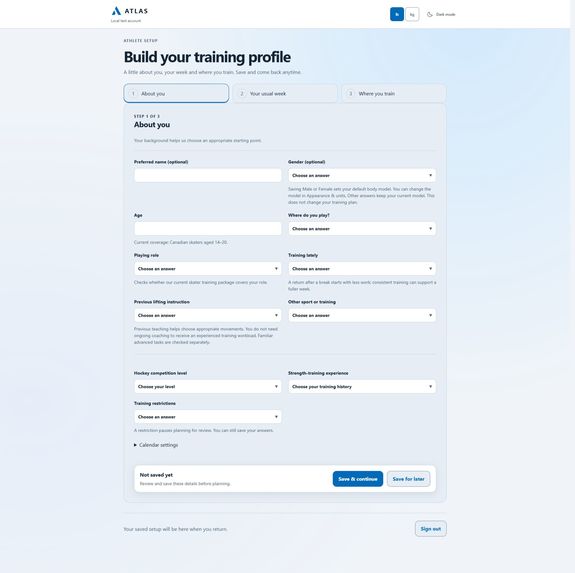
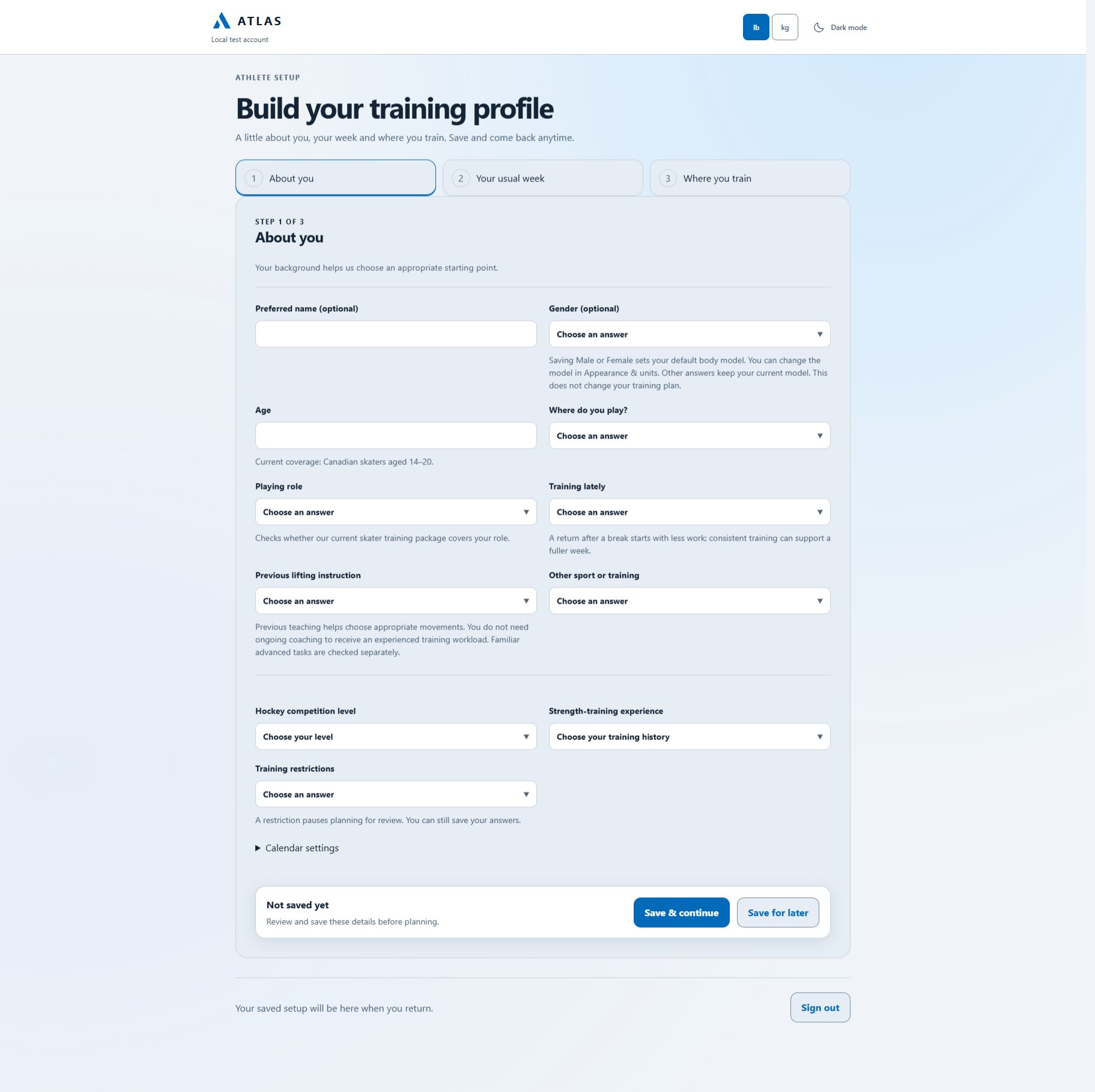
Guided athlete setup. Empty local test profile; development build.
-
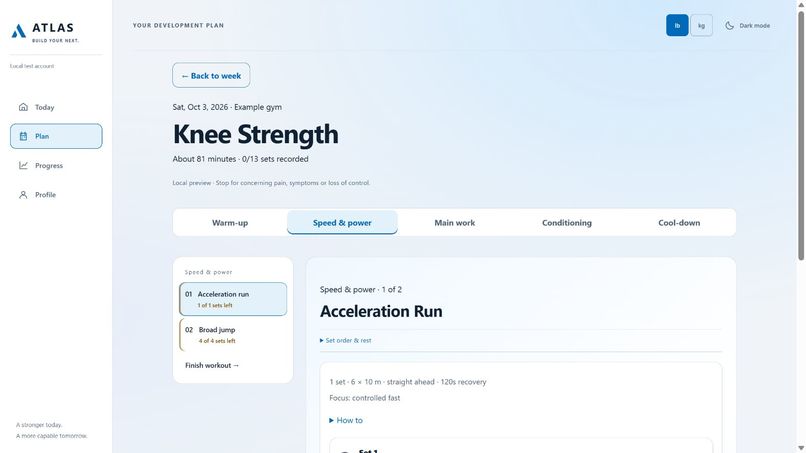
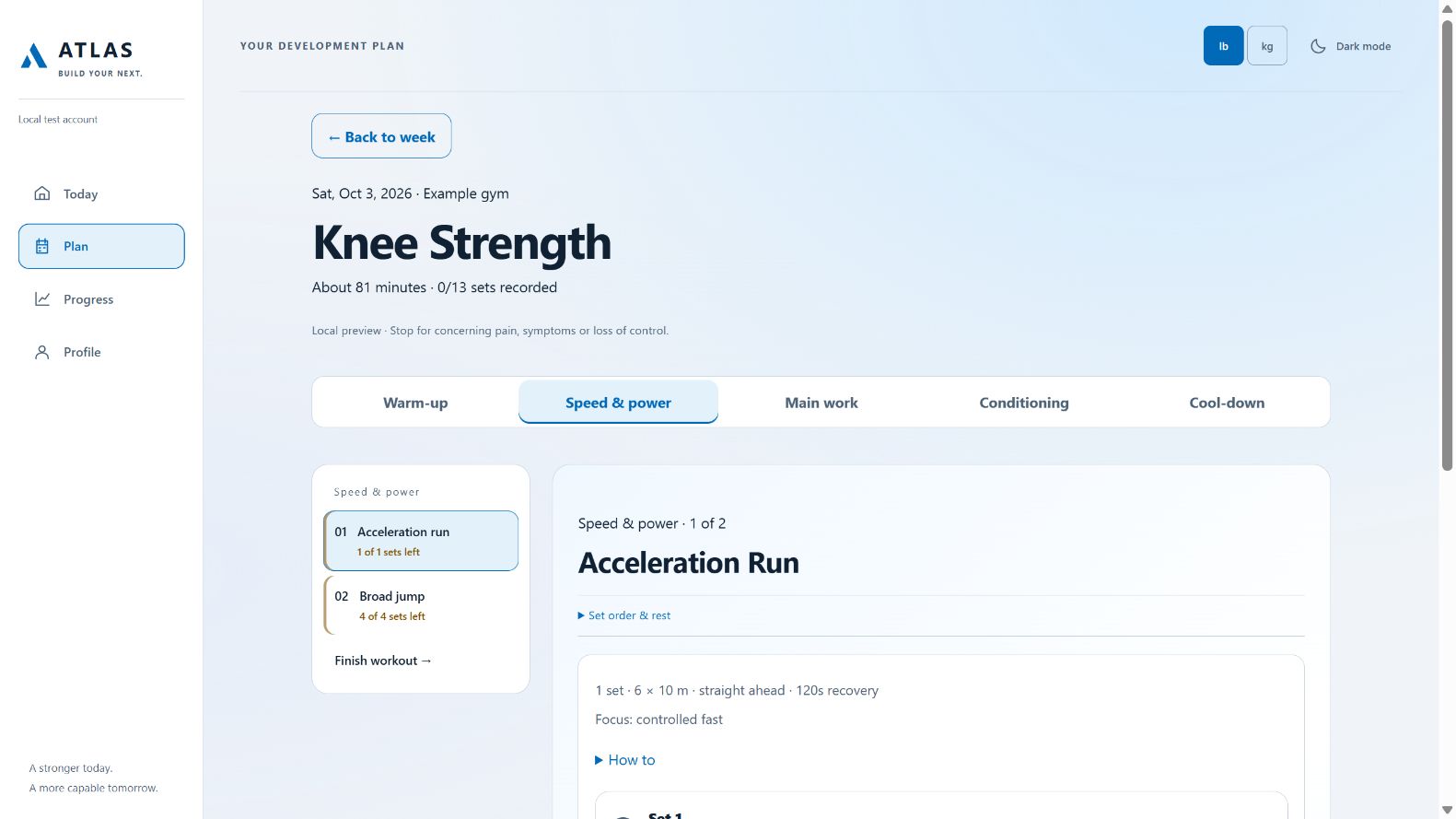
Speed and power work: acceleration and broad jumps. Local test account; development build.
-
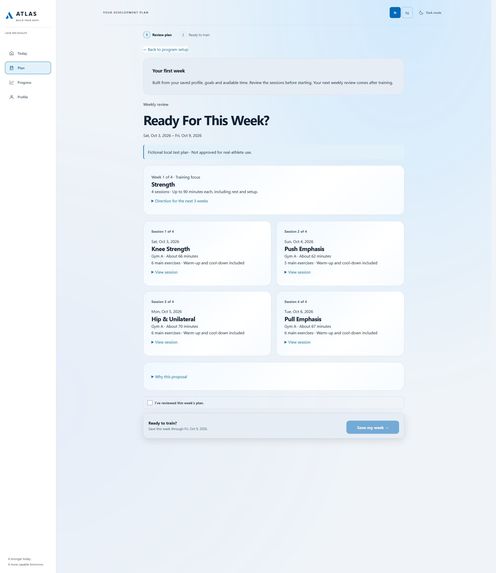
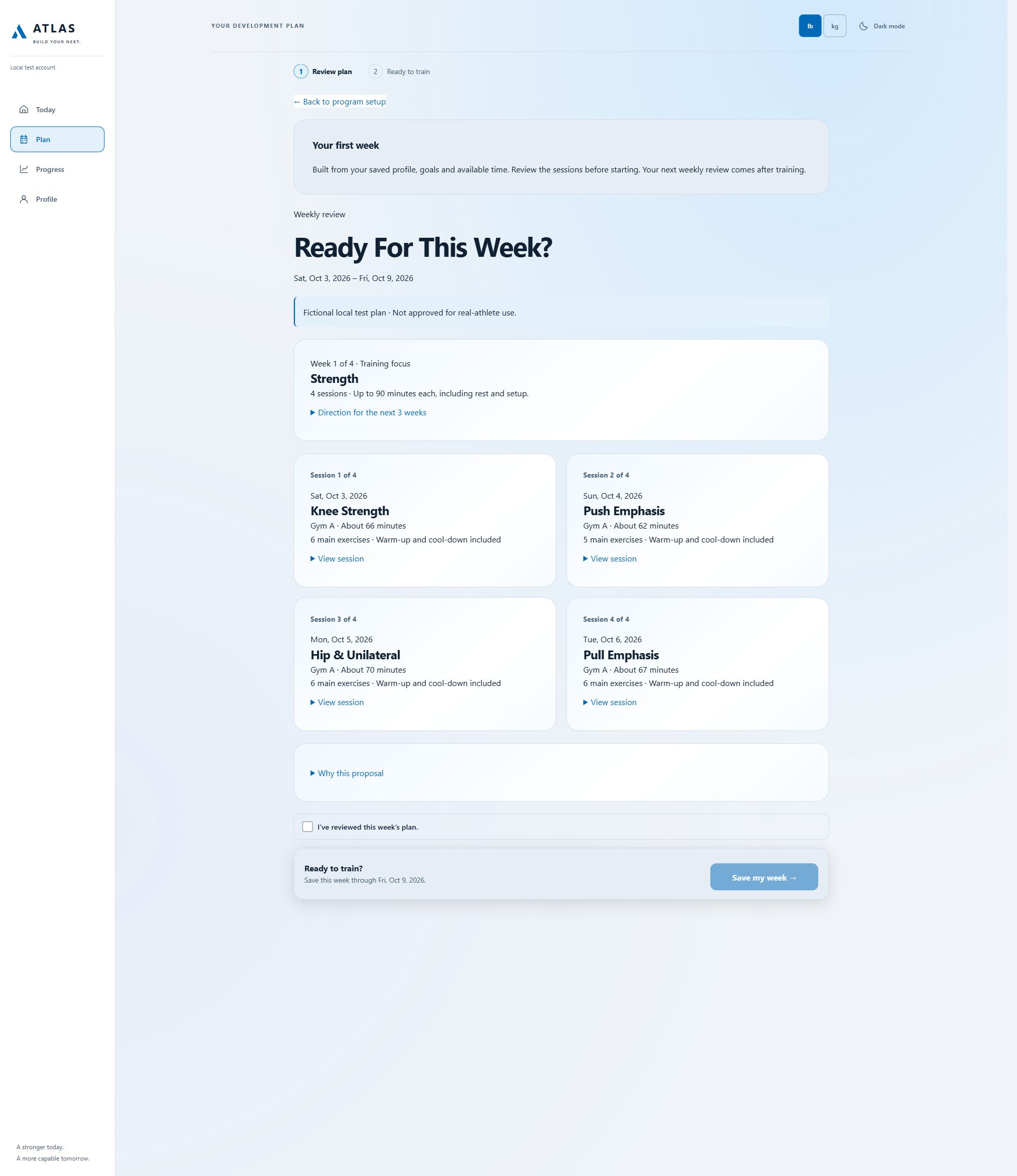
Weekly plan review. Fictional local test plan; development build.
-
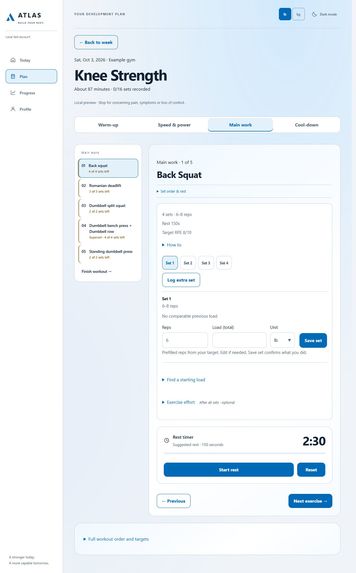
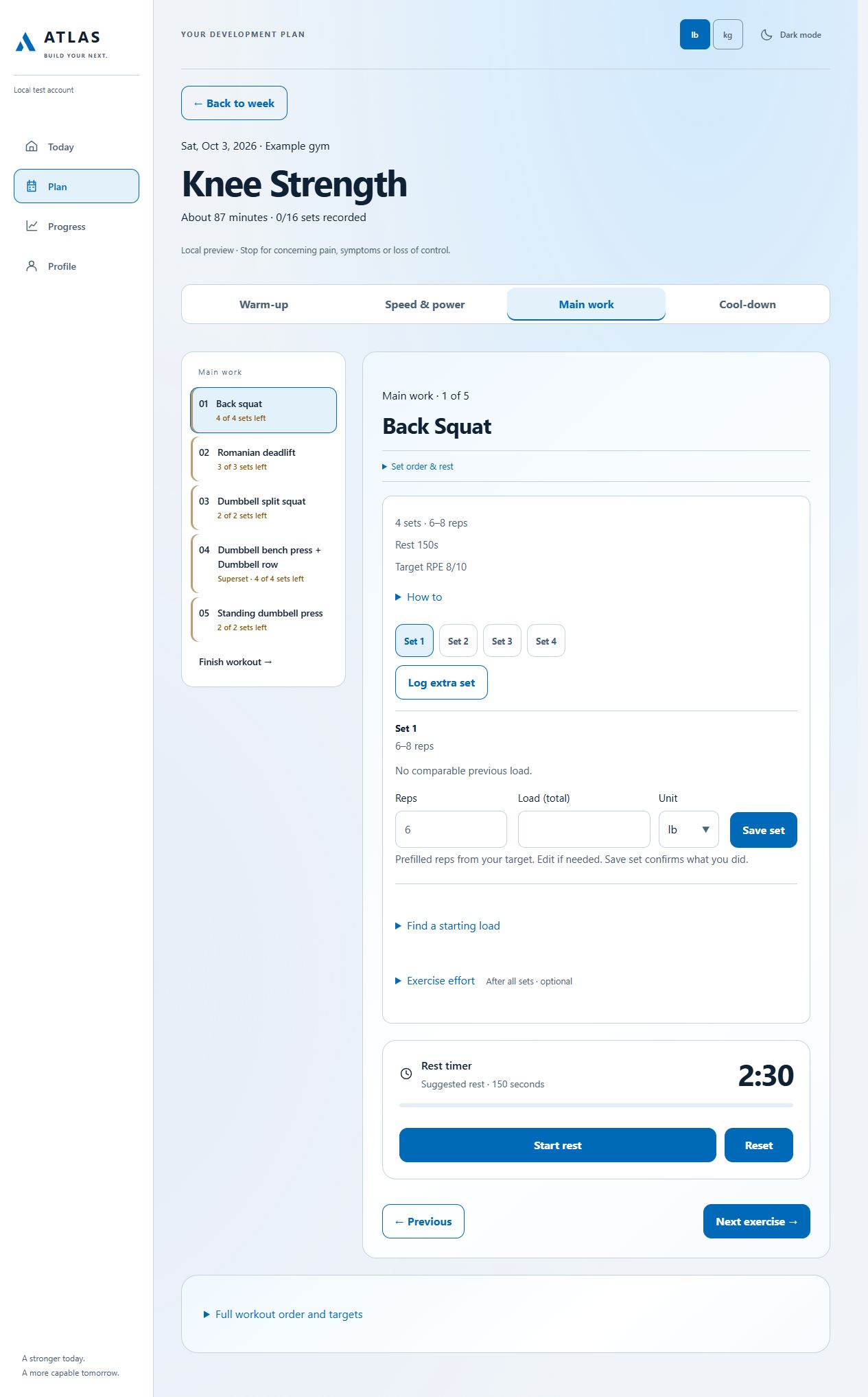
Strength session and set logging. Local test account; development build.
-
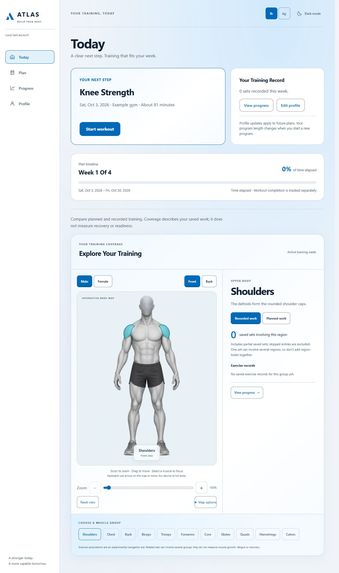
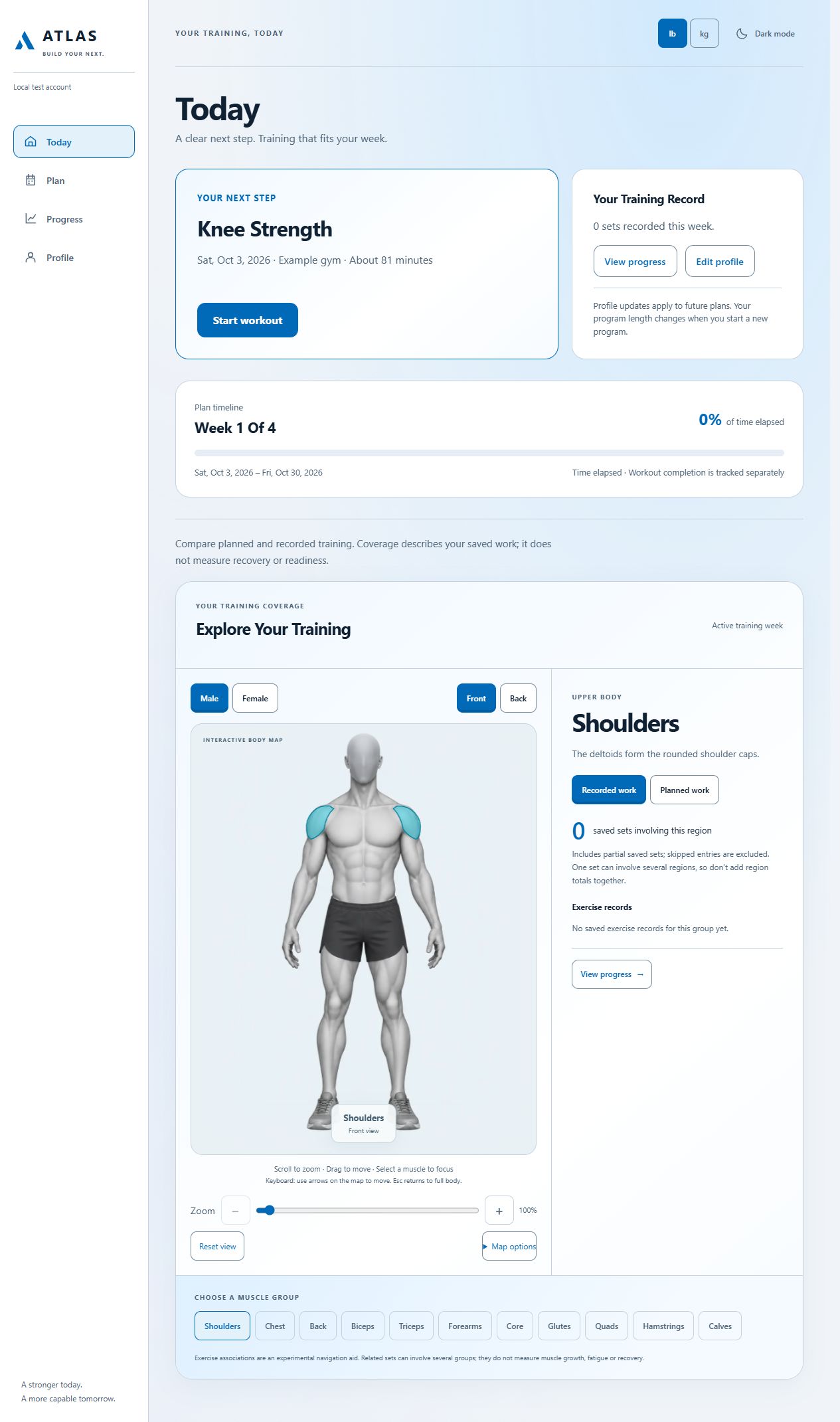
Today and the training-coverage body map. Local test account; development build.
Inspiration
As a longtime athlete and fitness enthusiast, I've seen how much an effective training plan depends on the person following it. Experience, goals, the season, available time and equipment all matter. I started Project Atlas to explore how software could bring those details together and make the next training decision clearer.
What it does
Atlas is a working local prototype for personalized athlete training, starting with hockey. An athlete sets up a profile, adds training locations and chooses a 1-4-week program. The app proposes sessions, supports workout logging and prepares later weeks through review of saved work and changing circumstances.
The workout view separates strength, speed/power and conditioning tasks. Today shows the next action and an interactive body map that distinguishes planned training from recorded work. The map illustrates coverage rather than measuring growth or recovery.
How I built it
I lead the product direction and hands-on workflow testing, using AI coding tools including Codex to help implement and investigate changes. The application uses Next.js, React and TypeScript, with local Supabase authentication and PostgreSQL storage. The body visualization uses Three.js and MakeHuman graphical assets, with attribution retained in the development project.
Planning is rule-based: it uses profile inputs and saved training records. AI assistance is part of development, rather than a runtime workout generator. Shared platform concepts are kept separate from hockey-specific rules.
Challenges I ran into
The hardest part has been making the whole journey connect. Signup needs to lead into setup; saving setup needs to advance to planning; finishing a week needs to lead into review. I also needed to preserve the difference between prescribed sets and work an athlete actually recorded, while keeping accepted program inputs and earlier history intact.
Accomplishments I'm proud of
The local prototype connects guided setup, planning, set logging and weekly continuation. I have refined the experience through repeated testing, including clearer navigation, visible unfinished sets, session summaries and training-coverage views. The public showcase contains real app captures and development links.
What I learned
A feature needs a purpose the user can understand. Profile questions should affect decisions; controls should tell people what to do next. Building Atlas has made me think more carefully about the relationship between training logic, trustworthy records and the interface people actually use.
What's next
Atlas is still in development. Next steps include refining the training library and adaptation rules, testing more athlete profiles and devices, and qualified programming review before a real participant launch.
Screenshots
The gallery shows actual app captures using fictional or empty local test profiles. These images come from different recent development builds and do not represent one continuous athlete history.
Built With
- next.js
- postgresql
- react
- supabase
- three.js
- typescript

Log in or sign up for Devpost to join the conversation.