-
-
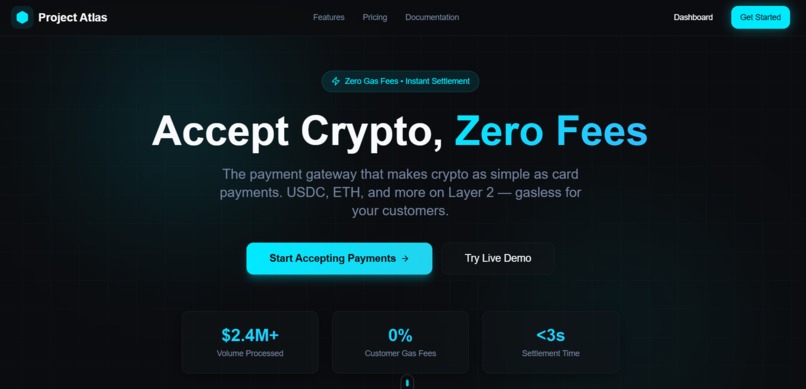
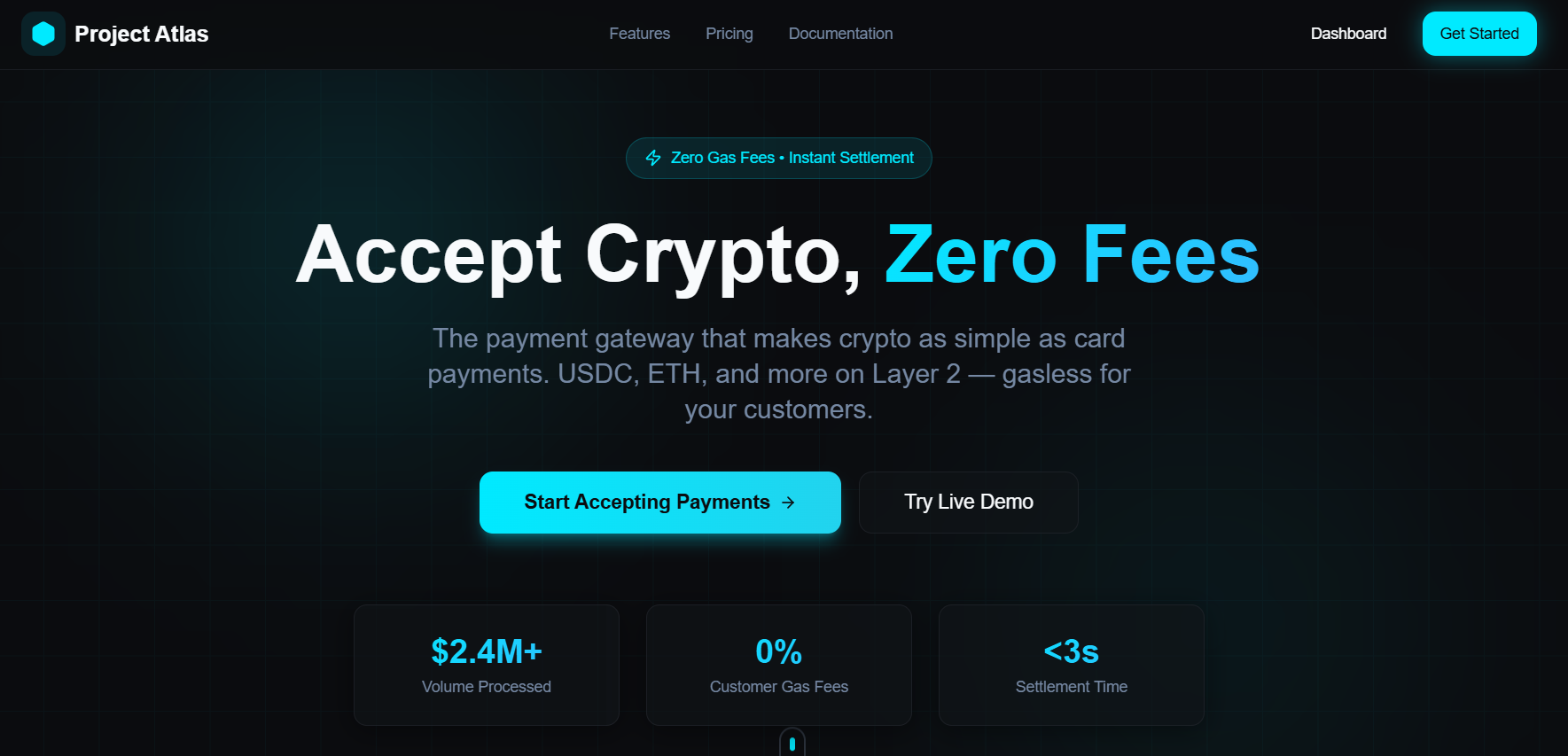
Website Landing Page
-
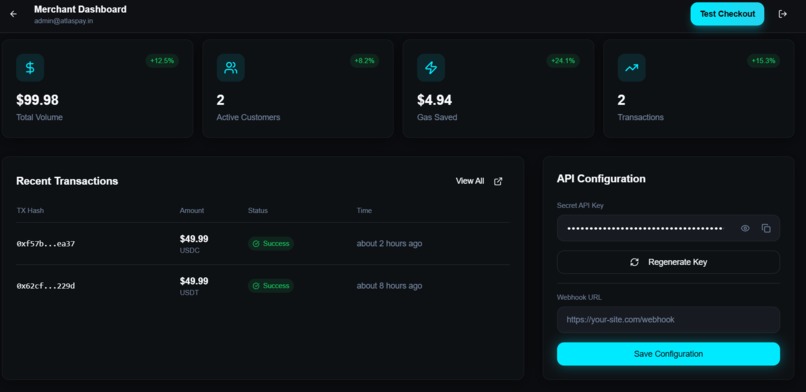
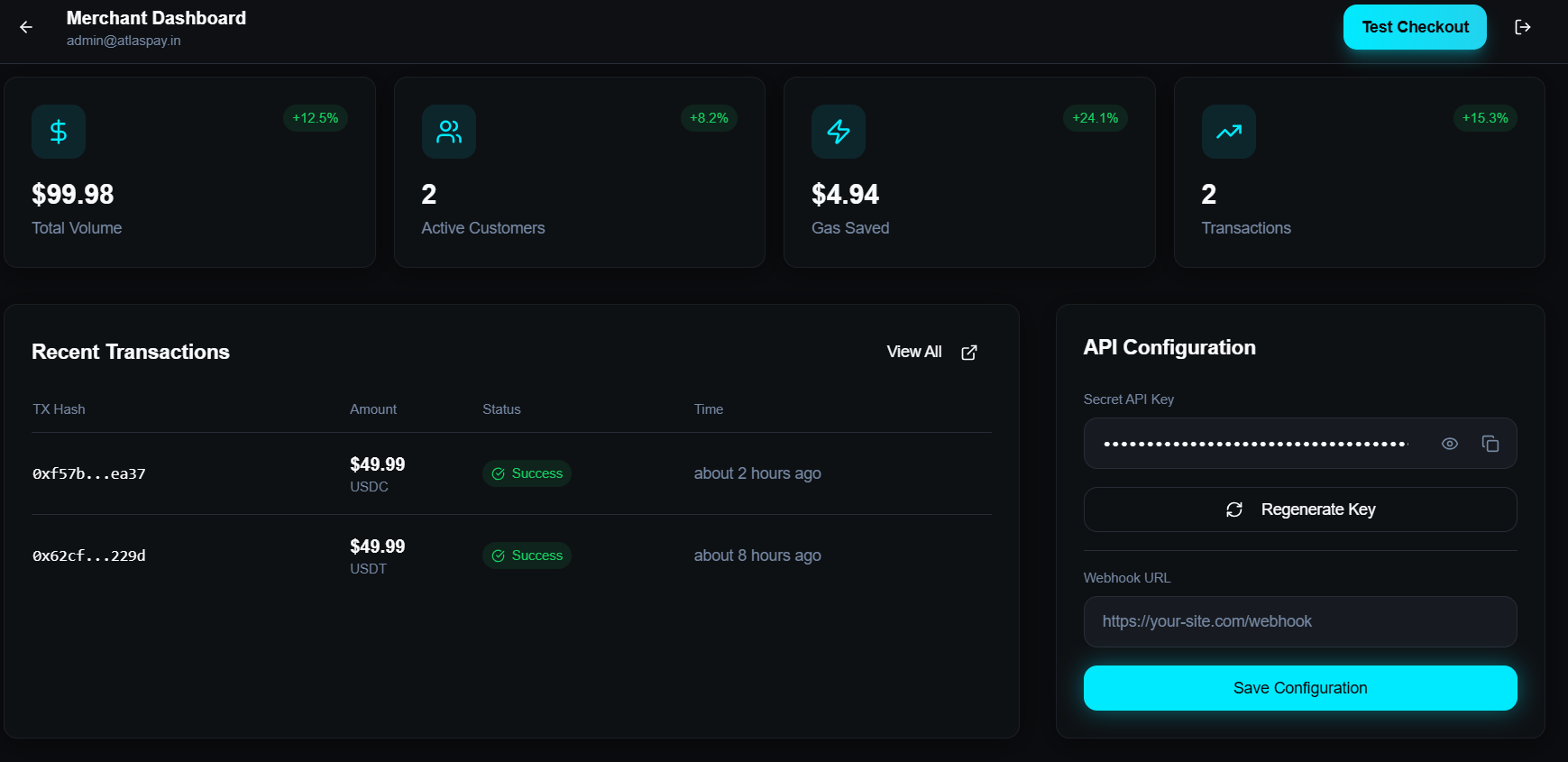
Website Dashboard
-
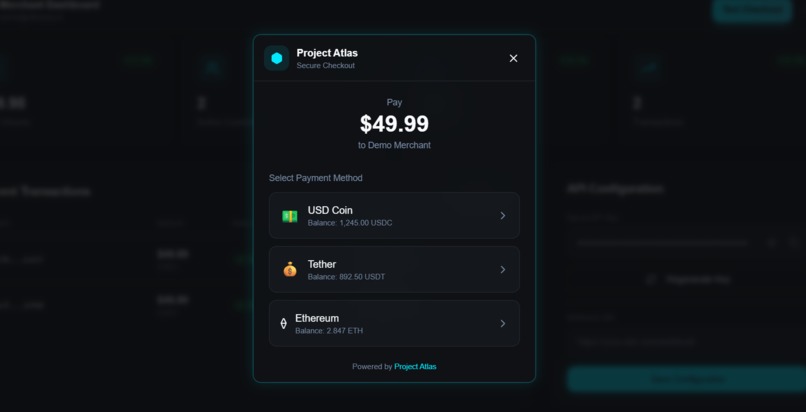
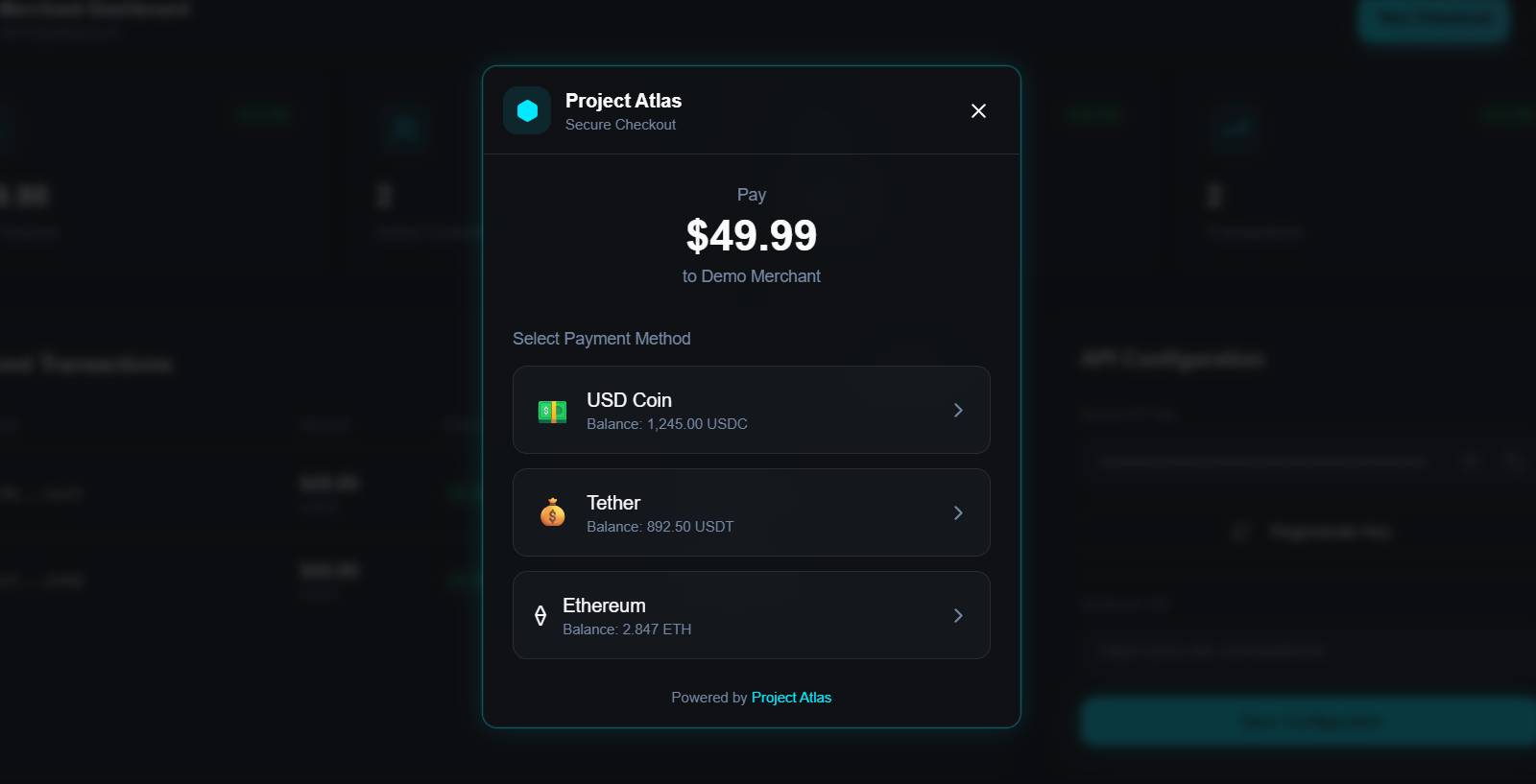
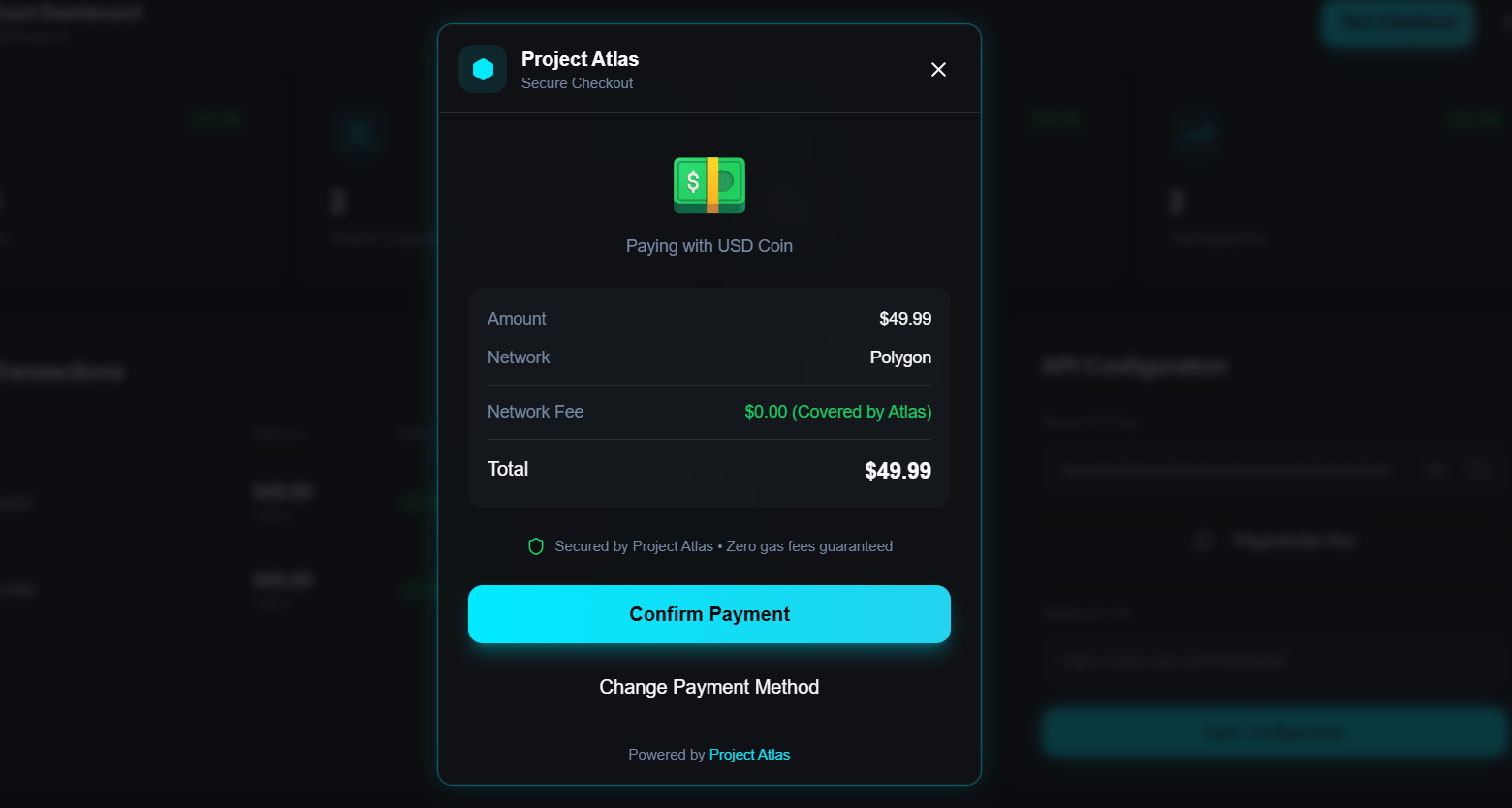
Payment mode selection
-
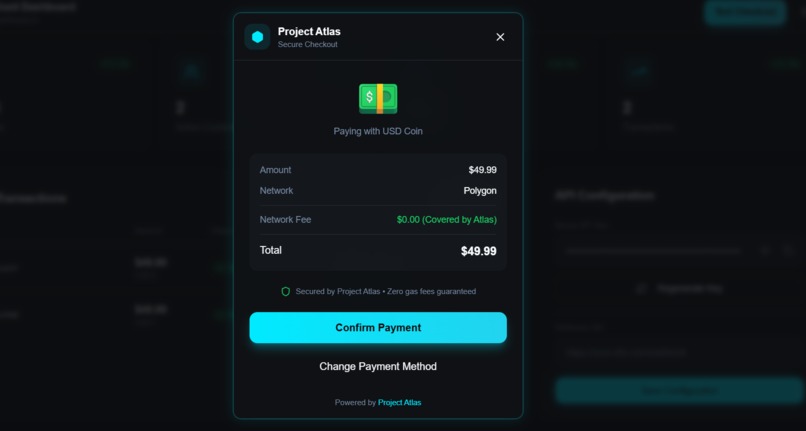
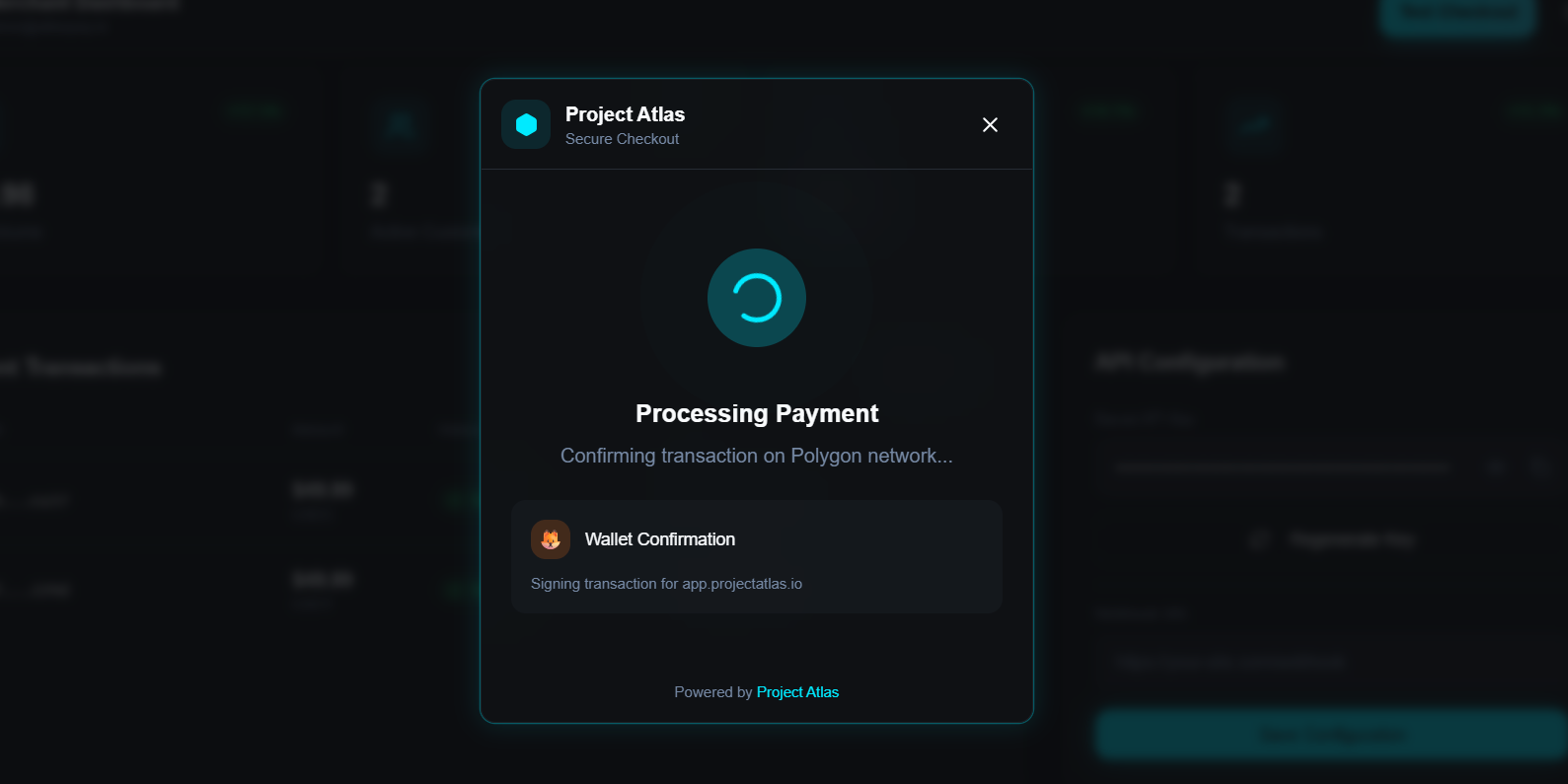
Payment processing
-
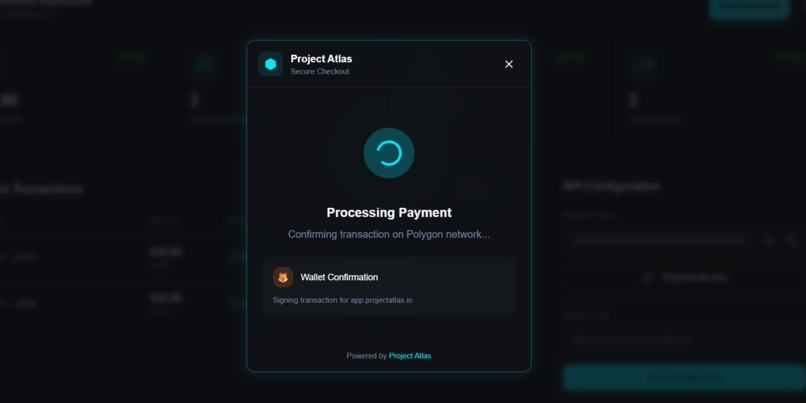
Payment approval
Inspiration
The spark for Project Atlas came from a frustrating personal experience: trying to buy a $10 digital service with crypto, only to realize we didn't have enough ETH in the wallet to pay the $3 gas fee. It was a conversion killer.
We looked at how Razorpay and Stripe revolutionized fiat payments by abstracting away the complexity of banking protocols. We realized that Web3 payments are still stuck in the "dial-up" era—users need to manage gas tokens, bridge funds, and calculate fees. We wanted to build a payment gateway that makes paying with crypto as simple as a UPI transaction: One click, zero gas worries, instant success.
What it does
Project Atlas is a gasless crypto payment gateway built on Layer 2 networks (Polygon, Arbitrum).
For the User: It allows them to pay for goods using stablecoins (USDC/USDT) without ever needing to hold the native chain token (MATIC/ETH) for gas fees. They see a price, they sign, and it's done. The "network fee" is $0.00 from their perspective.
For the Merchant: It provides a drop-in SDK (similar to Razorpay's checkout modal) that accepts payments instantly with sub-second finality. It handles the complex logic of cross-chain routing and settlement automatically.
How we built it
We utilized a modern Web3 tech stack to achieve the "Gasless" experience:
Frontend: Built with React and Tailwind CSS to create a high-fidelity, responsive Checkout Modal that feels like a traditional Web2 payment interface.
Smart Contracts: Deployed PaymentProcessor.sol contracts on Polygon and Arbitrum to handle the fund splitting and treasury management.
Gas Abstraction: We implemented a Relayer Service (using Node.js) that acts as a "Gas Station." When a user signs a transaction intent (using EIP-712 or ERC-4337 concepts), our relayer submits the transaction to the blockchain and pays the native gas fee, recouping a small margin from the transaction amount itself.
Simulation: We used standard Web3 libraries (ethers.js/viem) to mock realistic wallet interactions and loading states for the prototype.
Challenges we ran into
The "Gas Estimation" Problem: Calculating the exact gas fee in real-time to ensure our fee margin covers the actual network cost was tricky. We had to build buffer logic to handle L2 fee volatility.
Wallet Compatibility: ensuring the signature request looked clean and readable across different wallets (MetaMask vs. Rainbow) was a UX challenge.
Cross-Chain UX: Designing the UI to abstract away the concept of "Chains" so the user just sees "Pay $50" rather than "Pay $50 on Polygon zkEVM" required significant design iteration.
Accomplishments that we're proud of
The "Gasless" Flow: Successfully simulating a flow where the user pays only the product price in USDC, and the transaction confirms without them spending a single Wei of ETH.
Sub-Second UX: optimizing the UI state management to make the payment feel instant, masking the slight blockchain latency with optimistic UI updates.
The Dashboard: Building a comprehensive Merchant Dashboard that not only shows transactions but also visualizes "Gas Saved" for customers, proving the value prop immediately.
What we learned
UX is King: In crypto payments, technology matters less than the experience. Users don't care about decentralization when they are buying a T-shirt; they care about speed and cost.
L2s are Ready: Layer 2 networks have finally reached the speed and cost efficiency required to compete with Visa/Mastercard networks.
Account Abstraction is the Future: The ability to pay gas in stablecoins is the missing link for mass adoption.
What's next for Project Atlas
Mainnet Relayers: Moving our "Gas Station" from a simulation to a live production environment with real ETH liquidity.
Fiat Off-Ramps: Integrating with on-ramp providers to allow merchants to automatically convert their crypto income into Fiat (INR/USD) in their bank accounts at the end of the day.
Recurring Payments: Leveraging crypto allowances to build a "Subscription" feature for SaaS companies.
Built With
- arbitrum
- chai
- ether.js
- express.js
- mongodb
- node.js
- polygon
- react
- solidity
- waffle
- wagmi
- wiem


Log in or sign up for Devpost to join the conversation.