-
-
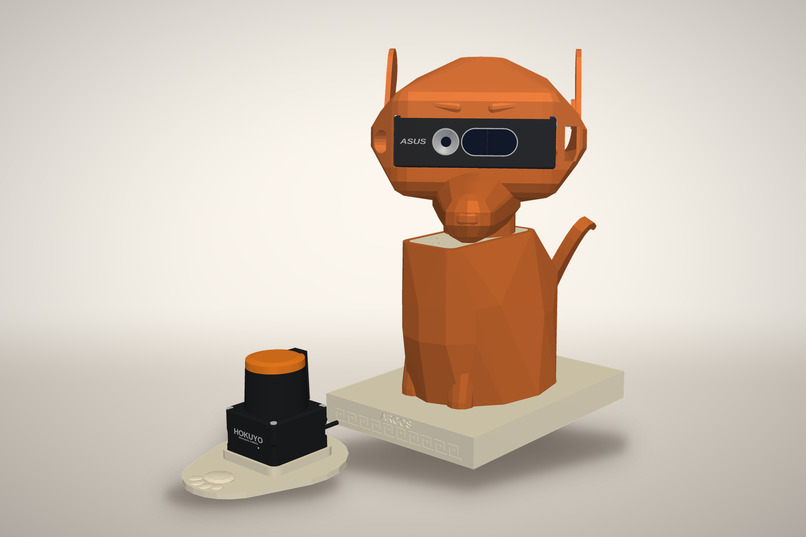
“I know you”: Argos turns to face you, ears up, tail wagging.
-
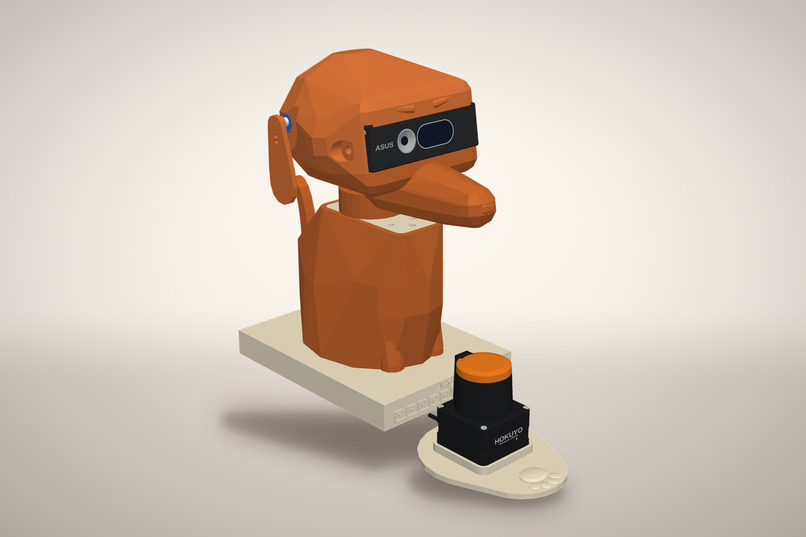
Argos at rest, ears down, watching the room.
-
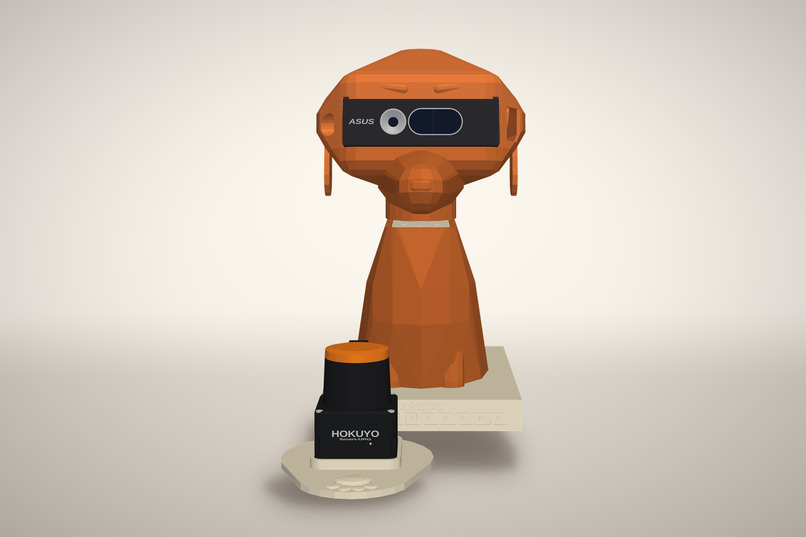
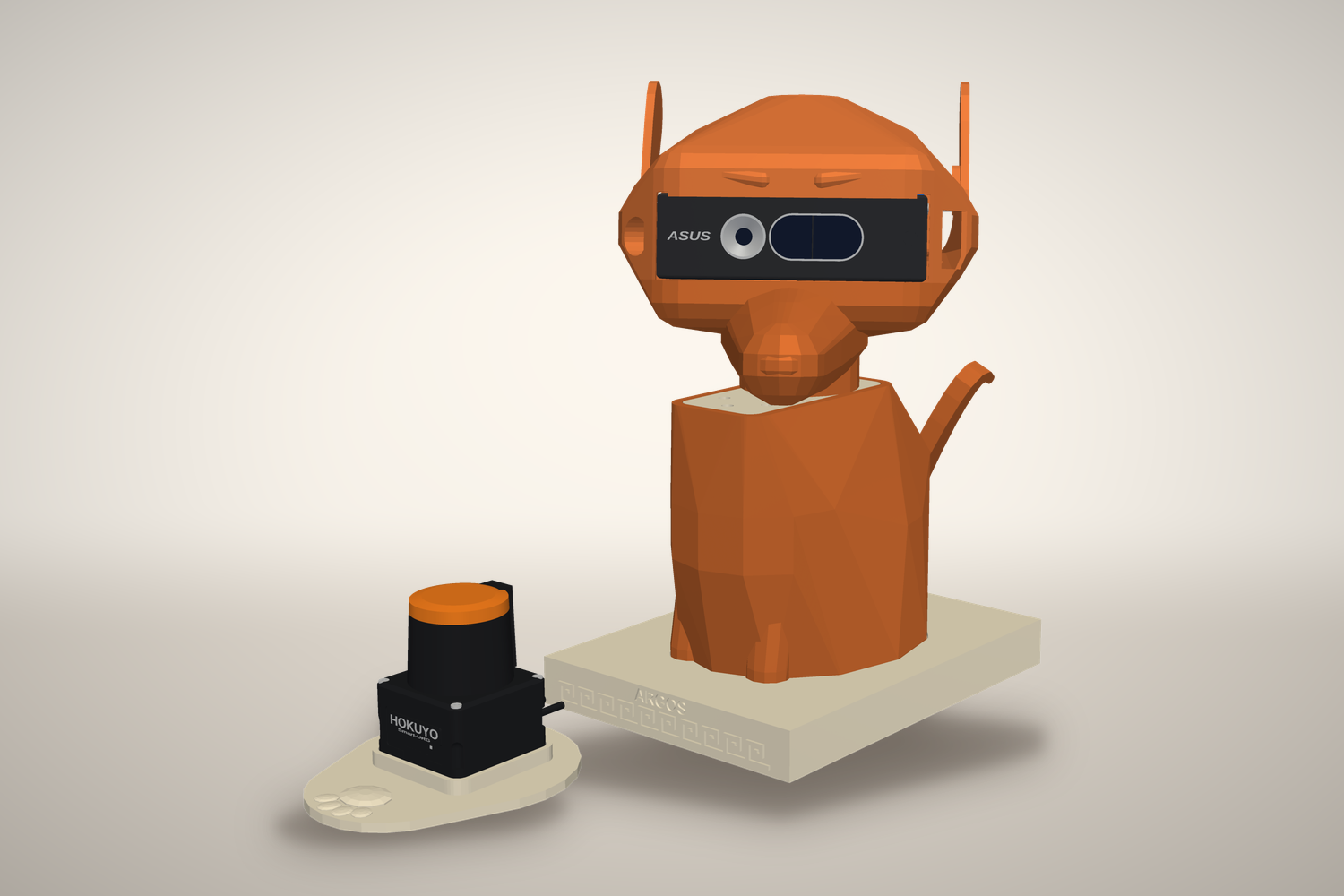
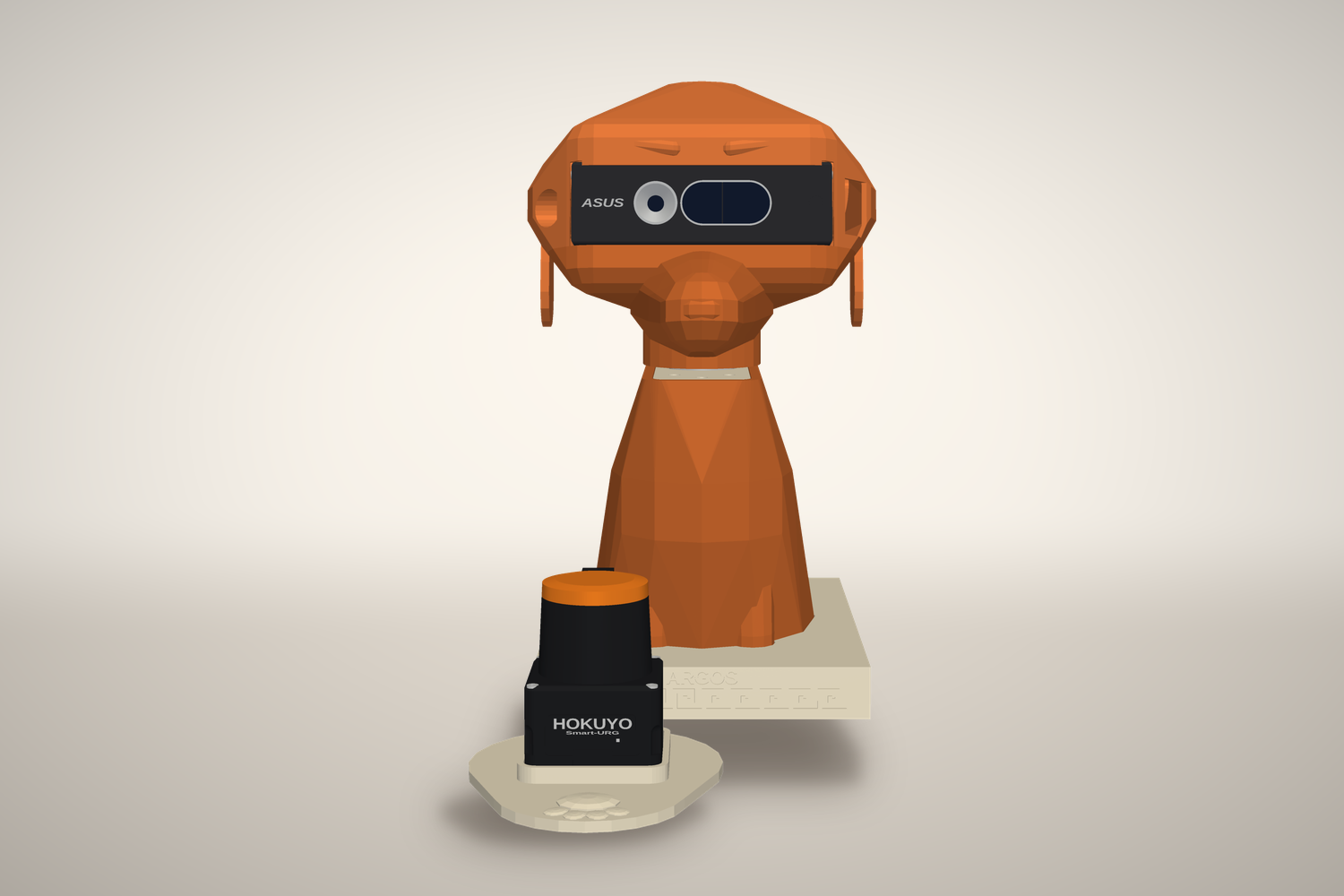
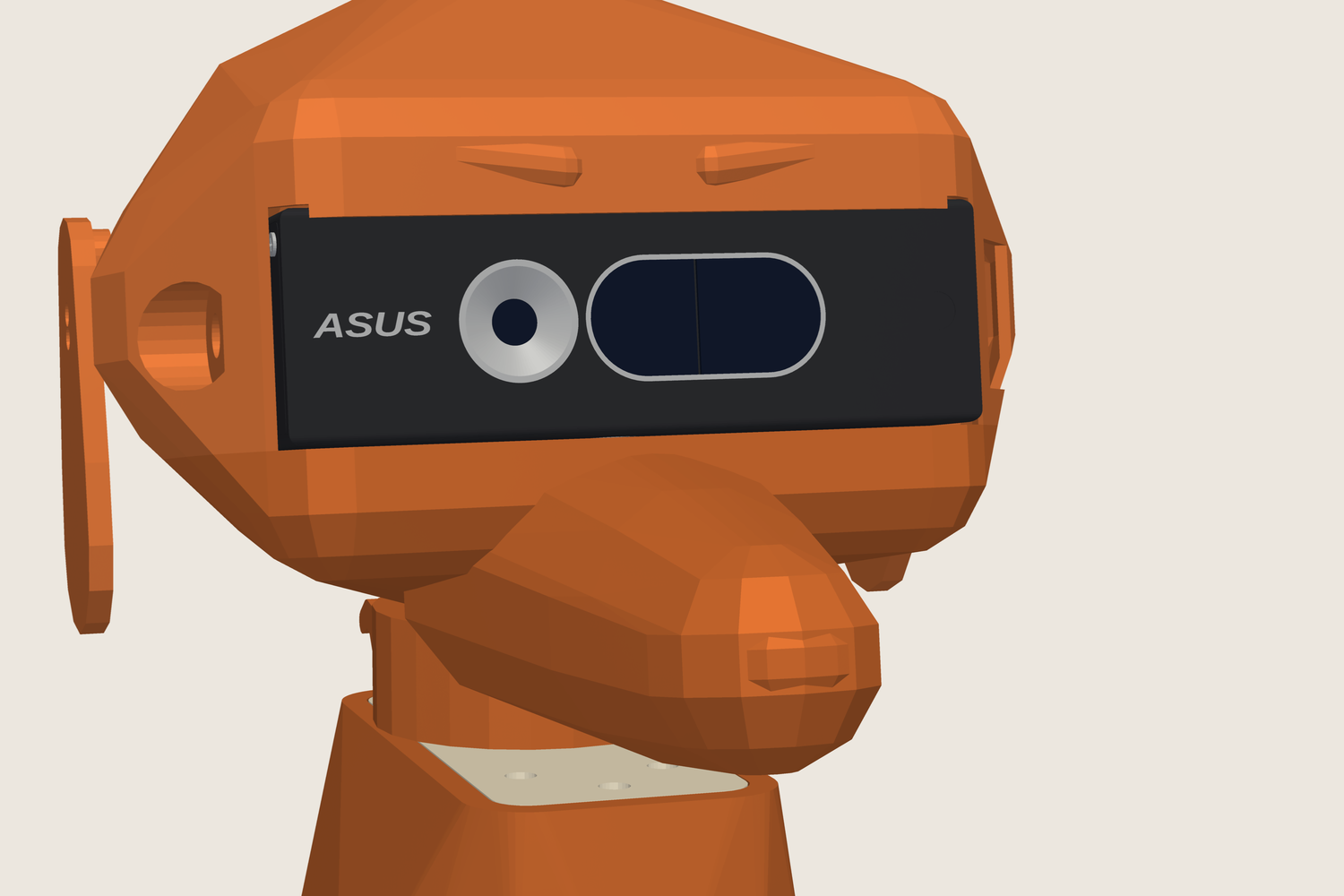
Front view. The depth camera sits behind the eye band.
-
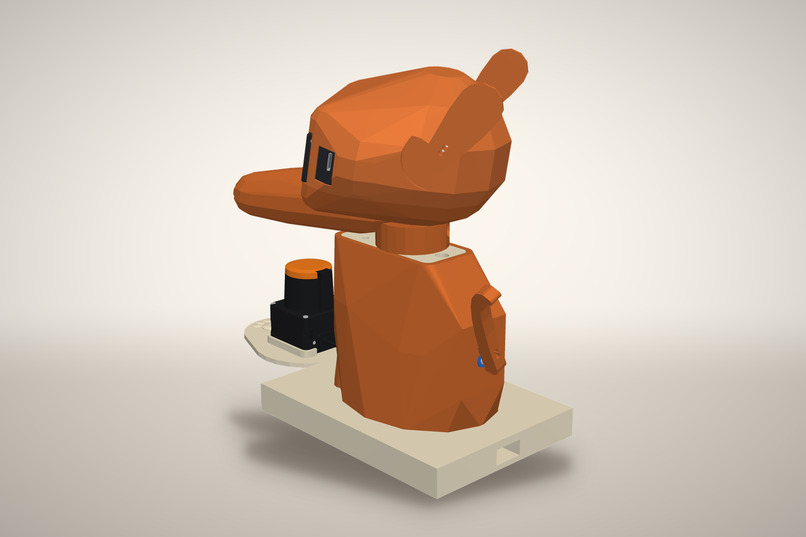
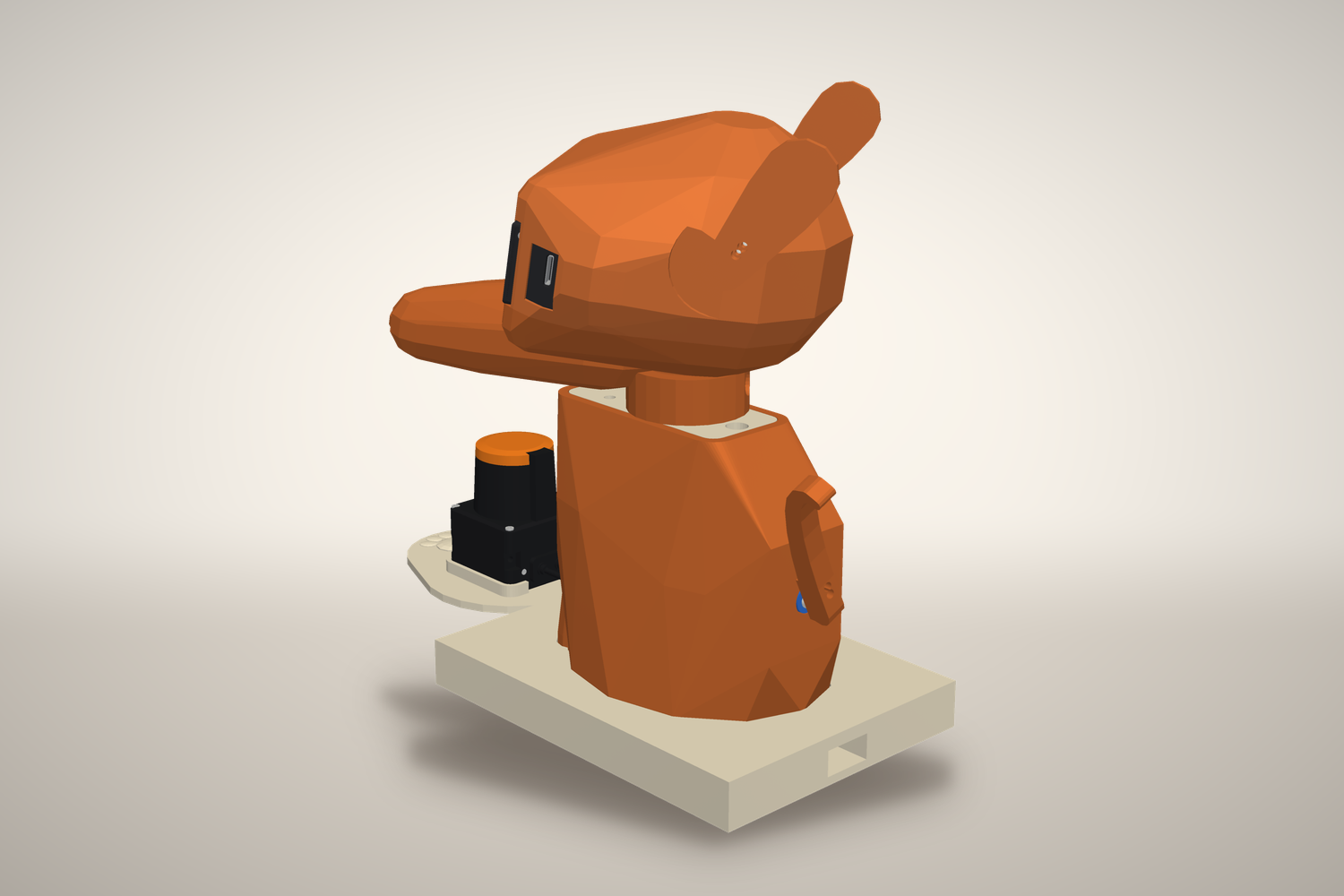
From behind: ears raised and tail mid-wag.
-
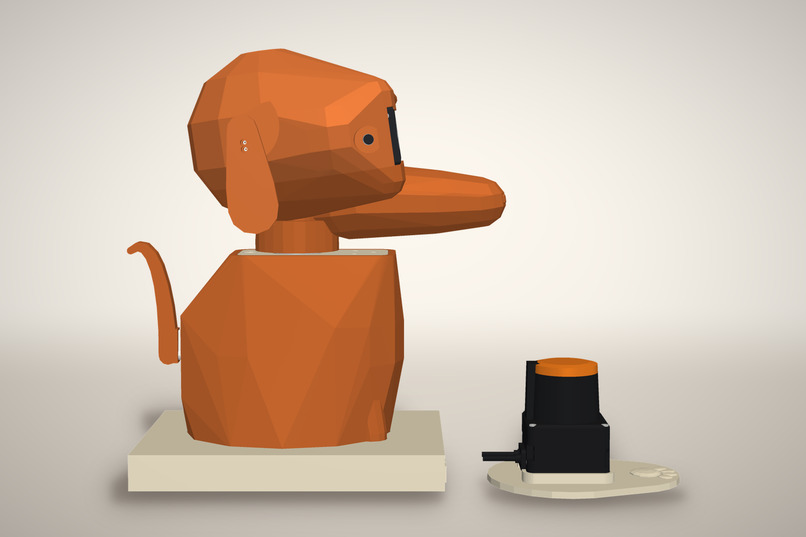
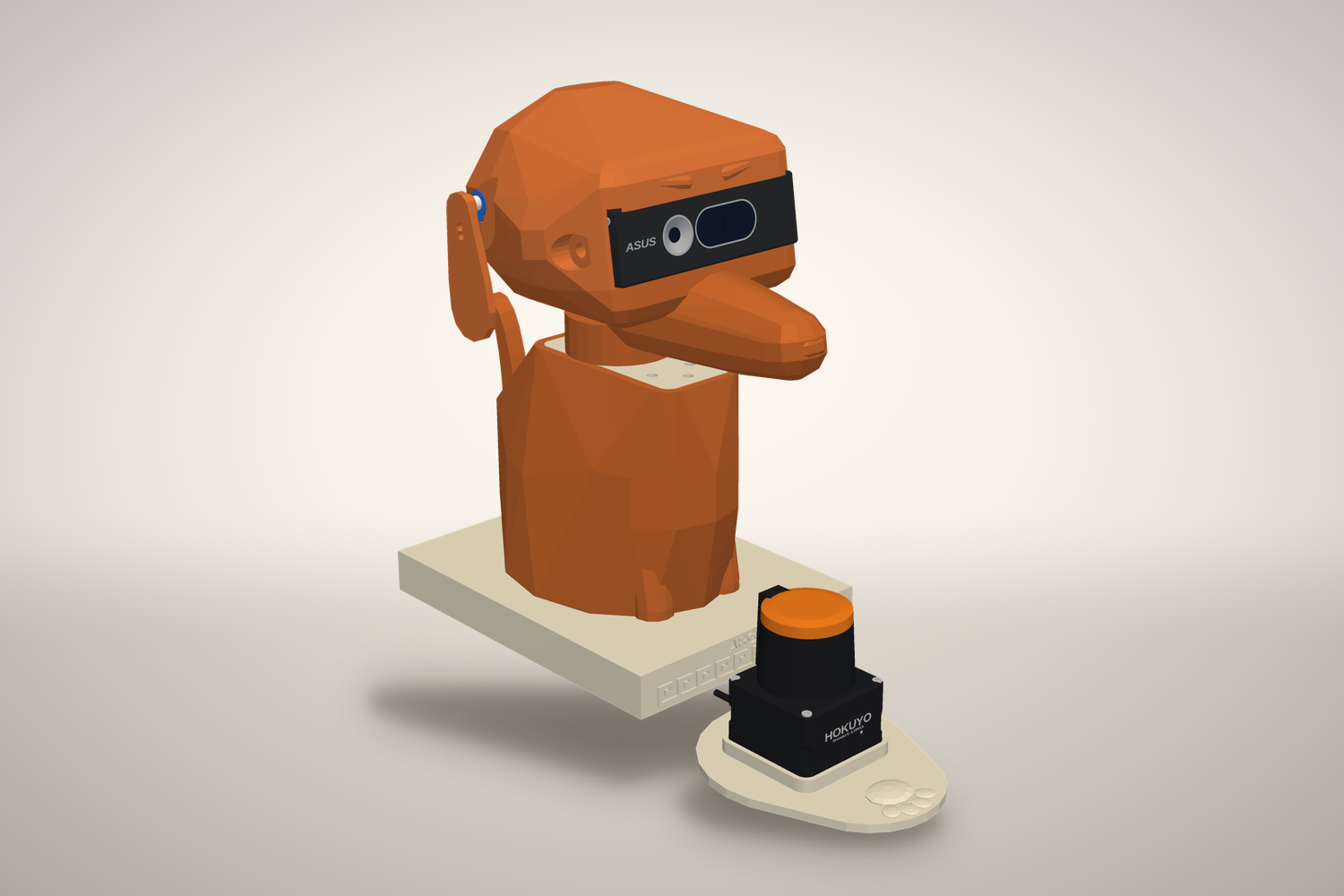
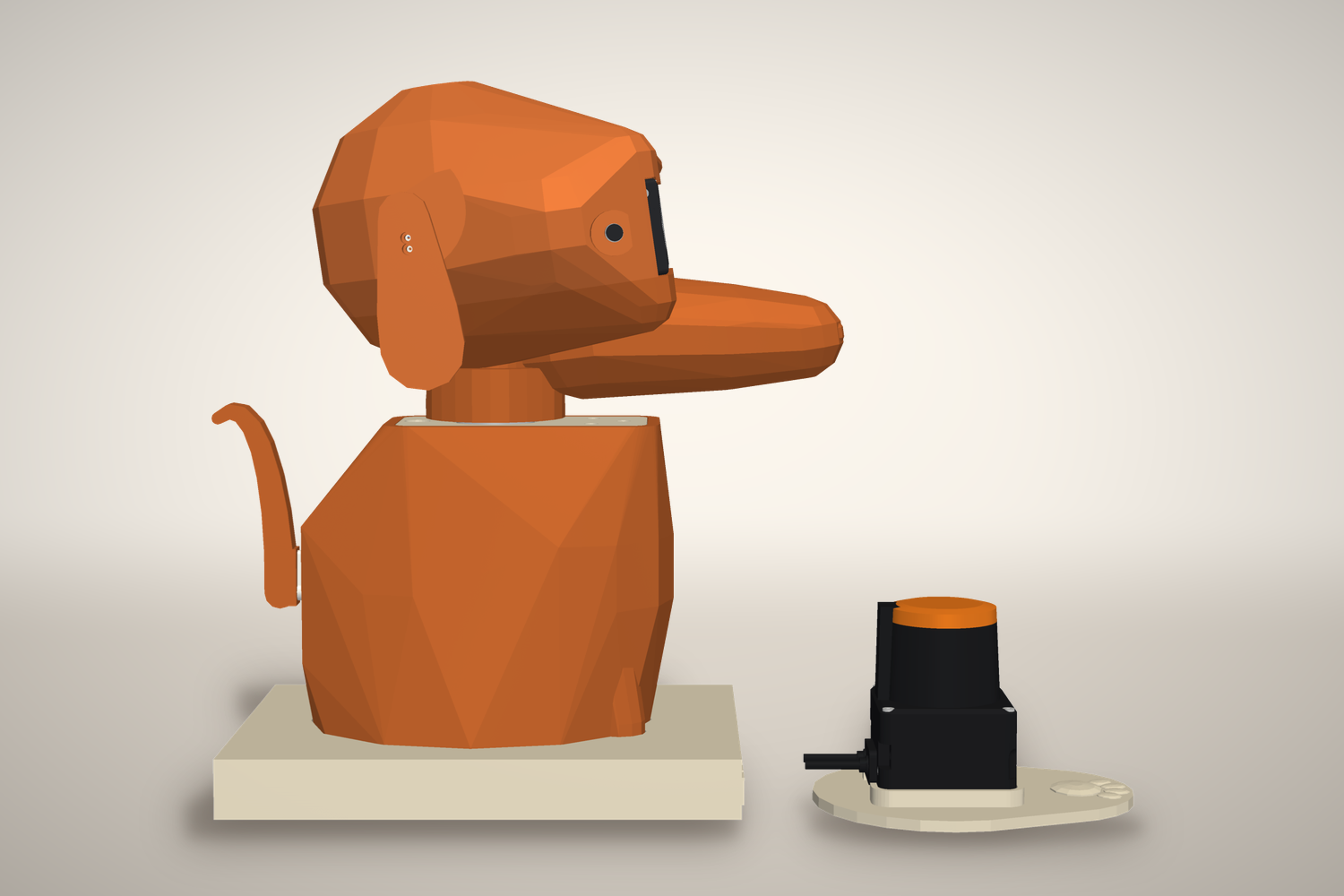
Side profile, with the LiDAR on its paw at ankle height.
-
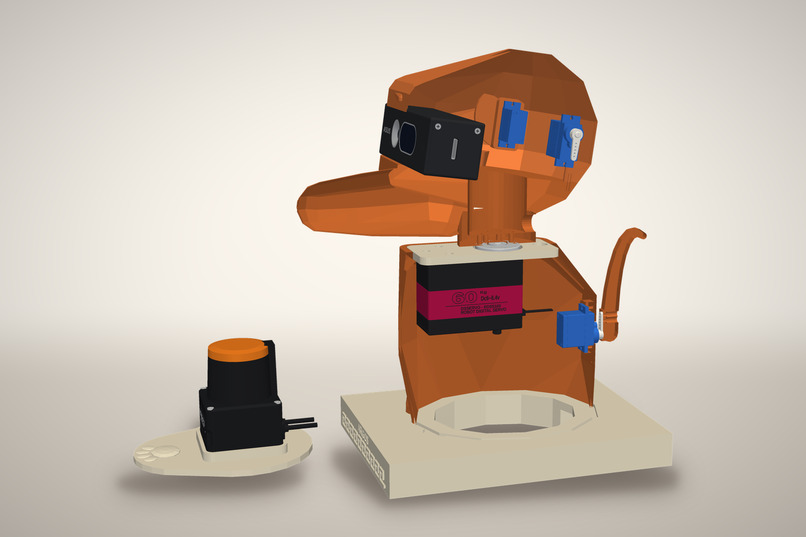
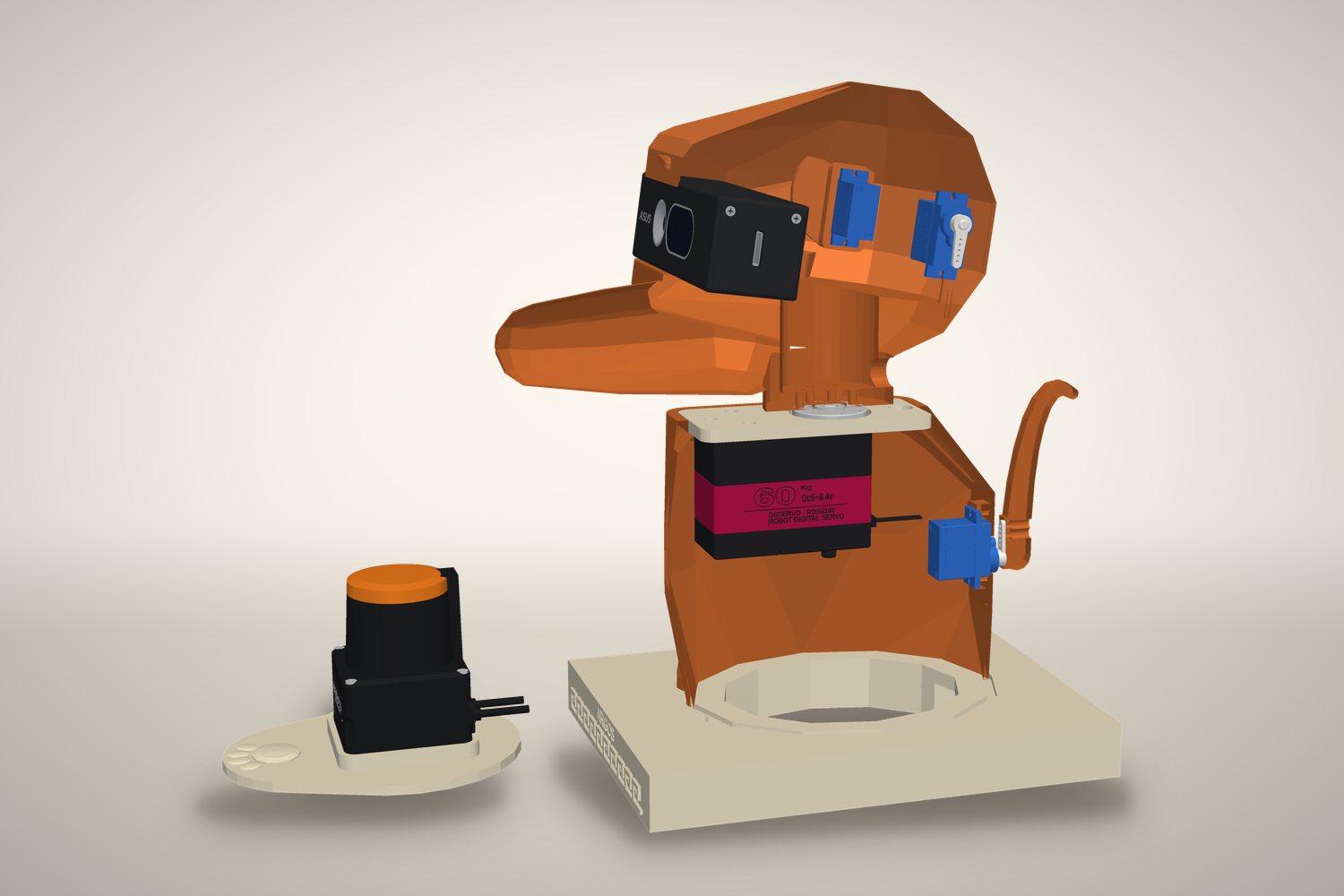
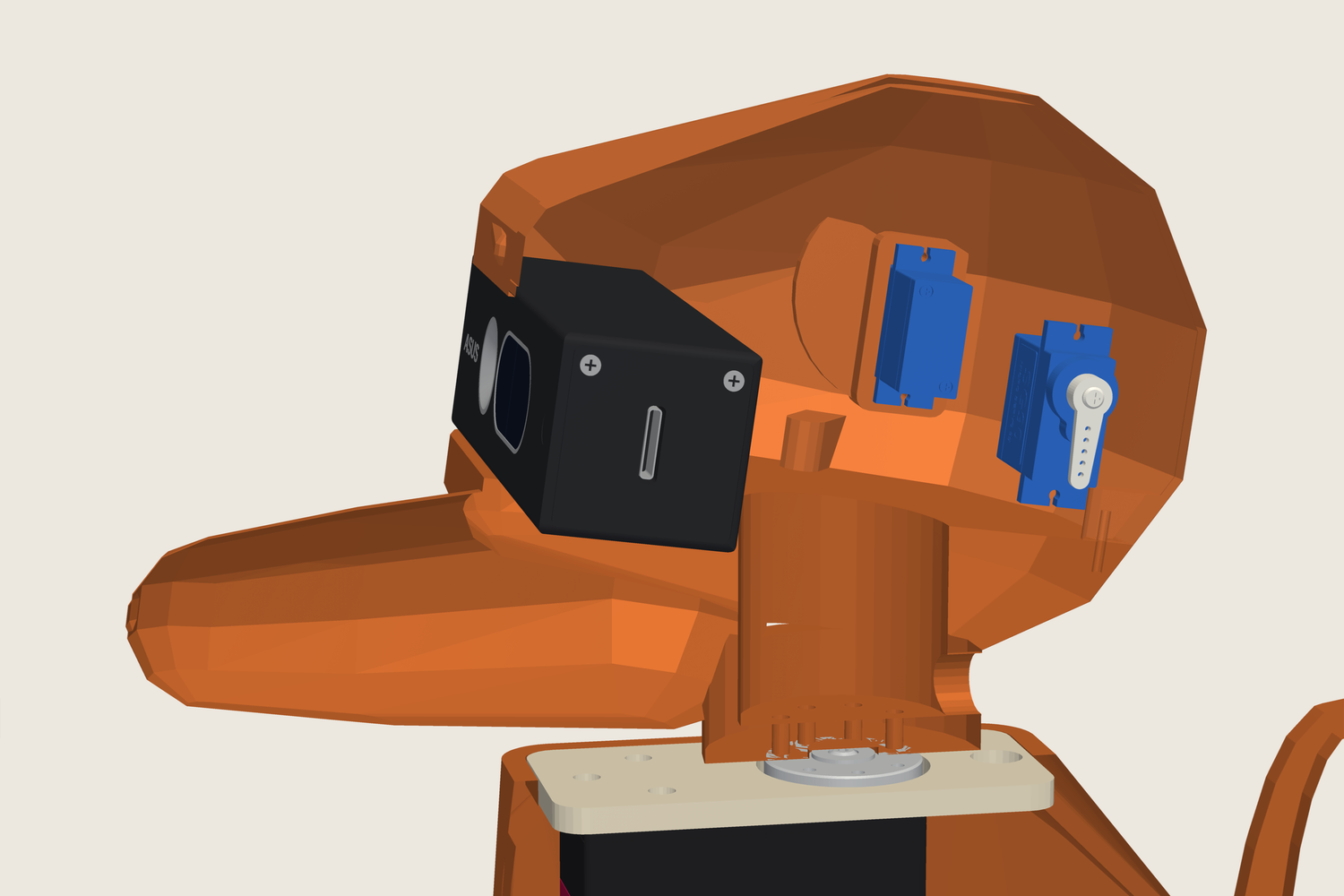
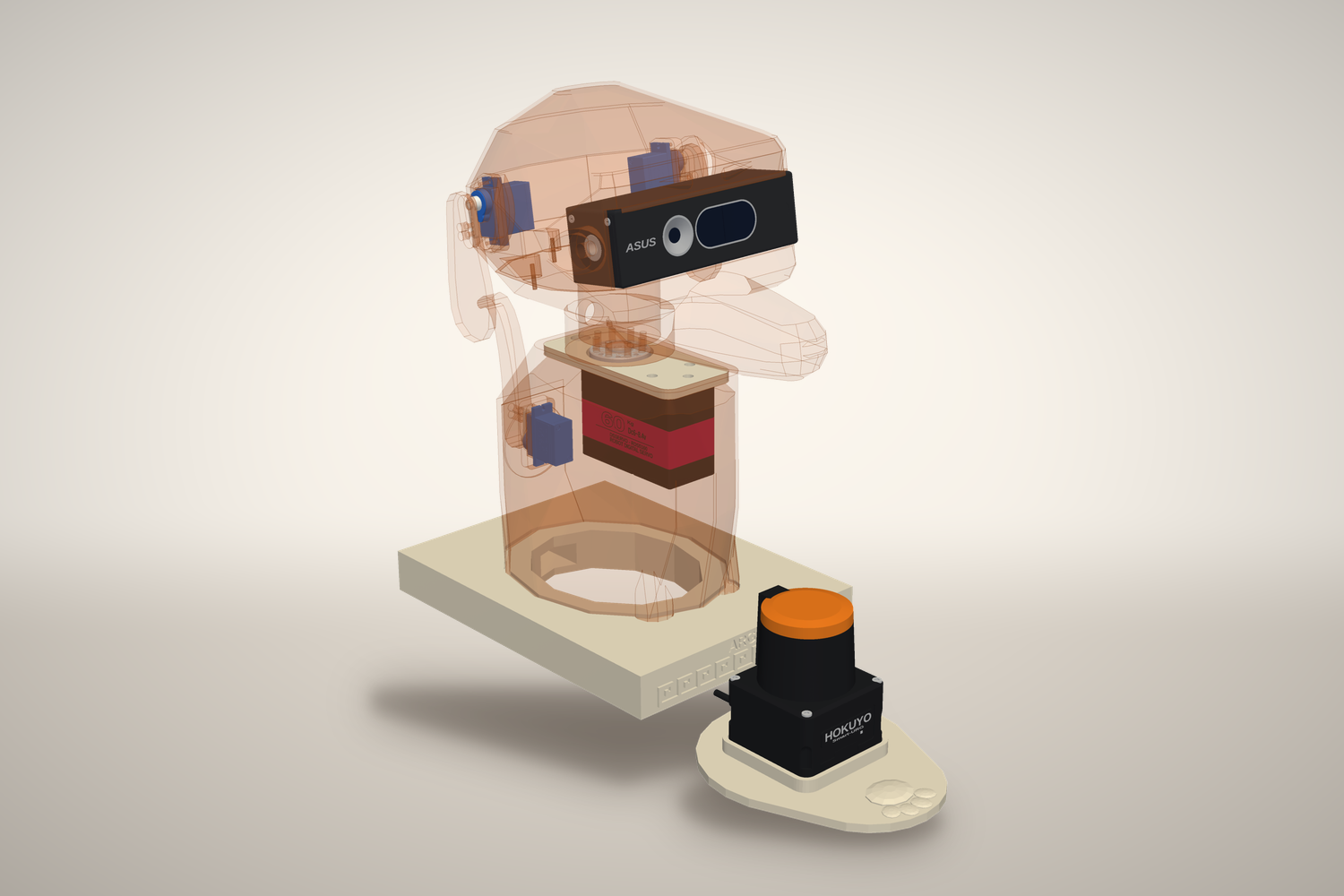
Cutaway showing the camera, ear servos, neck servo and tail servo.
-
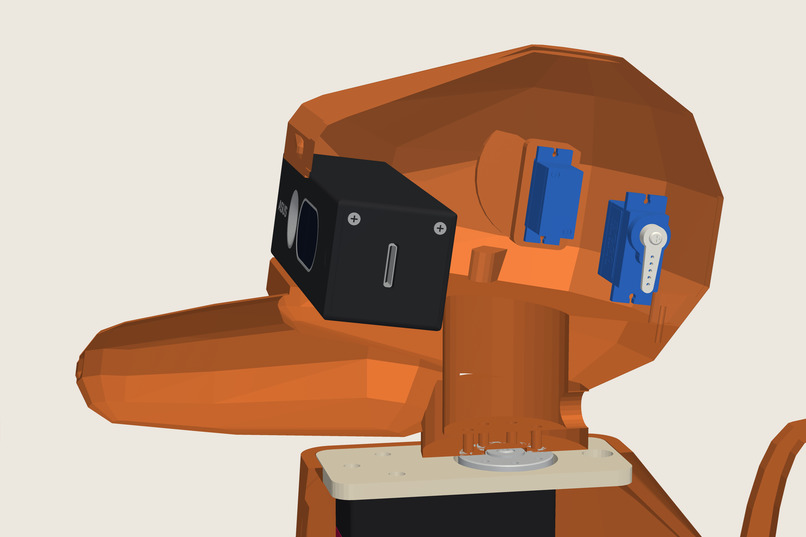
Inside the head: the Xtion camera in its pocket and the two ear servos.
-
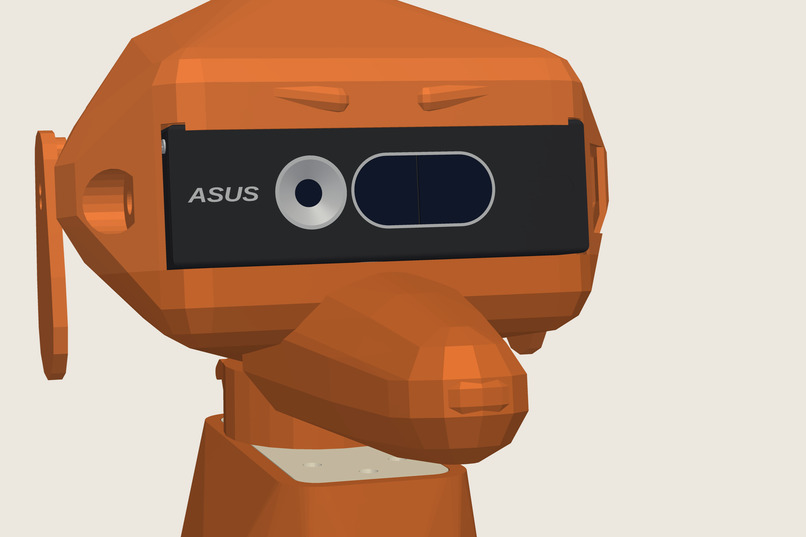
The face: an ASUS Xtion 2 for colour and depth.
-
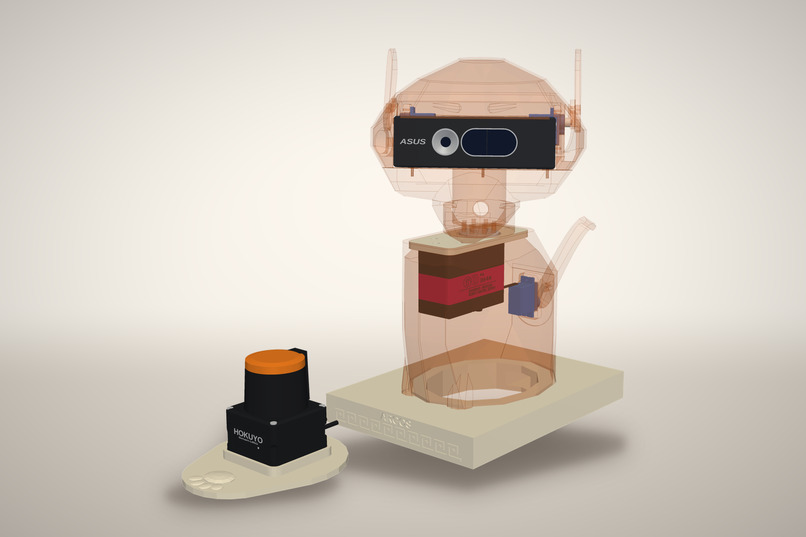
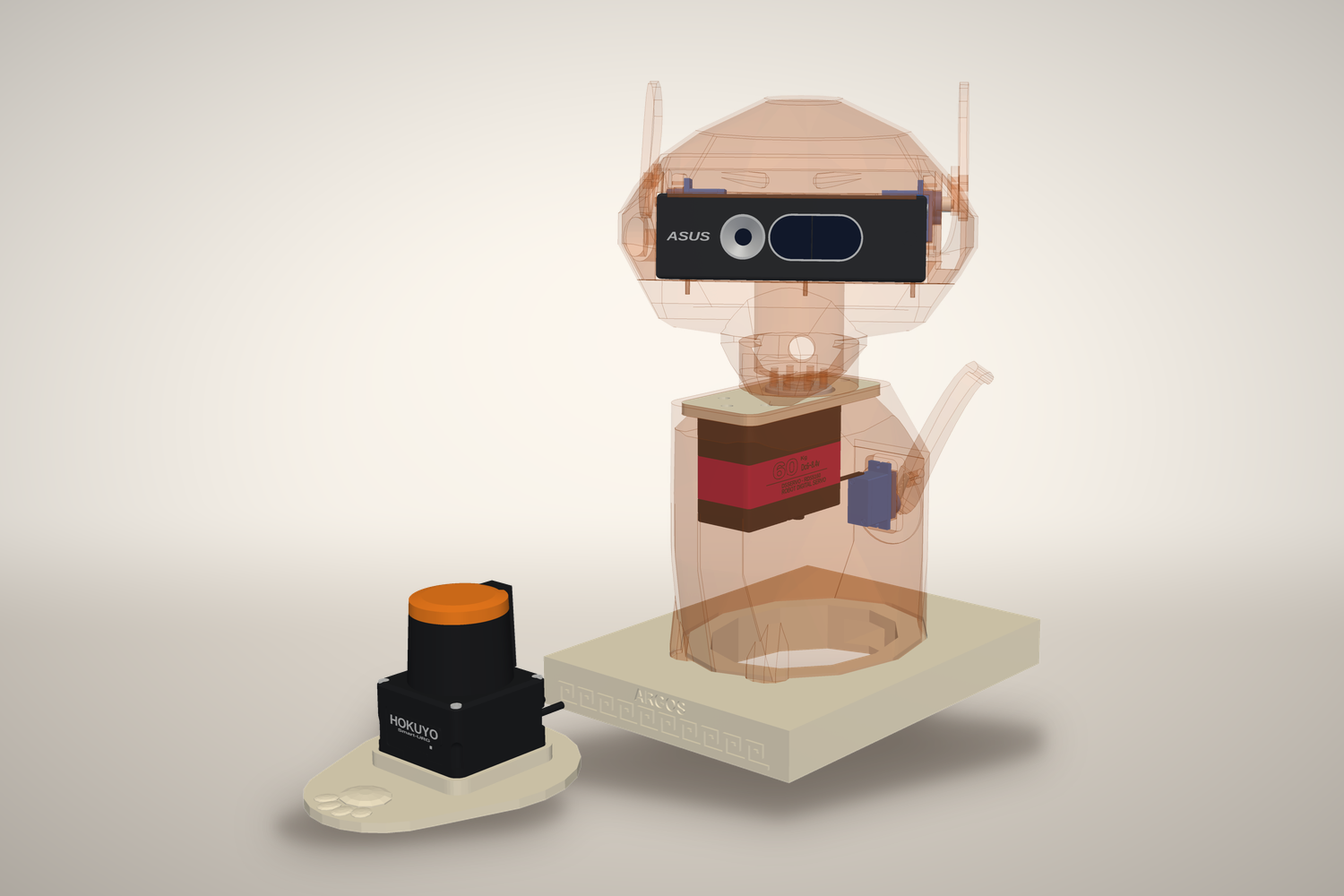
X-ray view of the hardware inside the greeting pose.
-
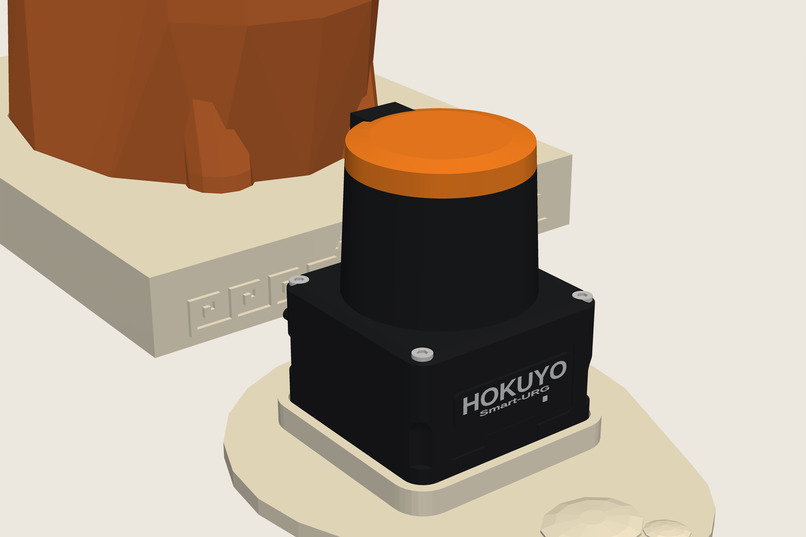
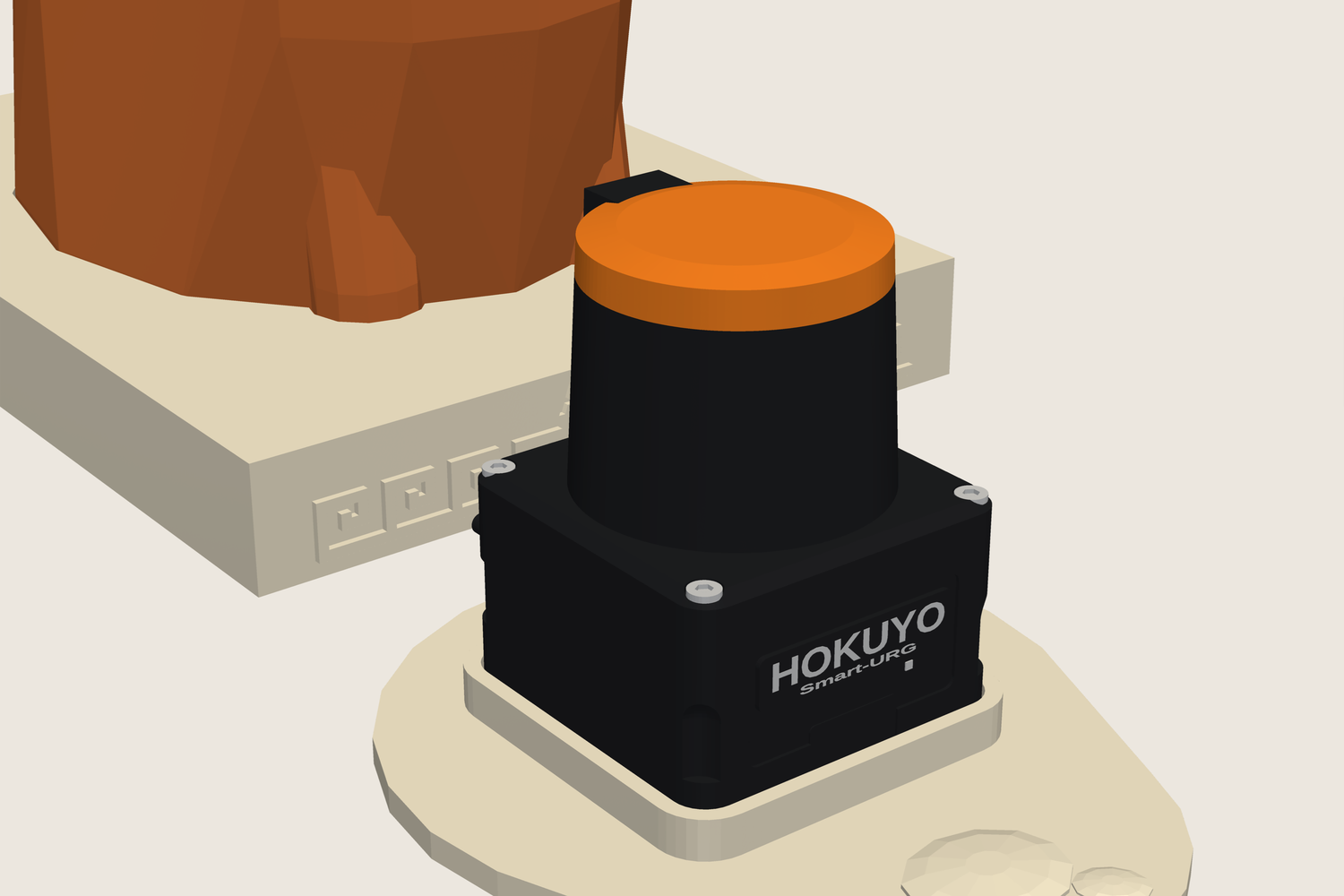
The Hokuyo LiDAR on its paw-print mount.
-
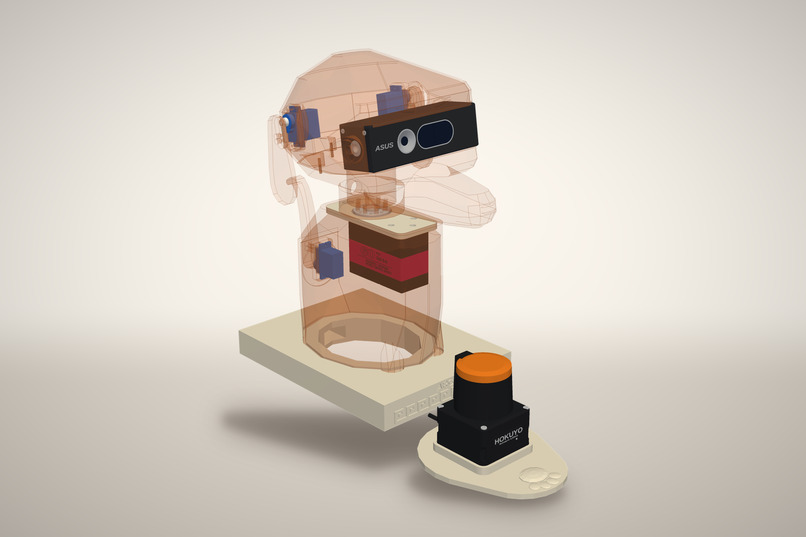
X-ray view at rest.
-
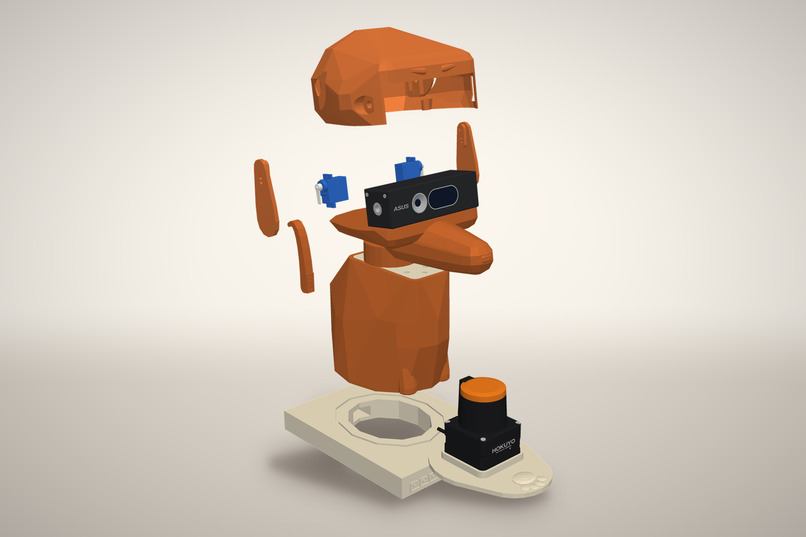
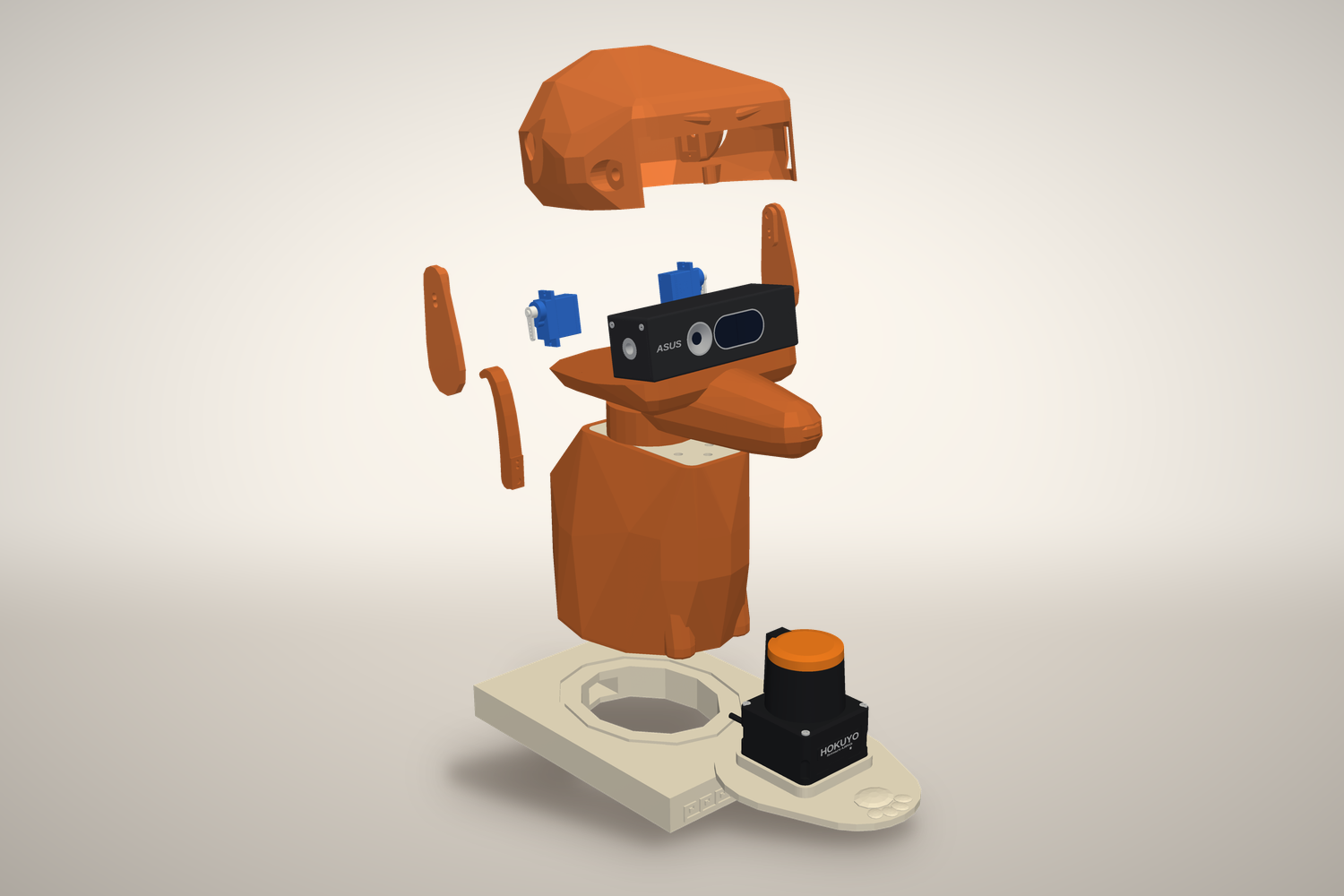
Exploded view: head top, ears, tail and plinth pulled apart.
-
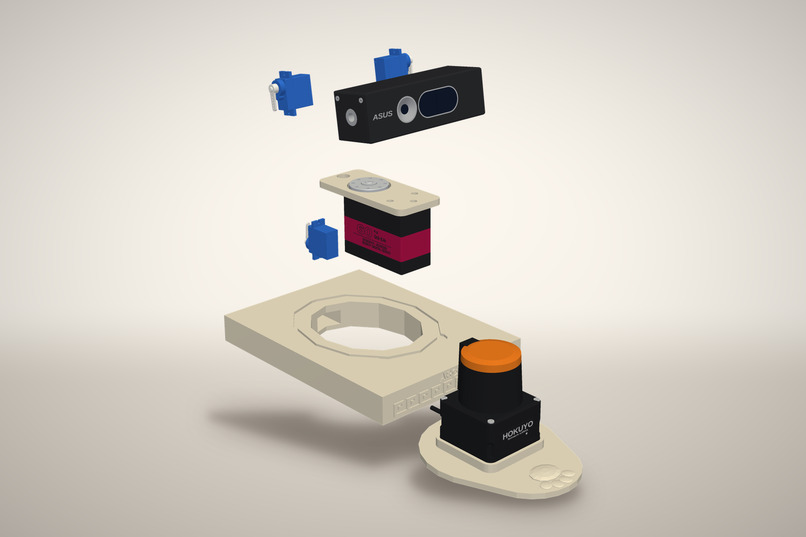
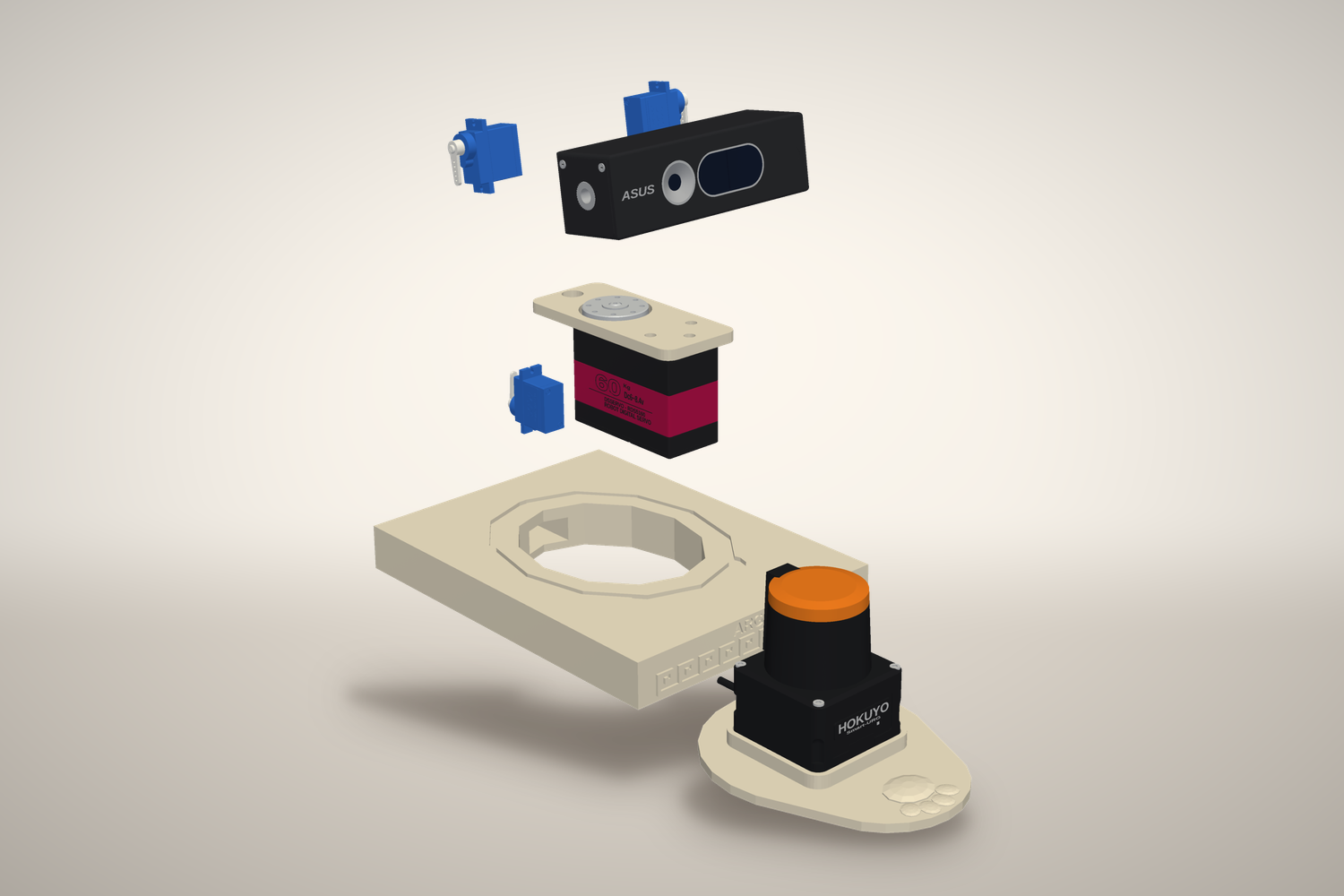
The electronics without the shell: camera, four servos and LiDAR.
-
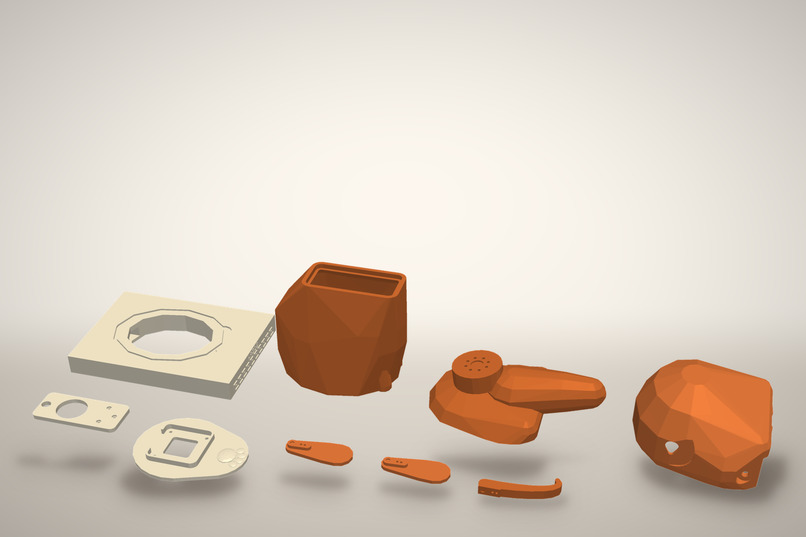
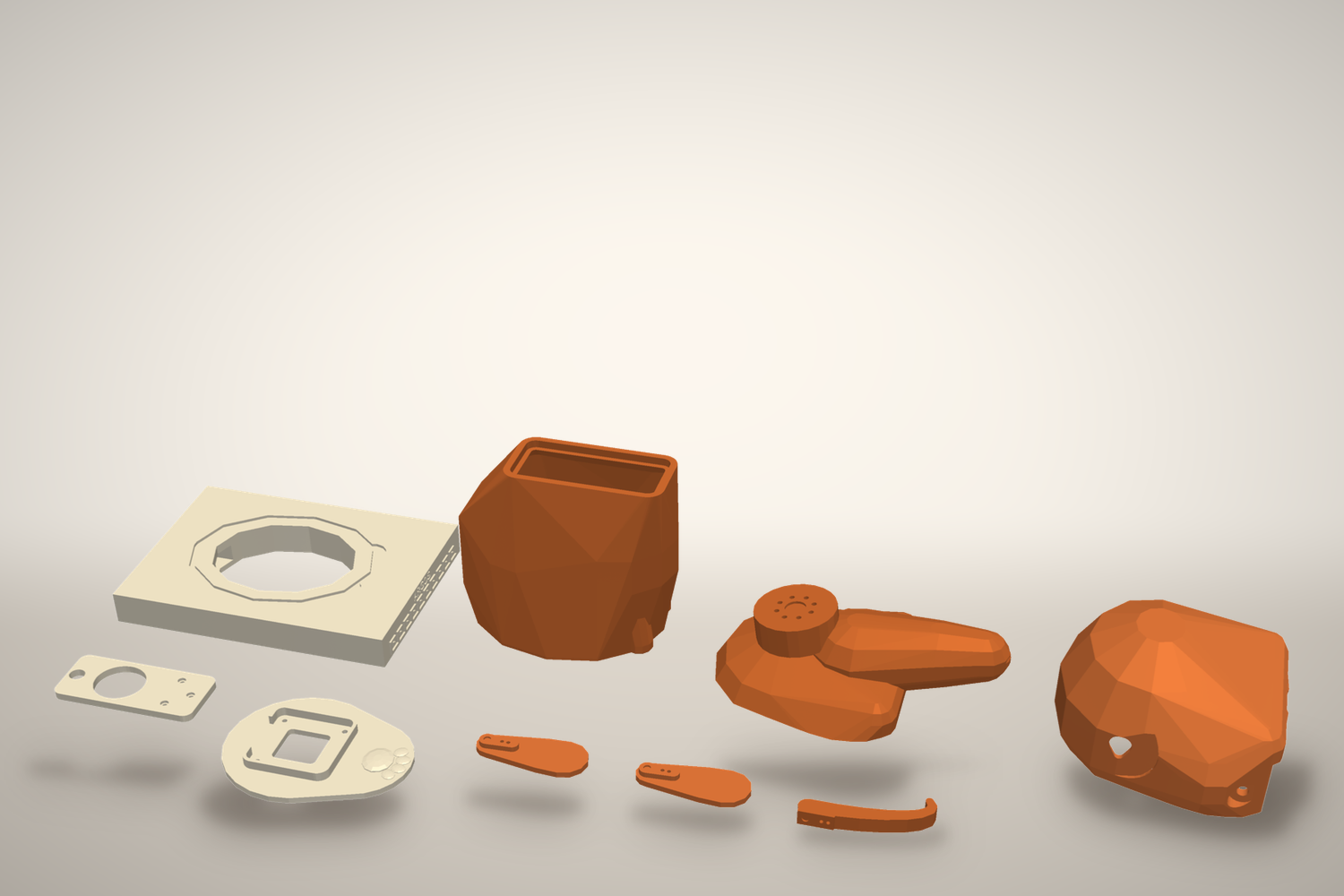
All nine 3D-printed parts laid out.
Inspiration
In the Odyssey, Odysseus comes home in disguise after twenty years. Nobody recognises him except his old dog Argos, who drops his ears and wags his tail. We built that dog.
What it does
Argos is a 3D-printed robot hound that guards your door. A LiDAR spots you approaching and his head turns to follow you. A depth camera recognises your face, and can tell a real face from a photo. Friends get greeted by name with ears up and a wagging tail. Strangers get challenged.
How we built it
We designed the body and 3D-printed it. An Arduino drives four servos for the head, ears and tail. The brain is Python with OpenCV for face recognition, ElevenLabs for the voice, and a Flask dashboard showing what Argos sees.
Challenges we ran into
A LiDAR thinks chair legs are people, so the camera has to confirm every track. Face recognition alone accepts a photo, so we added a depth check. And fitting a camera and four servos inside a dog's head took a lot of redesigns.
What we learned
Two imperfect sensors together beat either one alone.
What's next for Argos
Phone alerts for strangers, and a mobile base so Argos can walk to the door.


