Inspiration
In an off the grid tactical military situation, the ability to communicate in real time effectively and efficiently while also decreasing weight and increasing durability are large factors to consider. Current methods of satellite communications are at times slow, limiting, and require a clear line of sight to transmit data. Satellite services like Iridium Certus have a claimed bandwidth of 22-88kbps for similar applications, but in reality get less than that.
We believe that an SDR using High Frequency (HF) radios have the potential to be a medium of transmission of ground intelligence that is more efficient, lighter, durable, and efficient, as a viable alternative to current modes of communication.
What it does
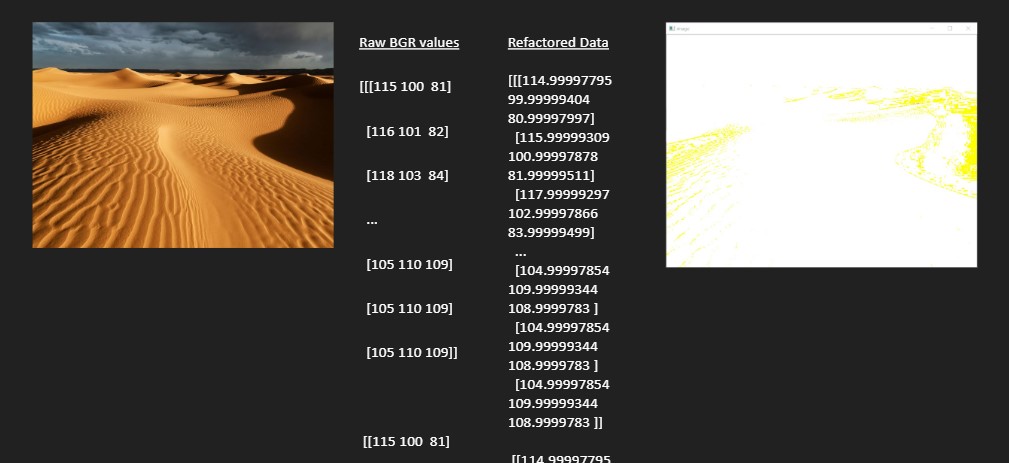
Our program takes images and converts it to raw pixel data which is used to generate an audio file to be sent through HF radio which is received and refactored back into its arrays which is then encoded back into the original image.
How we built it
Python 3.7 OpenCV for image processing and computing NumPy for raw data input and refactoring. SoundFile for the generation of waveforms based on raw pixel data of visual media to be transmitted.
Challenges we ran into
We ran into modules of python that were incompatible due to version and legacy. Extensive searching yielded unofficial compatibility implementations that were very useful
Accomplishments that we're proud of
Being able to generate an image that resembles the original
What we learned
Vision and audio computing is heavy on concepts of linear algebra.
What's next
Utilizing Deep Neural Networks to be able to find more efficient ways to refactor arrays and generate sound files.
Log in or sign up for Devpost to join the conversation.