-
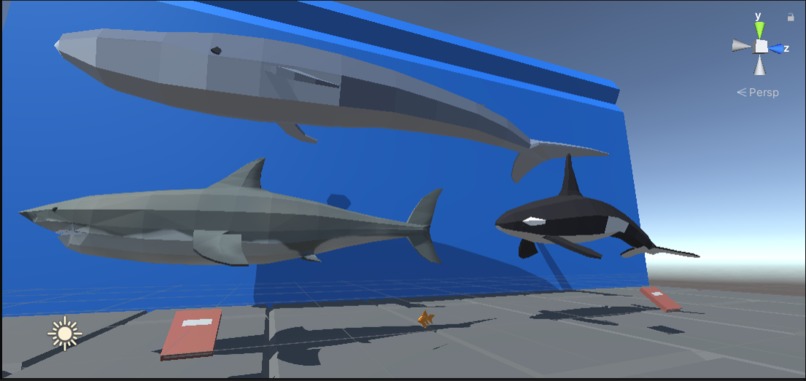
Prototype Exhibit 1
-
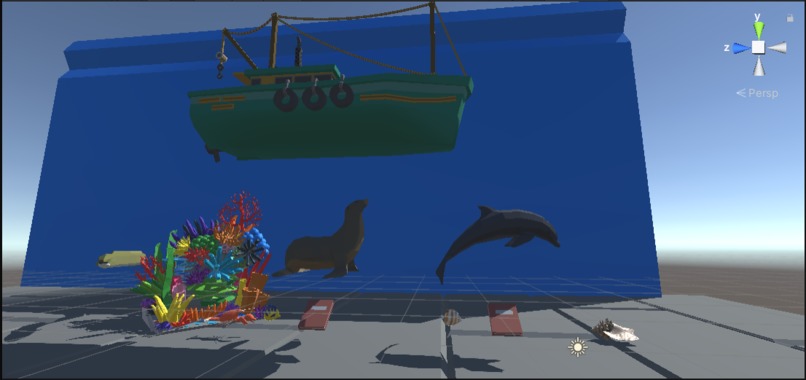
Prototype Exhibit 2
Inspiration
The inspiration for Project Accessible Oceans came from my own experiences when I was in about 3rd or 4th grade. Aquariums were always a place of learning, somewhere where knowledge was around every bend, but in a much more stimulating environment than a book or movie. Aquariums gave me a love for the seas that I couldn't imagine living without, it inspired me to research outside of school hours and pursue what I enjoyed. I don't want any to go without the opportunity of falling in love with science. With Covid-19 shutting down countless aquariums and museums, I want to give the aquarium experience to as many as possible. Quarantine has been hard on the younger minds of the world, taking away the hands-on experiences in favor of video calls and lectures. They deserve to have the same opportunities we all had as children, and this project is taking one step in the right direction.
What it does
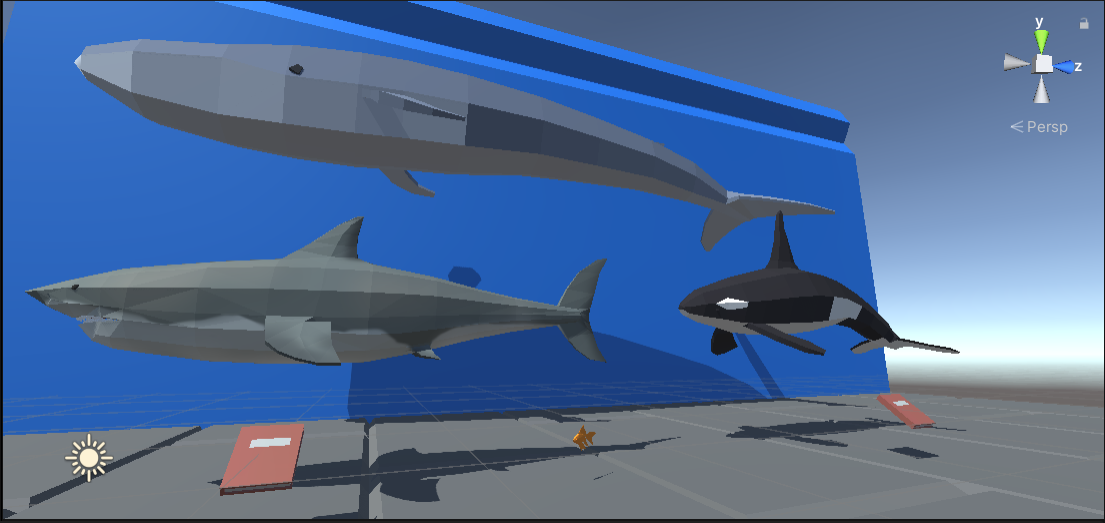
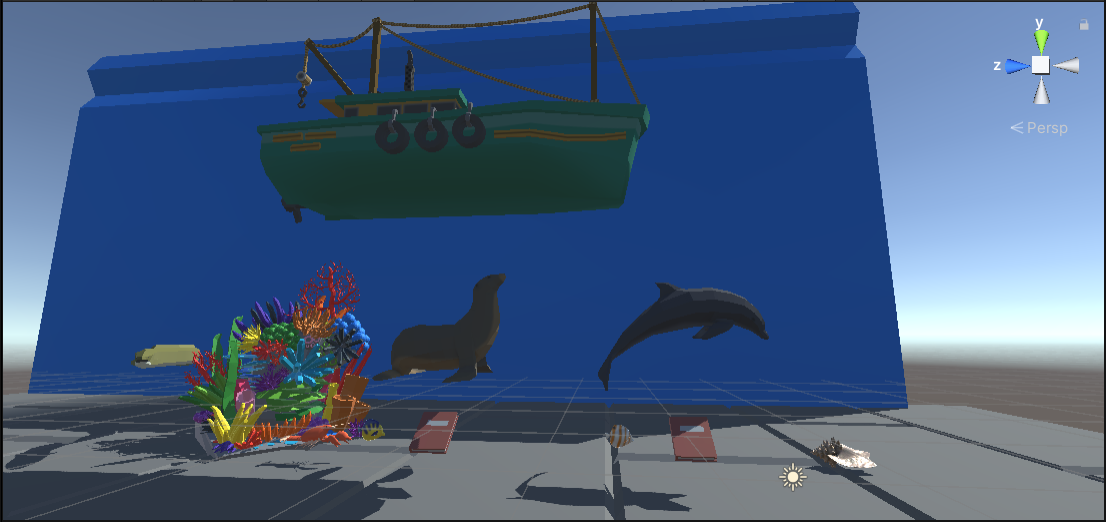
Project Accessible Oceans is an AR aquarium. Using the key given, anyone can bring an aquarium exhibit into their room whilst learning in the process.
How we built it
Using EchoAR, I linked it up to Unity and started to find 3d models that could be used. After finding models, they all needed to be resized, relocated, and arranged depending on their original state. I meddled in the coding, doing research on C# to be able to understand what was happening. Models for makeshift floors and walls were also found, along with models for the books. They were rotated to fit, and it also gave me the idea of making them interactable.
Challenges we ran into
I originally had a different plan, causing me to lose some time while changing ideas. Getting the two softwares to be compatible was very difficult, as it was my first time using both EchoAR and Unity. I've also done nothing pertaining to 3d modeling before, so discovering and changing the metadata was quite hard. Downloading all of the software also took time, causing a lot of stress and second-thoughts. C# was also completely foreign to me, so researching and learning a bit about the language was difficult.
Accomplishments that we're proud of
I'm proud of the idea, as its very personal to me, and has a lot of meaning. I'm also proud of how the displays came out, for being my first time using 3d modeling software. Whilst difficult, I enjoyed it overall, and will probably come back to do more casual projects.
What we learned
I learned a lot about how EchoAR interacts with Unity, and how certain data is stored and transferred. I also learned about metadata, and how it affects 3d models. Time management was also important, to keep from running out of time near the end of the project. I also learned about C#, and how it is similar yet different compared to other programming languages I do know.
What's next for Project Accessible Oceans
Making the books interactable would be next, giving the user information about the nearby creatures. This would be alongside finishing the aquarium displays and possibly separating each display to its own key or qr code to not run out of room.
A fully VR aquarium would be in the future, giving the in-depth surrealism of an actual building. But because its virtual reality, there would be no need for tanks, as the fish could just swim around inside the room itself, a magical experience similar to an aquarium without breaking any guidelines. Users could interact with the fish using a controller or pointer, which would give the user knowledge about the animals.
The code for Unity is "falling-frost-7779"
Built With
- echoar
- unity


Log in or sign up for Devpost to join the conversation.