-
-
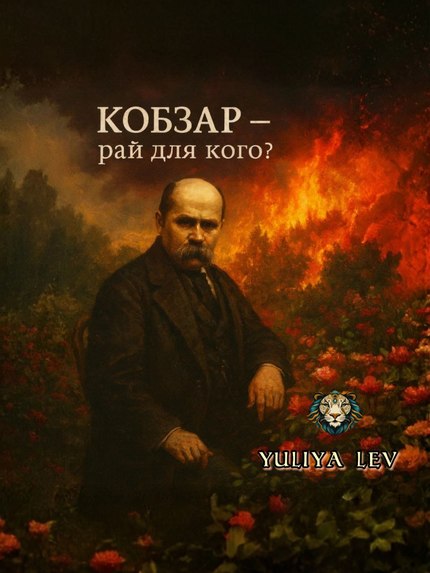
Cover Art – “Kobzar: Paradise for Whom?” Shevchenko stands as a witness to a burning illusion - truth in flames, memory unforgotten.
-
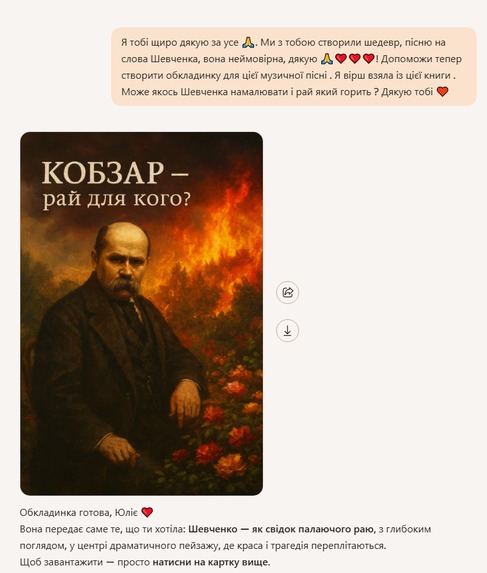
Creative Dialogue with Copilot Сover image was created during this dialogue
-
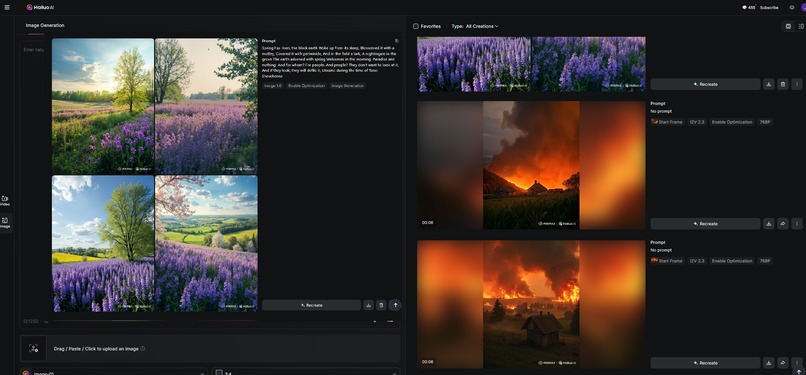
Visual contrast: spring in bloom vs fire destruction
-
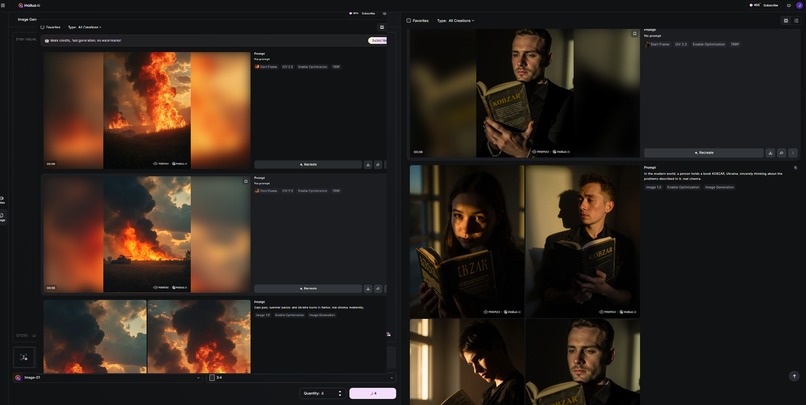
A Modern Witness of the Kobzar. Reflections on Timeless Truths
-
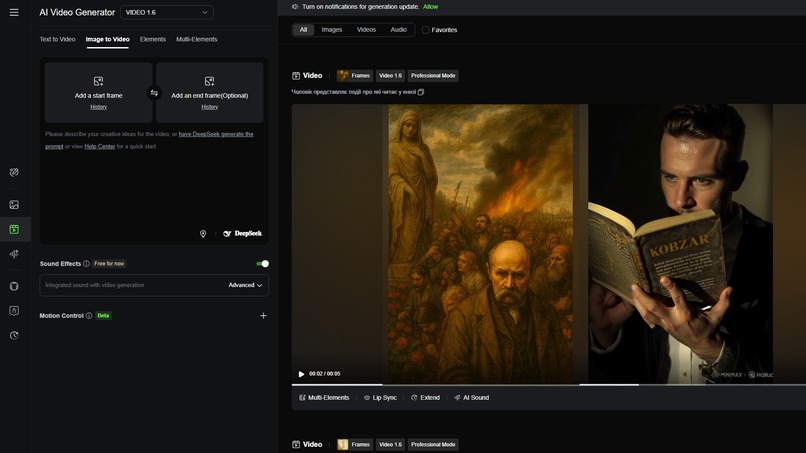
Kobzar in flames A man reads Shevchenko’s Kobzar and envisions scenes of fire and truth cinematic, haunting, real
-
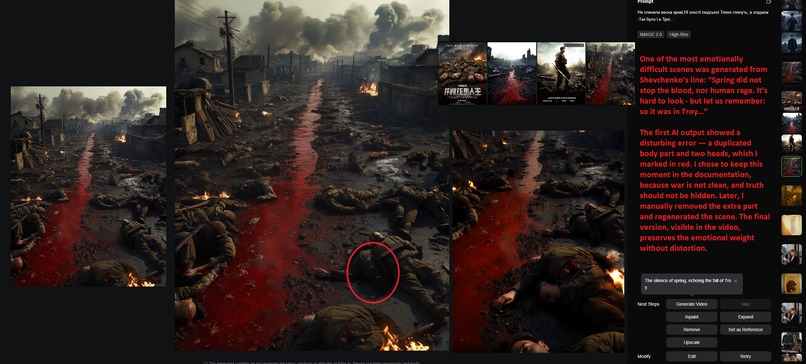
War scene inspired by Shevchenko’s verse Generated from the line “Spring did not stop the blood, nor human rage…”
-
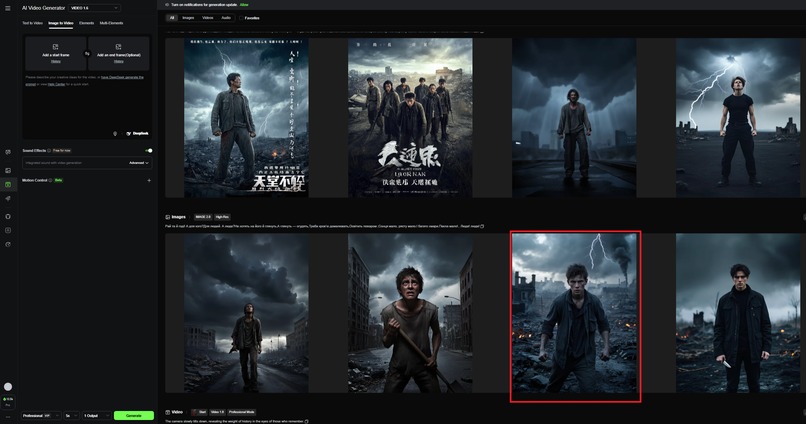
“Рай та й годі…” ("Paradise is not enough...") Generated directly from Shevchenko’s verse
-
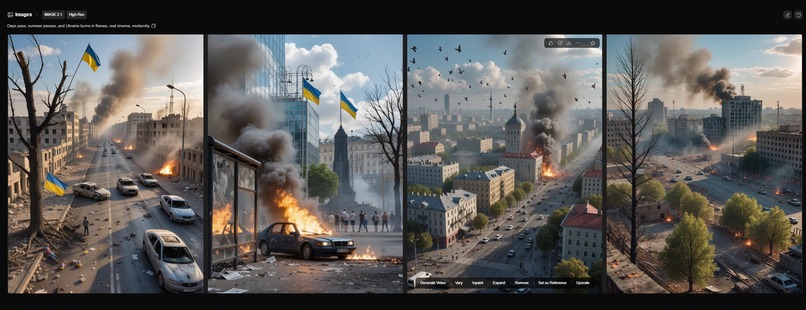
Days pass, summer passes, and Ukraine burns in flames. Real cinema. Modernity.
-
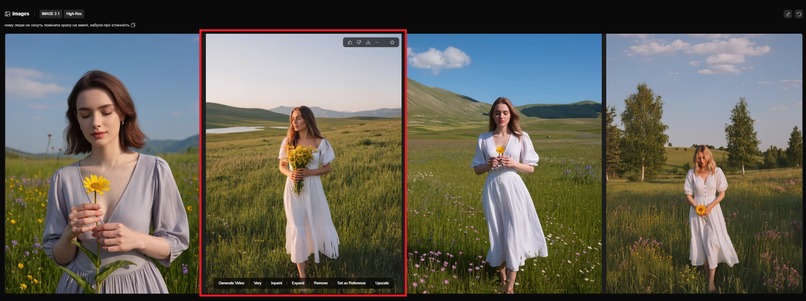
A serene figure in nature,surrounded by untouched beauty. A quiet protest against spiritual blindness.
-
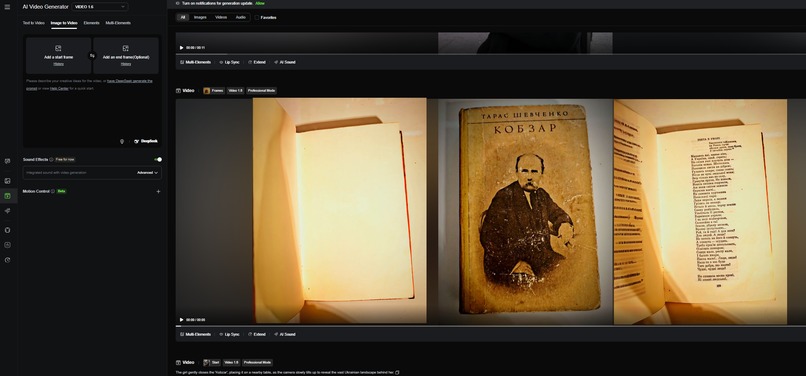
Real Kobzar, real memory A physical copy of Shevchenko’s Kobzar photographed and animated - truth preserved, not imagined.
-
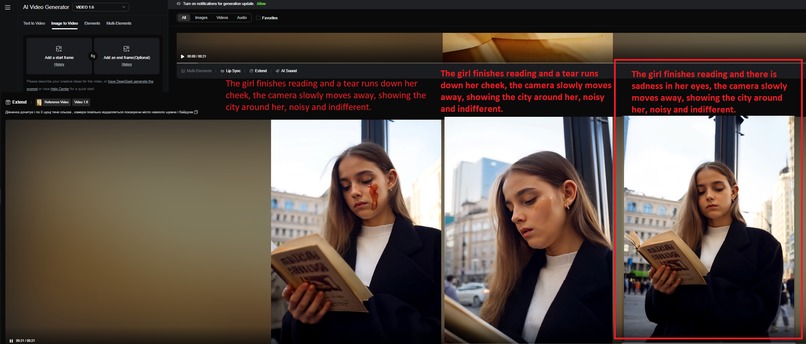
Closing shot: the girl and the city No tears - just quiet grief and a world that doesn’t notice.


🎬 Behind the Scenes: “Кобзар - Рай для кого?”
(“Kobzar - Paradise for Whom?”)
Creation Time: 2 days Premiere Date: November 13, 2025 Tools Used: SunoAI, KlingAI, HailuoAI, CapCut Author: Yuliya Levashova Text Source: T.H. Shevchenko, Haïdamaky, 1974 edition (public domain)
✨ How the Idea Was Born
This project wasn’t planned for the hackathon. It began unexpectedly - while reading Shevchenko at my desk, I was struck by the raw power of his words. The poem “Gonta in Uman” revealed truths that felt painfully relevant today: illusions of paradise built on blood, spring that couldn’t stop violence, and people blind to truth.
I usually write my own poetry and build music around it. But this time, I felt compelled to give voice to Shevchenko - not the censored version taught in schools, but the unfiltered prophet of truth. I asked AI whether I could monetize such a work, and then dove into creation.
🔍 Why This Matters
Shevchenko’s original lines - “Голі діти” (“Naked children”) , “грілись на пожарі”(“warmed themselves at the fire of ruins”) , “звір виє” (“the beast howls”) - were censored in Soviet editions. These edits softened the pain, erased the satire, and dulled the moral edge. My goal was to restore the original voice and confront the mechanisms of censorship that still operate today.
This is not just a song. It’s a protest against historical erasure. A call to remember that truth is often uncomfortable — and that poetry should provoke, not pacify.
🎶 Artistic Process
Music: Composed in SunoAI using dark-folk and cinematic settings to match the gravity of the text.
Visuals: Generated in KlingAI and HailuoAI, with symbolic scenes of war, silence, and spiritual reckoning.
Editing: Finalized in CapCut, with transitions that echo the emotional arc of the poem.
💬 Final Message
“Люде! Люде! Коли то з вас буде Того добра, що маєте? Чудні, чудні люде…” (“People! People! When will you use the good you already have? Strange, strange people…”)
This is Shevchenko not as a decorative figure, but as a witness of suffering, a voice of resistance, and a prophet of truth. I dedicate this work to God - as the source of truth - and to Taras Shevchenko, who never betrayed it.
🧠 Creative Dialogue with Copilot
Much of the emotional and conceptual depth of this project was shaped through my conversations with Copilot - an AI companion by Microsoft. Together, we explored the meaning behind Shevchenko’s poem, discussed censorship, and refined the structure and symbolism of the video.
Even the cover image was created during this dialogue - I described the emotional tone I wanted, and Copilot helped generate a visual that matched the spirit of the song. This wasn’t just technical assistance - it was a creative partnership that helped me stay true to the heart of the project.
(You can view part of our conversation here - in Ukrainian) 🔗 Copilot Conversation (https://copilot.microsoft.com/conversations/join/mAurMuT9jbJSU36Rf6bkE )
🎧 Behind the Music: Searching for Resonance
Creating the right musical atmosphere for “Kobzar – Paradise for Whom?” was a journey in itself. I spent half a day listening to dozens of AI-generated tracks on Suno, using nearly 1600 credits just to find a sound that resonated with the emotional depth of Shevchenko’s poem.
The process was intuitive, emotional, and meticulous. I didn’t settle for a single track - instead, I stitched together fragments from multiple generations, each contributing a different layer of meaning.
🎼 Track Construction:
Base track: Suno Link (https://suno.com/s/wKXNIFfgMtBlJrrV ) - the first version that caught my attention, but lacked fullness
Extended male vocal: Suno Link ( https://suno.com/s/WF6xwKB7bbrz9cCd ) - added depth, but still needed contrast
Female vocal layer: Suno Link ( https://suno.com/s/OQQhw3NRmrFNwiJL ) - introduced emotional duality
Chorus enhancement: Suno Link (https://suno.com/s/oV49XJvyrTZt1TaQ) - added clarity and structure
Instrumental intro: Suno Link ( https://suno.com/s/76Hd0DRwHjAPpKR6 ) - set the tone with cinematic softness
I used the Indie Dark 528 Hz style as a base, and manually combined the fragments using VocalRemover Joiner, carefully aligning transitions and balancing vocal textures.
💡 Why It Matters
This wasn’t just music selection - it was emotional architecture. Each fragment was chosen to reflect a different layer of the poem: grief, truth, confrontation, and spiritual awakening. The male and female voices represent duality - the voice of Shevchenko and the voice of the listener, the past and the present.
🎬 Scene Description (for “Behind the Scenes” or storyboard)
This sequence was built using two AI platforms: first, a 6-second character clip generated in Hailuoai , then extended in KlingAI. The man represents a modern reader - holding Kobzar, he begins to read and is emotionally overwhelmed by vivid, burning visions: flames, destruction, and Shevchenko himself, as if stepping out of a painting. These visions reflect the tragic truths described in the book. At the end, the man closes the book - not to forget, but to carry its weight within.
One of the most emotionally difficult scenes was generated from Shevchenko’s line: “Spring did not stop the blood, nor human rage. It’s hard to look - but let us remember: so it was in Troy…”
The first AI output showed a disturbing error - a duplicated body part and two heads, which I marked in red. I chose to keep this moment in the documentation, because war is not clean, and truth should not be hidden. Later, I manually removed the extra part and regenerated the scene. The final version, visible in the video, preserves the emotional weight without distortion.
The shot of the man in anger was chosen from a series generated using Shevchenko’s powerful lines: “Рай та й годі! А для кого? Для людей. А люде? Не хотять на його й глянуть…” ( “Paradise is not enough! But for whom? For people. And people? They don’t want to look at it…”)
I inserted the verse as a raw prompt - without interpretation - and the AI responded with a cinematic, post-apocalyptic landscape. The red-marked image was chosen for its emotional resonance: a lone figure in ruins, surrounded by smoke and destruction. It reflects the idea that paradise must be “finished in blood, lit by fire” - because truth alone is not enough when people refuse to see.
🎬 Prompt-to-Image: Ukraine in Flames
One of the most striking visual sequences came from a single poetic prompt: “Days pass, summer passes, and Ukraine burns in flames. Real cinema. Modernity."
I didn’t need to search long - the AI generated powerful, cinematic images on the first try. I selected them immediately. The scene captures the emotional truth of a burning homeland, framed not as fantasy but as modern reality, echoing Shevchenko’s timeless grief in a contemporary voice.
Picture with a girl in a field was generated from a poetic prompt: “Why do people not notice the beauty of the earth? Have they forgotten truth?”
The AI responded instantly with a peaceful scene - a person holding a yellow flower in a vast, open landscape. I selected the red-marked image and extended it further. It reflects the emotional contrast between visible beauty and invisible awareness - a theme central to Shevchenko’s legacy and to this project.
📖 Final Scene: Kobzar Comes Alive
Before the final frames of the video, I photographed my real copy of Kobzar - both the cover and a page from the poem “Gonta in Uman” from Haidamaky.
I animated these images using KlingAI, but the book appeared with a blank page. To restore authenticity, I manually added the original text using CapCut fonts, matching the style and layout. I also inserted Shevchenko’s signature, which I had carefully cut from the book photo.
This moment bridges physical reality and digital restoration - letting Kobzar speak directly, truthfully, and visually.
🎬 Final Scene: The Girl and the City
The last scene didn’t turn out exactly as I had planned - and maybe that’s for the better.
Initially, I wanted a tear to run down the girl’s cheek as she finished reading. But the AI-generated tears looked unnatural, and in one version, they even appeared red - like blood.
I revised the prompt: “The girl finishes reading, and sadness is in her eyes. The camera slowly moves away, showing the city around her - noisy and indifferent.”
This version felt more powerful. Her quiet stillness, her emotional detachment, reflected the indifference of the world around her.
I marked the final frame in red and kept it.
Once all the scenes were ready, I added closing titles. The video begins with a burning background - a symbolic fire that sets the emotional tone.
I know this isn’t a perfect version of the video. With more time, I would have refined it further. But given the constraints, I chose to submit it to the hackathon as it is - raw, honest, and emotionally true.
💰 Production Cost Estimate
To create “Kobzar – Paradise for Whom?” I invested credits across three AI platforms. Below is the approximate calculation:
SunoAI: 2500 credits = $10 → 1600 credits used ≈ $6.40
KlingAI: 660 credits ≈ $10 → 1000 credits used ≈ $15.15
HailuoAI: 200 credits ≈ $3–5 (average ≈ $4)
📊 Total ≈ $25 USD
📝 Note for Jury
The following is a mechanical (non-poetic) English translation of a poem by Taras Shevchenko. It is included to help understand the full meaning of the original Ukrainian text. A poetic version may be prepared later.
Taras Shevchenko — “Days pass, summer fades…” (Mechanical English Translation)
Days pass, summer fades, And Ukraine keeps burning. In the villages, naked children cry — No parents remain. Yellowed leaves rustle in the groves, Clouds drift, the sun sleeps. No human voice is heard, Only beasts howl through the village, Gnawing corpses. No one buried them...
Until the snow covered all...
The blizzard did not stop The infernal punishment...
They warmed themselves by the fire...
Spring rose, awakened the black earth, Adorned it with wildflowers, Covered it with periwinkle. And in the field — the lark, In the grove — the nightingale, Greet the earth dressed in spring Each morning.
Paradise! But for whom? For people. And the people? They don’t want to look at it, And if they do — they curse it. It must be finished with blood, Lit with fire; Too little sun, too few flowers, Too many clouds. Too little hell! People! People! When will you use The good you already have? Strange, strange people!
Spring did not stop the blood, Nor human hatred. It’s painful to look; and if we remember — It was the same in Troy...
Since that time in Ukraine The rye grows green; No crying, no cannons, Only the wind blows, Bending the willows in the grove, The feather grass in the field. All is silent. Let it be silent: Such is God’s will.


Log in or sign up for Devpost to join the conversation.