-
-
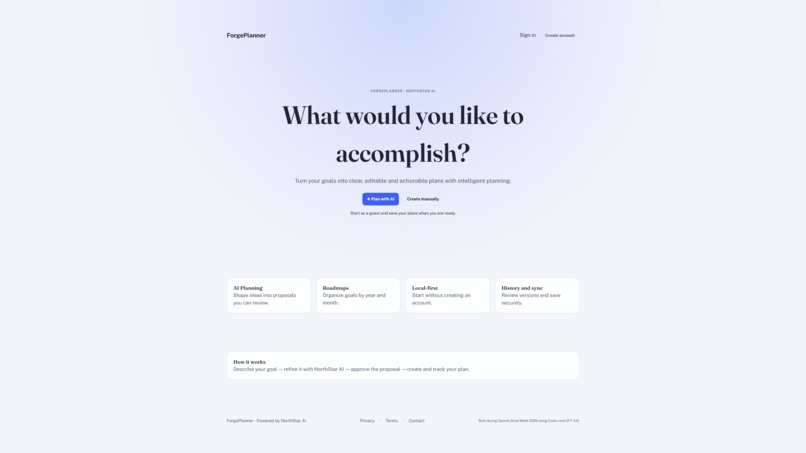
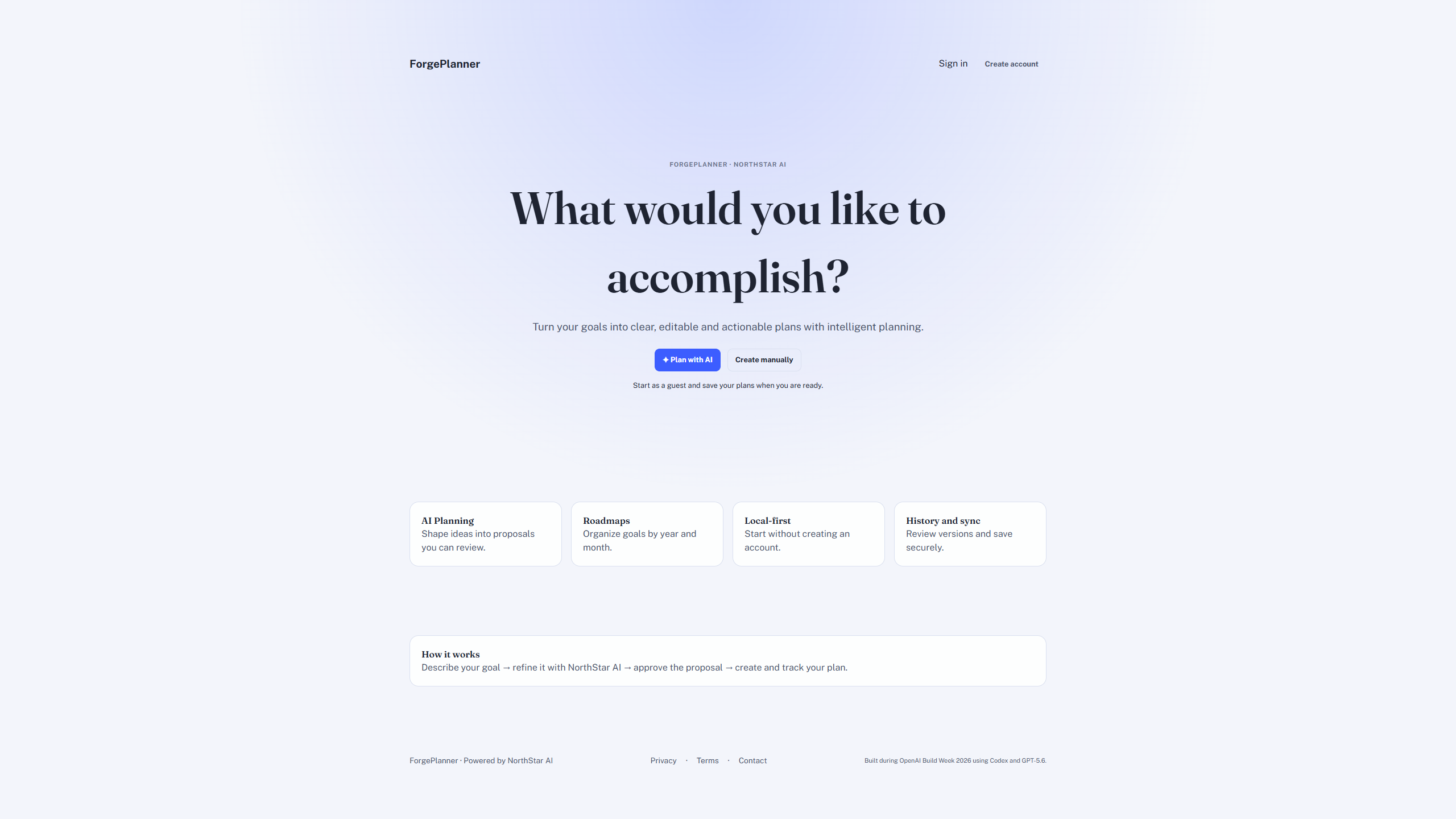
Landing Page
-
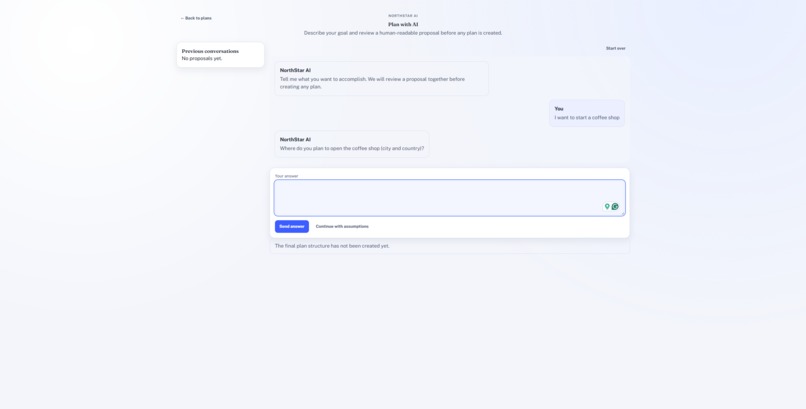
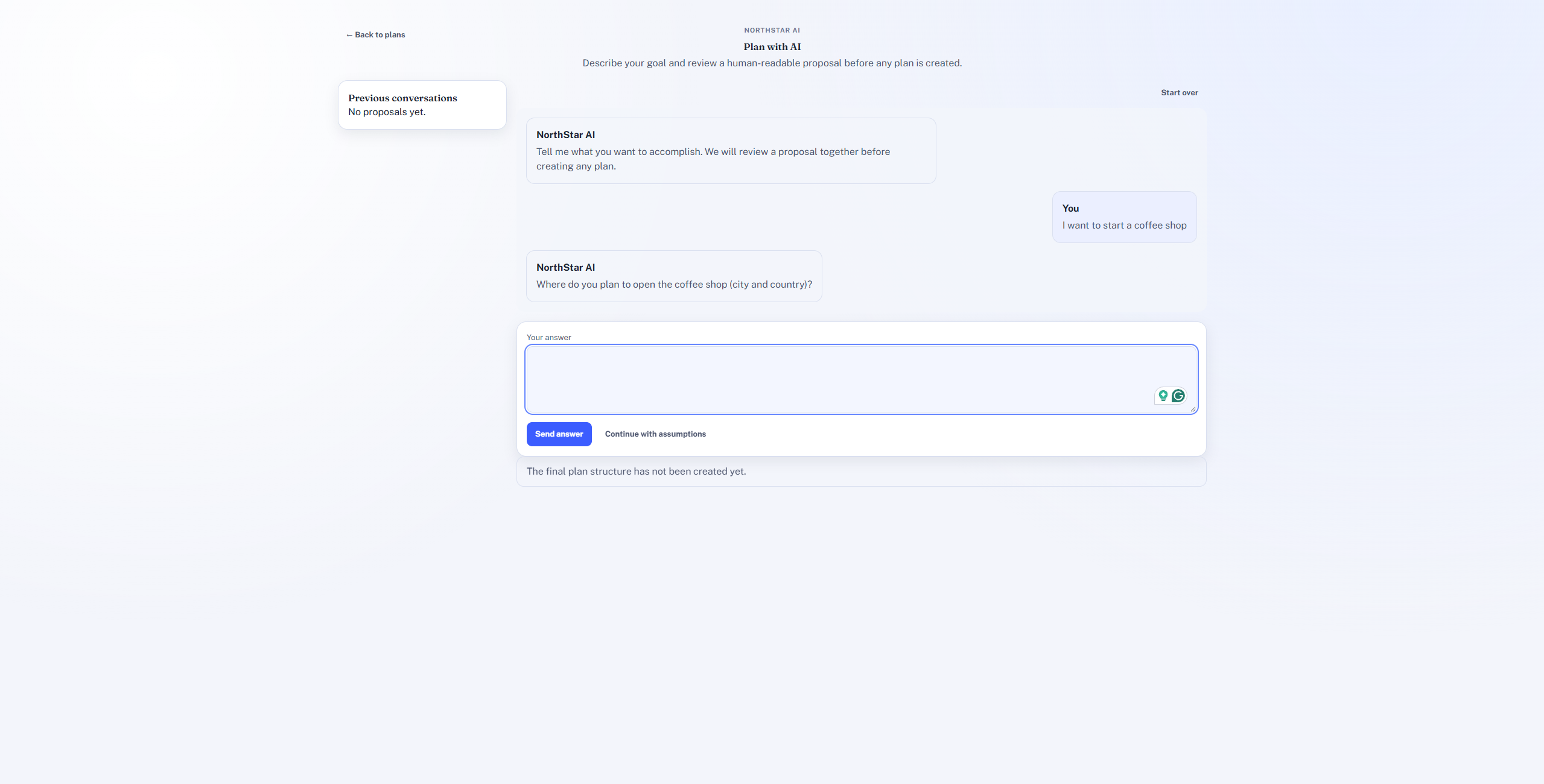
Talk to ForgePlanner AI
-
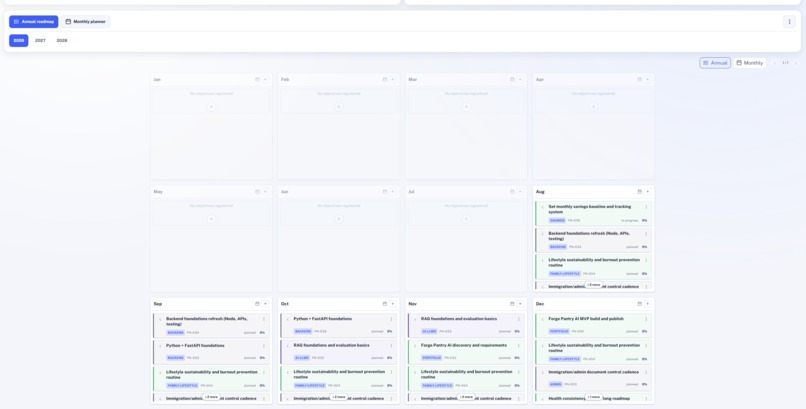
Roadmap
-
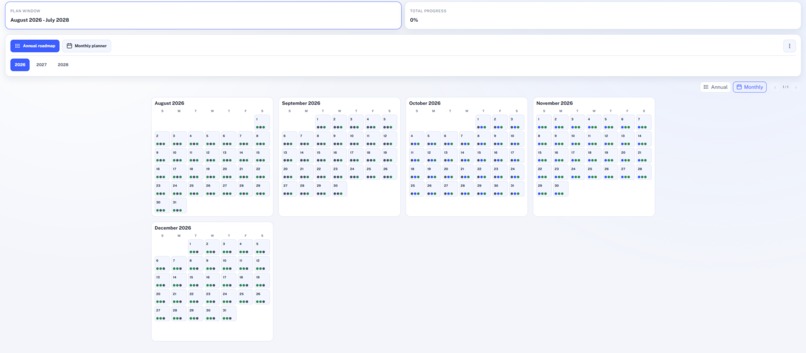
Calendar View
-
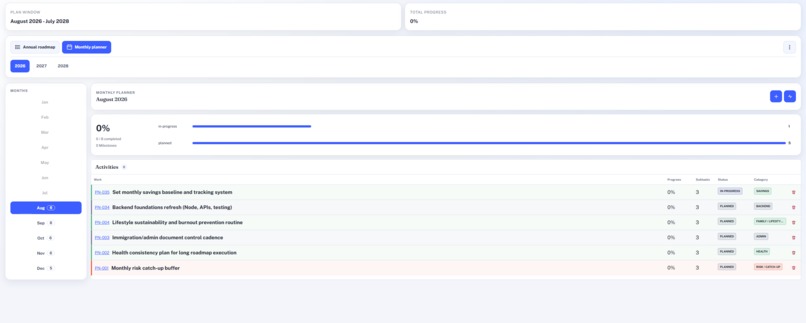
Focus View
-
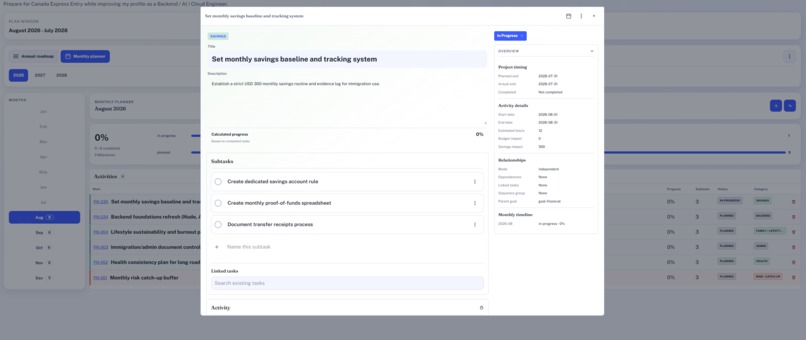
Subtasks View
-

Plans View

Inspiration
I've always been someone who plans ahead. As a software engineer, I constantly think about where I want to be in five or ten years—not only professionally, but also financially, personally, and with my family. One day I started designing a study plan for new certifications, but I quickly realized that learning wasn't the only challenge. I also needed to save money for exams, balance family responsibilities, manage my time, and make sure every decision moved me closer to my long-term goals.
I searched for an application that could combine career planning, savings, health, habits, and life goals into one coherent roadmap, but every tool I tried solved only part of the problem. Some were task managers, others were calendars, note-taking apps, budgeting tools, or habit trackers. None of them actually helped me build a complete life plan.
So I decided to build the planner I wanted to use myself.
At almost the same time I received OpenAI's Build Week announcement. What started as a personal side project suddenly became the perfect opportunity to transform a planner into something much bigger: a platform capable of helping anyone turn an idea into an actionable plan.
That is how ForgePlanner was born.
What it does
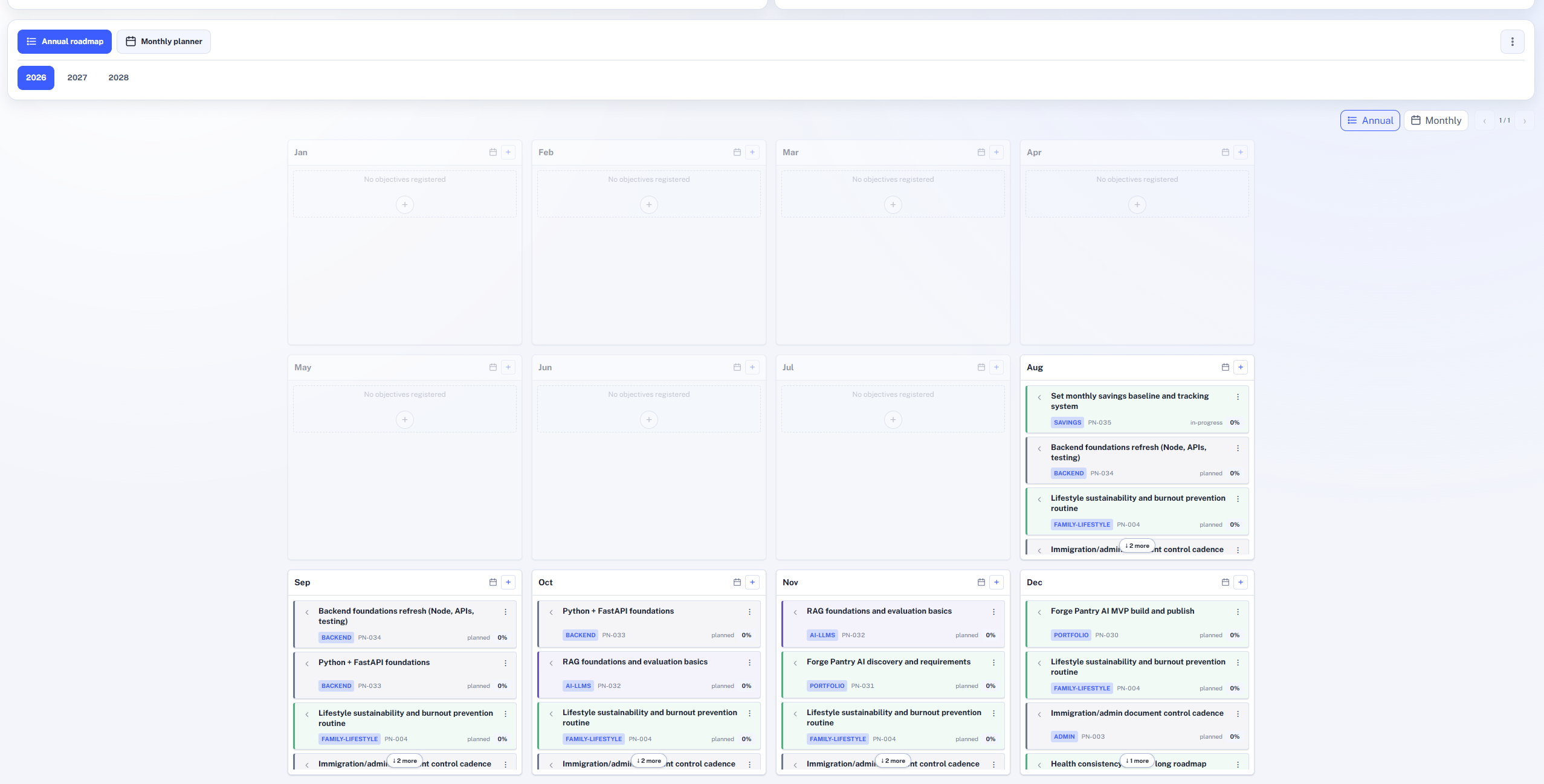
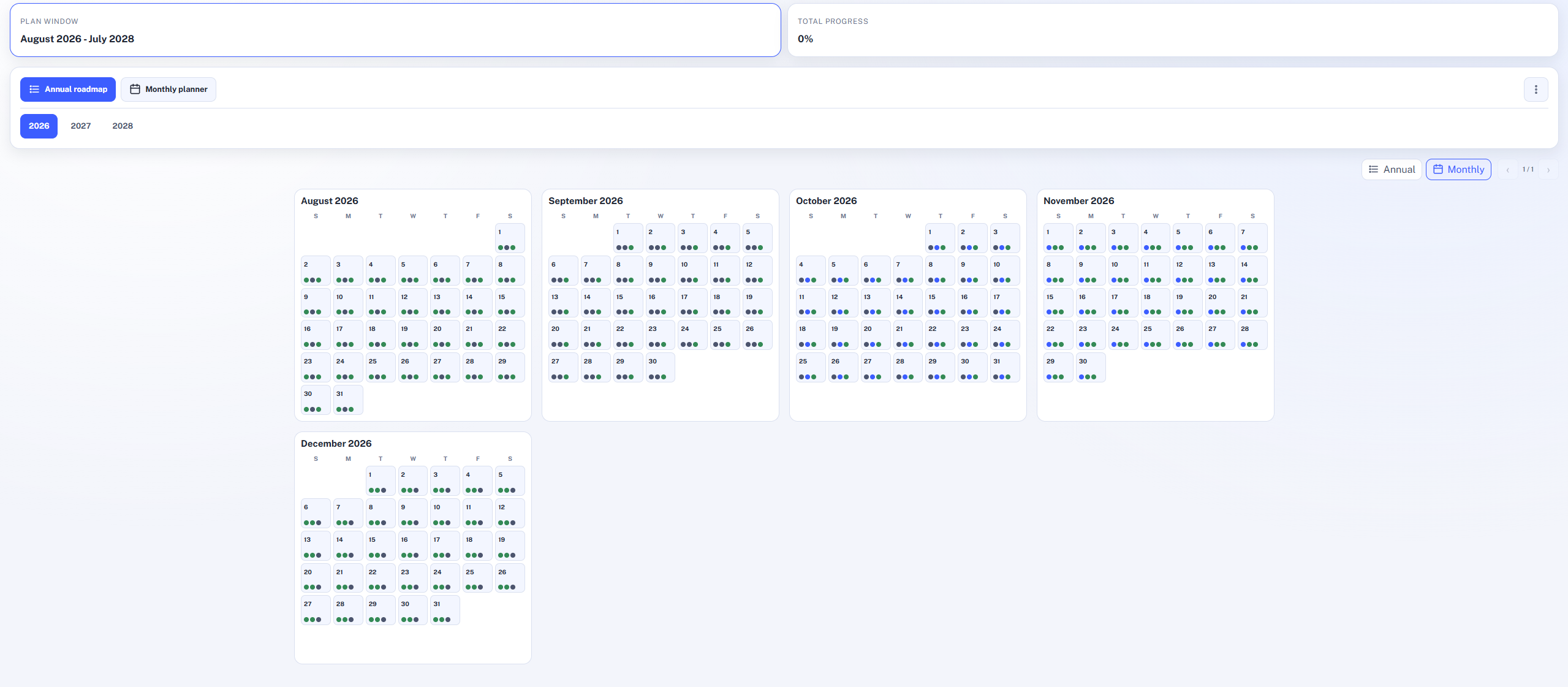
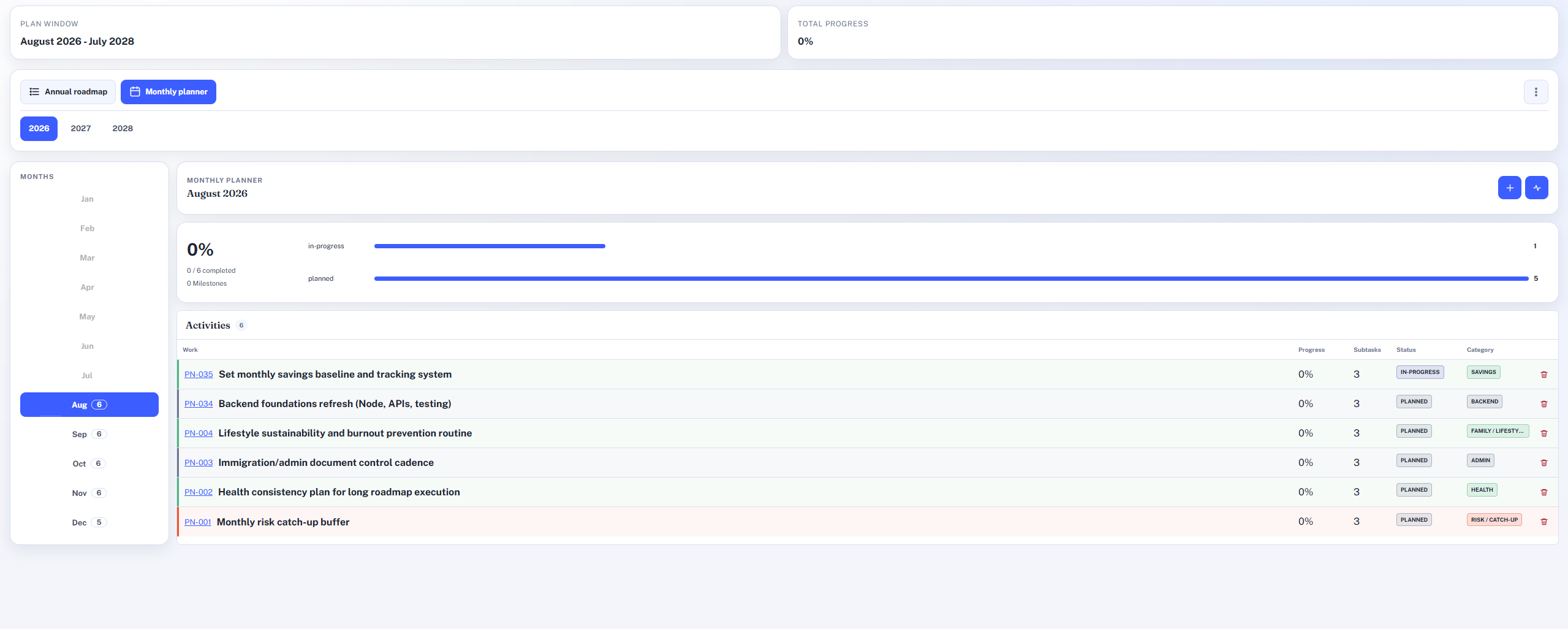
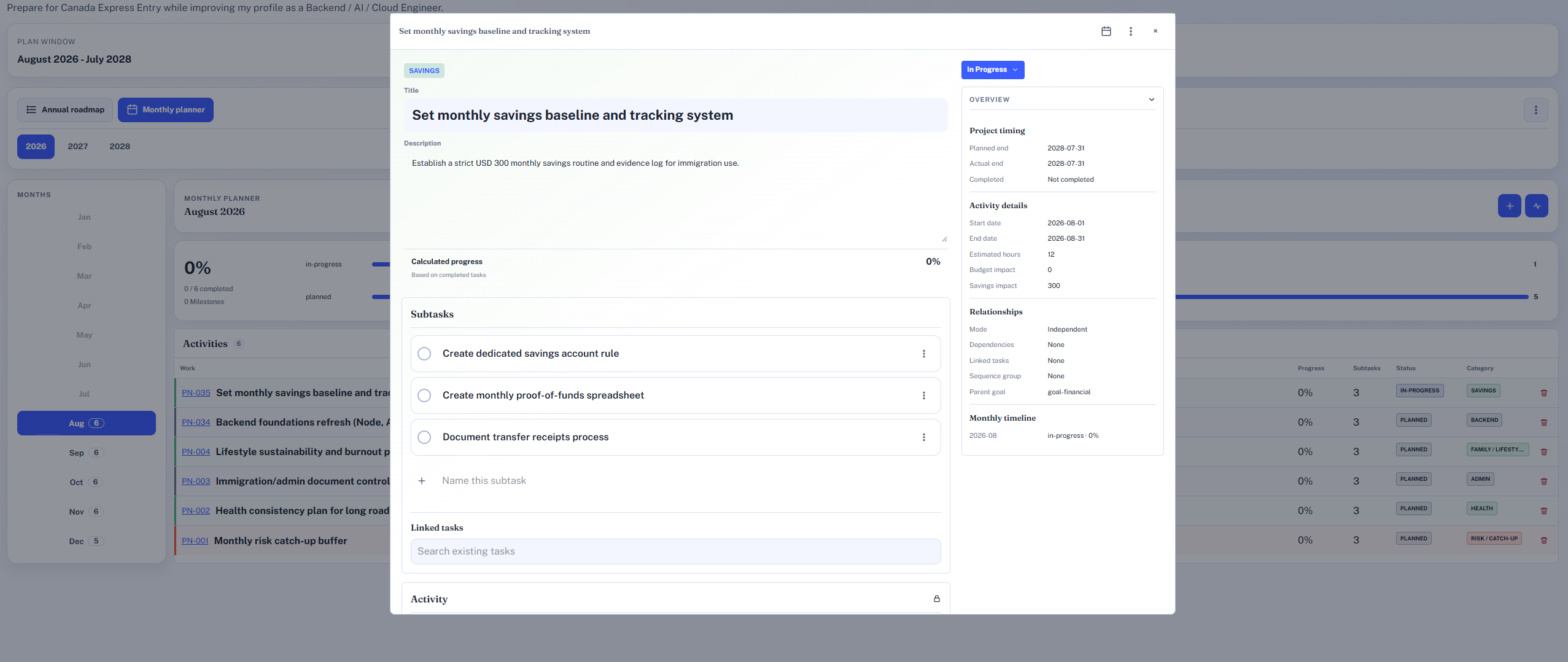
ForgePlanner is an AI-assisted life planning platform that helps users transform goals into structured roadmaps.
Instead of immediately generating a generic checklist, ForgePlanner first understands the user's objective through conversation. It asks follow-up questions when information is missing, learns the context, and only then generates a planning proposal.
Once the proposal is refined and approved, it is converted into a fully structured planning model that supports:
- Career planning
- Study plans
- Business planning
- Savings goals
- Health and lifestyle goals
- Long-term personal projects
Users can also create plans manually, work completely offline as guests, synchronize plans later with an account, collaborate with other users, maintain complete version history, and safely recover previous revisions.
How we built it
ForgePlanner is built with a TypeScript full-stack architecture.
The frontend uses React, Vite, and Zustand, while the backend uses Node.js, Express, Prisma, and PostgreSQL.
One of the biggest architectural decisions was separating conversational AI from plan generation.
Instead of asking an LLM to immediately generate a final plan, the system follows two independent stages:
- GPT-5.6 acts as a planning coach, asking clarification questions and helping the user refine the objective.
- Once the proposal is approved, GPT-5.6 converts that approved revision into ForgePlanner's canonical JSON schema using Structured Outputs.
Every generated plan is validated structurally and semantically before it can become a real plan.
Throughout the project I worked extensively with Codex directly inside VS Code. It became much more than an autocomplete tool—it helped review architecture, detect hidden edge cases, implement features, generate tests, debug production deployments, and continuously improve the overall design.
Challenges we ran into
The biggest challenge was resisting the temptation to let AI generate plans too early.
Initially, vague prompts like "I want to open a business" produced generic plans that looked correct but weren't actually useful.
To solve this, I redesigned the workflow so the AI first determines whether it has enough information. If not, it continues asking meaningful questions before proposing anything.
Another major challenge was ensuring that AI-generated content remained safe and deterministic. I implemented immutable proposal revisions, strict schema validation, semantic validation, checksum verification, idempotent conversions, and complete version history so every accepted proposal could be traced and safely converted into a real plan.
Handling guest users without sacrificing privacy or data integrity was another significant architectural challenge.
Accomplishments that we're proud of
- Built a planner that genuinely solves a real-world problem I personally experienced.
- Created a conversational planning experience instead of a simple prompt-to-text generator.
- Designed an AI proposal workflow with immutable revisions before plan creation.
- Built a versioned canonical planning schema with structural and semantic validation.
- Implemented secure guest planning without requiring registration.
- Added collaboration, synchronization, recovery, and complete version history.
- Successfully integrated GPT-5.6 into a structured planning workflow instead of using AI only for text generation.
- Used Codex as an engineering partner throughout the entire development process.
Most importantly, ForgePlanner already feels like a real product rather than a hackathon prototype.
What we learned
This project completely changed how I think about building AI products.
The difficult part isn't calling an LLM.
The difficult part is designing everything around it: deciding when the AI should ask questions instead of answering, validating structured outputs, protecting user data, handling failures, preserving history, and making AI feel like a collaborative planning partner instead of an autocomplete engine.
I also discovered how powerful Codex becomes when integrated directly into the development workflow. Having an AI capable of reviewing architecture, identifying hidden risks, and implementing features inside the real repository dramatically accelerated development.
What's next for ForgePlanner
This hackathon is only the beginning.
My goal is to continue developing ForgePlanner into a complete AI planning platform that helps people achieve long-term goals instead of simply organizing tasks.
The roadmap includes:
- Smarter GPT-5.6 planning conversations
- Adaptive plans that evolve as life circumstances change
- Weekly AI coaching and progress reviews
- Calendar integration
- Notifications and reminders
- Financial forecasting
- Shared family planning
- Team collaboration
- Mobile applications
- Specialized AI agents for careers, education, business, health, and personal finance
ForgePlanner began as the planner I wanted for myself. My goal is to turn it into the planner that helps anyone transform an idea into a realistic path toward achieving it.
Built With
- api
- codex
- css3
- express.js
- github
- gpt-5.6
- html5
- json
- nginx
- node.js
- openai
- outputs
- pm2
- postgresql
- prisma
- react
- responses
- schema
- structured
- typescript
- vite
- vitest
- vs
- zod
- zustand

Log in or sign up for Devpost to join the conversation.