Inspiration
Waste management has become an increasingly worrying issue, as the world is producing more and more waste every day. Most of that waste would be incinerated, releasing greenhouse gases, meanwhile landfills are still filling up. For example, Singapore’s Semakau landfill is predicted to be full by 2035. Therefore, simply incinerating trash cannot be a long-lasting solution.
Another much more environmentally friendly alternative is to recycle part of the trash. The most common and most often advertised example is to reuse plastic bottles as household products such as pen holders or plant pots. However, recycling can also be and is being implemented on larger scales, such as crushing thrown away glass down to sand and used as raw material or melting plastic to derive asphalt. One of the most important stages and the first stage of recycling is to sort wastes into certain categories, such as glass, plastics, papers, etc… as each material has a certain method to recycle. And the most cost-efficient method is to classify them as soon as they go into the trash bins, as it becomes difficult to sort when multiple materials of all shapes and sizes are mixed, and at that point, it takes less effort to just incinerate the mixture. However, waste classification is usually overlooked by most people as human behavior is often unconsciously based on taking the easiest actions, and the easiest way to dispose of trash is to just dispose everything into one container.
What it does
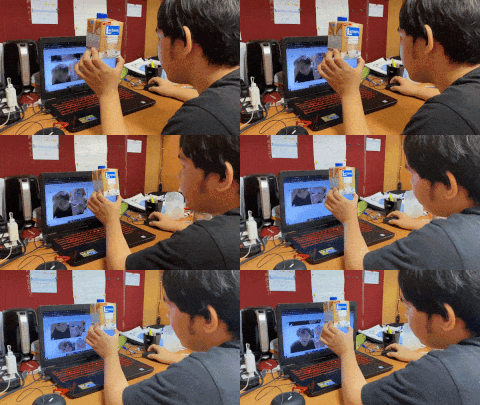
Hence, the goal of our project is to create an automatic trash classification system that creates a positive impact on the environment through human – centered design methodology.
How we built it
    - Dataset: The dataset used involved 2500 images split into 3 sub-datasets: train, validation and test with a ratio of 70:13:17. Each image is labeled as one of six categories.
 Two step fine-tuning of the pre-trained model ResNet50: First, the weights of all layers except the newly added layers were frozen, which were trained with Adam optimizer using cross-entropy loss applying a learning rate of 0.001. After which, the entire model was trained with a learning rate of 0.00001 but without freezing the weights.
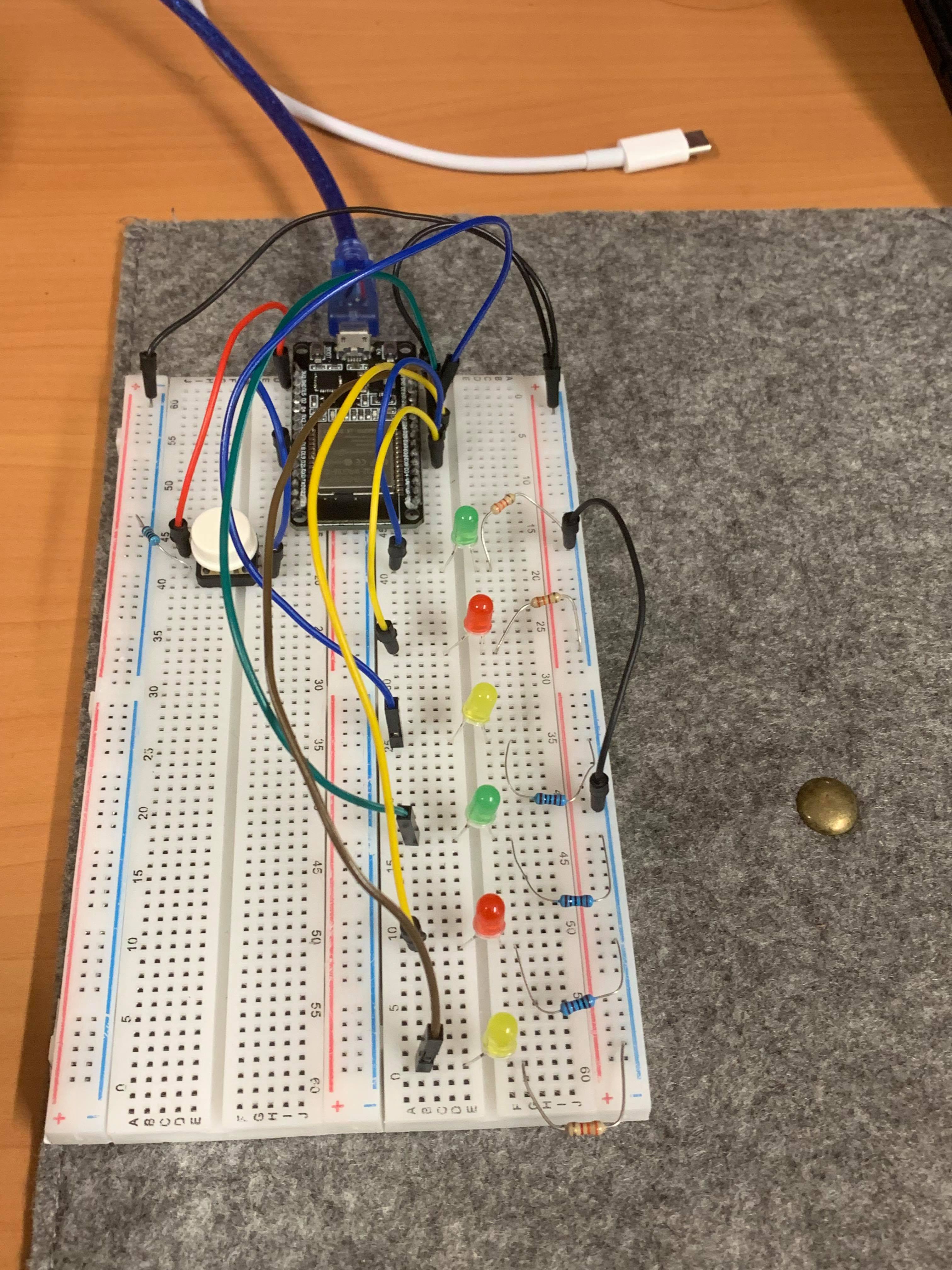
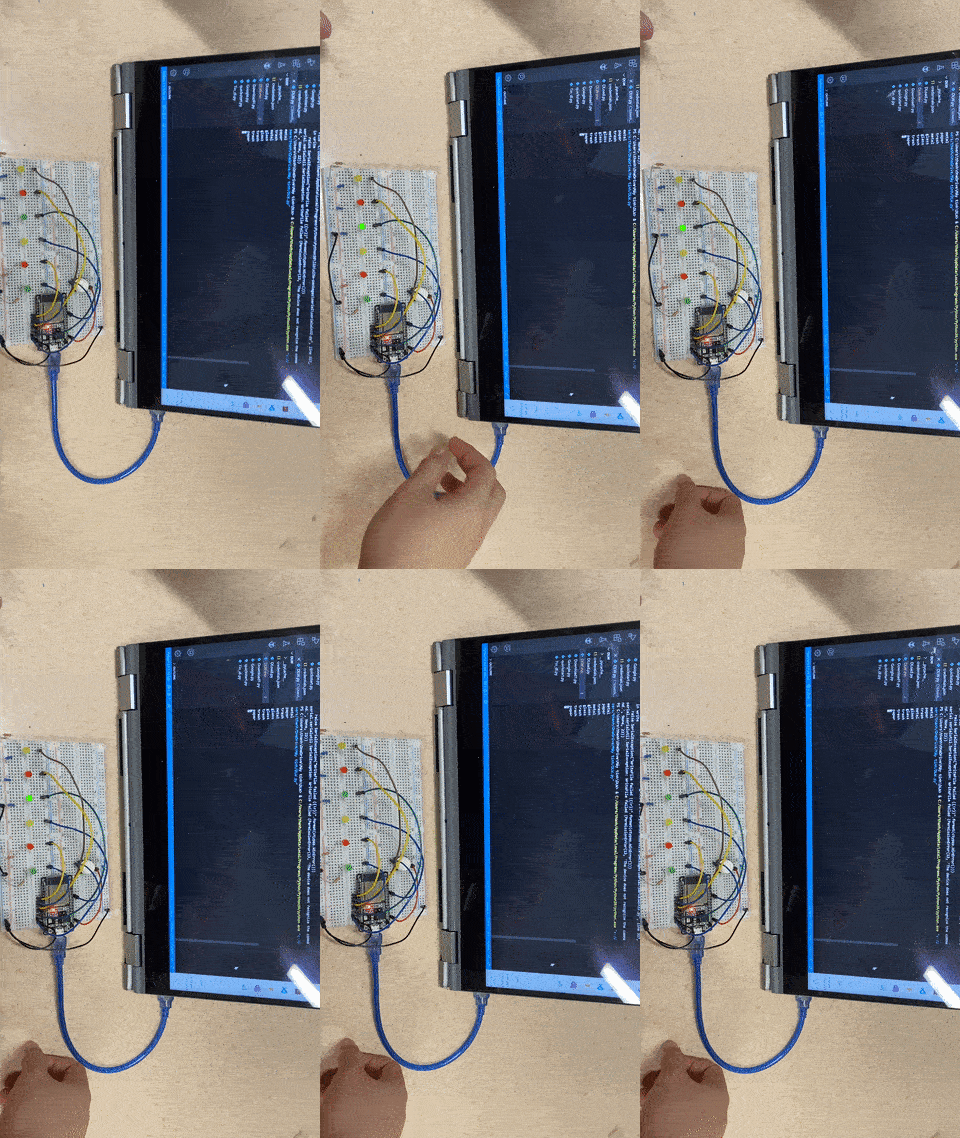
- Microcontroller: ESP32-VROOM 32 microcontroller connected to 6 Light Emitting Diodes to each of the digital ports through a current limiting resistor. This represents the model of 6 types of materials to be sorted. By receiving serial data from the computer, the corresponding LED will light up. We also installed a push button with interrupting functionality that stops the lightning and triggers the thank you sequence to mimic the scenario when the user has put trash into the correct bin.
Challenges we ran into
Connection between parts of model machine learning to Arduino hardware devices
Accomplishments that we're proud of
Within the 48-hour limit of the hackathon, we were able to accomplish a simple version of our model to assist and encourage trash classification. We do hope that a more refined version of this model would be able to be implemented and raise society’s awareness of trash classification and promote recycling.
What we learned
New knowledge and experience when facing new problems
What's next for Trash for Treasure - HHH
Our future plans include implementing cloud computing and services, as well as using auto-segmentation to detect the object and to use appropriate dataset to improve the model’s accuracy. Hardware wise, we strive to change the communication to wireless with bluetooth/ WiFi technology and a separate Webcam.


Log in or sign up for Devpost to join the conversation.